
Heat Treat
Heat Treating Knife Steel: Complete Guide
Heat treating is what turns a piece of flat bar stock into a functional knife blade. Done correctly, it transforms the steel’s internal crystal structure…
Abrasives
Belt recommendations, grit progression, and sharpening tips for grinding CPM 3V on a 2x72 belt grinder. Free guide from Torus CNC's ForgeBrain.
1 min readWritten by Rich LinvilleFree to read
CPM 3V grinds in the moderate range, tougher on belts than simple carbon steels but noticeably easier than high-carbide steels like CPM M4 or D2. Its low carbide volume, the same trait that gives it exceptional toughness, also means it does not load and dull belts as aggressively as harder-edged tool steels.
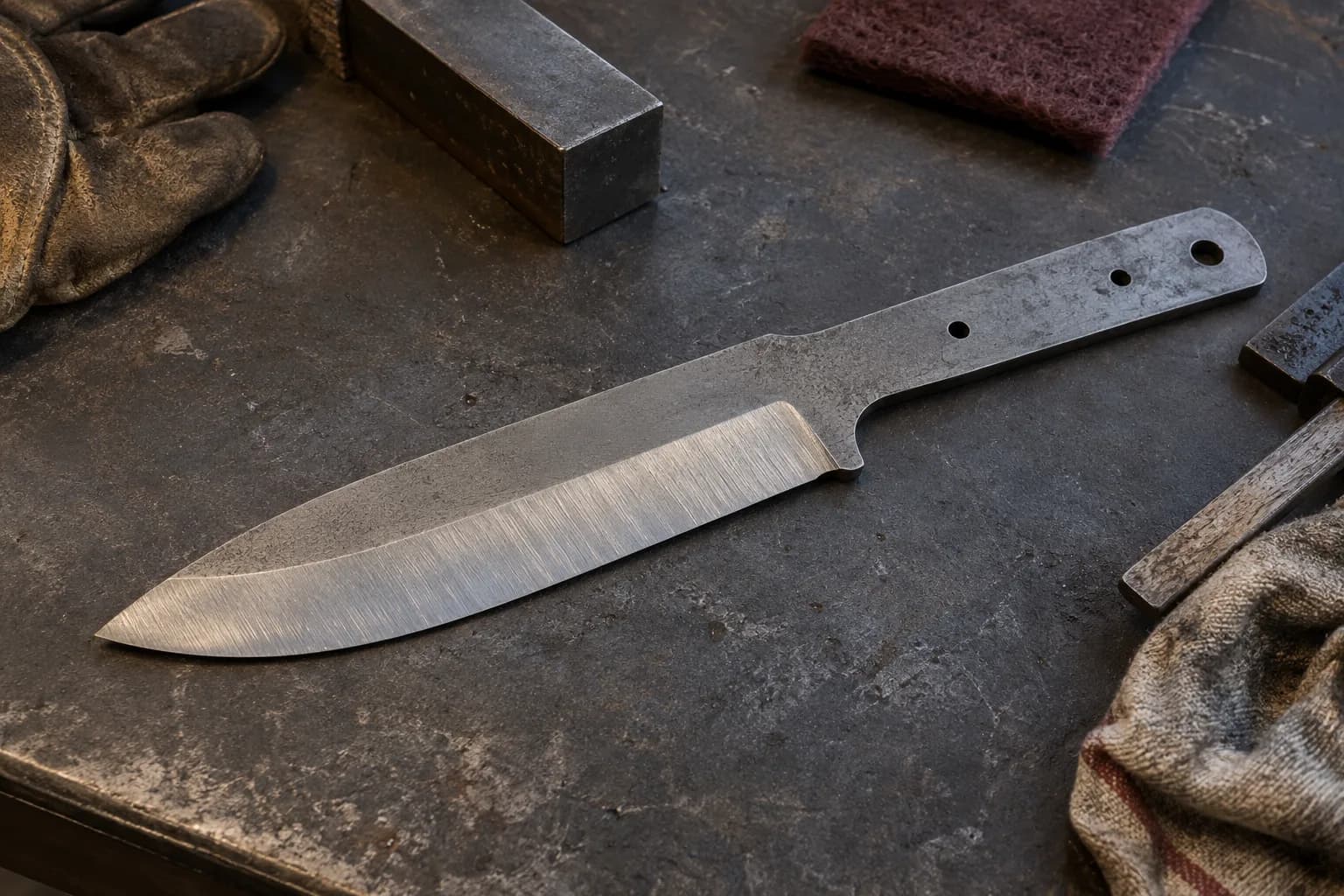
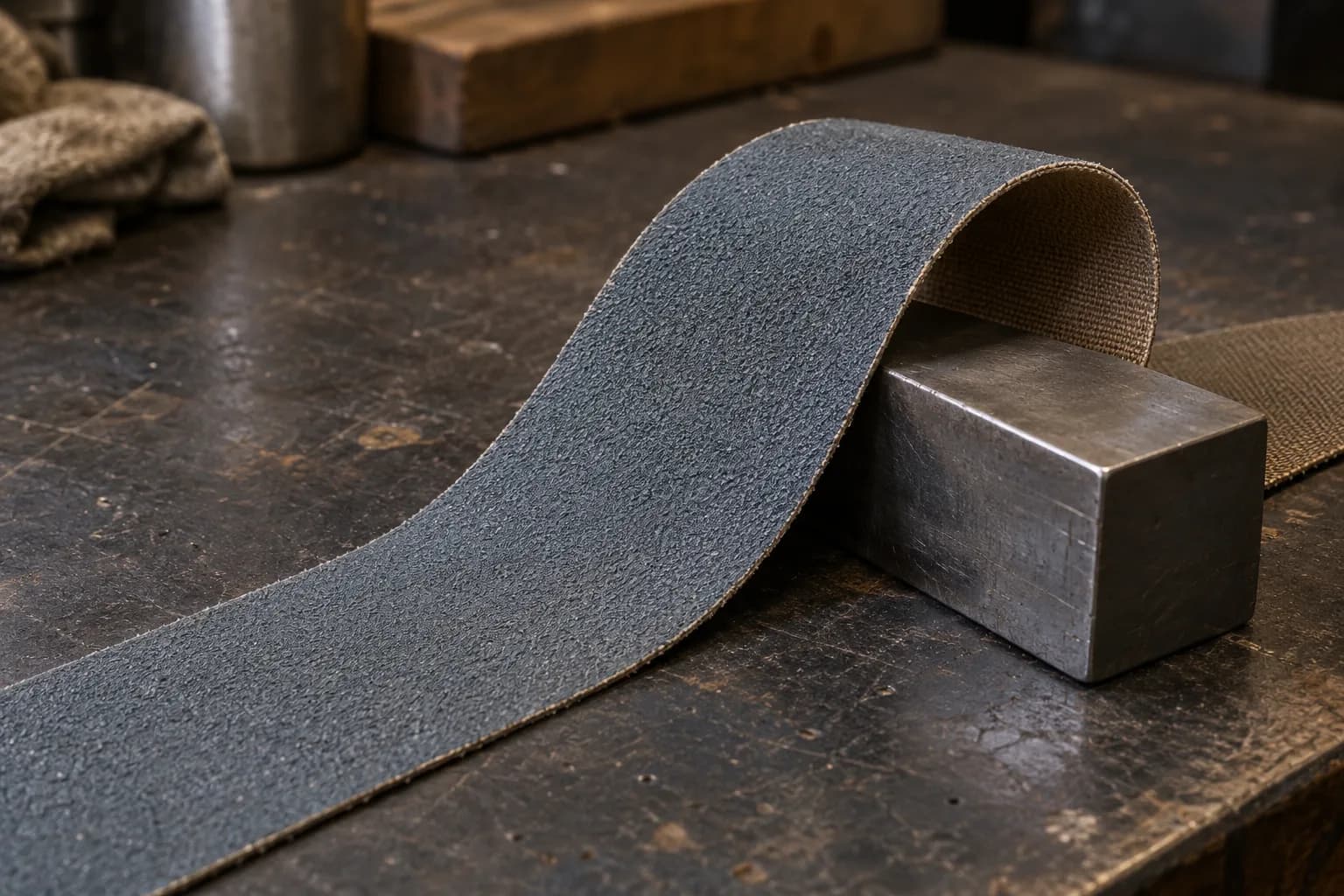
Ceramic belts are still the recommended choice for stock removal, though CPM 3V is more forgiving of belt type than high-carbide steels. Zirconia belts are a reasonable, more budget-friendly alternative for this steel specifically.
| Stage | Grit |
| Profiling / heavy stock removal | 50 |
| Bevel refinement | 80 |
| Pre-finish | 120 |
| Finish grinding | 220 |
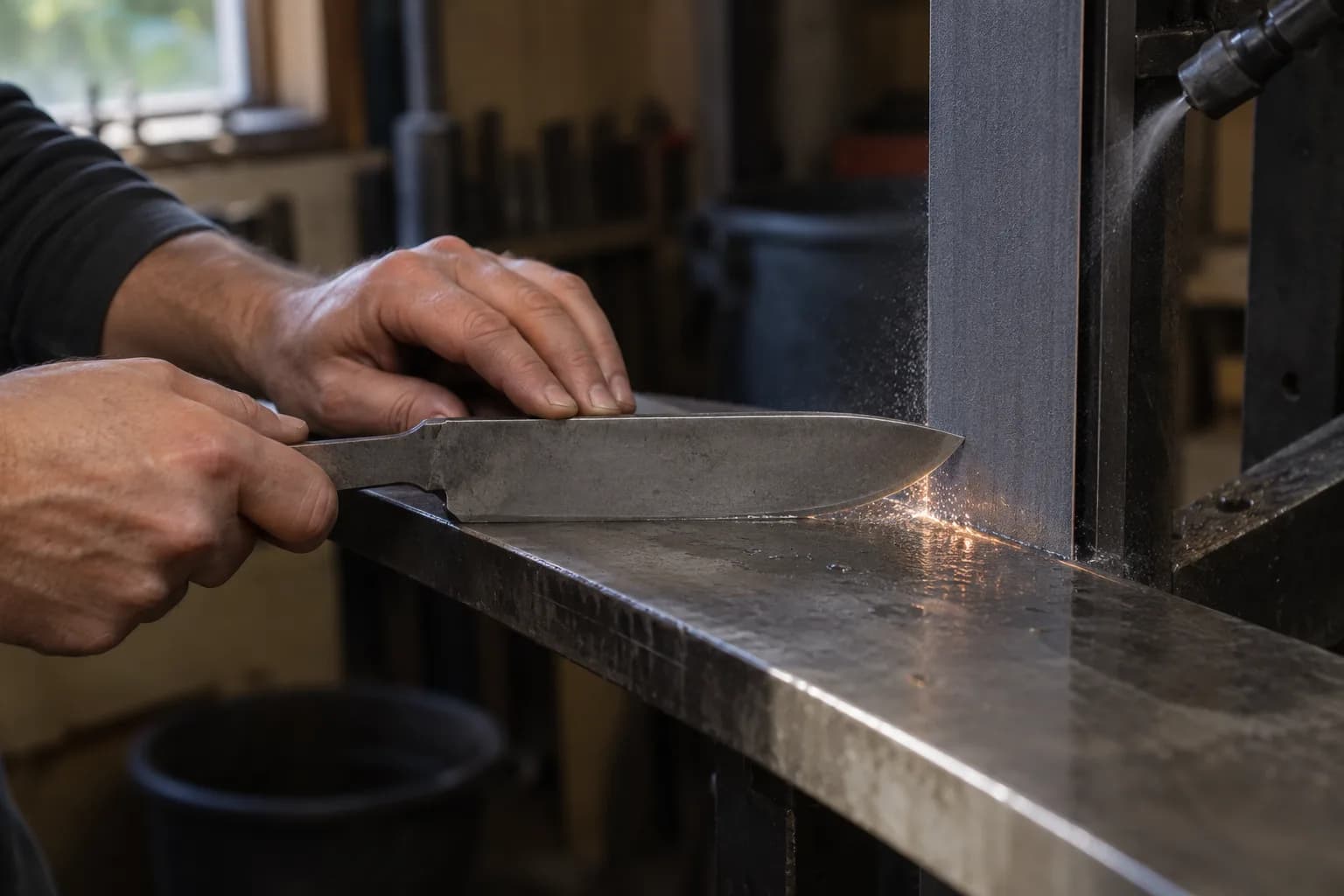
Standard technique applies well: moderate to high belt speed, light controlled passes, and a coolant mister to protect the temper. CPM 3V’s forgiving nature at the grinder is part of why it remains popular for makers building large hard-use blades that require significant stock removal.
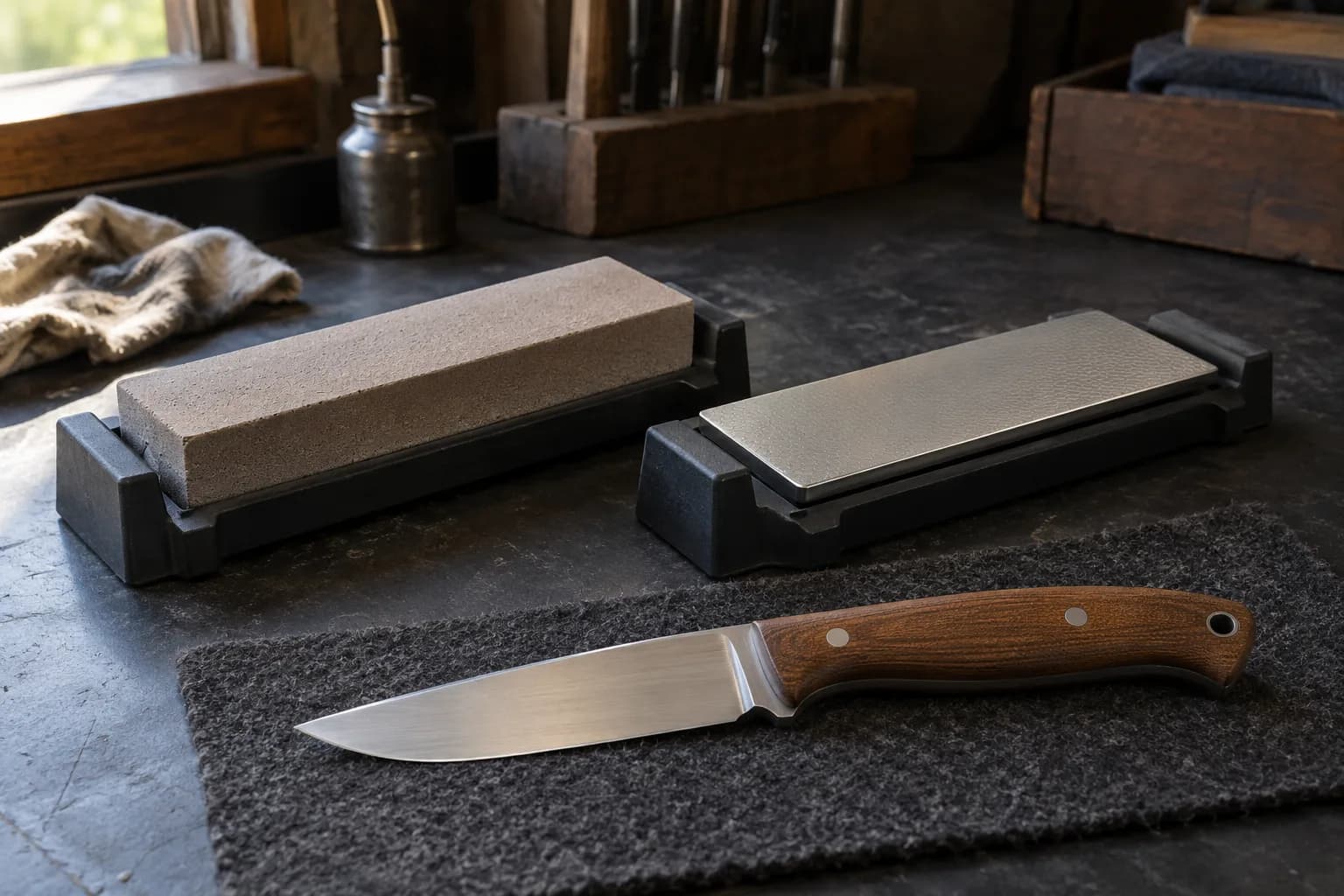
CPM 3V sharpens more easily than high-carbide tool steels like CPM M4 or D2, responding reasonably well to good-quality aluminum oxide or diamond stones. Diamond abrasives still give the most efficient results, but this steel is more forgiving of standard sharpening equipment than harder-edged alternatives.
Keep reading
Three more from the same bench.
Heat treating is what turns a piece of flat bar stock into a functional knife blade. Done correctly, it transforms the steel’s internal crystal structure…

Belts are the single biggest recurring cost in this hobby, and buying the wrong ones wastes money twice: once on belts that wear out fast, and again on…

Every Torus ships as a complete assembled chassis with the motor sold separately — which hands you the one decision that shapes the machine’s personality…
Same bench
I machine the parts, hand-assemble, track and test Torus grinders in Sterling, Illinois. Most orders ship in seven to ten business days from time of order.

Current dual-axis platform with a fiber-laser-cut 6061 chassis and single-knob tracking.

Current dual-axis platform with a steel chassis, more mass and less vibration.

Prior-design aluminum chassis, 90-degree tilt and 1.5-inch tooling arms.

One-man shop
I answer my own email. Tell me the steel, the machine and what it is doing, and I will tell you what I would try next.