| Toughness | 5/5The whole reason to choose it. Low carbon content means very little excess carbide, and the chromium and manganese give clean, deep hardening — the result is a steel that bends, absorbs impact and returns rather than chipping or snapping. This is why it dominates sword and chopper work. Critically, the advantage lives at 57–59 HRC and is largely spent by 61 HRC. | 4/5Very good for a simple carbon steel, and a big part of why it is so widely recommended: it holds up well to impact without the brittleness risk that comes with over-hardened, lower-manganese steels like 1095. | 5160 wins clearly. Lower carbon means less excess carbide, and the chromium and manganese give clean deep hardening — the combination bends and returns where 1084 would chip. Run at its intended 57 to 59 HRC, it is one of the toughest steels a beginner can buy. |
|---|
| Edge retention | 2/5Modest, and honestly so. At roughly 0.60% carbon there is neither the hardness nor the carbide volume for long slicing life — it will need touching up sooner than 1084, O1 or 52100. In exchange it sharpens back to working sharp in a few passes on almost any stone, which is the right tradeoff for a field blade. | 2/5Modest, in line with other simple carbon steels lacking wear-resistant alloy carbides, but it takes a very keen edge easily. | 1084 wins. At 0.84% carbon it hardens to 58 to 61 HRC against 5160's 57 to 59, and in low-carbide steels hardness is what drives edge life. Neither has alloy carbides, so both resharpen very quickly — the gap is real but easy to live with. |
|---|
| Corrosion resistance | 1/5None to speak of. The ~0.8% chromium is a hardenability alloy, not a stainless one. Expect rust on neglected blades and a fast patina on working ones — for a machete or camp knife that patina is a perfectly good protective finish. | 1/5No chromium and no meaningful corrosion resistance. Needs regular oiling and drying like any plain carbon steel. | A tie, and a poor one. 5160's ~0.8% chromium is a hardenability alloy, not a stainless one, and 1084 has essentially nothing. Both patina fast and rust if neglected. |
|---|
| Heat treat | Normalize and thermal cycle first, especially for forged blades or reclaimed spring stock. Austenitize at ~1525°F with a 10 minute soak, quench in a medium-fast oil — the chromium provides enough hardenability that a violent quench is unnecessary, which helps long blades survive straight. Temper twice for two hours at 400–450°F to land 57–59 HRC. Resist going higher: above about 60 HRC you trade away the toughness that is 5160's entire reason for existing. | Optionally normalize at 1607-1652 F to refine grain and relieve stress after forging or heavy machining. Austenitize at 1500-1525 F, holding 5-15 minutes, then quench in preheated oil (around 104-140 F) for reliable, full hardness thanks to 1084's higher manganese content. Temper starting around 350 F, going up to about 450 F depending on desired hardness; for general hunting and utility blades, 375-425 F for 2 hours across 2-3 cycles is a common recommendation, letting the blade cool to room temperature between cycles. | Both are forge-friendly, with 1084 the simpler of the two. 1084 is eutectoid: magnet heat, fast oil, temper 400 to 425°F, no soak required. 5160 wants about 1525°F with a 10 minute soak and a medium-fast oil, then 400 to 450°F to land 57 to 59 HRC. 5160's better hardenability is a real advantage on long blades, which crack less in a gentler quench. |
|---|
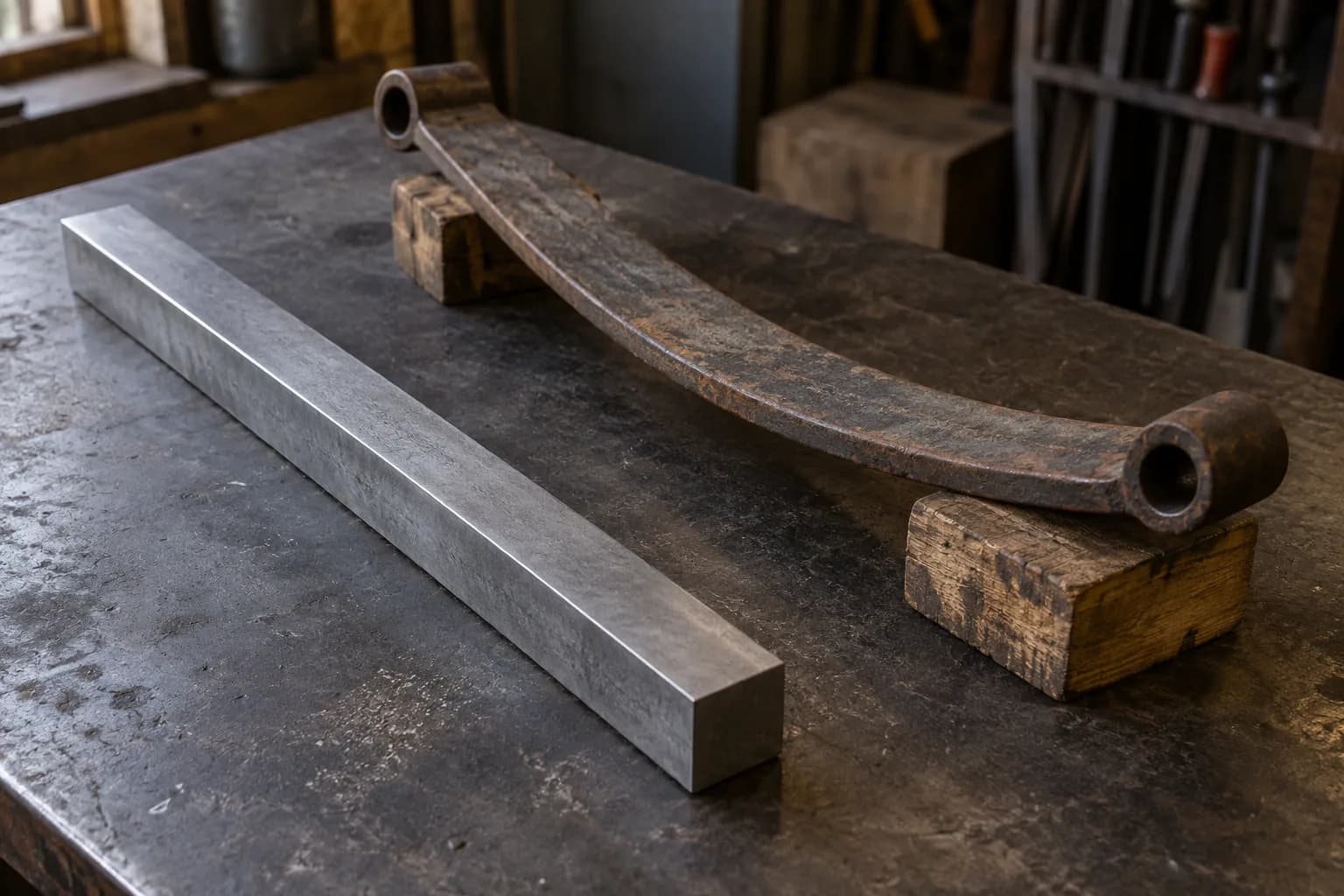
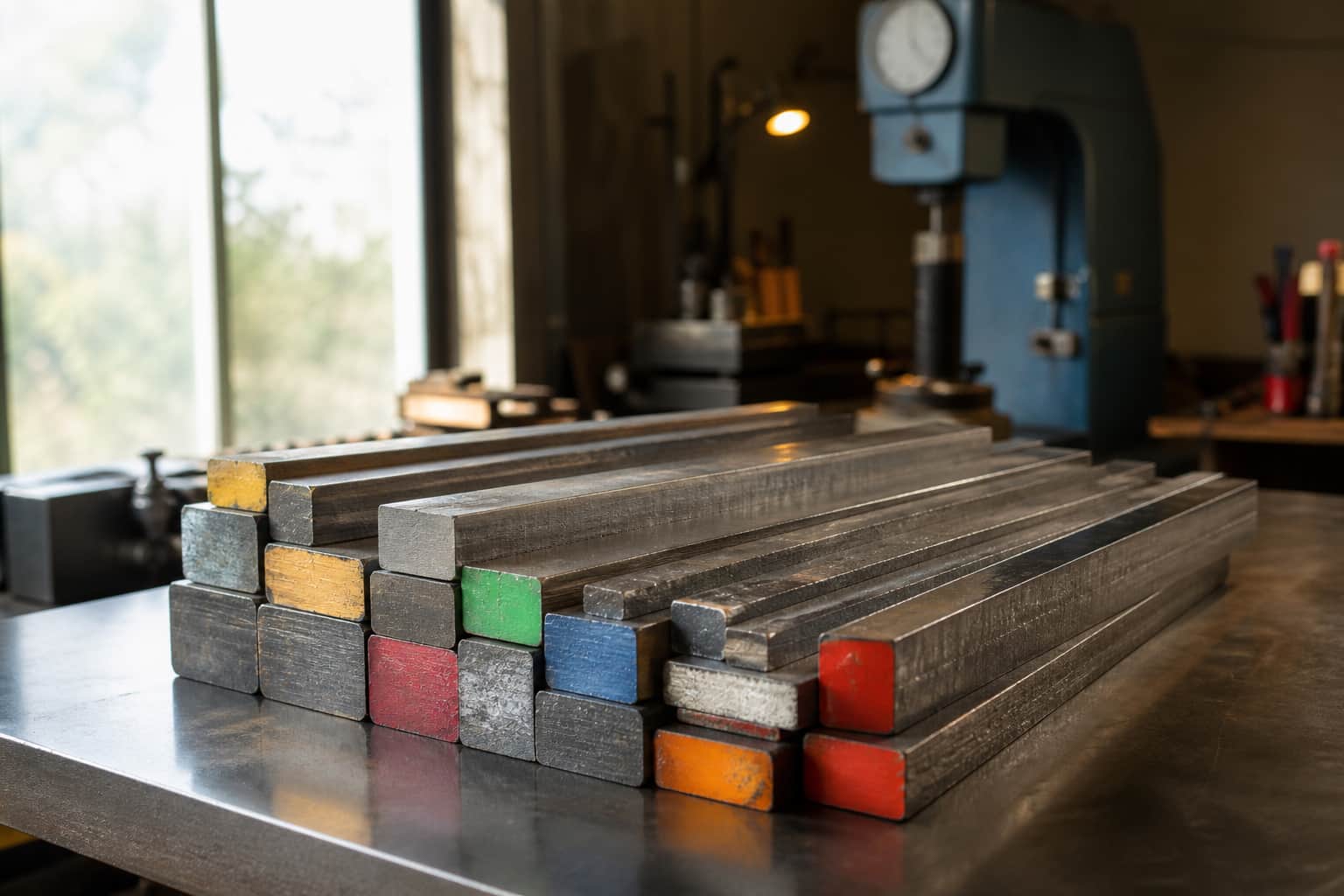
| Grinding | 4/5Grinds and files easily in the annealed state and forges beautifully, which is why it is a bladesmithing staple. Hardened 5160 at 57–59 HRC is also comparatively cooperative on the belt. New bar stock behaves far better than reclaimed leaf springs, which arrive with scale, service fatigue and unknown history. | 5/5Extremely easy to grind and forge, one of the most forgiving steels available for both stock removal and forging work. | Both grind easily annealed and hardened. 5160 is more often bought as reclaimed leaf spring, which arrives with scale and unknown history — new bar stock behaves far better and is worth the small premium. |
|---|