
Abrasives
Belt Buyer’s Guide: Which Abrasives to Actually Buy
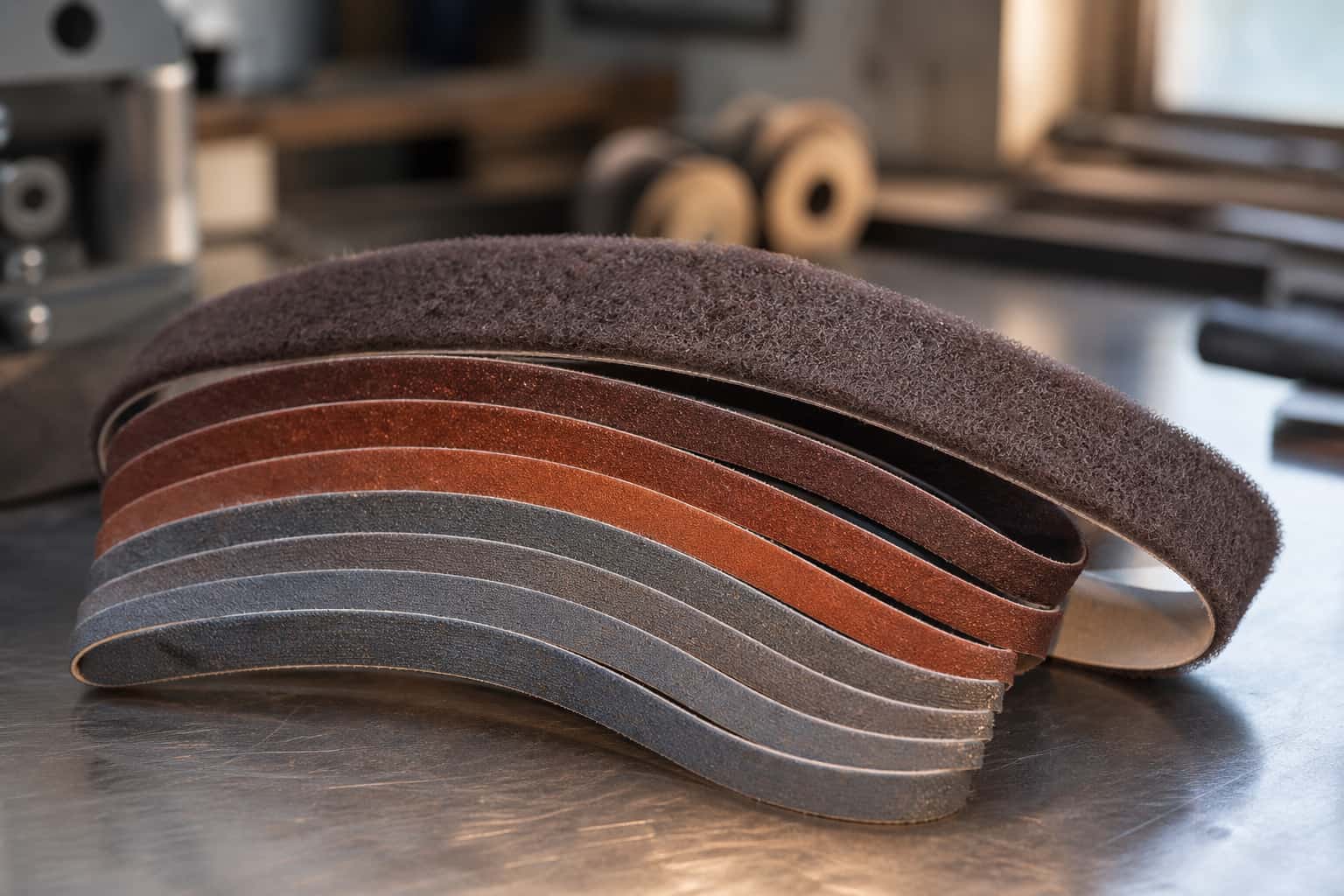
Belts are the single biggest recurring cost in this hobby, and buying the wrong ones wastes money twice: once on belts that wear out fast, and again on…
Abrasives
5160 on the 2x72: grinding long blades and leaf spring stock, belt progressions, heat control, and sharpening a tough chopper edge in the field.
2 min readWritten by Rich LinvilleFree to read
5160 is a forgiving steel on the grinder, and the challenges it does present come from the blades people make out of it rather than the alloy itself. Machetes, kukris, swords and camp choppers mean long grinds, big surface areas and a lot of belt time — and a fair amount of 5160 arrives as reclaimed leaf spring with scale, pitting and a curve to grind out. None of it is hard. It is just more work than a six-inch hunter.
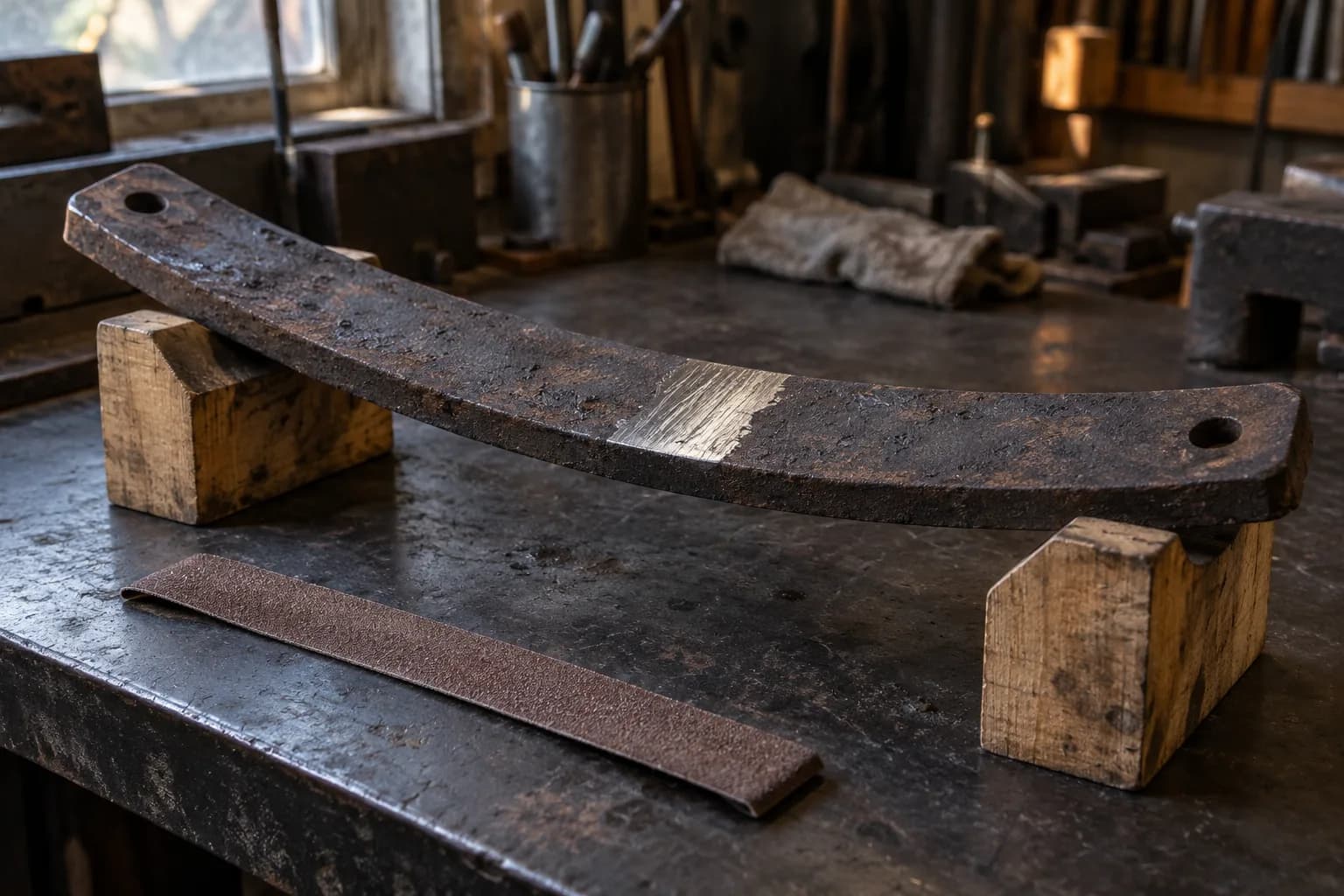
Annealed 5160 hogs quickly and predictably with 36 to 60 grit ceramics. If you are working new bar stock, it behaves exactly as you would expect. If you are working reclaimed leaf spring, budget extra belts and extra time: there is mill scale and often surface pitting to get through before you see clean steel, and you need to grind deep enough to be sure any fatigue cracking from the spring’s service life is gone. A cracked spring makes a cracked blade.
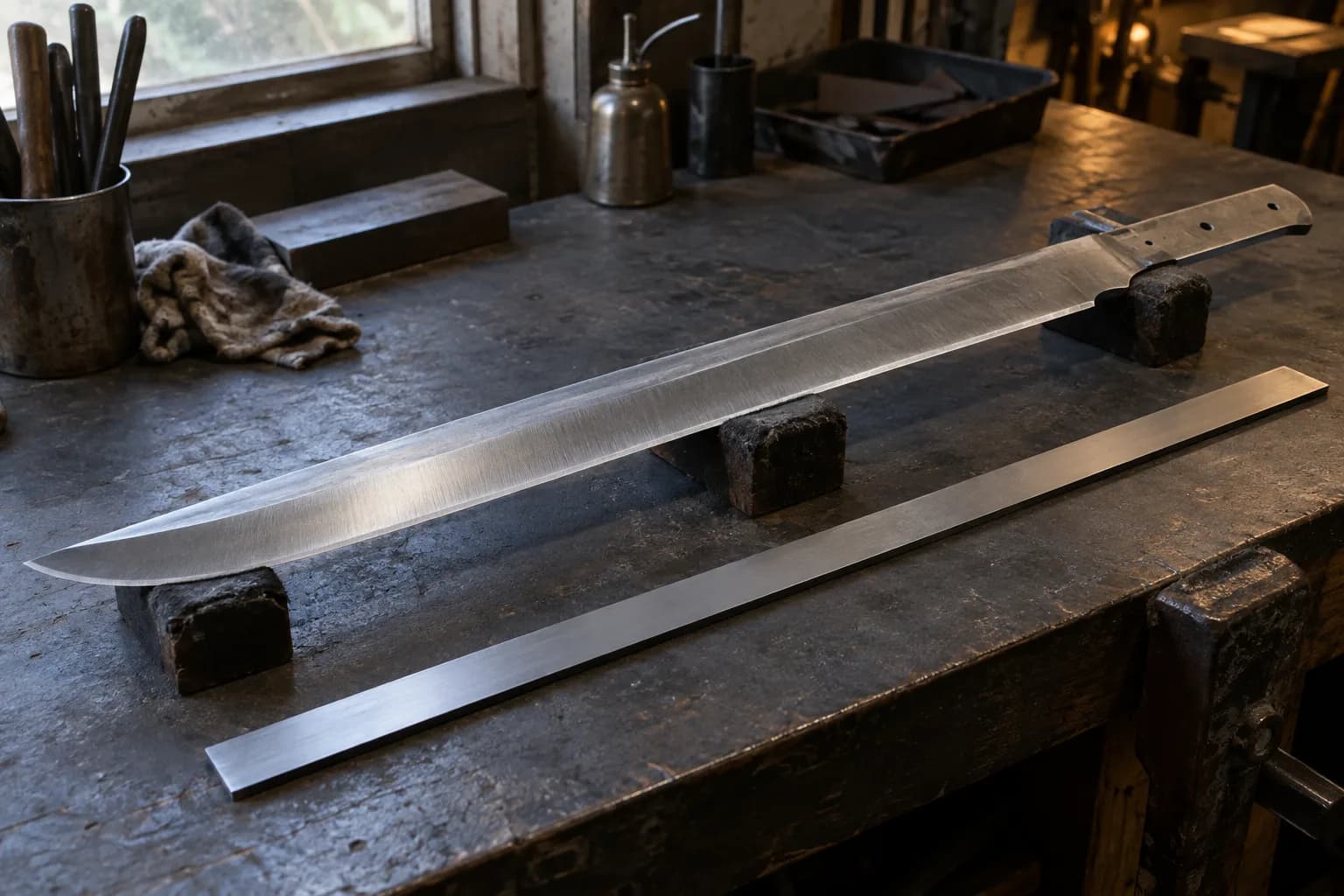
The real skill on a 5160 machete or sword is consistency, not removal. Long bevels magnify every wobble, and a grind line that drifts a millimetre over three inches is invisible until it drifts ten over thirty. Work in full-length passes rather than sections, keep the platen flat, and check your grind line against the spine frequently rather than at the end. Long thin blades also flex under belt pressure, which quietly changes your grind angle — support the blade and ease off.
At 57 to 59 HRC, hardened 5160 is one of the more cooperative steels you can put on a belt — low carbide content and moderate hardness mean it cuts cleanly. Its 400 to 450°F temper also gives you slightly more thermal headroom than a hard-run steel like O1 or 15N20. That is not permission to grind hot: it just means an honest mistake is more likely to be recoverable. Keep it moving, dip regularly, and slow the machine for finishing.
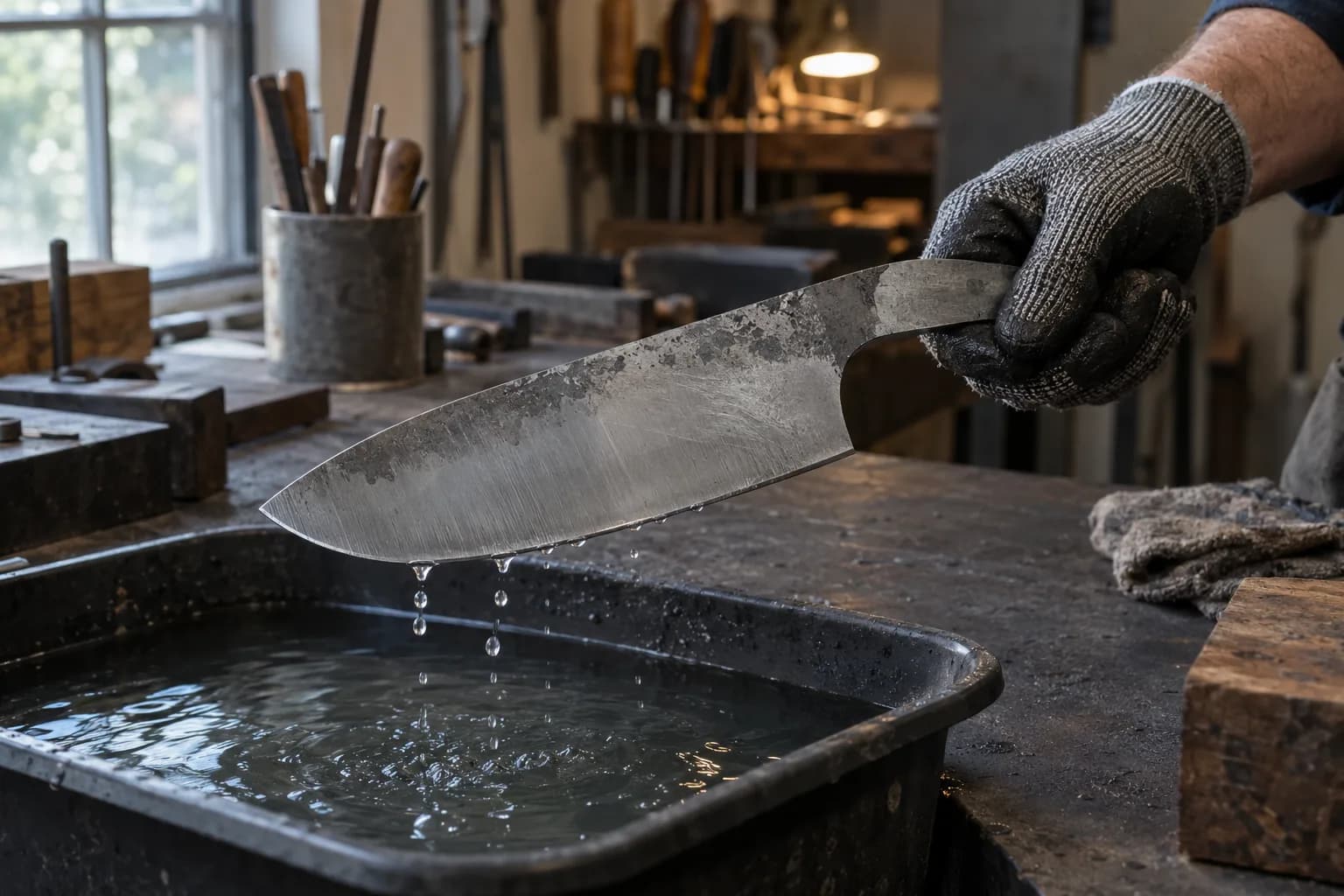
Full belt-selection logic in the Belt Buyer’s Guide.
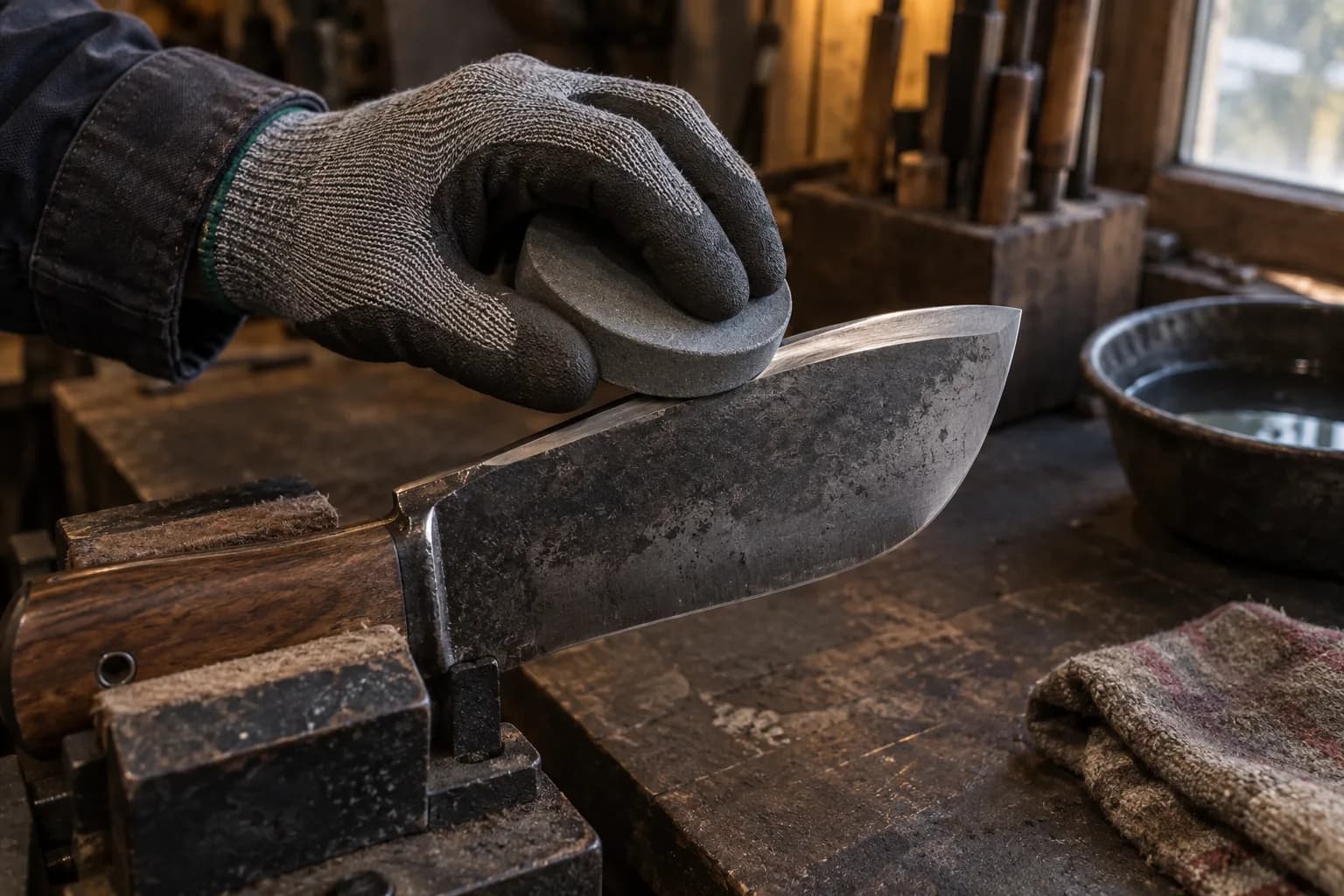
5160 sharpens fast on anything, and that is a genuine feature rather than a consolation prize. It has no wear-resistant carbides, so a few passes on a stone, a puck or even a smooth file will bring a chopper back to working sharp in the field — which is exactly what a machete or camp knife needs. Do not chase a razor apex on a chopping blade: run 20–25° per side with a slightly convex edge, which is far more durable against impact than a crisp V-bevel. Kitchen and slicing work in 5160 is rare but can go finer. Method in How to Sharpen a Knife, and the reasoning behind edge angles in Why Hardness Matters.
Keep reading
Three more from the same bench.
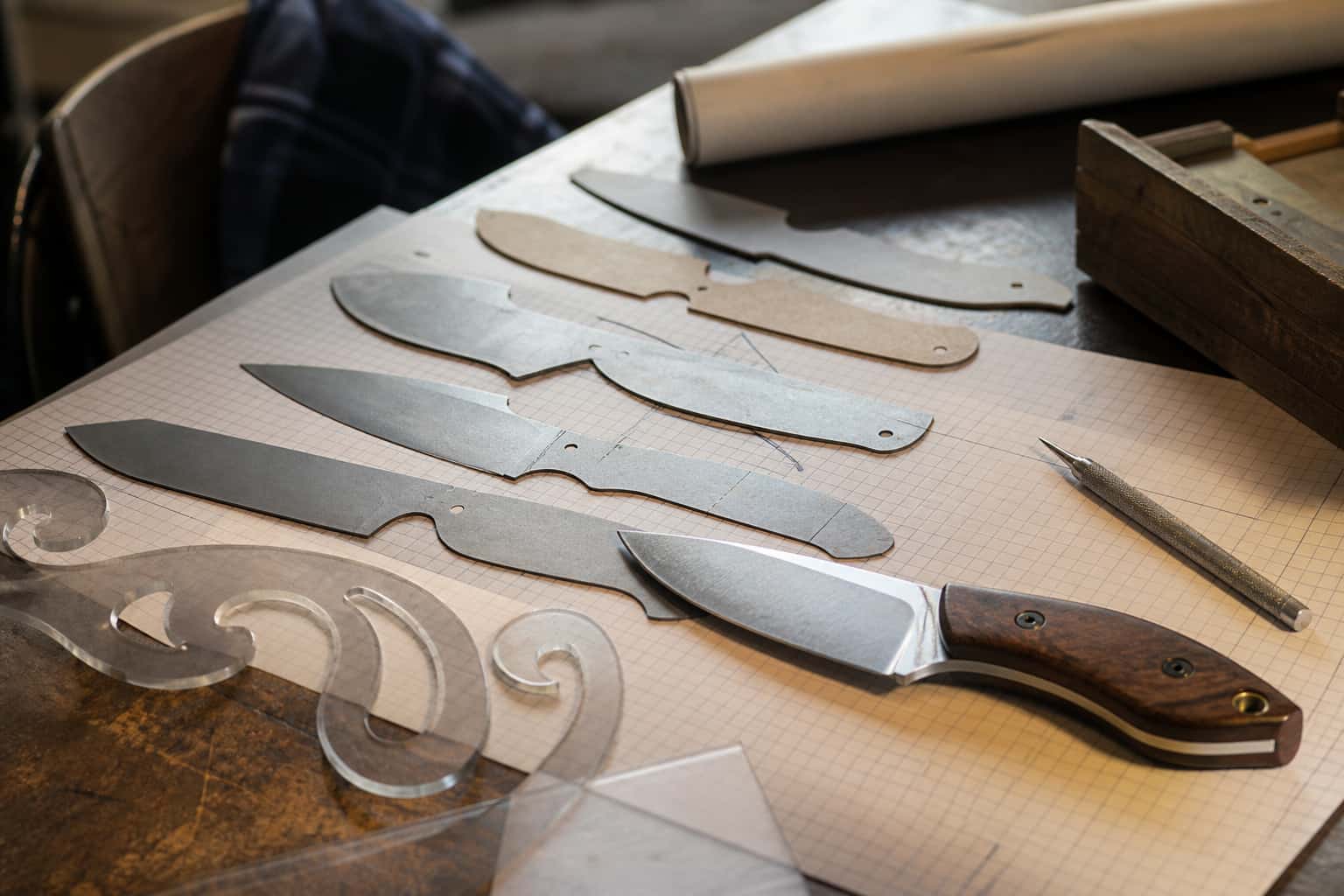
Belts are the single biggest recurring cost in this hobby, and buying the wrong ones wastes money twice: once on belts that wear out fast, and again on…
Sharpening is where knifemaking gets humbled: you can grind a flawless blade and still hand someone a knife that won’t slice paper. The good news …
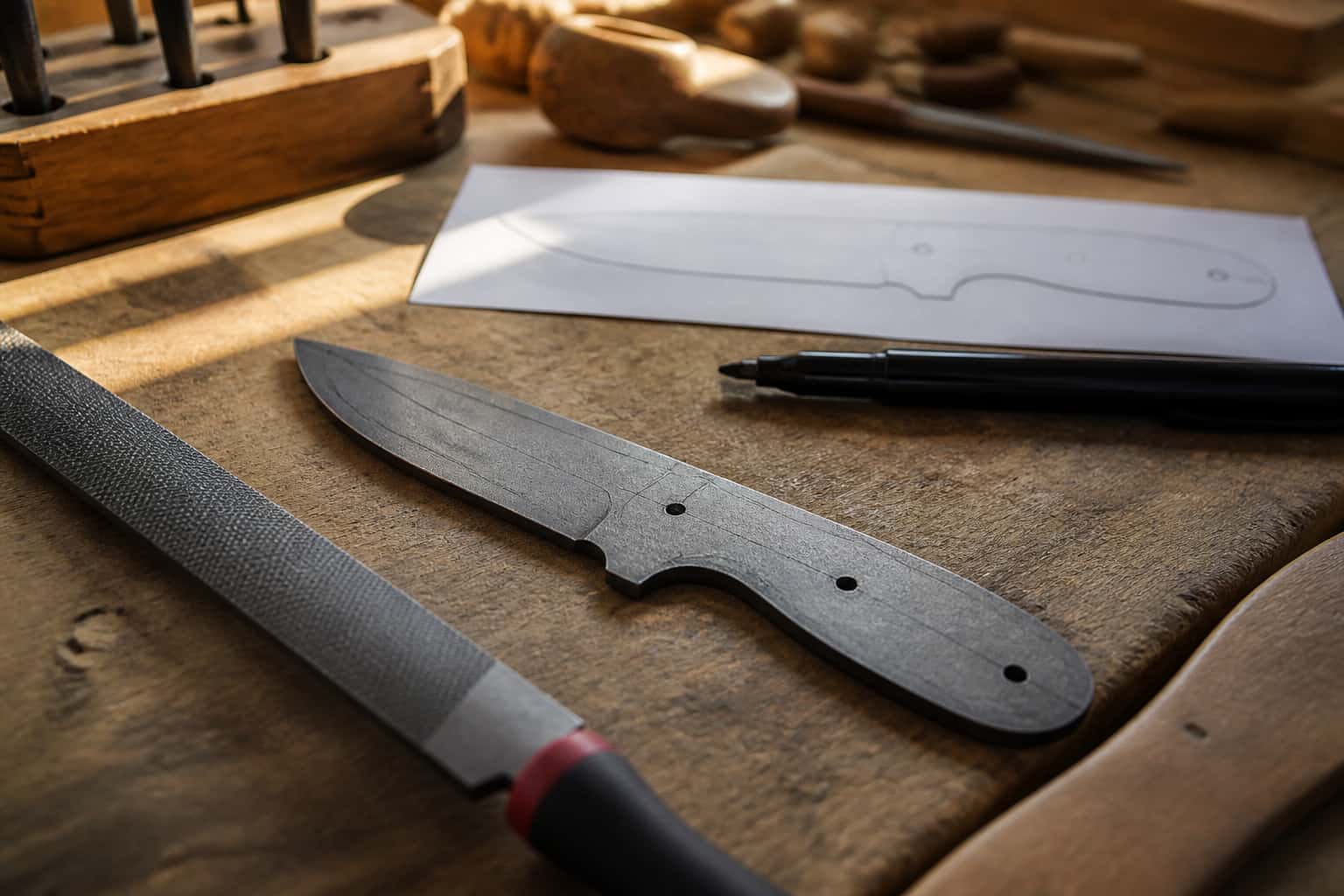
Spend a week on any knifemaking forum and you’ll see the question: “Can I make a knife out of this old file / leaf spring / saw blade?” It’s one of the…
Same bench
I machine the parts, hand-assemble, track and test Torus grinders in Sterling, Illinois. Most orders ship in seven to ten business days from time of order.
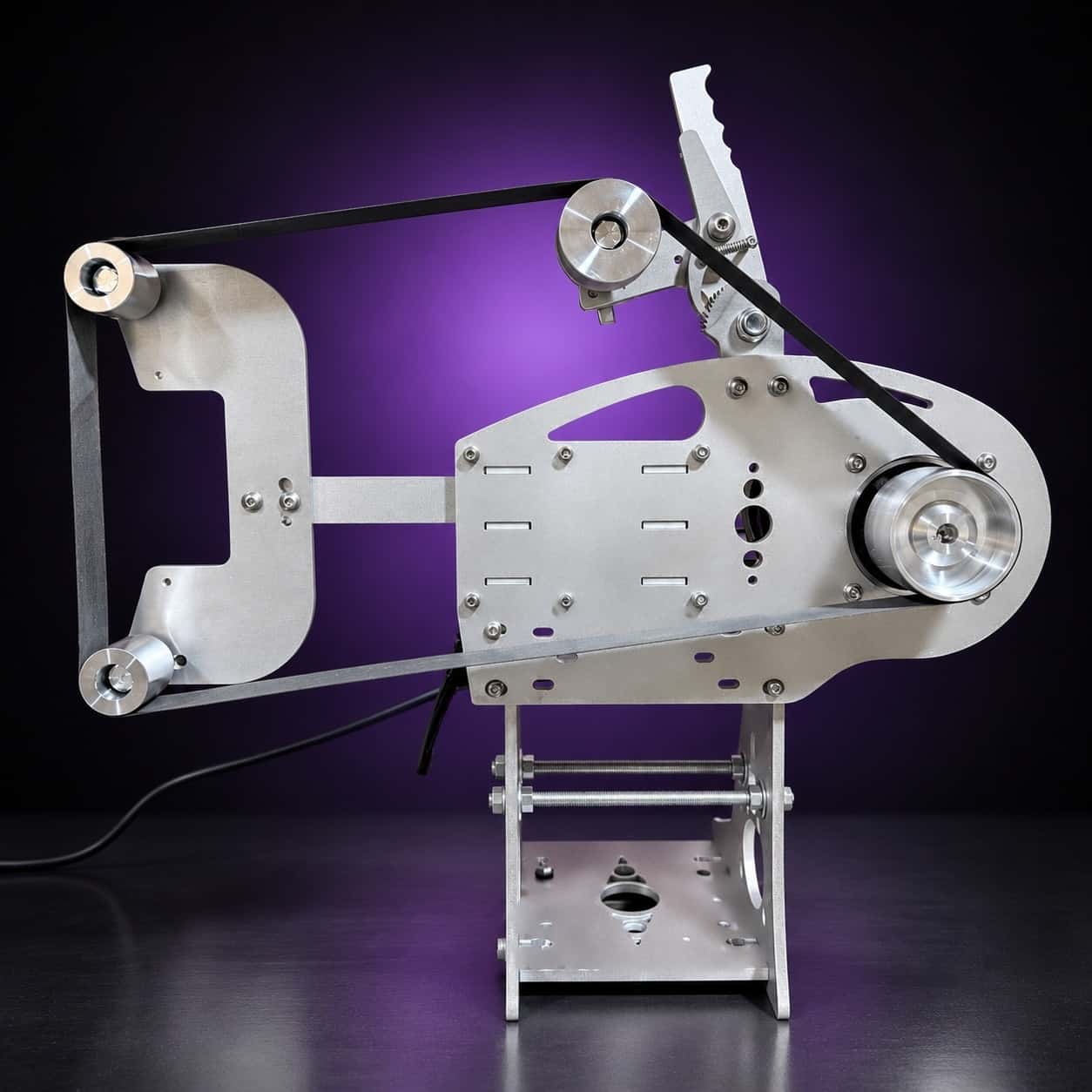
Current dual-axis platform with a fiber-laser-cut 6061 chassis and single-knob tracking.
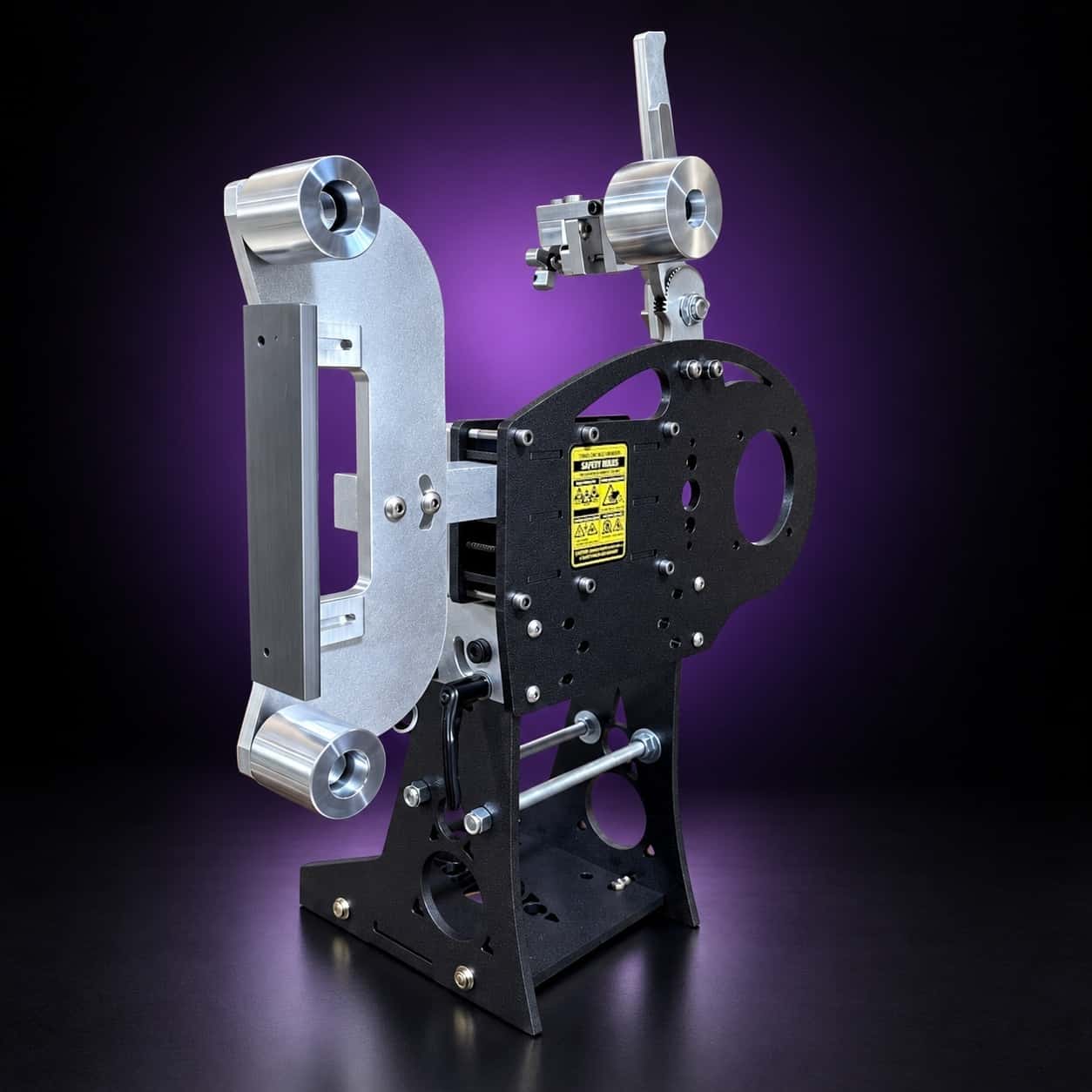
Current dual-axis platform with a steel chassis, more mass and less vibration.
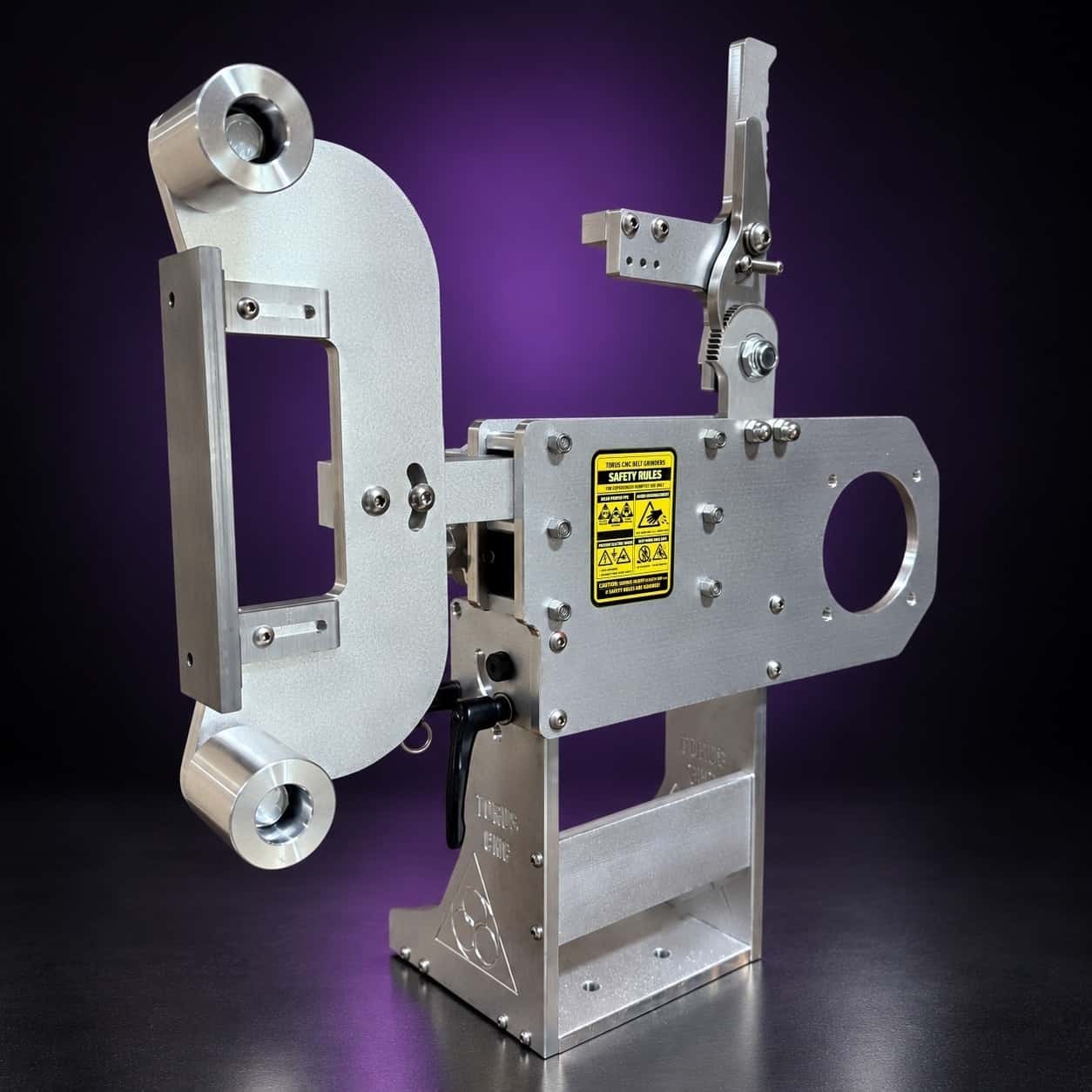
Prior-design aluminum chassis, 90-degree tilt and 1.5-inch tooling arms.
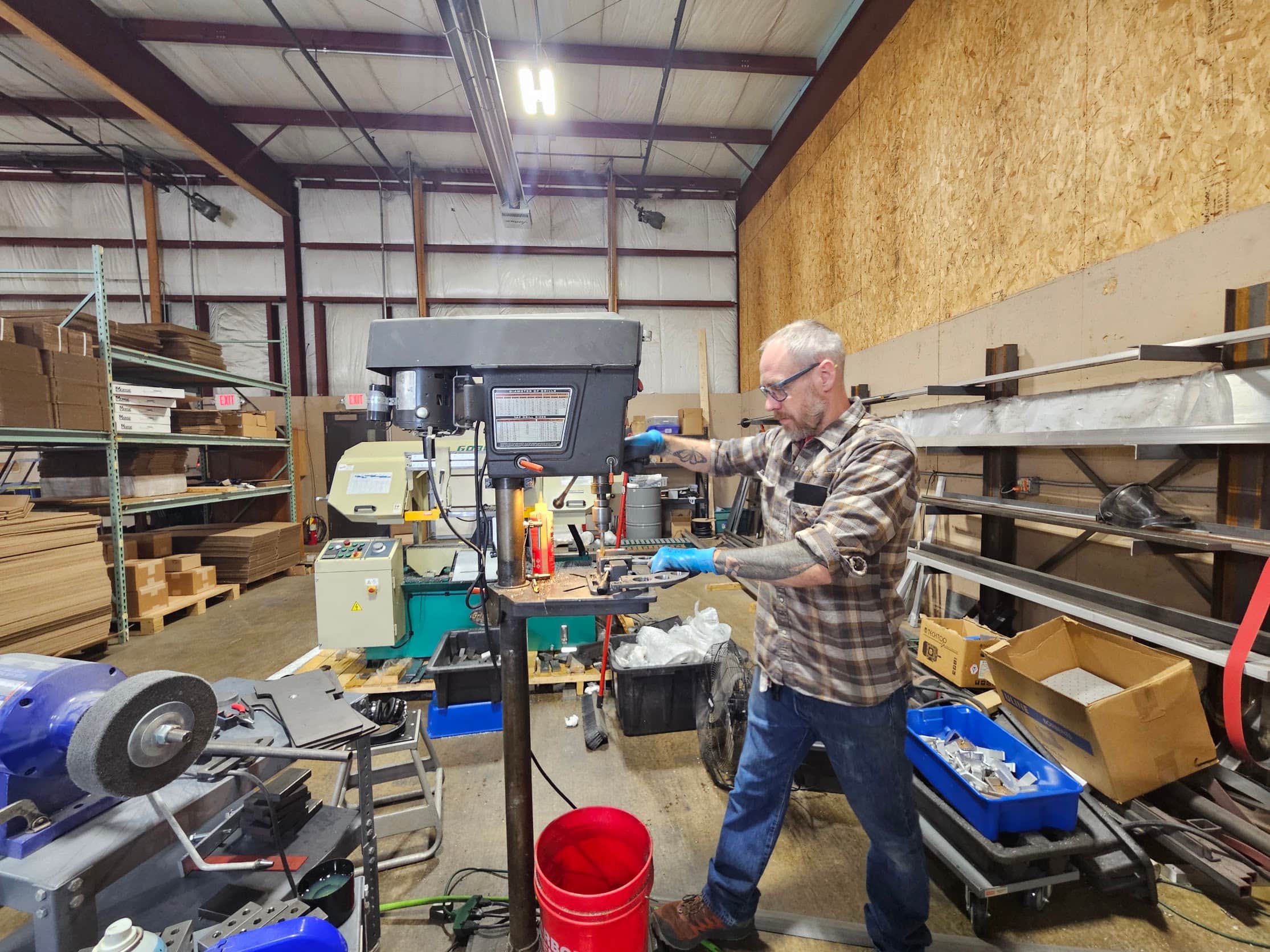
One-man shop
I answer my own email. Tell me the steel, the machine and what it is doing, and I will tell you what I would try next.