| Toughness | 5/5Excellent, and the reason the steel is worth taking seriously on its own. Roughly 2% nickel refines grain and improves impact resistance, while the near-total absence of alloy carbides removes the usual crack-initiation sites. This is what lets you run 15N20 at 61–62 HRC and still grind it thin without chipping. | 5/5Among the toughest of the simple high-carbon steels, which is why it is the go-to choice for swords, machetes, and other blades that need to survive hard impacts without chipping or snapping. | 15N20 wins. Both steels are low in carbide and inherently tough, but nickel refines grain and adds genuine impact resistance on top. 1075 is no slouch — it is the reason cheap machetes survive — but 15N20 is tougher at any given hardness. |
|---|
| Edge retention | 3/5Better than its plain chemistry suggests, because in low-carbide steels edge retention tracks hardness — and 15N20's toughness lets it live at 61–62 HRC where 1084 typically runs 58–60. It will not out-slice a carbide-rich steel like D2, but against the simple carbon steels it holds a keen edge longer than expected. | 2/5Lower carbon content than 1084 or 1095 means fewer carbides and correspondingly modest wear resistance; expect to touch up the edge more often on demanding use. | 15N20, again through hardness rather than wear resistance. Neither has alloy carbides. 15N20 runs 61 to 62 HRC comfortably; 1075 is usually taken to 57 to 59, where it is deliberately soft for durability. Higher hardness means a longer-lasting edge in slicing. |
|---|
| Corrosion resistance | 2/5Slightly better than plain carbon steel, entirely thanks to the nickel — the same trait that keeps it bright in a ferric chloride etch slows ordinary staining a little too. It is not stainless and it is not close. Dry it, oil it, and expect a patina on a working blade. | 1/5No chromium and no meaningful corrosion resistance. Needs regular oiling and drying like any plain carbon steel. | 15N20 is marginally ahead thanks to nickel, but the practical gap is small. Both rust, both patina, both need oiling. Neither is remotely stainless. |
|---|
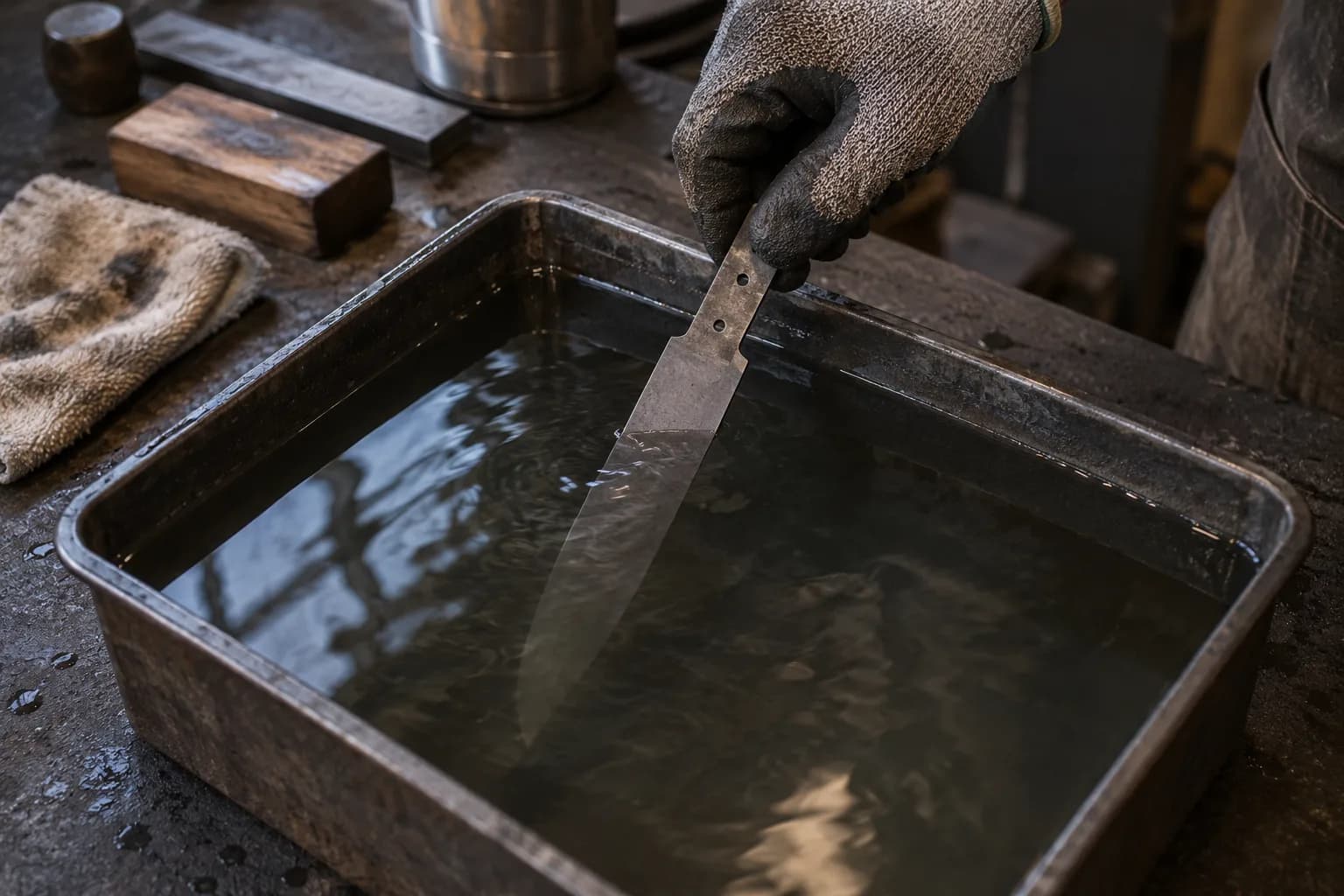
| Heat treat | Normalize and thermal cycle if forged or damascus-welded. Austenitize at 1475–1500°F with a 10 minute soak, then quench in a fast oil (Parks 50 class) — hardenability is moderate, so speed matters, especially in thin sections. Temper twice for two hours at 300–400°F: 300–350°F holds 61–62 HRC for thin kitchen blades, 400°F backs down to about 59–60 for harder-use work. | Austenitize at 1450-1480 F, holding 5-15 minutes. Because 1075 carries less manganese than 1084, it hardens best in a fast oil (such as Parks 50) rather than a slower conventional quench oil, reaching roughly 64-65 RC as-quenched. Temper in two 2-hour cycles: around 400-450 F for tough, hard-use blades like swords and machetes (57-61 RC), or as low as 300-350 F for applications favoring edge holding over shock resistance (63-65 RC), letting the blade cool to room temperature between cycles. | Very similar and both easy. 1075 is close to forge-and-magnet simple — austenitize around 1475°F, fast oil, temper 400 to 450°F. 15N20 uses the same austenitizing range and fast oil, but is tempered lower at 300 to 350°F to preserve the hardness its toughness allows. Neither steel demands a long soak. |
|---|
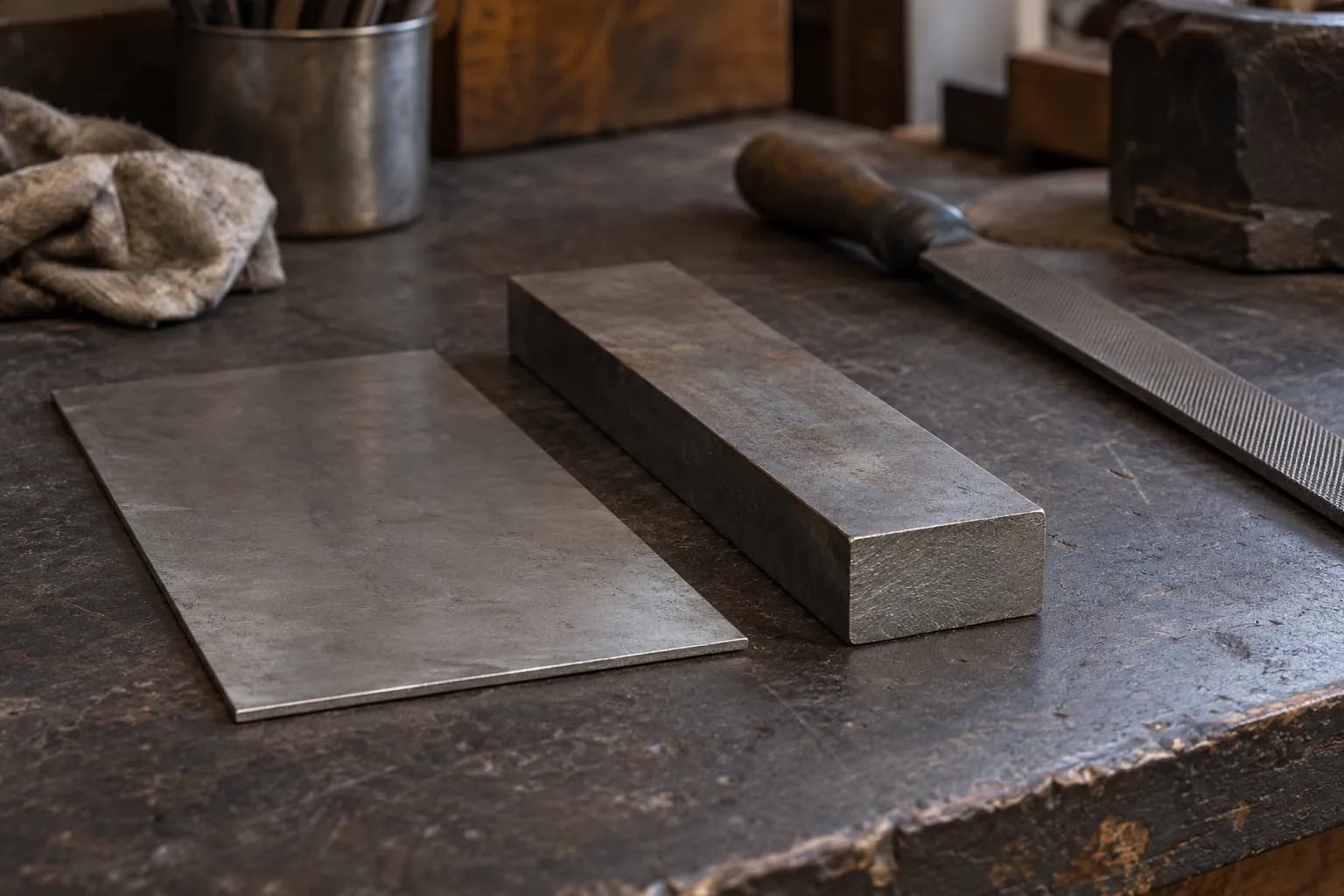
| Grinding | 4/5Easy on belts and files in the annealed state, and forgiving under heat because there are no coarse carbides to tear out. Most commonly sold in thin stock (0.060–0.125"), which grinds fast but also heats fast — keep it moving and dip often. | 5/5Very easy to grind and forge, with a wide, forgiving heat-treat window that makes it a common recommendation for first-time bladesmiths. | Both grind easily. 1075 is commonly available in thicker bar and takes heavy hogging well; 15N20 comes in thin sheet that heats fast on the belt and wants a lighter touch and frequent dips. |
|---|