
Abrasives
Belt Buyer’s Guide: Which Abrasives to Actually Buy
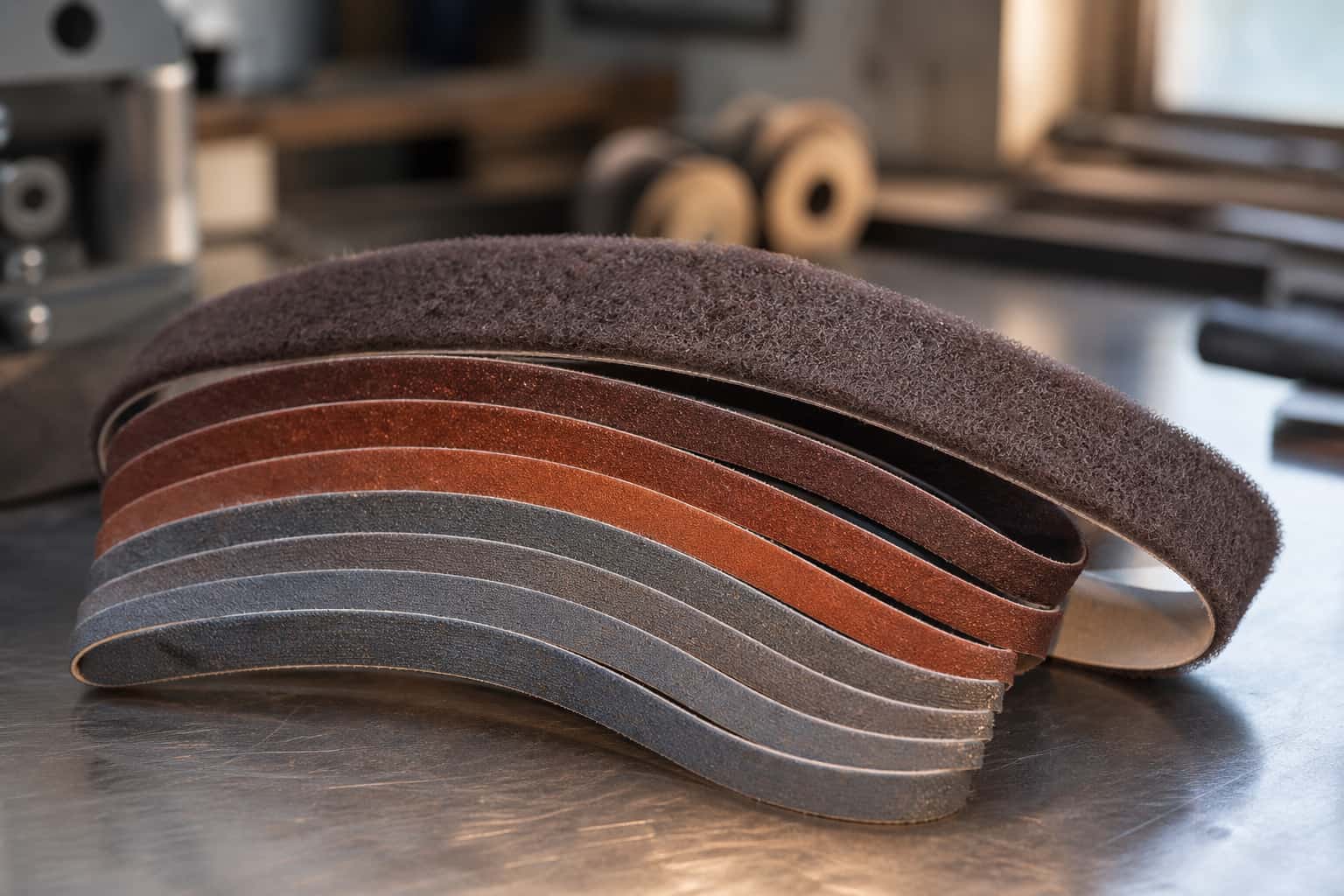
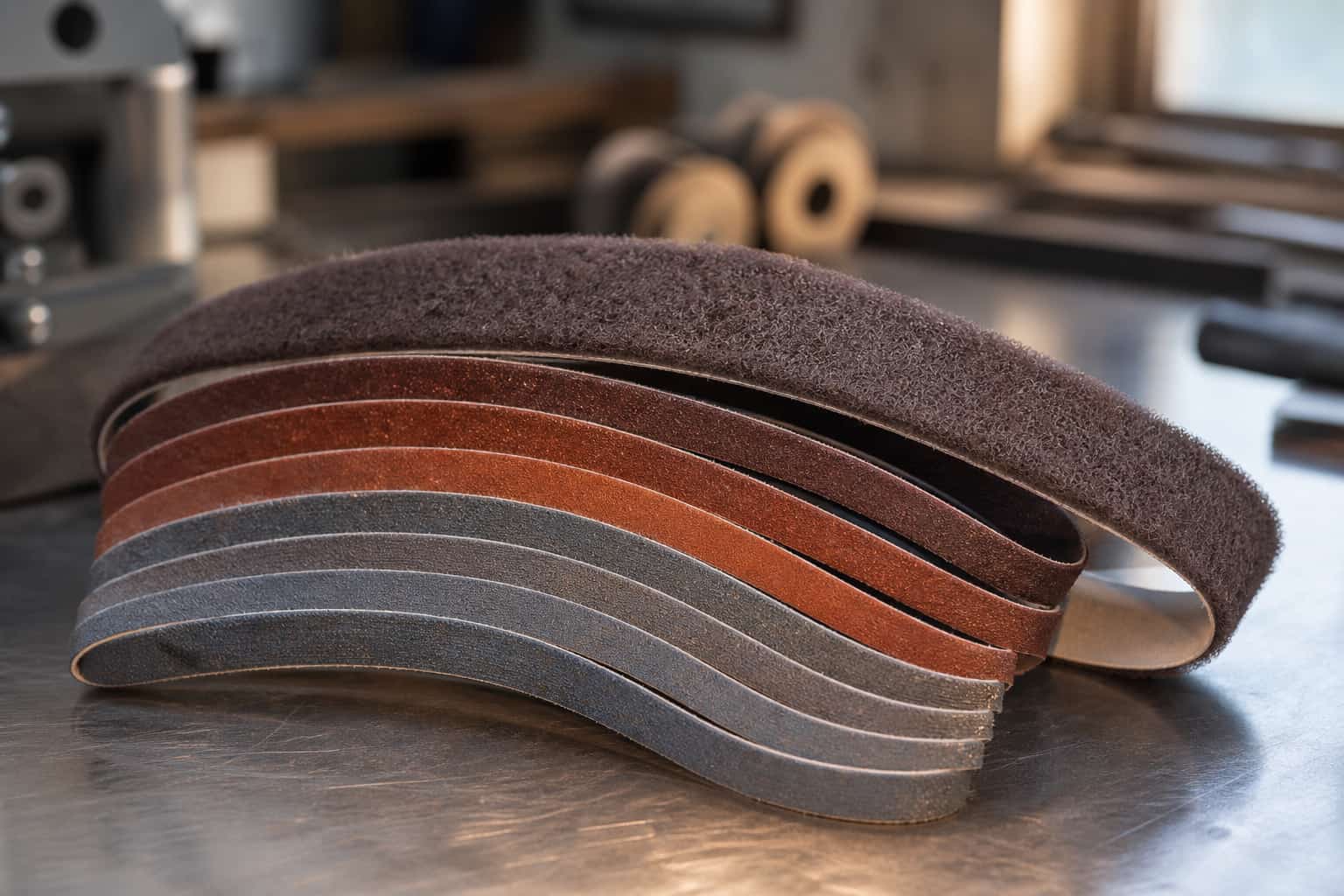
Belts are the single biggest recurring cost in this hobby, and buying the wrong ones wastes money twice: once on belts that wear out fast, and again on…
Abrasives
Thin 15N20 stock has little mass to absorb heat: use sharp ceramic belts, keep moving, dip often. Then the belt progression, damascus finish and sharpening.
2 min readWritten by Rich LinvilleFree to read
15N20 is a pleasure to grind and very easy to overheat, for the same reason: it is almost always sold thin. Stock in the 0.060 to 0.125 inch range has very little mass to absorb heat, so a bevel that would merely get warm in quarter-inch bar can go blue in seconds. Master that and the steel gives you almost nothing else to worry about — there are no coarse carbides to tear out, no diamond requirement, and no drama at the stones.
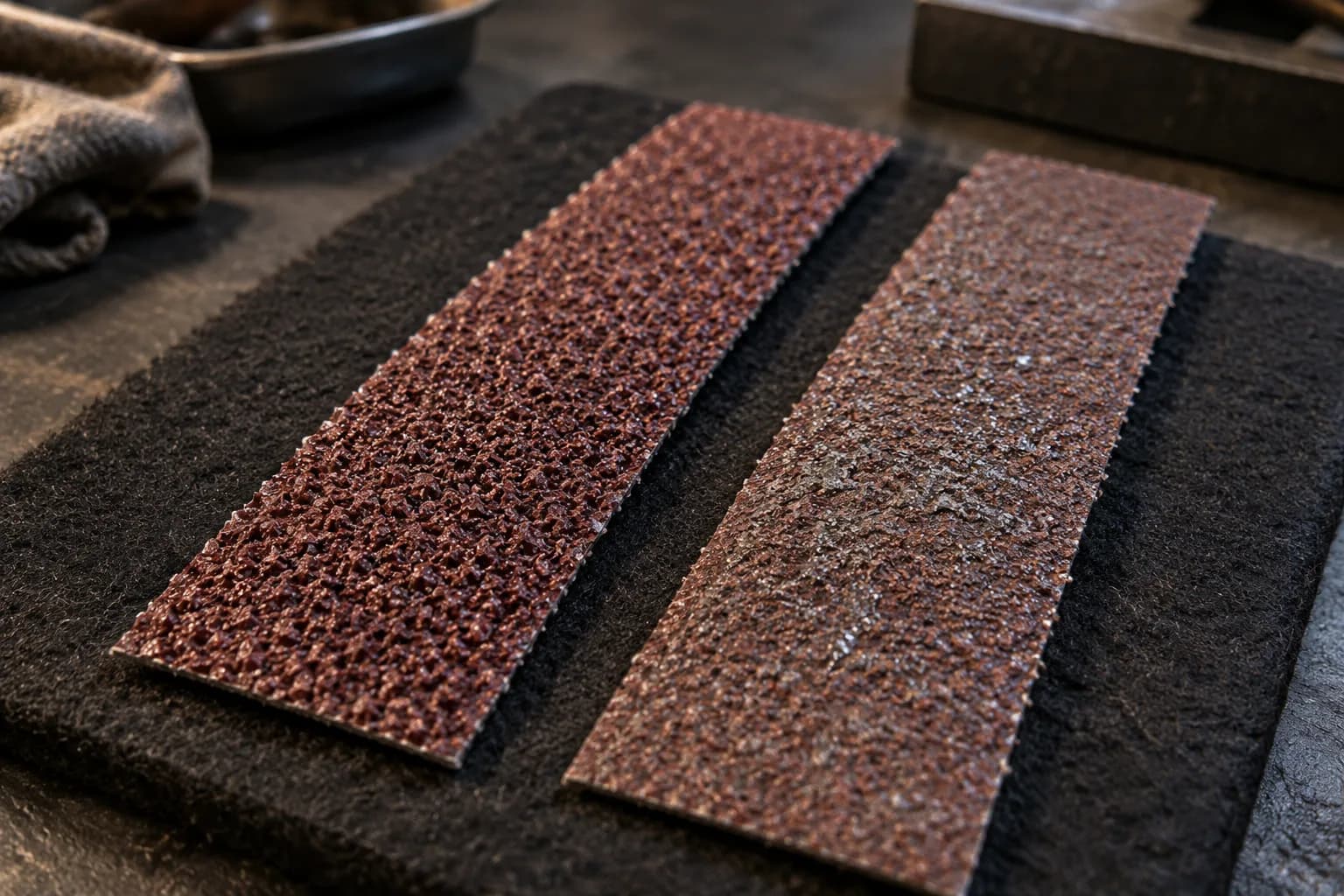
This is the whole skill with 15N20. Thin stock heats fast, and the closer you get to the edge the faster it goes. Three habits solve it: keep the blade moving across the full belt rather than dwelling, dip in water far more often than feels necessary, and use fresh sharp belts so the grit cuts instead of rubbing. Grinding annealed and heat treating afterwards removes most of the risk — and because 15N20’s heat treat is straightforward (1475–1500°F, fast oil, low temper), there is no reason not to.
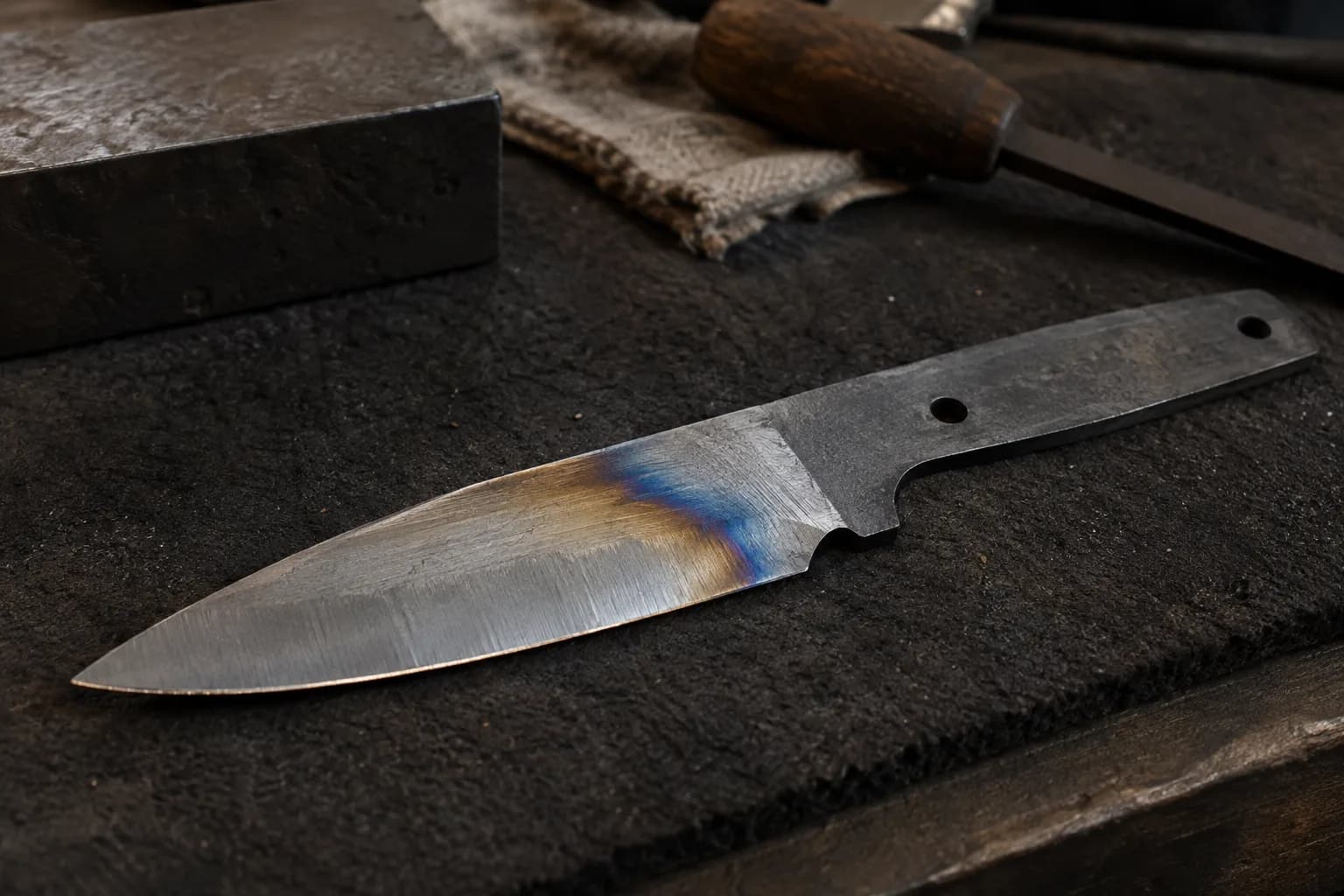
At 61 to 62 HRC, 15N20 is harder than most simple carbon steels ever get, but it grinds far more easily than that number suggests — there is no carbide volume to fight. The tempering temperature is the caution: at 300 to 350°F, the margin before you draw the temper is genuinely small. Slow the machine for finishing passes and treat any visible colour on the edge as a failed blade rather than a cosmetic problem.
Full belt-selection logic in the Belt Buyer’s Guide.
If your 15N20 is a layer in a pattern-welded billet rather than a monosteel blade, the grinding is the same but the finishing is not. The pattern only appears after etching, and etching reveals every scratch you left behind — so a damascus blade needs a genuinely clean hand-sanded finish, usually to 400 or 600 grit, before it ever goes in the ferric chloride. Sand in one consistent direction and inspect under raking light. Details in Etching Damascus.
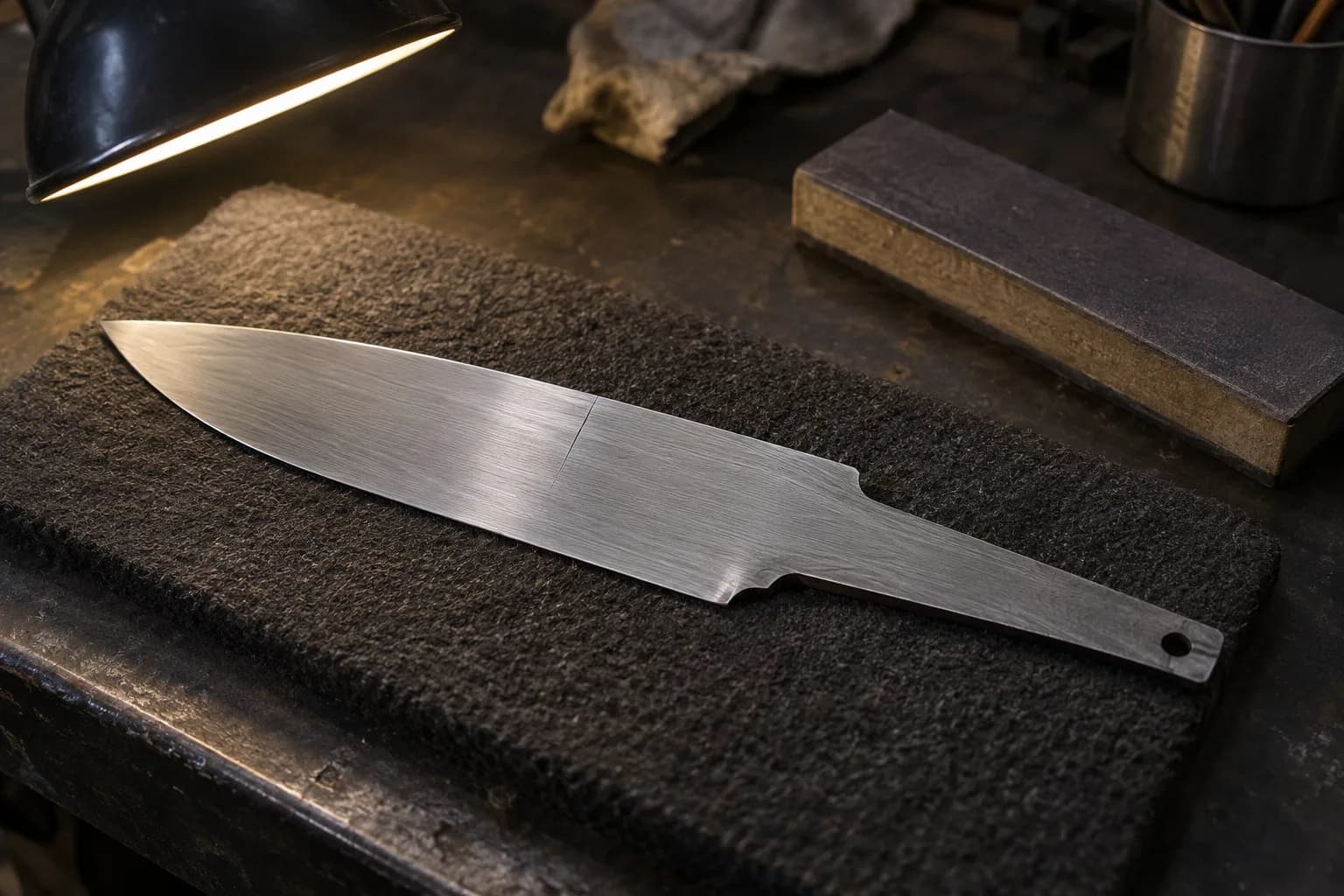
Easy, and satisfying. With no alloy carbides to speak of, 15N20 cuts on any abrasive — aluminium-oxide stones, ceramics, belts, guided systems — and it takes a very keen apex that strops back readily. The high hardness works in your favour here: at 61 to 62 HRC the apex is stable enough to hold a thin, acute grind. Run 15–17° per side on kitchen blades and slicers, which is where this steel belongs. Full method in How to Sharpen a Knife. Nickel or not, wipe and oil after sharpening — this is not a stainless steel.
Keep reading
Three more from the same bench.
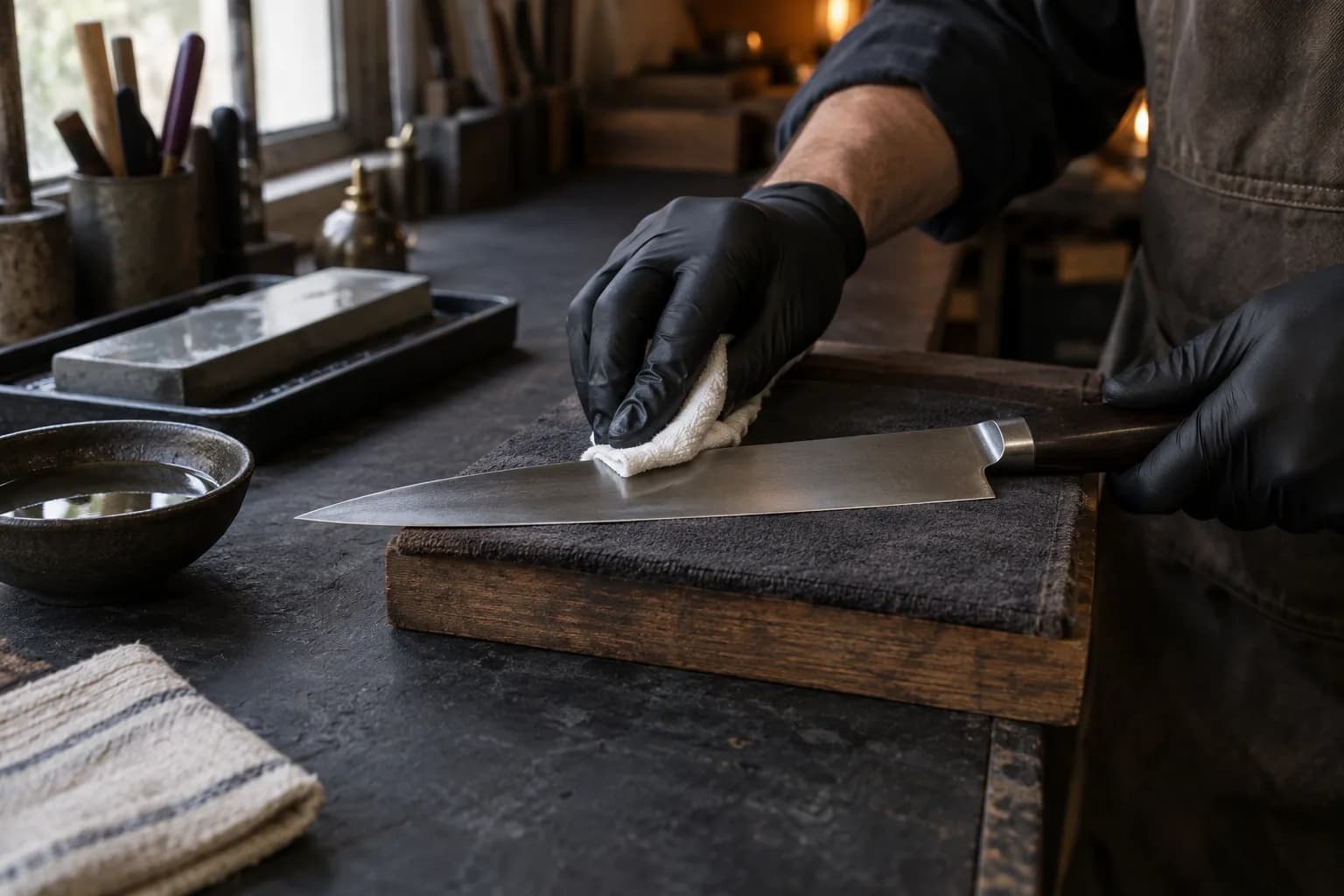
Belts are the single biggest recurring cost in this hobby, and buying the wrong ones wastes money twice: once on belts that wear out fast, and again on…
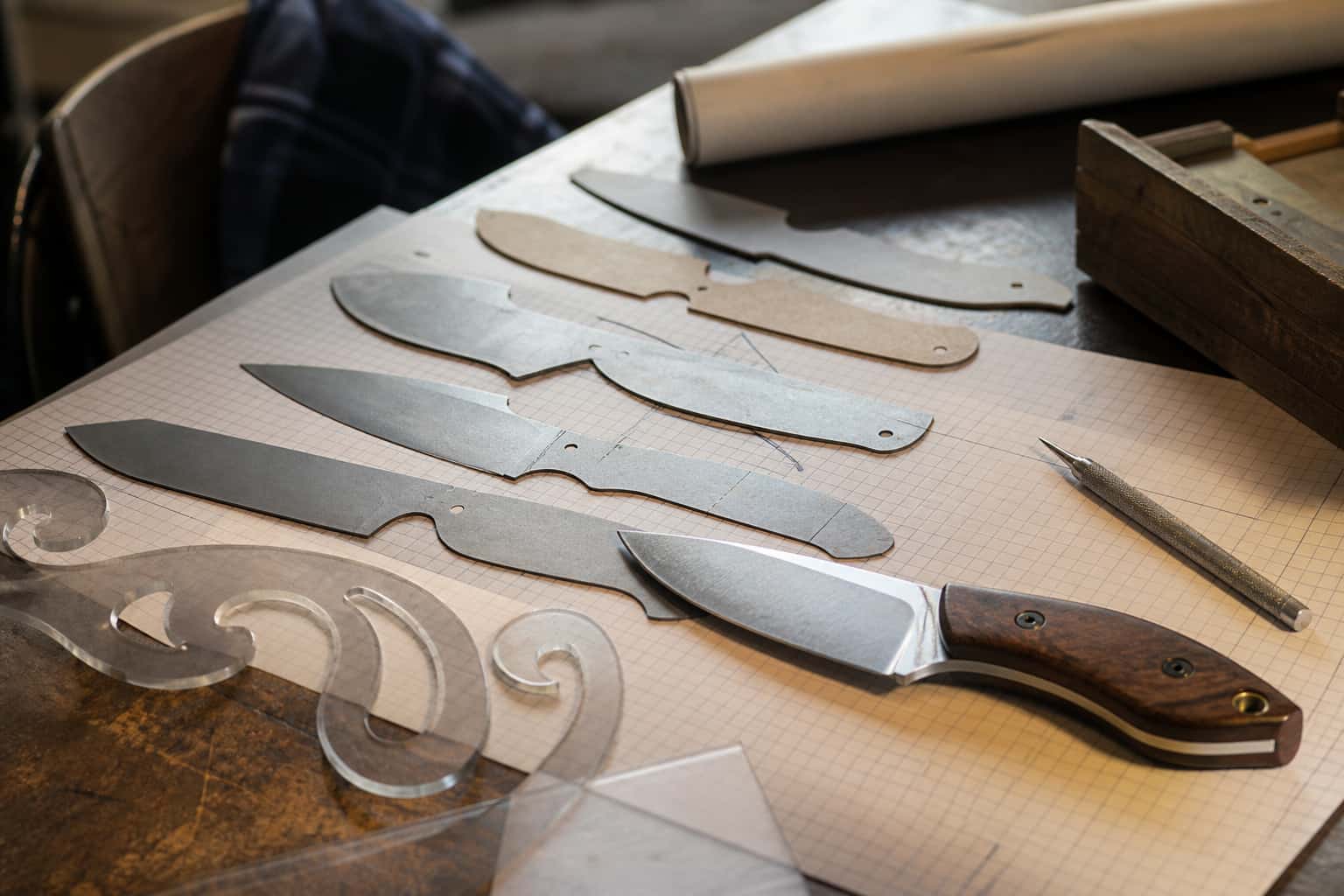
Sharpening is where knifemaking gets humbled: you can grind a flawless blade and still hand someone a knife that won’t slice paper. The good news …
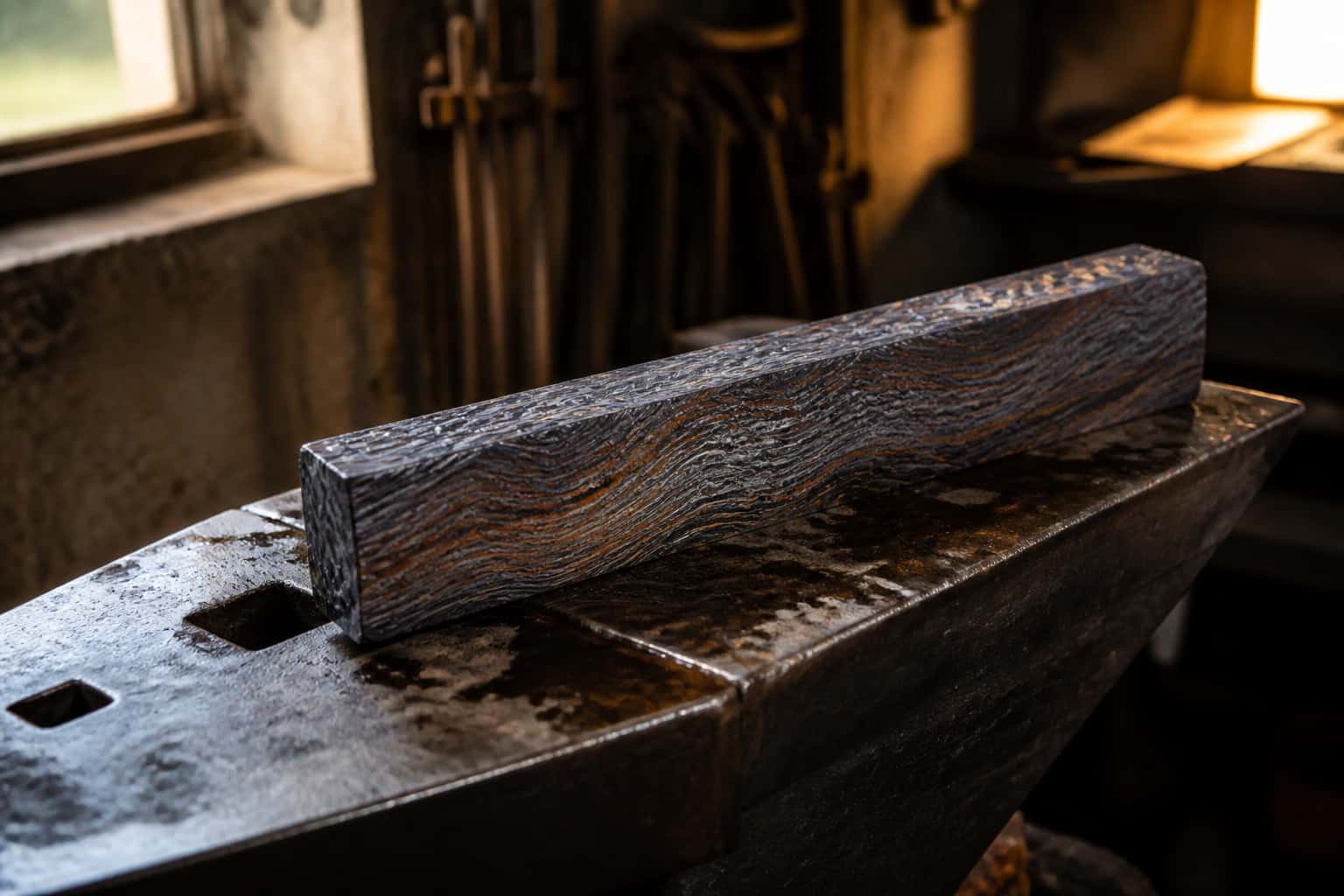
Modern “damascus” is pattern-welded steel: two different steels stacked, forge welded into one solid billet, and manipulated so that grinding and etching…
Same bench
I machine the parts, hand-assemble, track and test Torus grinders in Sterling, Illinois. Most orders ship in seven to ten business days from time of order.
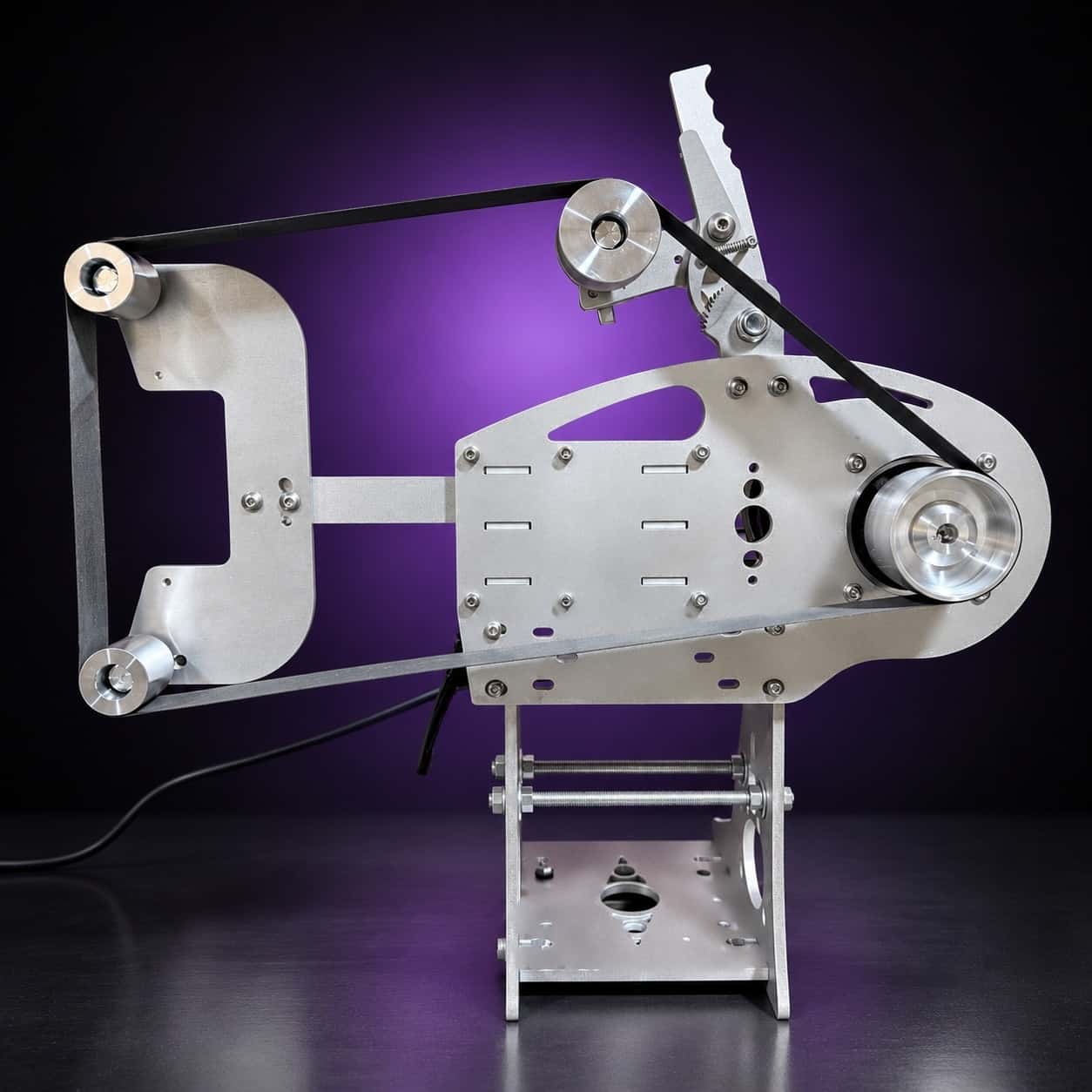
Current dual-axis platform with a fiber-laser-cut 6061 chassis and single-knob tracking.
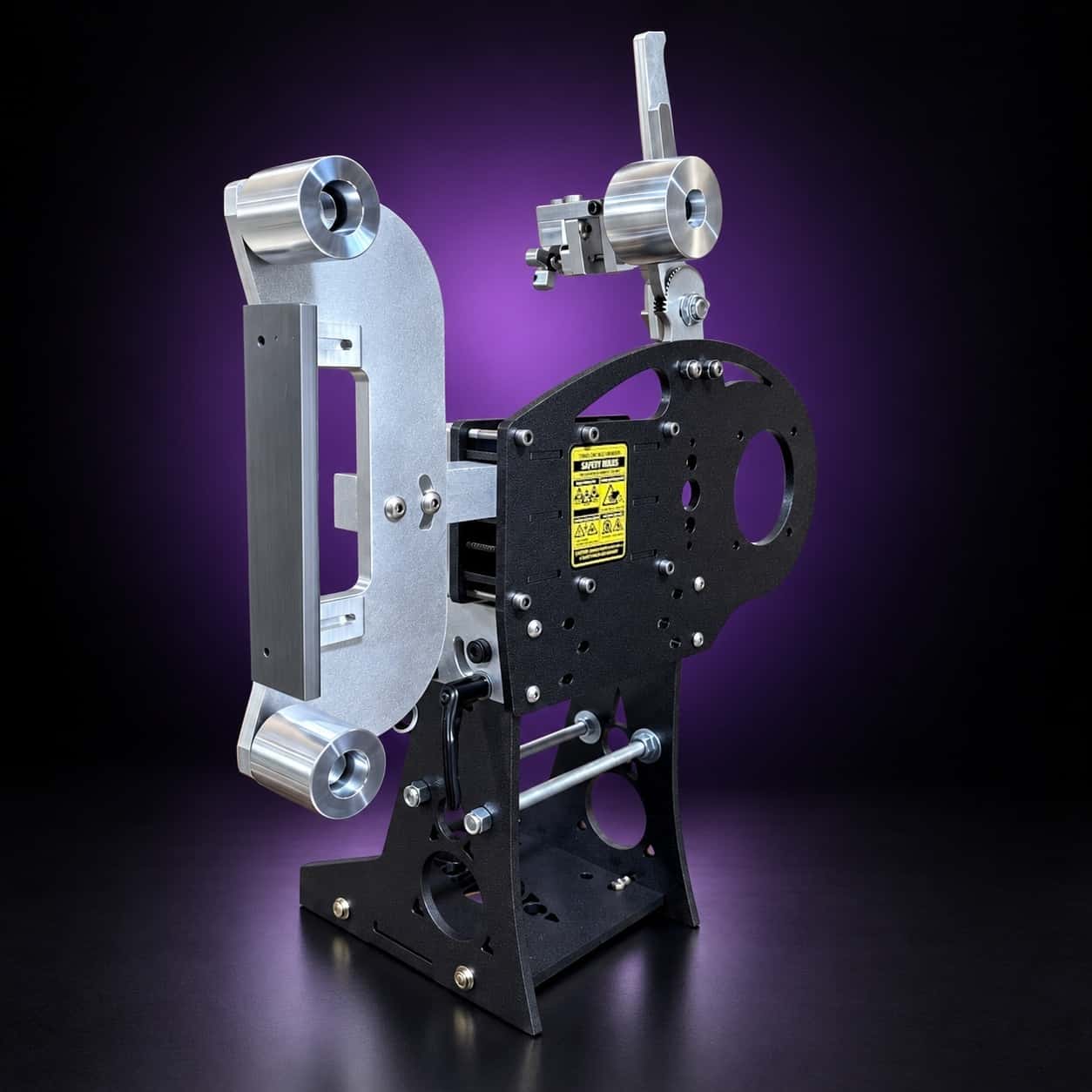
Current dual-axis platform with a steel chassis, more mass and less vibration.
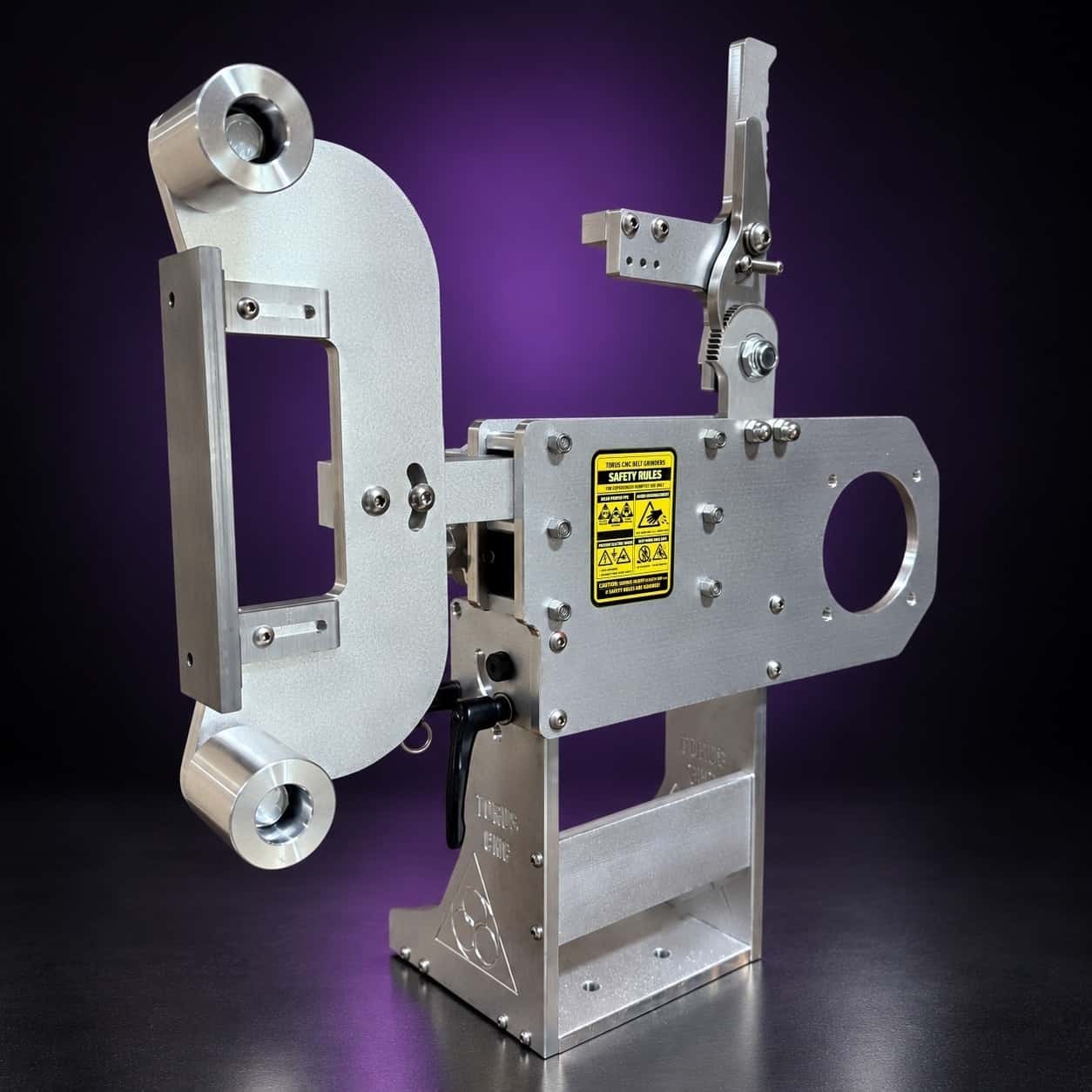
Prior-design aluminum chassis, 90-degree tilt and 1.5-inch tooling arms.
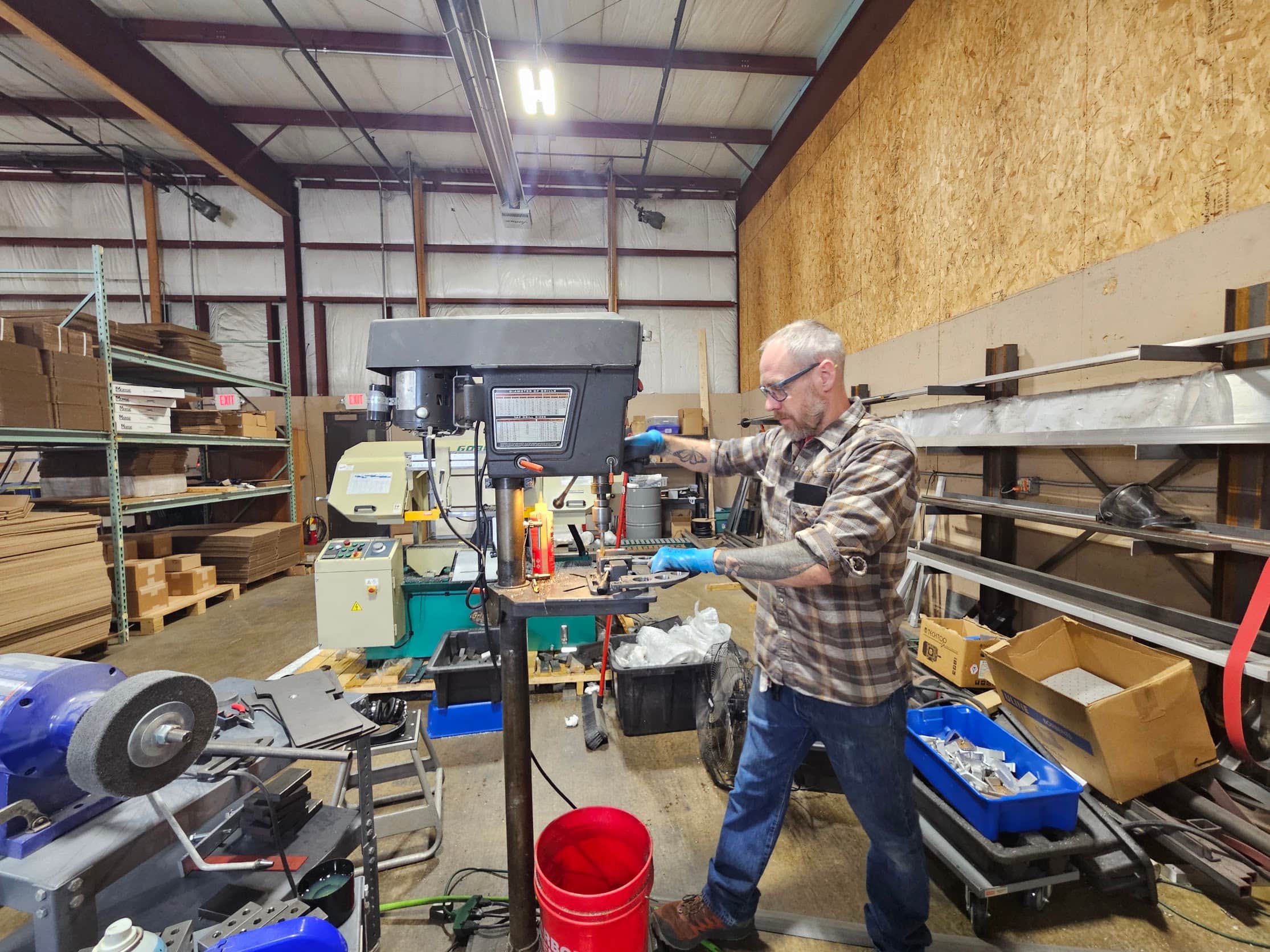
One-man shop
I answer my own email. Tell me the steel, the machine and what it is doing, and I will tell you what I would try next.