
Fantasy & Fiction Blades
Fantasy Blades in Real Steel: The Maker’s Field Guide
Every fictional blade is a real design brief with the physics turned off. Turn the physics back on and something interesting happens: the analysis becomes…
Fantasy & Fiction Blades
The crysknife audited: real tooth-and-bone weapon traditions, ceramic edge physics, why the shield-world loves slow blades, and desert-knife builds.
2 min readWritten by Rich LinvilleFree to read
Herbert’s crysknife is fiction’s most sacred knife: ground from the crystal tooth of a sandworm, milky and iridescent, keyed to its owner, never sheathed unblooded. It is also the entry point to a real and ancient blade lineage — weapons of tooth, bone and ceramic — and to Dune’s quietly brilliant combat-physics worldbuilding. Both are worth the maker’s attention.
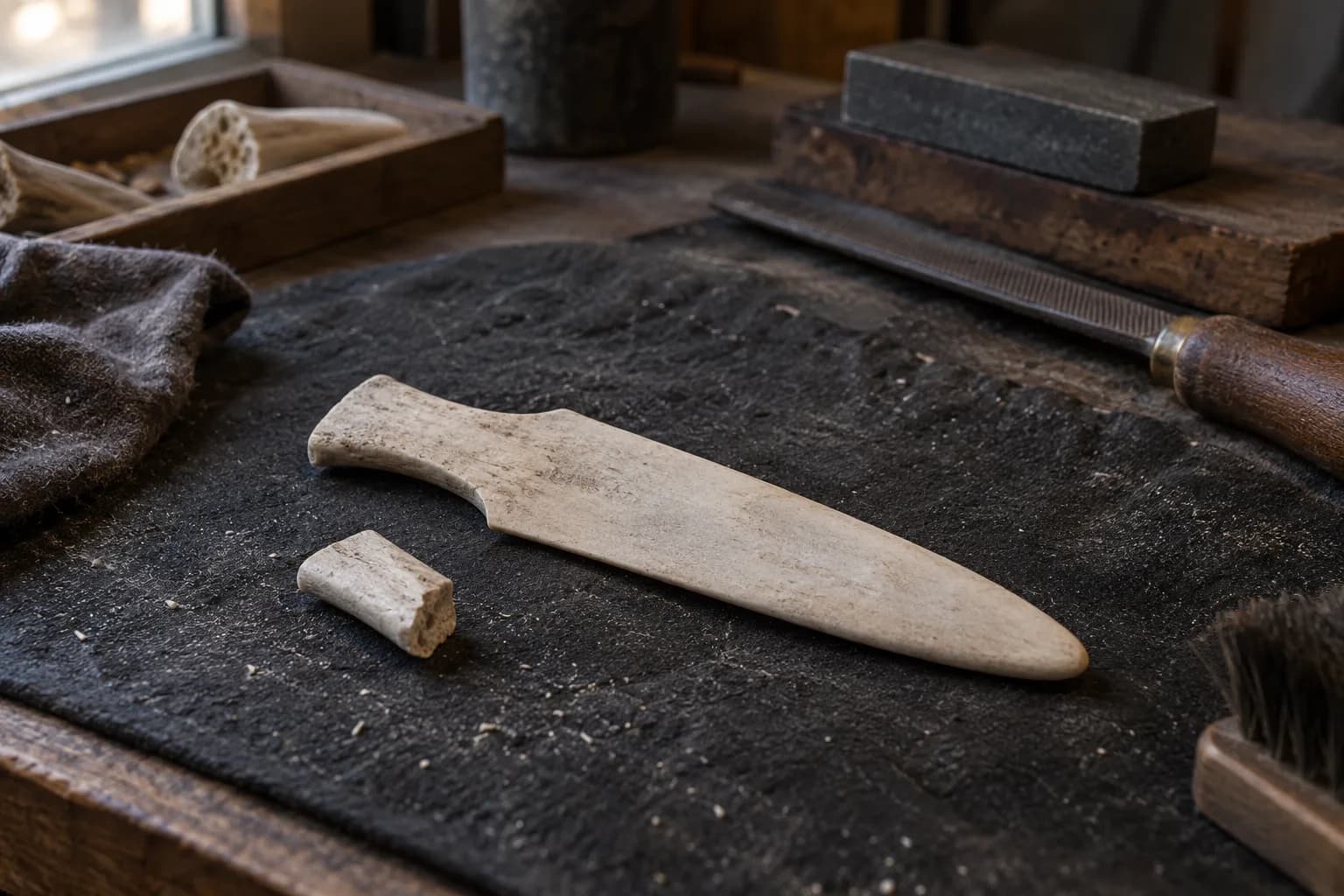
Humanity armed itself with biological hard tissue long before metal and kept doing it after: shark-tooth swords across the Pacific (tooth rows lashed to wood clubs — the leiomano), bone daggers in New Guinea carrying exactly the crysknife’s mix of weapon and sacred-status object, and the obsidian-edged macuahuitl from the Mistborn analysis. Enamel and dentin are respectable engineering materials — hard outer shell, tougher core, nature running the same laminated logic as a san-mai billet — and a large predator’s tooth IS a functional puncturing blade with zero modification. Herbert scaled a real idea to a 400-meter worm; the concept audit passes.
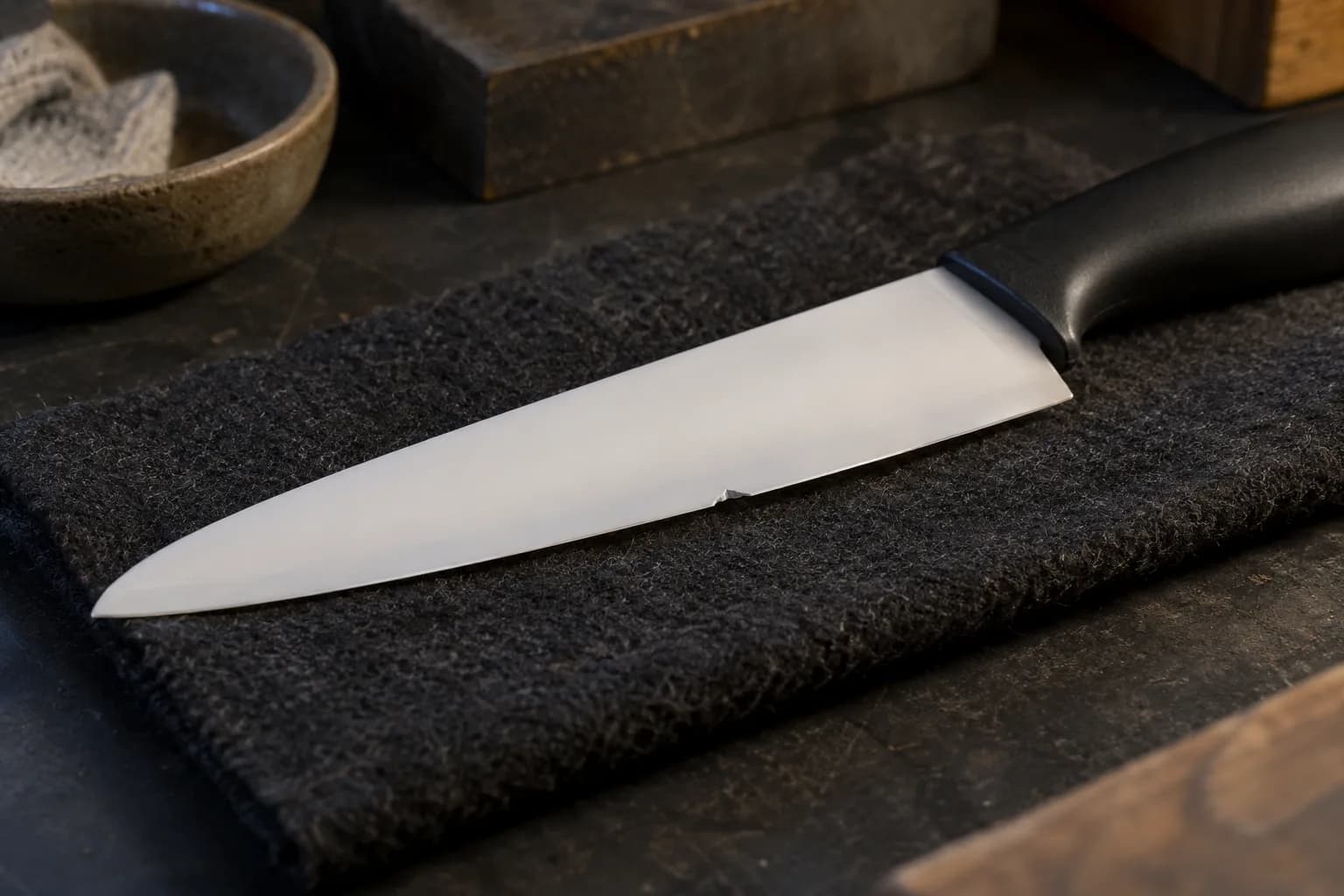
A crystalline tooth blade would behave like today’s ceramic knives: very hard, very edge-holding, chemically inert — and brittle under lateral load, per the curve that governs this whole section. Real ceramic kitchen blades chip on a dropped cutting board; a fighting crysknife would demand exactly the disciplined thrust-and-slice use Fremen training implies, and would live one hard parry from martyrdom. Herbert’s fix is elegant lore: fixed crysknives (keyed, stabilized) versus unfixed ones that crumble away from their owner — fictional stabilization standing in for the toughness the material lacks, and a rather beautiful metaphor for a blade bonded to one hand.
Dune’s knife culture is not aesthetic — it is engineered by the Holtzman shield, which stops fast projectiles and admits only the slow blade. Herbert built a technological reason for a spacefaring civilization to fence with daggers, and the fencing itself is real-blade doctrine: point control, timing, the slow push through the shield — closer to the smallsword’s world than to any brawl. Among fictional universes, only a few earn their blade cultures with an actual mechanism; Dune leads that list, and makers — who sell slow blades in a firearm world — might appreciate the parable more than most readers.
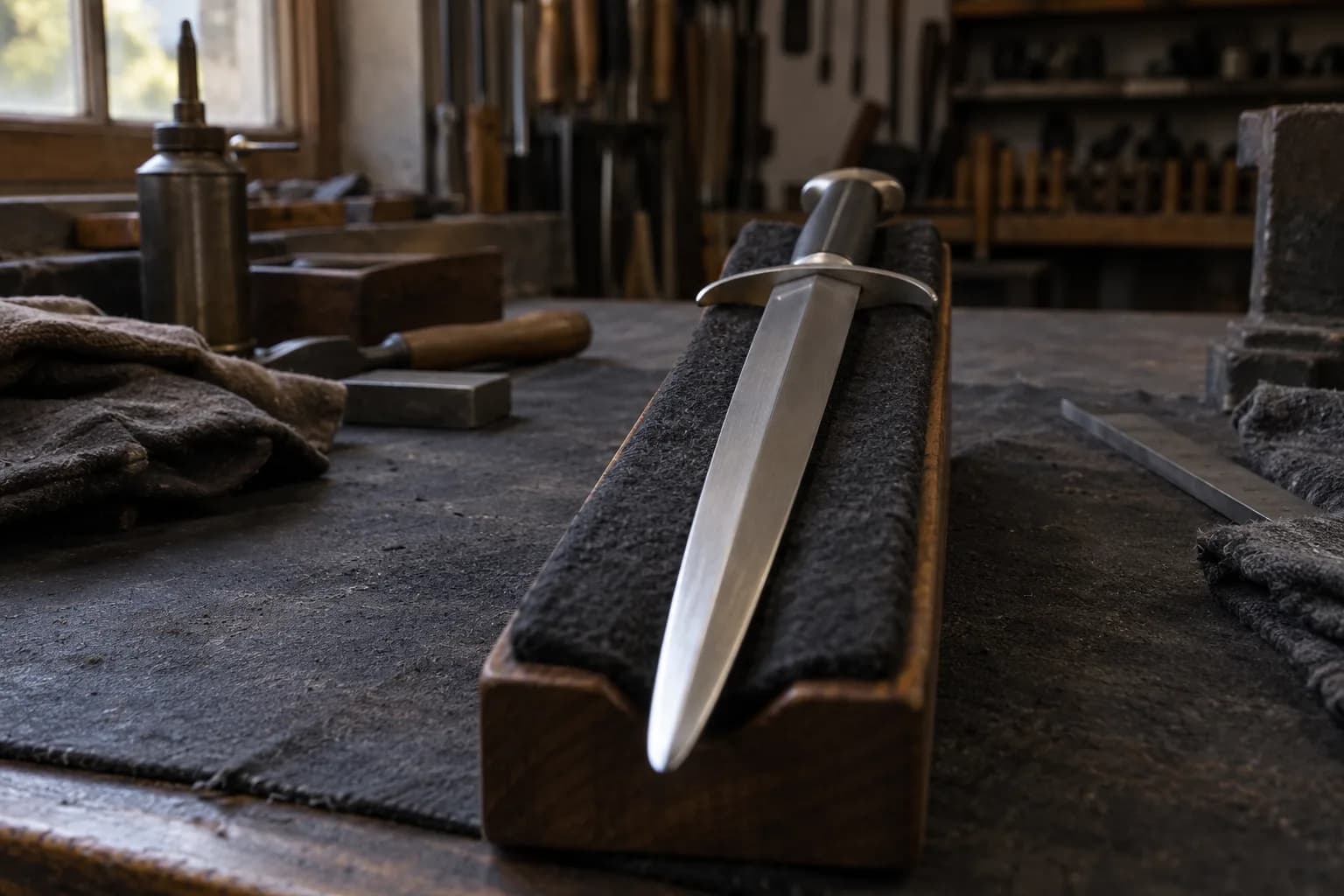
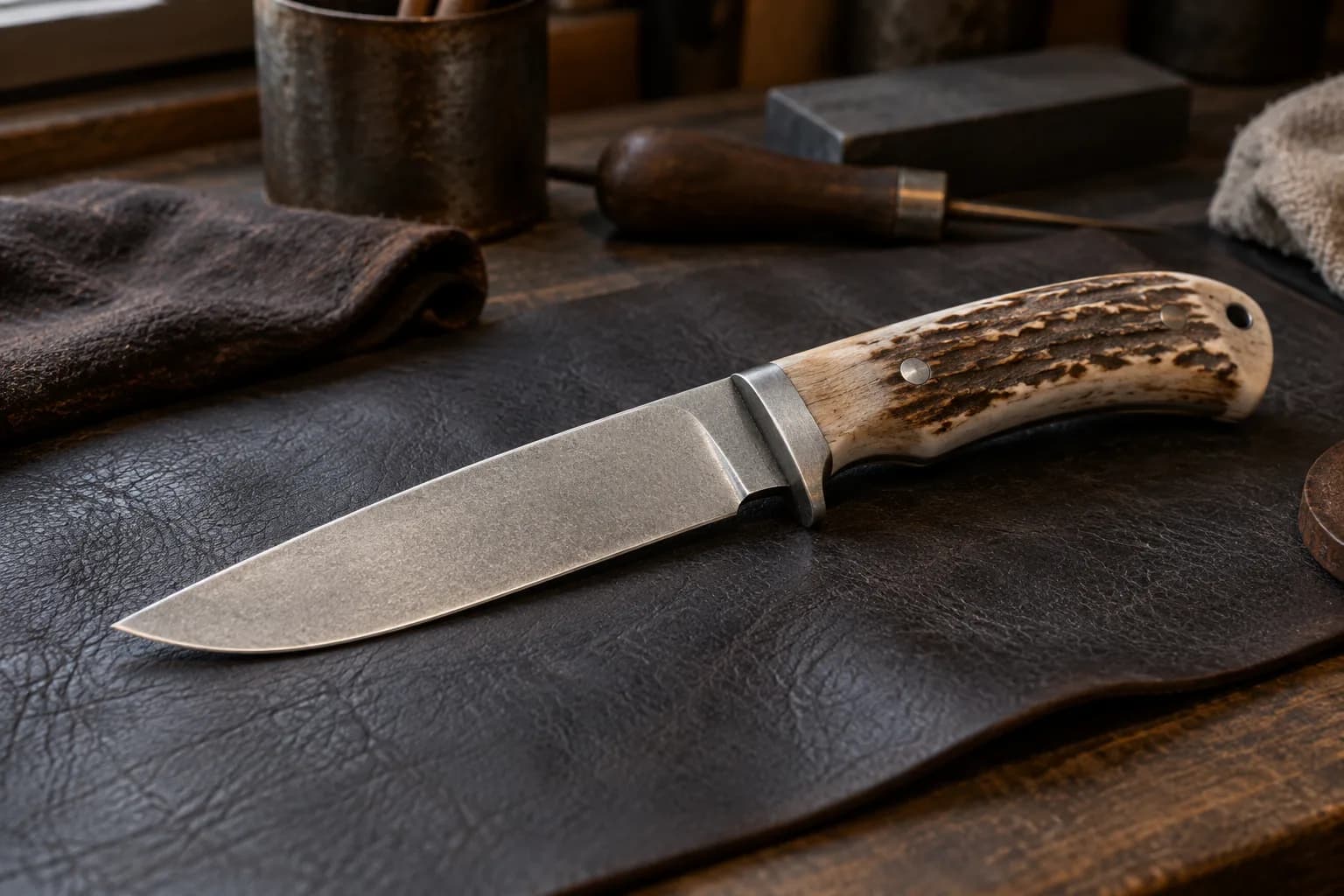
Real crysknife-adjacent work, three lanes. The materials homage: handle and fittings in bone, antler or fossil ivory (walrus and mammoth, legally sourced — check your state’s ivory laws, they vary hard) on a milky-finished blade. The look: a bead-blasted or stone-washed AEB-L blade wearing the pale iridescence honestly, per finish practice, in the crysknife’s slim double-curve silhouette — inspired-by, not replica. And the desert-knife brief played straight: a corrosion-immune LC200N fighter built for an environment that eats blades — which is, after all, exactly the design problem Arrakis poses. The fan gets the sacred-knife story; the maker gets to tell the real one underneath it.
Keep reading
Three more from the same bench.
Every fictional blade is a real design brief with the physics turned off. Turn the physics back on and something interesting happens: the analysis becomes…

Brandon Sanderson handed his world’s assassins a genuinely great materials-engineering problem: Allomancers can sense and violently manipulate metal, so…

Comics run on invented metals — adamantium, vibranium, the whole periodic table of plot — and the fastest way to appreciate real metallurgy is to audit…
Same bench
I machine the parts, hand-assemble, track and test Torus grinders in Sterling, Illinois. Most orders ship in seven to ten business days from time of order.

Current dual-axis platform with a fiber-laser-cut 6061 chassis and single-knob tracking.

Current dual-axis platform with a steel chassis, more mass and less vibration.

Prior-design aluminum chassis, 90-degree tilt and 1.5-inch tooling arms.

One-man shop
I answer my own email. Tell me the steel, the machine and what it is doing, and I will tell you what I would try next.