
Swords
Sword Anatomy: A Maker’s Field Guide
Before the types, the vocabulary. Every sword — katana or claymore, gladius or rapier — is the same short list of parts negotiating the same physics: a…
Swords
Thrust-first civilian swords: why the rapier won the town, its guard-cage hilt, the smallsword refinement behind modern fencing, and what thrust blades demand.
2 min readWritten by Rich LinvilleFree to read
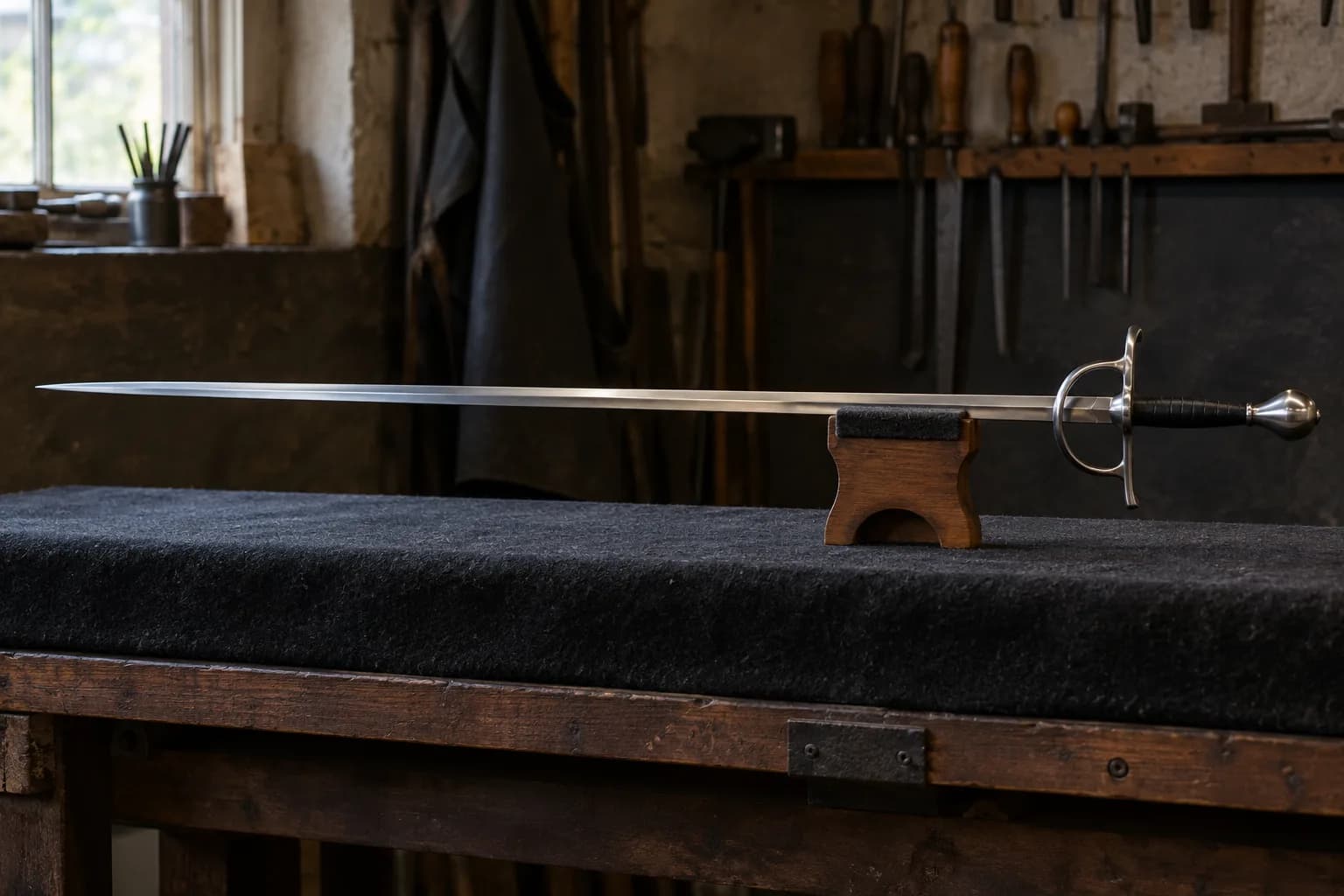
The rapier is what the sword became when it left the battlefield and moved to town: a civilian’s weapon for the street and the duel, worn with ordinary clothes, optimized for the thrust — and carrying the most spectacular hilt architecture the sword ever grew. Its slimmed-down heir, the smallsword, carried the type to the edge of the modern age and into every fencing salle on earth.
Unarmored civilian fighting changes the math: no plate to defeat, no shield wall, just speed and reach settling matters in linear encounters. A long stiff point-first blade controls distance and kills through a doublet; by the mid-1500s the rapier ran 40-plus inches of narrow blade at 2.2 to 2.8 pounds — heavier than its elegance suggests, balanced close to the guard for point control. The Italian and Spanish masters built geometric fencing systems around it, and the duel of honor built a legal-adjacent culture around them.
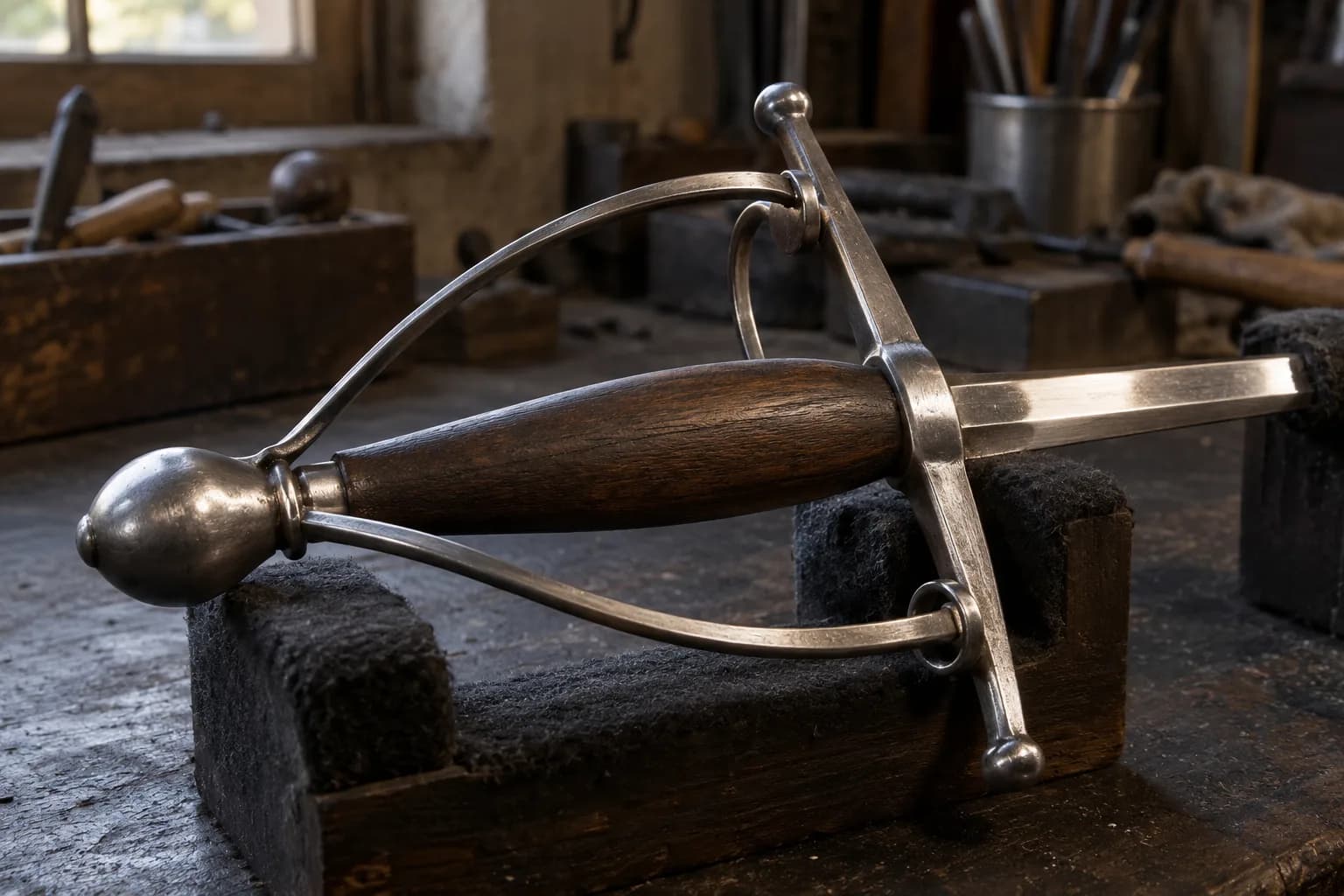
With no gauntlet, the hand became the target — so the hilt became armor: side rings grew into sweeping bars, then full cup hilts and swept cages, engraved and blued into status jewelry that happened to stop blades. For a modern maker the complex hilt is the project within the project: bending, forging and fitting the basket demands more metalwork hours than the blade, which is exactly why finished rapiers command their prices.
By 1700 the rapier slimmed into the smallsword: 30-32 inches, often a stiff hollow-ground triangular blade of little over a pound, the gentleman’s sidearm through the eighteenth century. It thrust only — edge abandoned entirely — and its salle systems became modern foil and epee fencing almost unchanged. The triangular hollow section is the maker’s takeaway: three concave faces meeting in a rigid, feather-light spine — an engineering trick worth studying for anyone who thinks stiffness requires mass.
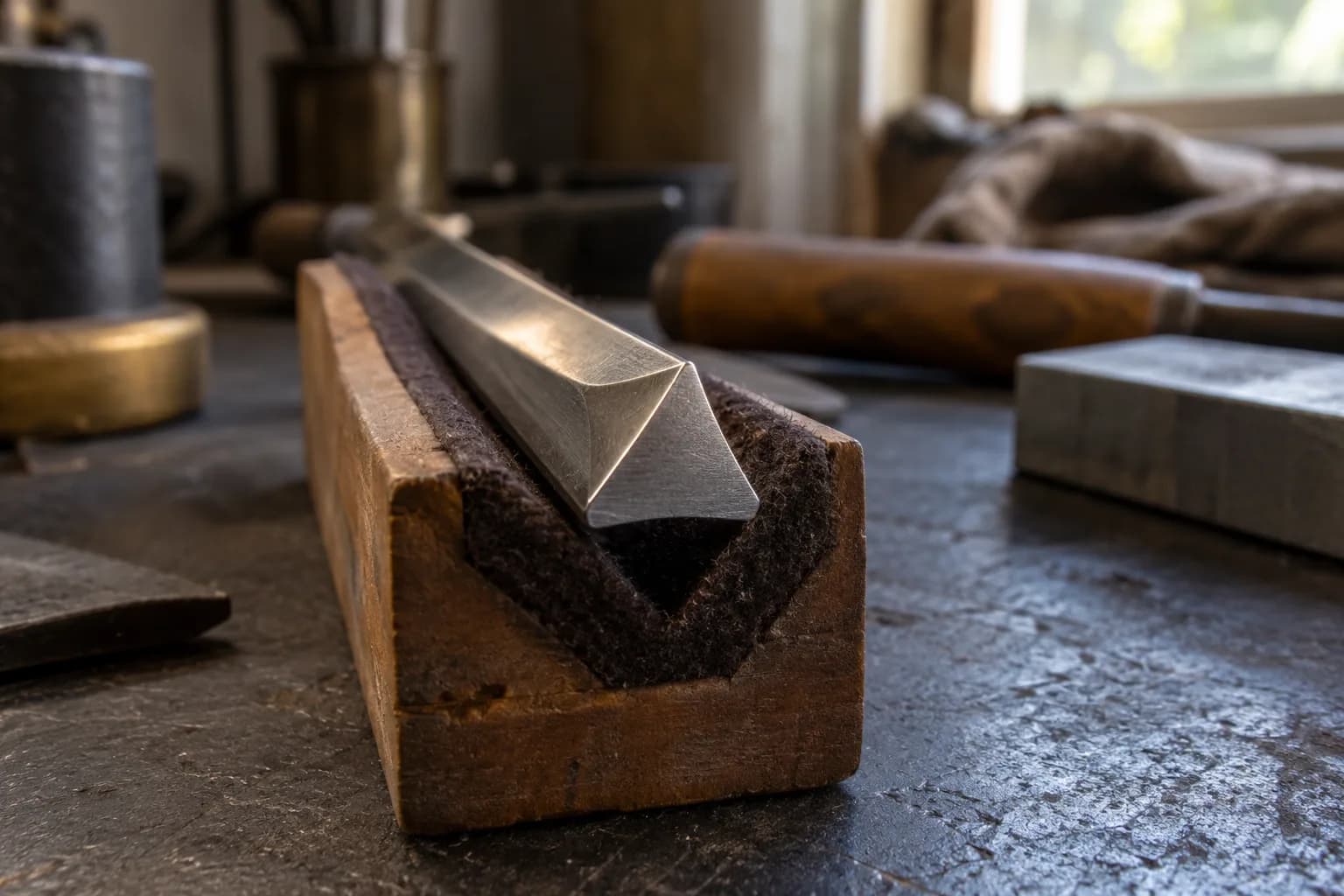
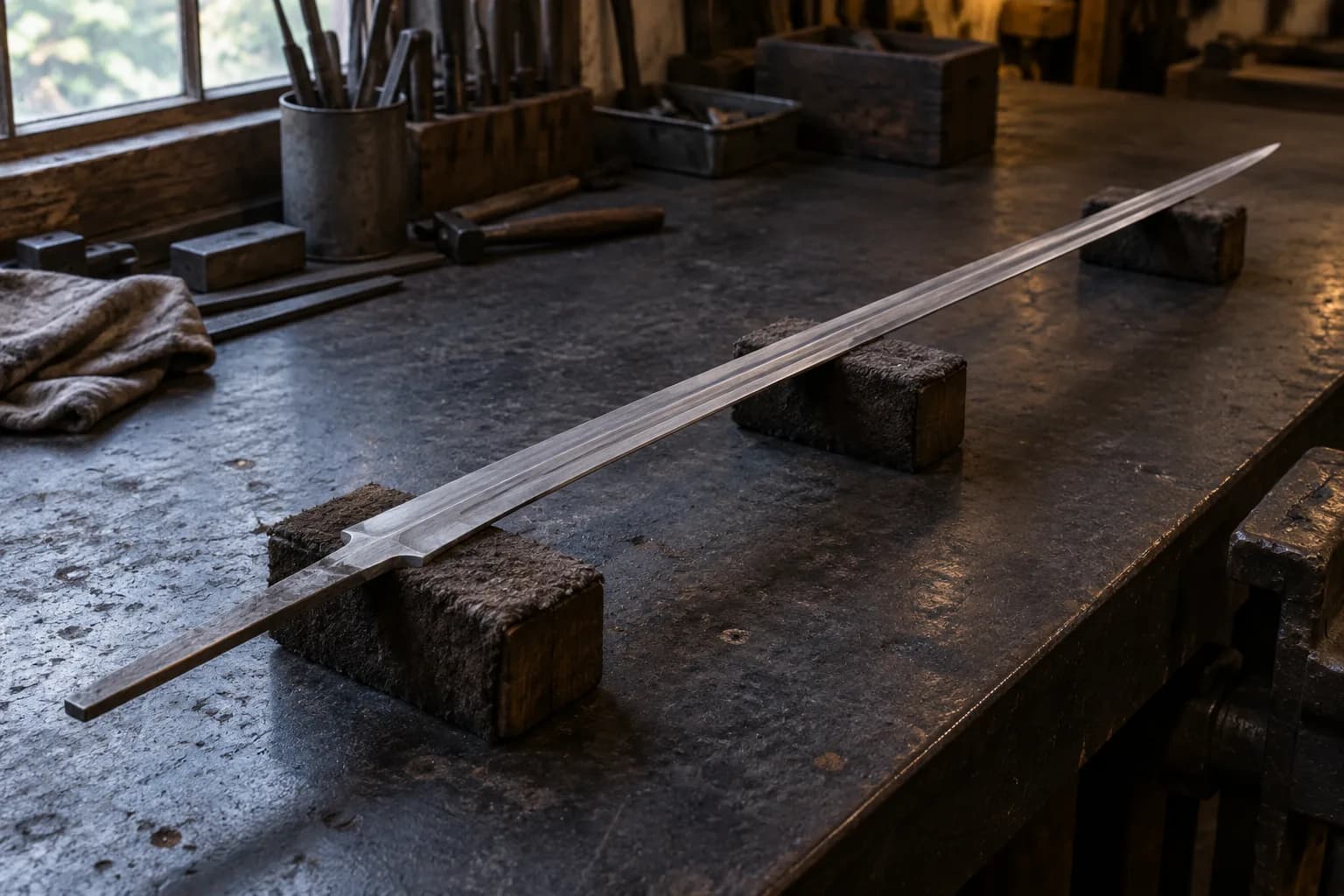
Rapier and smallsword blades are the precision end of sword smithing: long, narrow, and unforgiving of wandering thickness — an over-thinned span telegraphs as whip, a thick one as deadness. Stiffness with lightness comes from cross-section (diamond, lenticular-with-ridge, or the hollow triangle) and disciplined distal taper. Spring steels through-hardened to the low 50s serve, per Sword Steels; practice blades for historical fencing flex at the foible on purpose. The hilt work is a semester of its own — and the reason rapier makers are their own guild within the craft.
Keep reading
Three more from the same bench.
Before the types, the vocabulary. Every sword — katana or claymore, gladius or rapier — is the same short list of parts negotiating the same physics: a…

The longsword is the European counterpart to the katana’s fame: the two-handed cruciform sword of the late medieval knight, the centerpiece of the German…

Two knives can share the same steel, grind type, and blade shape and still perform completely differently, because of stock thickness and how that…
Same bench
I machine the parts, hand-assemble, track and test Torus grinders in Sterling, Illinois. Most orders ship in seven to ten business days from time of order.

Current dual-axis platform with a fiber-laser-cut 6061 chassis and single-knob tracking.

Current dual-axis platform with a steel chassis, more mass and less vibration.

Prior-design aluminum chassis, 90-degree tilt and 1.5-inch tooling arms.

One-man shop
I answer my own email. Tell me the steel, the machine and what it is doing, and I will tell you what I would try next.