
Fantasy & Fiction Blades
Fantasy Blades in Real Steel: The Maker’s Field Guide
Every fictional blade is a real design brief with the physics turned off. Turn the physics back on and something interesting happens: the analysis becomes…
Fantasy & Fiction Blades
Sanderson's no-metal design brief taken seriously: real obsidian edge physics, why Vin's daggers would work and break, and koloss sword math.
2 min readWritten by Rich LinvilleFree to read
Brandon Sanderson handed his world’s assassins a genuinely great materials-engineering problem: Allomancers can sense and violently manipulate metal, so the deadliest people in the Final Empire fight with glass and obsidian daggers, wooden shields and stone-tipped spears. Fans on the forums have argued the practicalities for years — Vin’s move from glass to obsidian daggers gets its own threads — and the argument is worth having, because the real materials science is stranger than the fiction.
The part fiction does not exaggerate: a conchoidally fractured obsidian edge is sharper than anything a steel blade can hold — the apex thins toward molecular scale, which is why obsidian scalpels have seen real use in modern surgery for ultra-fine incisions. Flint-knapped edges armed most of human history, and the Aztec macuahuitl — a wooden sword edged with obsidian blades — reportedly did horrific work against Spanish steel. As a pure CUTTING material, volcanic glass needs no fantasy assistance.
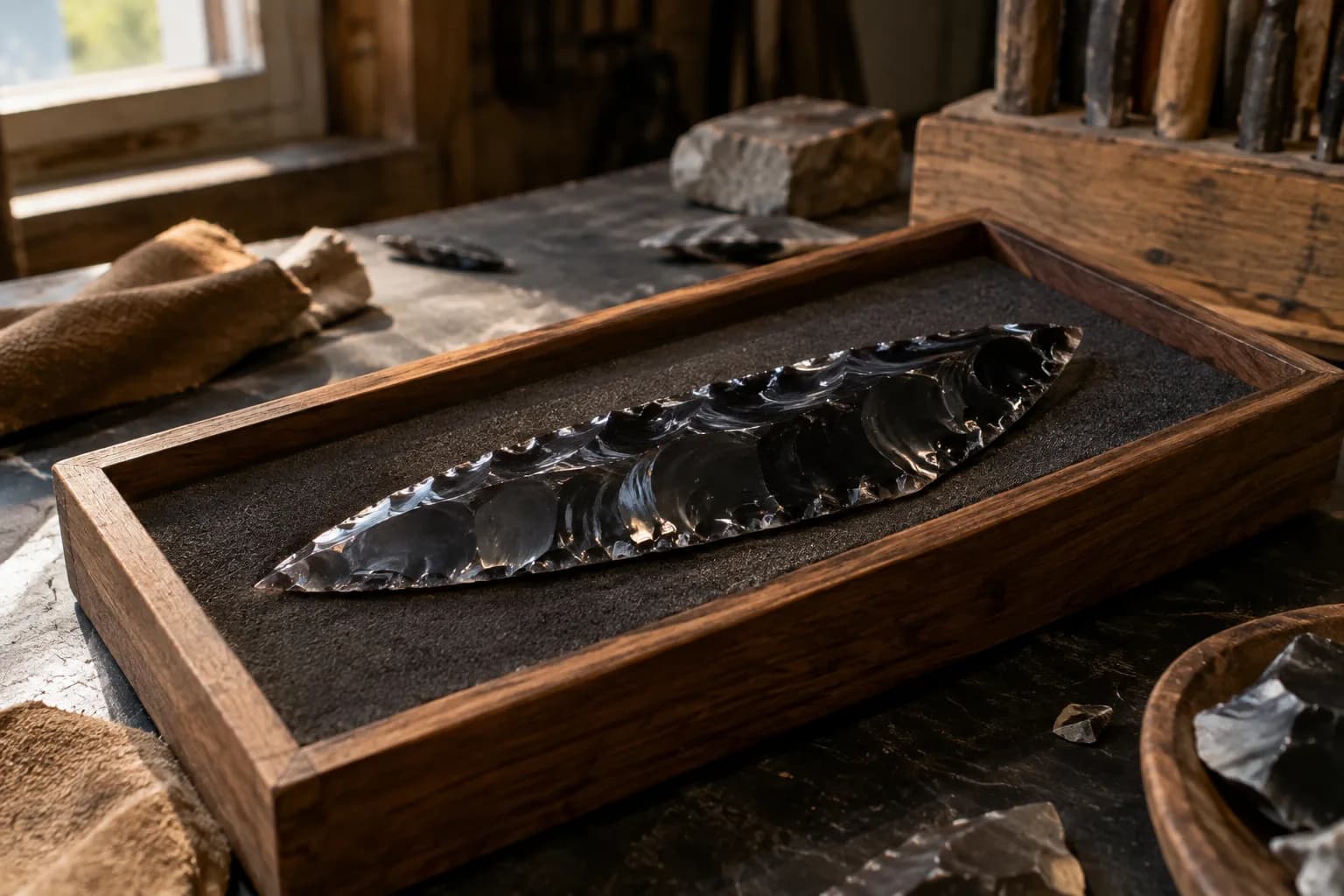
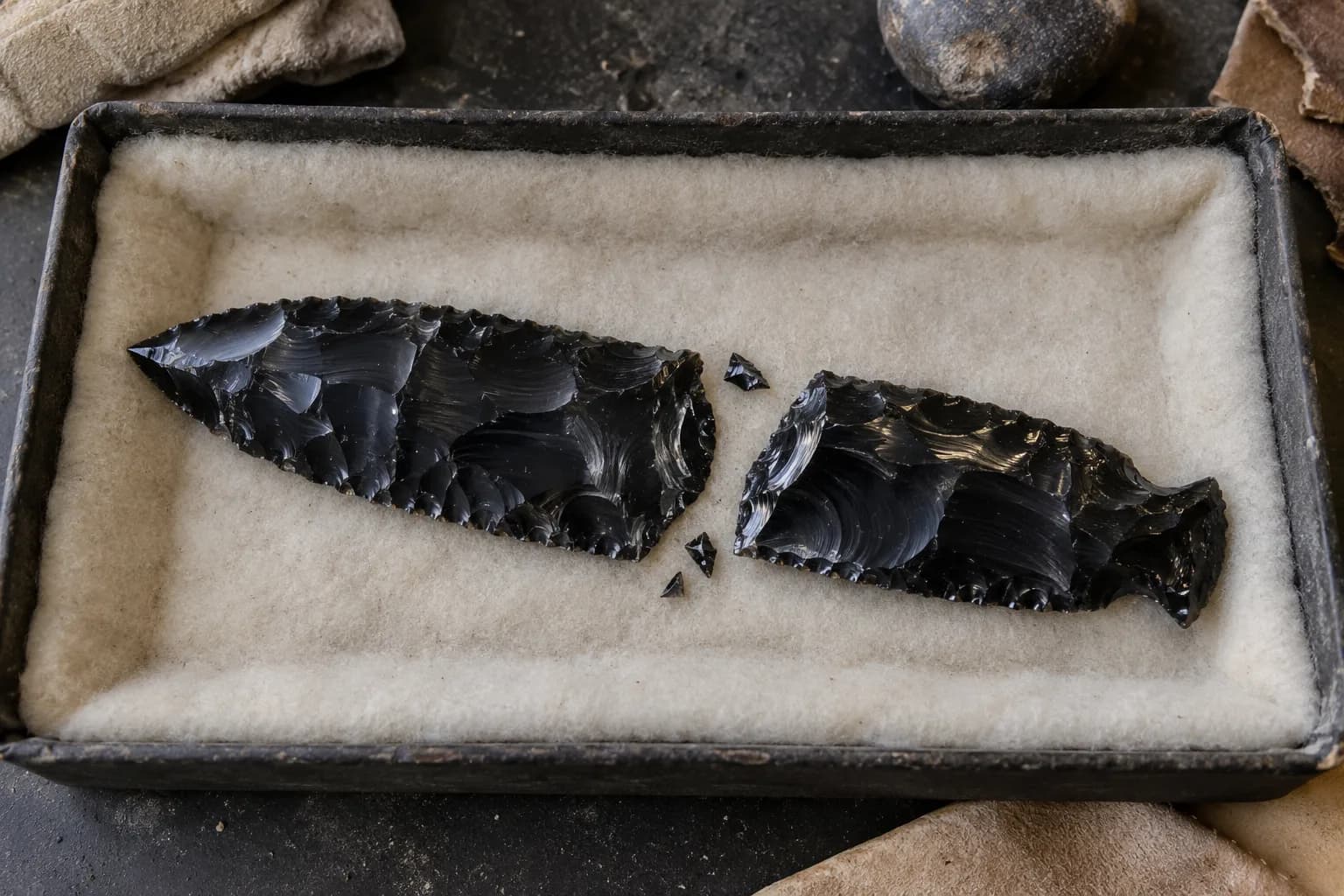
The other half of the physics: glass and obsidian have effectively zero fracture toughness — the hardness-toughness curve’s brutal far end. No flex, no edge-on-edge contact, no prying, no lateral load: any of them shatters the blade, which is why history’s obsidian weapons were slashers with replaceable edges, never fencing tools. Sanderson plays this fair — his glass-dagger fighters stab and slice soft targets and avoid parries — and the fan-debated glass-to-obsidian switch tracks a real distinction too: manufactured glass is homogeneous and predictable; good obsidian is the superior knapping material with the sharper practical edge. A duel between obsidian daggers and a steel EDC blade ends with the steel intact and the obsidian in pieces — after the obsidian cut deeper on the first pass.
At the other extreme, the koloss carry crude iron greatswords sized for ten-foot monsters, and normal humans in the books simply cannot use them — which is the correct physics. Run the mass math from the impossible-swords guide: scale a 6-pound greatsword to koloss dimensions and you are carrying a blade in the dozens-of-pounds class, swingable only with superhuman strength — which is exactly what pewter-burning provides. Sanderson’s reputation for hard-magic consistency survives the calculator, which is more than most franchises manage.
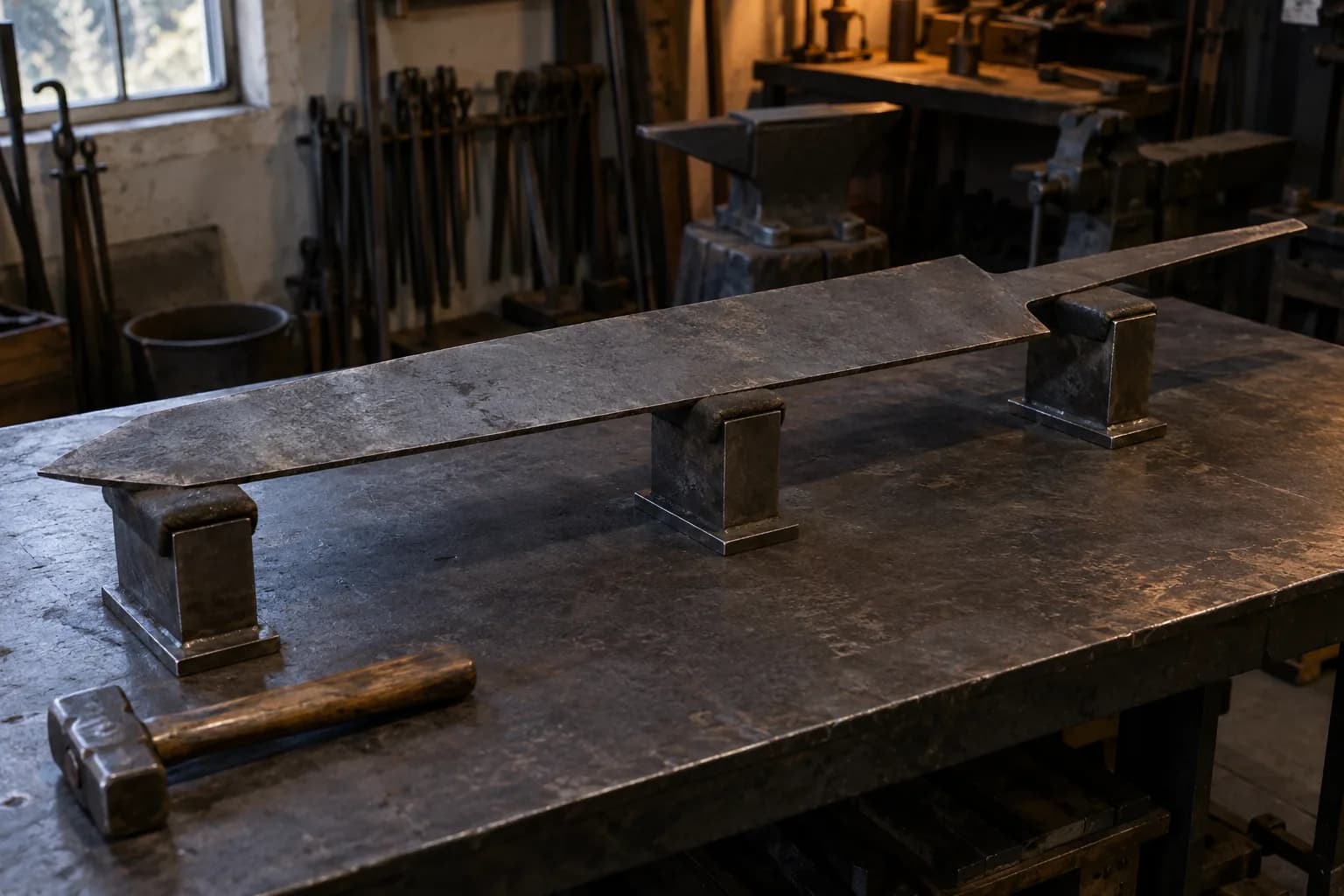
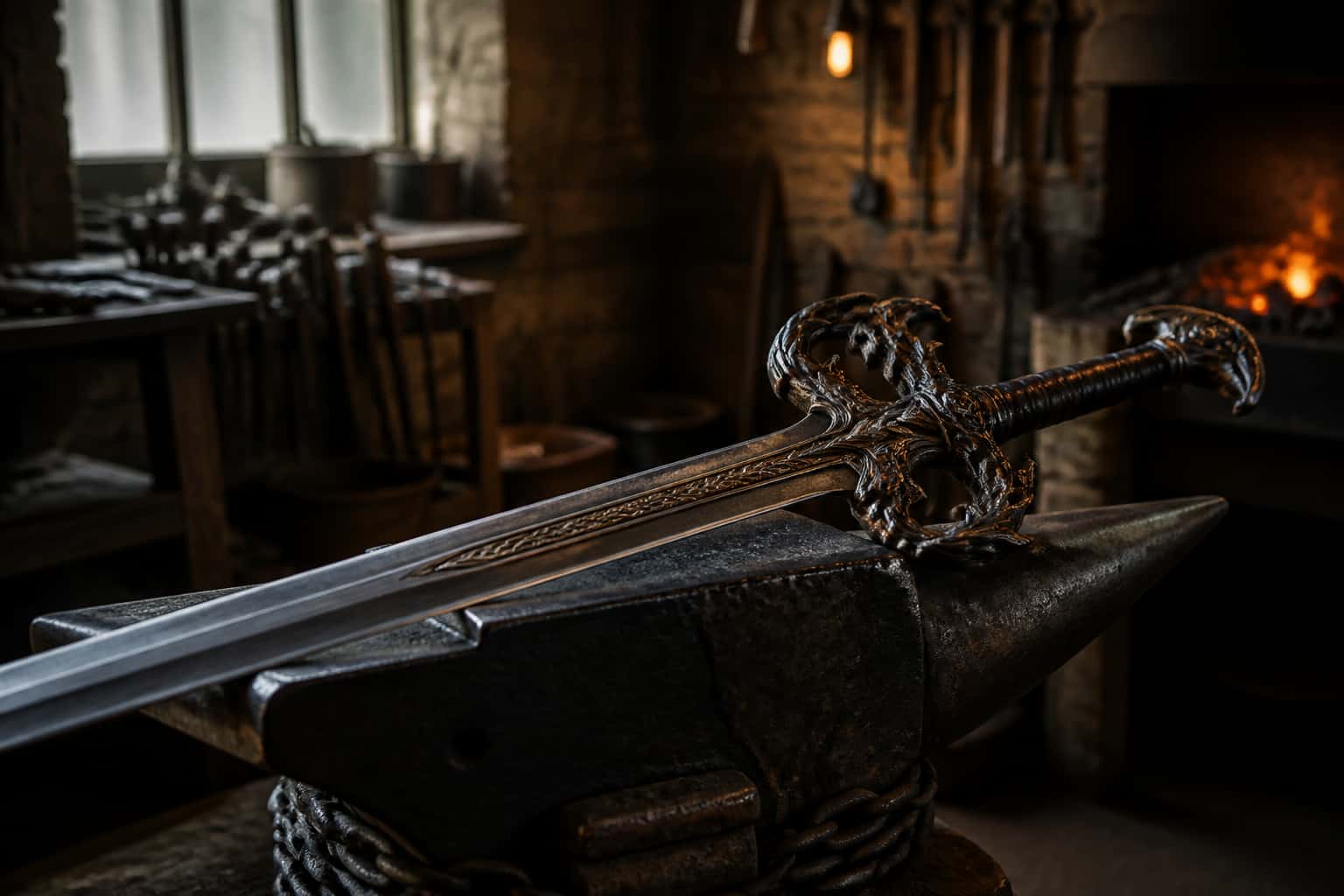
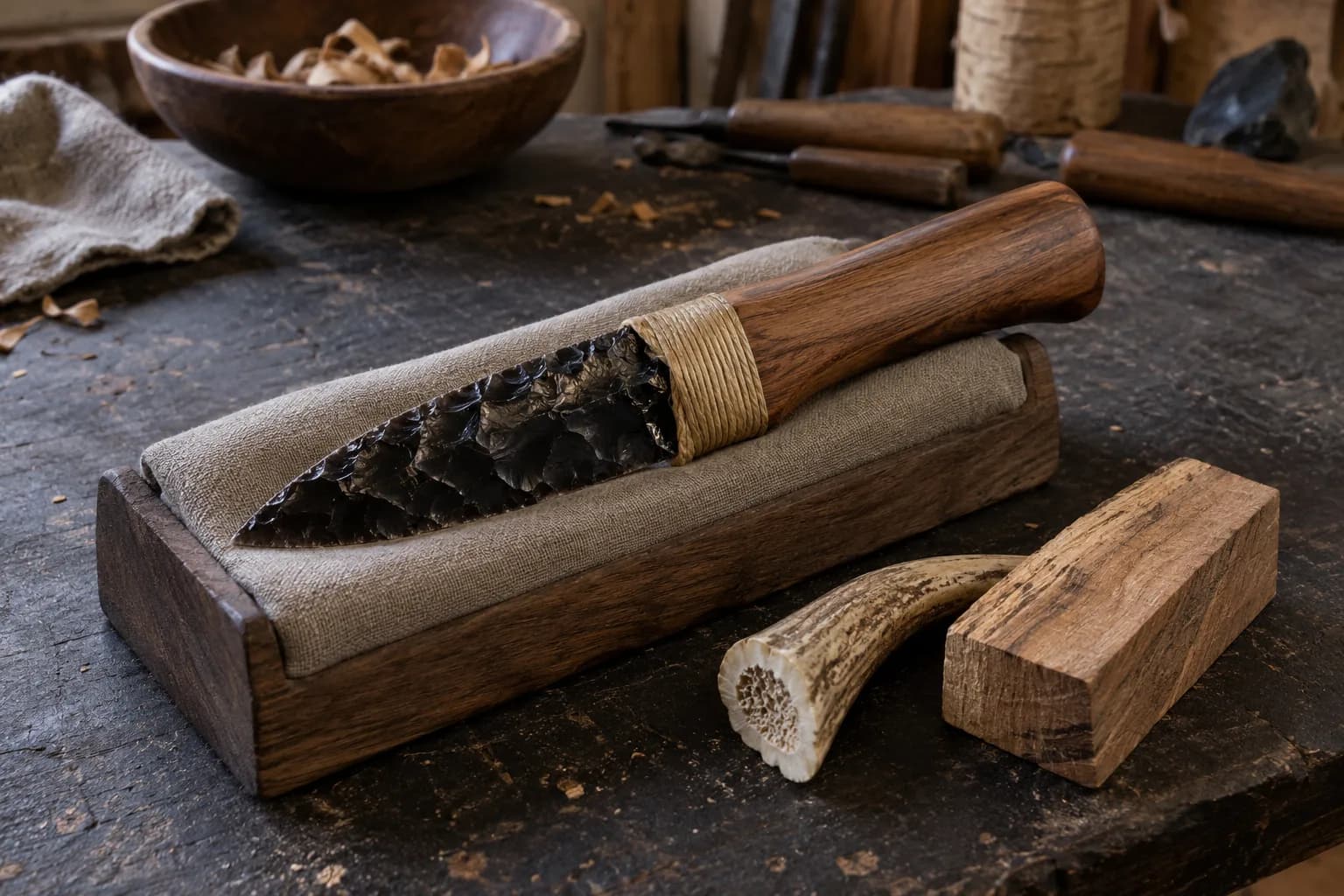
The no-metal brief is a fun real commission: knapped obsidian or glass blades with wood, antler or micarta furniture — knapping is its own venerable craft, adjacent to ours the way leatherwork is — sold as display and cutting-demo pieces with the fragility stated plainly. The steel maker’s version: an inspired-by dagger in blackened 26C3 or W2 with an obsidian-dark etched finish per Blade Finishes — the Mistborn mood, none of the shatter. Either way the fan learns the real lesson: every material choice is a trade, and the Final Empire’s assassins were making the same trades a maker weighs at the steel rack.
Keep reading
Three more from the same bench.
Every fictional blade is a real design brief with the physics turned off. Turn the physics back on and something interesting happens: the analysis becomes…

Heat treat recipes and steel spec sheets both cite a target hardness on the Rockwell C scale, but the number by itself doesn’t explain why that specific…

Big blades live on impact, and impact rewrites the geometry rules: the edge is a wedge under shock load, balance is a cutting spec, and…
Same bench
I machine the parts, hand-assemble, track and test Torus grinders in Sterling, Illinois. Most orders ship in seven to ten business days from time of order.

Current dual-axis platform with a fiber-laser-cut 6061 chassis and single-knob tracking.

Current dual-axis platform with a steel chassis, more mass and less vibration.

Prior-design aluminum chassis, 90-degree tilt and 1.5-inch tooling arms.

One-man shop
I answer my own email. Tell me the steel, the machine and what it is doing, and I will tell you what I would try next.