
Fantasy & Fiction Blades
Fantasy Blades in Real Steel: The Maker’s Field Guide
Every fictional blade is a real design brief with the physics turned off. Turn the physics back on and something interesting happens: the analysis becomes…
Fantasy & Fiction Blades
Tolkien's blades through a maker's eyes: how to reforge Narsil honestly, why Sting is the best design, glowing Elvish steel, and what Weta got right.
2 min readWritten by Rich LinvilleFree to read
Tolkien’s blades carry more cultural weight than any weapons in fiction, and — fitting for a philologist steeped in Norse saga — they are grounded in real sword culture: named heirloom blades, reforged ancestral steel, workshops with reputations. The pop-culture guide covers the licensed replica market; this is the maker’s read of the blades themselves.
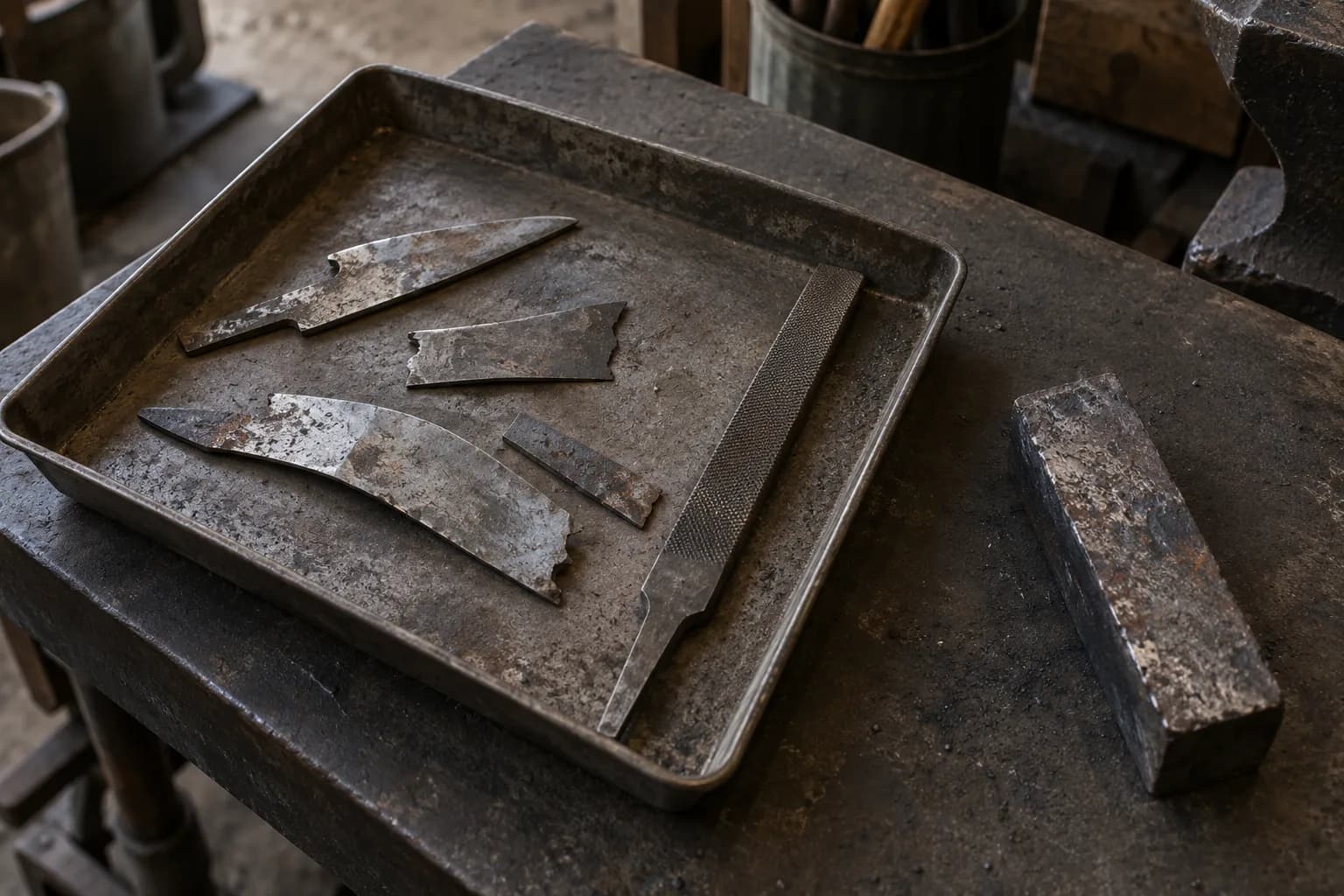
The Shards of Narsil become Anduril — fantasy’s most famous reforging — and the maker’s question is what reforging a shattered sword actually means. The honest answer: welding shards edge-to-edge produces a blade of welds, and every weld line is a future failure plane; a real smith reforges by returning the steel to the fire wholesale — the shards drawn, folded and forge-welded back into one billet, then a NEW blade forged from the old steel. Which is precisely what saga-tradition reforging meant: continuity of the metal and the name, not a jigsaw repair. Ancestral steel reborn as new geometry is a real, buildable, deeply satisfying commission — makers do it today with grandfathers’ worn files and broken heirlooms, per the forge-welding craft that makes old steel new.
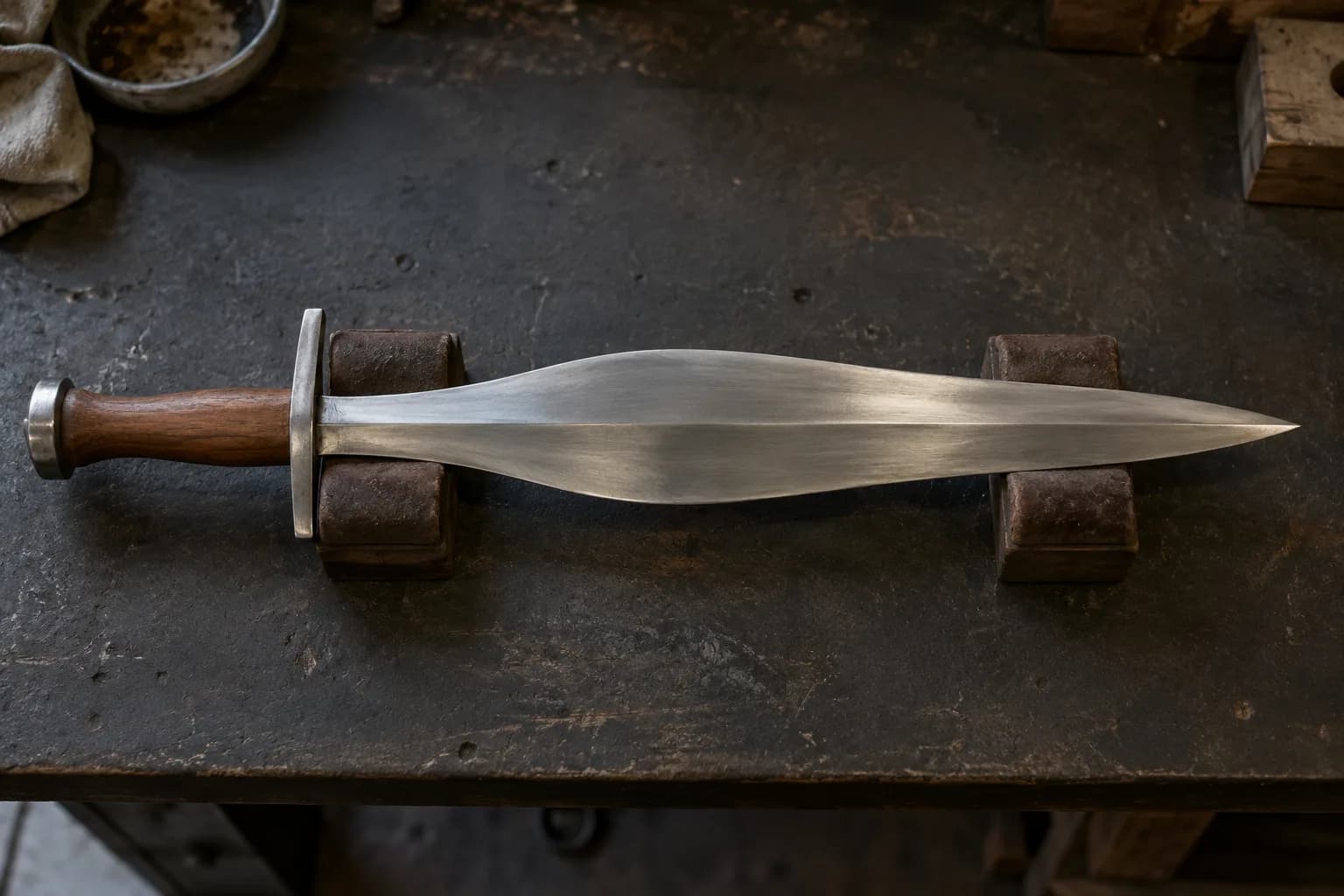
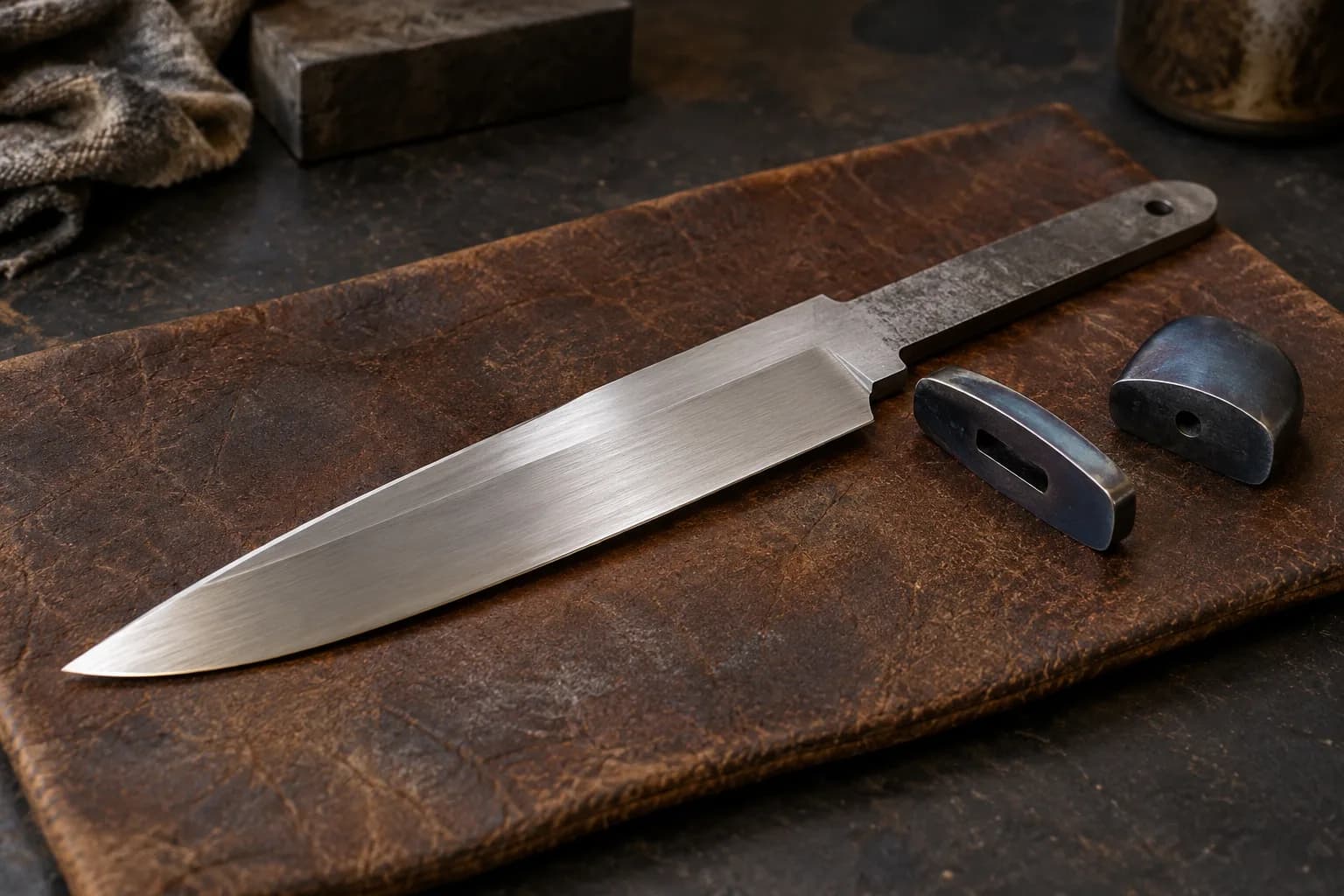
Sting is the quiet star: an Elvish long-knife that serves Bilbo and Frodo as a sword — which is exactly right for hobbit-scale users, and exactly how a maker sizes a blade to its wielder. Its film form (leaf-shaped, ~15-inch blade) is a superbly practical pattern: the leaf profile concentrates cutting mass forward while keeping a fast point — the same geometry logic as the ancient leaf blades — and a leaf-bladed short sword in 5160 or 80CrV2 is one of the most rewarding inspired-by builds in the genre: seax-adjacent, legal to own nearly everywhere, and useful at camp in a way a longsword never is.
Elf-blades glowing at orcs is pure magic — but a maker can get closer than fans expect: temper colors put genuine blue on polished steel (the temper chart’s 540-570°F band, used deliberately as fire-blued finish), and a vivid hamon delivers the otherworldly-edge aesthetic the films gave Elvish steel. Fire-blued fittings with a bright blade, or a misty W2 hamon on a leaf blade, IS the Middle-earth look in real metallurgy — no orcs required for activation.
The films’ blades came from Weta Workshop under real swordsmiths’ influence, and it shows: distinct cultural design languages (flowing Elvish curves, brutal orc utility, Rohirric horse-culture blades with real migration-era DNA per the Viking lineage), correct proportions, and props that moved like weapons. It is the rare franchise where studying the screen blades genuinely teaches design vocabulary — which is why the licensed replicas anchor so many collections, per the pop-culture guide’s market notes.
The commissions this franchise actually generates, in order: leaf-bladed short swords (Sting-adjacent, the perfect first sword per the first-sword path), reforged-heirloom projects (the Narsil emotion with real family steel), and ranger-plain working blades with fire-blued or hamon accents. All inspired-by, none trademark copies — and every one an on-ramp: the fan who commissions a leaf blade this year asks about the roadmap next year. Tolkien would approve; his whole legendarium runs on craft handed down.
Keep reading
Three more from the same bench.
Every fictional blade is a real design brief with the physics turned off. Turn the physics back on and something interesting happens: the analysis becomes…
Ask a room of sword owners what started it and the honest answers are rarely museums: it was Aragorn reforging Narsil, a Kurosawa duel, an anime blade the…

Every knifemaker’s customers eventually ask, and every knifemaker eventually wonders: could I make a sword? Yes — the 2×72 that grinds your knives grinds…
Same bench
I machine the parts, hand-assemble, track and test Torus grinders in Sterling, Illinois. Most orders ship in seven to ten business days from time of order.

Current dual-axis platform with a fiber-laser-cut 6061 chassis and single-knob tracking.

Current dual-axis platform with a steel chassis, more mass and less vibration.

Prior-design aluminum chassis, 90-degree tilt and 1.5-inch tooling arms.

One-man shop
I answer my own email. Tell me the steel, the machine and what it is doing, and I will tell you what I would try next.