
Swords
Sword Steels for Modern Makers
Sword steel selection is knife steel selection with the priorities inverted: at three feet of lever arm, toughness is nearly everything and wear…
Swords
How movies and anime drive the sword world: Lord of the Rings' licensed replicas, wall-hanger vs functional honesty, and what makers can learn.
2 min readWritten by Rich LinvilleFree to read
Ask a room of sword owners what started it and the honest answers are rarely museums: it was Aragorn reforging Narsil, a Kurosawa duel, an anime blade the size of a door. Pop culture is the sword world’s front porch — and understanding how the replica economy works is worth any maker’s time, because those fans become collectors, and collectors eventually knock on custom makers’ doors.
Peter Jackson’s trilogy is the modern case study: Weta Workshop built screen props with genuine swordmaking craft, and licensed replicas — United Cutlery holds the license, with Anduril, Sting, Glamdring and Orcrist as the flagships — sold in numbers the sword world had never seen, typically in the $150 to $400-plus range, with upgraded museum-line versions in carbon steel. An entire generation’s first sword was an officially licensed movie blade, and the halo effect lifted every corner of the market — historical replicas, HEMA gear, and custom work included.
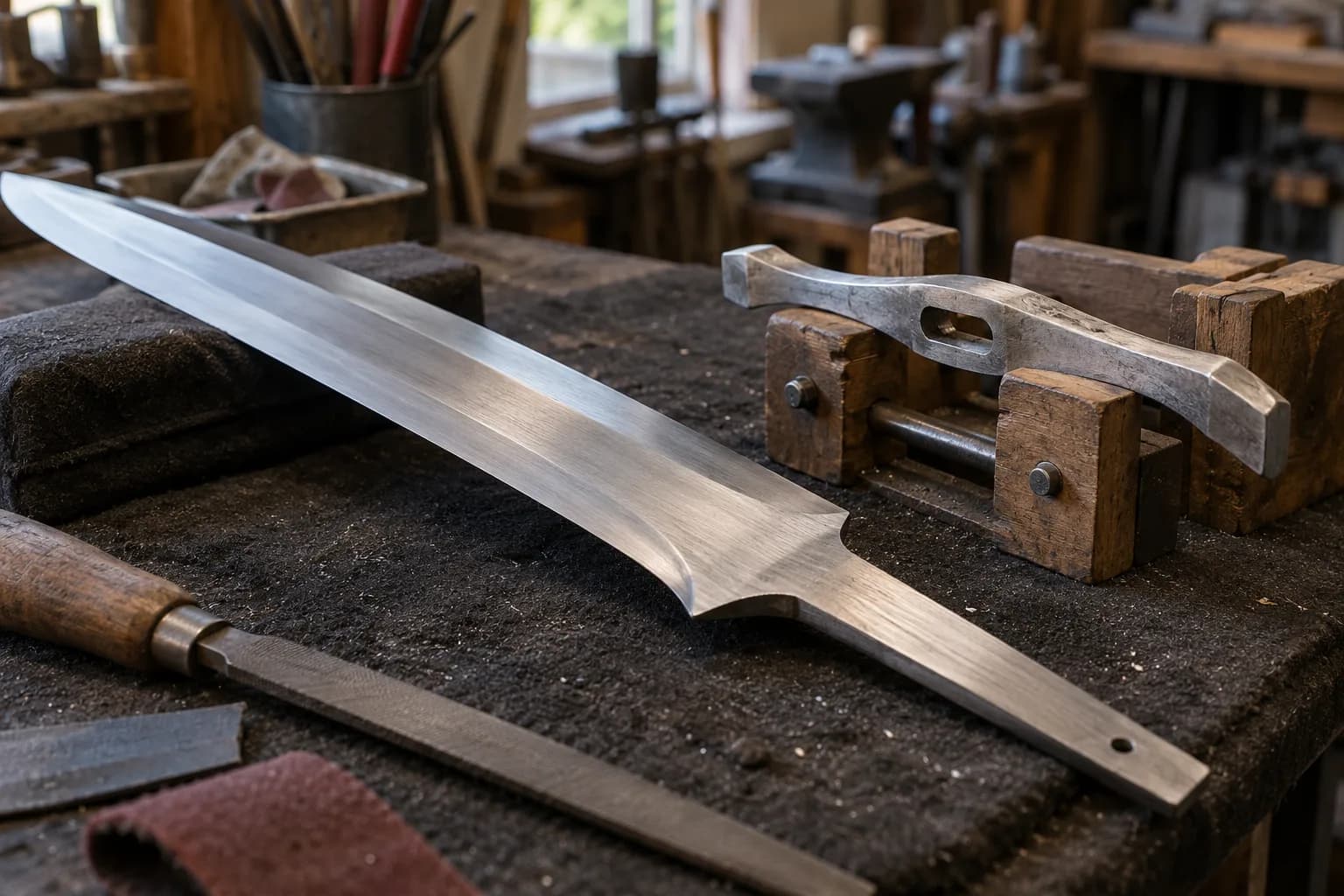
The replica market splits on one question: display or use? Display pieces — stainless blades, rat-tail tangs, cast fittings — are perfectly legitimate AS DISPLAY, and dangerous the moment someone swings one; the stainless-at-length problem from Sword Steels plus welded tangs is how blades end up in emergency-room stories. Functional replicas — carbon steel, continuous tangs, real heat treat — cost more because they are quietly real swords wearing movie clothes. A maker’s job in this conversation is simple honesty: label which one a piece is, and never let a customer baton the wall-hanger.
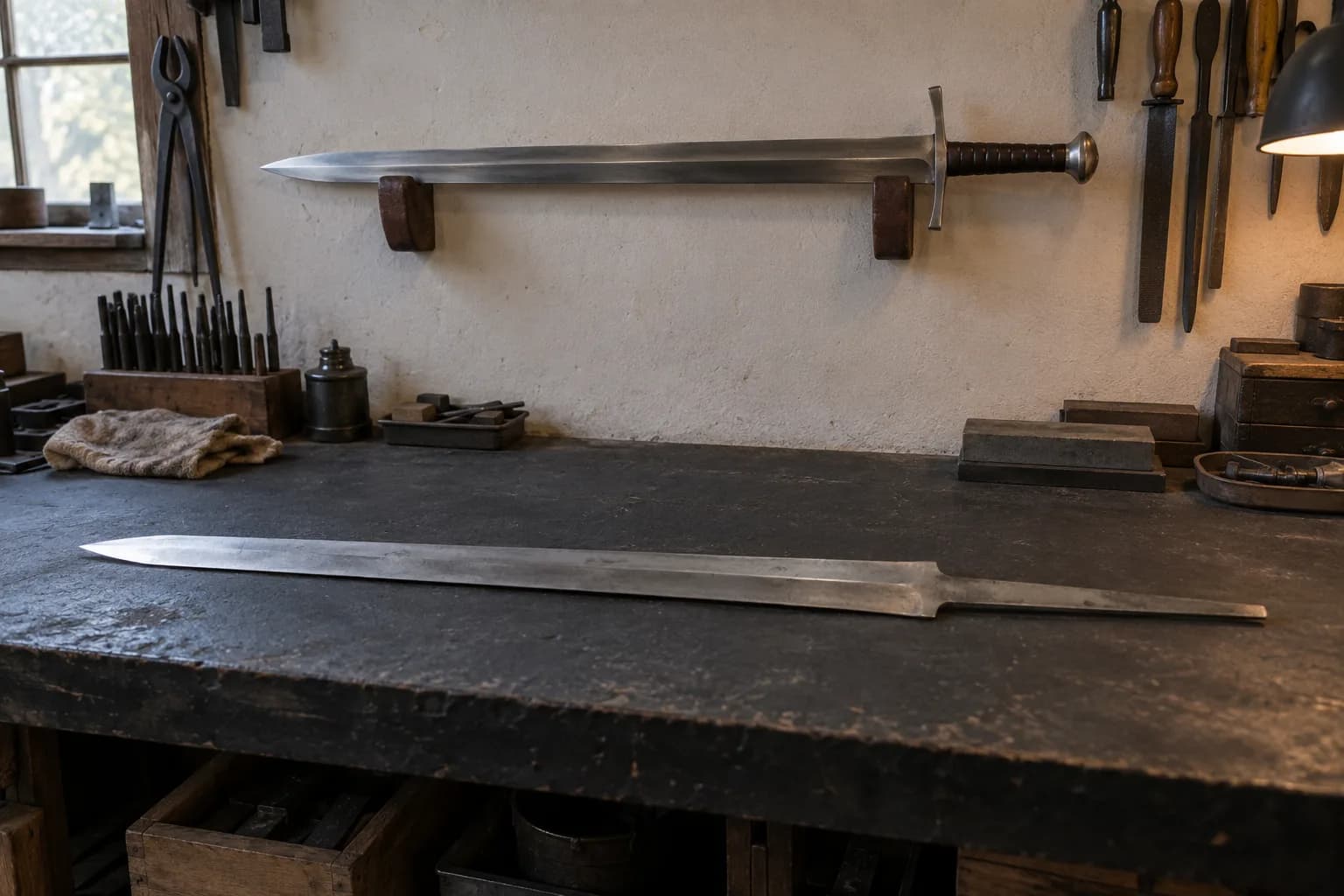
The anime-and-games canon — the oversized, the impossibly proportioned, the physics-optional — drives a huge commission stream, and it deserves respect rather than sneering: an impossible blade built AS a real object is a legitimate fabrication challenge (weight math, tang engineering, balance salvage) that teaches more problem-solving than another drop-point hunter. The maker’s discipline is the estimate: steel at fantasy scale is heavy, and the buyer needs the honest pounds-and-dollars number before the deposit, not after.
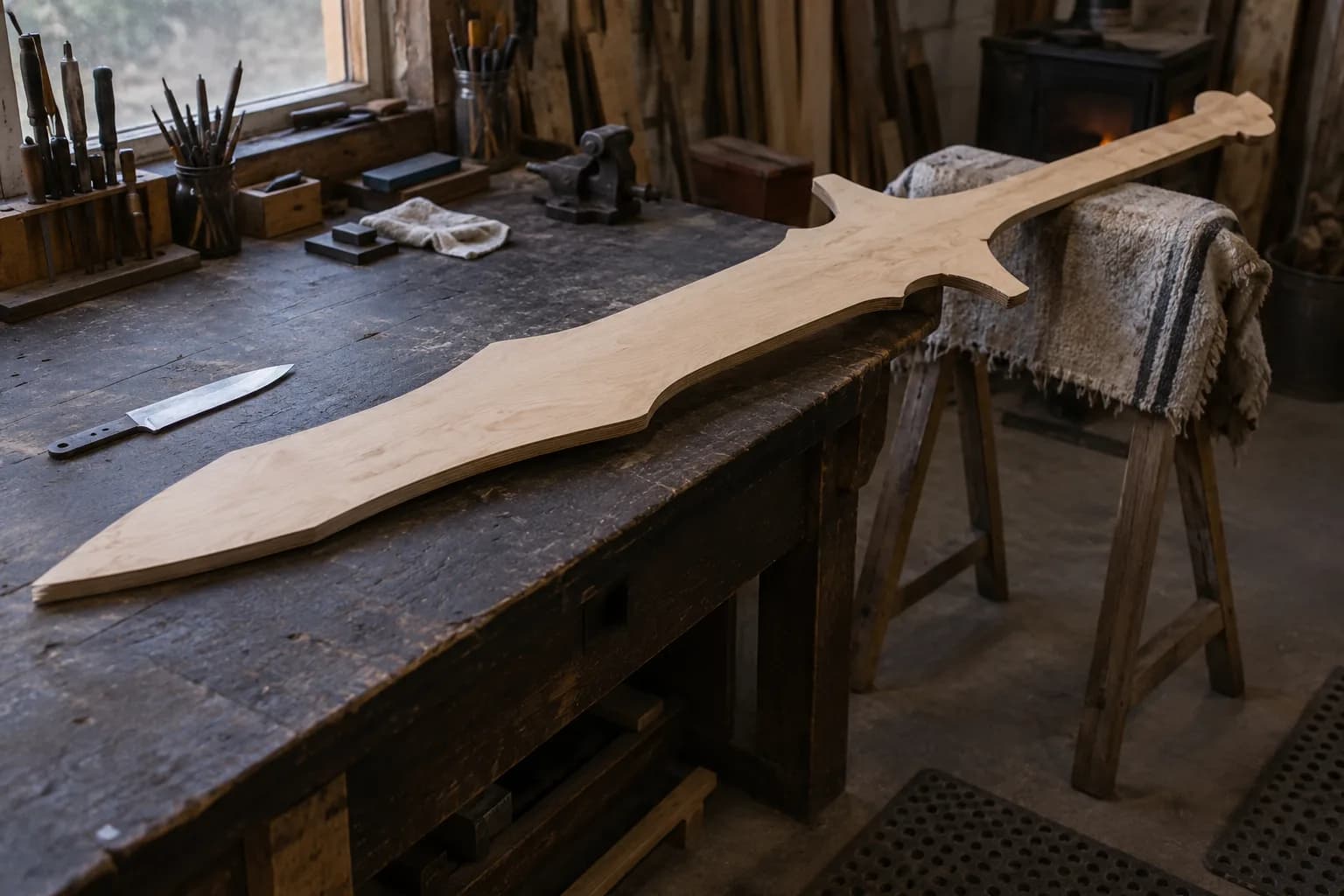
Three things. Respect the entry point — the customer holding a licensed replica is holding the reason your craft has a market; meet the enthusiasm. Sell the difference — the step from replica to custom is the step from a movie’s sword to THEIR sword, and that story closes commissions. And mind the law — licensed designs belong to their license holders; a maker copies Anduril at their legal peril, but “a ranger’s sword in the spirit of the films” is a design brief, not an infringement. The fandom-to-forge pipeline runs one direction, and it ends at benches like yours — the Fantasy & Fiction Blades section now walks it franchise by franchise; the modern-culture side of that pipeline continues in LARP, HEMA and Modern Sword Culture.
Keep reading
Three more from the same bench.
Sword steel selection is knife steel selection with the priorities inverted: at three feet of lever arm, toughness is nearly everything and wear…

No blade carries more mythology per inch than the katana — the folded-a-thousand-times, cuts-through-tanks legend machine. The real sword underneath is…

The sword never actually died — it just changed jobs. Today it is sporting equipment, theater prop, historical laboratory and craft object at once…
Same bench
I machine the parts, hand-assemble, track and test Torus grinders in Sterling, Illinois. Most orders ship in seven to ten business days from time of order.

Current dual-axis platform with a fiber-laser-cut 6061 chassis and single-knob tracking.

Current dual-axis platform with a steel chassis, more mass and less vibration.

Prior-design aluminum chassis, 90-degree tilt and 1.5-inch tooling arms.

One-man shop
I answer my own email. Tell me the steel, the machine and what it is doing, and I will tell you what I would try next.