
Swords
Sword Anatomy: A Maker’s Field Guide
Before the types, the vocabulary. Every sword — katana or claymore, gladius or rapier — is the same short list of parts negotiating the same physics: a…
Swords
Viking swords decoded: pattern welding born of necessity, the misspelled Ulfberht counterfeits, the crucible steel evidence, and what makers can take from it.
2 min readWritten by Rich LinvilleFree to read
The Viking sword is where bladesmithing history gets genuinely mysterious: gorgeous pattern-welded blades giving way, at the top of the market, to a run of swords marked with one name — ULFBERHT — made from steel that should not have existed in Northern Europe for another eight centuries. It is also the ancestral home of half the techniques in the damascus section of this site.
The Viking-age sword (roughly 750–1050) is a one-handed, broad, double-edged cutter around 30 inches, wide fuller, short guard, distinctive lobed or tea-cozy pommel — Petersen’s typology catalogs dozens of hilt variants. It fought with a shield, cutting around and over it; the thrust was secondary. Balance mattered enormously: wide thin blades with pronounced fullers and strong distal taper kept these swords near two and a half pounds and quick in one hand.
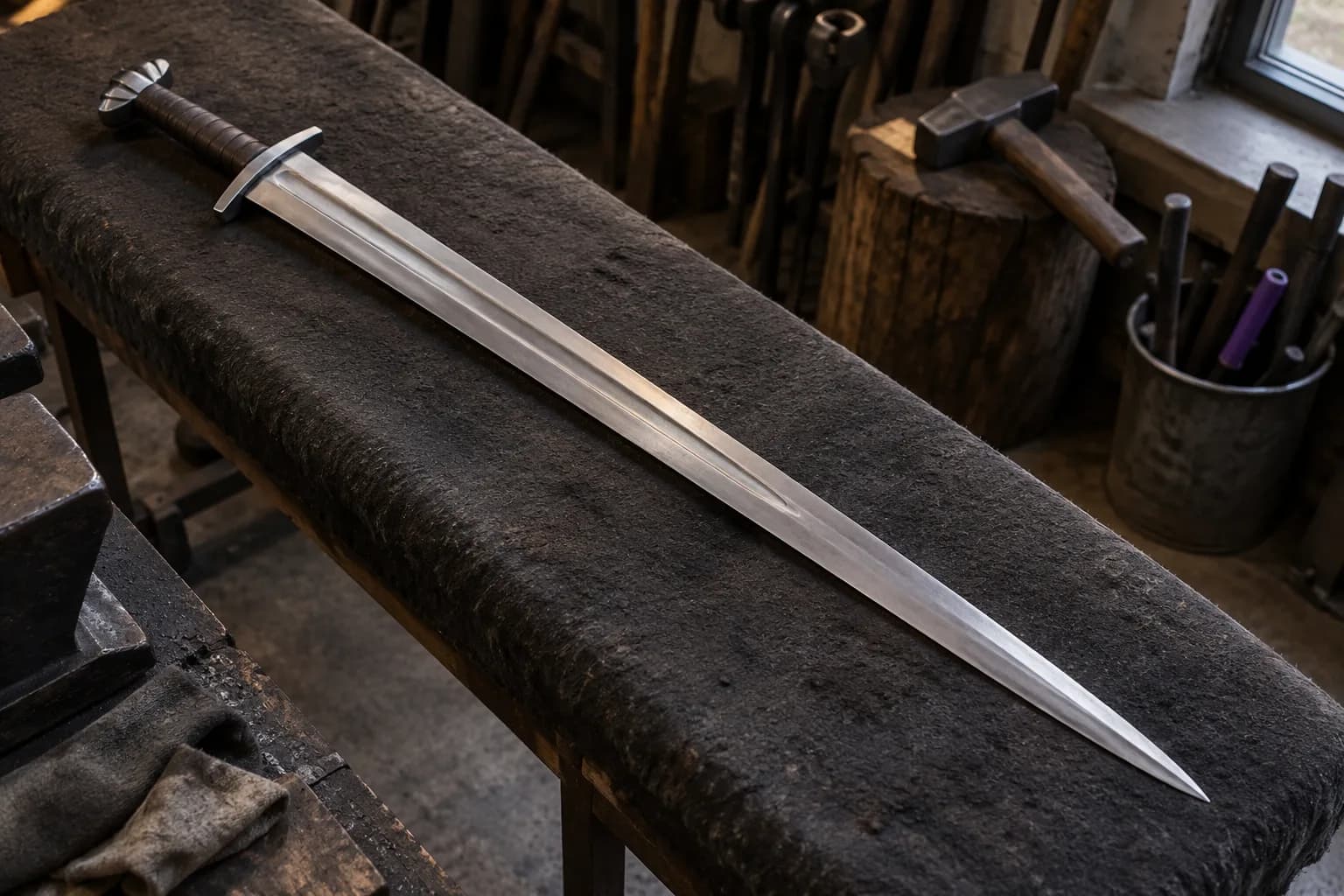
Early medieval smiths could not make large volumes of consistent steel, so they built blades from what they had: rods of varying iron and steel, twisted and forge-welded into cores, edged with the best carbon steel available. The twisted structure averaged out weaknesses — and etched into herringbone and serpent patterns that became prestige itself; sagas praise the patterns explicitly. Every technique lives on in the damascus section: what was engineering necessity is now pure art, and 15N20 plays the bright twist modern smiths reach for.
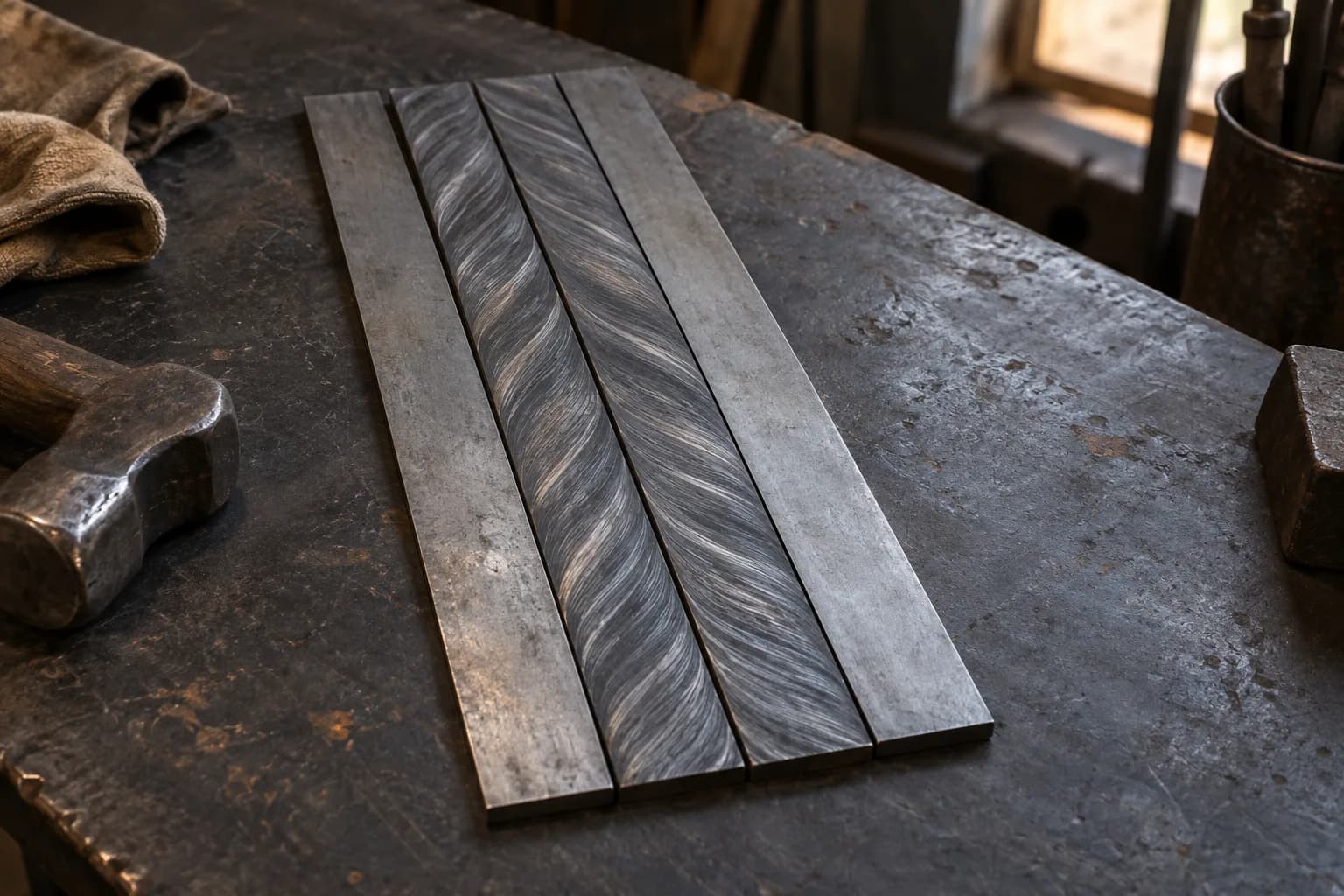
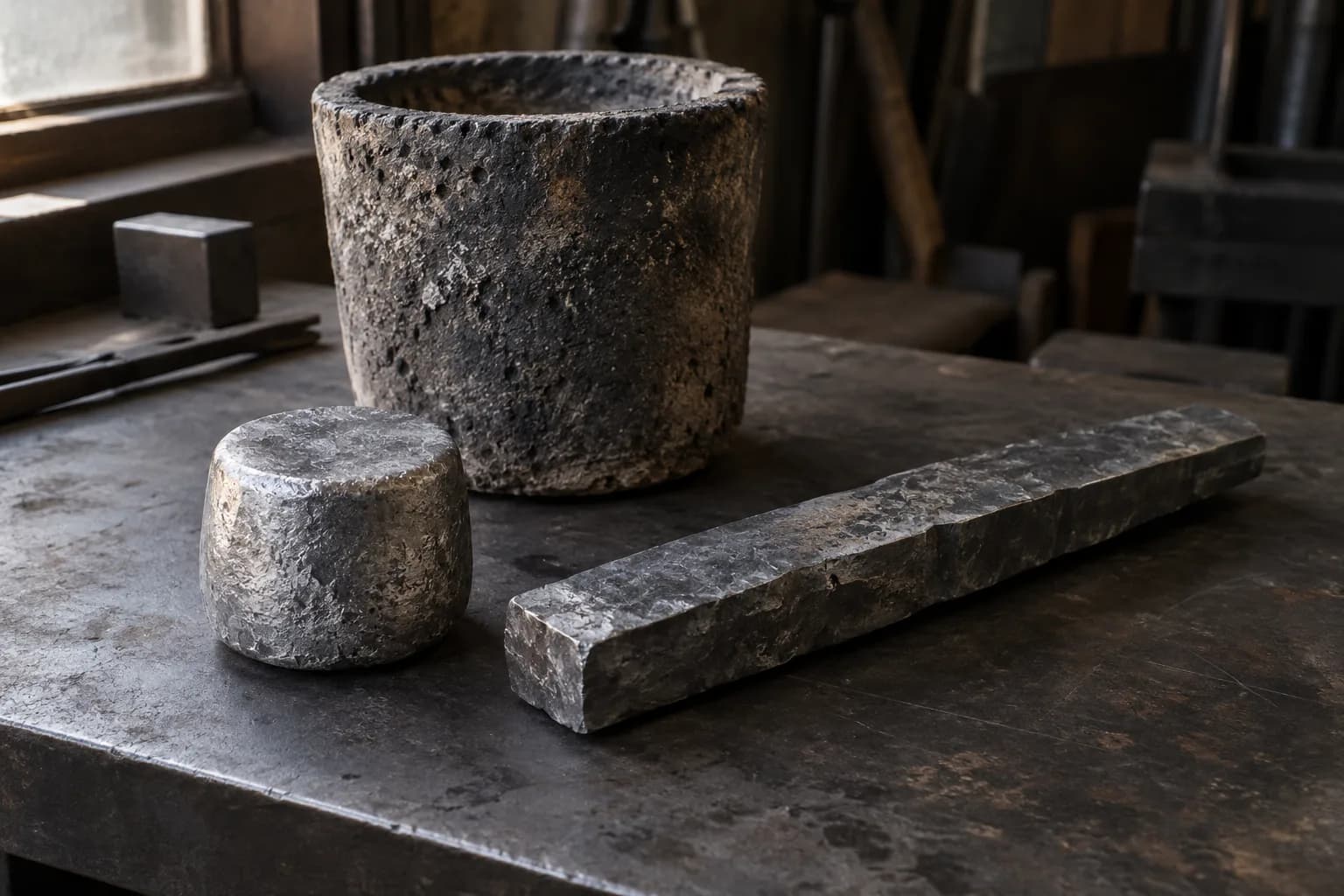
Roughly 170 known blades carry the inlaid signature +VLFBERH+T, spanning two centuries and clearly multiple workshops — a brand, complete with misspelled counterfeits (the fakes sometimes sign +VLFBERH+T with the crosses misplaced, medieval trademark infringement in the flesh). The mystery: the best Ulfberhts are crucible-class steel — high-carbon, slag-free, homogeneous — at a time Europe made nothing like it. Leading explanation: ingots imported up the Volga trade routes from Central Asian crucible-steel producers, forged by Frankish smiths into Viking hilts. A sword whose steel crossed half the known world; supply chains are older than we think.
Three lessons. Material honesty: the extra an Ulfberht cost bought real performance — cleaner steel bent instead of breaking — and customers paid for it then as now. Branding: a consistent maker’s mark on consistent quality built a name that outlived its maker by a century, an argument our Selling & Business guides make in modern dress. And craft: a pattern-welded Viking-style blade with a lobed pommel remains one of the most satisfying historical builds a damascus-capable shop can attempt — the techniques are all documented in the damascus silo, and the hilt furniture is honest blacksmithing per the forging section.
Keep reading
Three more from the same bench.
Before the types, the vocabulary. Every sword — katana or claymore, gladius or rapier — is the same short list of parts negotiating the same physics: a…

The longsword is the European counterpart to the katana’s fame: the two-handed cruciform sword of the late medieval knight, the centerpiece of the German…

“Grain” comes up constantly in heat-treat discussions, fine grain is good, coarse grain is bad, normalizing refines it, but it’s rarely explained what…
Same bench
I machine the parts, hand-assemble, track and test Torus grinders in Sterling, Illinois. Most orders ship in seven to ten business days from time of order.

Current dual-axis platform with a fiber-laser-cut 6061 chassis and single-knob tracking.

Current dual-axis platform with a steel chassis, more mass and less vibration.

Prior-design aluminum chassis, 90-degree tilt and 1.5-inch tooling arms.

One-man shop
I answer my own email. Tell me the steel, the machine and what it is doing, and I will tell you what I would try next.