Belt Grinders

Knife Making Tools Worth Buying.

It is easy to fall down the tool rabbit hole. Here are the knifemaking tools that earn their bench space: a 2×72 belt grinder first, then a bevel jig, a plunge jig, a quench vise, and the small things.
2 min readBy Rich Linville
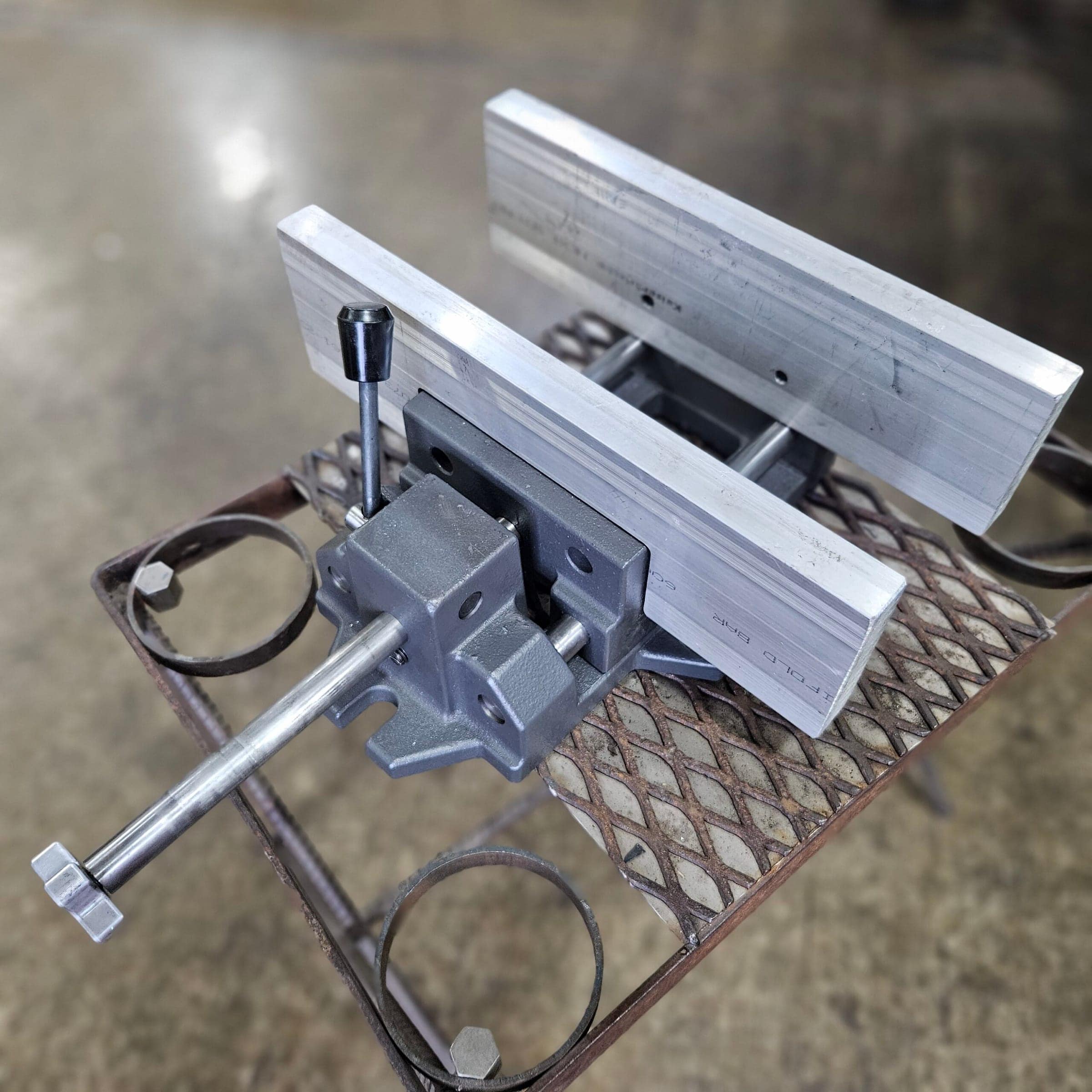
Close-up of a Torus CNC quench vise handle and clamp holding aluminum bar stock

Knife-Making Tools That Actually Make You Look Like You Know What You’re Doing
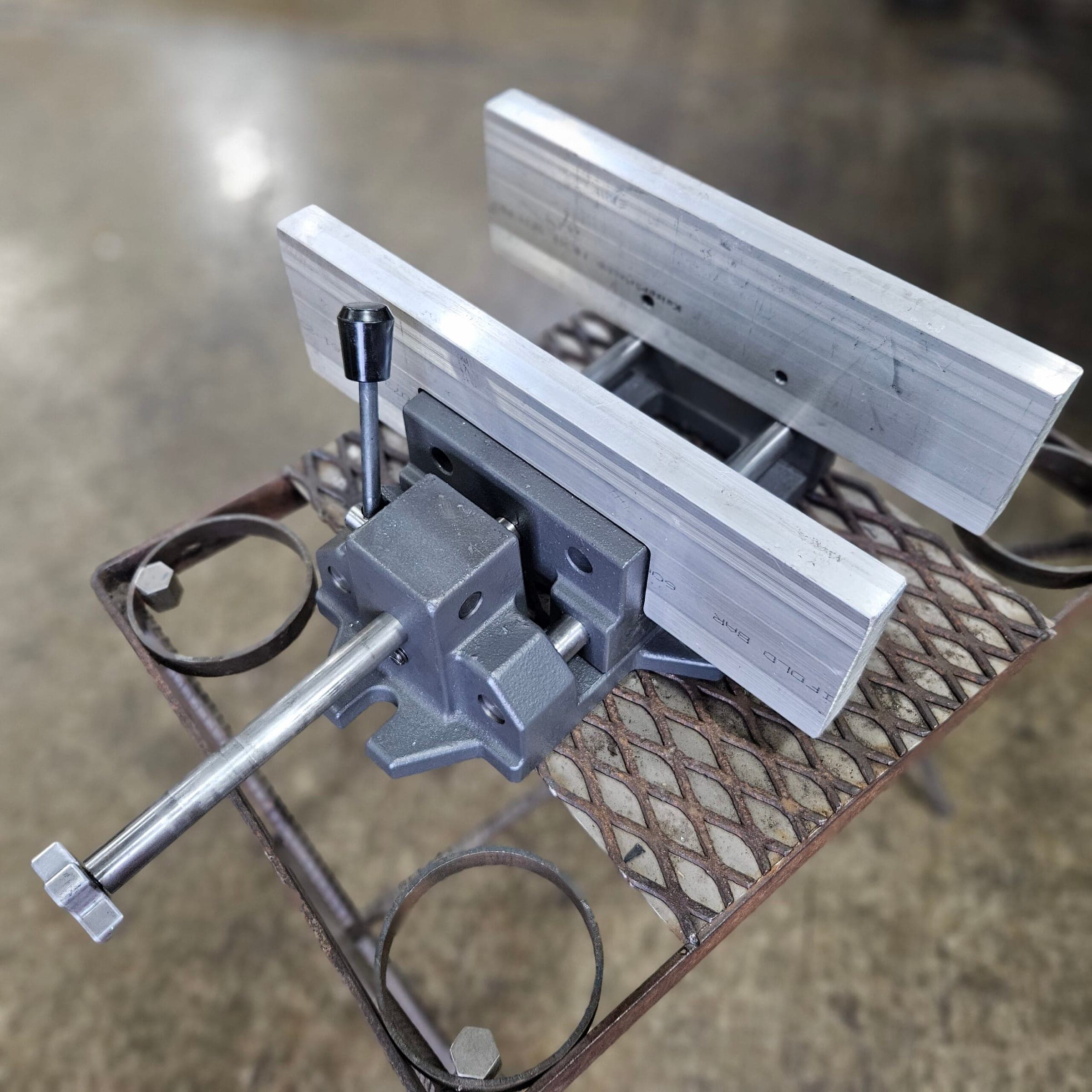
Close-up of a Torus CNC quench vise handle and clamp holding aluminum bar stock

If the knifemaking bug has bitten you, you already know how fast the tool rabbit hole opens up. One minute you are shaping a blade on a file jig and the next you are comparing VFD wiring diagrams at midnight. Here is the truth from someone who builds the tools: with a short list of the right ones, you stop fighting your setup and start making knives that look like you meant them.

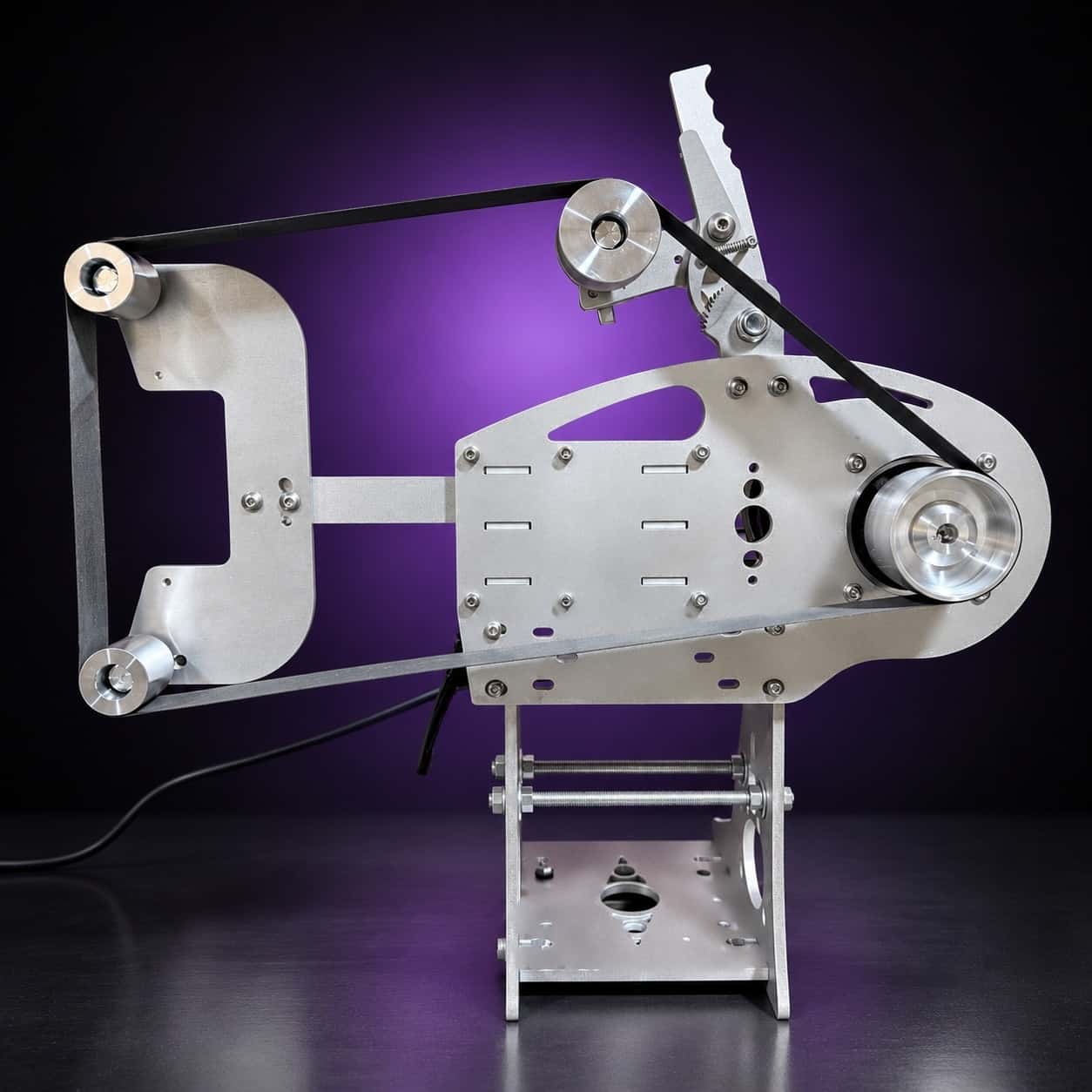
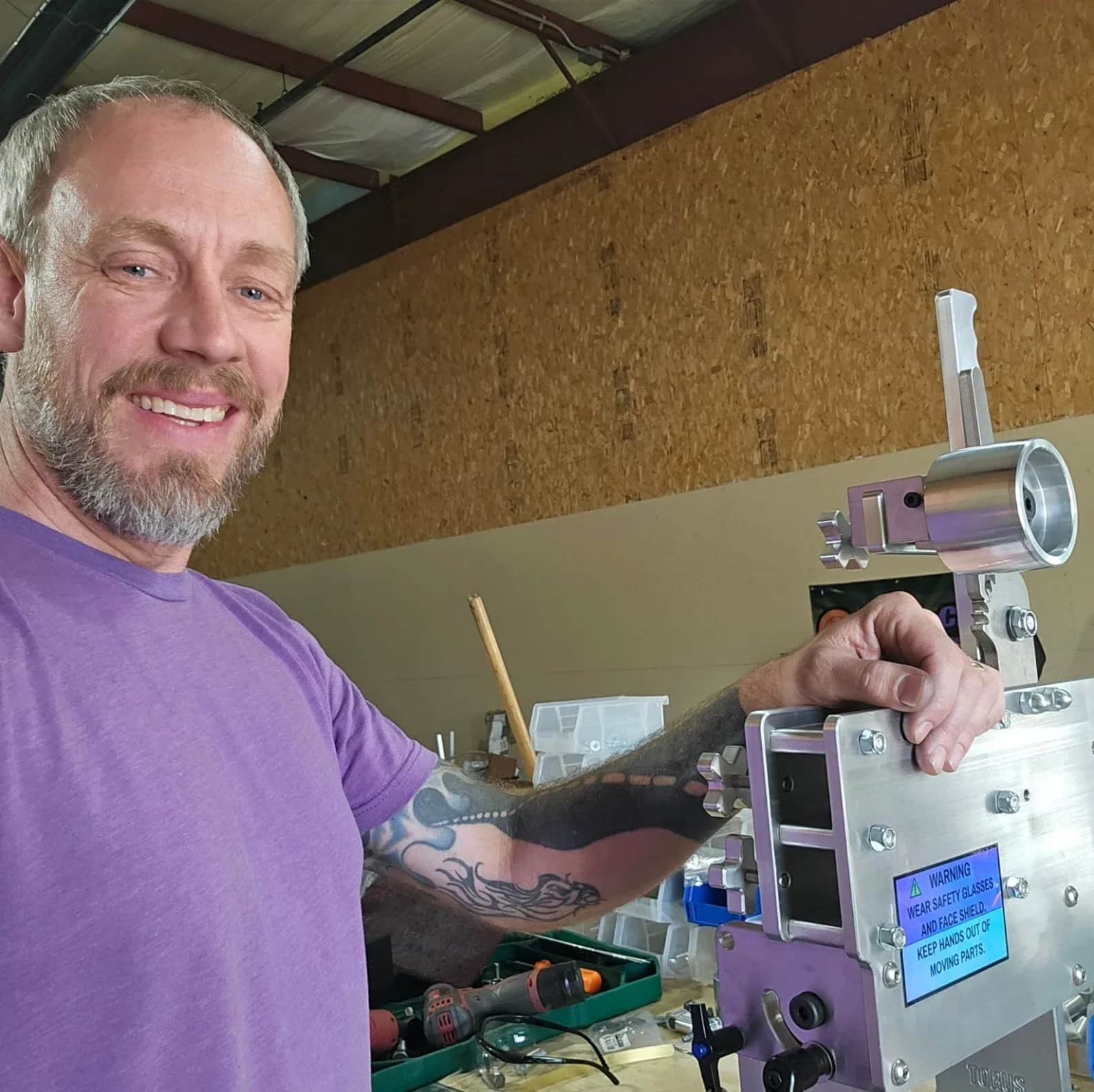
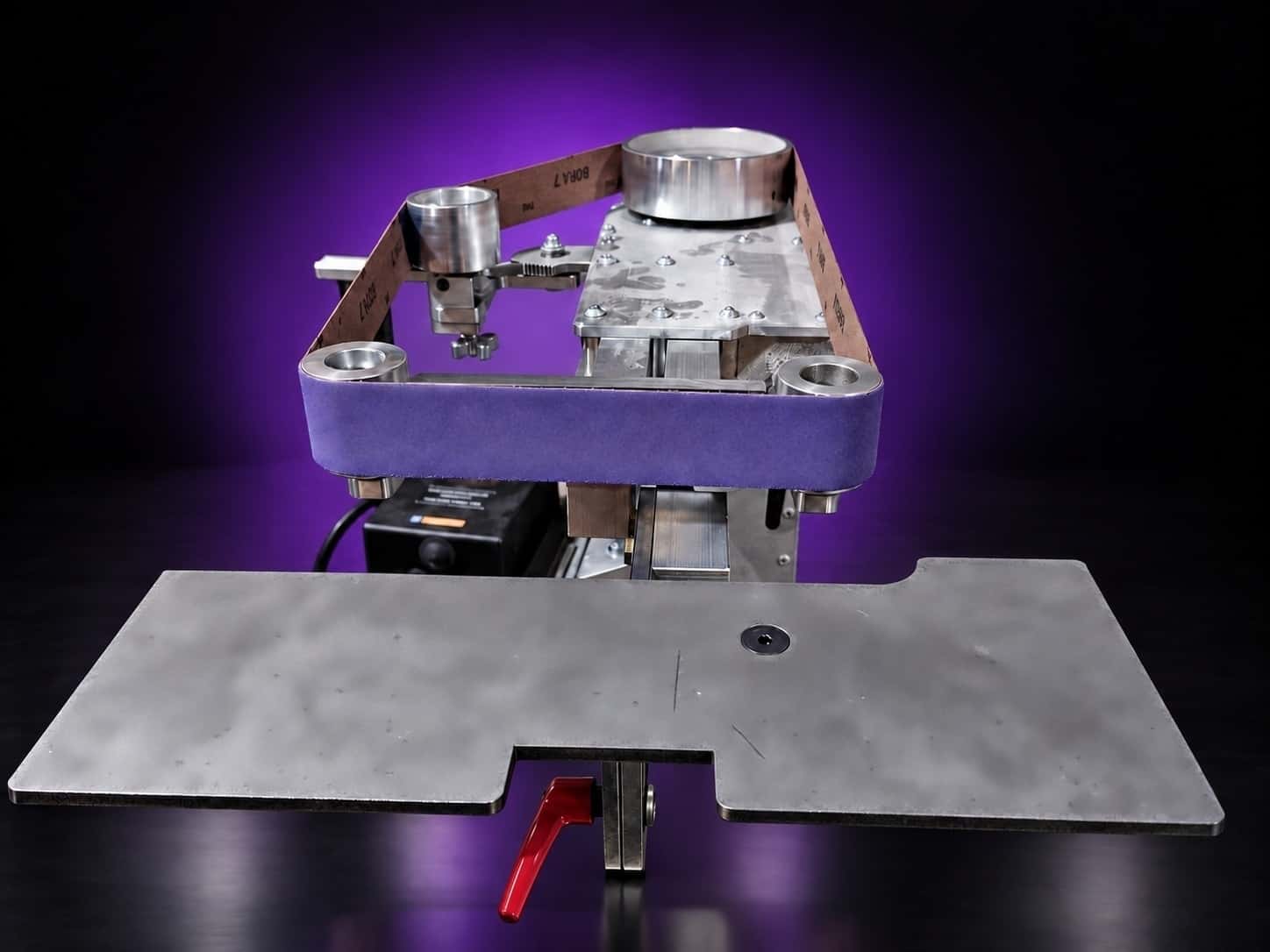
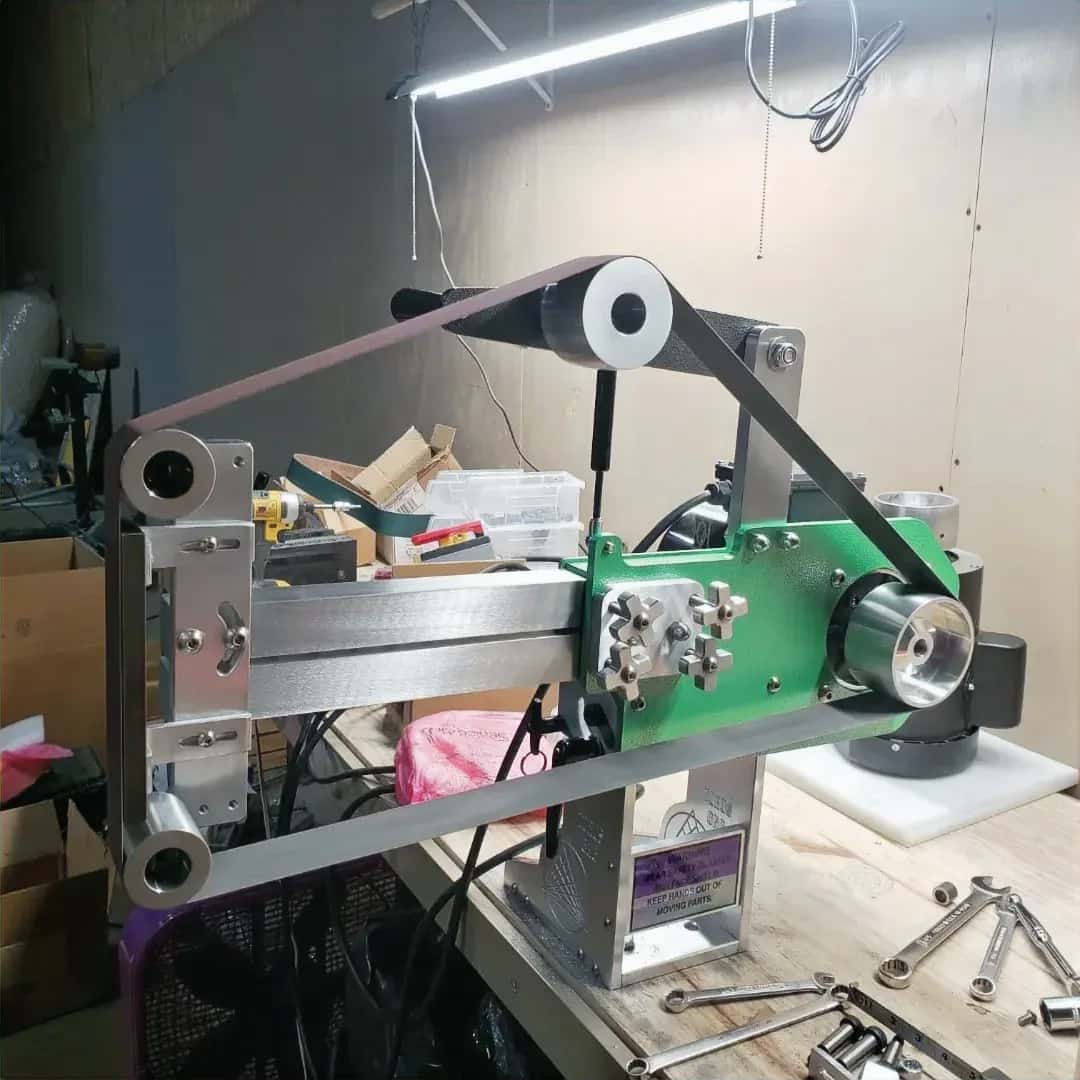
Let’s start with the centerpiece — a 2×72 belt grinder. This is the tool that transforms your shop from hobby status to full-blown knife lab. The Torus 2×72 stands out for its precision machining, heavy-duty materials, and ease of use. It tracks true, runs smooth, and helps you shape crisp, even bevels without the chatter or drift of lesser setups.

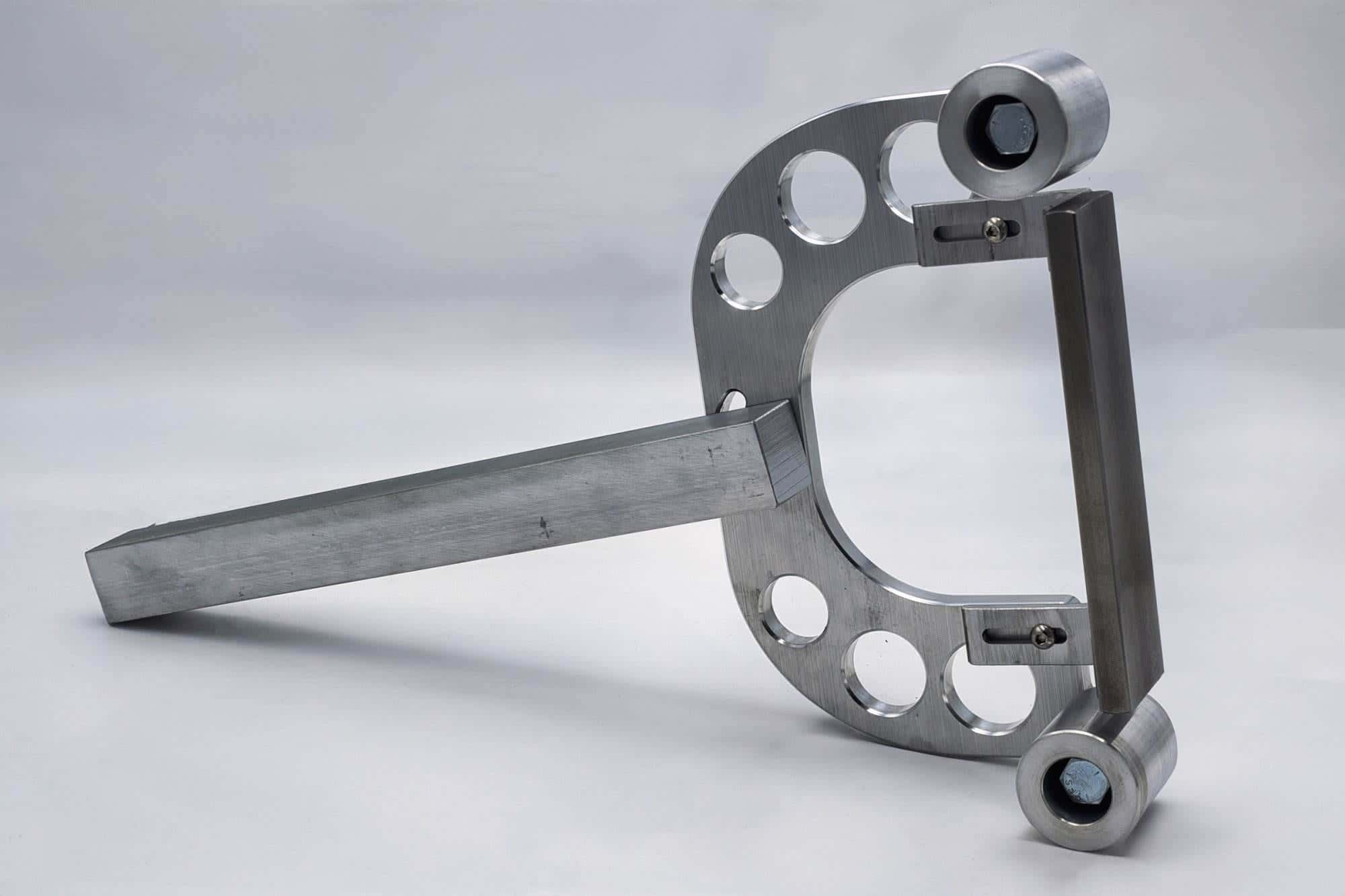
Speaking of bevels — if you’ve ever tried to eyeball one, you know how fast things can go wrong. A bevel grinding jig gives you the control and repeatability you need to nail consistent angles every time. Pair that with a plunge grind jig, and suddenly your plunges look clean and professional instead of like you sneezed mid-pass. Both jigs are a godsend for dialing in symmetry and fine details.
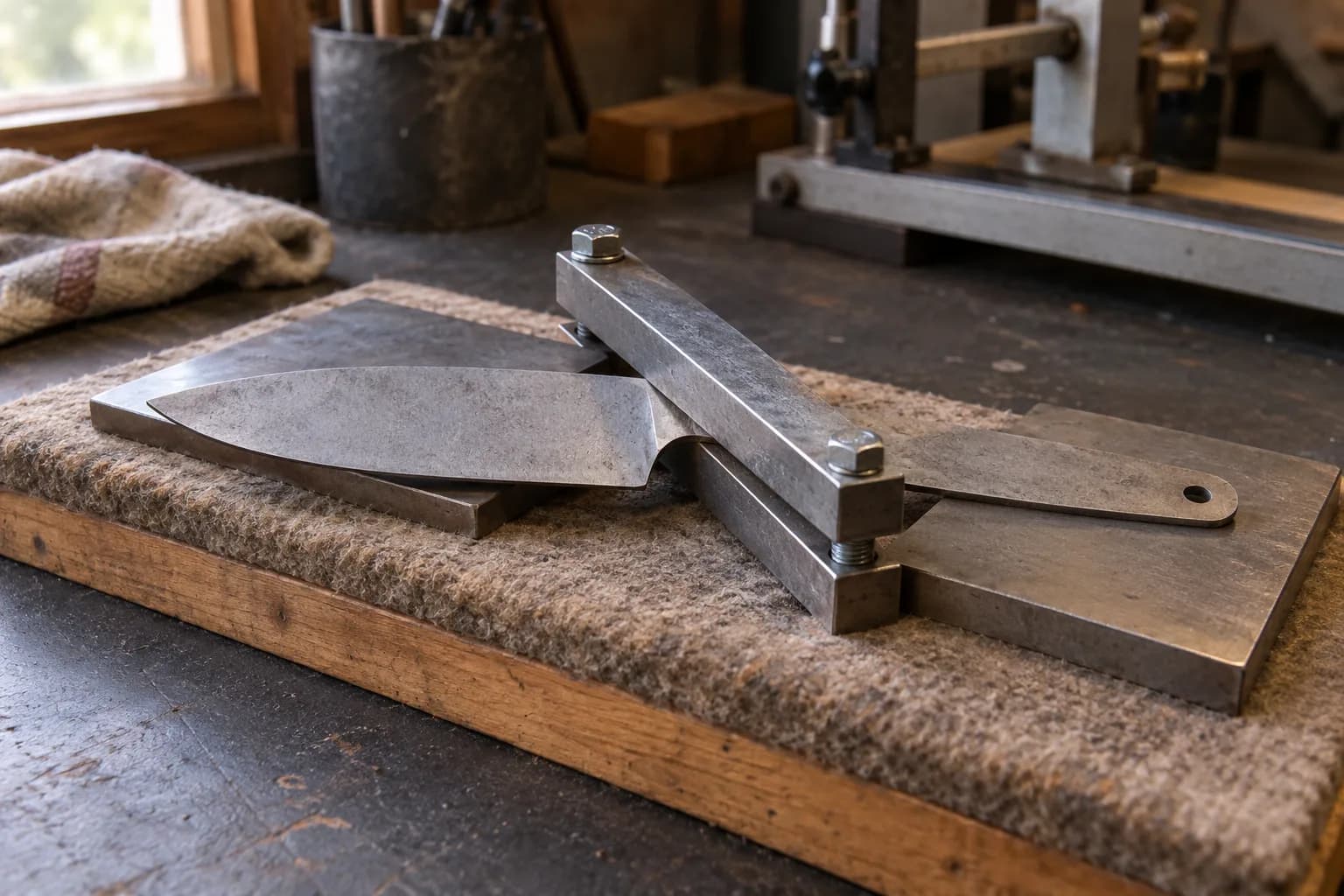
Two steel bars bolted together clamp a blunt knife blank at the ricasso, resting on steel plates over felt on a bench.

Then there’s heat treatment — the heart of the process. My XL 4×14 quench vise makes this step consistent: it clamps the blade between two thick aluminum plates that pull heat from both faces and help keep it straight. A few degrees off here can mean hours of rework later, so these tools are worth their weight in hardened steel.
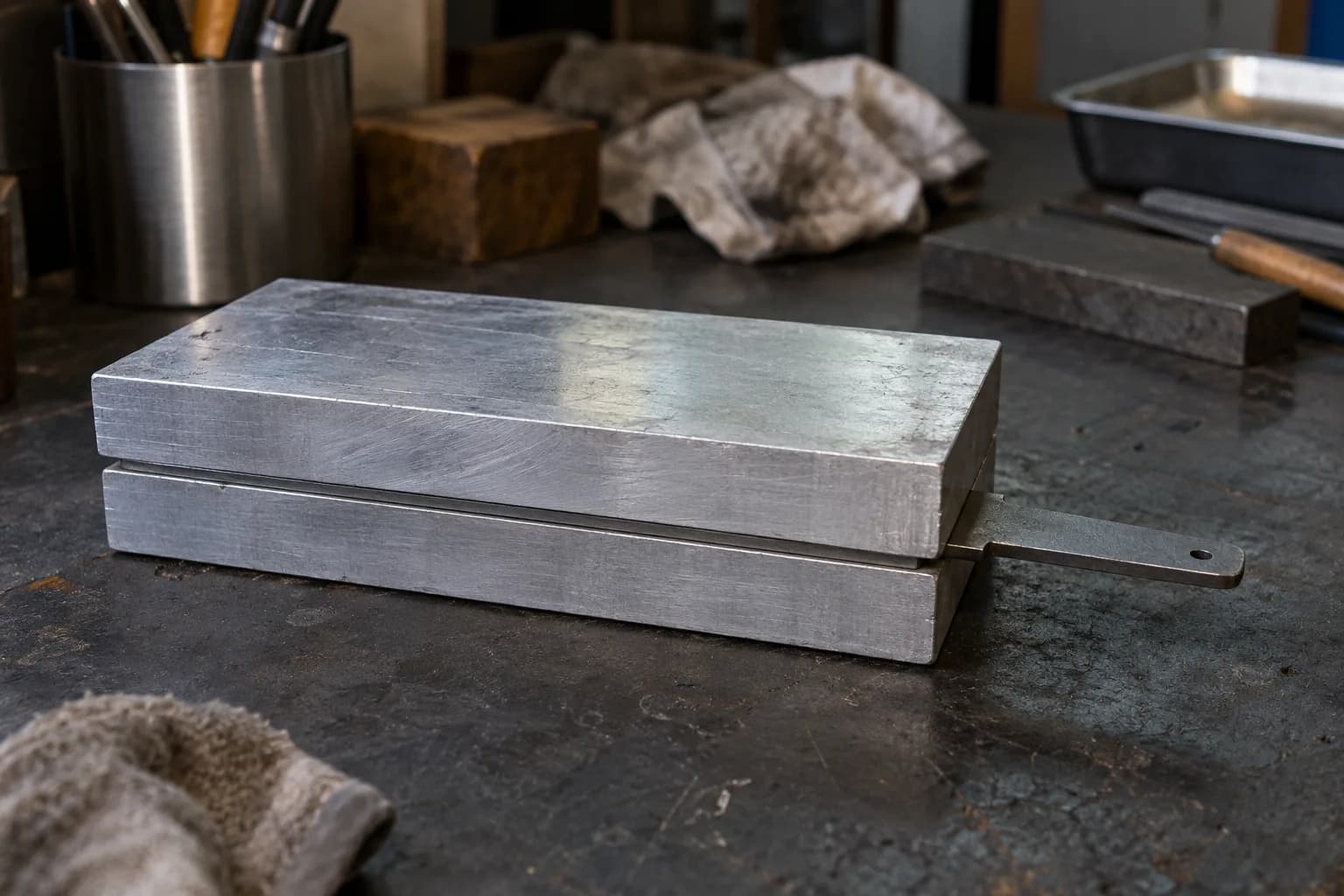
Two thick aluminum plates stacked on a dark bench with a gray steel tang projecting from the seam between them.

Don’t overlook the small stuff either: a pack of Sharpies for layout lines, a scribe for precision marking, and a set of good drills (think McMaster-Carr, not bargain-bin specials). You’ll be amazed at how much better your results look when your holes line up, your grinds stay even, and your quenches behave.
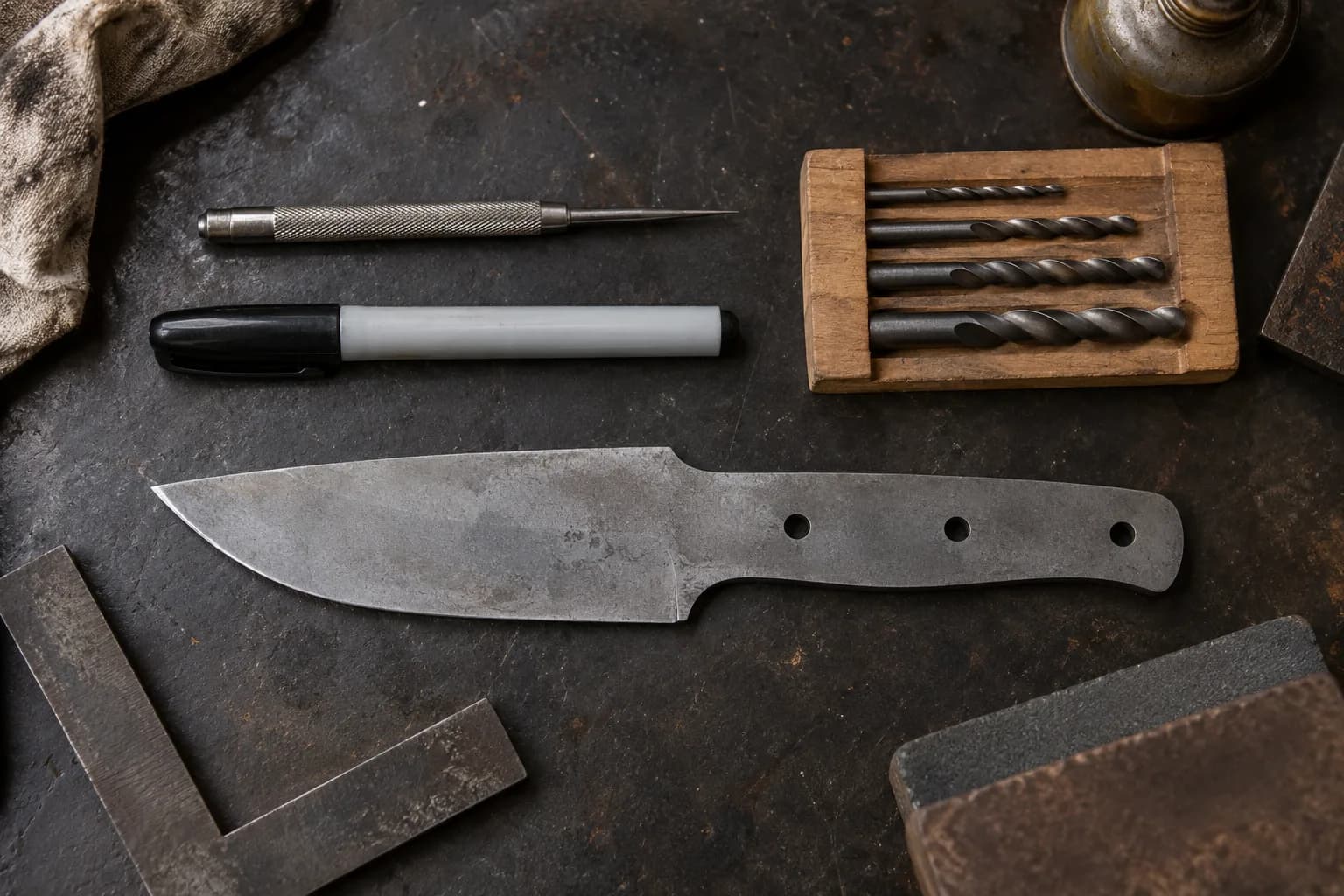
Overhead view of a scribe, plain marker and four drill bits in a wooden cradle beside a knife blank with three pin holes.

The takeaway? Knifemaking isn’t about having the most tools — it’s about having the right ones. Start with quality, build your workflow around repeatability, and let your tools do what they’re meant to: make you look like you’ve been doing this for years.

Start with the centerpiece. The Nova 2×72 is fiber-laser-cut 6061 aluminum, tilts 90 degrees, and ships assembled and tested from Sterling, Illinois for $1,295. Add a motor and VFD, then a quench vise when heat treat day comes.
Filed underBelt Grinders

Keep grinding

Related shop notes

ForgeBrain

Go deeper on the technique

Free reference guides from the ForgeBrain library — no sign-up, no paywall.

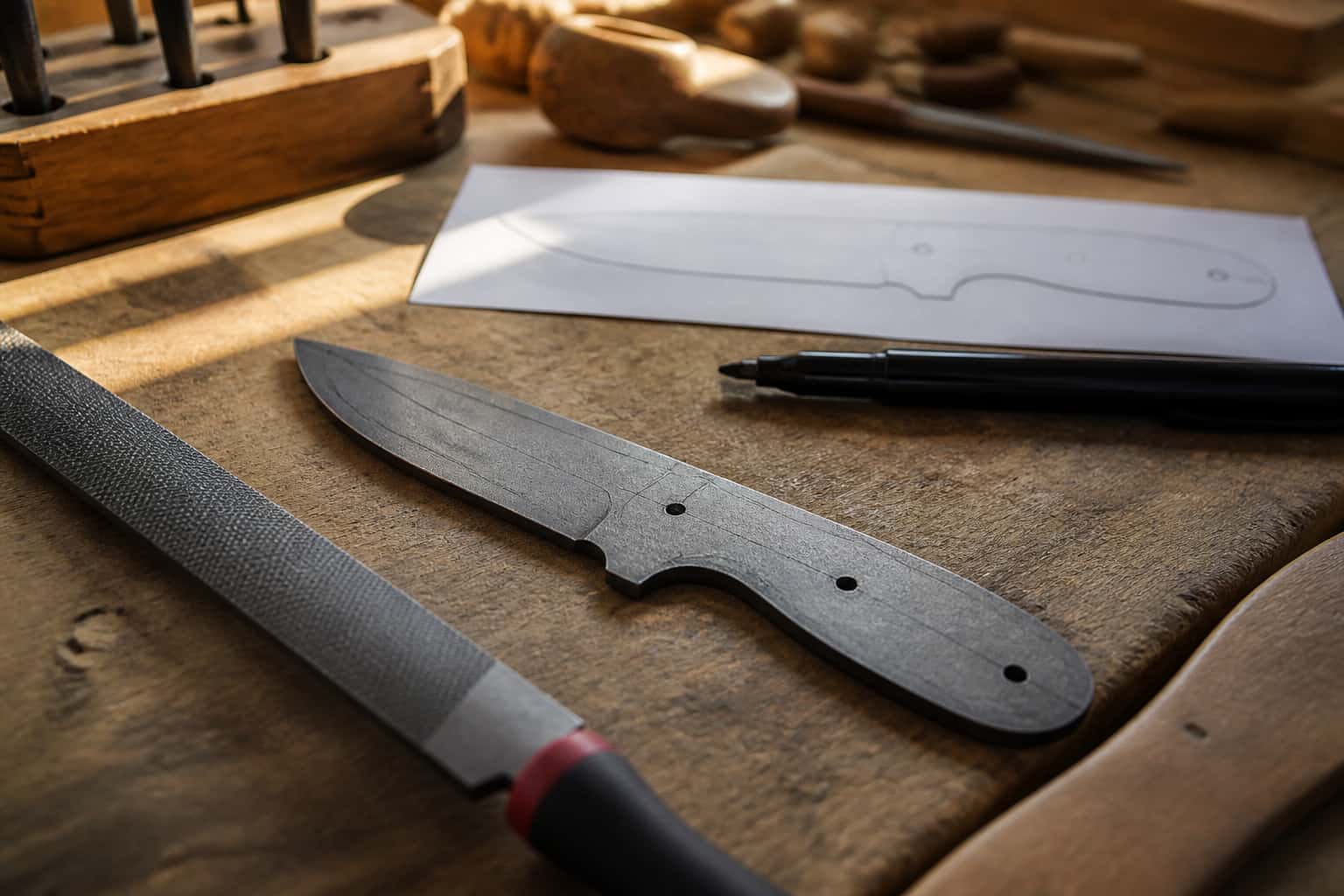
  • Beginner knife blank with scribed layout lines beside a file, marker, and paper template on a bench
    Beginner Guides

    Essential First Tools & Equipment for Knifemaking

    It’s easy to look at a fully outfitted professional shop and assume you need all of it to make your first knife. You don’t. Here’s what actually matters on day one, and what can reasonably wait until you know what kind of knifemaker you’re becoming. The Grinder This is the one piece of equipment worth…

    Read the guide
  • Beginner knife blank with scribed layout lines beside a file, marker, and paper template on a bench
    Beginner Guides

    Where to Buy Knife Steel: A Sourcing Guide

    Buying steel from a real, known supplier instead of unmarked scrap or “mystery steel” is the single most important sourcing decision a new maker makes, see 10 Common Mistakes Beginner Knifemakers Make for why. Here’s what to look for in a supplier, and real, currently-active options worth knowing. What to Actually Look For in a…

    Read the guide

Built in Sterling

The machines behind these notes

I machine the parts, hand-assemble, track and test each grinder before it ships. Most orders leave in seven to ten business days from time of order.

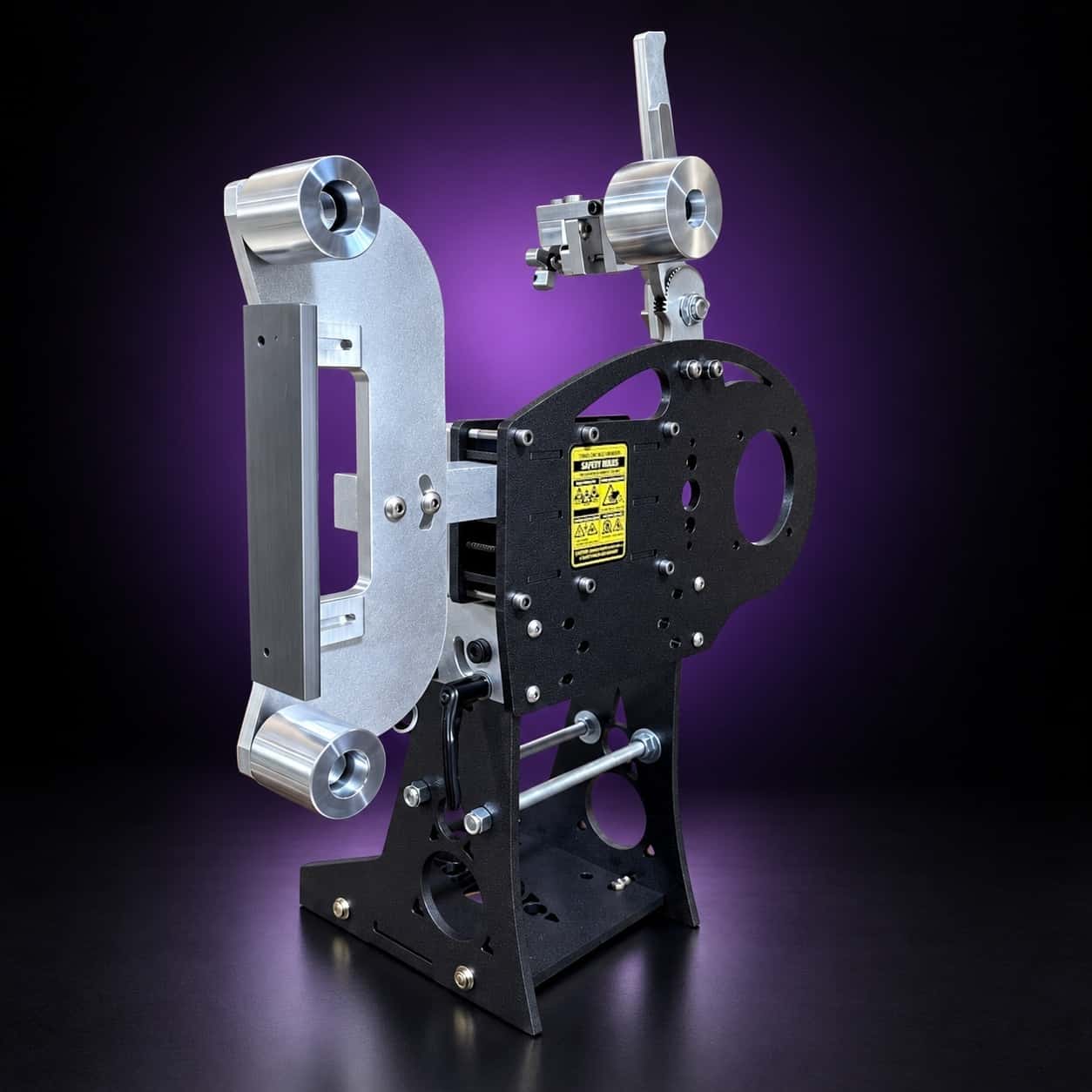
  • Nebula 2x72 grinder, front three-quarter view: aluminum arm, black plate, Safety Rules label, on black with a purple glow

    Nebula 2×72 Steel Belt Grinder

    My heaviest 2x72: a 3/8-inch steel chassis with machined dual-axis tracking. Bolt it down and it stays put.

    Starts at$1,295View
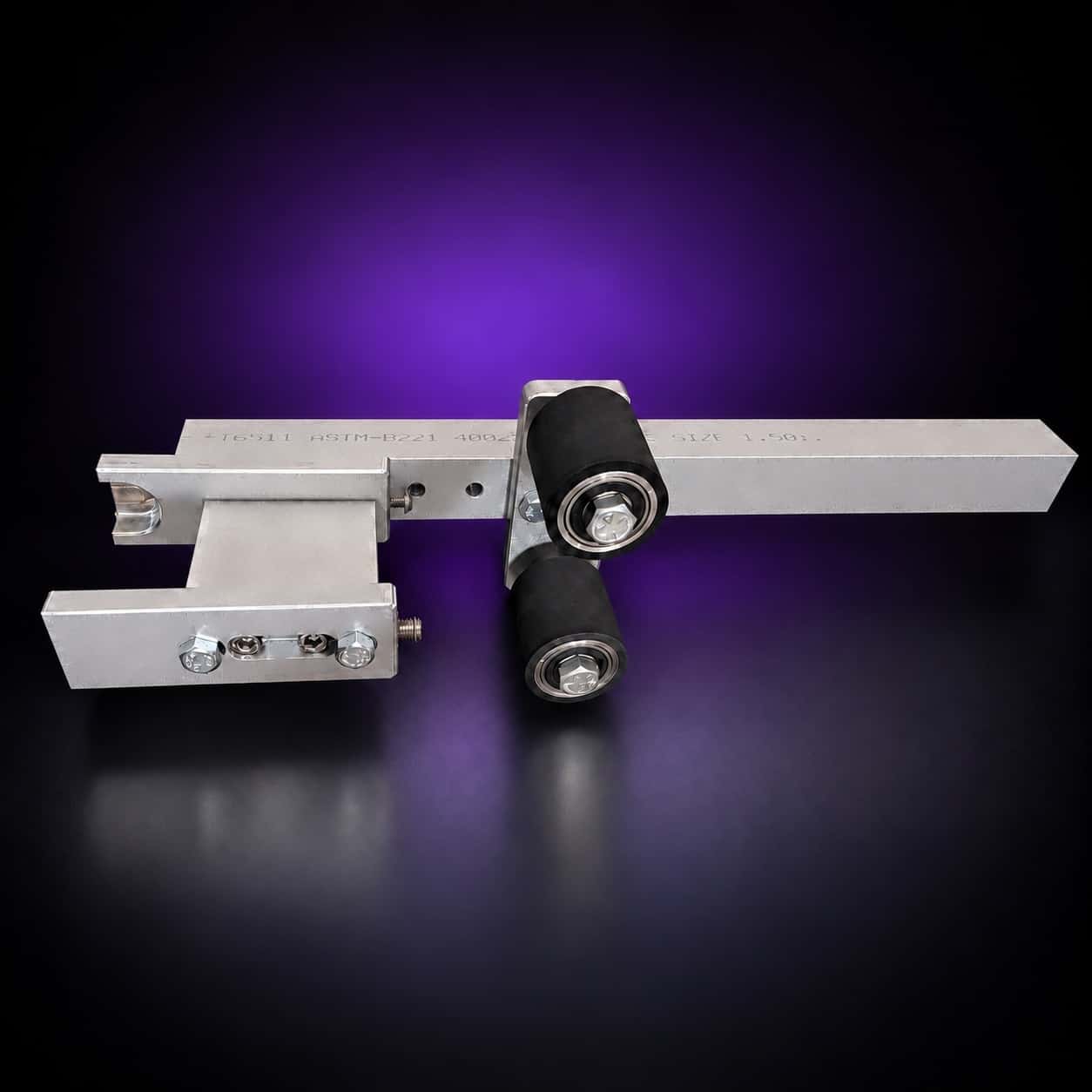
  • Small wheel attachment from above: holder fork, engraved aluminum arm and two rubber wheels, on black with a purple glow

    Small Wheel Attachment with 1.5″ Aluminum Tooling Arm

    Reaches the choils, finger grooves and inside curves a flat platen never will. Wheels from 1/2 to 1.5 inches.

    Starts at$289View
Rich Linville in the Torus CNC shop with a finished 2x72 belt grinder

Built to order

Tell me what you are building

I answer my own email. Tell me the work you do and which grinder you are considering.