
Beginner Guides
2×72 Belt Grinder Brands Compared: The Honest Field Guide
Full disclosure, before anything else: this is Torus CNC’s site — we build three of the grinders compared below. Here’s how we’ve kept this honest: every…
Troubleshooting
Work back from what it is doing to what caused it, then to the fix that addresses the cause. Nothing here needs a sign-up.
The flow
Causes first, then the quick checks, the fix, prevention and the stop-work point.
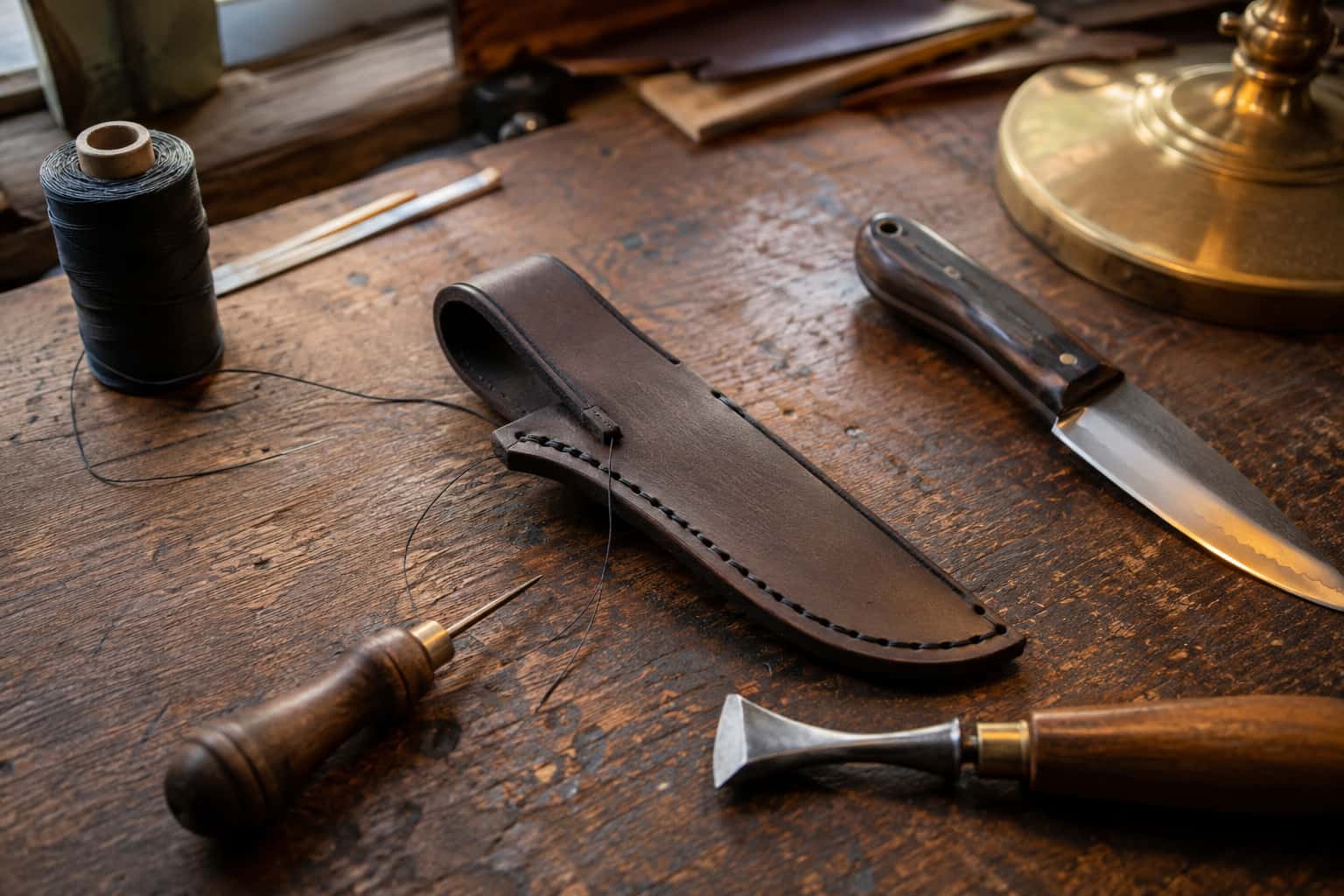
On the blade side: a missing or undersized WELT — the edge rides directly on the threads and cuts them one draw at a time; this is the classic first-sheath failure and the reason the fold-over guide calls the welt non-negotiable. Stitches tearing THROUGH the leather: holes too close to the edge, oversized holes (drilled fat or awl wallowed), thin or belly-grade leather at the seam, or thread over-tensioned until it acts like a cheese wire. General fraying: unwaxed or rotted thread, or stitches left proud on the surface with no groove protecting them from abrasion.
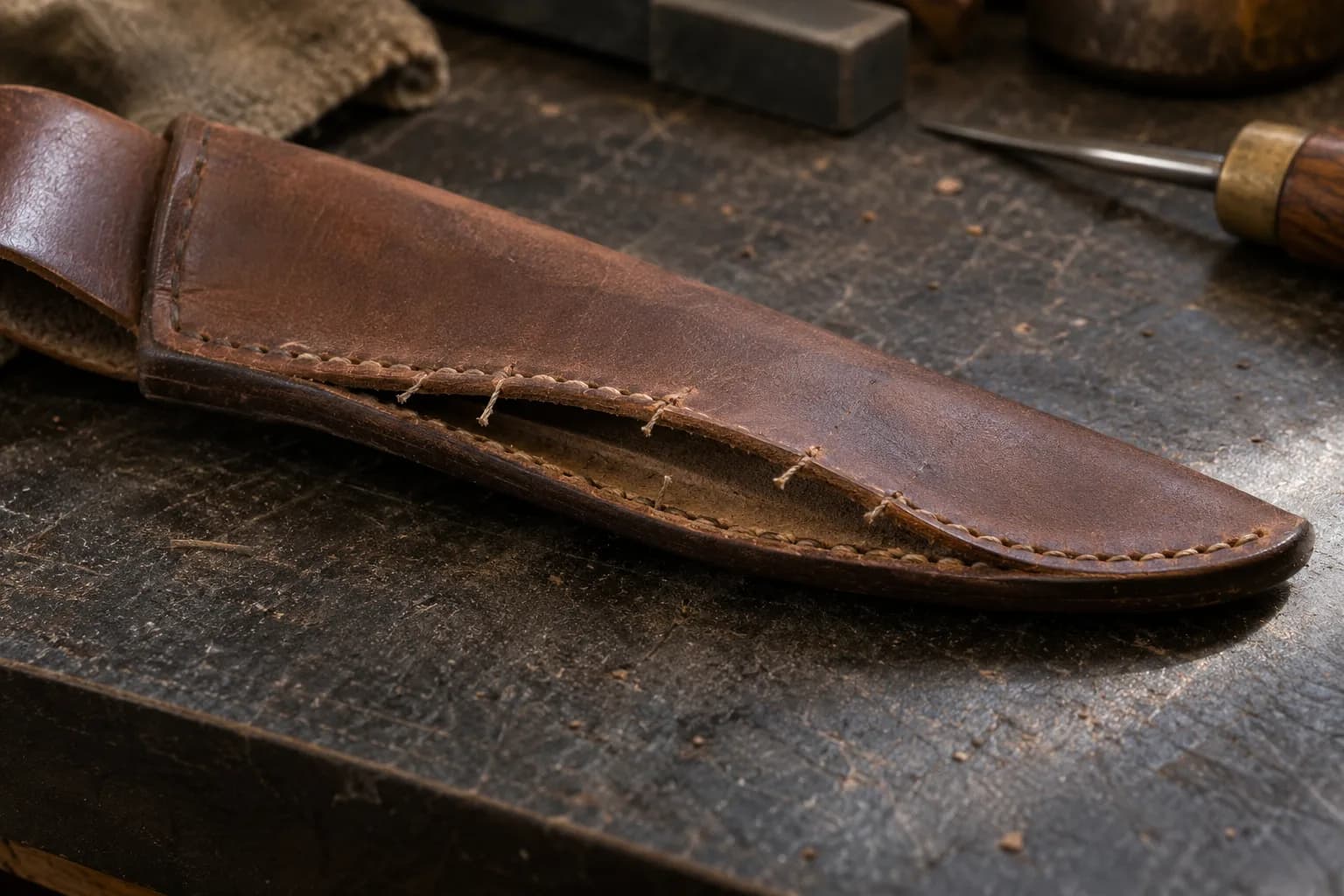
Pull the blade slowly and listen — contact clicking along the seam is the edge on thread or welt. Look inside with a light: welt present? Continuous past the edge's whole travel? Measure stitch-line edge distance (should be a solid 3/16-plus on 8-9 oz). Check whether failed stitches sit proud or grooved.
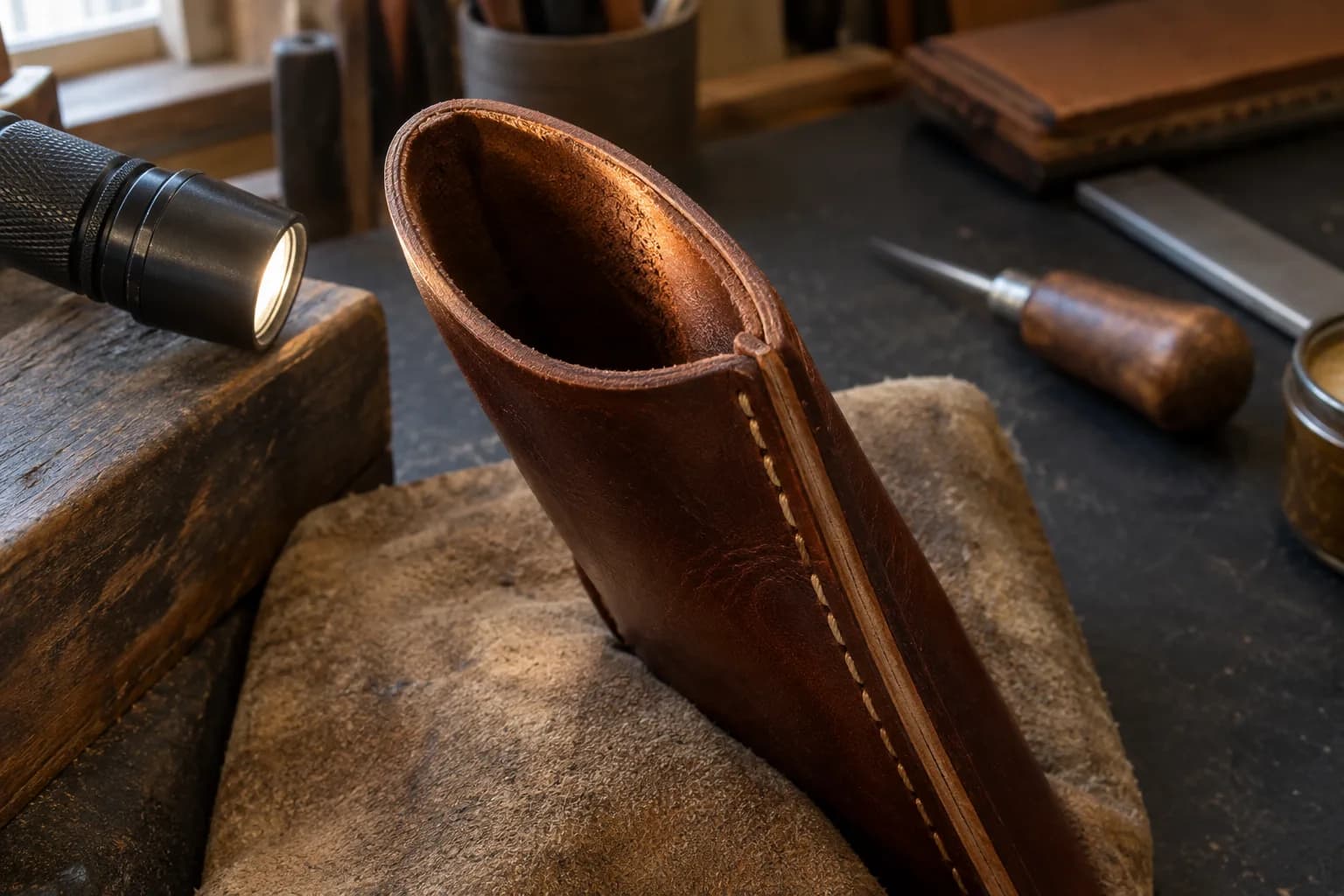
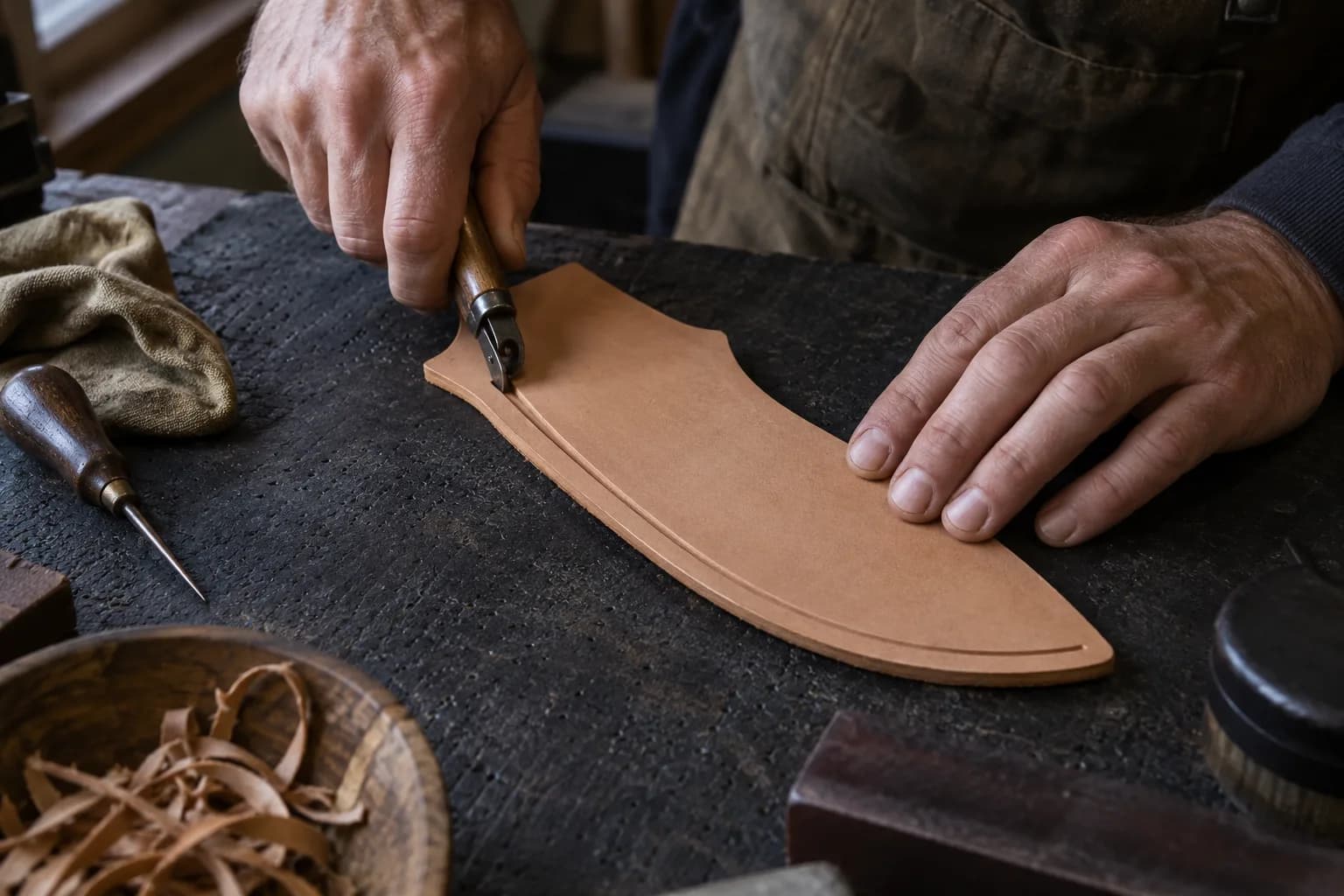
A cut seam over a missing welt means rebuild, not repair: unpick, cut a full-length welt (two layers for thin blades' clearance), re-glue, re-groove, and saddle stitch — the two-needle structure that cannot unzip from one failure, backstitched at the ends. Torn-through holes: move the new stitch line inboard on a fresh groove, or glue a reinforcing layer over the damaged margin. Replace any suspect thread with waxed poly and recess every run in its groove. A seam failing from abrasion alone re-stitches through the same holes in an evening.
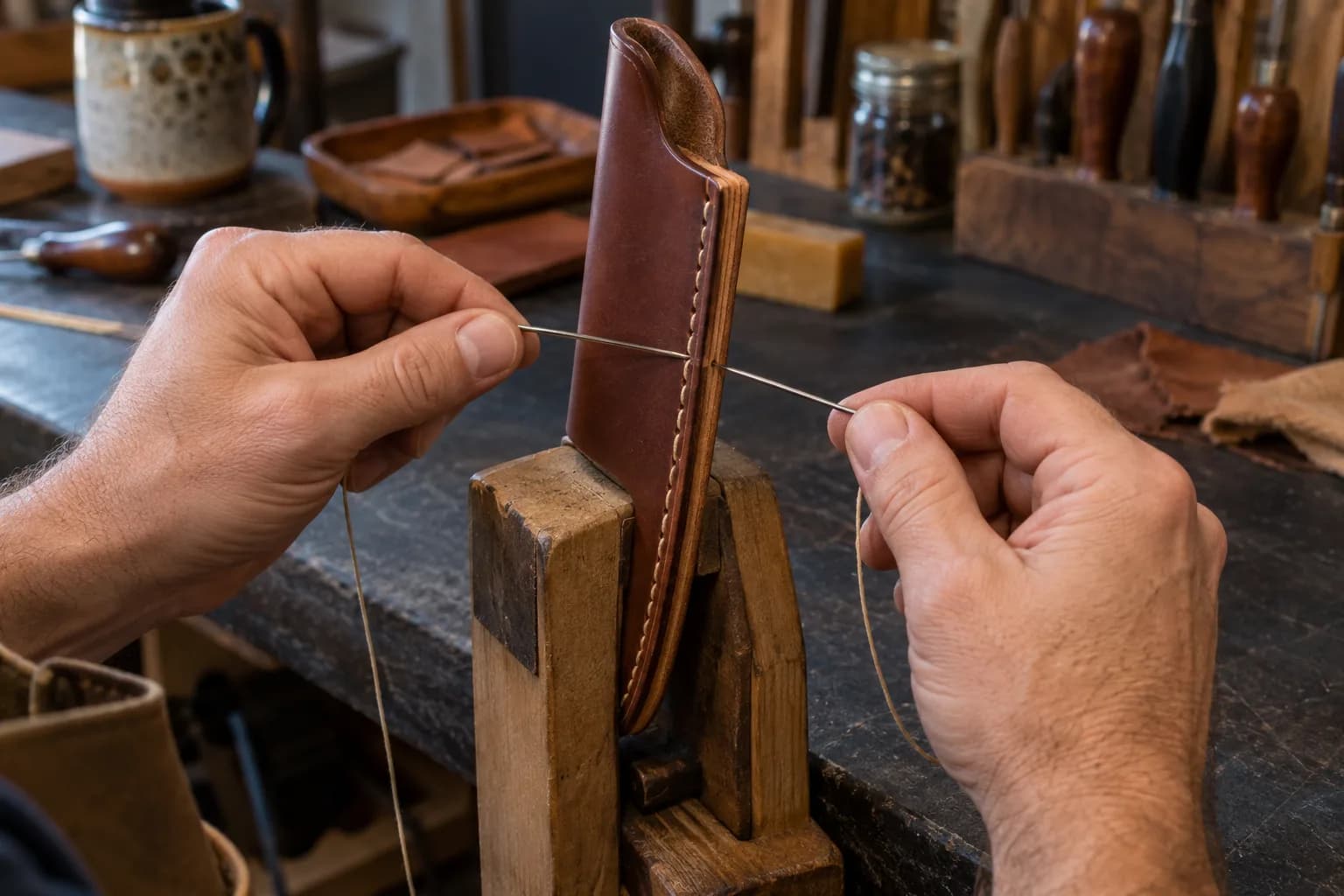
Welt in every blade-side seam, always. Groove, mark, and keep 3/16 edge distance. Blunt harness needles following awl holes, snug-never-strangled tension, backstitched ends. Wet-form so retention grips the handle, not the edge dragging the seam.
If the edge has been cutting the INSIDE of a welted seam anyway, the sheath is undersized for the knife — no re-stitch fixes a geometry mismatch; pattern a new sheath around the actual blade with proper welt clearance.
Keep reading
The long-form version of the fix above, written from the same bench.
Full disclosure, before anything else: this is Torus CNC’s site — we build three of the grinders compared below. Here’s how we’ve kept this honest: every…

Comics run on invented metals — adamantium, vibranium, the whole periodic table of plot — and the fastest way to appreciate real metallurgy is to audit…
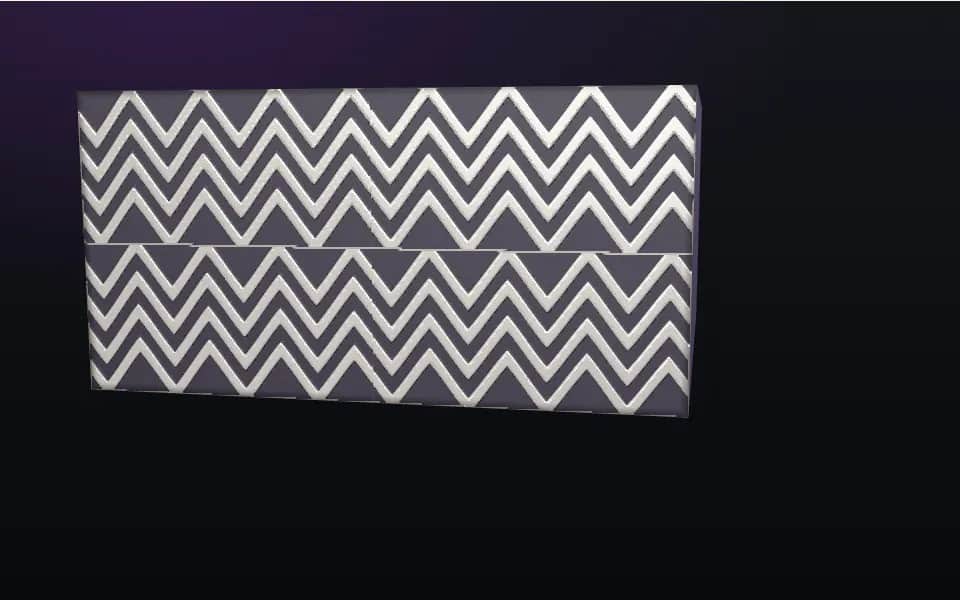
Past the ladder, twist, and raindrop lies the territory where damascus becomes composition: patterns built by controlling the layers in three dimensions…
Same bench
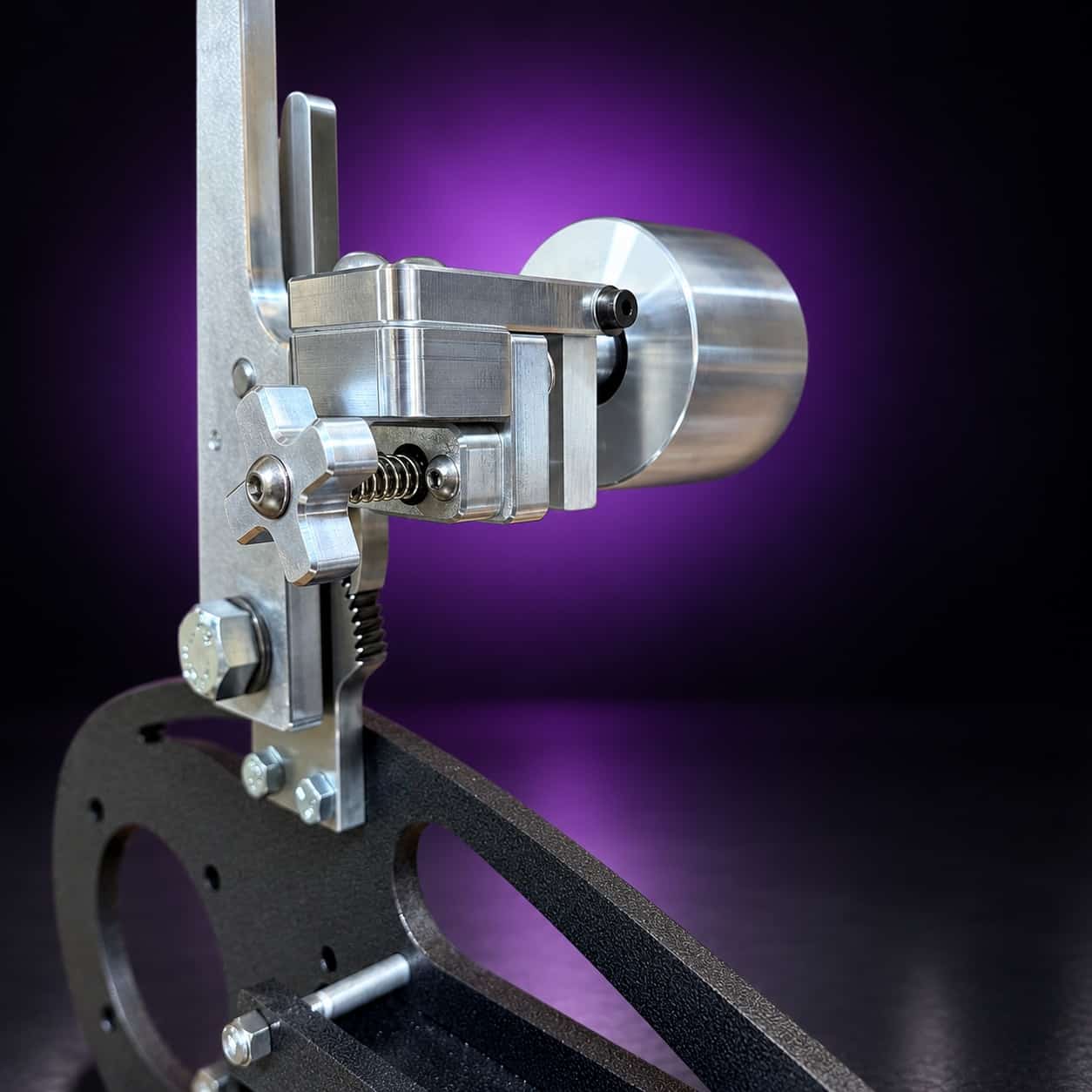
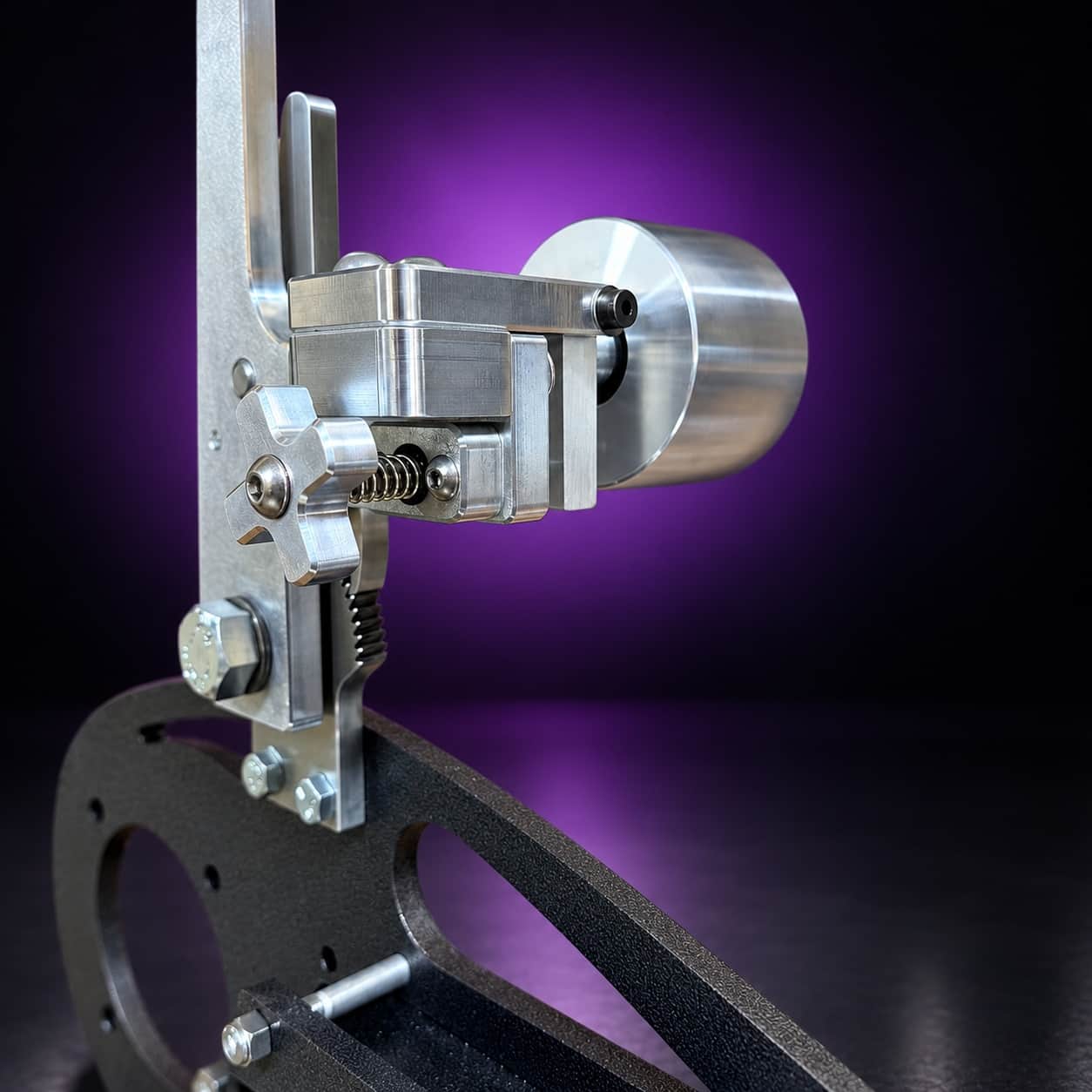
Flex, a soft platen or a tracking knob that will not hold can show up as a bad grind. I machine the parts, hand-assemble, track and test each Torus grinder in Sterling, Illinois.

Current dual-axis platform with a fiber-laser-cut 6061 chassis and single-knob tracking.

Current dual-axis platform with a steel chassis, more mass and less vibration.

Prior-design aluminum chassis, 90-degree tilt and 1.5-inch tooling arms.
One-man shop
Send me a photo and describe what happened before it went wrong. Include the machine, belt and steel when they are relevant.