
Swords
Sword Anatomy: A Maker’s Field Guide
Before the types, the vocabulary. Every sword — katana or claymore, gladius or rapier — is the same short list of parts negotiating the same physics: a…
Swords
China's two swords compared: the straight, double-edged jian of the scholar and the single-edged, usually curved dao of the soldier, plus maker's notes.
2 min readWritten by Rich LinvilleFree to read
China organized its swords into a duality the rest of the world never quite matched: the jian — straight, double-edged, the scholar-gentleman’s blade, “the gentleman of weapons” — and the dao — single-edged, usually curved, the soldier’s chopper, “the general of weapons.” Two philosophies of cutting, refined in parallel for over two thousand years.
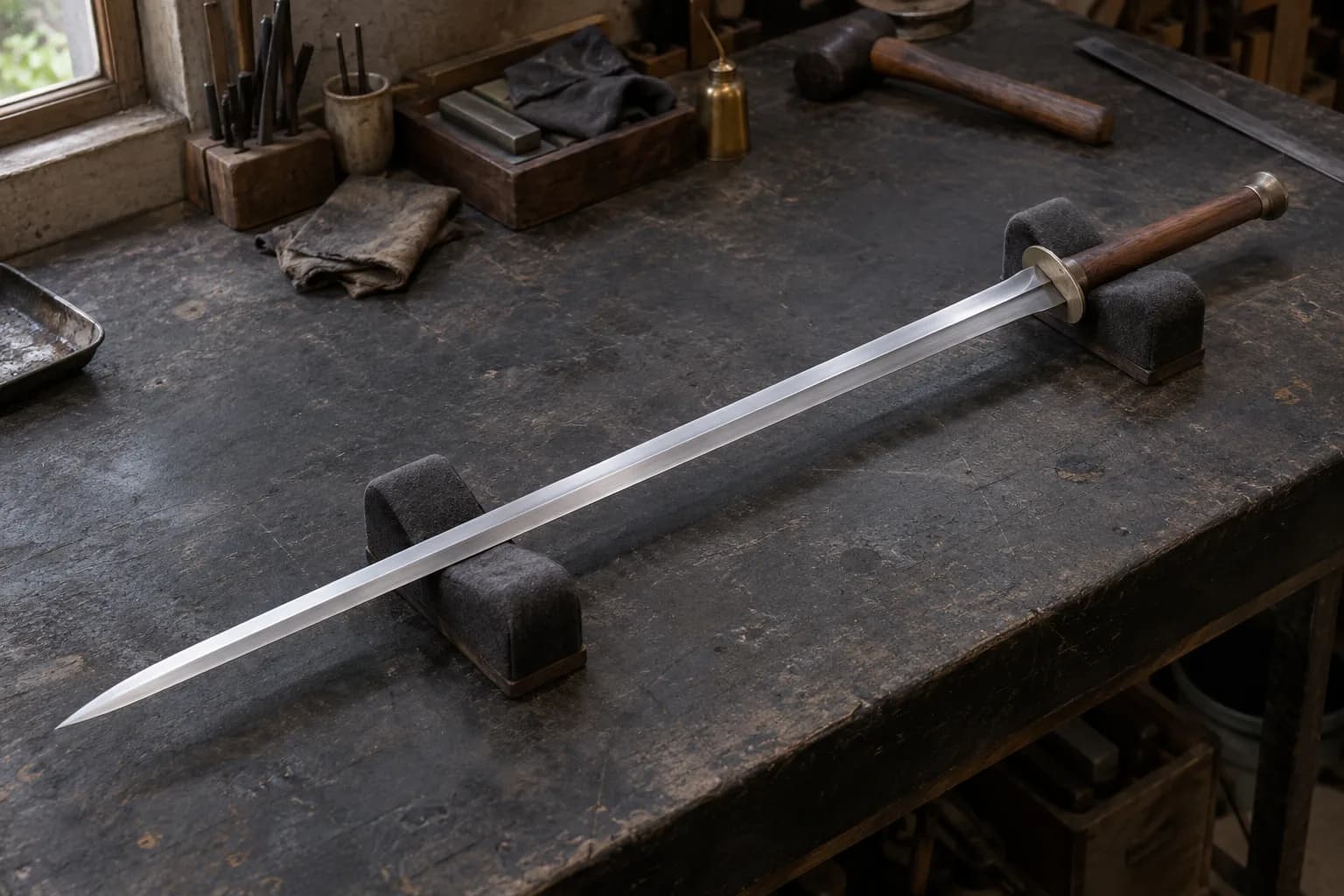
The jian is among the oldest continuously refined sword forms on earth — bronze examples of startling quality (the famous Goujian sword survived two millennia sharp) run straight through to Qing-dynasty steel. Classic proportions: 28 to 31 inch double-edged blade, subtle profile taper to a capable point, light guard, balance close to the hilt for tip agility. Its technique is precision itself — thrusts, draw cuts and deflections led by the point, the reason it remains the demanding centerpiece of taiji and traditional swordsmanship. Construction often used sanmei — hard steel edge plate between softer cheeks — the laminated logic every maker recognizes.
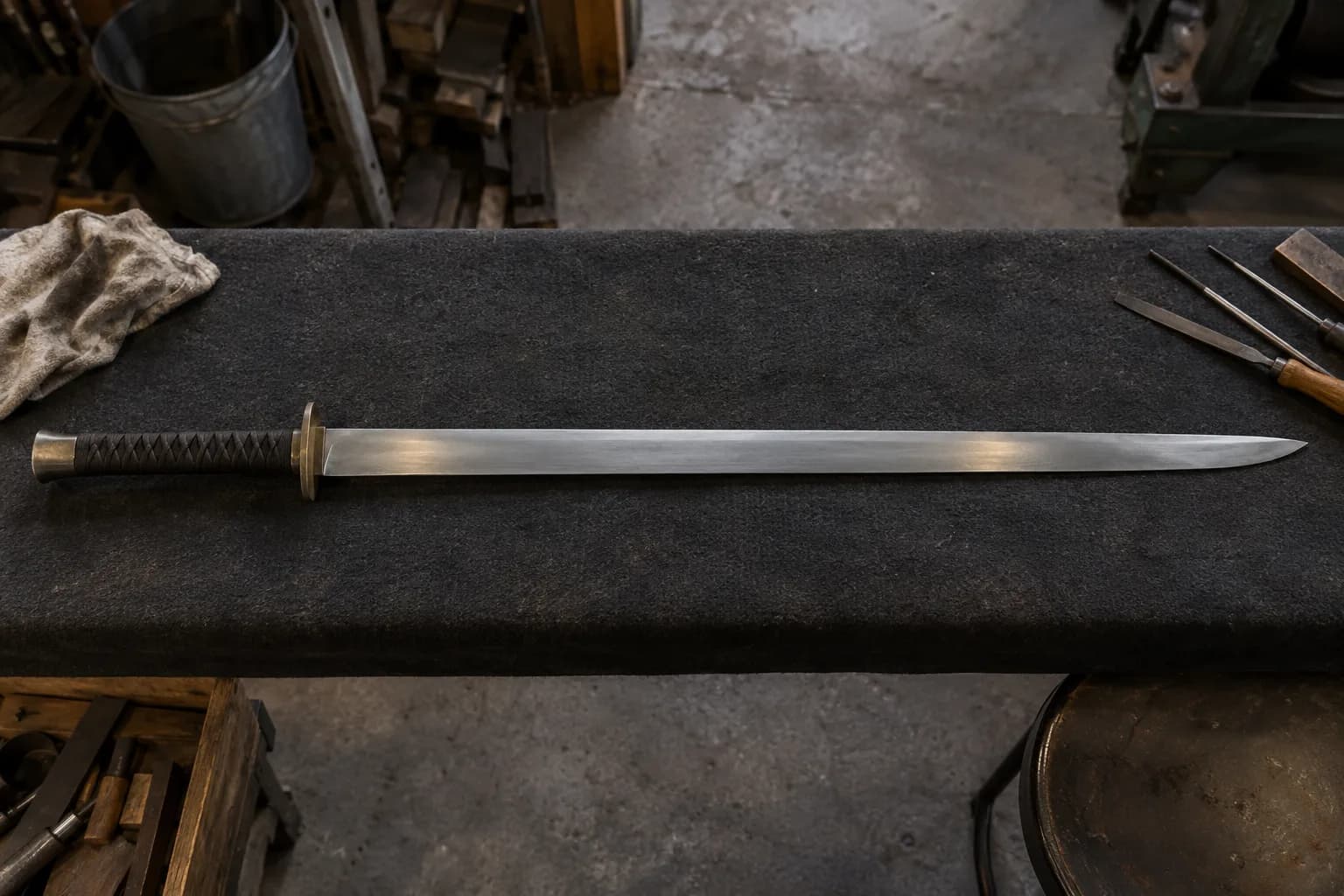
The dao is the working sword: single edge, simple sturdy technique, the arm of infantry and cavalry from the Han dynasty onward. Its great variants map its jobs — the willow-leaf liuyedao with gentle curve as the standard sidearm, the aggressive oxtail niuweidao of civilian martial arts with its flared tip, the straight earlier zhibeidao. The curve arrived with steppe cavalry influence — the same draw-cut logic as the saber family — and the dao settled into the role every army eventually rediscovers: the sword that is easy to teach, hard to break, and always there.
The pairing is a design seminar: the jian trades power for precision and demands years; the dao trades finesse for effect and forgives soldiers trained in months. Neither is the better sword — they are answers to different questions, the same trade every knife rack repeats between the thin slicer and the camp chopper.
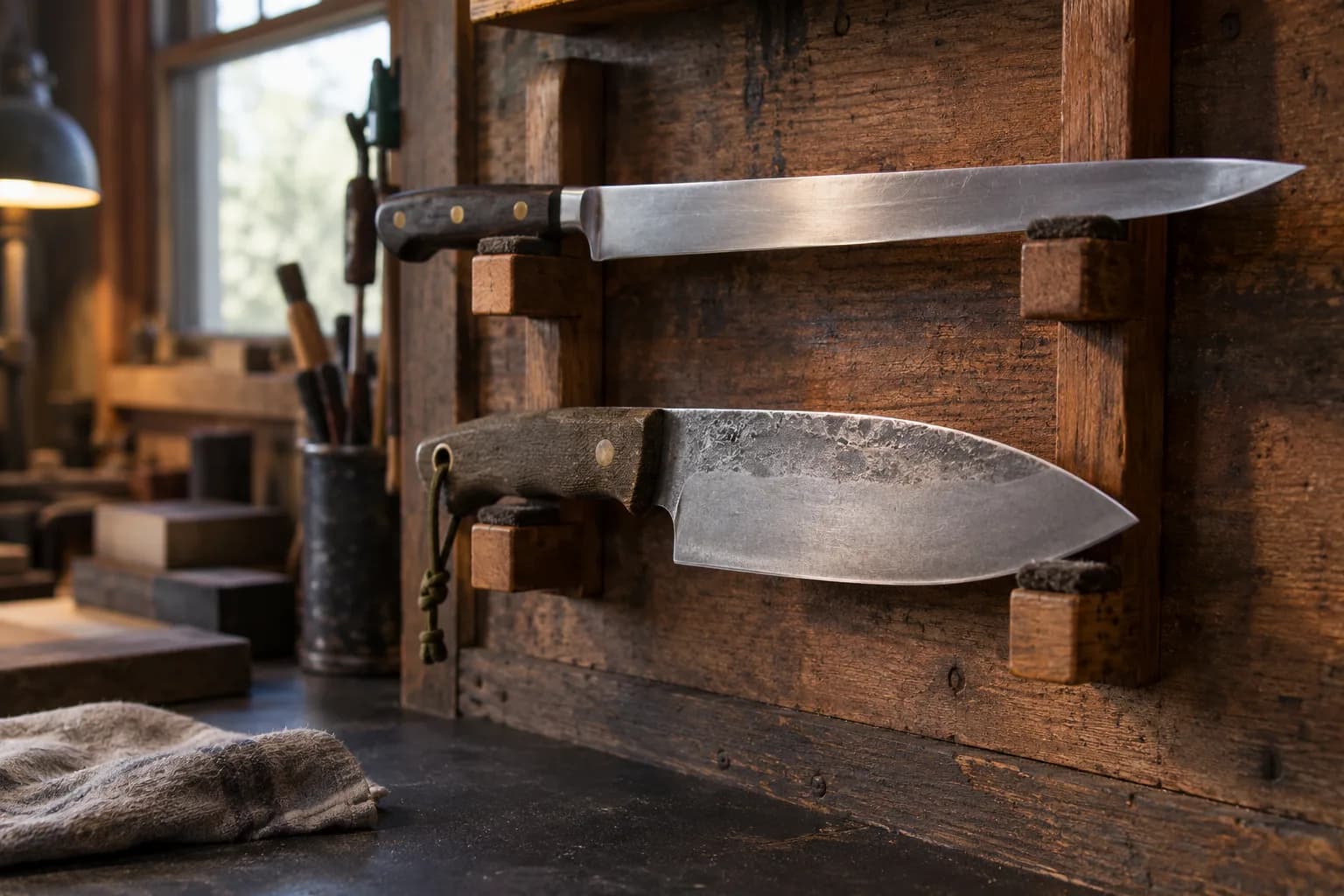
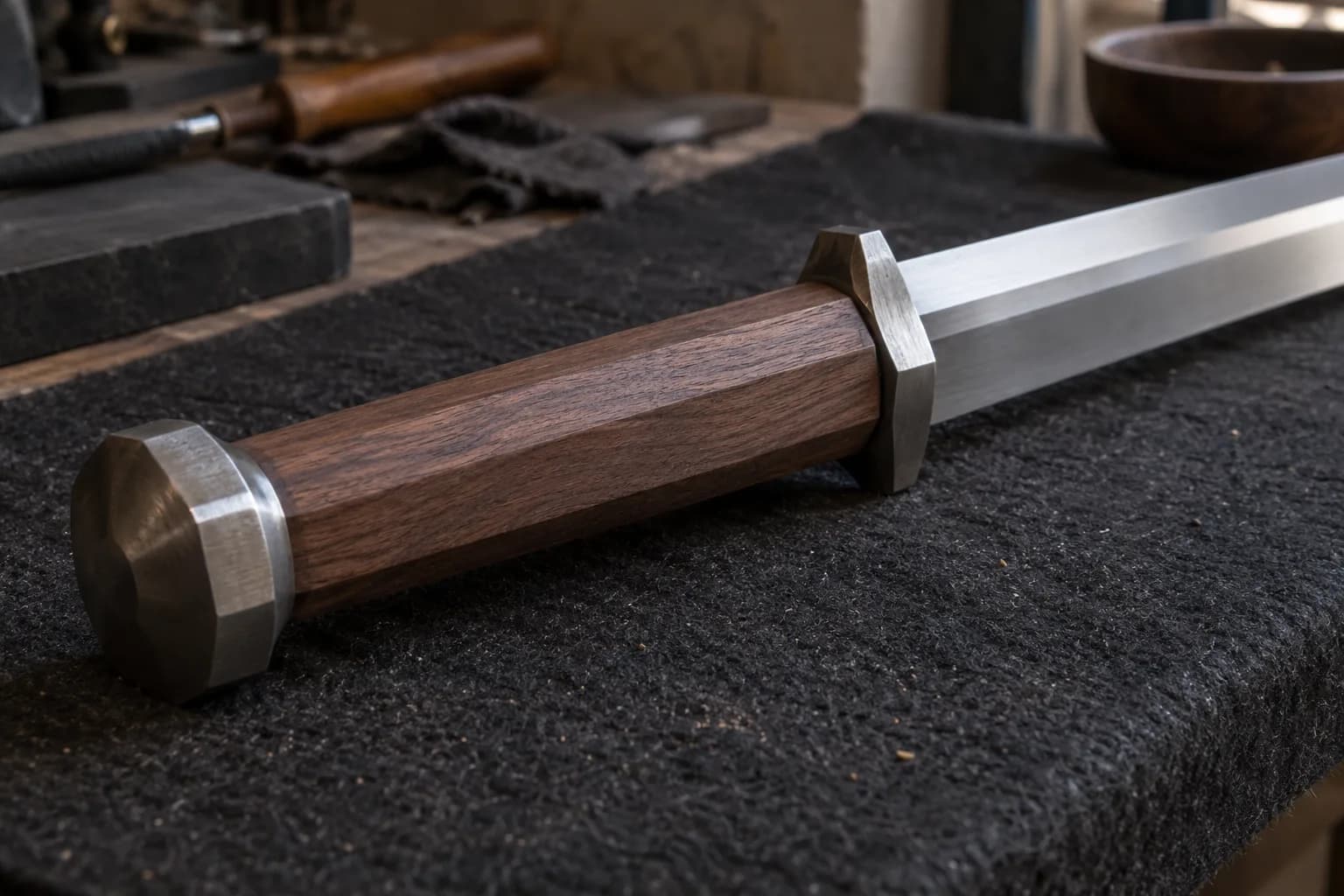
A jian build is a precision exercise: double edges ground symmetrically over 30 inches punish wandering pressure, the near-hilt balance demands strict distal taper, and the traditional octagonal grip and fittings reward clean bench work. A dao is the friendlier first Chinese blade — single edge, willow-leaf curve walked through the platen like a long skinner belly, generous fuller optional. Spring steels at sword hardness serve both; sanmei construction, for the ambitious, gets its forge-welding grounding in the damascus section.
Keep reading
Three more from the same bench.
Before the types, the vocabulary. Every sword — katana or claymore, gladius or rapier — is the same short list of parts negotiating the same physics: a…
Half the world’s swords curve, and the reason is one piece of physics: a curved edge meeting a target does not chop, it SLICES — the blade’s arc converts…
No blade carries more mythology per inch than the katana — the folded-a-thousand-times, cuts-through-tanks legend machine. The real sword underneath is…
Same bench
I machine the parts, hand-assemble, track and test Torus grinders in Sterling, Illinois. Most orders ship in seven to ten business days from time of order.
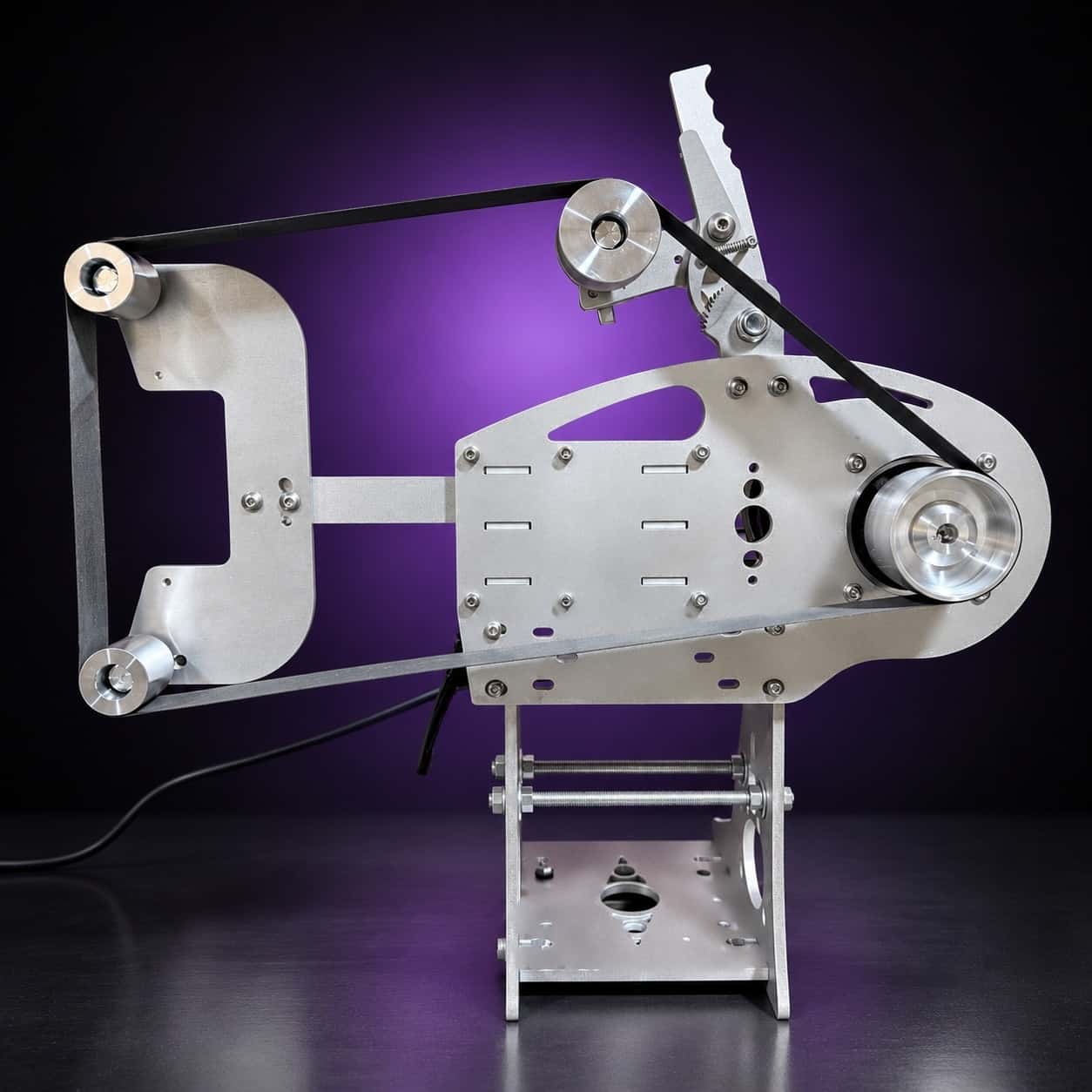
Current dual-axis platform with a fiber-laser-cut 6061 chassis and single-knob tracking.
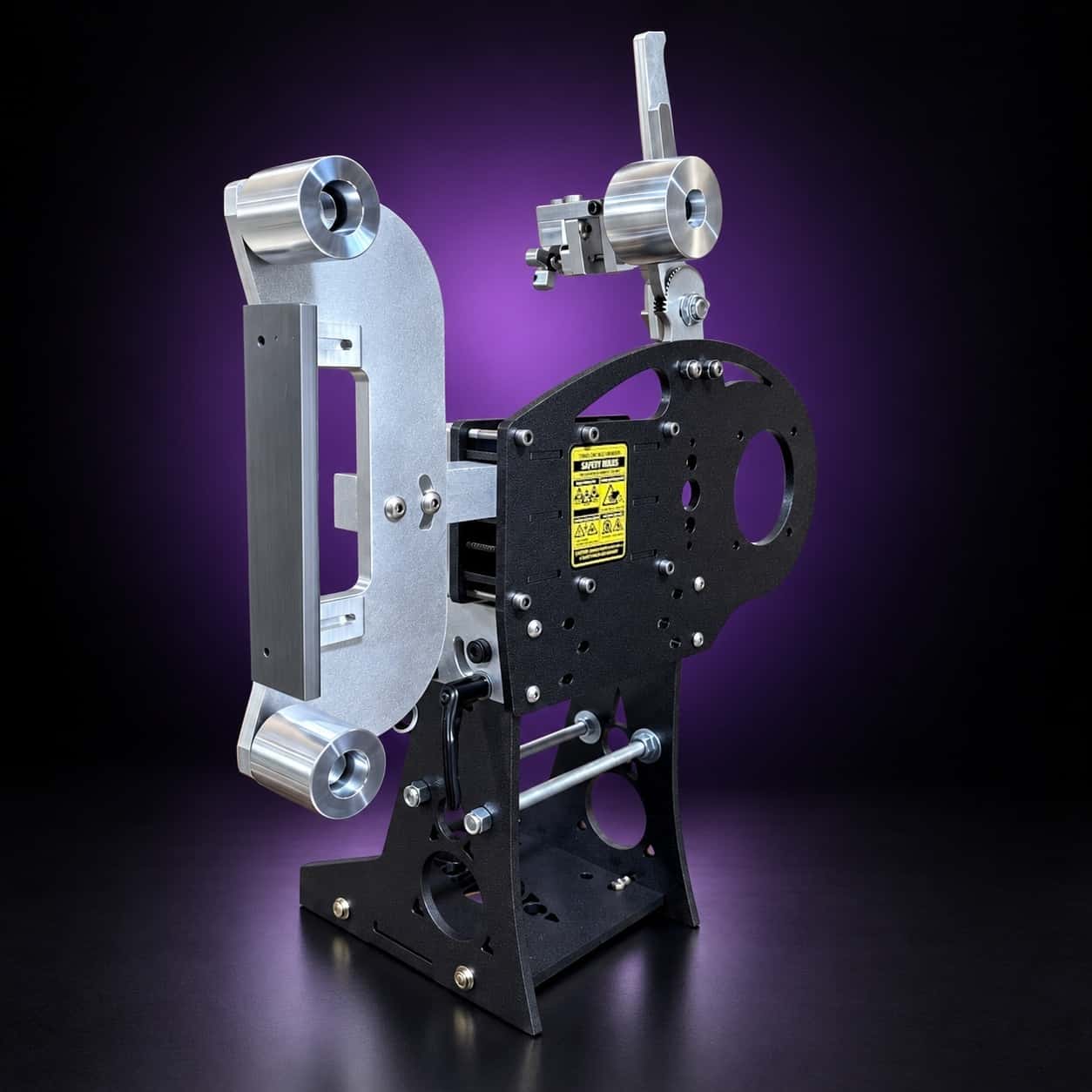
Current dual-axis platform with a steel chassis, more mass and less vibration.
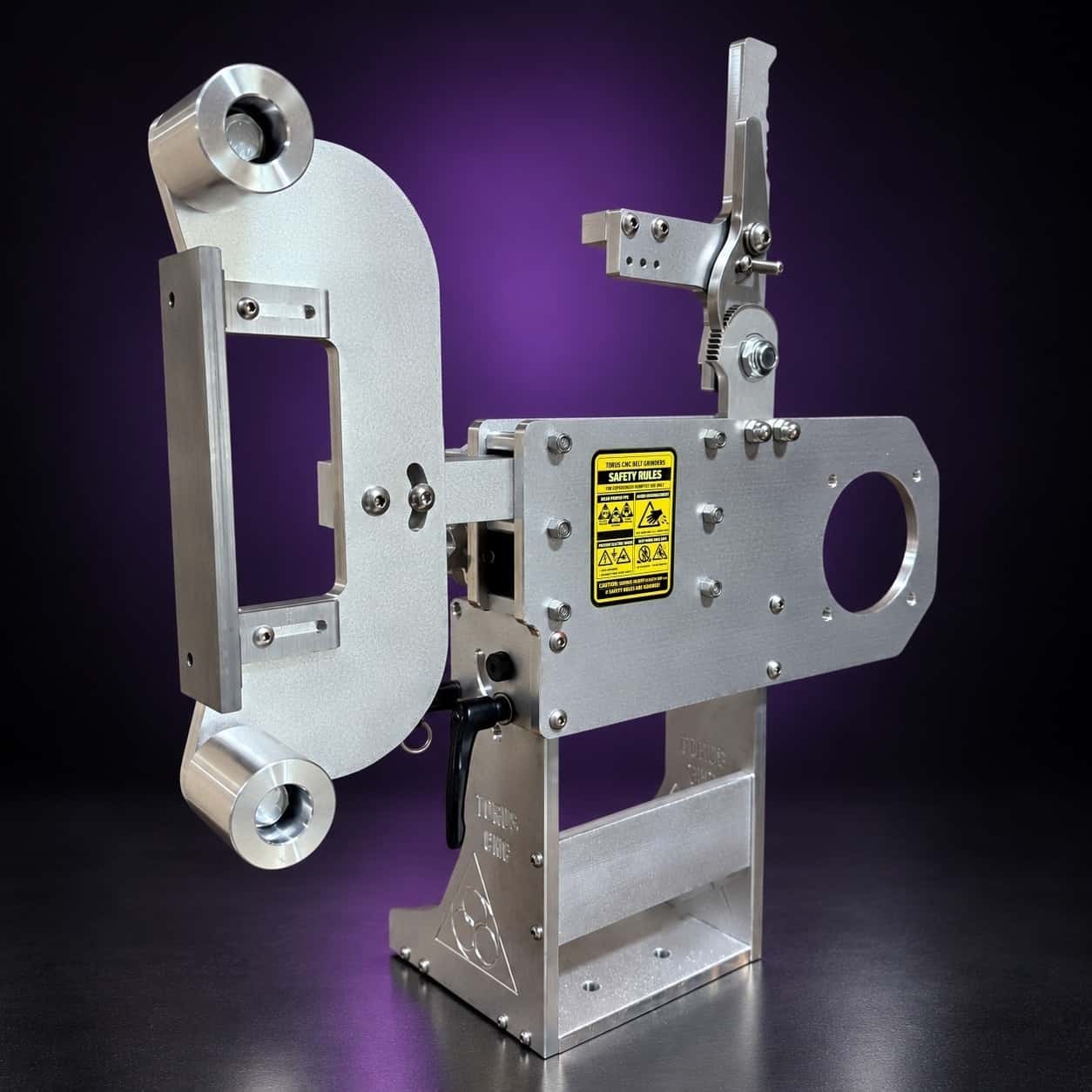
Prior-design aluminum chassis, 90-degree tilt and 1.5-inch tooling arms.
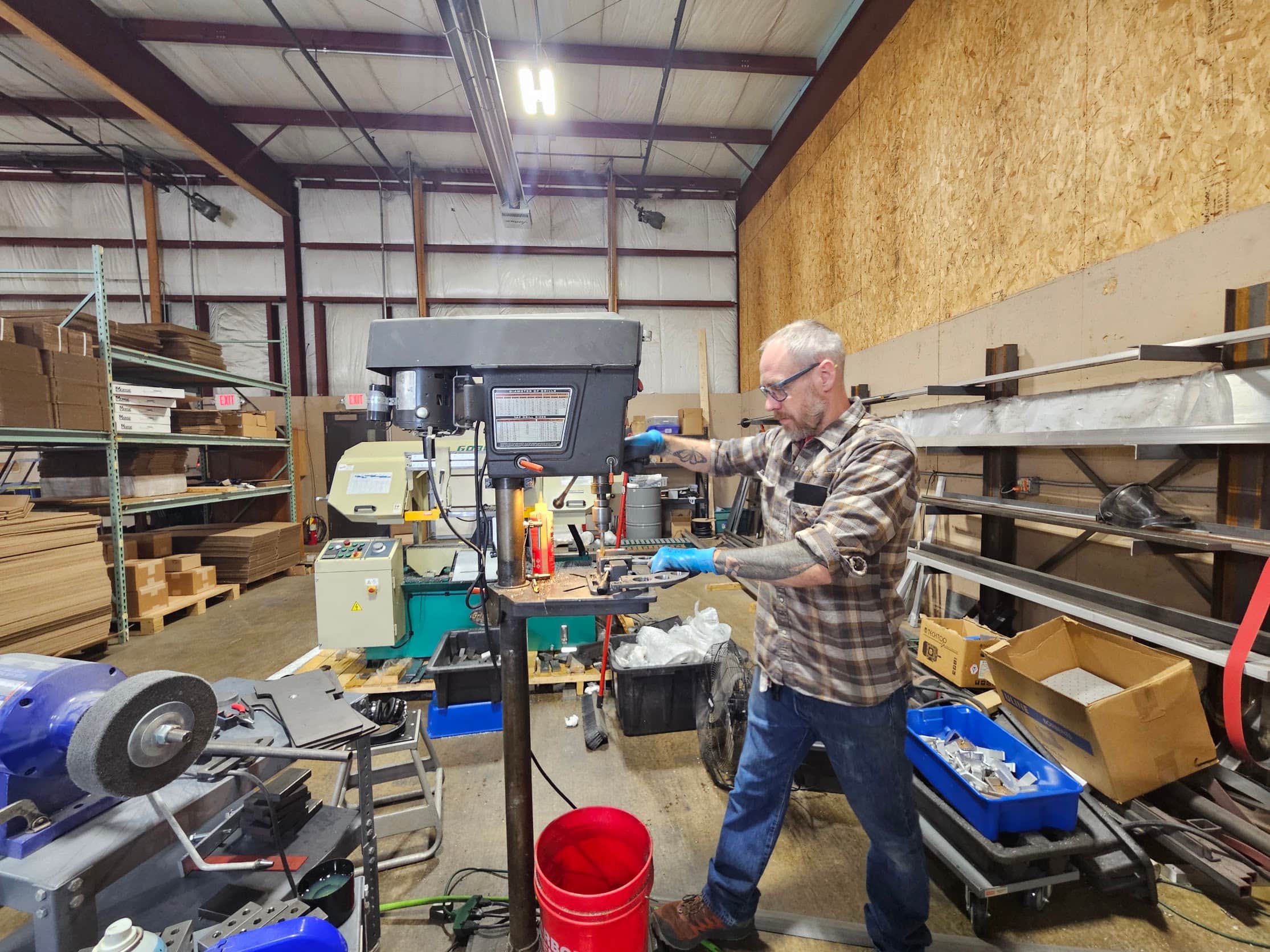
One-man shop
I answer my own email. Tell me the steel, the machine and what it is doing, and I will tell you what I would try next.