
Selling & Business
Starting a Knifemaking Business: The Whole Checklist
Starting a knifemaking business is mostly done in the wrong order: logo first, LLC never, pricing by vibes, and equipment bought by excitement. Here is…
Selling & Business
The honest bottleneck analysis: why forging never limits output, where grinding and finishing hours actually go, and what removes the constraint.
2 min readWritten by Rich LinvilleFree to read
Every scaling conversation in this craft eventually hits the same wall, so here it is up front: forging is never the bottleneck. A competent smith forges a blade in under an hour; that same blade then absorbs three to six hours of grinding, finishing, handle and sheath work. Output scales when the back half of the process speeds up — and only then.
Run the audit on your last five knives (the tracked hours from pricing discipline make this free): forging or profiling, rough grinding, heat treat, finish grinding, hand finishing, handle, sheath, final assembly. The distribution nearly every maker finds: shaping steel is a sliver; ABRASIVE work — rough grind, finish grind, hand sanding — plus handle and sheath finishing owns 60-80% of the total. That distribution IS the scaling roadmap, because removing an hour from a stage you run forty times a season matters exactly forty times more than romance about the stage you enjoy.
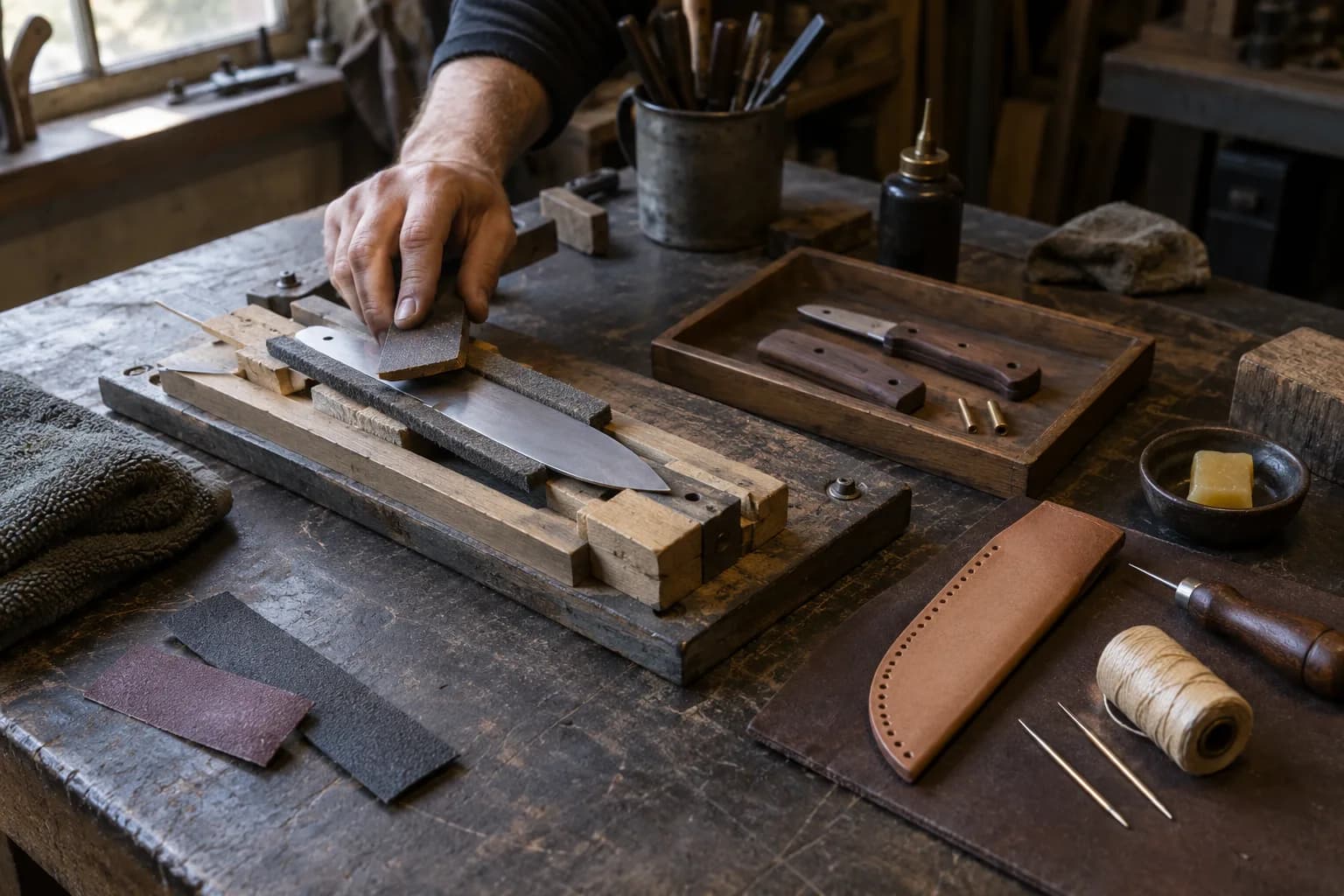
First: process. Batch stages per the batch production guide, jigs for repeated cuts, a finish standard matched to the product tier (the 400-grit working satin that sells at shows costs a third of the mirror that does not sell for three times more), and belts run at the right speed per task off the speed chart — fresh belts being the cheapest throughput upgrade in the shop, per every belt guide ever written. Second: machine. Process improvements eventually hit the ceiling of equipment that will not repeat — a grinder that loses tracking mid-batch, a work rest that will not stay square, single-speed motors that burn finish passes. This is the one place equipment genuinely IS the answer: consistency and variable speed are throughput, not luxury, and the production tier of the cost guide exists because of this exact wall. Third: scope. The last constraint is the catalog itself — three patterns run deep out-produce twelve run shallow, and saying no to off-catalog commissions during production season is a business skill.
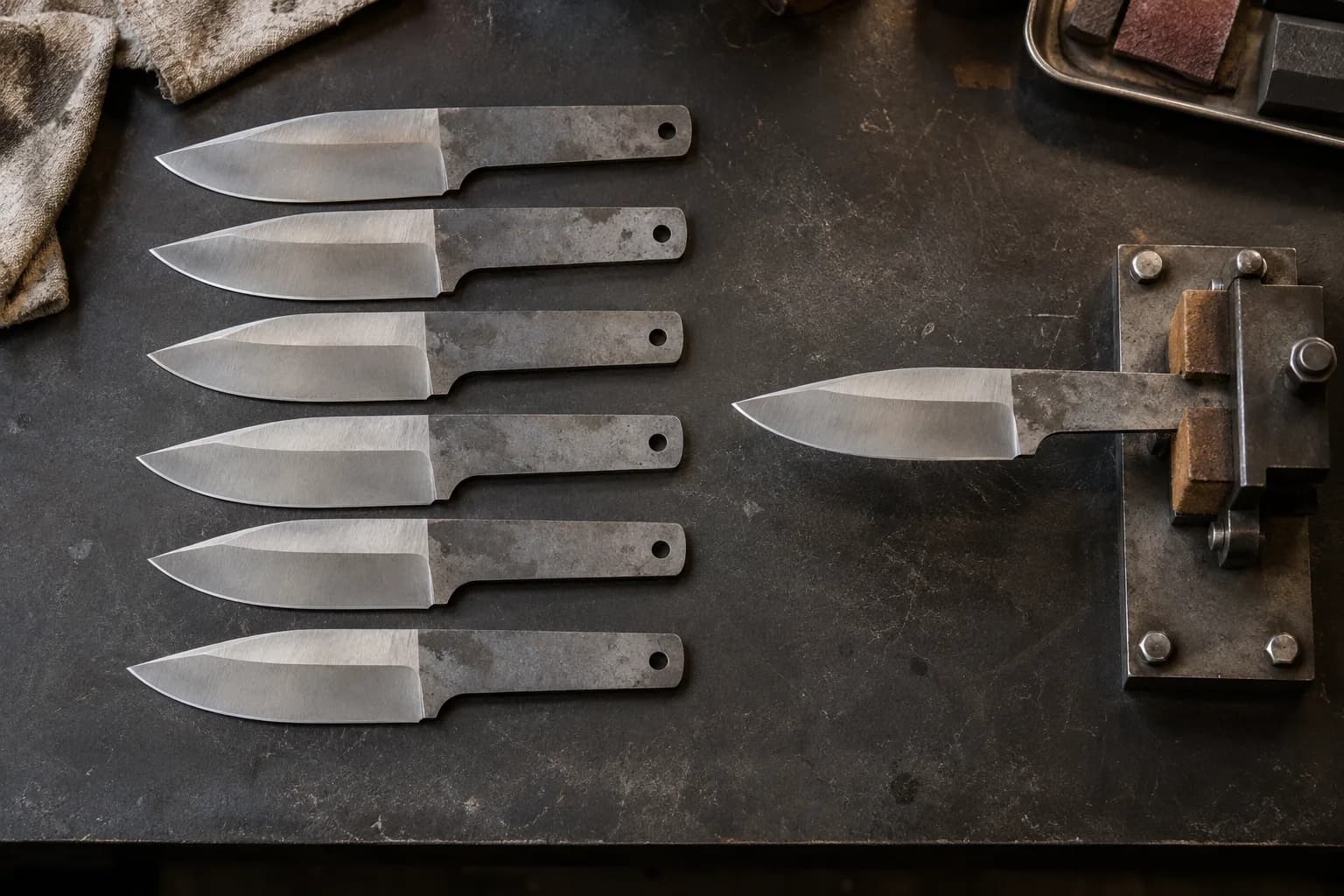
What does not remove the constraint: forging faster (was never the gate), working longer (fatigue grinds crooked bevels and burns tempers — see the burned-edge diagnosis), and hiring before process exists (a helper amplifies a system; without one they amplify chaos). The burnout post is the companion read — throughput built on process survives; throughput built on hours does not.
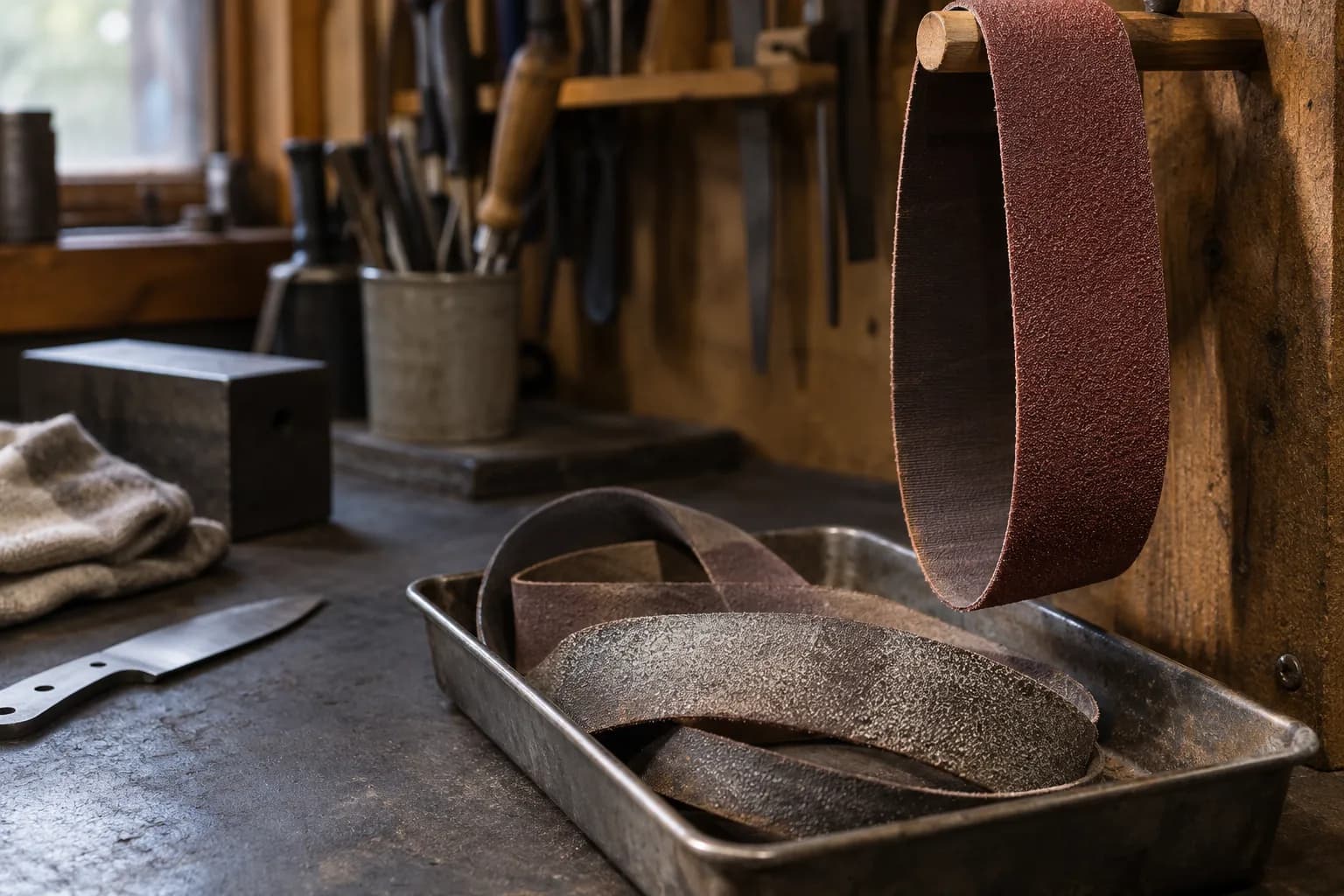
Audit the hours, batch the stages, standardize the finish, feed the machine fresh belts at the right speed — and when process hits the equipment ceiling, buy the consistency, not another romance tool. Scaling is boring on purpose. The income math shows what the freed hours are worth.
Keep reading
Three more from the same bench.
Starting a knifemaking business is mostly done in the wrong order: logo first, LLC never, pricing by vibes, and equipment bought by excitement. Here is…
The faire booth business model is forty matching daggers, not forty individual daggers — and the difference between those two sentences is the difference…
Belts are the single biggest recurring cost in this hobby, and buying the wrong ones wastes money twice: once on belts that wear out fast, and again on…
Same bench
I machine the parts, hand-assemble, track and test Torus grinders in Sterling, Illinois. Most orders ship in seven to ten business days from time of order.
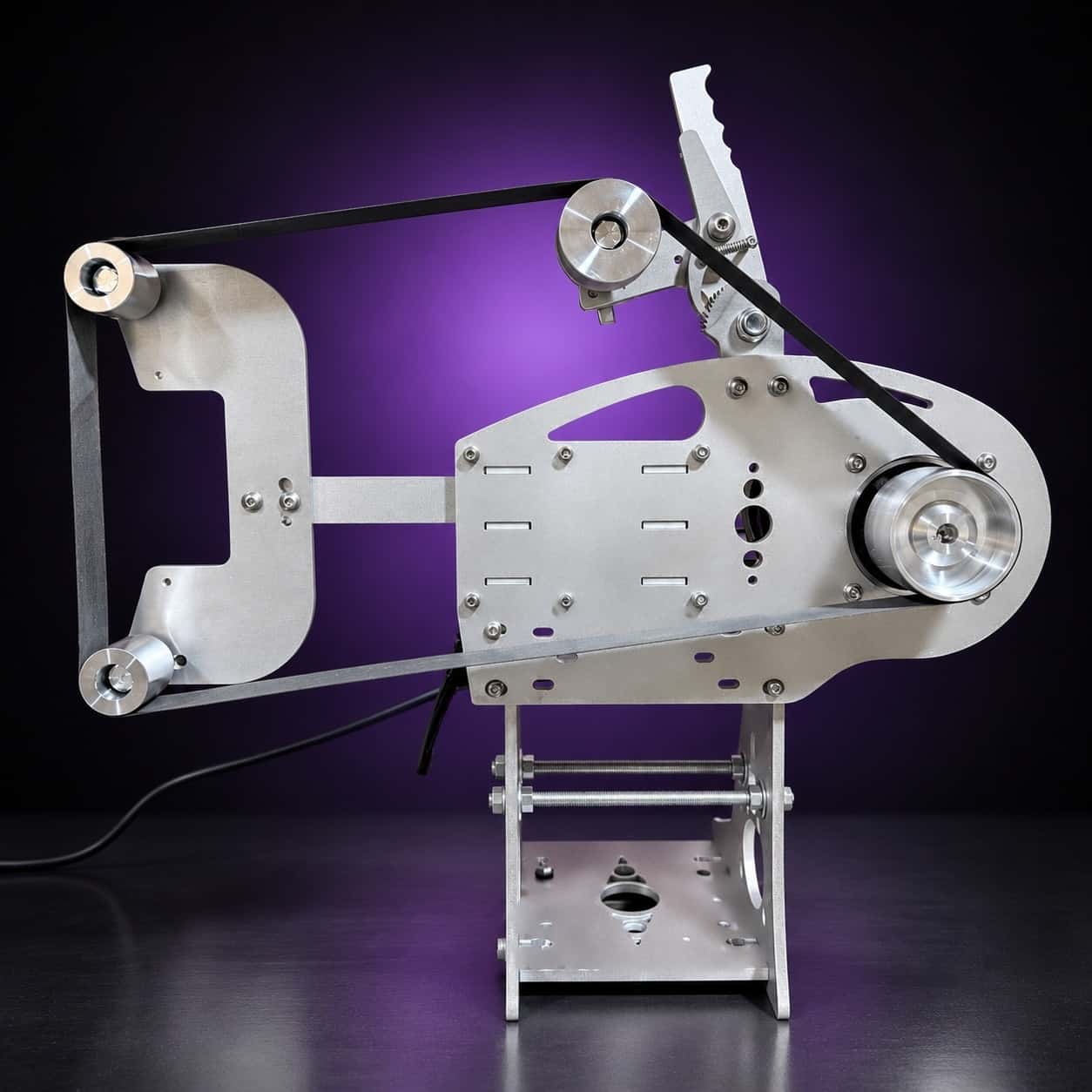
Current dual-axis platform with a fiber-laser-cut 6061 chassis and single-knob tracking.
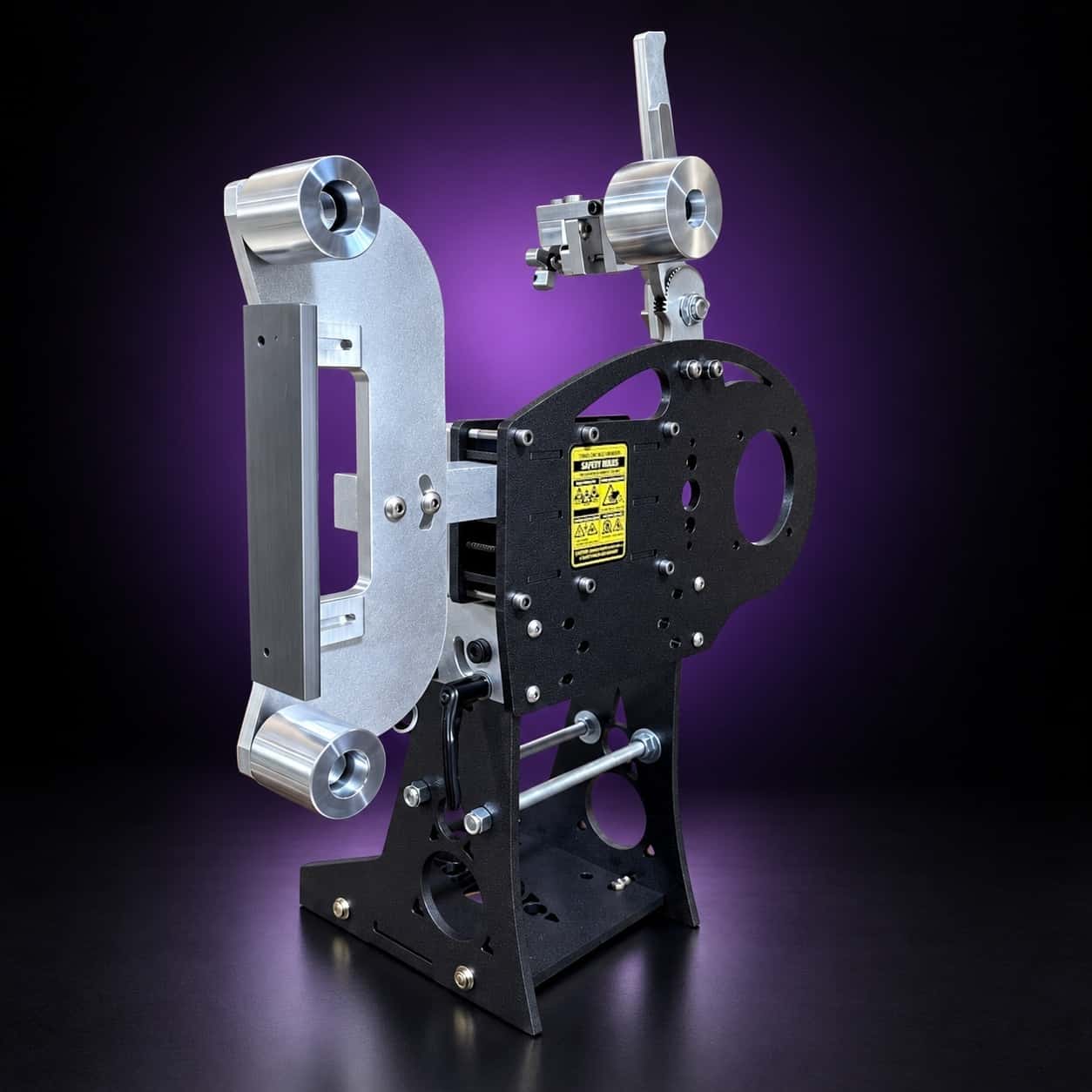
Current dual-axis platform with a steel chassis, more mass and less vibration.
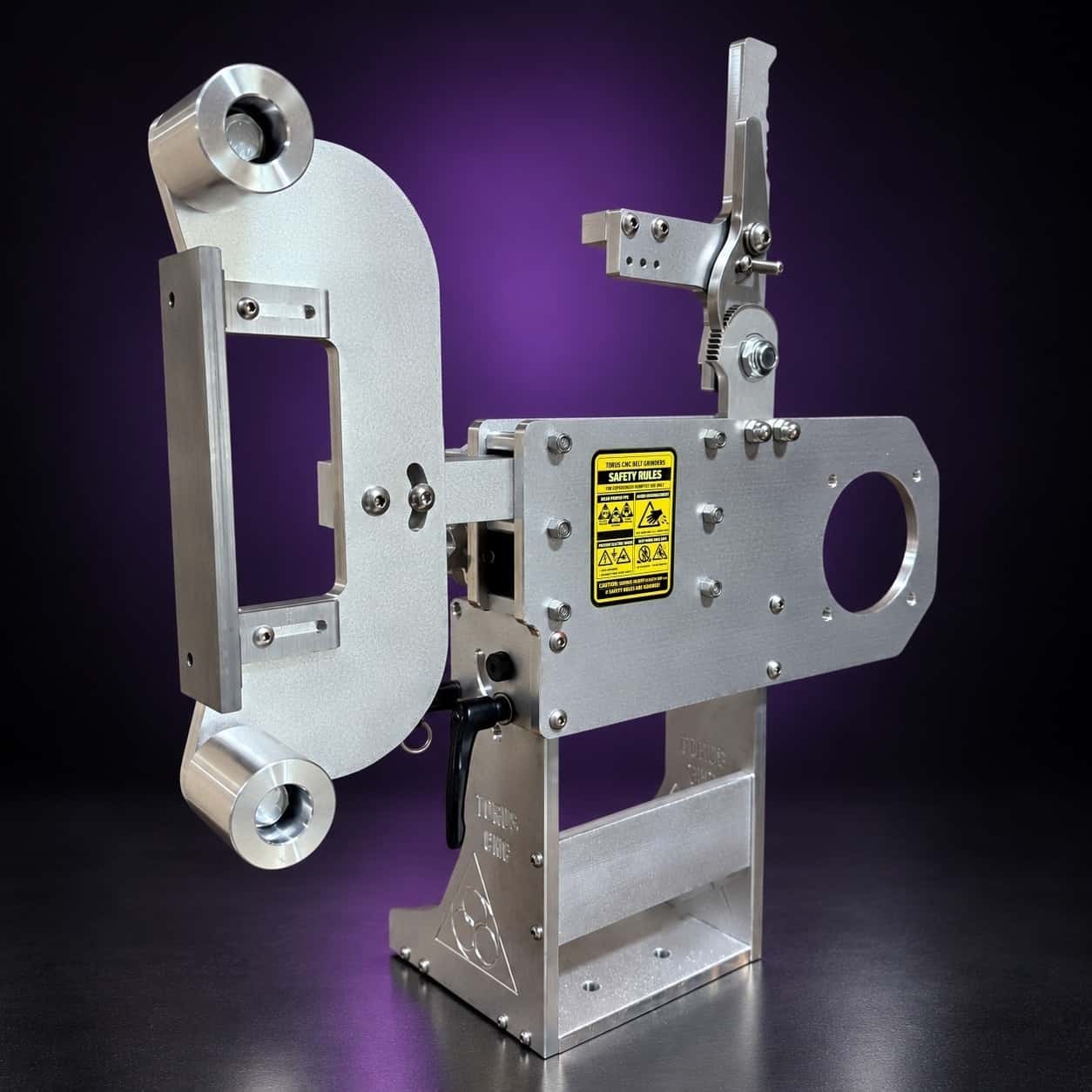
Prior-design aluminum chassis, 90-degree tilt and 1.5-inch tooling arms.
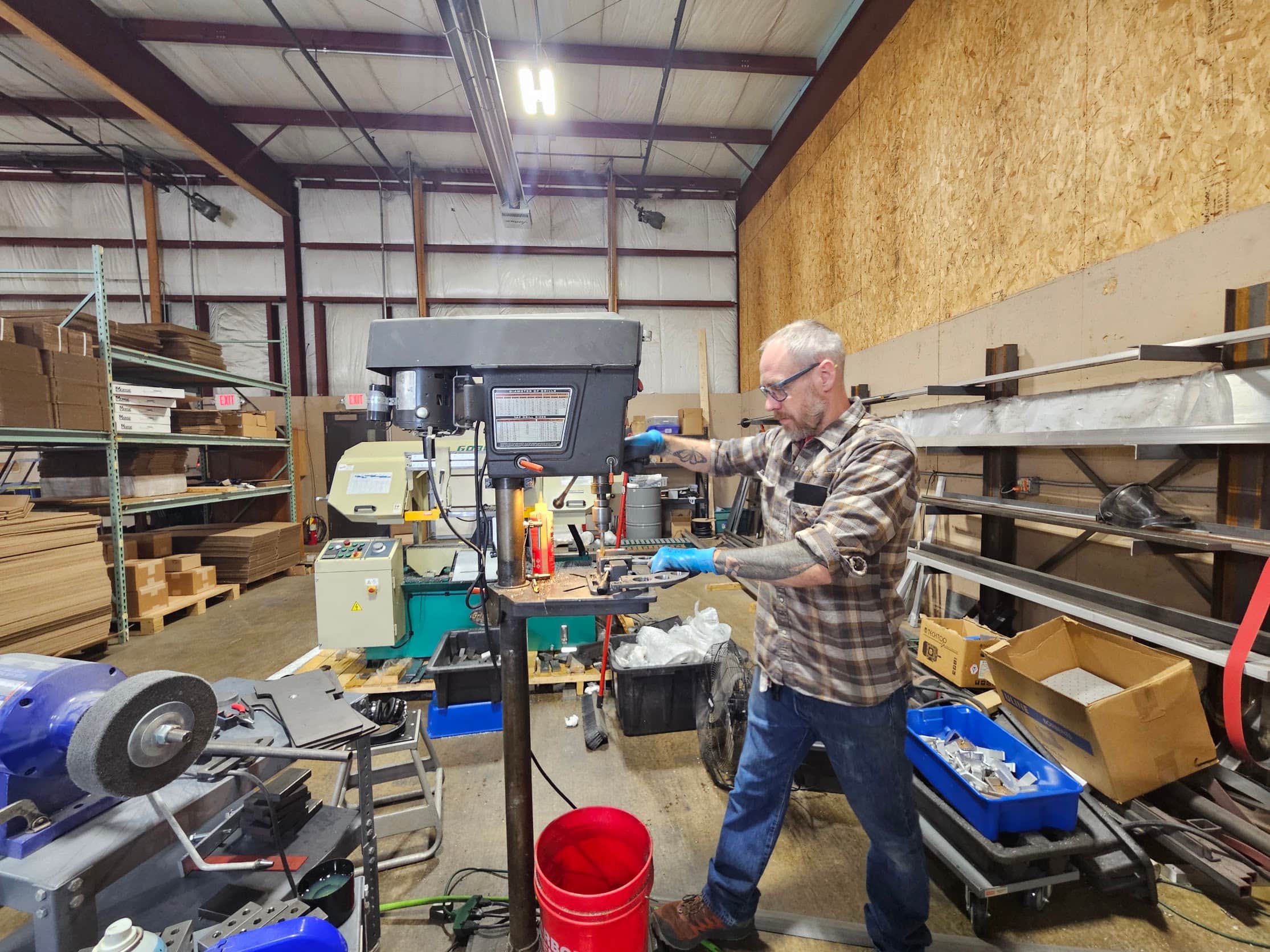
One-man shop
I answer my own email. Tell me the steel, the machine and what it is doing, and I will tell you what I would try next.