
Fantasy & Fiction Blades
Fantasy Blades in Real Steel: The Maker’s Field Guide
Every fictional blade is a real design brief with the physics turned off. Turn the physics back on and something interesting happens: the analysis becomes…
Fantasy & Fiction Blades
Running the real numbers on anime's giant blades: what a slab of steel actually weighs, why real greatswords ran 5-7 pounds, and buildable homages.
2 min readWritten by Rich LinvilleFree to read
Guts’ Dragonslayer — the iconic slab from Berserk, “too big to be called a sword” — is the perfect specimen for the genre’s favorite math problem: what does an anime blade actually weigh? Steel does not negotiate, so grab the calculator. The density that rules every answer: steel runs about 0.28 pounds per cubic inch.
Model the Dragonslayer conservatively as drawn: call it six and a half feet long, a foot wide through the body, three inches thick. That is 78 x 12 x 3 = 2,808 cubic inches — roughly 795 pounds of steel. A motorcycle, swung one-handed. Even a generously tapered version — half that average thickness — sits near 400 pounds; even a MERE two-hundred-pound version would be unliftable as a weapon, since a sword is held at one end and leverage multiplies every ounce past the grip. The manga knows this, of course: the Dragonslayer is explicitly absurd, forged for a myth and swung by a man the story built into one. The math is not a gotcha — it is the joke, measured.
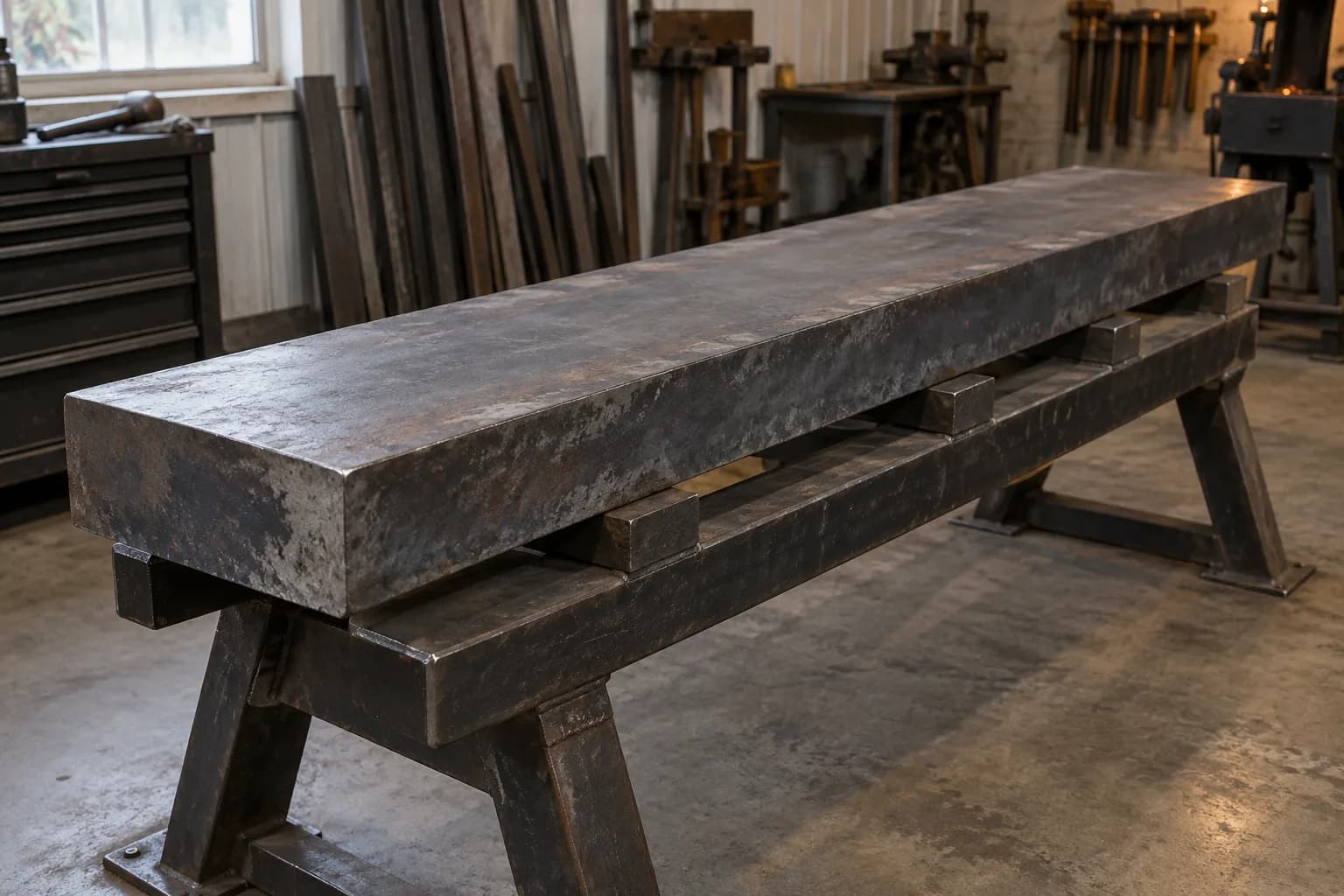
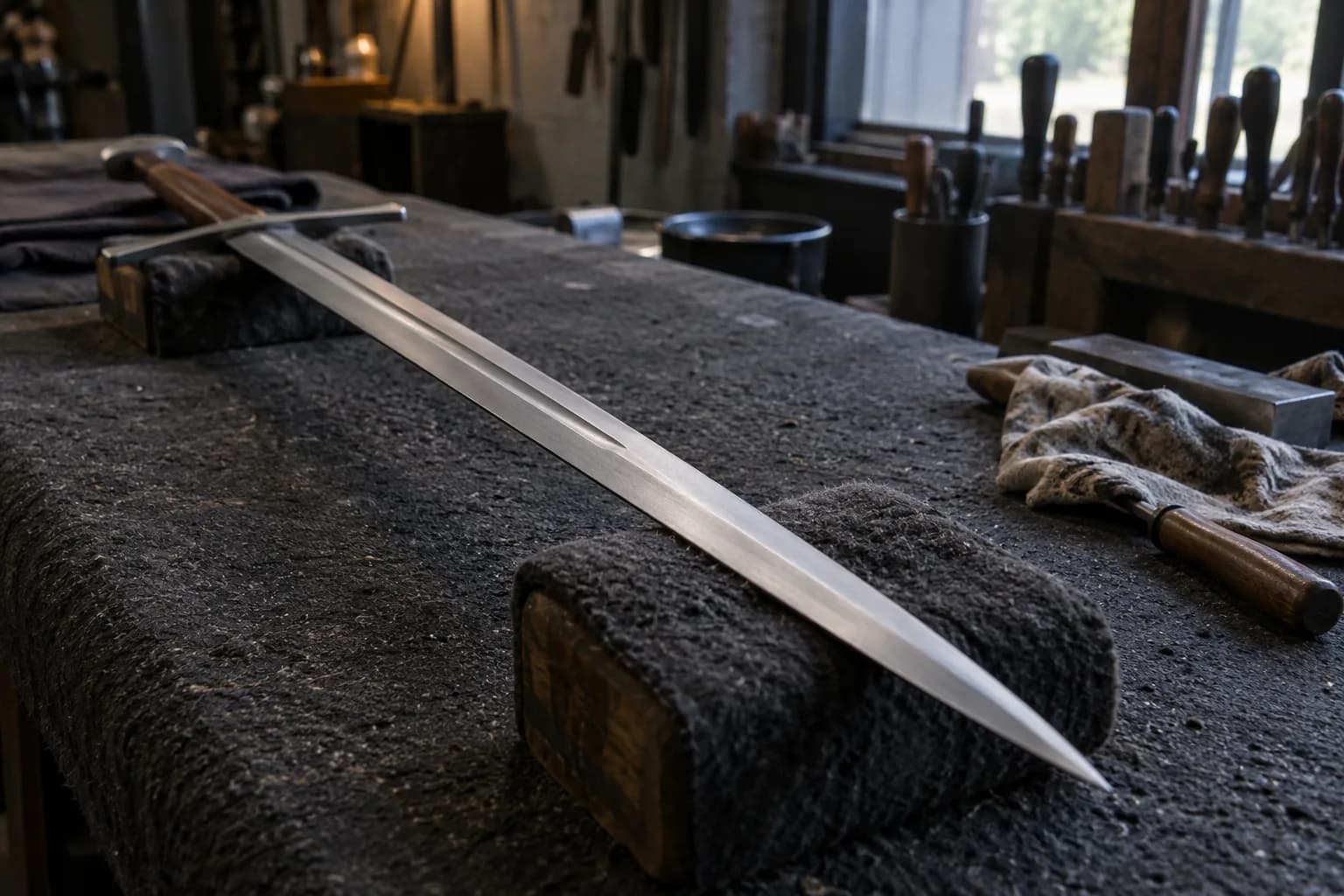
The calibration line, from the greatsword guide: real two-handers — zweihanders, montantes, the big claymores — ran five to seven pounds at five to six feet, and they achieved it with the tricks fiction erases: aggressive distal taper, deep fullers stripping mass from the neutral axis, and diamond sections that buy stiffness with geometry instead of bulk. A real blade at Dragonslayer LENGTH is buildable at eight-to-ten honest pounds — the outer edge of usable — and it looks like a blade, not a slab, because the slab is precisely what mass math forbids.
The giant blade endures because it communicates on sight: mass as devotion, burden as character — Guts CARRIES his backstory. Cloud’s Buster Sword, the video-game busters, the koloss iron from the Mistborn analysis — all the same visual grammar, and all correctly gated behind superhuman strength in any franchise that keeps its rules straight. Fiction bends rule one from the field guide on purpose; the fun is knowing by exactly how much.
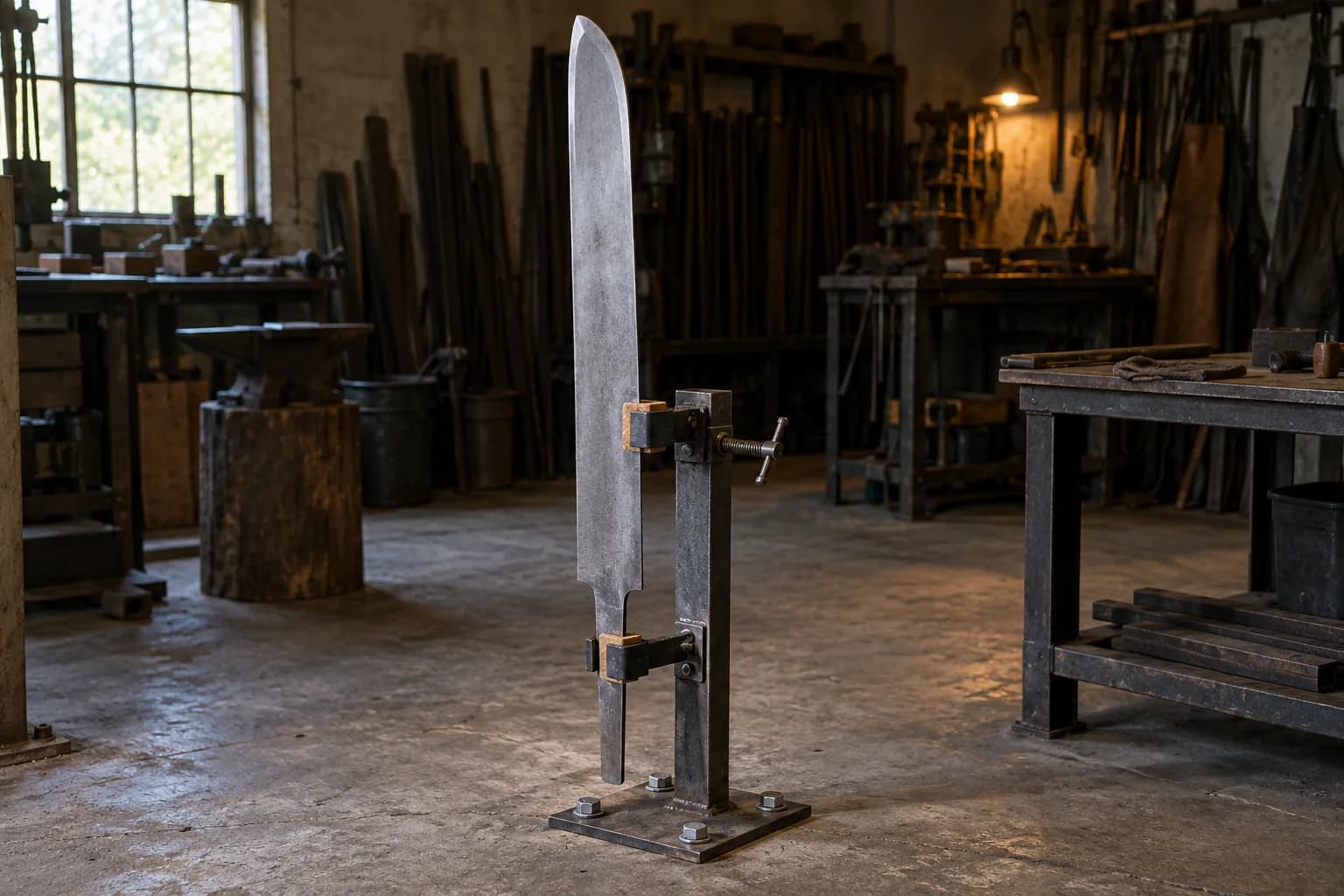
Real Dragonslayer-inspired builds pick a lane. Lane one: the wall statement — a full-silhouette slab in mild steel or laminated wood-core construction, built AS display and labeled so, per the display-tier rules (nobody’s wall studs want 795 pounds; even the display build wants engineering). Lane two: the wieldable homage — the silhouette FEEL at real-sword mass: broad blade, hard distal taper, deep fullers, eight-ish pounds of properly heat-treated 5160, built with every long-blade discipline in the first-sword guide. Lane two is the better commission and the better story: the customer swings it, feels eight real pounds fight their wrists — and finally understands, in their forearms, exactly what the math above was saying about Guts.
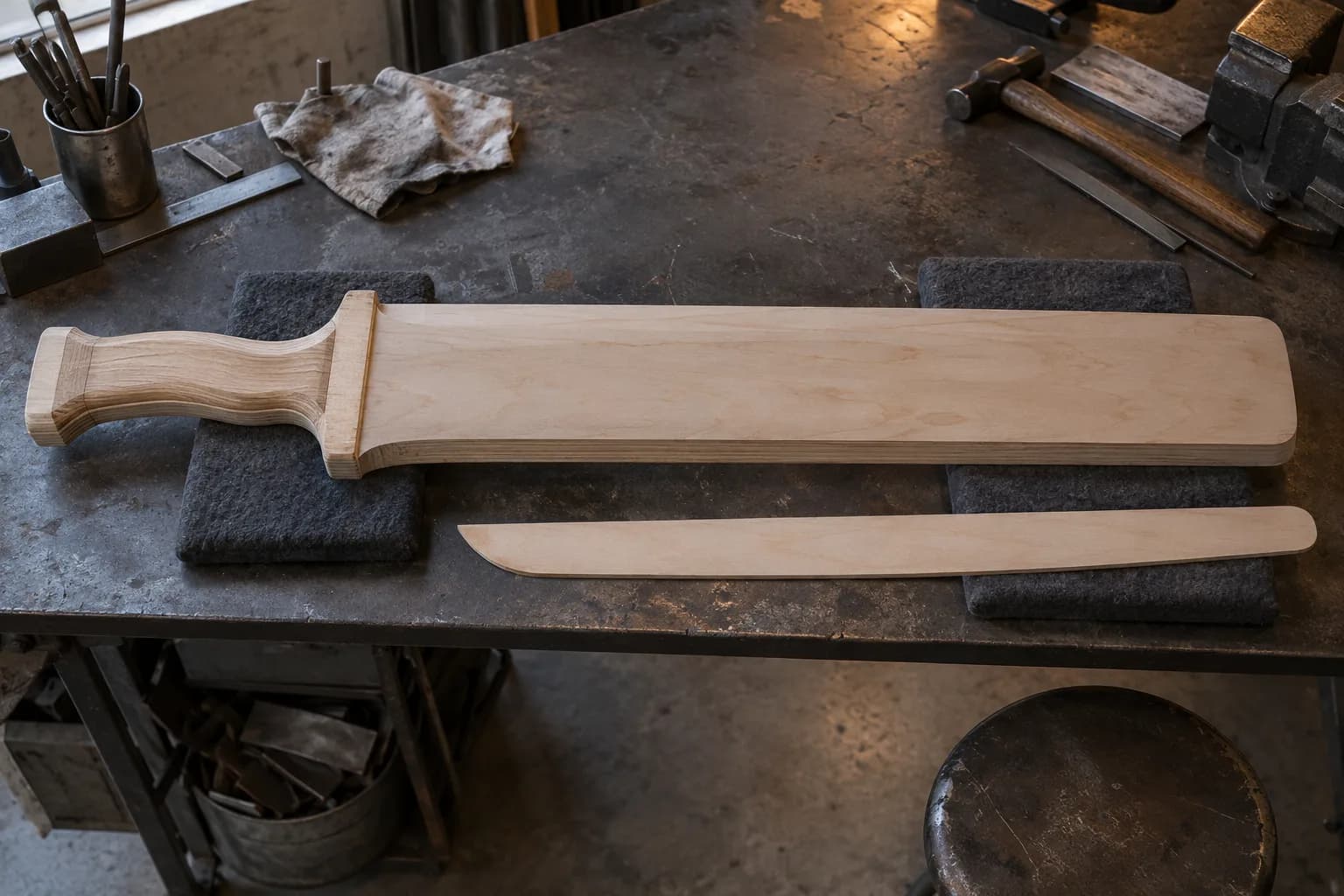
Keep reading
Three more from the same bench.
Every fictional blade is a real design brief with the physics turned off. Turn the physics back on and something interesting happens: the analysis becomes…
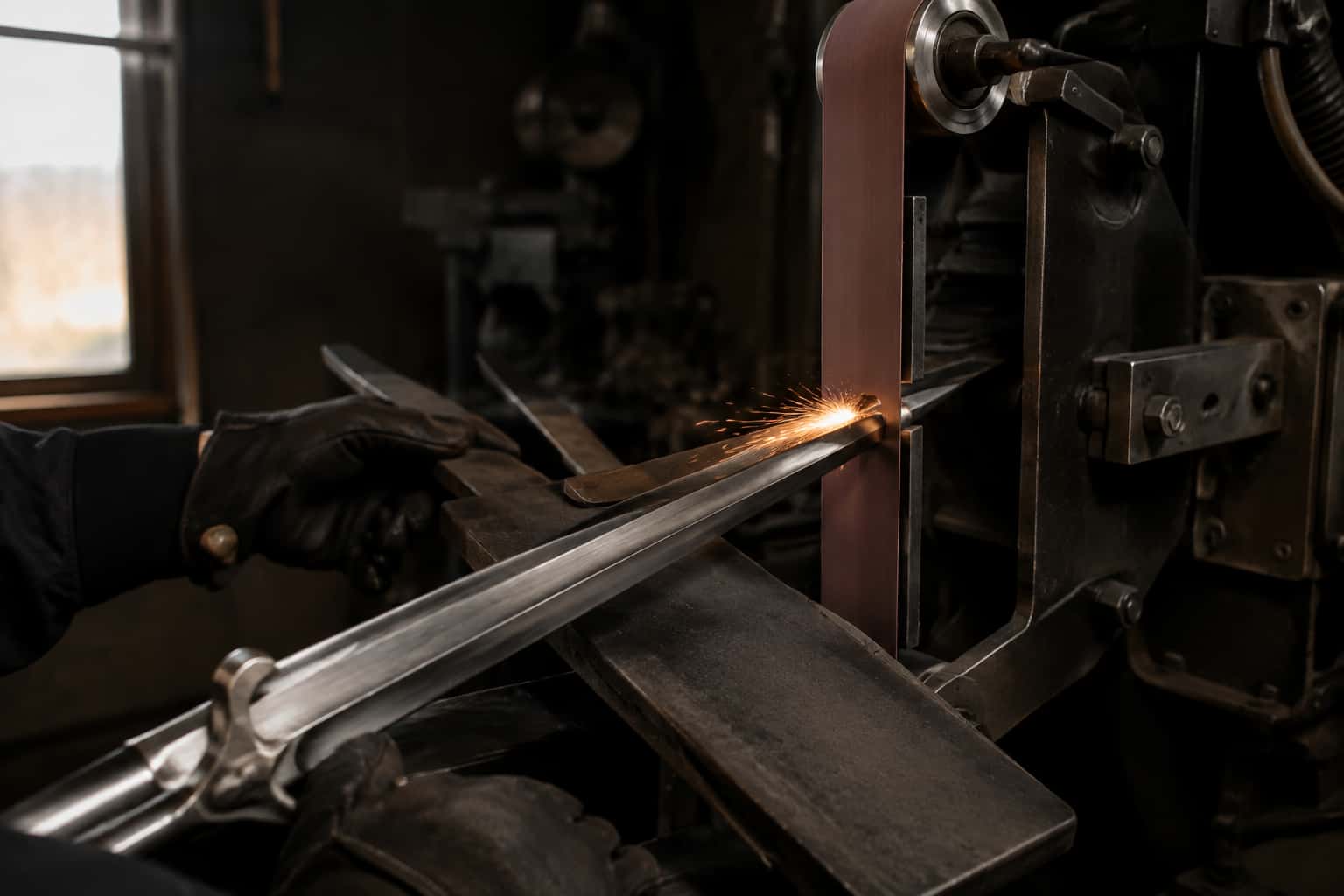
The greatswords are where sword mythology runs wildest — the fifty-pound barbarian blade of the movies — and where reality is most impressive: five to…
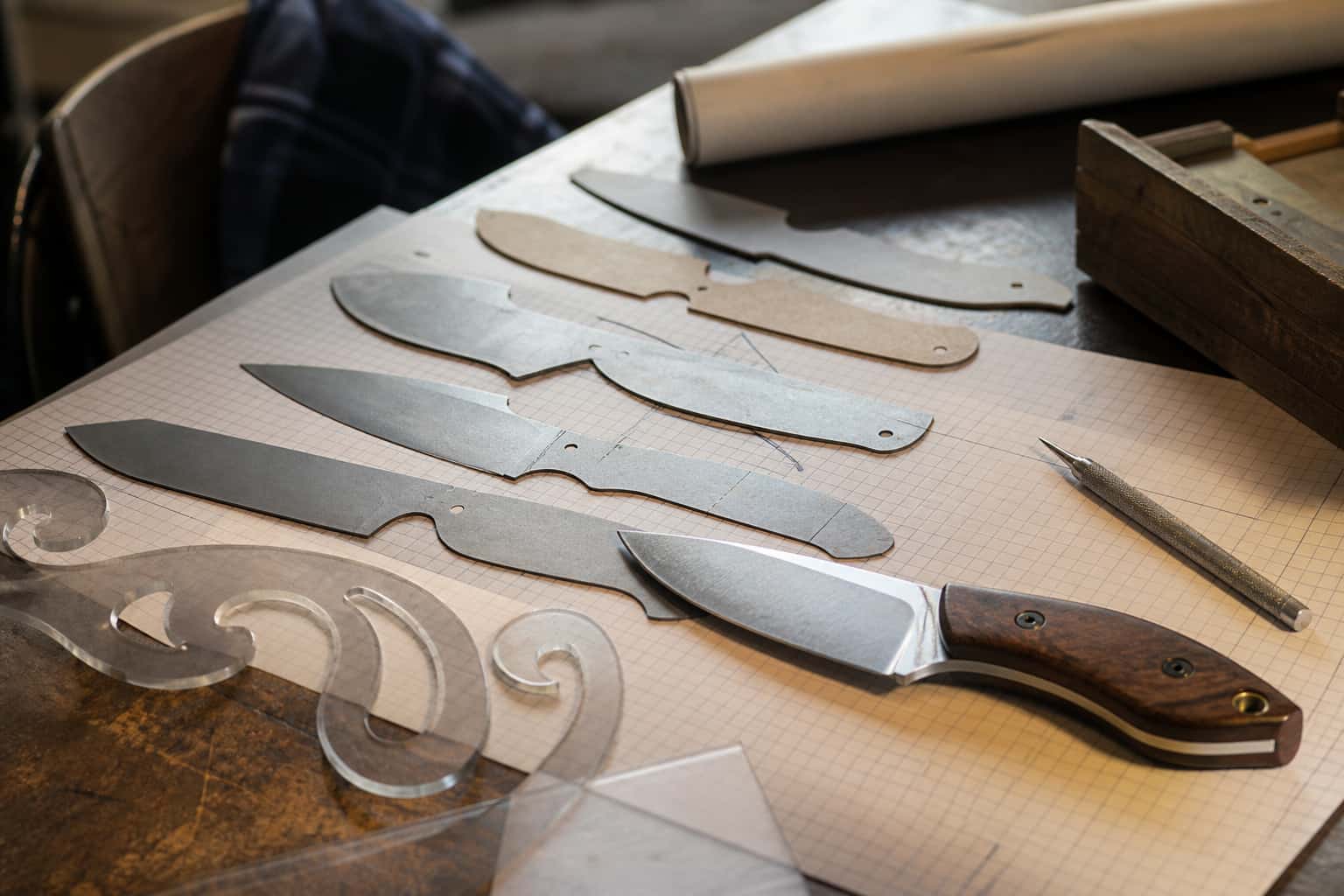
Two knives can share the same steel, grind type, and blade shape and still perform completely differently, because of stock thickness and how that…
Same bench
I machine the parts, hand-assemble, track and test Torus grinders in Sterling, Illinois. Most orders ship in seven to ten business days from time of order.
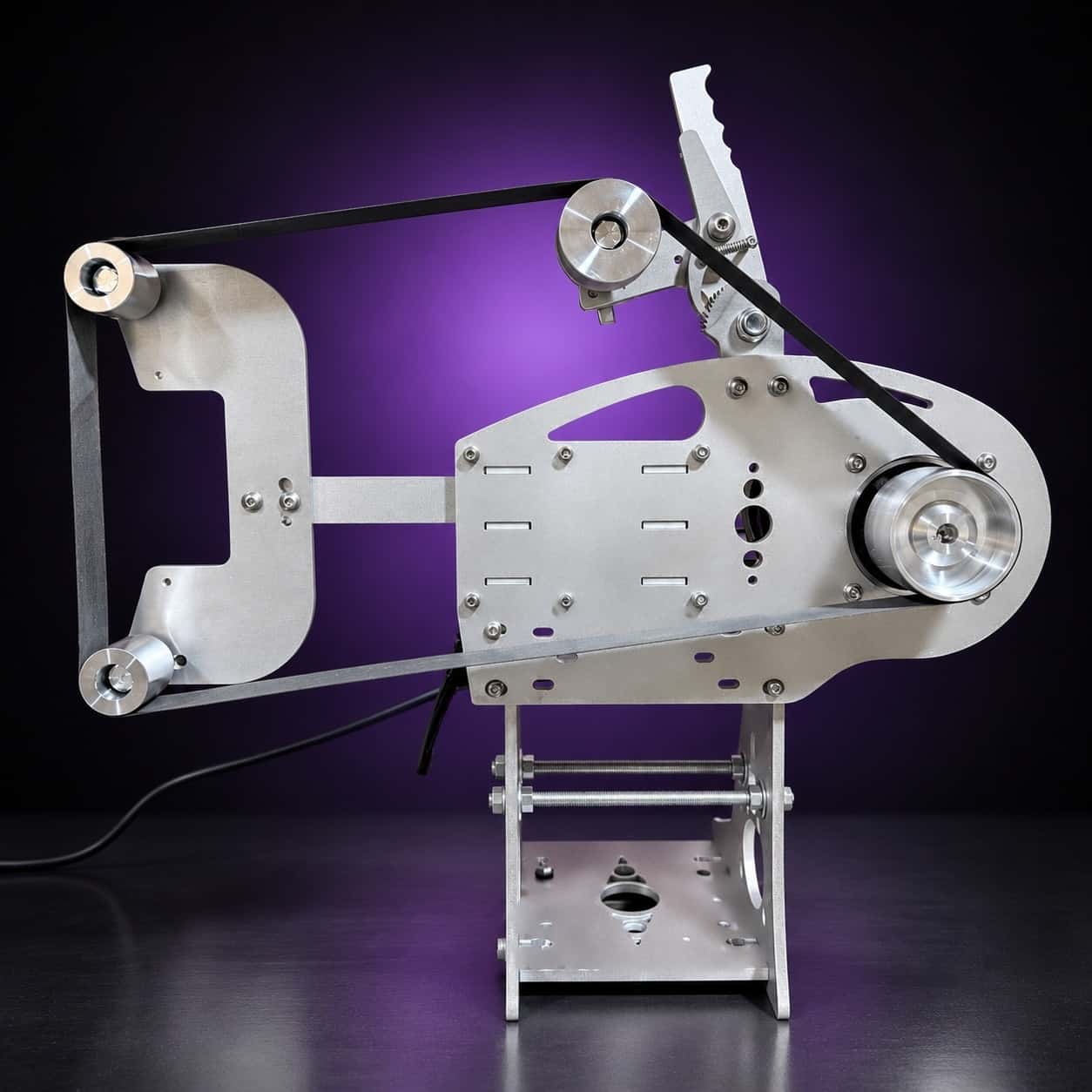
Current dual-axis platform with a fiber-laser-cut 6061 chassis and single-knob tracking.
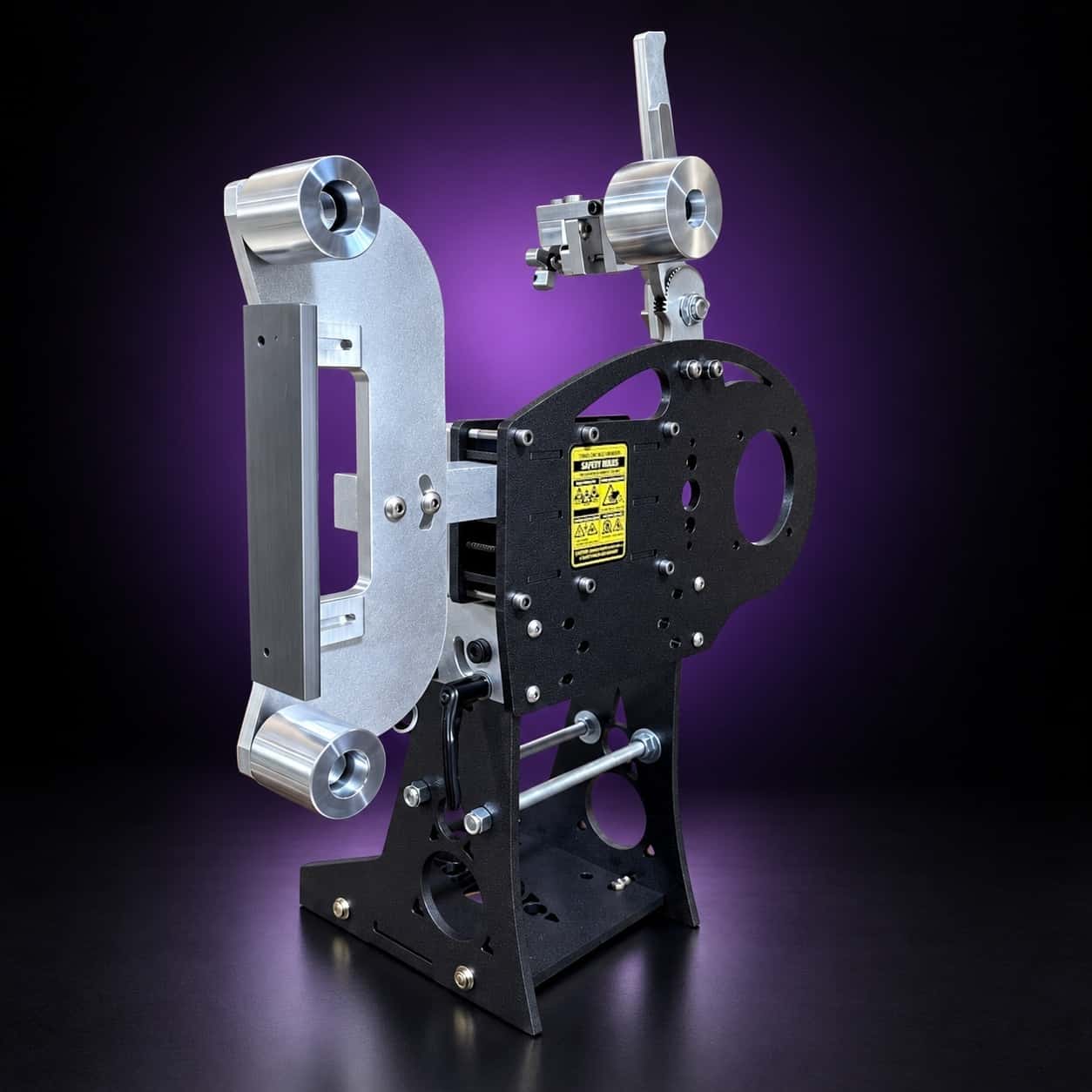
Current dual-axis platform with a steel chassis, more mass and less vibration.
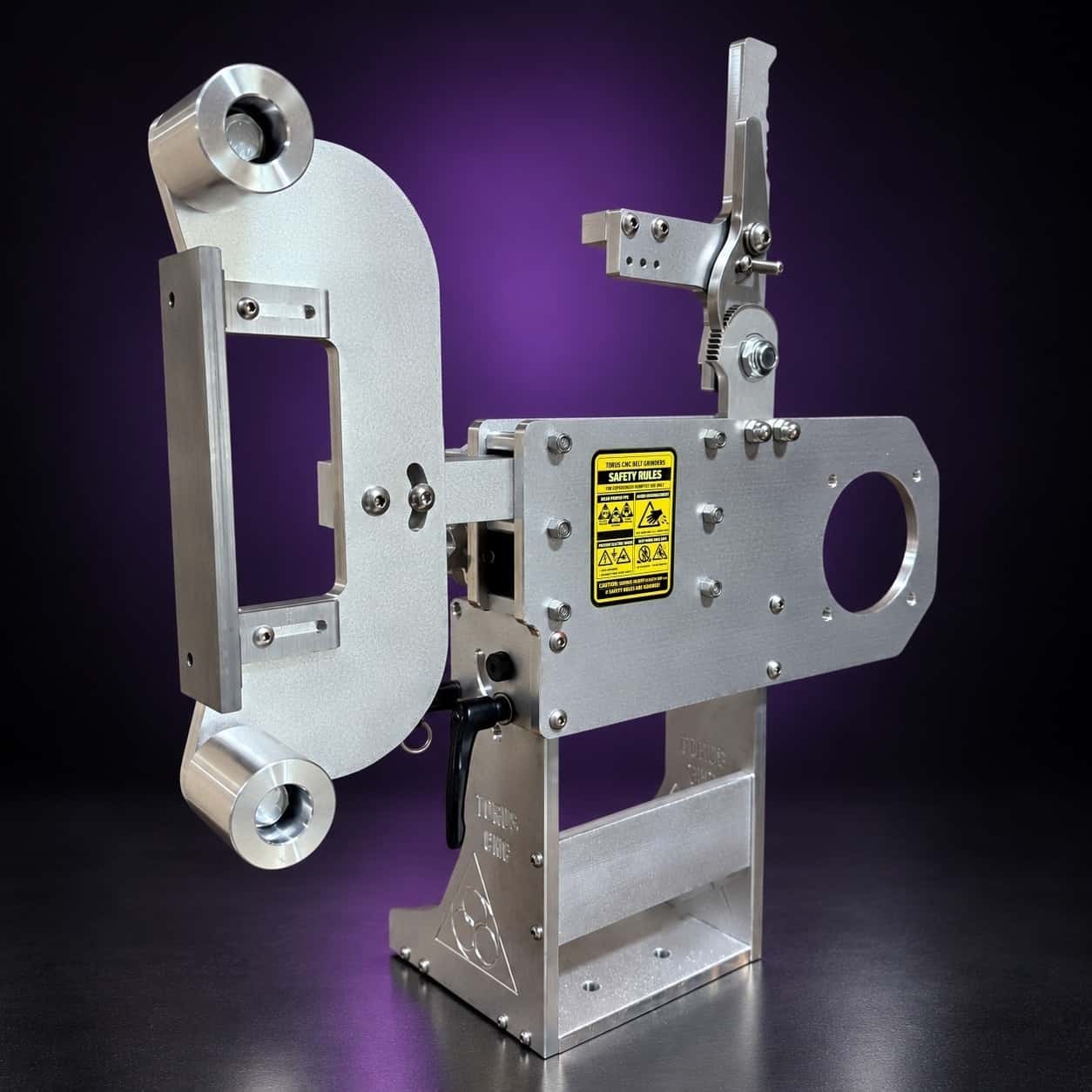
Prior-design aluminum chassis, 90-degree tilt and 1.5-inch tooling arms.
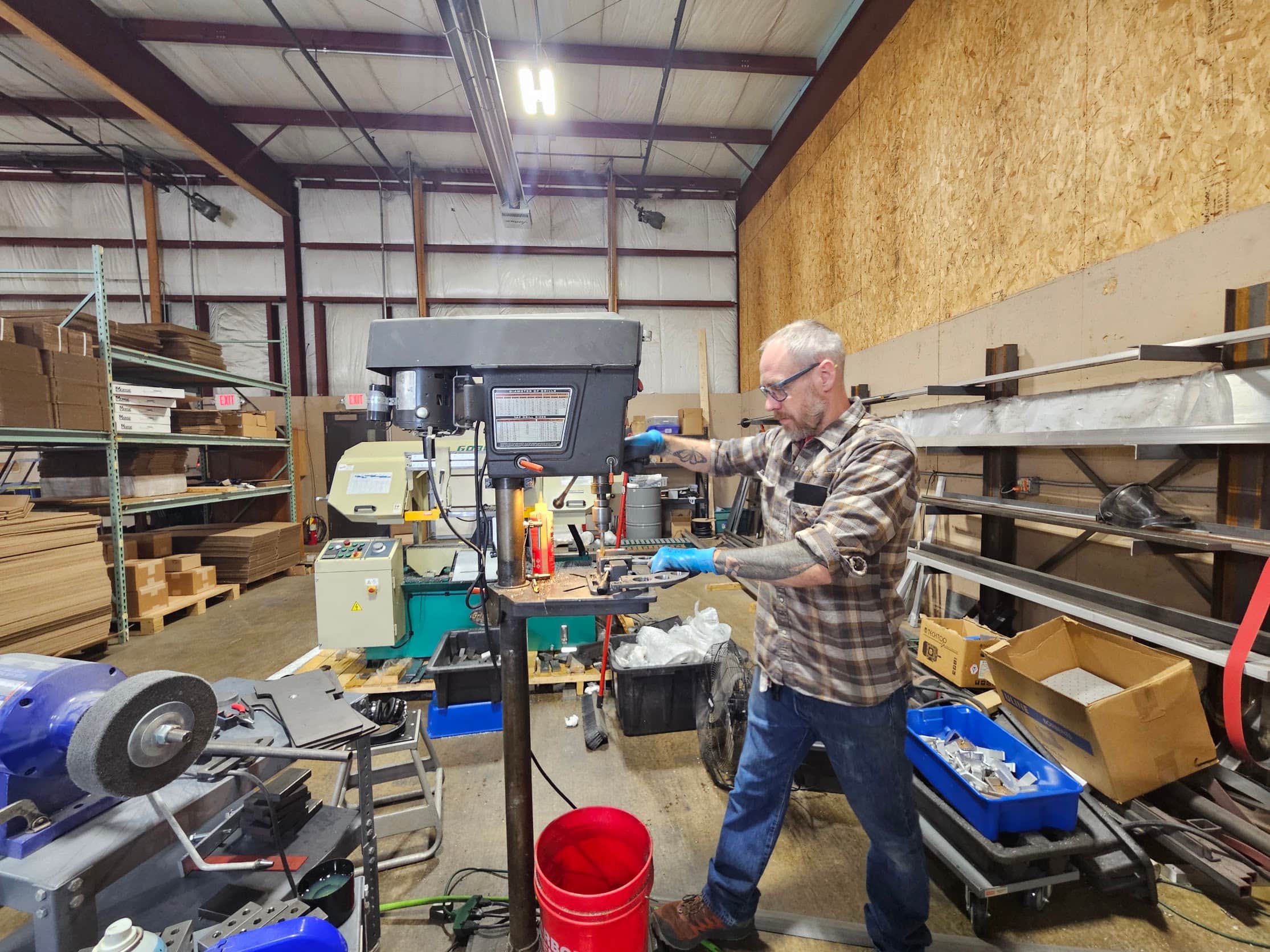
One-man shop
I answer my own email. Tell me the steel, the machine and what it is doing, and I will tell you what I would try next.