
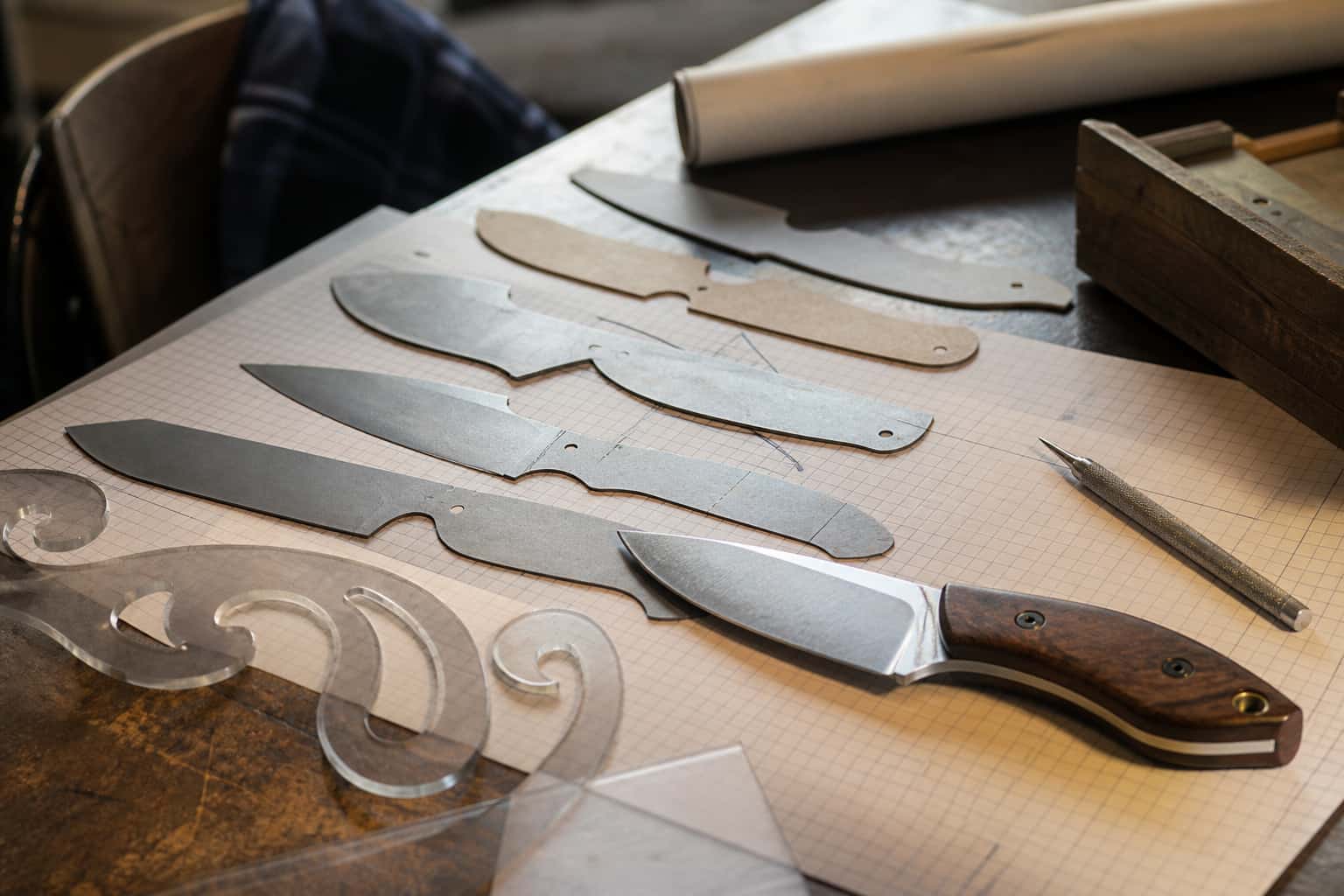
Blade Design
Making & Fitting a Guard: The Gap-Free Method
Nothing separates the serious maker from the scale-slapper like a fitted guard: a slotted block of metal pressed gap-free against the blade’s shoulders…
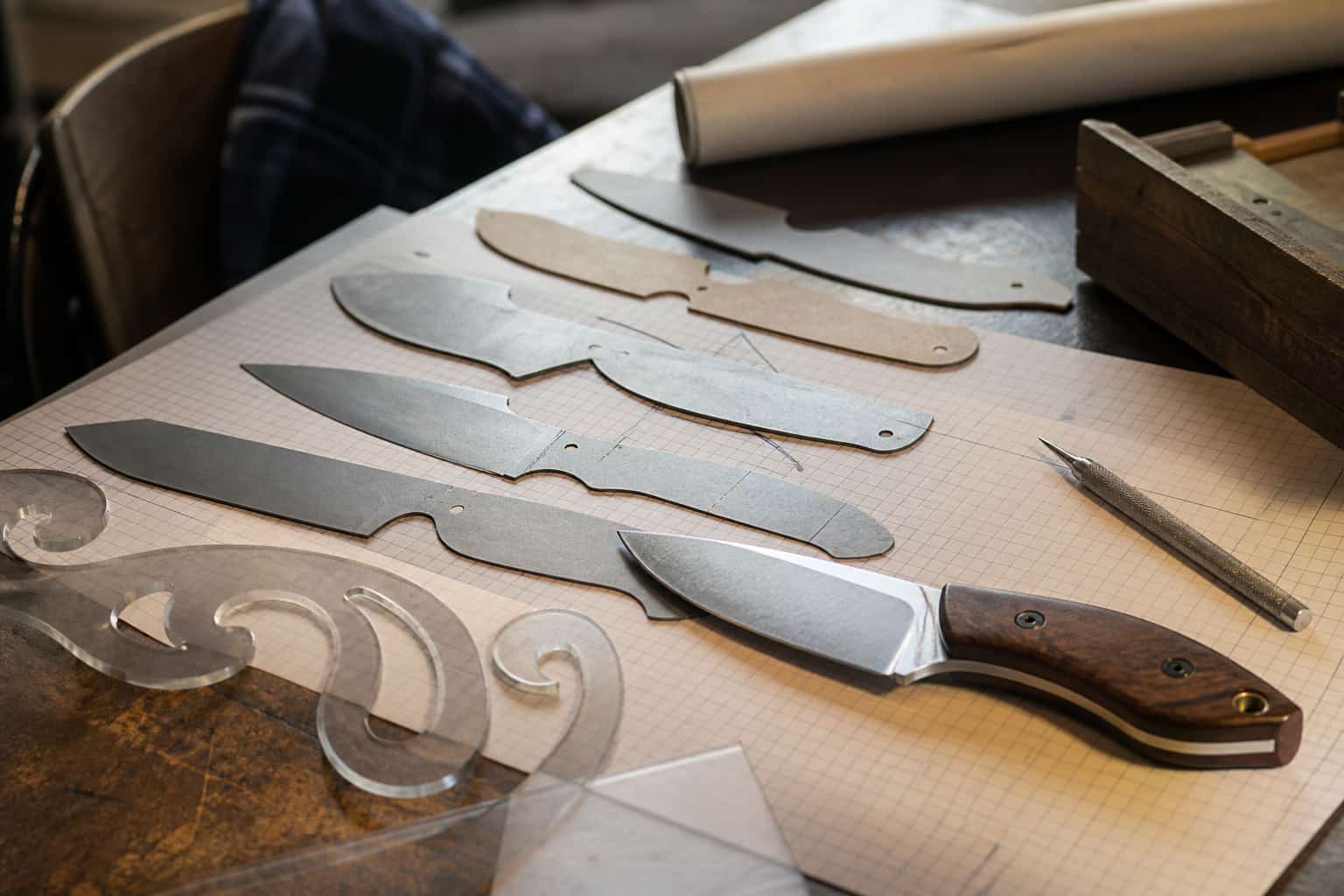
Blade Design
How makers sign blades: electro-etch stencils step by step, steel stamps, engraving options, mark placement, and building a mark worth protecting.
2 min readWritten by Rich LinvilleFree to read
An unsigned blade is an orphan: nobody can find you to buy the next one. The maker’s mark is where craft meets business — your name, permanently in steel, on every piece that leaves the bench. Here are the methods, from the $100 setup that signs most custom knives today to the stamp that outlives you.
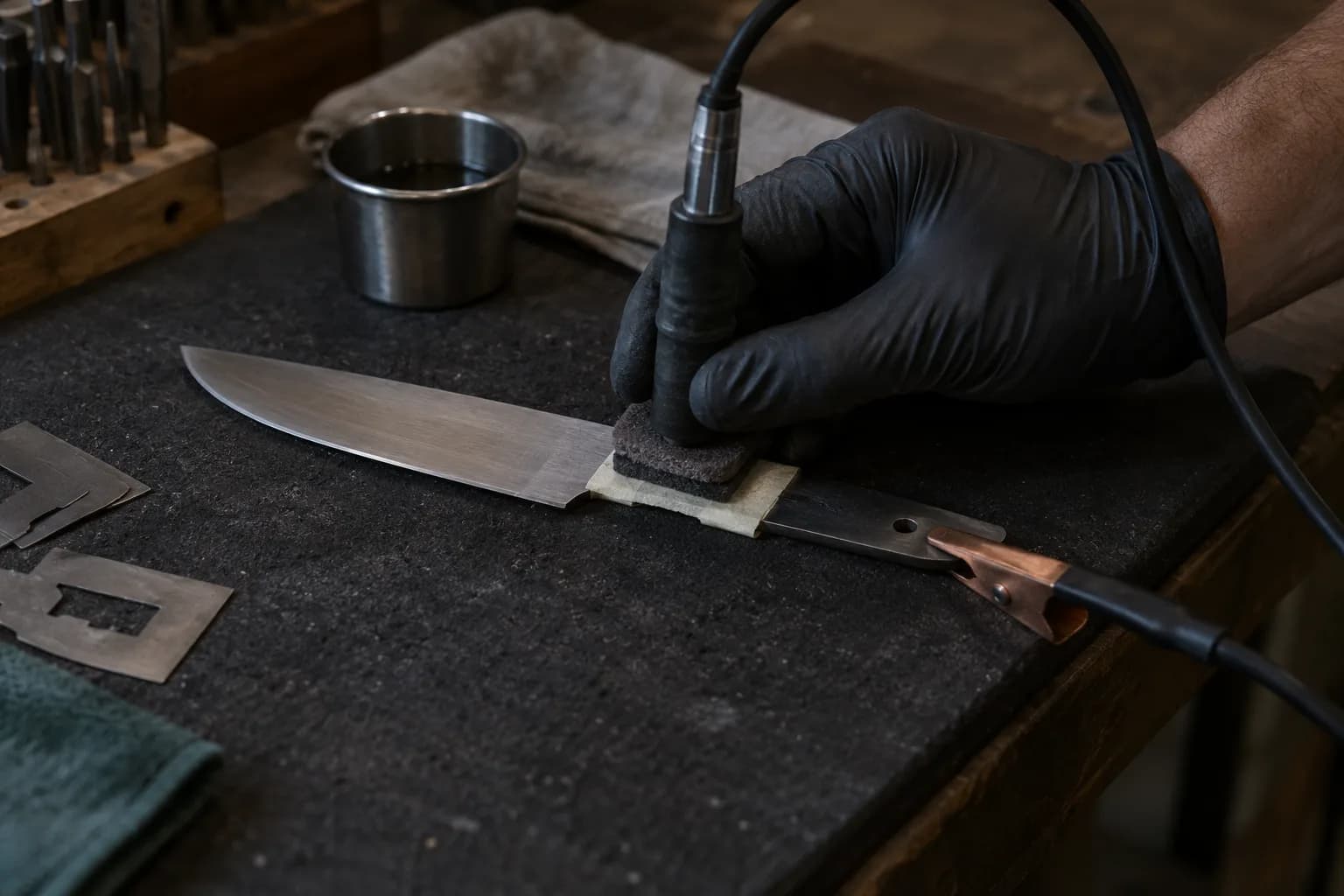
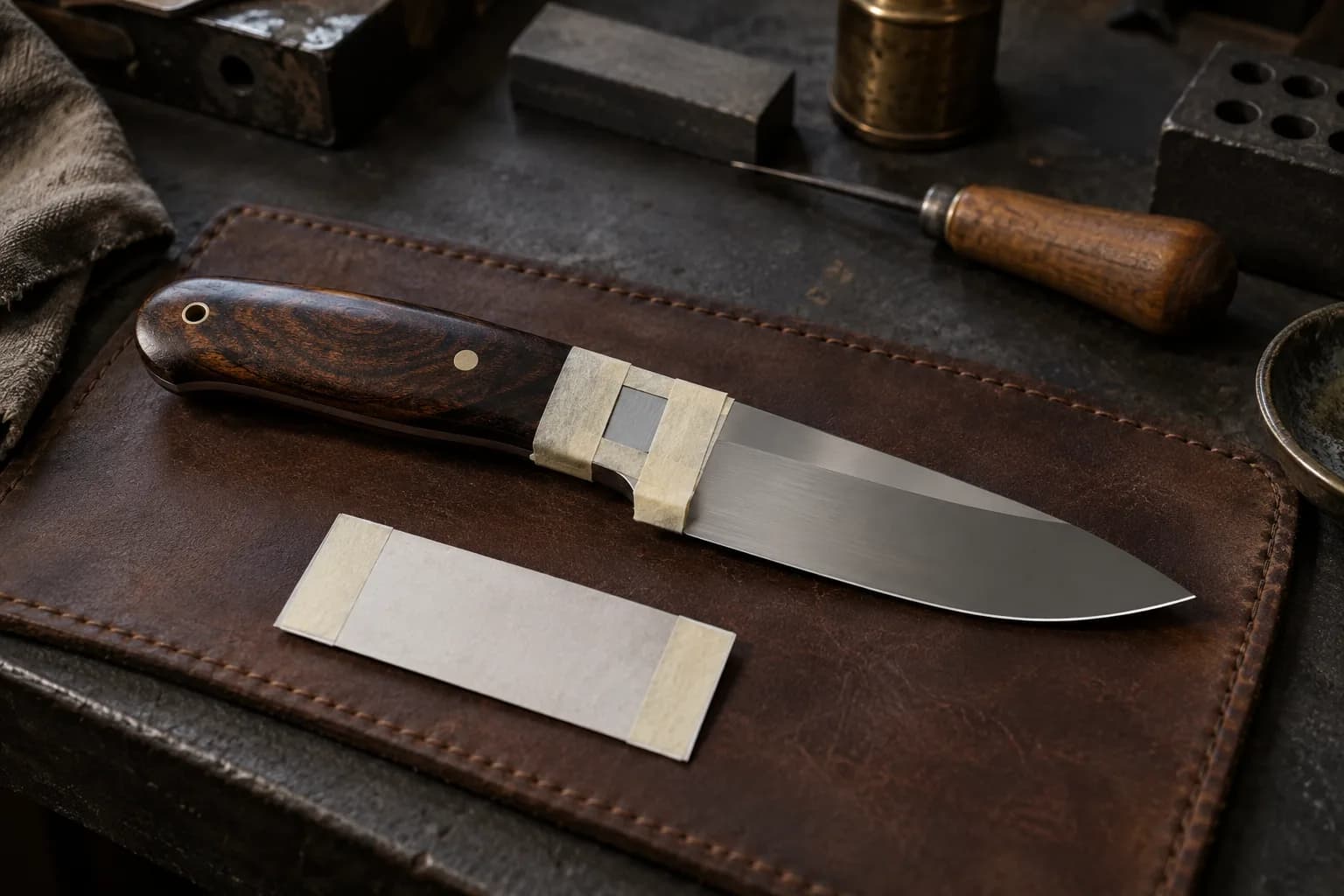
The dominant method for good reason: an electro-etcher passes low-voltage current through an electrolyte-soaked pad, through a stencil of your mark, into the blade — etching wherever the stencil is open. The sequence: clean the blade dead-degreased, tape a registration window, wet the pad with electrolyte, press the stencil flat, and work in firm timed dabs — DC current etches material away; switching to AC (marking mode) deposits a black oxide into the etch for the classic dark mark. Depth builds with passes. Stencils come from stencil services (send your logo art; buy multiples — they wear), and the whole rig — etcher, stencils, electrolyte — costs about what one knife sells for. Practice on scrap: over-etching blurs edges, a lifted stencil ghosts, and both are permanent.
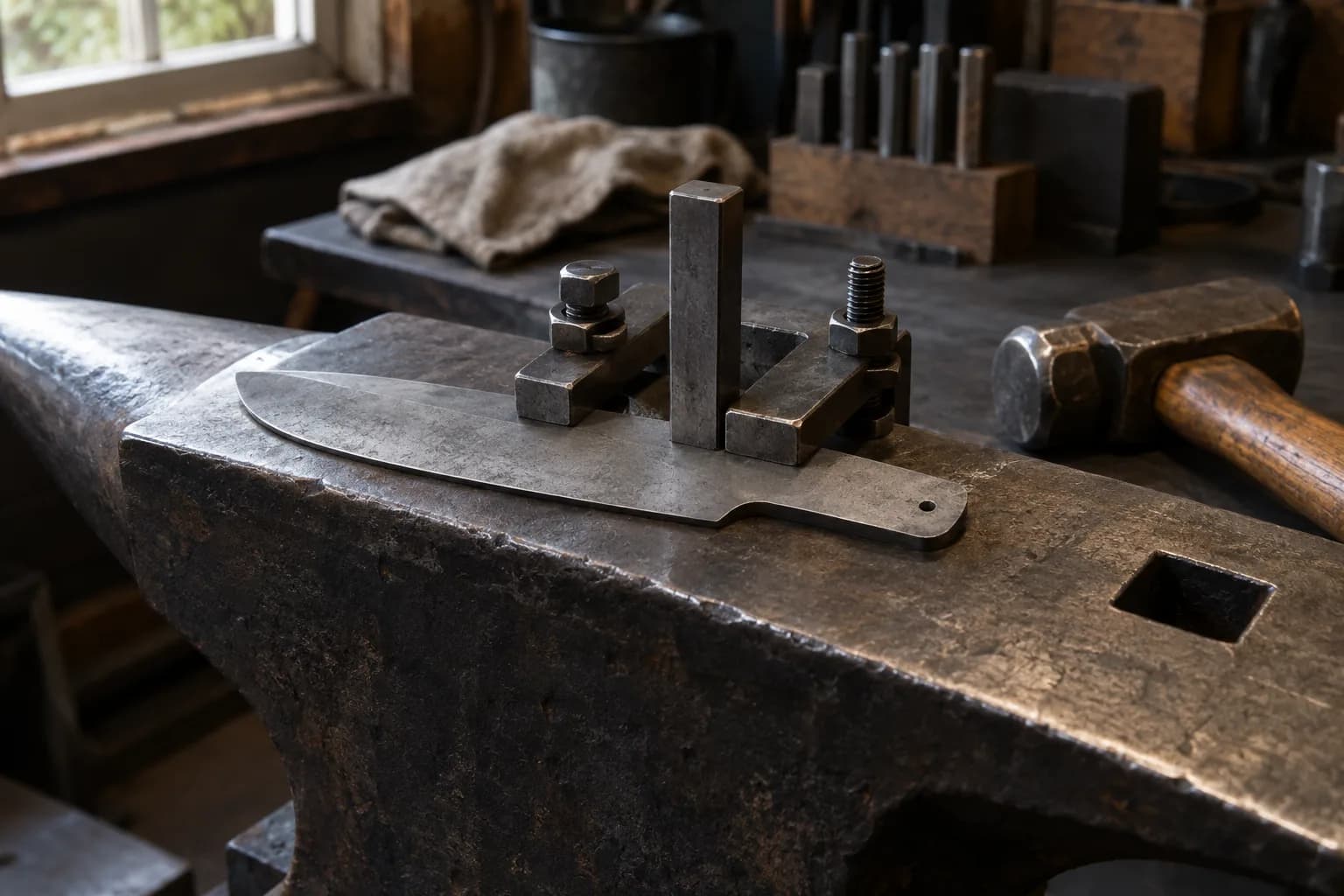
A hardened steel stamp of your mark, struck or pressed into ANNEALED steel — which decides the workflow: stamping happens before heat treat (striking hardened steel damages stamp and blade both, and a post-HT strike can start a crack). One firm blow beats three shy ones; a jig that registers the stamp square prevents the drunken double-strike. Stamps suit forged work beautifully — struck at a working heat or cold on annealed stock — and carry the old-world signature energy; custom stamps run more up front than etch stencils and then last generations.
Engraving (hand or rotary) for one-off script and embellishment; carbide-scribe signatures for the minimalist line; laser marking where volume and precision pay for access; and acid-etch-over-stencil variants of the electro method. The wrong road: vinyl stickers and paint markers — anything that wipes off was never a mark.
Convention puts the mark on the ricasso or blade flat, left side (presentation side) — visible, protected, and clear of the grind. Content: name or logo, and no more than the mark stays legible at ricasso scale; MK-number or year codes can ride the tang or spine. Consistency is the whole game: same mark, same placement, every knife — because the mark is how your work gets identified at shows, resold honestly, and hunted down by the customer who saw one at a campfire, per the channel guide’s word-of-mouth math. Design it once, at bumper-sticker simplicity (fine detail dies at etch scale), and let every blade that leaves the shop carry the same signature. The Ulfberht smiths built a two-century brand on exactly this; the counterfeits proved it worked.
Keep reading
Three more from the same bench.
Nothing separates the serious maker from the scale-slapper like a fitted guard: a slotted block of metal pressed gap-free against the blade’s shoulders…
The final surface finish on a blade is more than cosmetic, it affects corrosion resistance, how scratches show up over time, and how much grinding and…
The Viking sword is where bladesmithing history gets genuinely mysterious: gorgeous pattern-welded blades giving way, at the top of the market, to a run…
Same bench
I machine the parts, hand-assemble, track and test Torus grinders in Sterling, Illinois. Most orders ship in seven to ten business days from time of order.
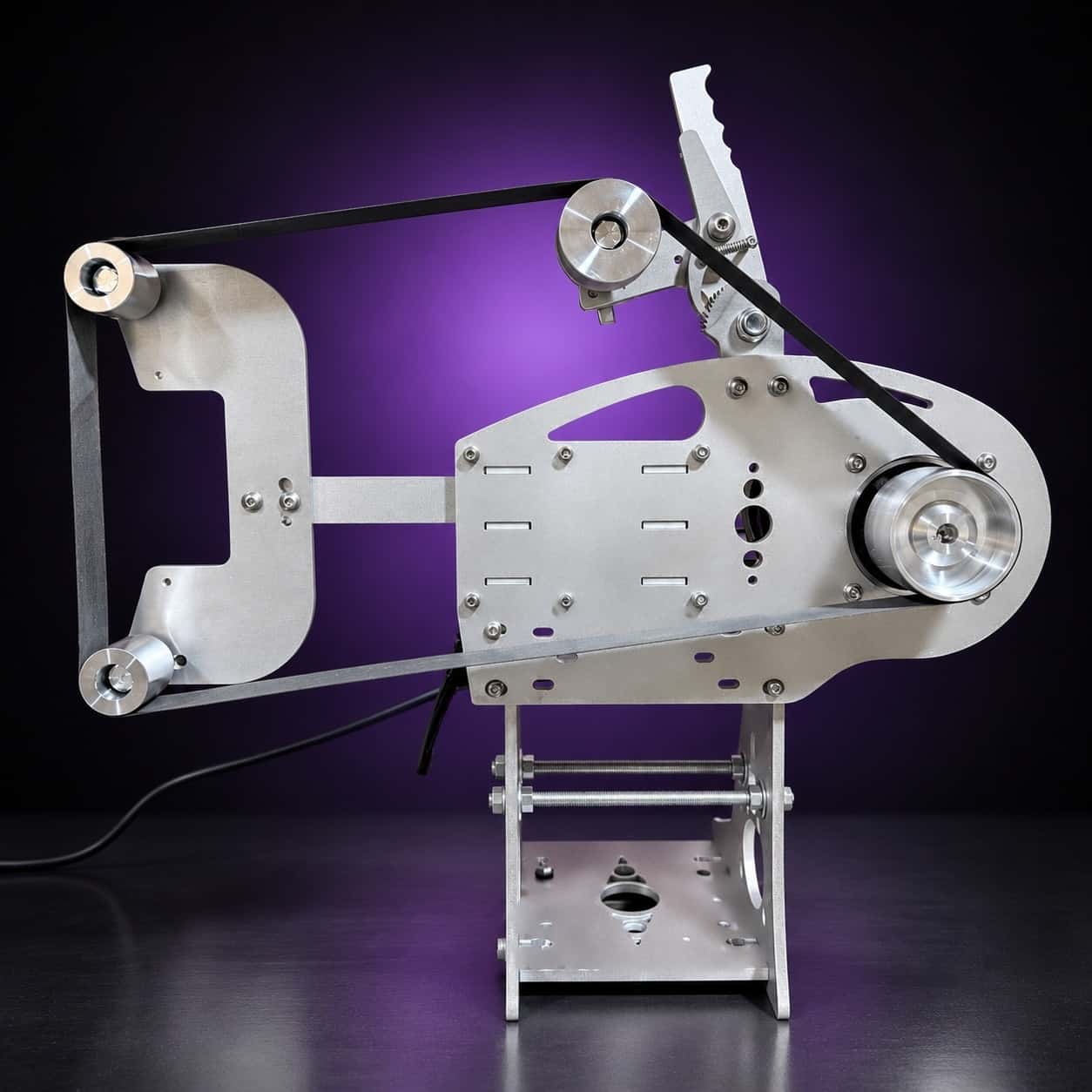
Current dual-axis platform with a fiber-laser-cut 6061 chassis and single-knob tracking.
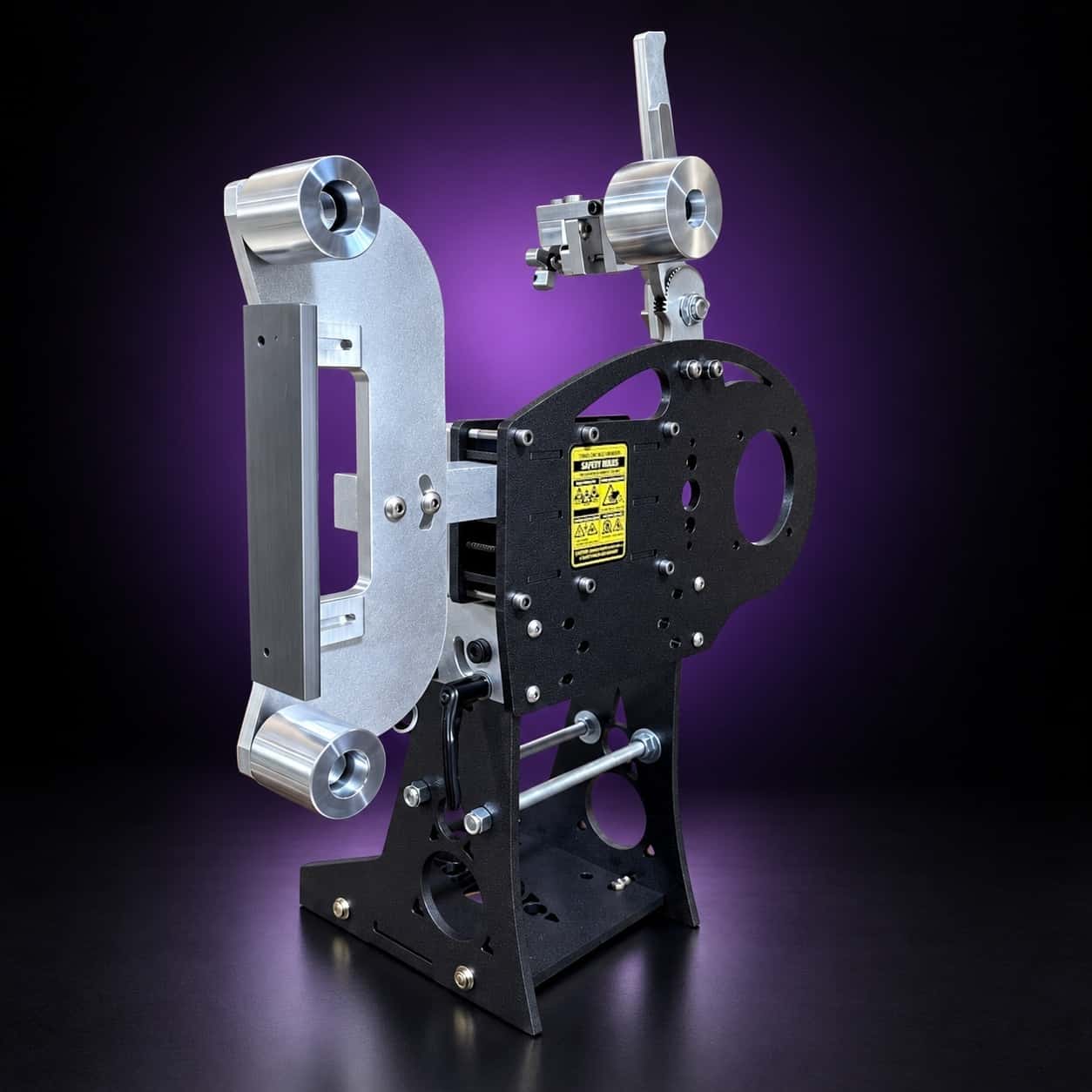
Current dual-axis platform with a steel chassis, more mass and less vibration.
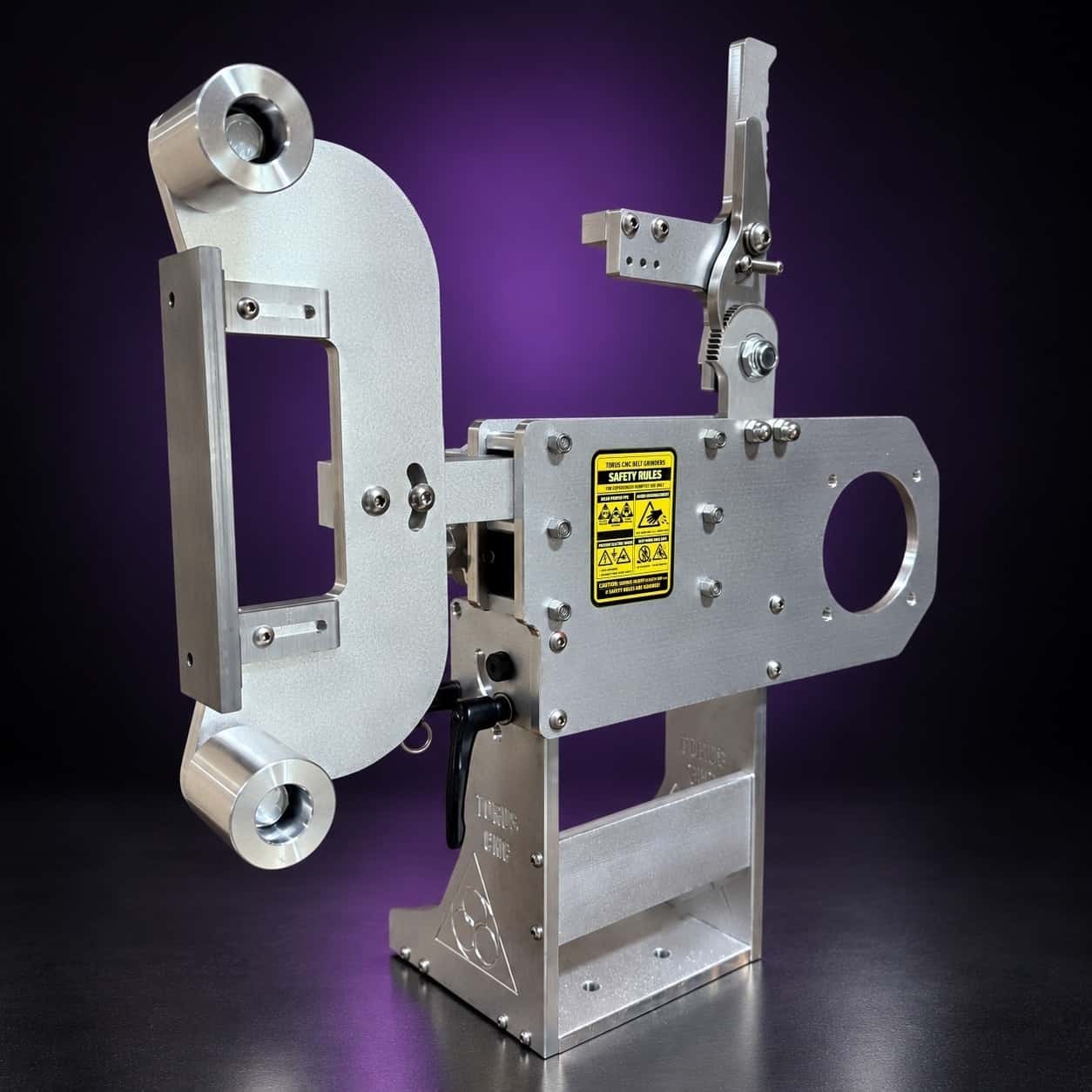
Prior-design aluminum chassis, 90-degree tilt and 1.5-inch tooling arms.
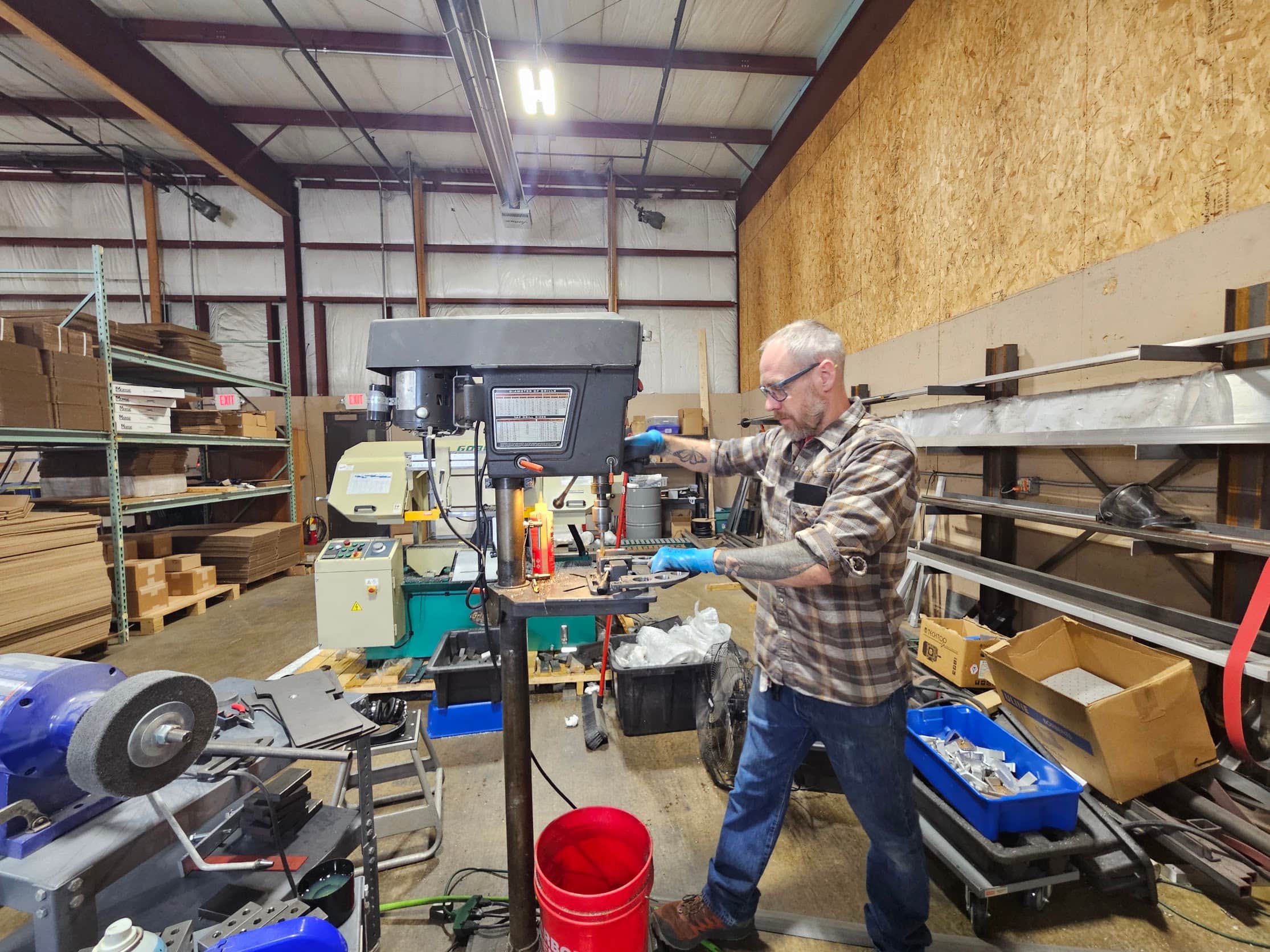
One-man shop
I answer my own email. Tell me the steel, the machine and what it is doing, and I will tell you what I would try next.