
Swords
Sword Steels for Modern Makers
Sword steel selection is knife steel selection with the priorities inverted: at three feet of lever arm, toughness is nearly everything and wear…
Swords
Where swords live now: HEMA's steel feders, LARP's foam craft, SCA combat and cutting sports, what each community buys, and where a maker fits in.
2 min readWritten by Rich LinvilleFree to read
The sword never actually died — it just changed jobs. Today it is sporting equipment, theater prop, historical laboratory and craft object at once, carried by communities that between them account for most of the swords made in the world right now. For a maker, knowing these scenes is knowing your customers.
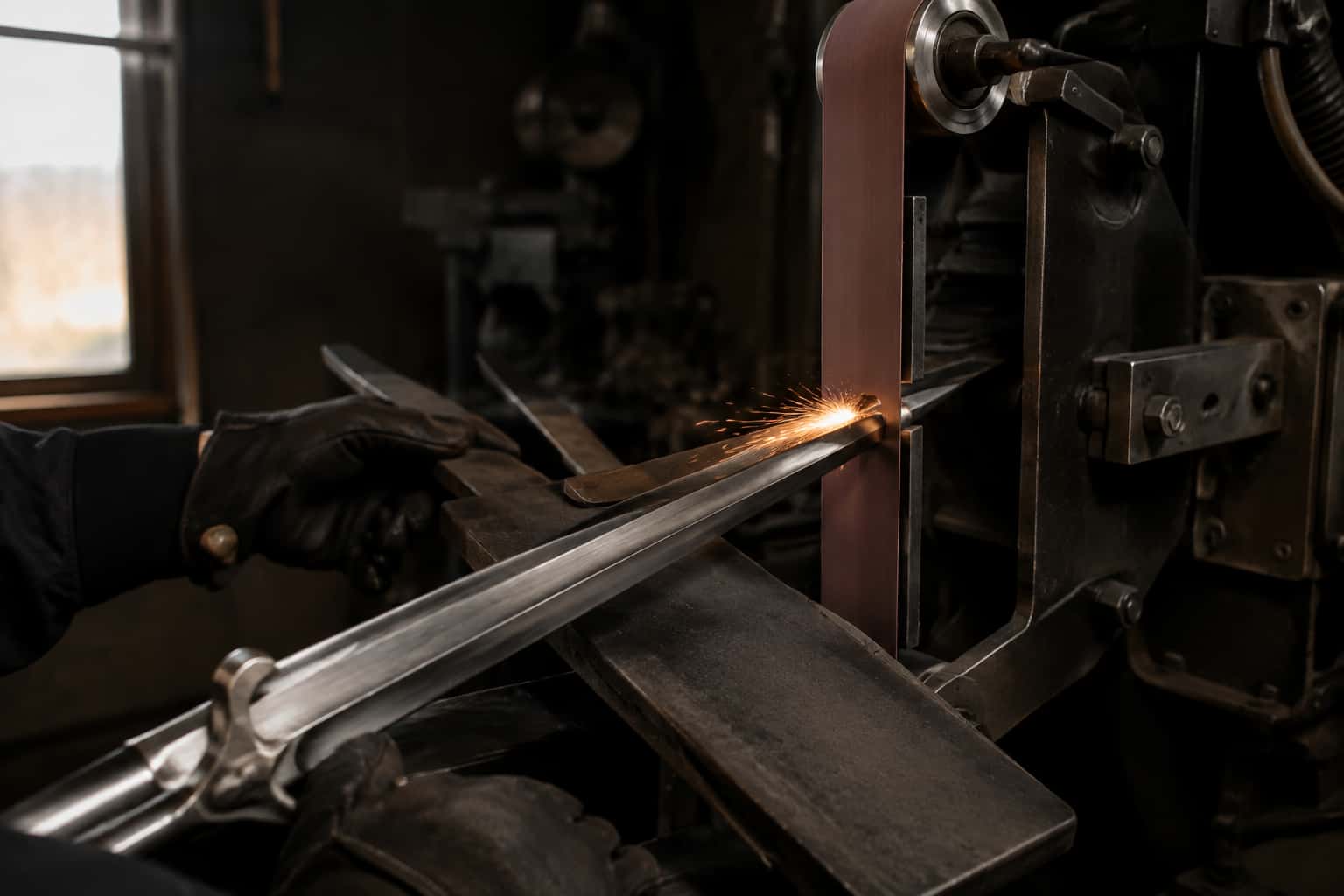
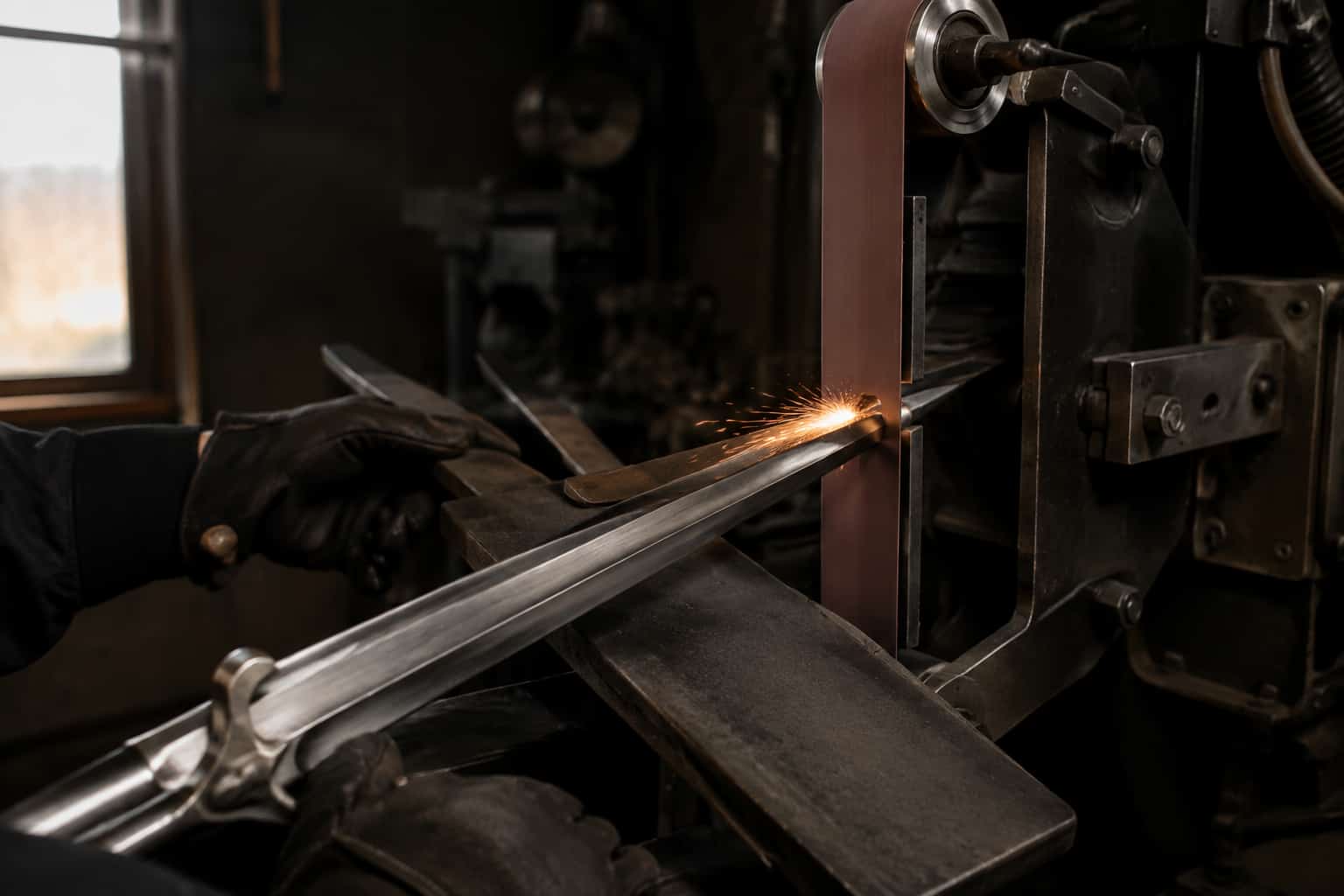
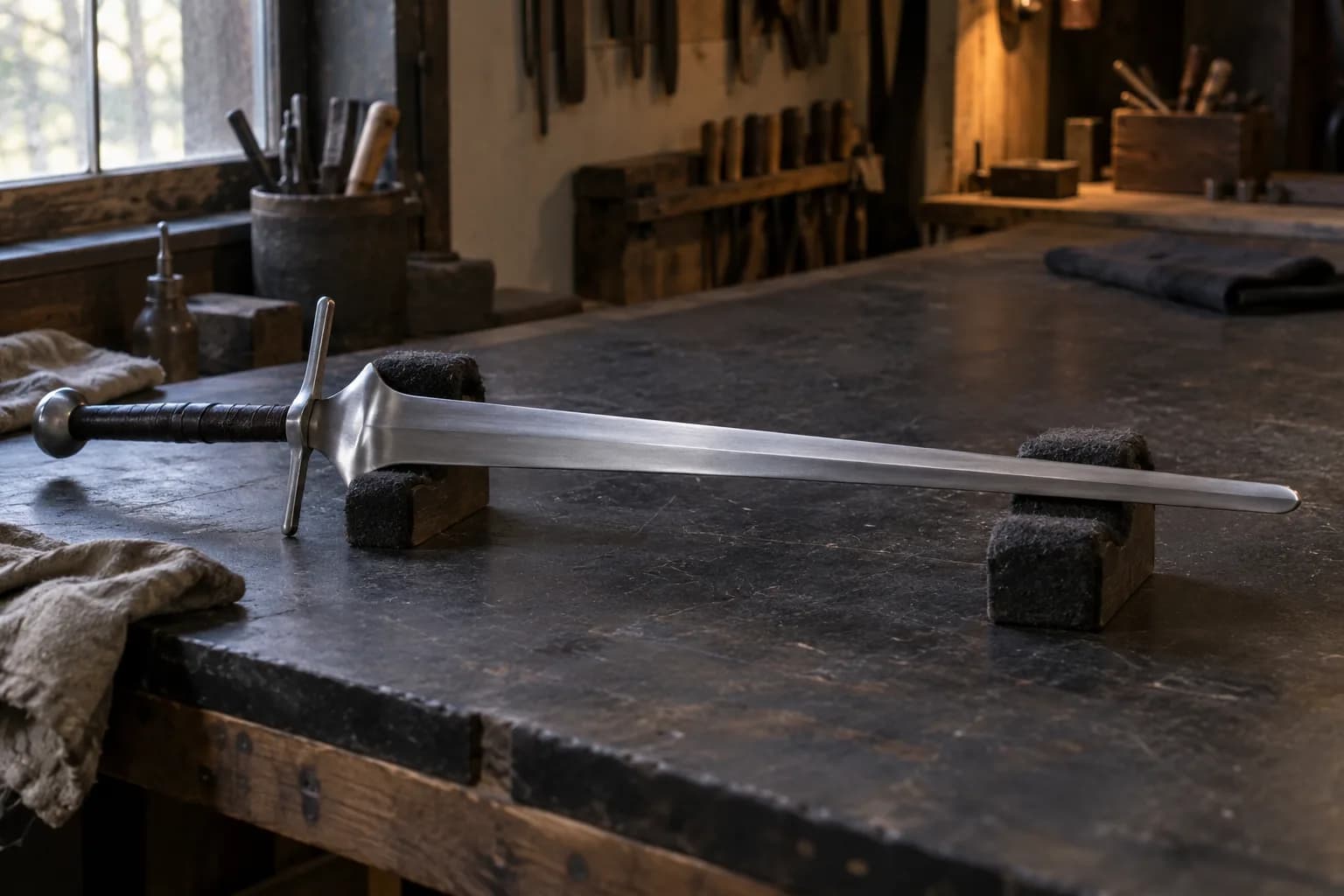
Historical European Martial Arts rebuilt real swordsmanship from the surviving manuals — Liechtenauer, Fiore, the montante treatises — and turned it into a global sparring sport. Its standard tool is the feder (federschwert): a purpose-built sparring longsword with thickened blunt edges, a flexible last third for safer thrusts, and a flared schilt at the ricasso, descended directly from the 16th-century training swords in Meyer’s manual. Modern feders run 9260 and similar silicon spring steels because they must survive thousands of full-force flexes — the resilience case study from Sword Steels in weekly practice. HEMA smiths are a real niche: feders, blunt arming swords, sabers and montante trainers, all engineered to break predictably never and bend predictably always.
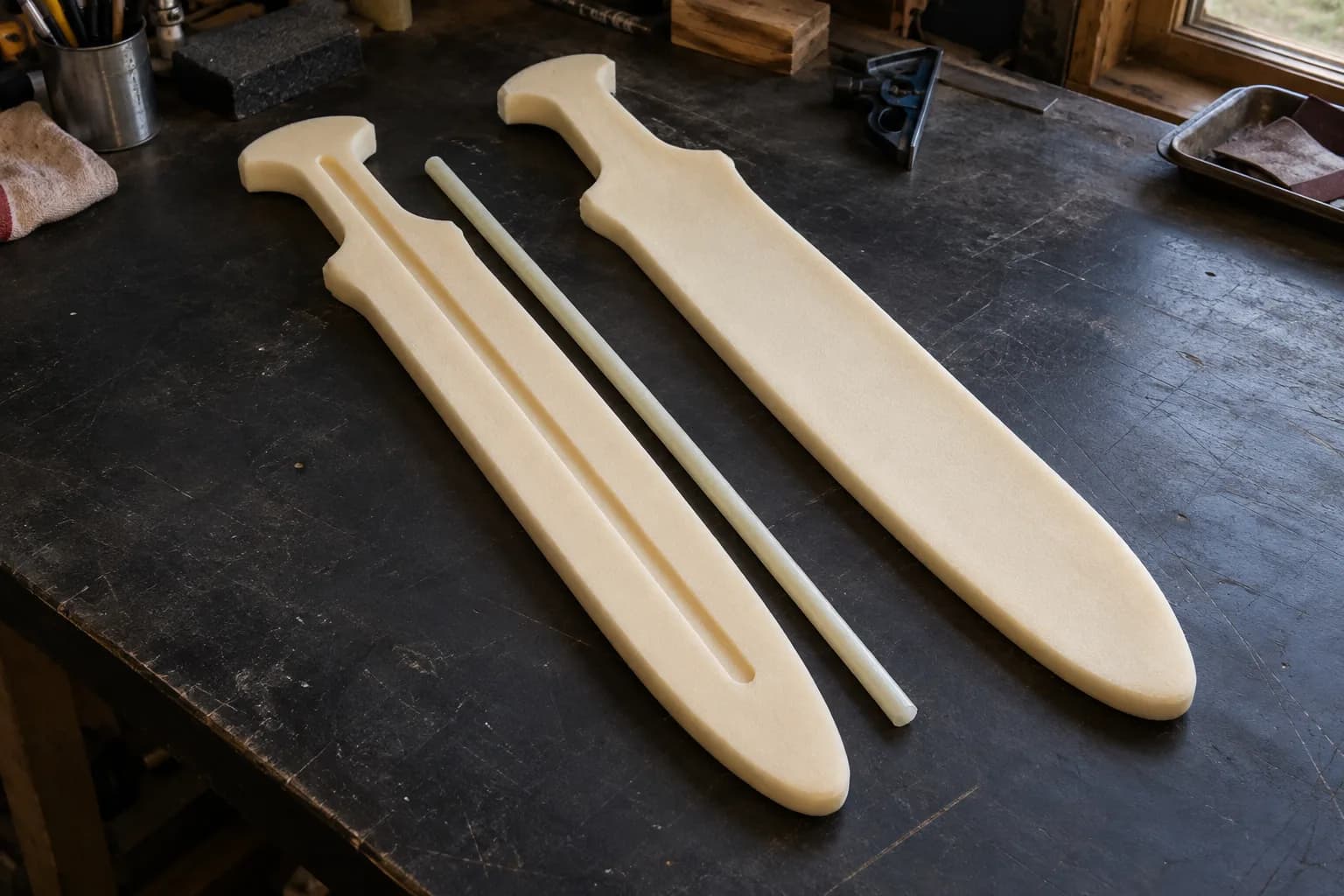
Live-action role play fights with foam-and-latex swords over fiberglass or carbon cores — a legitimate parallel craft with its own materials science (sculpted foam edges, latex or silicone skins, flex-tested cores) and safety-first calibration culture, since the whole point is hitting friends who remain friends. Steel makers cross over more than either side admits: LARP smiths think constantly about balance and presence because a convincing foam sword must FEEL like the anatomy guide’s numbers while weighing under two pounds. Boffer sports (Dagorhir, Amtgard, Belegarth) run the same idea with sport rules. It is the largest sword community by headcount, and its veterans routinely graduate to steel — arriving at custom benches already fluent in balance talk.
The Society for Creative Anachronism fights armored combat with rattan (its rapier program fences steel), and its armorers and smiths form one of the oldest continuous craft communities in the revival. Test cutting — tatami mats, water bottles, the tameshigiri tradition behind the katana’s living practice — has become its own sport with competitions rewarding exactly what makers care about: edge geometry, blade presentation and heat treat, publicly graded. Add collectors, reenactors and stage-combat theater, and the modern sword world is bigger and better organized than at any point since swords left the belt.
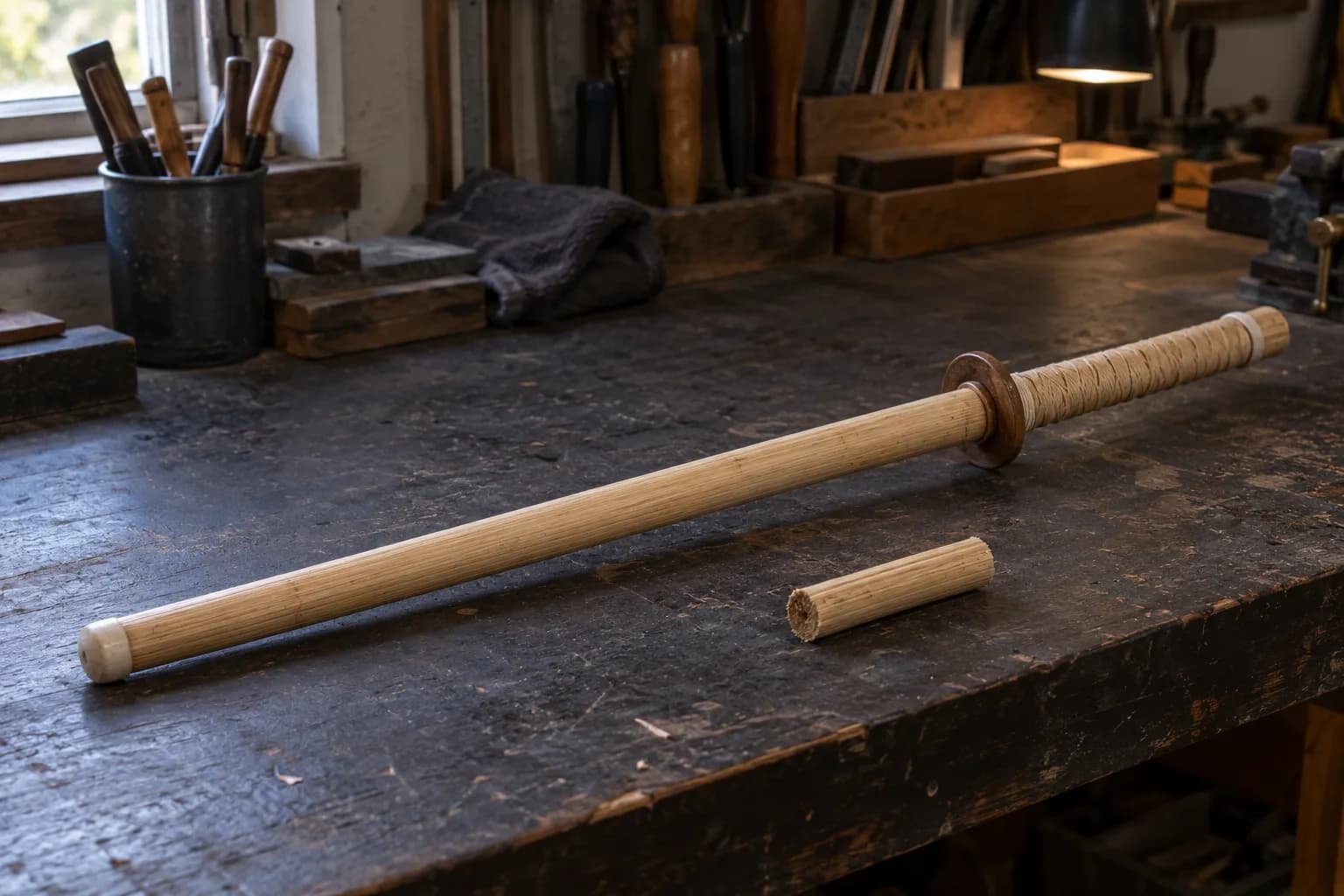
Each scene buys differently: HEMA wants engineered resilience and replaceable trainers; cutting sport wants competition sharps with dialed geometry; SCA wants period furniture and armor-adjacent work; LARP wants steel from you only when its veterans upgrade; collectors want the historical types from this section done right. The common thread is community trust — these are club scenes where reputation travels by word of mouth, and one well-made feder or cutter at practice outsells any advertisement. Show up, cut, spar, listen: the sword’s living culture is the friendliest sales floor a bladesmith will ever walk.
Keep reading
Three more from the same bench.
Sword steel selection is knife steel selection with the priorities inverted: at three feet of lever arm, toughness is nearly everything and wear…

Ask a room of sword owners what started it and the honest answers are rarely museums: it was Aragorn reforging Narsil, a Kurosawa duel, an anime blade the…

The longsword is the European counterpart to the katana’s fame: the two-handed cruciform sword of the late medieval knight, the centerpiece of the German…
Same bench
I machine the parts, hand-assemble, track and test Torus grinders in Sterling, Illinois. Most orders ship in seven to ten business days from time of order.

Current dual-axis platform with a fiber-laser-cut 6061 chassis and single-knob tracking.

Current dual-axis platform with a steel chassis, more mass and less vibration.

Prior-design aluminum chassis, 90-degree tilt and 1.5-inch tooling arms.

One-man shop
I answer my own email. Tell me the steel, the machine and what it is doing, and I will tell you what I would try next.