
Abrasives
The Complete 2×72 Attachments Guide
A 2×72 out of the box is a platform; the attachments are the machine. Every serious grinder task — flat bevels, hollow grinds, fullers, handle curves…
Abrasives
How contact wheels work: what diameter does to the hollow, what durometer does to the bite, serrated vs smooth, and hollow-grinding technique.
2 min readWritten by Rich LinvilleFree to read
A contact wheel is a simple promise — a perfectly round, rubber-faced reference — that unlocks a whole family of grinds the platen cannot touch. Two numbers define every wheel: diameter and durometer. Learn what each buys and the catalog stops being confusing.
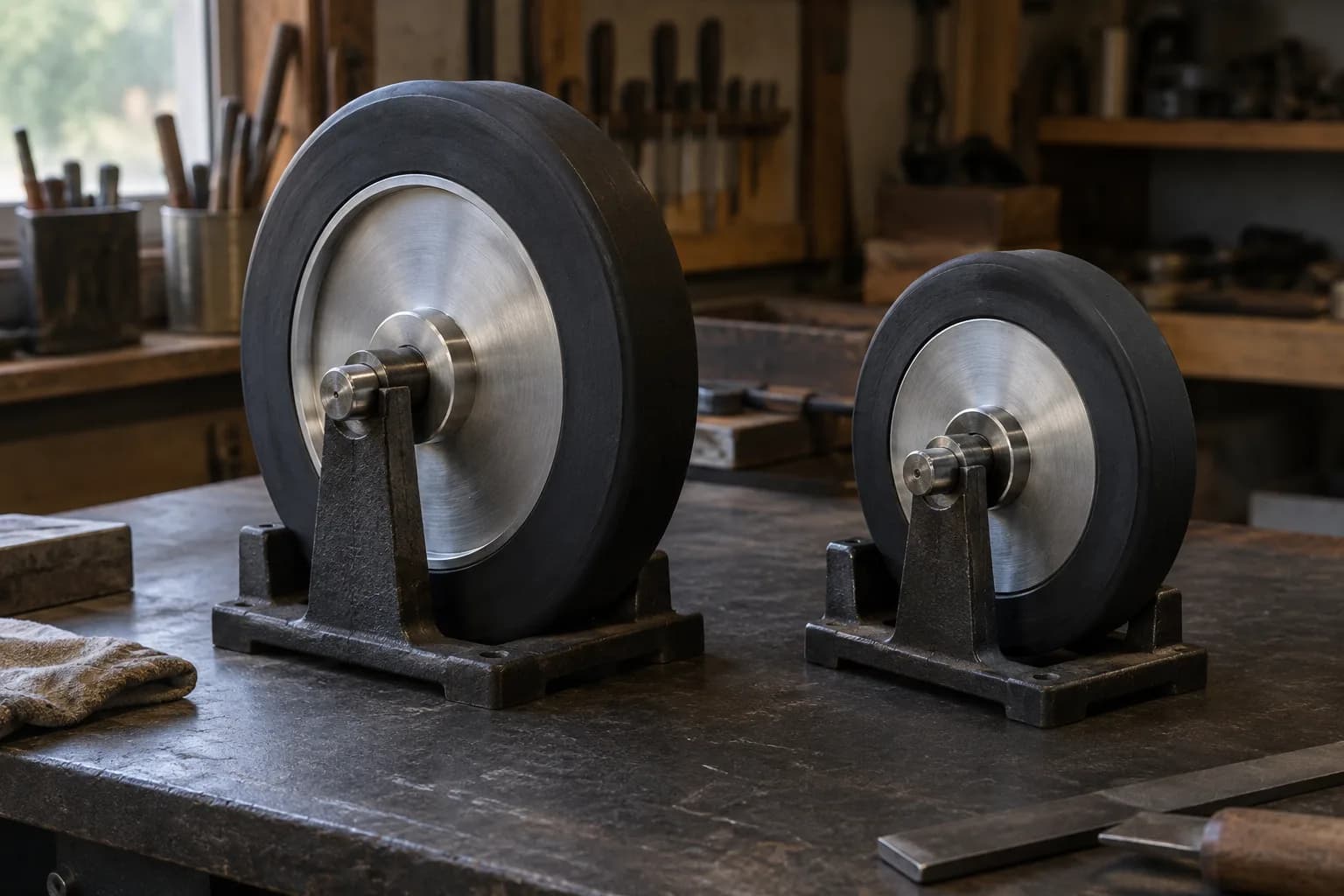
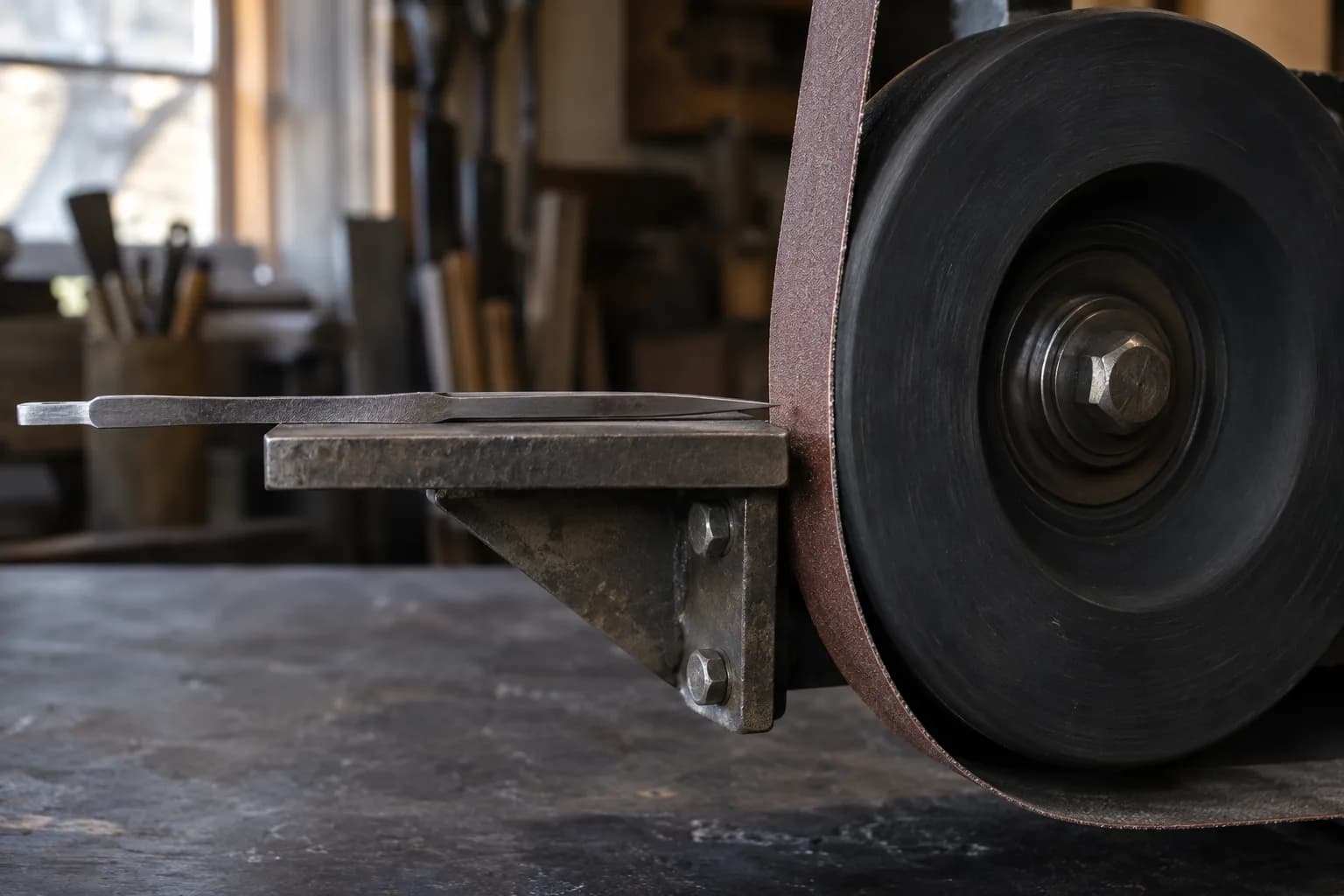
The wheel’s radius prints into the blade as the hollow’s sweep: big wheels (10-14″) cut shallow, wide, elegant hollows — the classic hunter and razor look; 8″ is the versatile middle that also hogs like a champion; small diameters cut deep, tight hollows and blend curves. One wheel cannot fake another’s radius, which is why shops accumulate them — but the first contact wheel should be a middle size that hollows knives AND removes steel fast, because hogging is the wheel’s second career: round contact concentrates pressure into a moving line, eating steel faster than any flat setup.
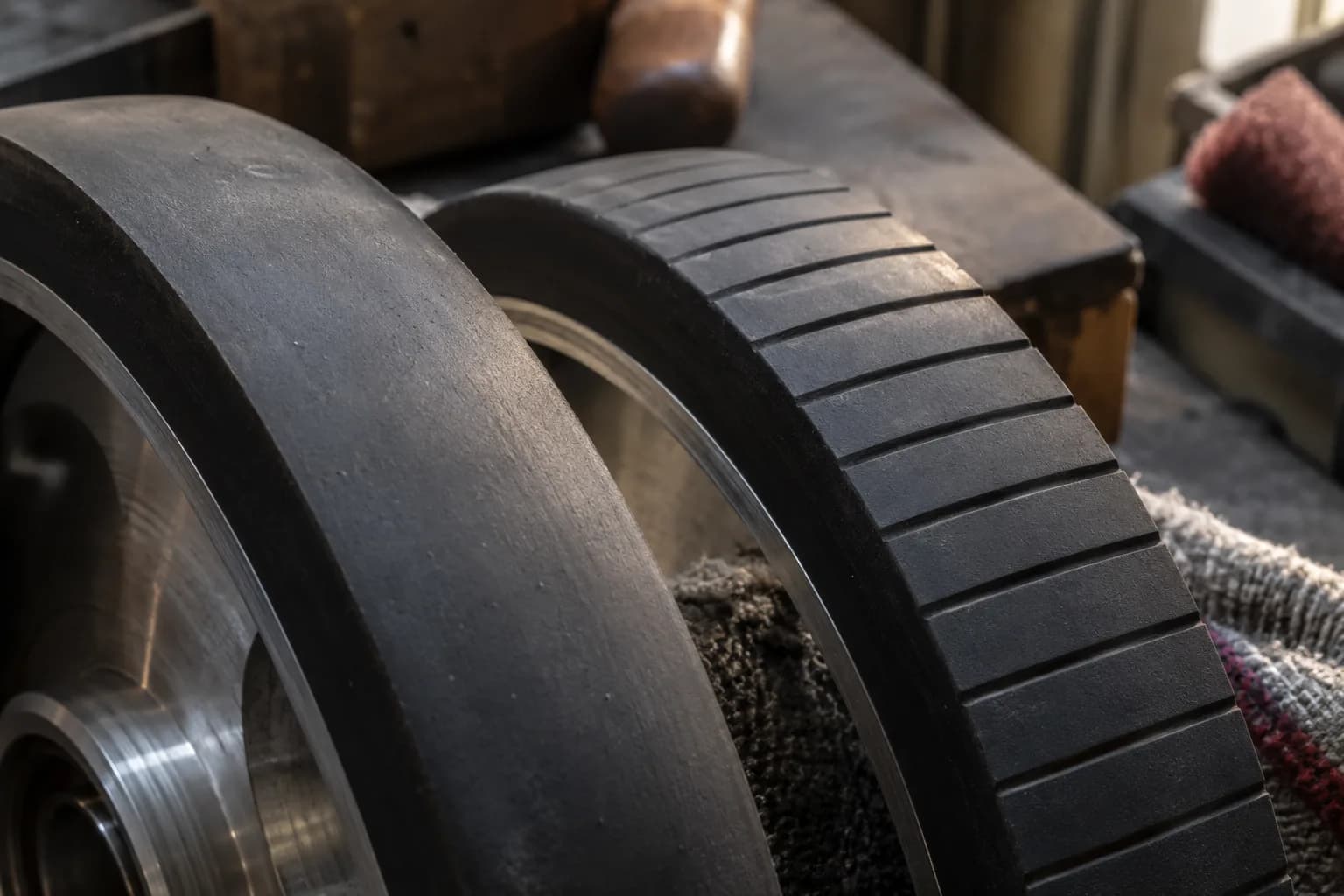
Durometer — rubber hardness — decides how the belt meets the work. Hard faces (70+ Shore A) cut aggressive and true, printing crisp hollows and fast hogging; softer faces cushion the contact for blending and finishing, wrapping slightly around curves. Serrated faces run cooler and cut harder (the grooves vent and flex); smooth faces finish cleaner. The working default is a smooth middle-durometer wheel; specialists come later.
Set the work rest so the blade addresses the wheel at centerline height, establish the hollow with light passes at coarse grit — the wheel finds its own registration once the hollow starts (the blade nests onto the radius) — then walk the grits up per the belt progression, always cooler and lighter as the cheeks thin: hollow sections lose their mass early and burn fast, per the burned-edge rules. Keep the blade moving through the pass; a dwell prints a wheel-width flat spot into the hollow that only a full regrind erases.
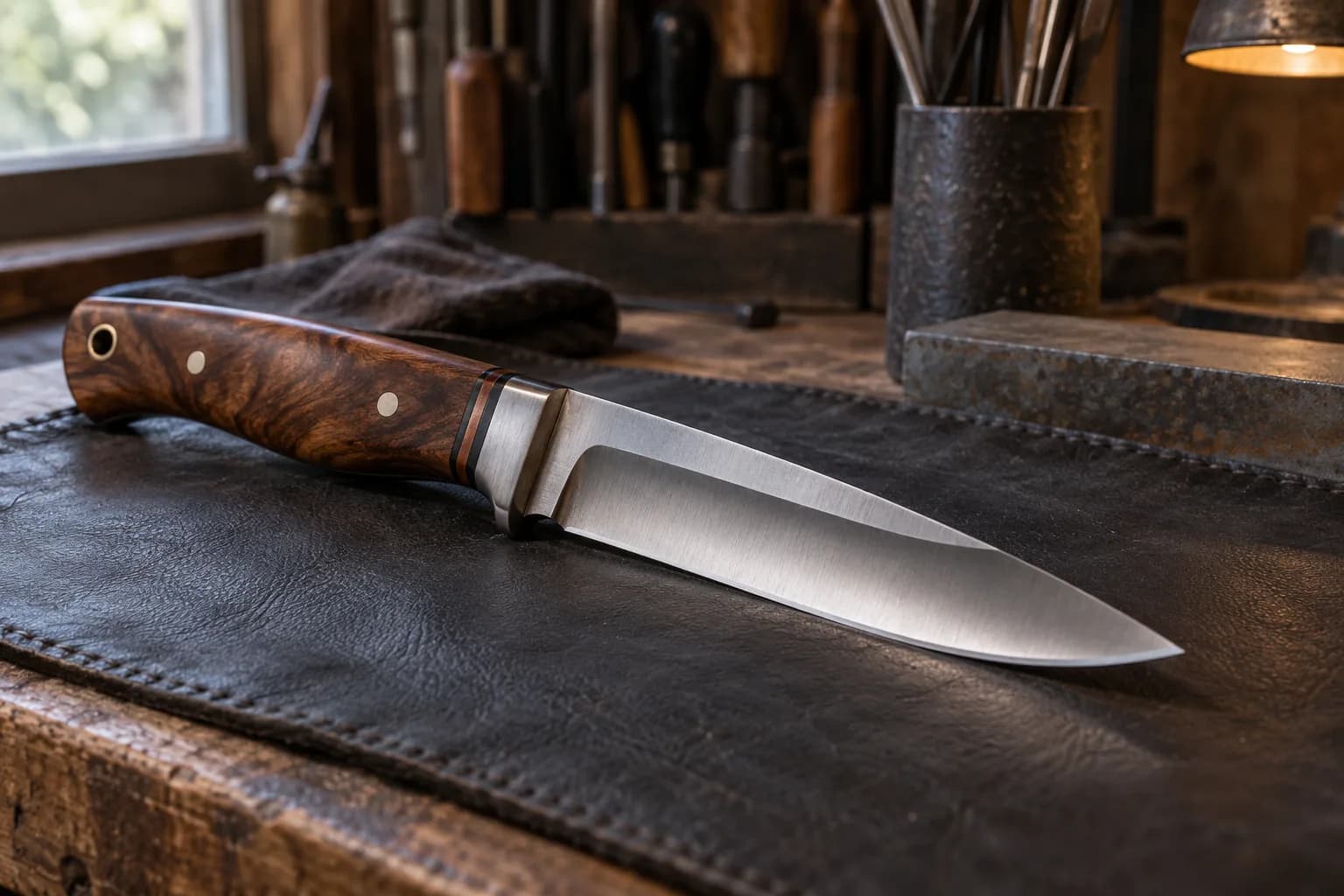
Hollows excel where slicing and re-sharpening rule: hunters (the classic skinning grind), razors (the whole discipline), EDC slicers that stay slicey through years of sharpening. They surrender to the platen for choppers and hard-use blades — thin hollow cheeks and lateral loads disagree, per the geometry chart. One machine, both grinds: that is the whole point of the arm system.
Keep reading
Three more from the same bench.
A 2×72 out of the box is a platform; the attachments are the machine. Every serious grinder task — flat bevels, hollow grinds, fullers, handle curves…
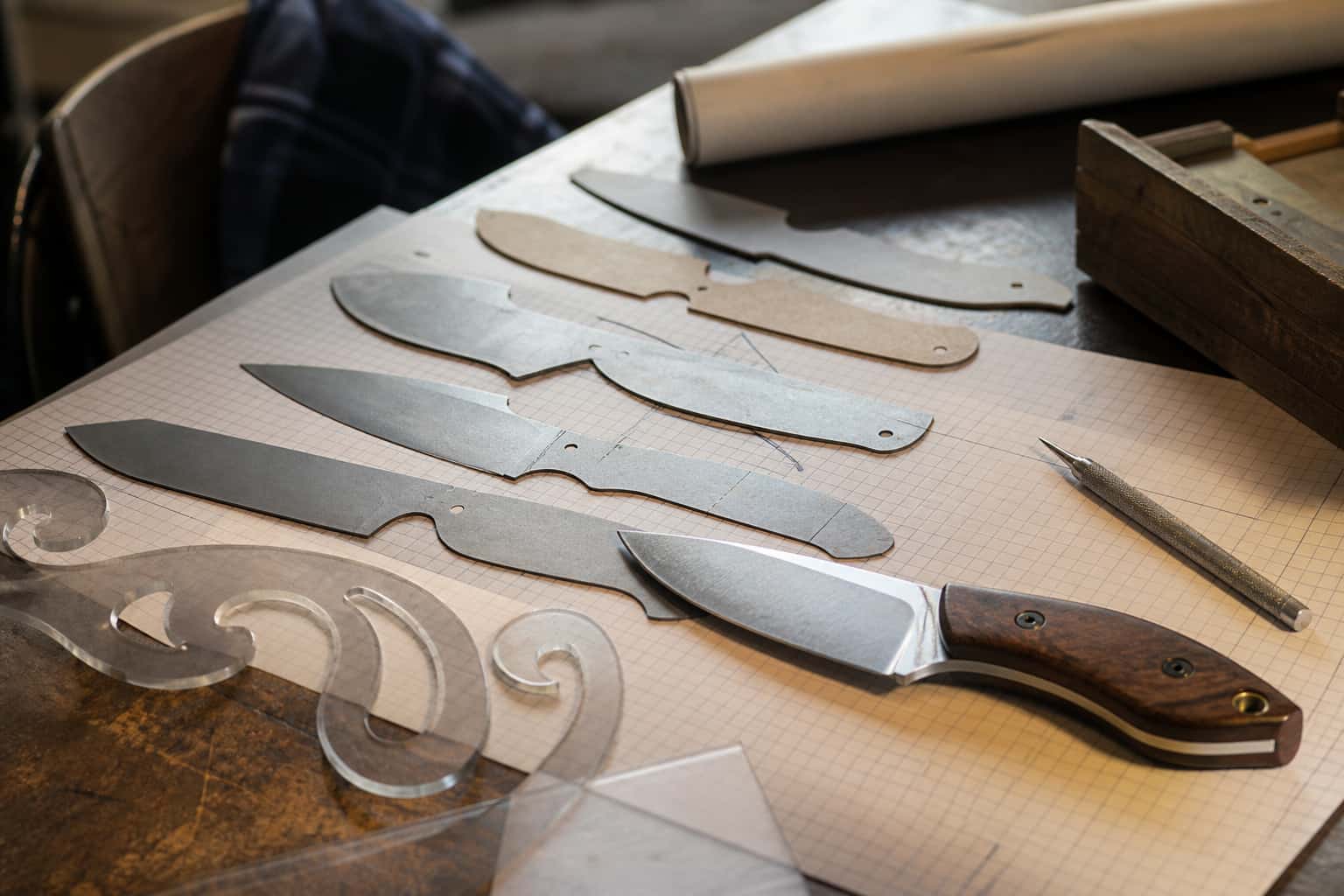
Belts are the single biggest recurring cost in this hobby, and buying the wrong ones wastes money twice: once on belts that wear out fast, and again on…
The straight razor is the purest geometry exercise in bladesmithing: a blade whose edge angle is fixed by its own proportions, whose grind approaches…
Same bench
I machine the parts, hand-assemble, track and test Torus grinders in Sterling, Illinois. Most orders ship in seven to ten business days from time of order.
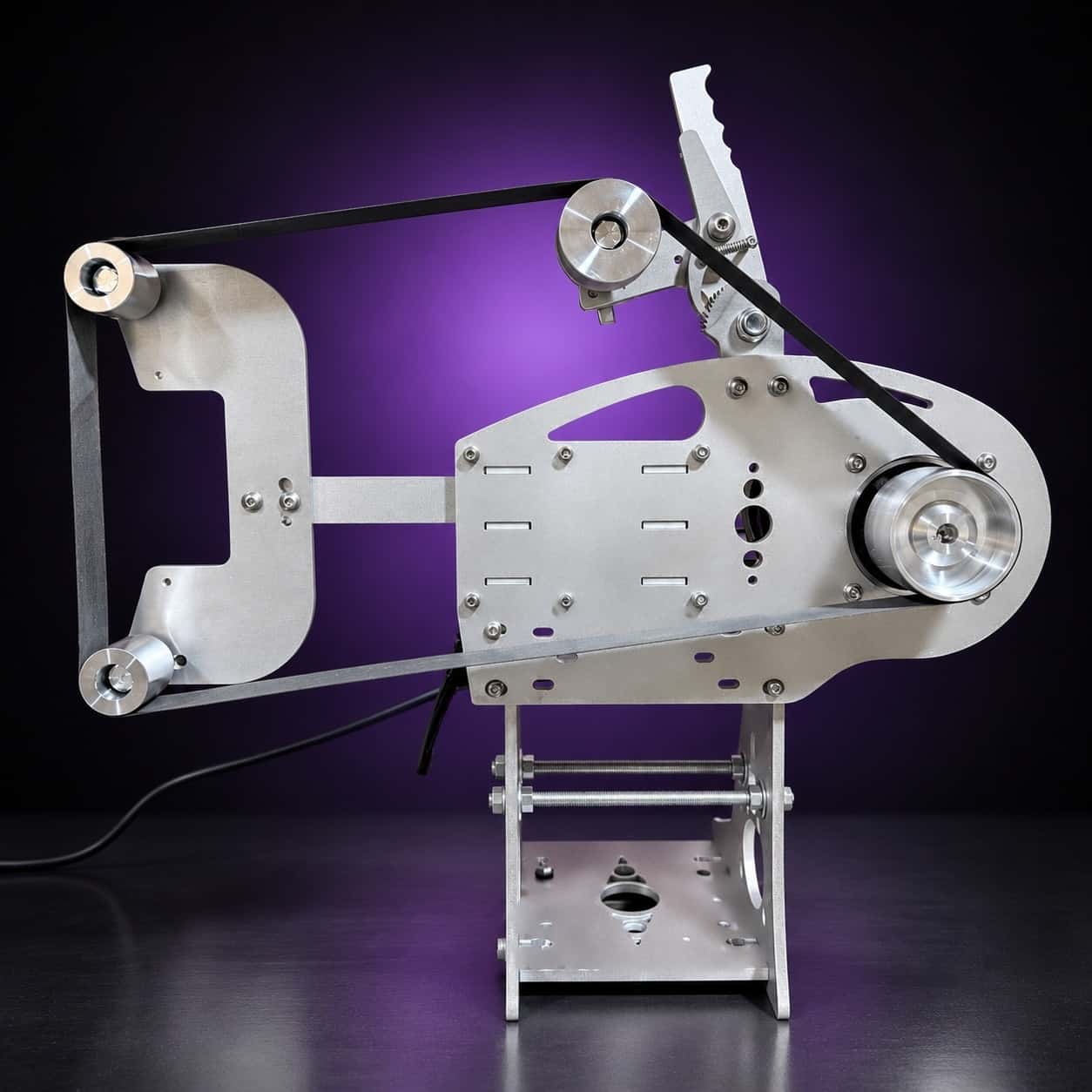
Current dual-axis platform with a fiber-laser-cut 6061 chassis and single-knob tracking.
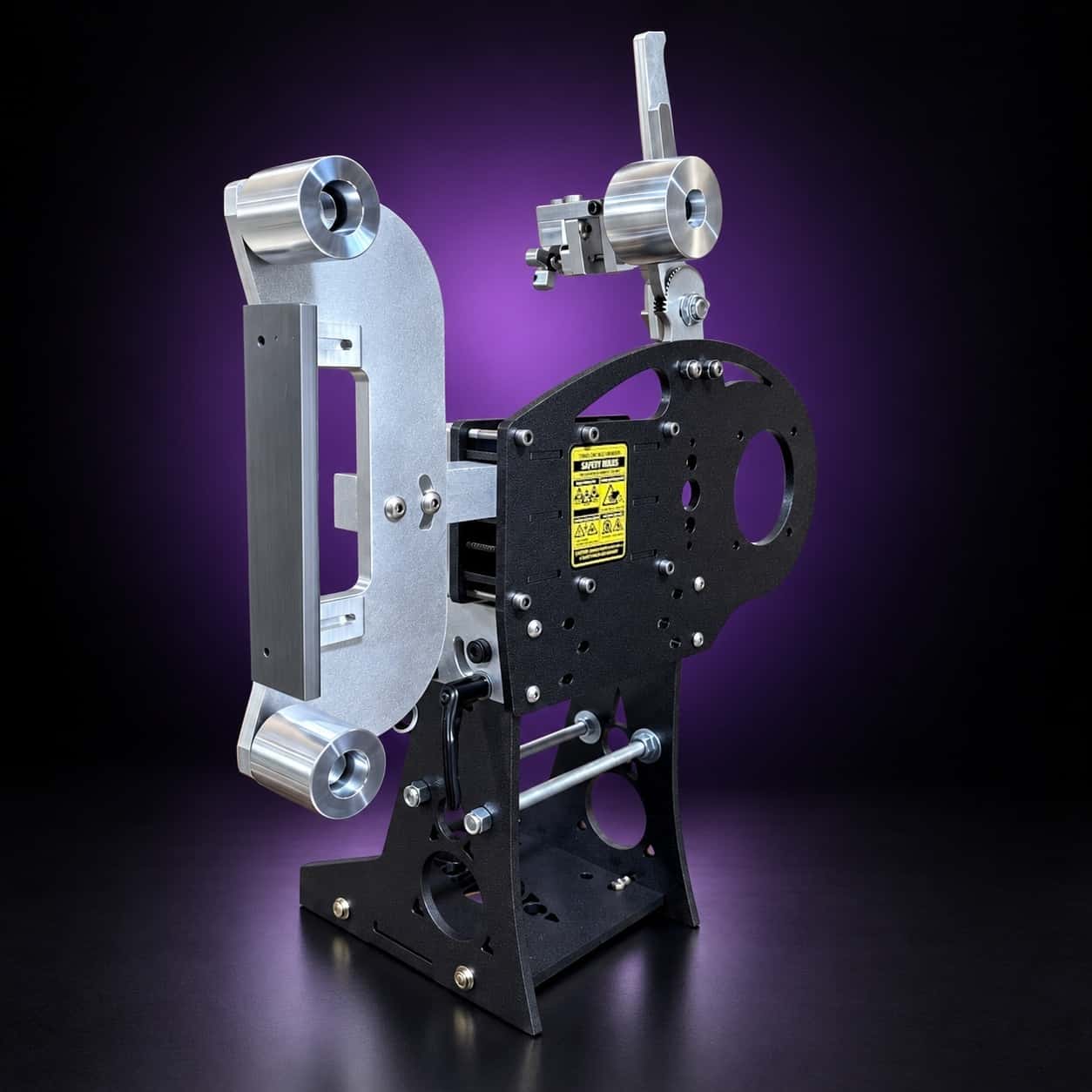
Current dual-axis platform with a steel chassis, more mass and less vibration.
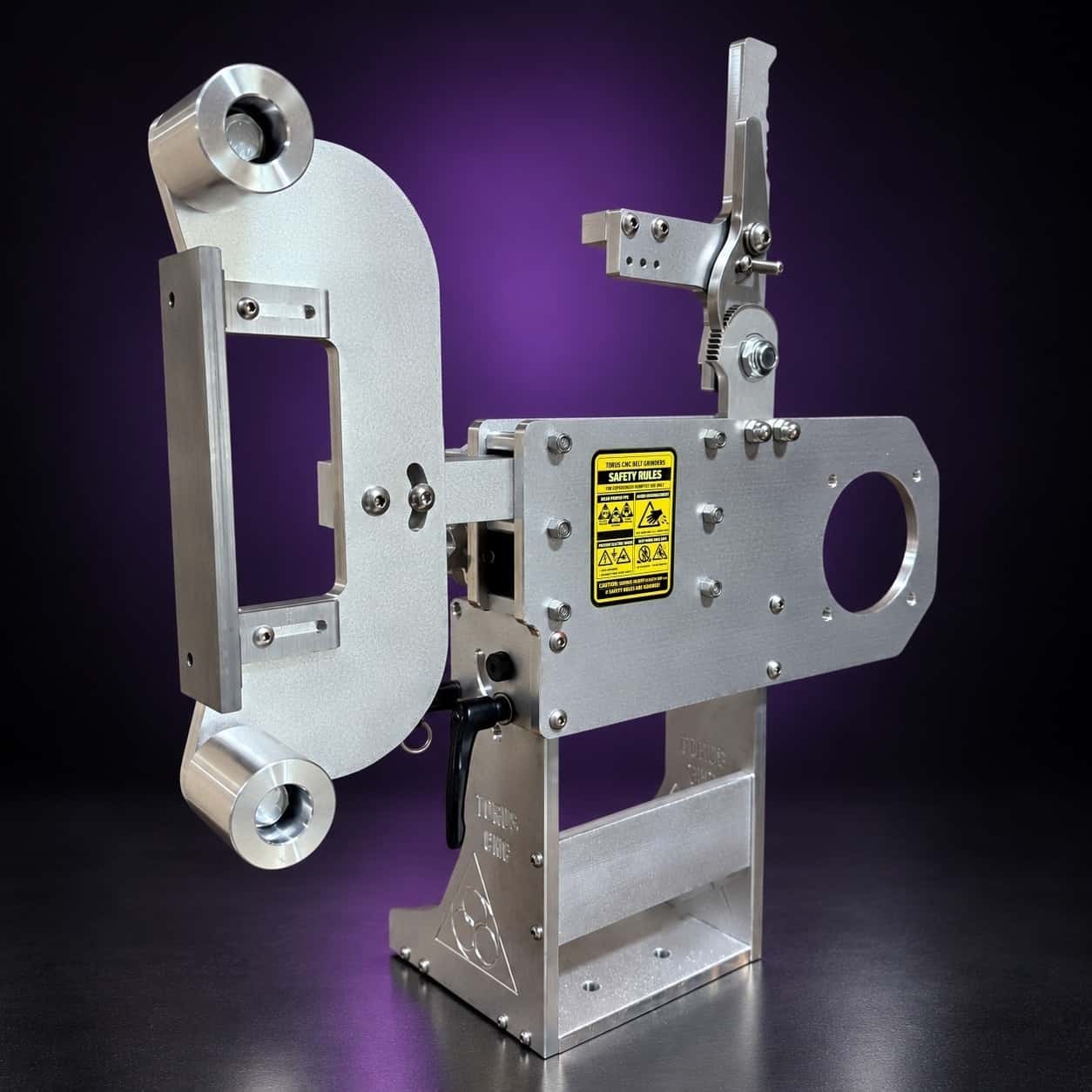
Prior-design aluminum chassis, 90-degree tilt and 1.5-inch tooling arms.
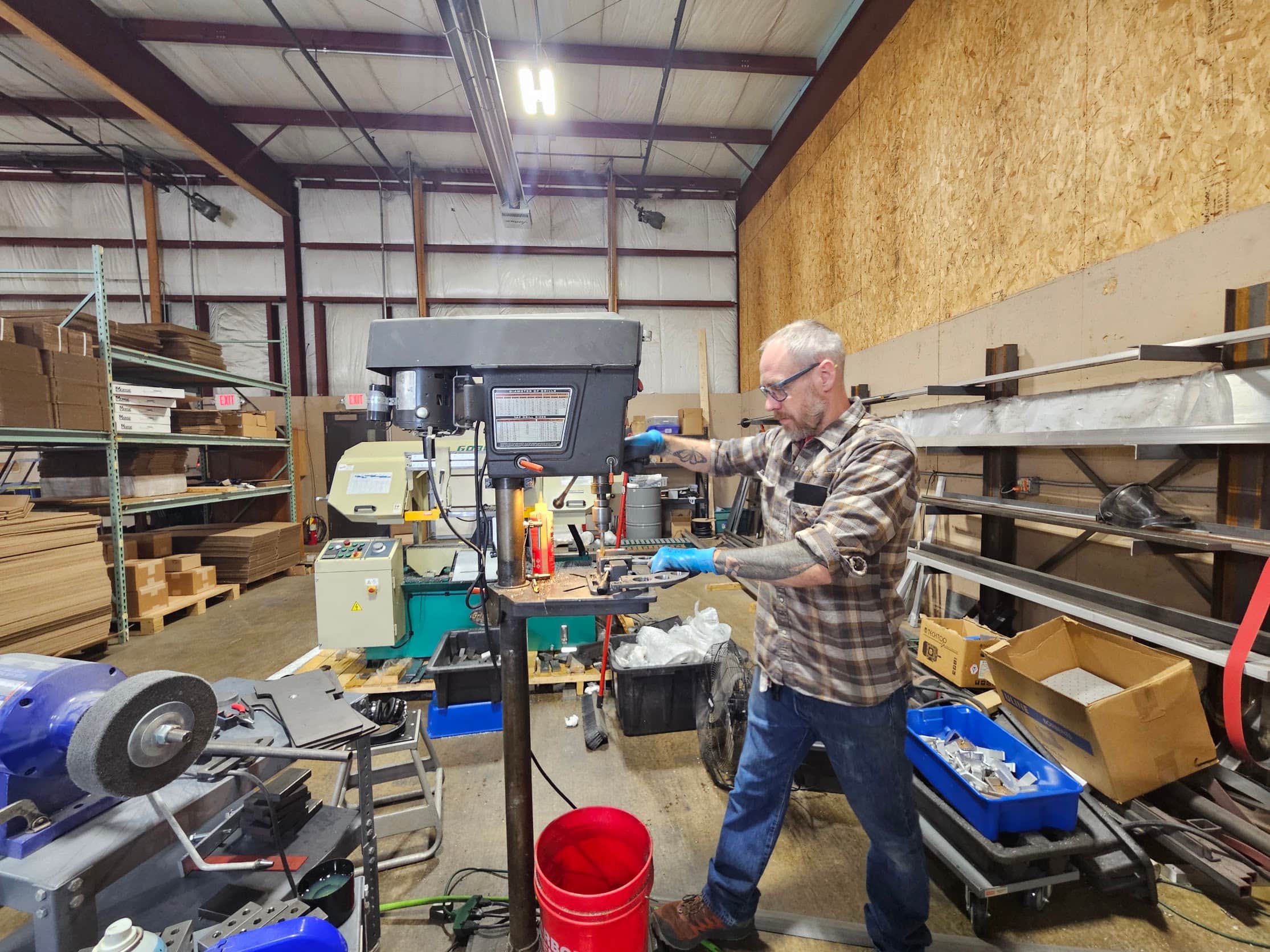
One-man shop
I answer my own email. Tell me the steel, the machine and what it is doing, and I will tell you what I would try next.