
Swords
Combat Blunts: Buhurt, HEMA, SCA & Stage Steel
The LARP world fights mostly with foam and latex — no grinder required. But wrapped around it is a real steel-fighting economy: armored combat leagues…
Swords
How to grind rebated edges and safe tips on combat steel: flats, radii and rolled tips on a 2x72, meeting inspection, and maintenance reality.
2 min readWritten by Rich LinvilleFree to read
A rebated edge is a manufactured shape, not an absence of sharpening — a specific flat-and-radius geometry that must pass a tournament marshal’s gauge and survive a season of steel-on-steel. Grinding not-sharp to spec is honest precision work. Here is how it is done on a 2×72.
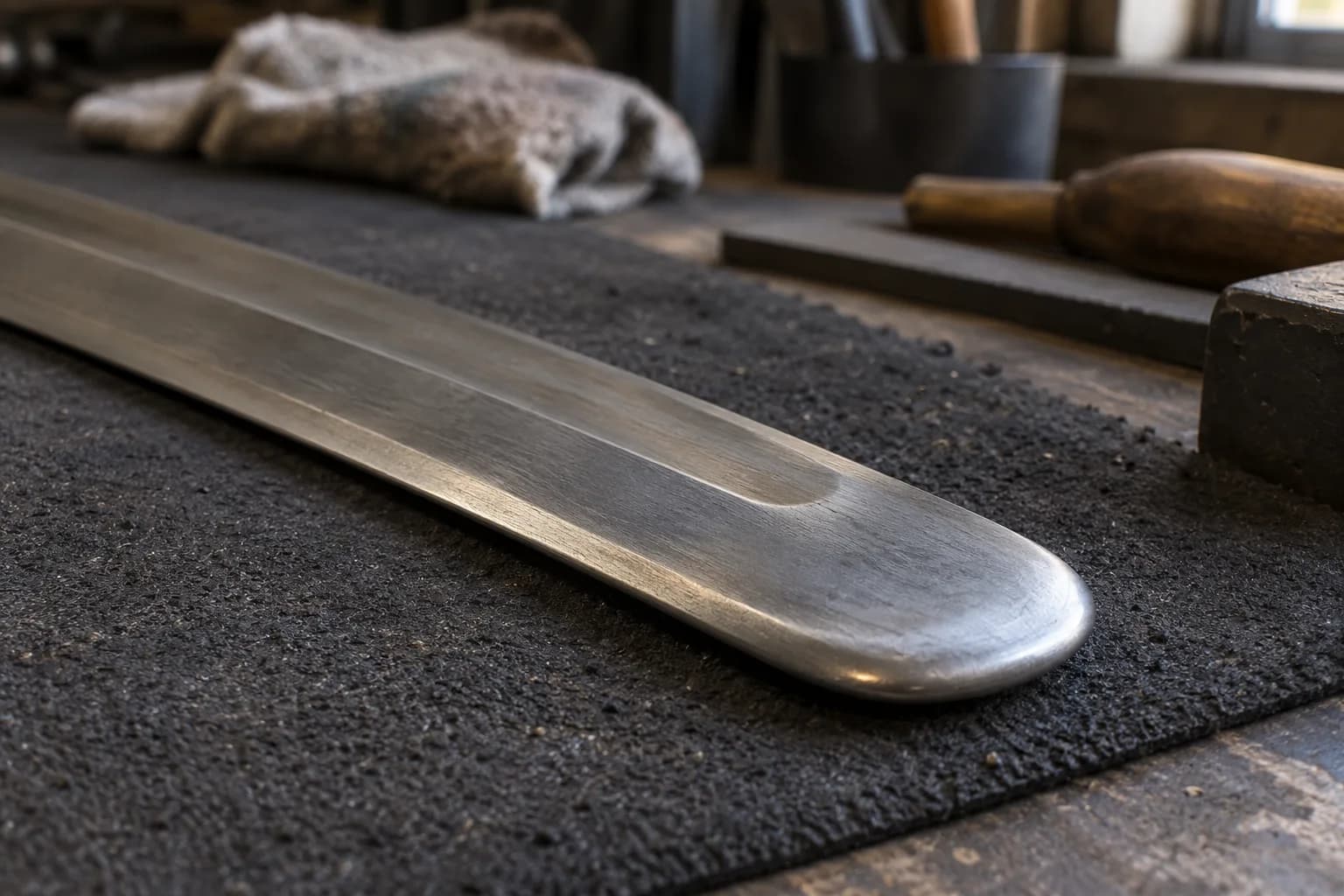
Three elements make a combat blunt. The edge flat: the deliberately thick edge — buhurt’s floor is about 5/64 inch (2 mm per rulebook) and working practice runs comfortably above the minimum, since edges thin as they peen and dress over a season; build at 1/8 inch and inspections never argue. The edge radius: the flat’s corners rounded into the bevels — buhurt wants radii beyond roughly 3/8 inch (10 mm), meaning the edge reads as a smooth rounded landing, not a squared curb. The tip: rounded, substantial, and in thrust-permitted scenes (HEMA, SCA rapier) engineered to flex or capped per the org — a spatulated or button tip ground full and smooth, never a filed-off point. Every number above is the published ballpark for its scene; the current rulebook and the marshal’s gauge are the real spec, per the combat blunts map.
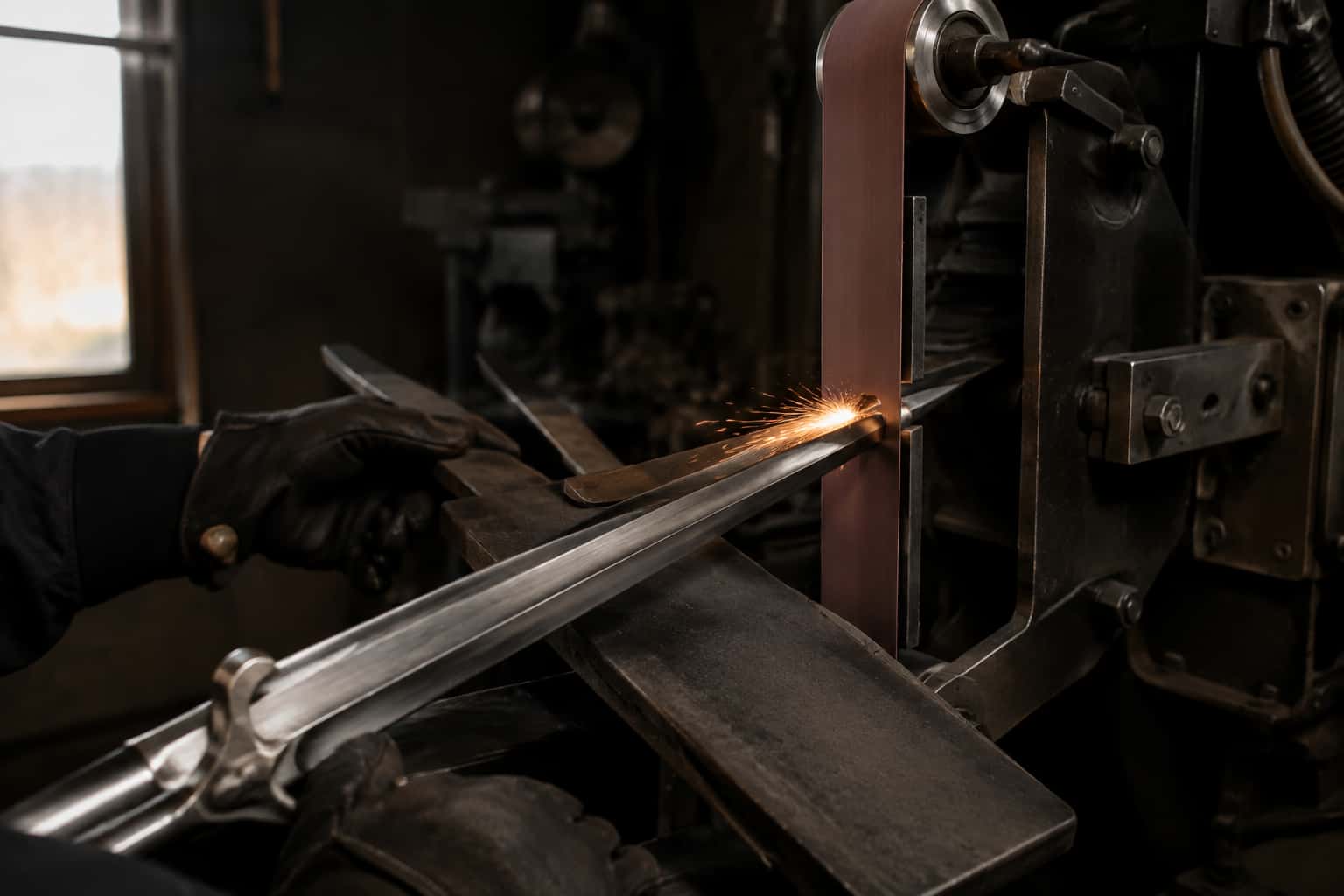
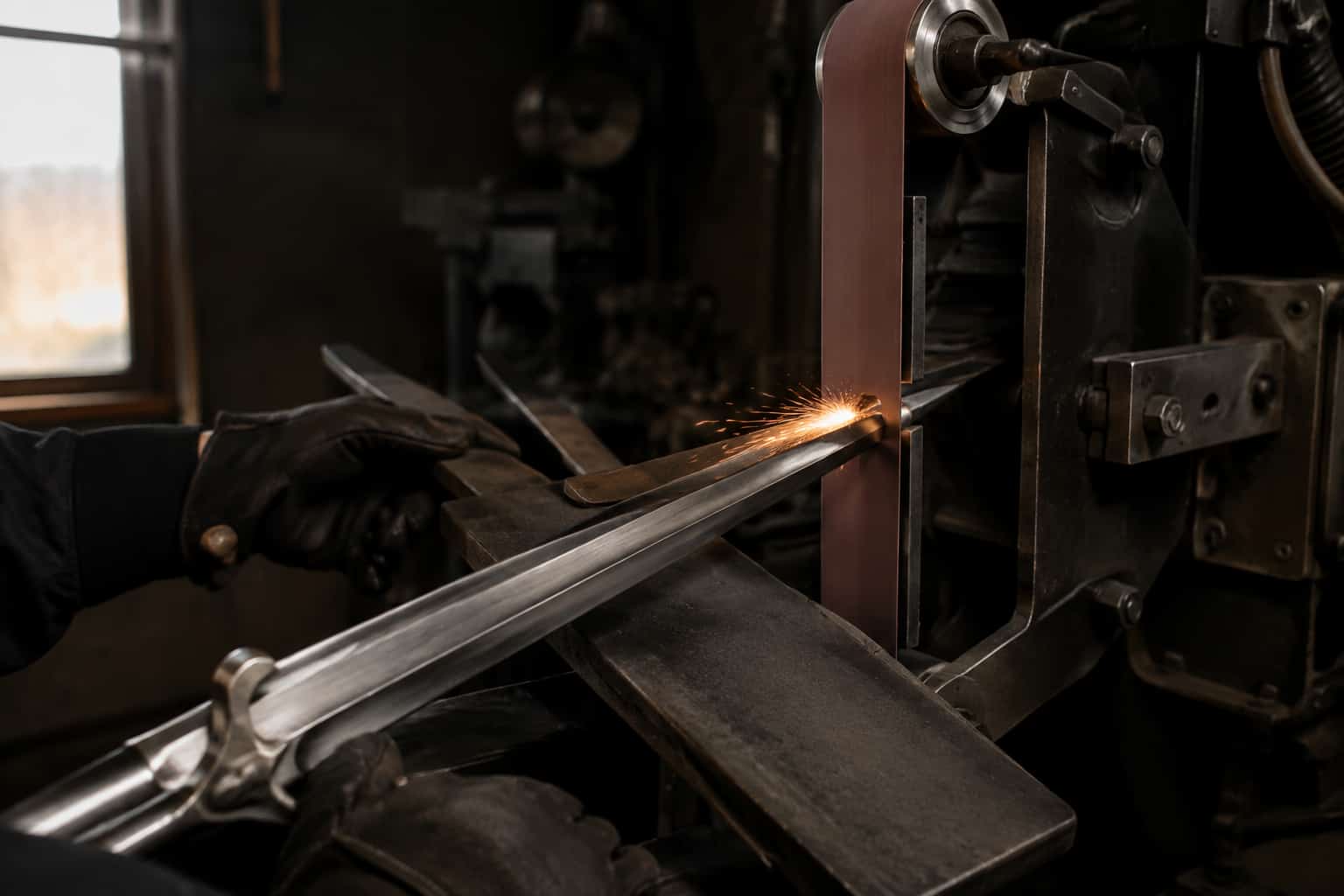
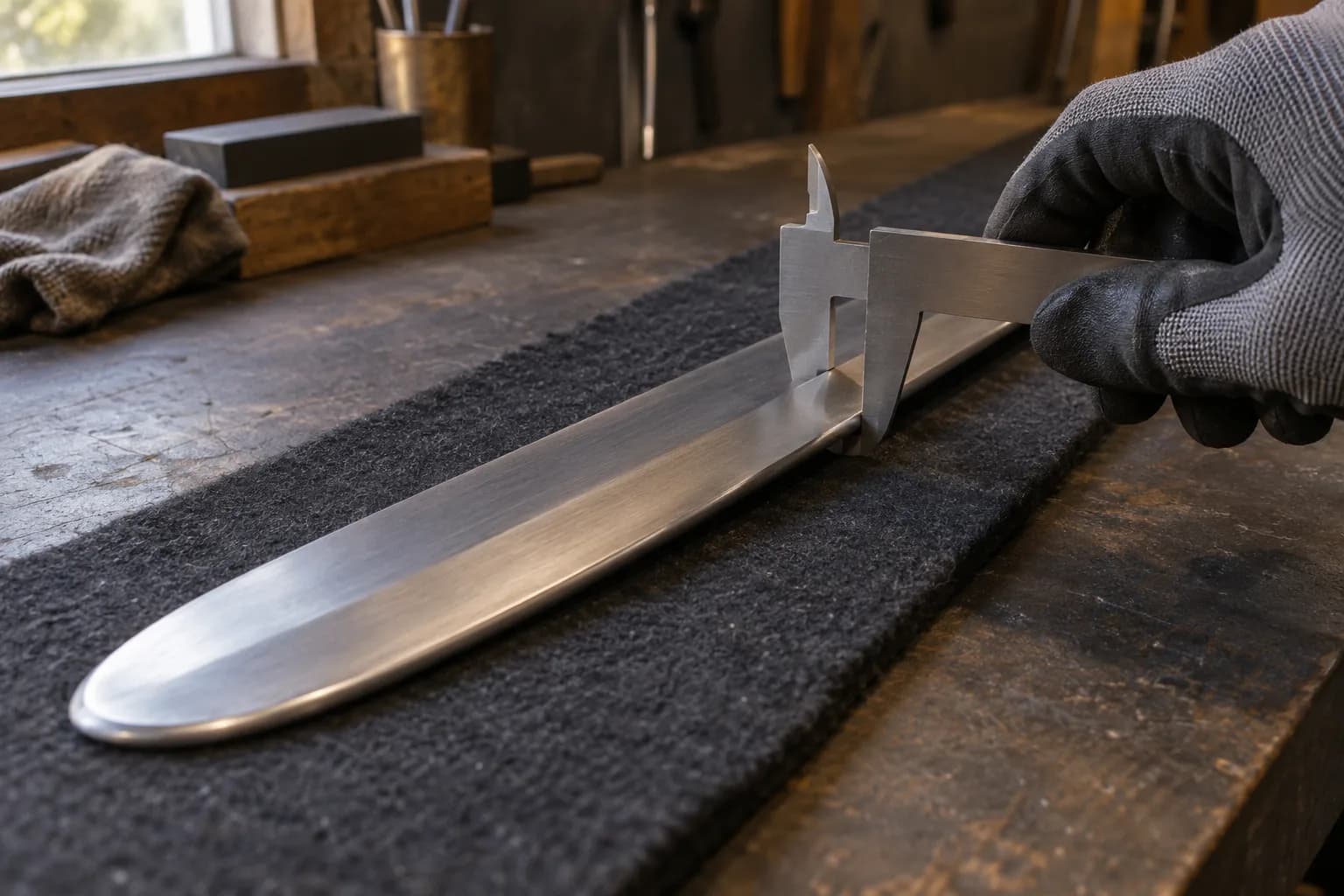
Sequence on the 2×72: grind the blade’s bevels as designed but stop the edge at the target flat plus dressing allowance — a platen pass with the blade held square, checked with calipers along the full length (inspectors measure the thin spot, not the average). Then convert flat-plus-corners into the radius on the slack belt: rolling passes that wrap the flat into the bevels until a fingertip slides across the edge and feels one continuous curve — the same muscle memory as convexing a working axe edge, aimed at a bigger radius. Tips shape against the platen edge and small wheel: full-width button first, then blended into the profile so no shoulder catches a gauge or a gambeson. Finish matters more than it looks: a 220-grit-clean rebate peens smoothly in service; a rough one grows the burrs that fail inspections.
Combat blunts are 5160/9260-class at resilient hardness (per the spring steel guide), which means the grinding happens on tempered spring steel: sharp belts, moderate speed off the speed chart, and heat discipline — a blued rebate is an over-tempered soft spot that will mushroom first at the next tournament. The thick edge is more heat-tolerant than a knife edge; it is not immune.
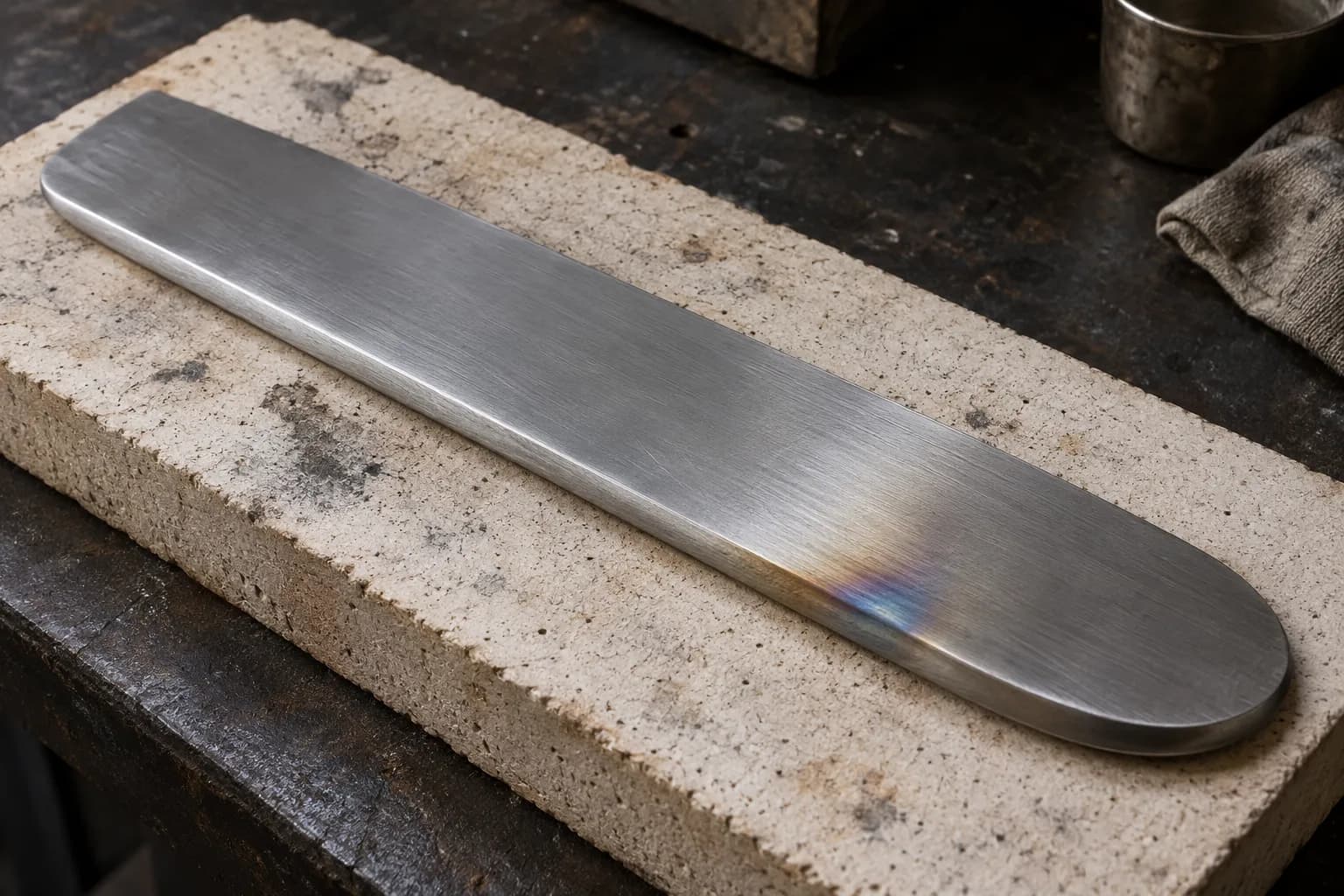
Steel-on-steel service peens edges, raises burrs and slowly thins flats — which is why fighters dress their weapons and re-inspect all season. Build for it: start above minimums, leave tips generous, and offer re-dressing as a service (a slack-belt session restoring radius and removing burrs is fast work and repeat business). Retire lines exist too: a blade dressed down to the rulebook floor, or showing crack ticks at the flat, is done — say so to the customer; the marshal will anyway.
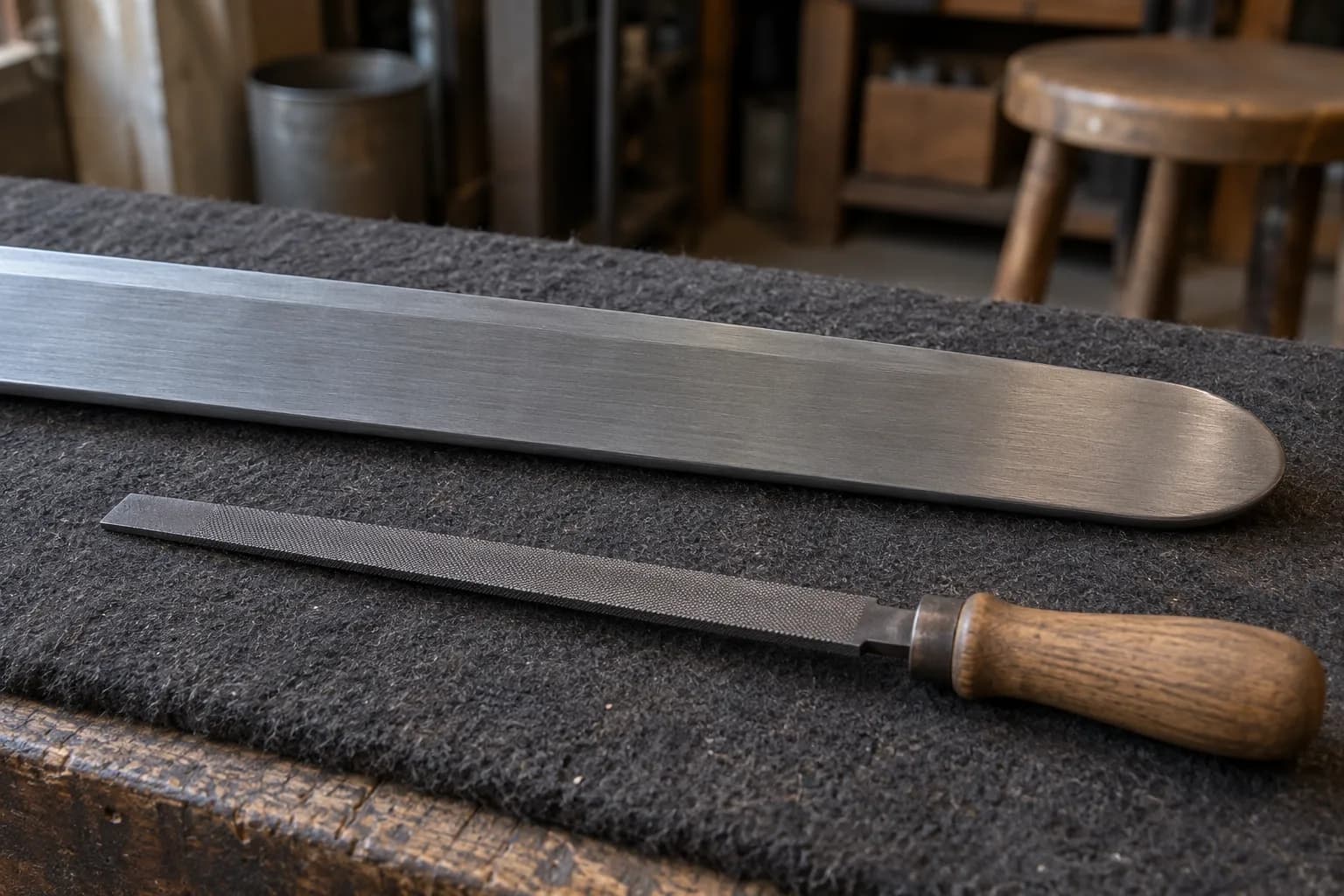
Calipers on the flat, fingertip on the radius, gauge-thinking throughout, and the current rulebook taped over the bench for the scene you are building into. Not-sharp to spec is real grinding craft — and the maker known for passing inspection the first time owns the club’s equipment budget.
Keep reading
Three more from the same bench.
The LARP world fights mostly with foam and latex — no grinder required. But wrapped around it is a real steel-fighting economy: armored combat leagues…

Not-sharp blades still have a steel decision, and it is really a safety decision wearing a cost question. The short answer: mild steel is legitimate for…

The sword never actually died — it just changed jobs. Today it is sporting equipment, theater prop, historical laboratory and craft object at once…
Same bench
I machine the parts, hand-assemble, track and test Torus grinders in Sterling, Illinois. Most orders ship in seven to ten business days from time of order.

Current dual-axis platform with a fiber-laser-cut 6061 chassis and single-knob tracking.

Current dual-axis platform with a steel chassis, more mass and less vibration.

Prior-design aluminum chassis, 90-degree tilt and 1.5-inch tooling arms.

One-man shop
I answer my own email. Tell me the steel, the machine and what it is doing, and I will tell you what I would try next.