
Swords
Sword Anatomy: A Maker’s Field Guide
Before the types, the vocabulary. Every sword — katana or claymore, gladius or rapier — is the same short list of parts negotiating the same physics: a…
Swords
True two-handers: zweihander, montante and claymore at 55-70 inches and 5-7 pounds, what paid specialists used them for, and building one with taper.
2 min readWritten by Rich LinvilleFree to read
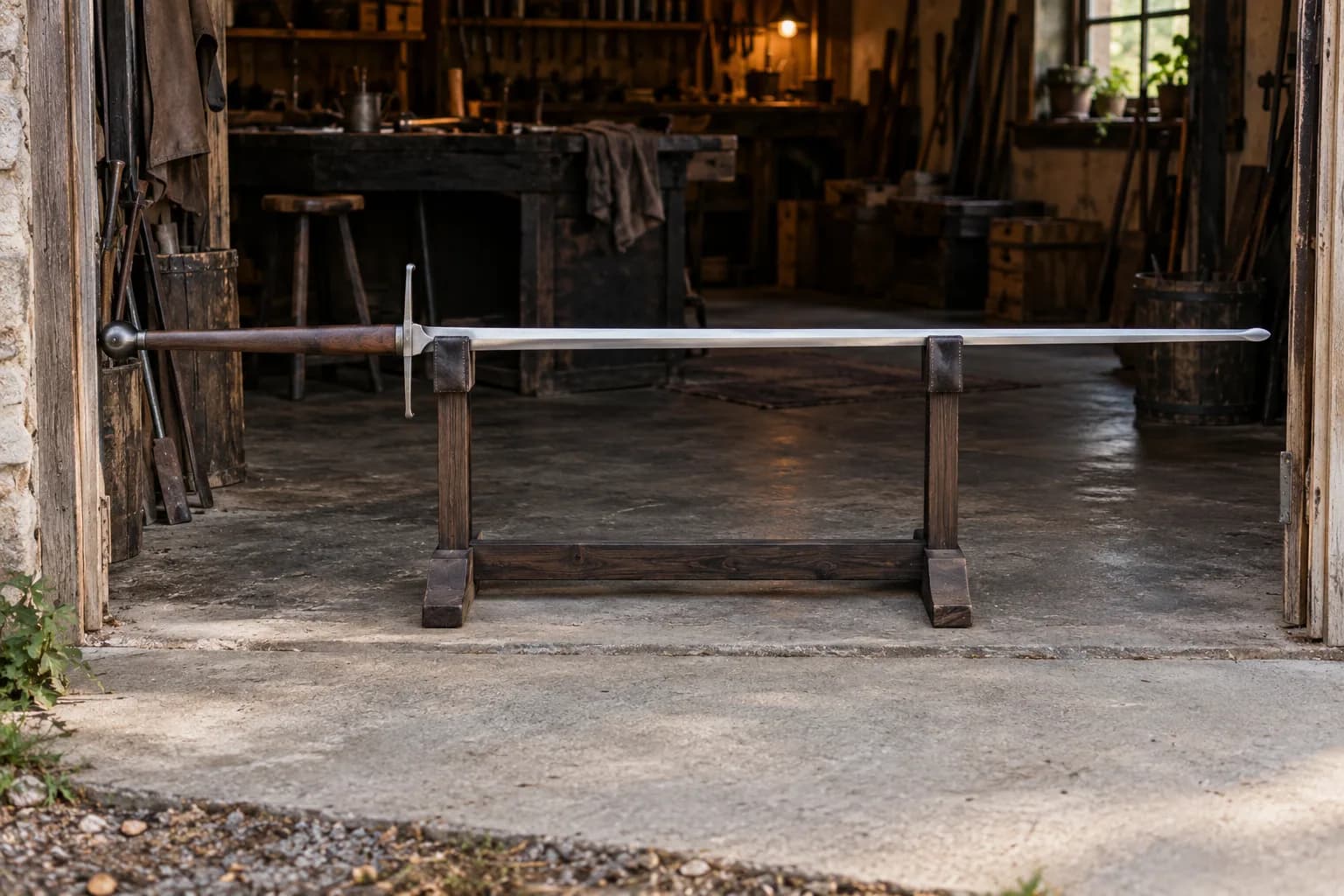
The greatswords are where sword mythology runs wildest — the fifty-pound barbarian blade of the movies — and where reality is most impressive: five to seven pounds of steel, five to six feet long, wielded with two-handed technique closer to polearm work than fencing, by specialists paid extra for the job.
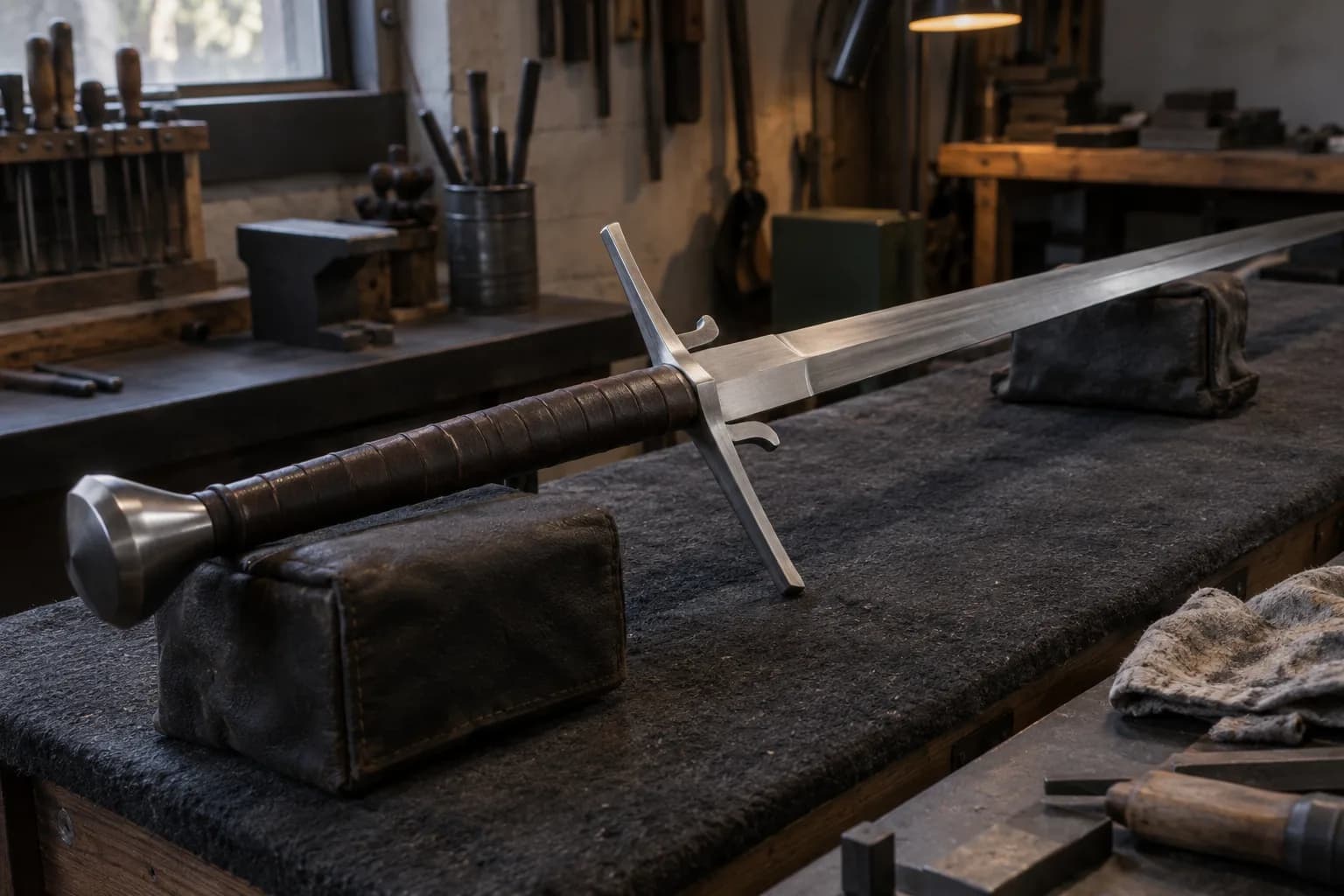
True two-handers — the German zweihander, Iberian montante, English greatsword — run 55 to 70 inches overall at five to seven pounds; the Scottish claymore (the two-handed one with the famous down-sloped quillons ending in quatrefoils) sits lighter around 4.5 to 5.5 pounds. Parade and bearing swords ran heavier and were never fought with — the source of half the myth. Balance lives well down the blade by knife standards, but long grips, ricasso grip-overs and parrying lugs (the secondary guards above the ricasso) turn the length into leverage: in trained hands a montante moves shockingly fast.
Specialist work. Landsknecht doppelsoldner — double-pay soldiers — carried zweihanders for breaking pike formations and guarding standards; montante systems (which survive in Iberian fencing manuals) are built around one fighter controlling space against multiple opponents — bridges, doorways, escort work. The greatsword is area denial made steel: continuous sweeping arcs that no one walks through. It was never a dueling sword and never common; it was the heavy equipment of its trade.
Everything a blade does, a greatsword does harder. Distal taper is life: these blades commonly run thick at the ricasso and halve or better toward the point, or nobody could swing them — the flexible foible is normal and correct. Fullers and flattened-diamond sections strip mass; the parrying lugs, waisted ricasso and side rings are forged or fabricated furniture jobs on top of the blade work. Hardness stays modest (low 50s, resilience first, per Sword Steels) because a six-foot lever finds every brittle spot in a heat treat.
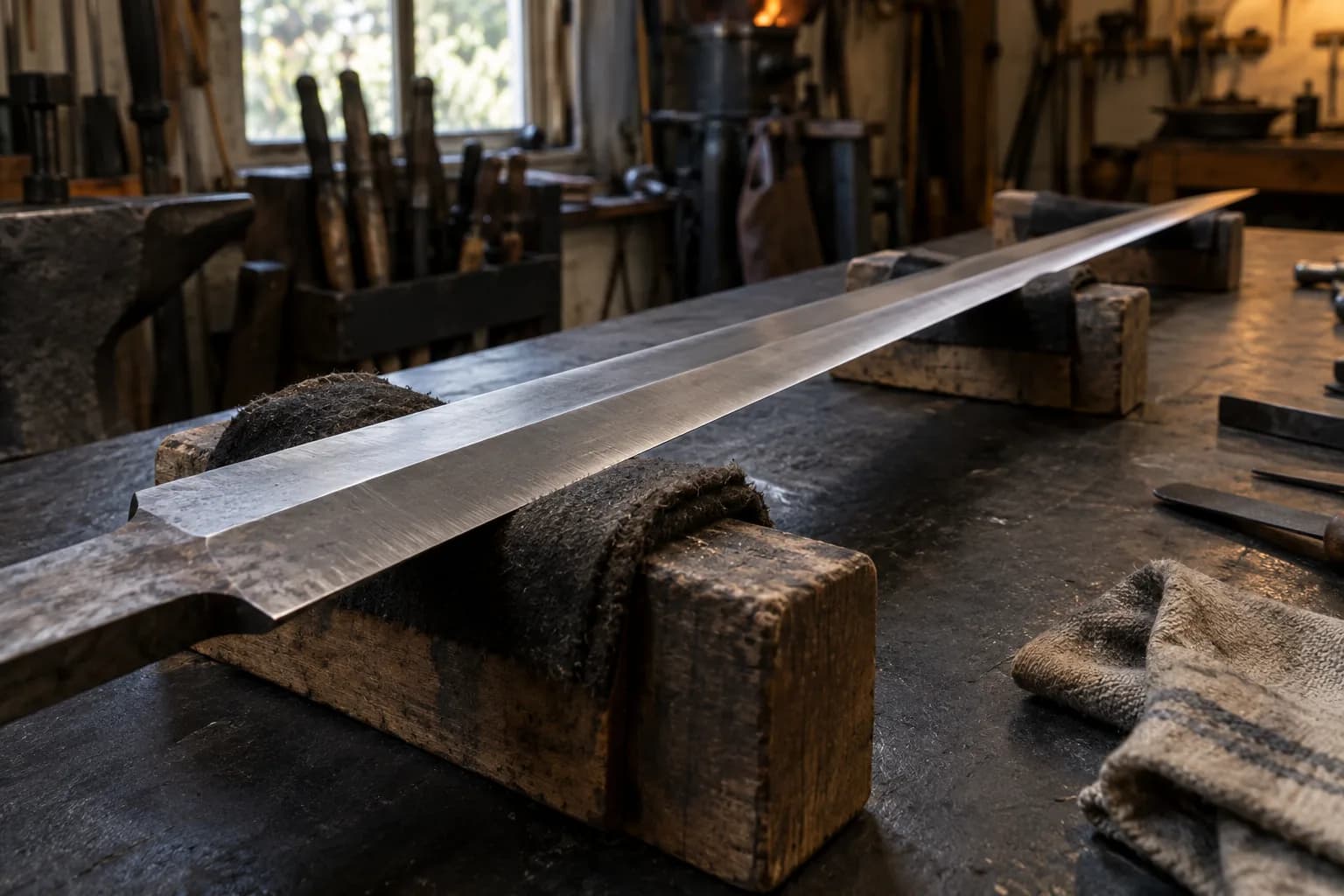
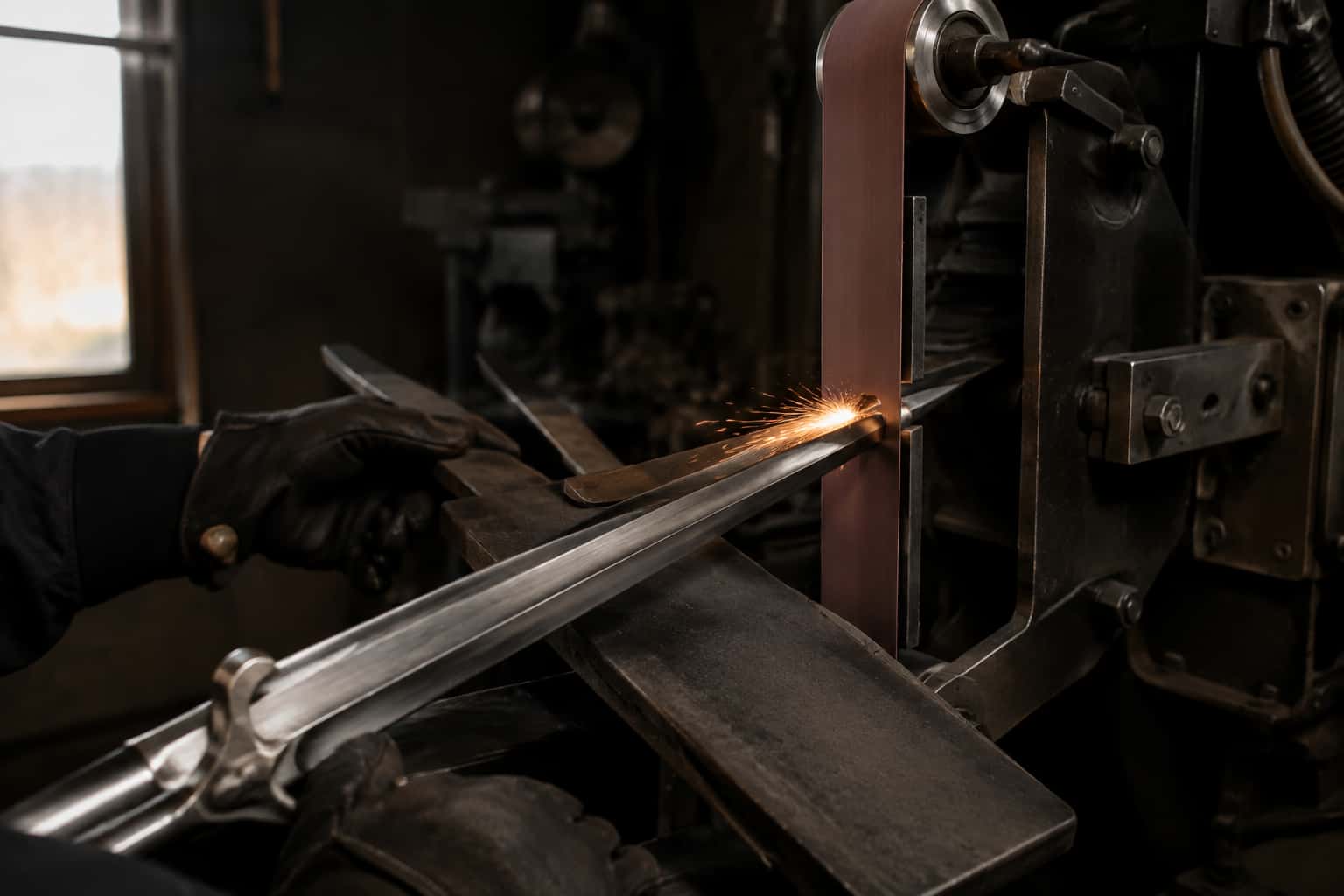
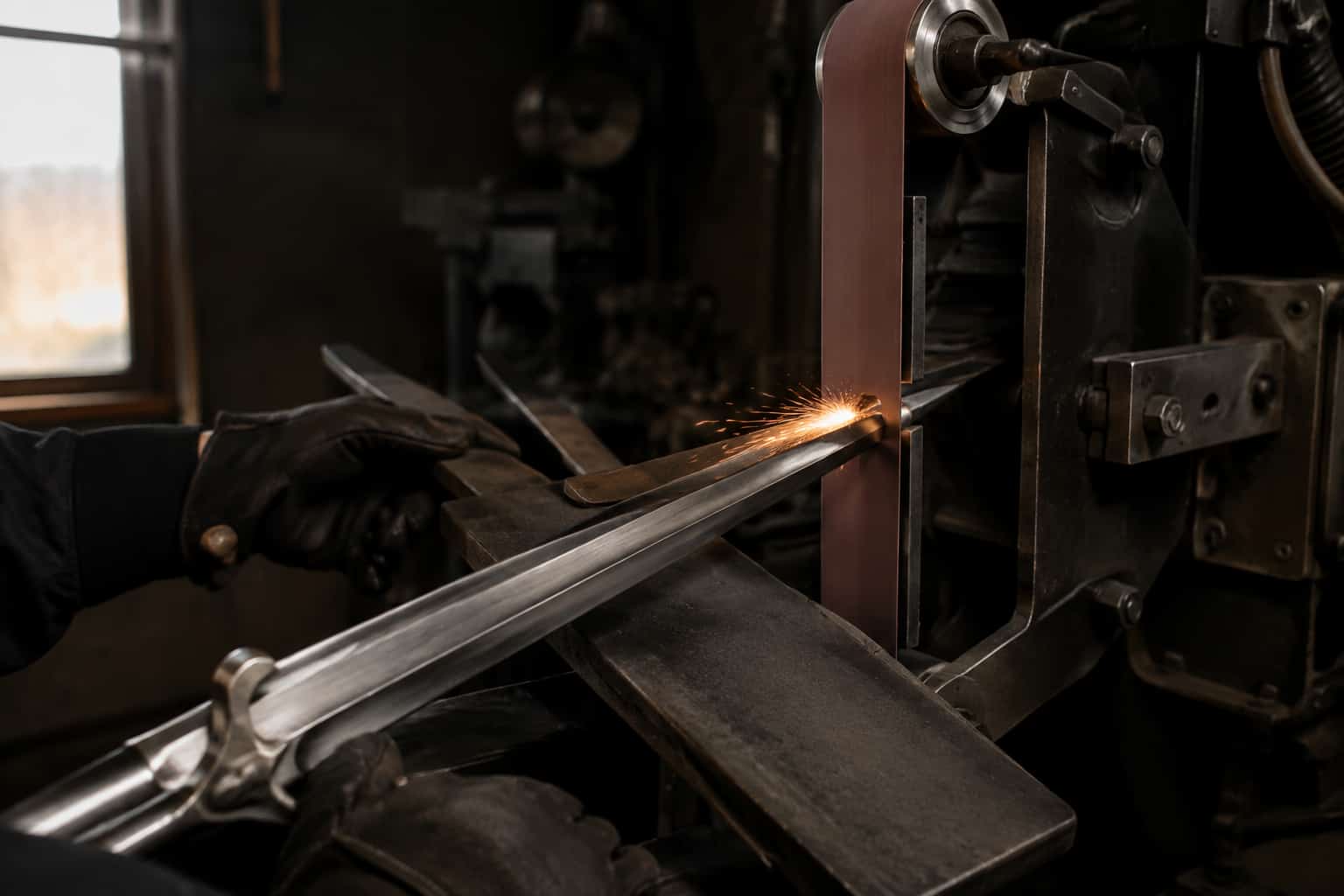
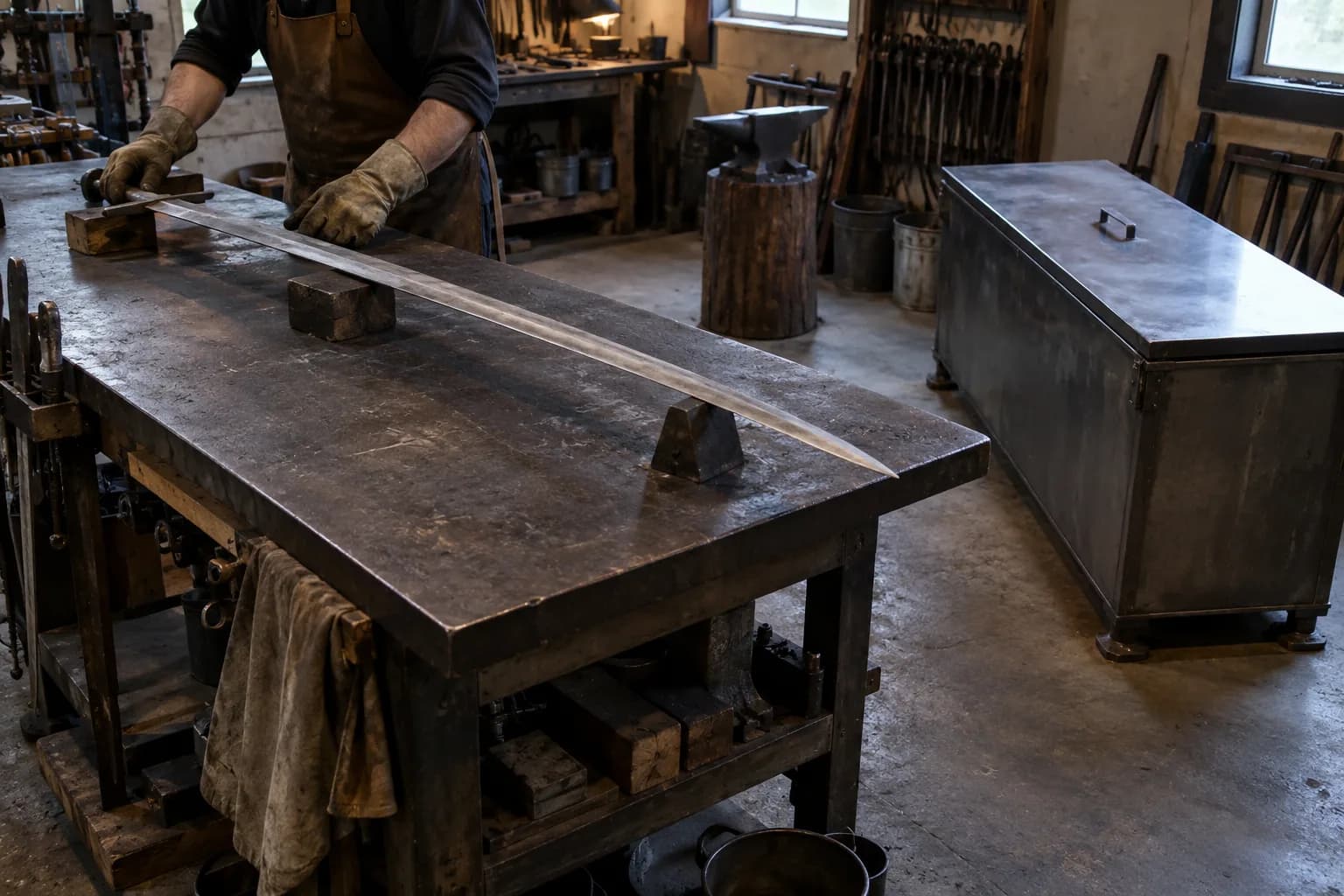
A greatsword is the largest object a 2×72 shop is likely to attempt, and the machine handles it — in zones, with the blade walked continuously past the platen, exactly the long-blade discipline from Your First Sword scaled once more. The practical obstacles are logistics: bar stock over five feet, a quench vessel to match (horizontal tank or very committed vertical tube), and straightening sessions that test character. Which is why the honest path runs shorter first — but as a statement piece, nothing in the craft out-statements a montante on the wall.
Keep reading
Three more from the same bench.
Before the types, the vocabulary. Every sword — katana or claymore, gladius or rapier — is the same short list of parts negotiating the same physics: a…

The longsword is the European counterpart to the katana’s fame: the two-handed cruciform sword of the late medieval knight, the centerpiece of the German…

The rapier is what the sword became when it left the battlefield and moved to town: a civilian’s weapon for the street and the duel, worn with ordinary…
Same bench
I machine the parts, hand-assemble, track and test Torus grinders in Sterling, Illinois. Most orders ship in seven to ten business days from time of order.

Current dual-axis platform with a fiber-laser-cut 6061 chassis and single-knob tracking.

Current dual-axis platform with a steel chassis, more mass and less vibration.

Prior-design aluminum chassis, 90-degree tilt and 1.5-inch tooling arms.

One-man shop
I answer my own email. Tell me the steel, the machine and what it is doing, and I will tell you what I would try next.