| Toughness | 5/5Top of the stainless class with its AEB-L family — far beyond mainstream budget stainless, and in league with good carbon steels. AEB-L itself keeps a slight edge at equal hardness, but 14C28N supports thin edges and hard use that would chip conventional stainless outright. | 5/5One of the toughest stainless steels available, inheriting AEB-L's excellent toughness while adding a bit more wear resistance from vanadium and nitrogen. | Both inherit the family's elite stainless toughness; Nitro-V tested at its best runs with AEB-L, and 14C28N sits a breath behind. All three support thin, hard-use edges. No build should turn on this margin. |
|---|
| Edge retention | 2/5The honest weak point, shared with AEB-L: fine carbides and no vanadium means modest wear resistance. Pushing hardness to 61–62 HRC with a cold treatment recovers a lot of real-world edge holding — factory-soft examples undersell the steel. Resharpening is fast and pleasant. | 3/5Similar to AEB-L: good, not exceptional, since it relies on a fine, clean microstructure rather than heavy carbide loading for its edge. | Nitro-V by a small, real margin — its vanadium adds a little wear resistance the others lack, on top of the same keen fine-carbide edge. 14C28N pushed to 61–62 with cryo narrows it. Both resharpen in moments. |
|---|
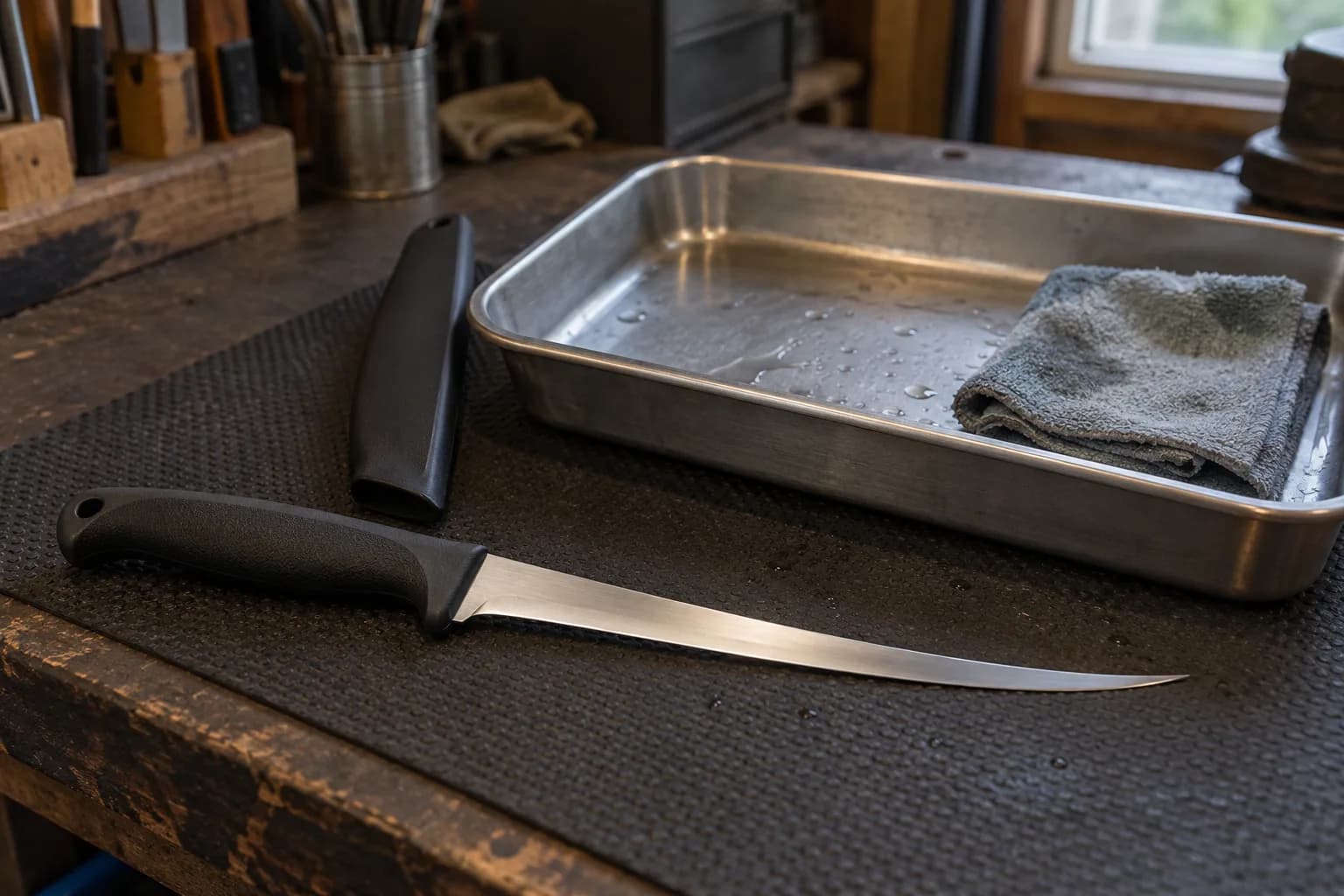
| Corrosion resistance | 4/5The best of the AEB-L family — 14% chromium plus nitrogen, engineered for wet razor service. Kitchen and waterside use with basic care is no drama. Not quite the vault-grade resistance of nitrogen specialists like LC200N, hence 4 not 5. | 4/513.6% chromium plus nitrogen gives genuinely good stainless performance, a step up from AEB-L and well suited to kitchen and outdoor use. | 14C28N, slightly — 14% chromium plus 0.11% nitrogen edges Nitro-V's 13% plus smaller nitrogen addition. Both are dramatically better than AEB-L in wet service; 14C28N just has the deepest margin of the family. |
|---|
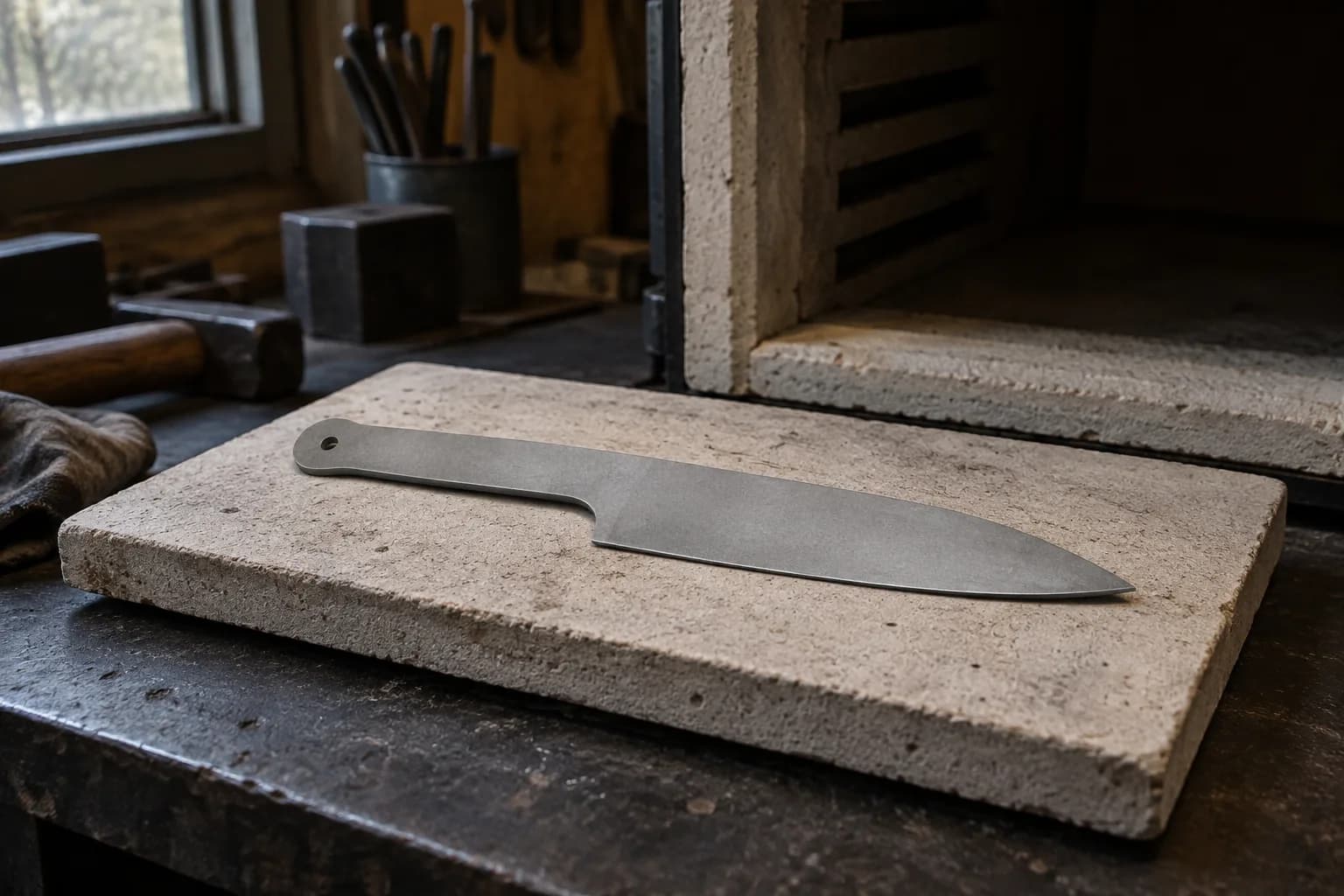
| Heat treat | Austenitize 1950°F, 10–15 min soak. Plate quench between aluminum plates; add a cold step (freezer at minimum, liquid nitrogen ideally) before tempering to convert retained austenite. Temper 2×2h at 300–350°F for 60–62 HRC. Production practice of 58–60 HRC works but leaves performance on the table. | Austenitize at 1900-1950 F for 15 minutes (use the lower end if following with a freezer rather than liquid nitrogen). Plate quench, then apply a cryogenic treatment (liquid nitrogen or a home freezer) before tempering. As-quenched hardness can reach roughly 64 Rc. Temper at 300-350 F: 300 F favors maximum hardness and edge stability, while 350 F gives the best overall toughness balance for most knife use. Avoid tempering near 450 F, which shows an unexpected drop in toughness for this steel. | Same playbook for both: ~1950°F austenitize, plate quench, cold treatment strongly recommended, low temper for 60–62 HRC. Nitro-V has excellent maker-community documentation (it was commissioned for makers); 14C28N has Sandvik's own datasheet depth. Neither is harder than the other. |
|---|
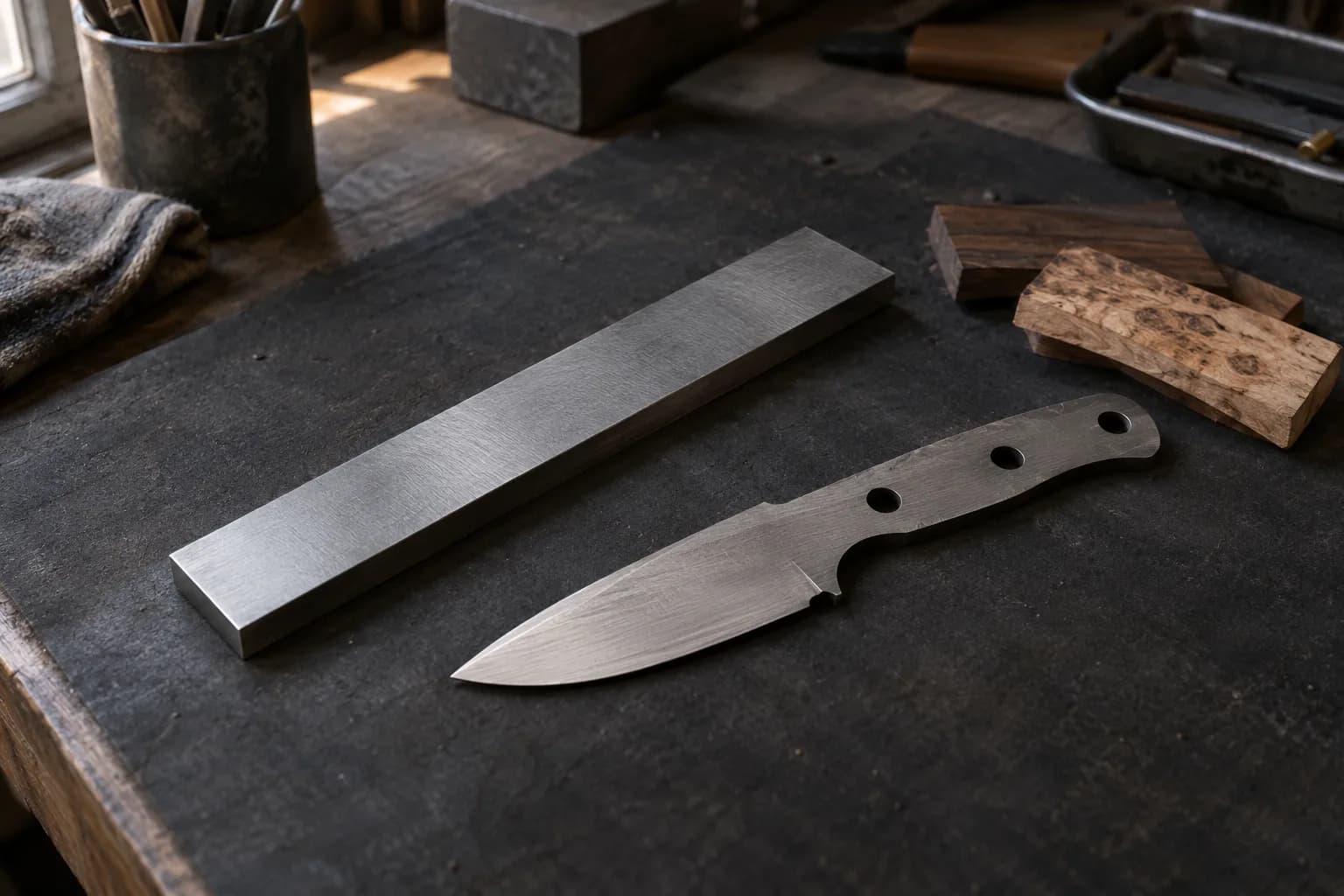
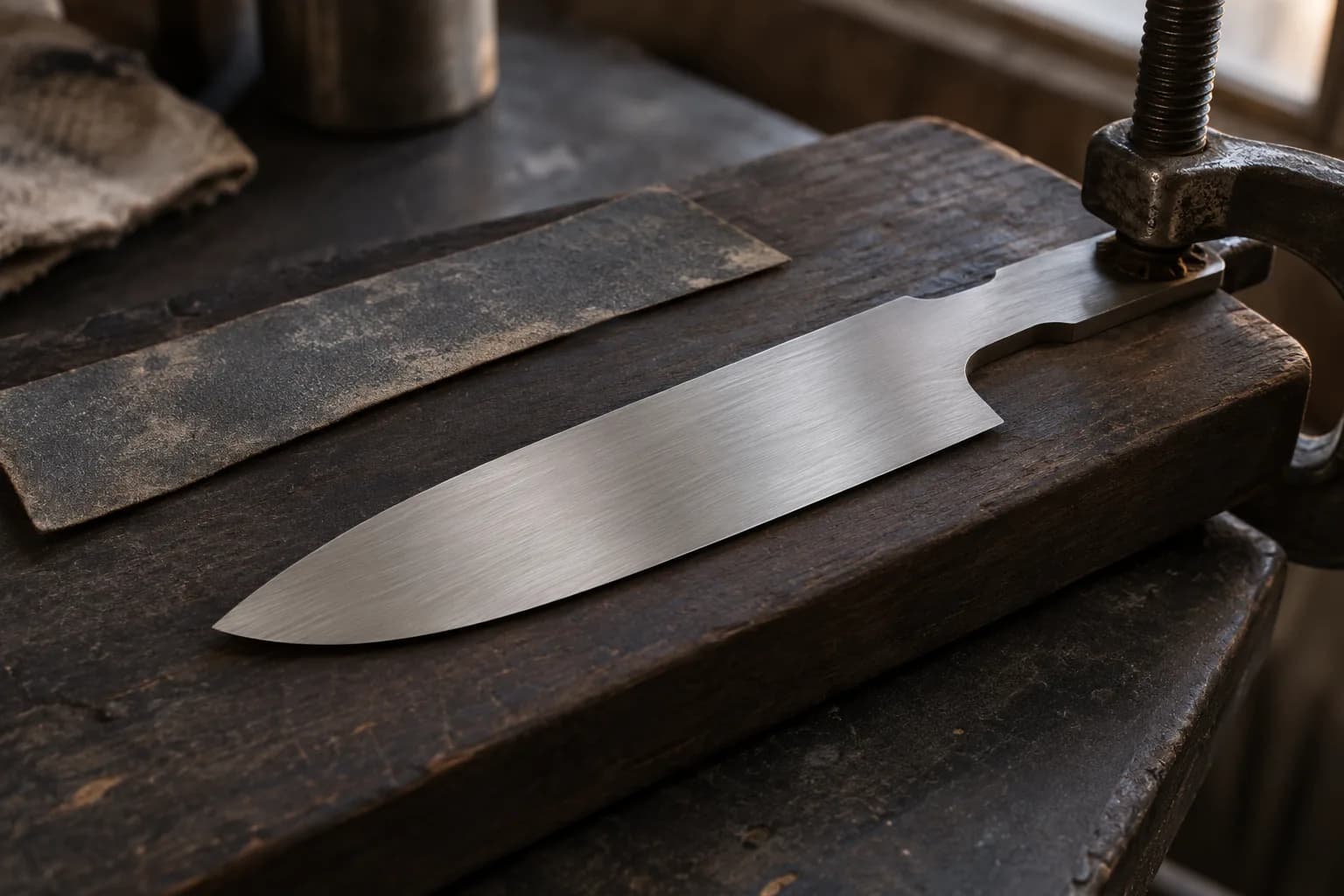
| Grinding | 5/5As friendly as hardenable stainless gets: fine structure, no carbide tear-out, cuts cleanly on ceramics, hand-sands better than almost any other stainless, and finishes crisply. Belt life is good and the steel telegraphs no surprises. | 4/5Processes well with standard knifemaking tools and is considered forgiving to grind and heat treat for a stainless steel. | A tie — the AEB-L family manner runs through both: clean belt behavior, fine finishes, no carbide tear-out, unusually pleasant hand sanding for stainless. Nitro-V ships in more knife-specific sizes from maker suppliers, which is its quiet practical advantage. |
|---|