| Toughness | 5/5Among the best toughness of any stainless knife steel at a given hardness, thanks to its simple chemistry and very fine, clean grain structure with minimal large carbides. Often used as a toughness benchmark against more heavily alloyed stainless steels. | 5/5One of the toughest stainless steels available, inheriting AEB-L's excellent toughness while adding a bit more wear resistance from vanadium and nitrogen. | Tied. Both are among the toughest stainless steels available, AEB-L through its simple, clean chemistry and Nitro-V by carrying that same base forward. |
|---|
| Edge retention | 2/5Modest wear resistance compared to higher-vanadium steels since it has far fewer hard carbides, but the fine grain gives it excellent edge stability, so it takes a very keen edge and resists rolling or chipping at that edge even though it dulls from abrasion sooner than high-carbide steels. | 3/5Similar to AEB-L: good, not exceptional, since it relies on a fine, clean microstructure rather than heavy carbide loading for its edge. | Nitro-V holds a modest edge here thanks to its vanadium addition, giving it a bit more wear resistance than AEB-L's minimal-alloy composition. |
|---|
| Corrosion resistance | 4/5A genuine stainless steel with 12.8% chromium, giving it solid, dependable corrosion resistance well suited to kitchen and wet-environment use. | 4/513.6% chromium plus nitrogen gives genuinely good stainless performance, a step up from AEB-L and well suited to kitchen and outdoor use. | Essentially tied, though Nitro-V's added nitrogen gives it a slight theoretical edge in resisting corrosion in the harshest conditions. |
|---|
| Heat treat | Austenitize between 1940-1975 F (soak roughly 15 minutes at 1940 F, or as little as 5 minutes at 1975 F), then plate or air quench. An optional cryogenic treatment (liquid nitrogen) can push peak hardness from around 62 HRC to roughly 64 HRC. Temper at least twice, 2 hours each cycle, in the 350-450 F range depending on desired final hardness, tempering immediately after quench or cryo. | Austenitize at 1900-1950 F for 15 minutes (use the lower end if following with a freezer rather than liquid nitrogen). Plate quench, then apply a cryogenic treatment (liquid nitrogen or a home freezer) before tempering. As-quenched hardness can reach roughly 64 Rc. Temper at 300-350 F: 300 F favors maximum hardness and edge stability, while 350 F gives the best overall toughness balance for most knife use. Avoid tempering near 450 F, which shows an unexpected drop in toughness for this steel. | AEB-L is simpler to heat treat with a shorter, more forgiving process. Nitro-V asks a bit more of the equipment, typically wanting a cryogenic treatment after quenching to reach its best properties. |
|---|
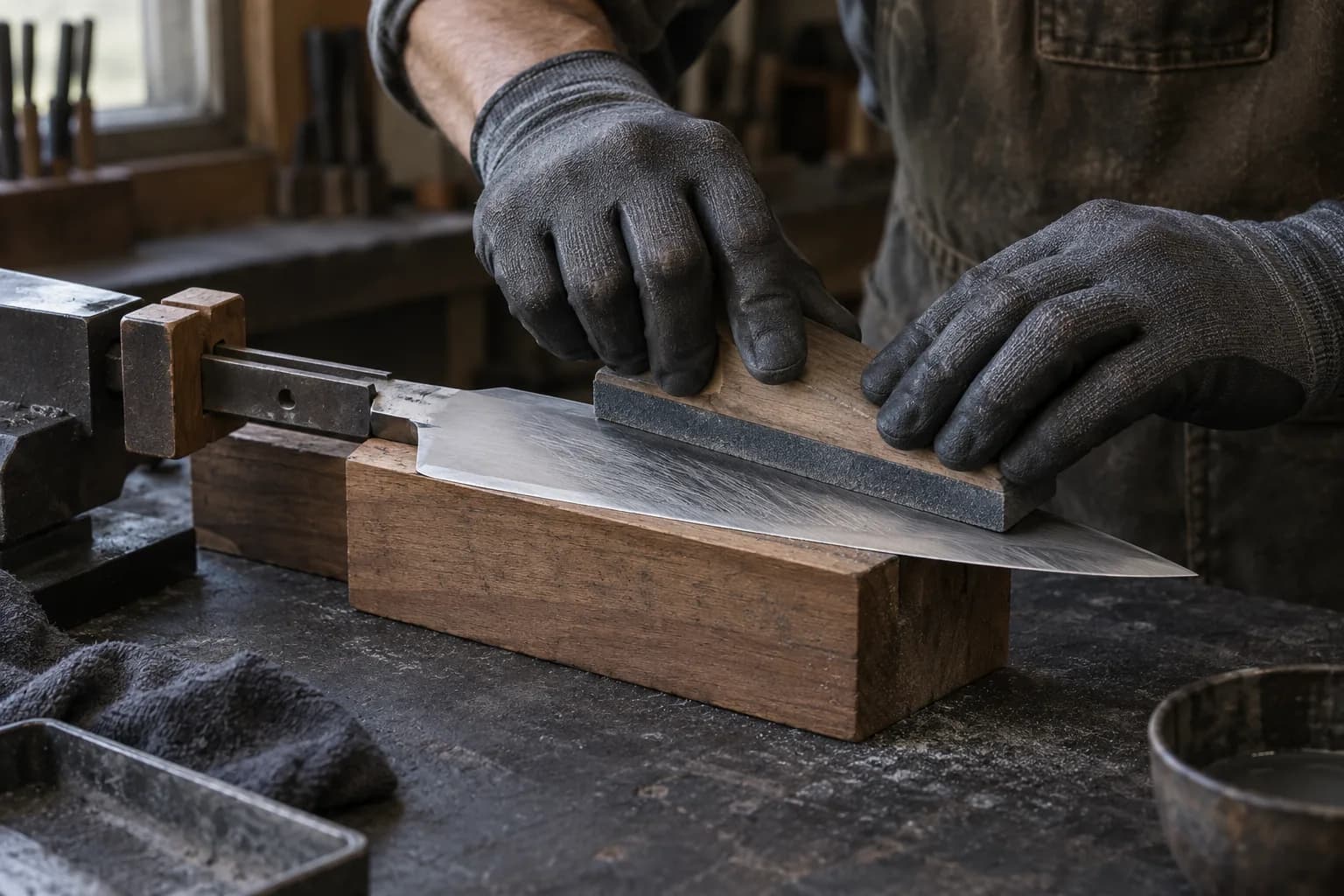
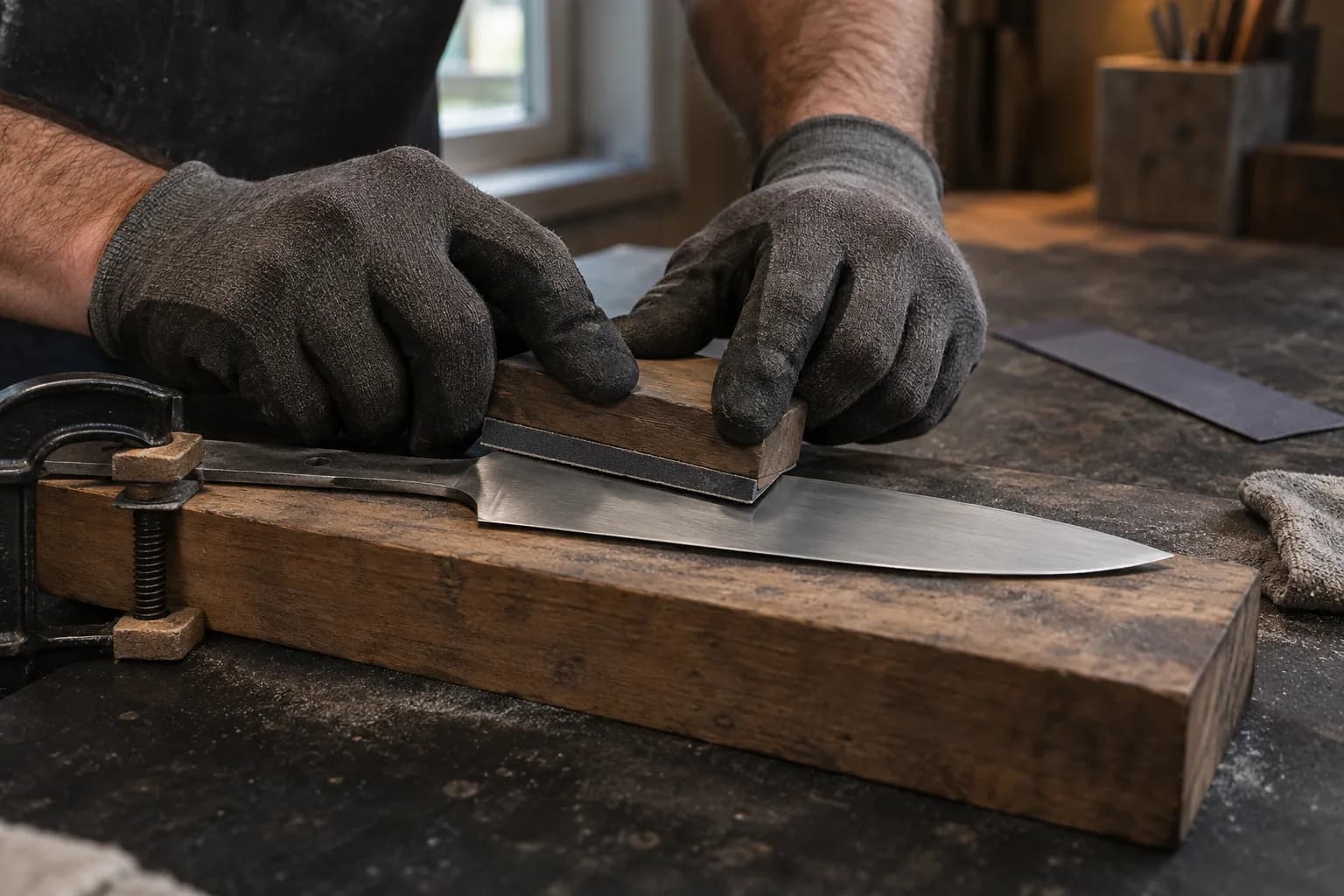
| Grinding | 5/5One of the easiest stainless steels to grind and finish available to knifemakers, with no large hard carbides to fight through. A common recommendation for makers just starting to work with stainless steel. | 4/5Processes well with standard knifemaking tools and is considered forgiving to grind and heat treat for a stainless steel. | AEB-L is noticeably easier and faster to grind, one of the easiest stainless steels available for stock removal. Nitro-V is still reasonably forgiving for a stainless steel, just a step behind AEB-L. |
|---|