
Forging & Bladesmithing
Blacksmith Hammers: Types, Weights & How to Choose
The hammer is the cheapest tool in the forge and the one your body will know best. Every smith eventually owns a rack of them, but they all trace to a…
Forging & Bladesmithing
From stone mauls to iron smithing: how guild centuries froze regional hammer patterns, the water-powered trip hammer, and the revival behind today's rack.
2 min readWritten by Rich LinvilleFree to read
The hammer is older than the anvil, older than metal, arguably older than us — hafted stone mauls predate Homo sapiens. Every tool in your shop descends from the moment someone lashed a rock to a stick and multiplied the arm. What follows is the short version of three million years, aimed at what a bladesmith swings today.
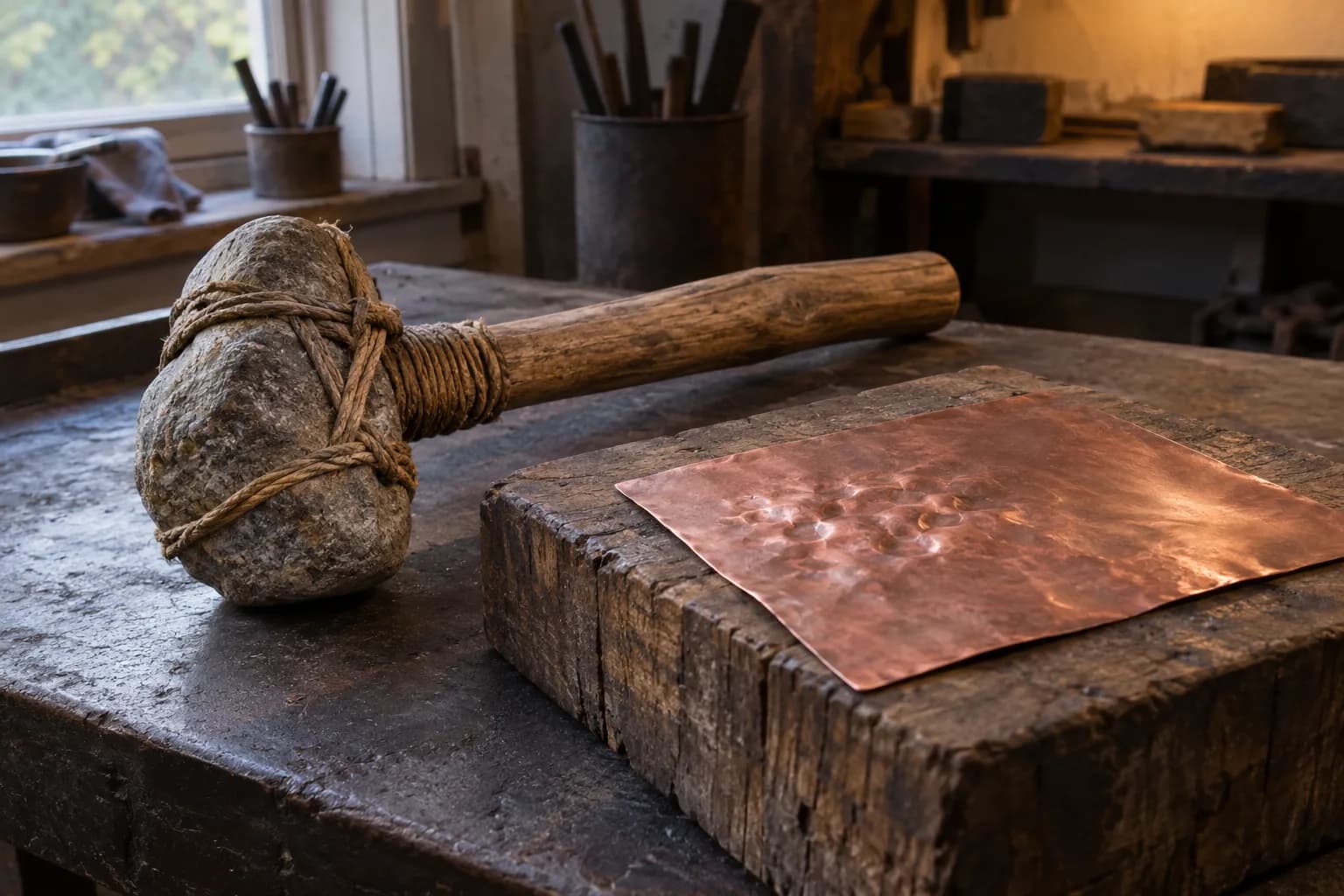
Stone hammers shaped the first metalwork — native copper beaten cold — and stone persisted deep into the Bronze Age, since a stone maul cares nothing for the heat of a casting. Bronze hammers appear with bronze itself, but the recognizable smith’s hammer arrives with iron: iron demands forging (it cannot be usefully cast with ancient technology), forging demands sustained precise hammering at heat, and by the Roman era the toolkit — flat faces, peens, sledges, set hammers — was substantially the one hanging in a modern shop. A Roman smith could work at your anvil after a five-minute orientation.
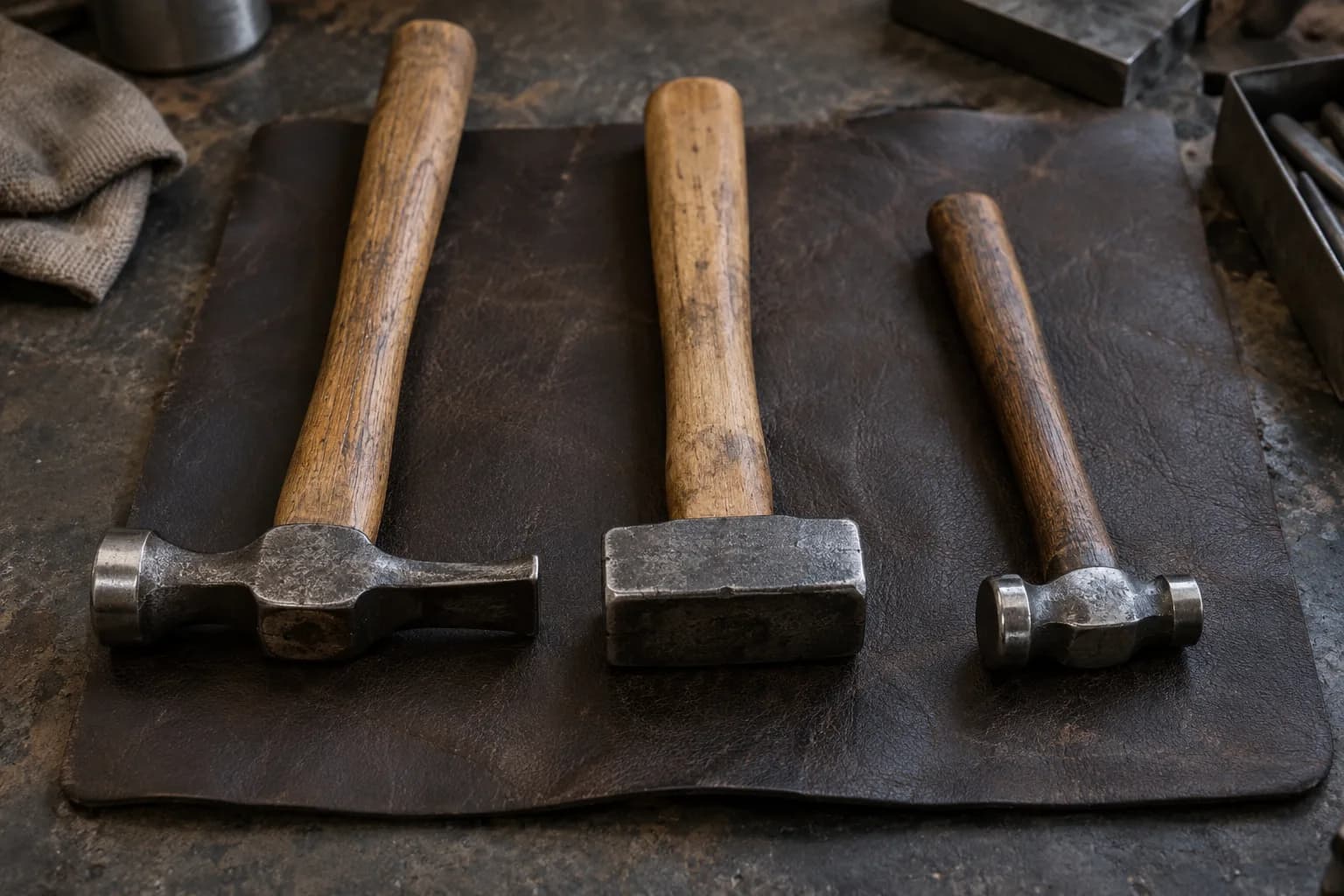
Medieval and early-modern smithing froze regional patterns into the traditions we inherit: the German, Swedish and French cross peens covered in the peen guide, the Japanese kozuchi lineage behind the dog head, and dozens of trade-specific heads — cutlers, saw doctors, file cutters, coopers each carrying hammers evolved for one job. Patterns traveled with apprentices, and a head’s shape identified a smith’s trade and region the way an accent identifies a hometown.
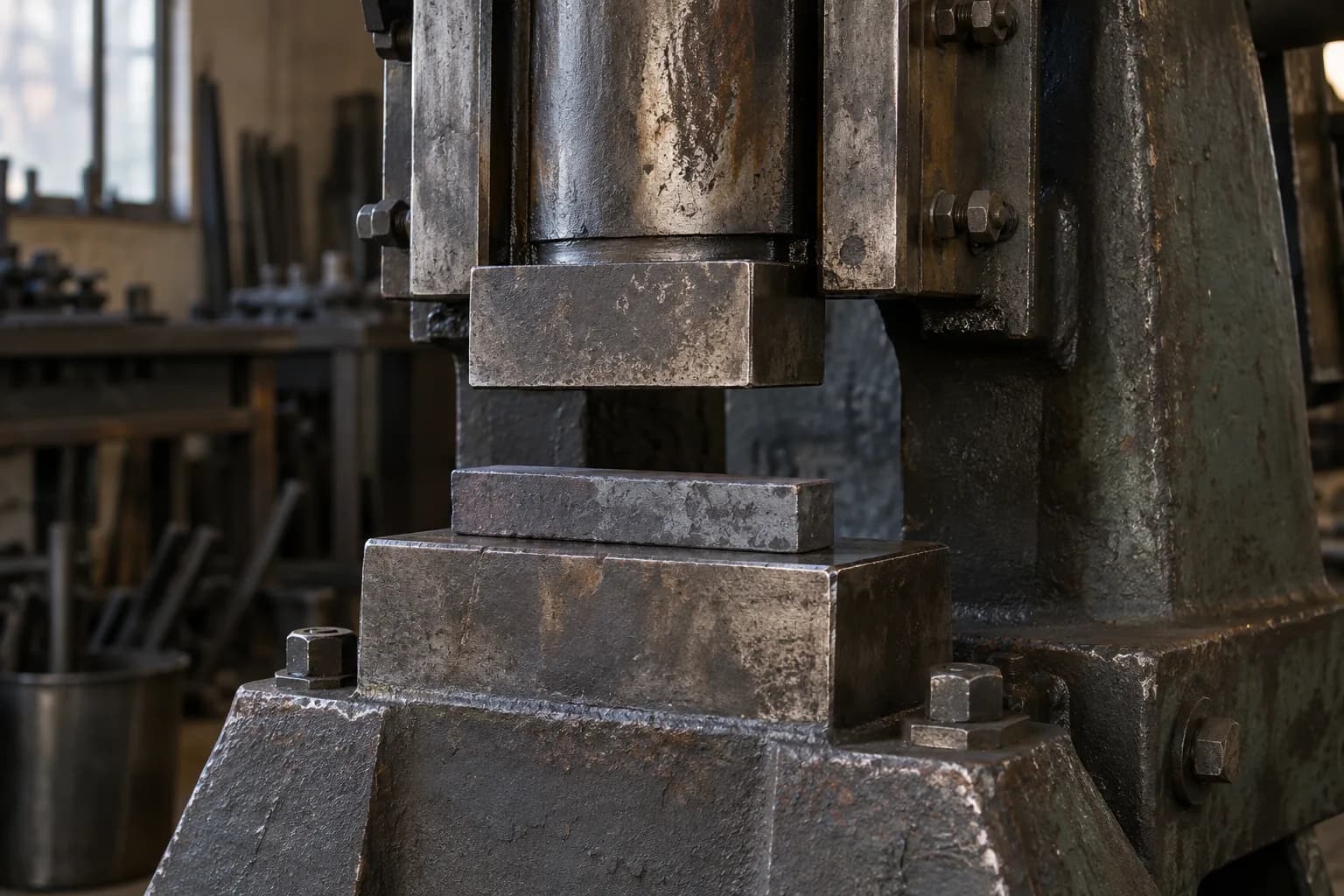
The other lineage is powered. Water-driven trip hammers — a cam lifting and dropping a massive head — ran in China by the Han dynasty for grain and appear in European ironworks by the medieval period, making possible the heavy drawing no arm could sustain. The tilt hammers and steam hammers of the industrial age scaled the idea to forge ship shafts, and their small descendants — the mechanical and air hammers in Presses and Power Hammers — put a tireless striker in a one-person shop. Every power hammer is the old apprentice, electrified.
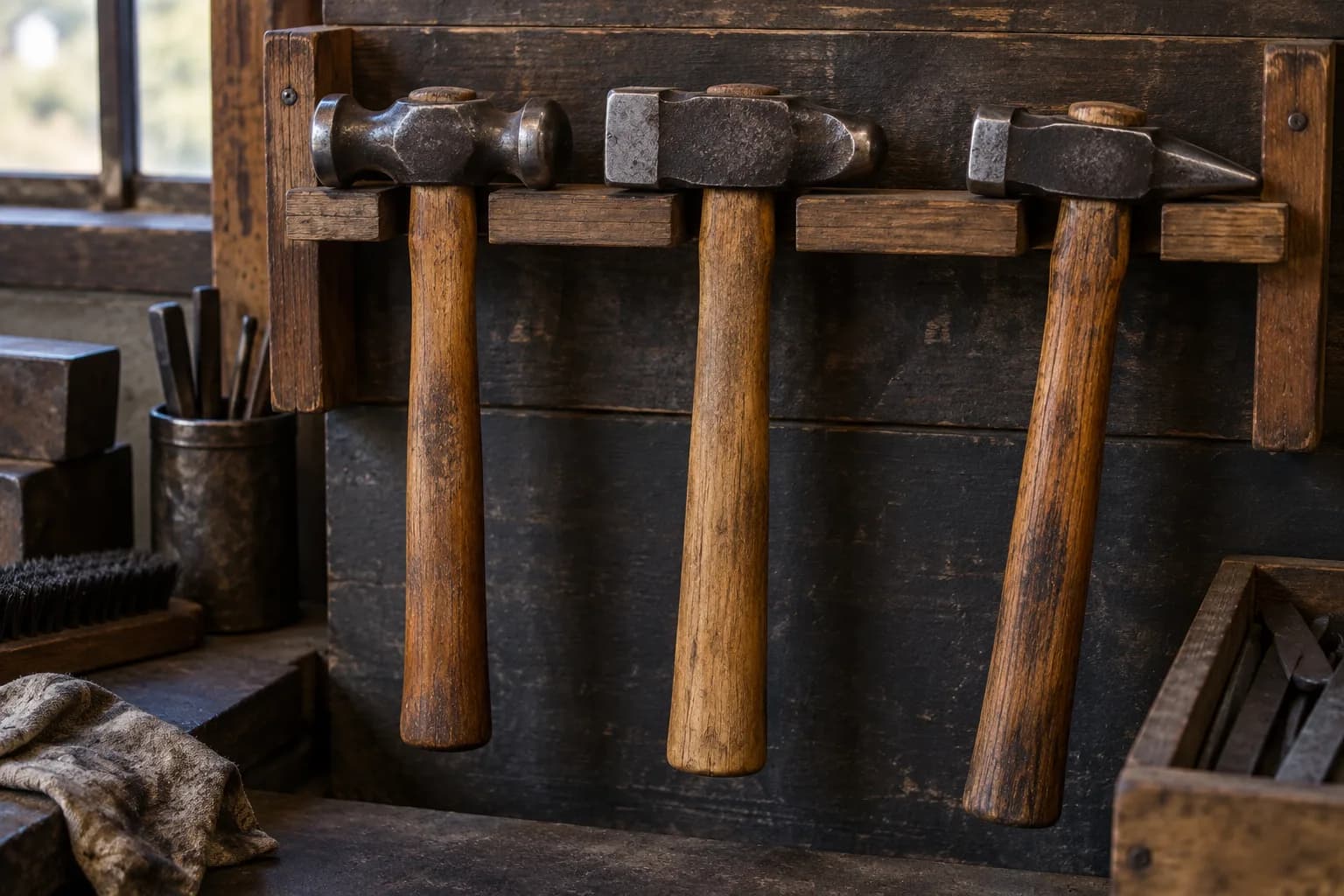
Industrial forging nearly erased hand-smithing by the mid-twentieth century, and the hammer patterns began dying with the trades that carried them. The revival came from the artist-blacksmith movement of the 1970s onward, and with it something new: smiths studying, collecting and re-forging the old regional patterns on their merits, then teaching them at hammer-ins to anyone who shows up. Today’s rack — a Brazeal-style rounding hammer beside a Japanese-lineage dog head beside a German cross peen — is a collection no historical smith would have seen. We are living in the hammer’s most cosmopolitan era, and the beneficiaries are the blades coming off the anvil.
Keep reading
Three more from the same bench.
The hammer is the cheapest tool in the forge and the one your body will know best. Every smith eventually owns a rack of them, but they all trace to a…

Walk any modern hammer-in and the racks tell the story: the rounding hammer — one domed face, one flat, a compact block of a head — has become the default…

Somewhere between your tenth damascus billet and your first sore shoulder, every forging maker asks the machine question. Power hammers and hydraulic…
Same bench
I machine the parts, hand-assemble, track and test Torus grinders in Sterling, Illinois. Most orders ship in seven to ten business days from time of order.

Current dual-axis platform with a fiber-laser-cut 6061 chassis and single-knob tracking.

Current dual-axis platform with a steel chassis, more mass and less vibration.

Prior-design aluminum chassis, 90-degree tilt and 1.5-inch tooling arms.

One-man shop
I answer my own email. Tell me the steel, the machine and what it is doing, and I will tell you what I would try next.