
Forging & Bladesmithing
Blacksmith Hammers: Types, Weights & How to Choose
The hammer is the cheapest tool in the forge and the one your body will know best. Every smith eventually owns a rack of them, but they all trace to a…
Forging & Bladesmithing
A peen wedge moves steel perpendicular to its line: cross peens draw lengthwise, straight peens spread sideways. National patterns, rhythm and dressing.
2 min readWritten by Rich LinvilleFree to read
Before there were rounding-hammer debates there was the cross peen: the standard European smith’s hammer for centuries, and still the most efficient hand tool ever devised for one essential job — moving steel in a chosen direction instead of every direction.
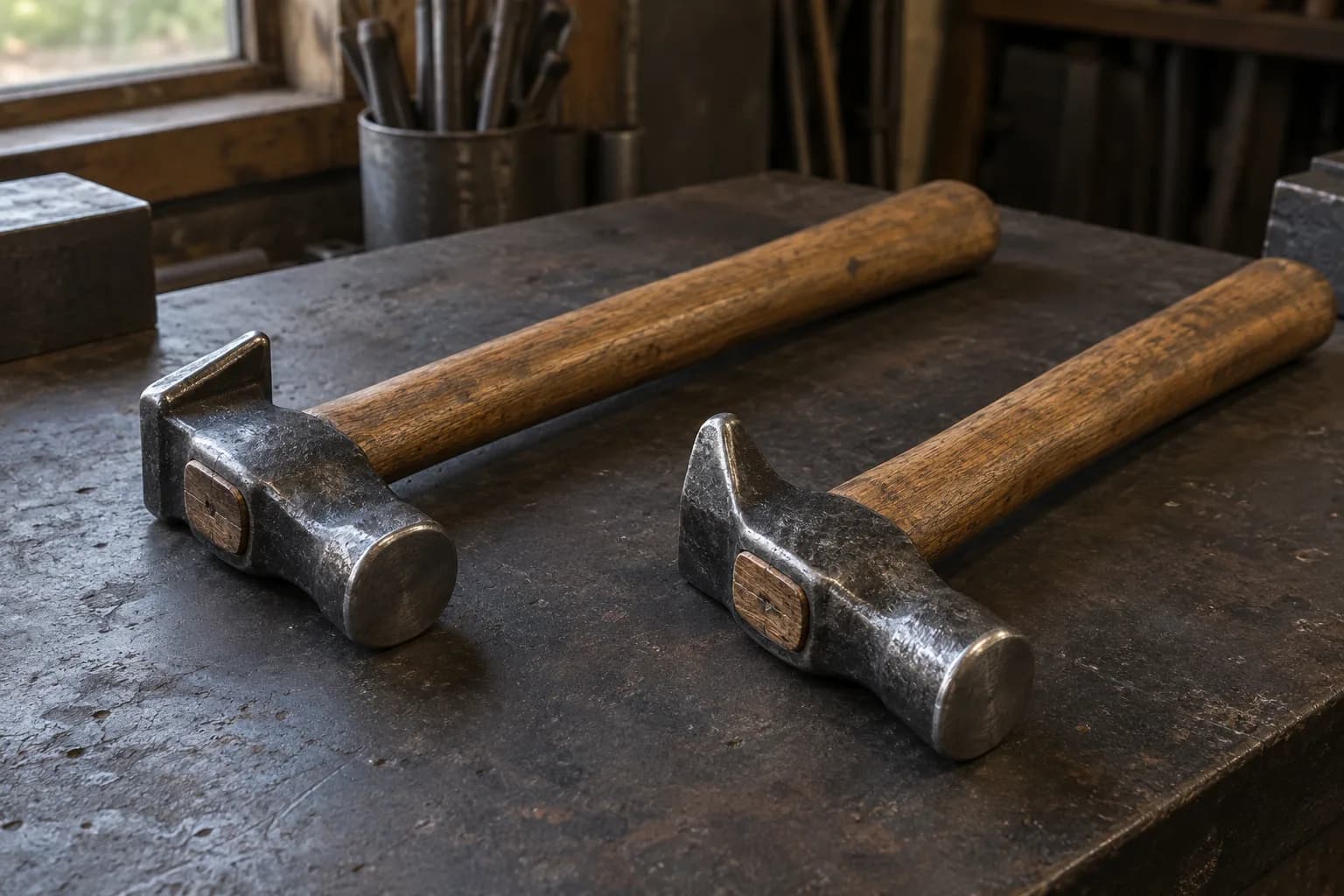
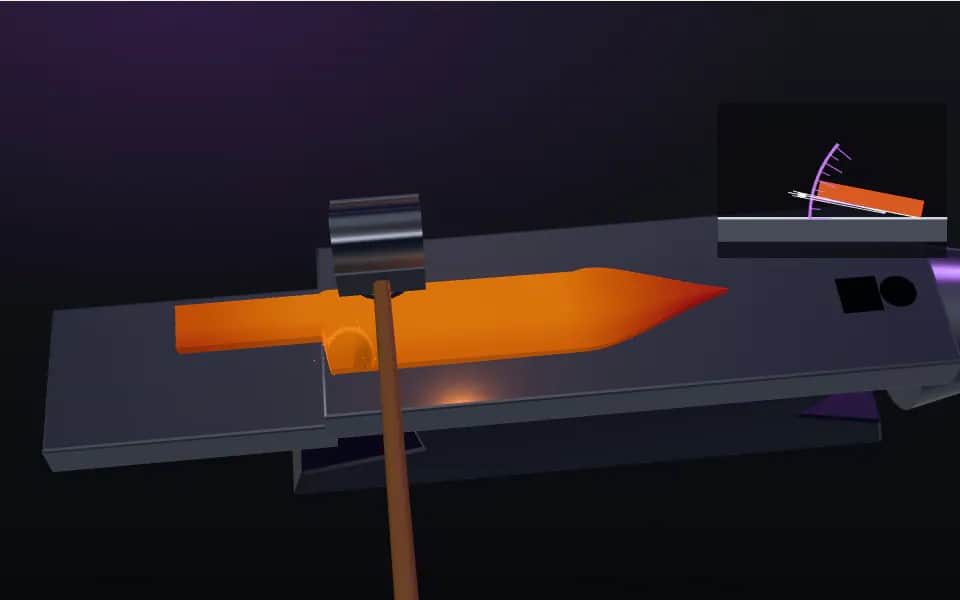
A wedge-shaped peen concentrates the blow along a line. Steel flows away from that line — perpendicular to the wedge — and barely spreads along it. Cross peen (wedge perpendicular to the handle): each blow draws the stock LENGTHWISE as you work along the bar. Straight peen (wedge parallel): the same wedge now spreads stock SIDEWAYS — widening a blade, fanning an axe cheek. One head geometry, rotated ninety degrees, two different tools. The flat face on the other side then dresses out the peen’s corrugations.
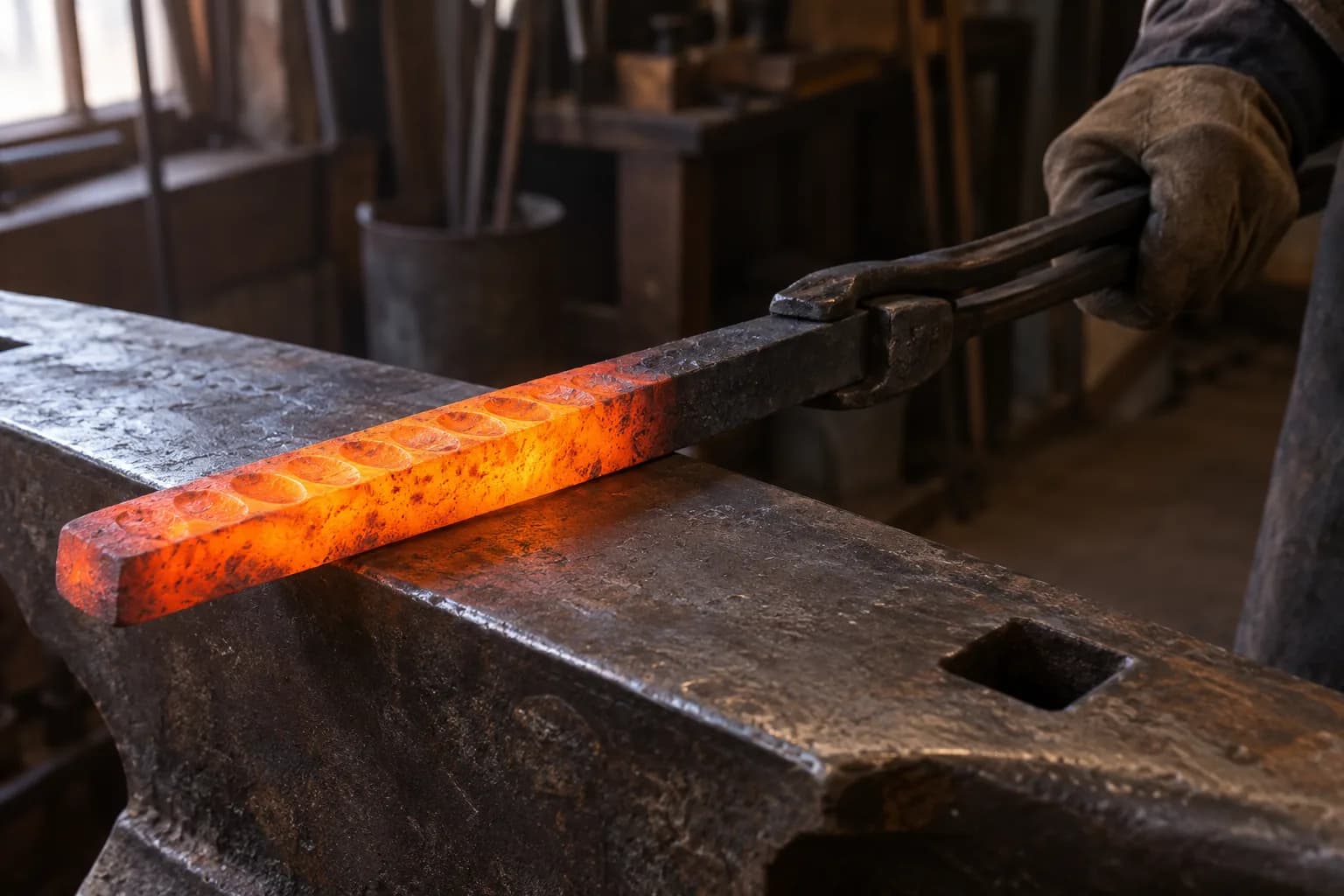
Classic drawing: walk overlapping peen blows down the hot zone like a tiny power hammer — the surface corrugates as the bar lengthens visibly — then flip to the flat face and settle the ridges smooth before the heat dies. This peen-then-planish cycle draws faster than flat-face forging by a wide margin, and it is the manual ancestor of every fullering die. It also teaches blade forging’s core skill: managing WHERE mass goes, the difference between forging a blade and merely flattening a bar, as the step-by-step guide shows in sequence.
The traditions differ mostly in head shape and balance: German pattern — square-ish body, stout peen, the hardware-store archetype; Swedish pattern — slimmer, longer head with more mass behind the face; French pattern — distinctive swept profile with the face set forward. Working differences are modest; buy (or forge) whichever balance your arm likes, in the same 2–2.5 pound blade-work sweet spot from the hammer field guide.
An out-of-the-box peen is usually too sharp — a chisel that cuts cold shuts into your work. Radius it: a clean rounded ridge, something like a dowel’s curve, polished smooth. Sharper radius = faster drawing and rougher surface; fuller radius = slower and cleaner. Many smiths keep two cross peens dressed at different radii and let that be the speed control.
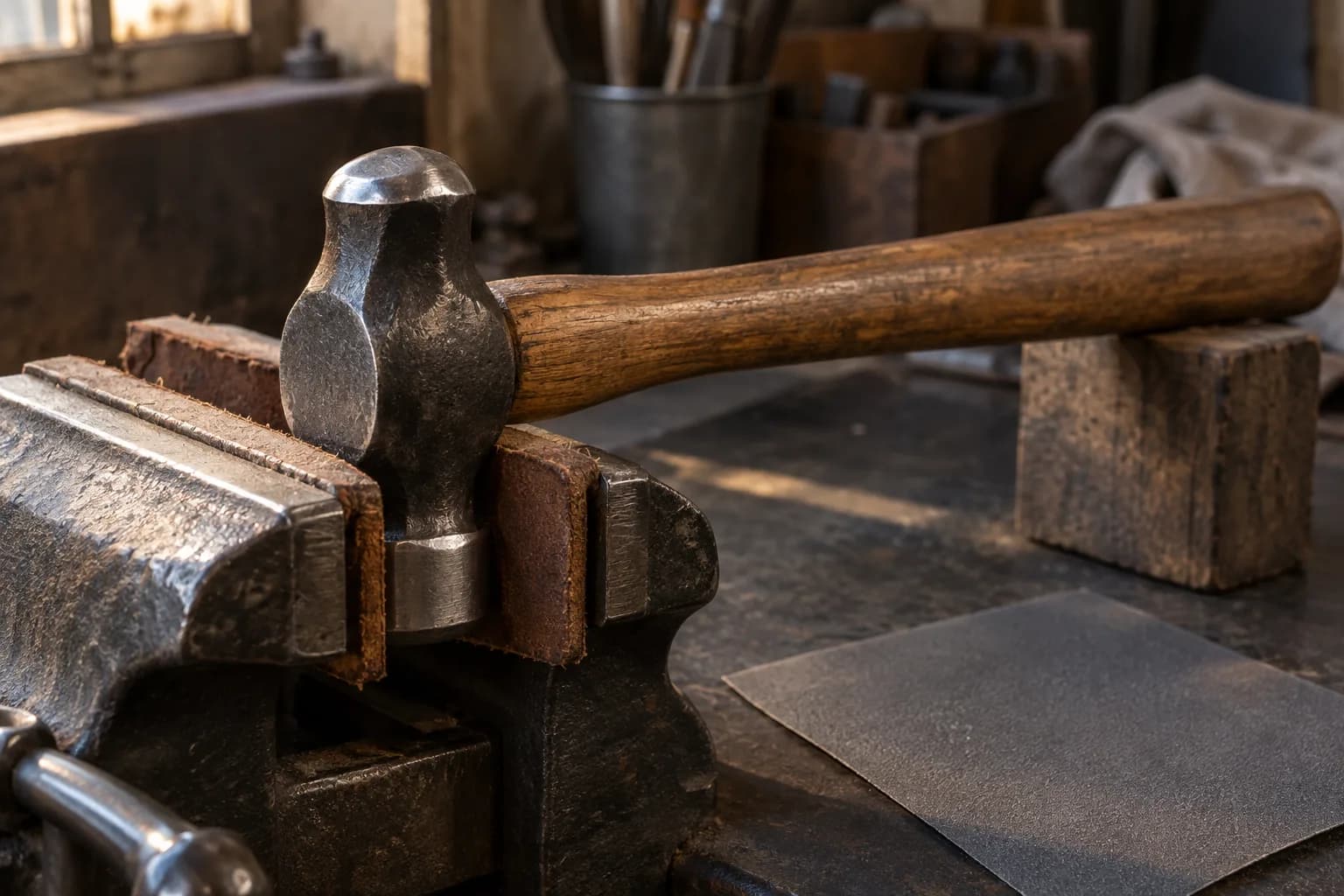
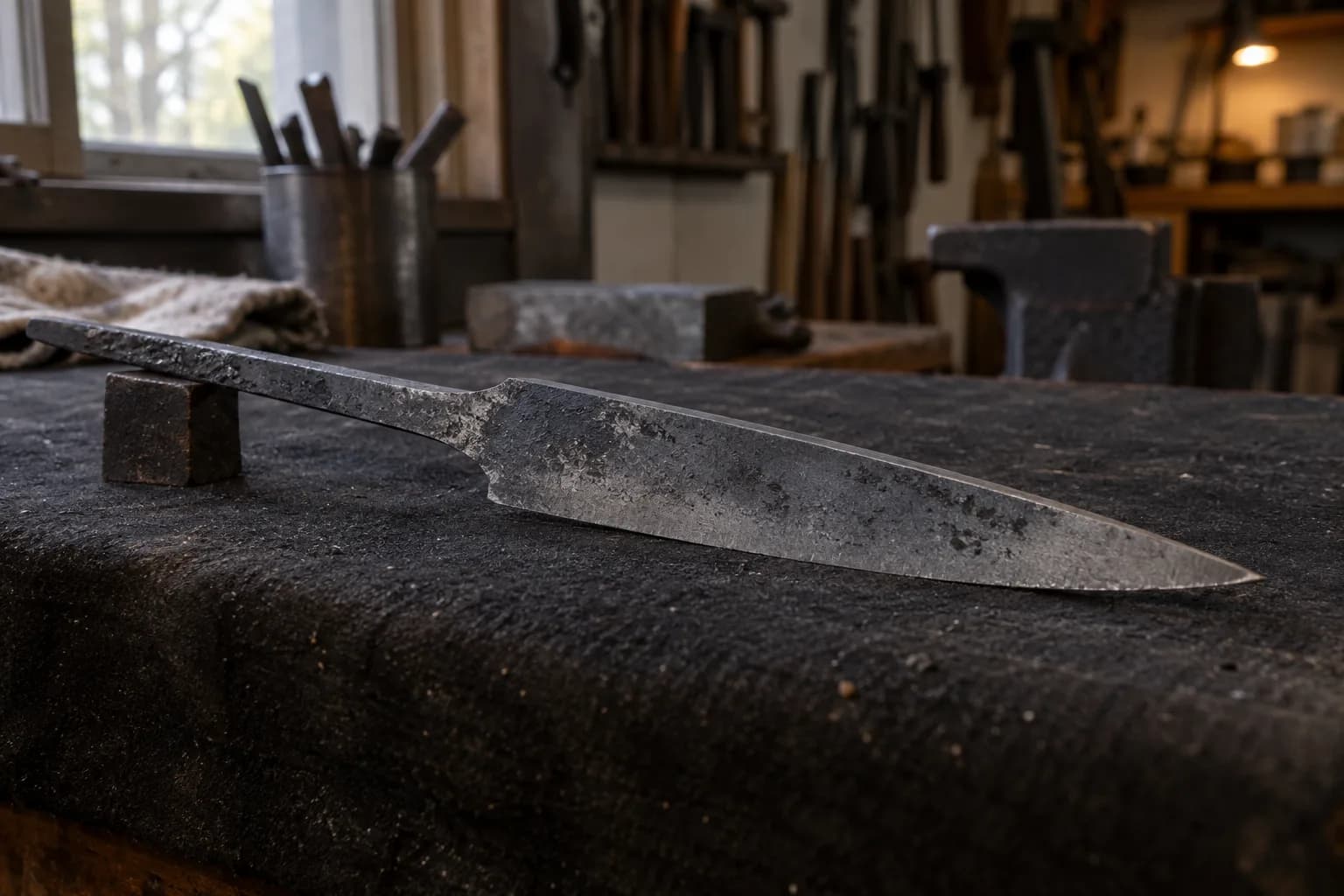
Cross peen work shines at tang drawing, distal taper, and stretching bevels along the blade; straight peen work at widening — spreading a too-narrow blank instead of starting over. For thin near-final bevels, peens hand off to the dog head or the rounding hammer’s flat; the wedge that moves 1/2-inch stock beautifully leaves ridges thin stock cannot afford. Peen for mass movement, flat for finish — the oldest division of labor in the craft.
Keep reading
Three more from the same bench.
The hammer is the cheapest tool in the forge and the one your body will know best. Every smith eventually owns a rack of them, but they all trace to a…

Walk any modern hammer-in and the racks tell the story: the rounding hammer — one domed face, one flat, a compact block of a head — has become the default…
Forging a knife is not sculpting with sparks — it’s a sequence, and once you know the sequence, every session has a plan. This guide walks a first forged…
Same bench
I machine the parts, hand-assemble, track and test Torus grinders in Sterling, Illinois. Most orders ship in seven to ten business days from time of order.

Current dual-axis platform with a fiber-laser-cut 6061 chassis and single-knob tracking.

Current dual-axis platform with a steel chassis, more mass and less vibration.

Prior-design aluminum chassis, 90-degree tilt and 1.5-inch tooling arms.

One-man shop
I answer my own email. Tell me the steel, the machine and what it is doing, and I will tell you what I would try next.