
Forging & Bladesmithing
Blacksmith Hammers: Types, Weights & How to Choose
The hammer is the cheapest tool in the forge and the one your body will know best. Every smith eventually owns a rack of them, but they all trace to a…
Forging & Bladesmithing
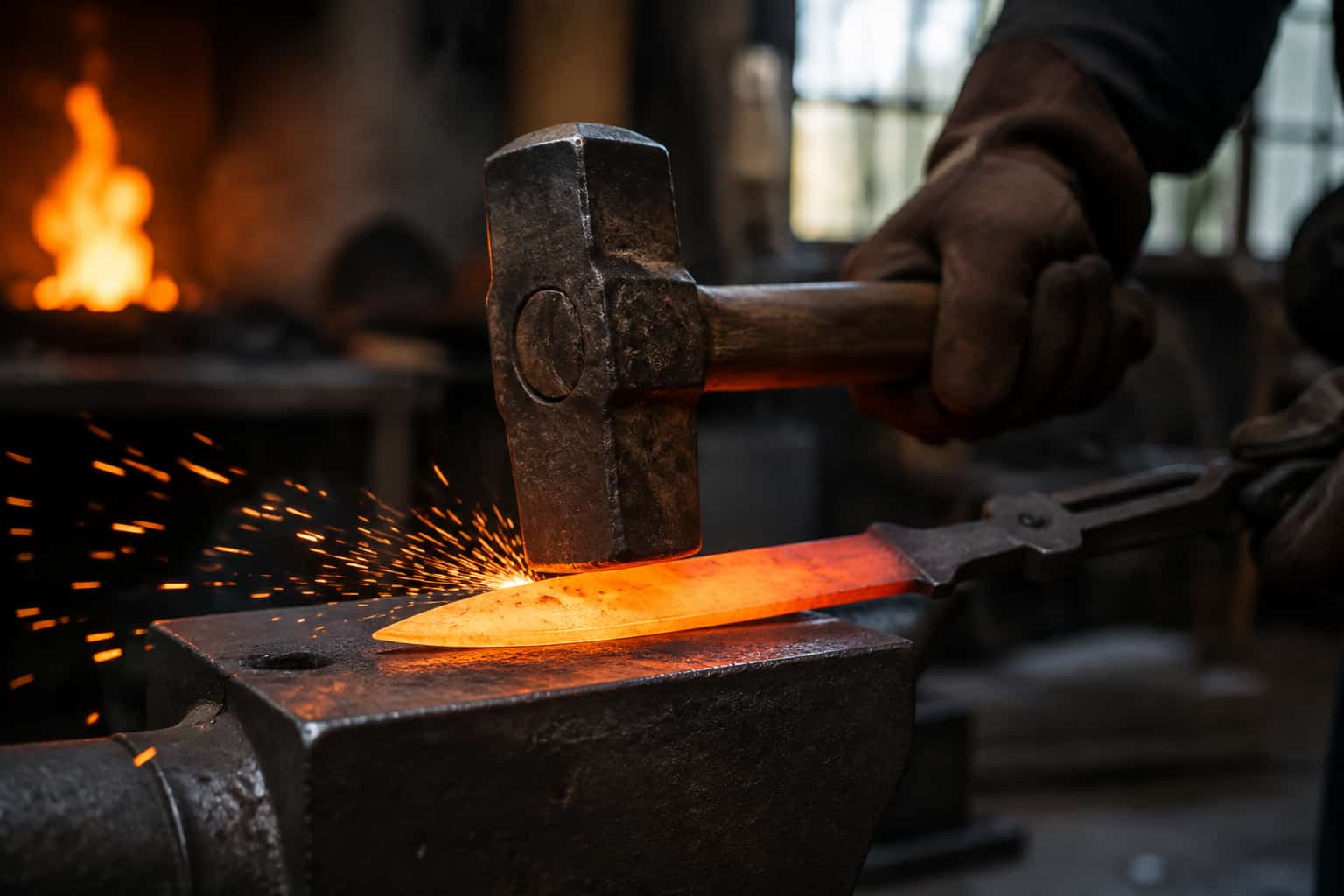
Thirty minutes of face dressing turns a flea-market 2-pound ball peen into a forging hammer. The ball makes texture; skip cast iron and cracked eyes.
2 min readWritten by Rich LinvilleFree to read
Nobody needs a hundred-dollar hammer to forge a first knife. The ball peen in every flea market bin, the engineer’s hammer at the hardware store, the dead sledge in a barn — all of them are one dressing session from real forging tools, and the smiths sneering at them mostly started with them.
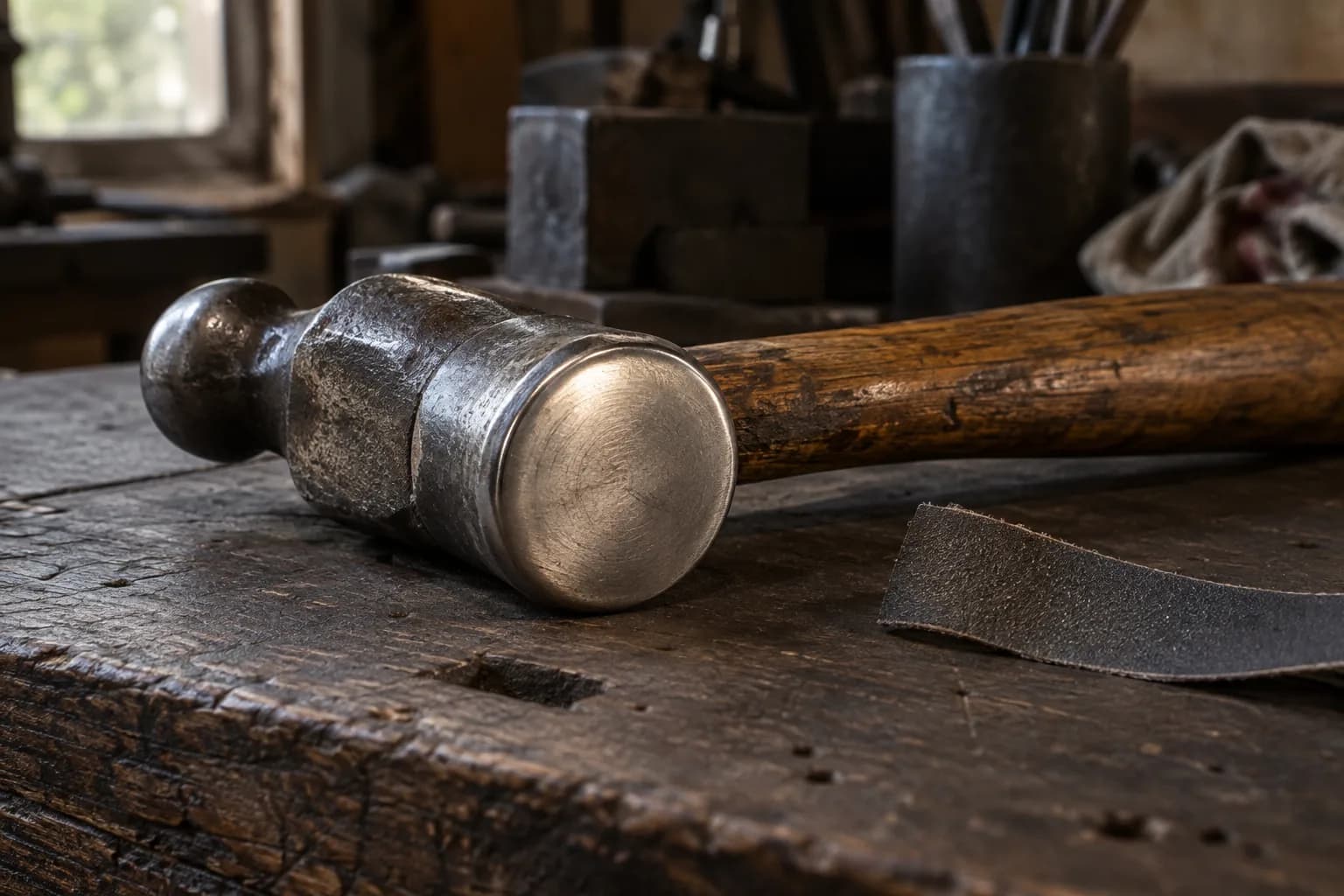
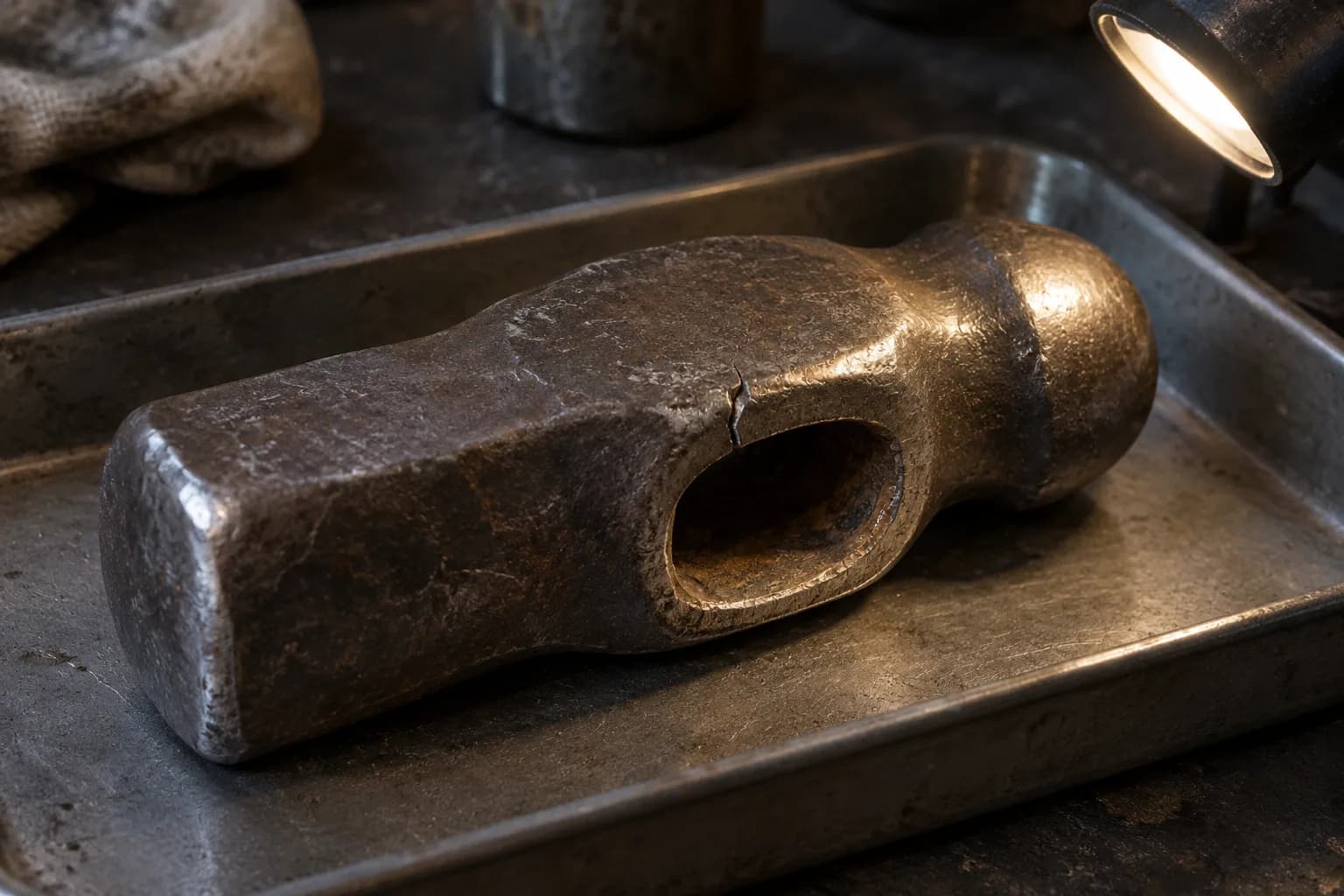
A 2-pound ball peen is a legitimate forging hammer: flat face for drawing and smoothing, and the ball — designed for riveting — doubles as a crude rounding face for faster metal movement and as a texture tool. Flea market examples run a few dollars, with good old American steel in the heads. The catch is the factory grind: faces come flat-and-sharp-cornered or scarred by a previous life, and forging with them stamps every flaw into your blade.
Thirty minutes on the 2×72 turns junk into tool: radius and polish the face’s corners to a soft, even ease; crown the flat face very slightly (a barely-visible dome so edge-catches cannot dig); polish out every scratch through 220 then 400; and smooth the ball of pits. Work cool — a hammer face is hardened, and grinding heat draws it soft exactly where it works. The same session revives any found head, and re-dressing twice a year keeps it printing clean.
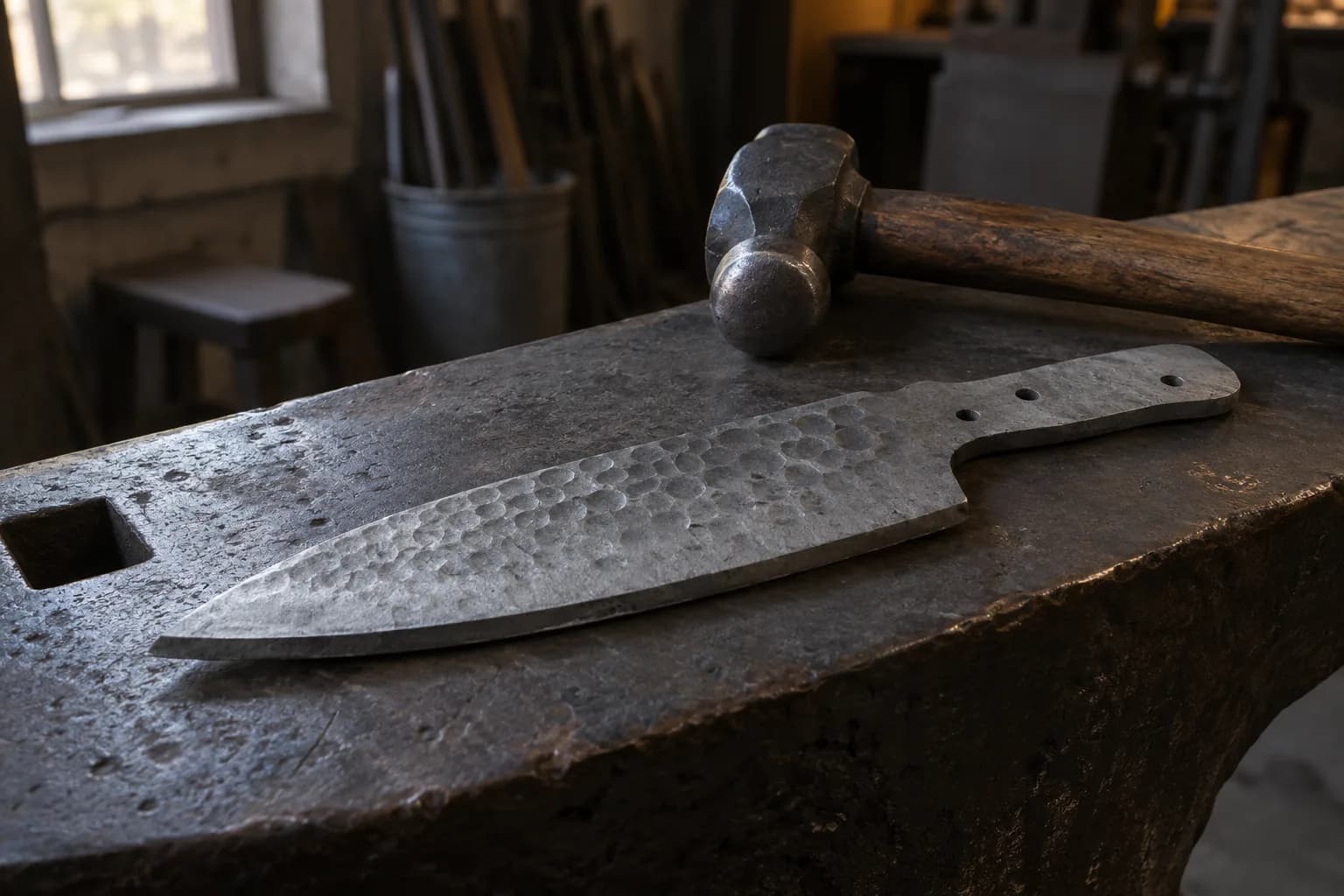
The ball face earns permanent rack space for texture: overlapping peen blows leave the hand-dimpled surface that sells as “hand forged” on brut-de-forge builds — flats textured before the bevels grind clean, per the aesthetic covered in Blade Finishes Explained. Different ball sizes give different dimple scales; a dedicated cheap ball peen kept ONLY for texture (never dressed smooth) is a common shop trick.
Engineer’s and drilling hammers (2–4 pound double-flats) make fine strikers and heavy drawing hammers; a cut-down sledge head re-handled short is the classic damascus billet mover; and cross peens hide in every farm auction under rust that a belt removes in minutes. Skip: cast-iron anything (they chip dangerously), carpentry claw hammers (faces too hard, made for nails, known to spall against hardened surfaces), and cracked eyes no wedge can save.
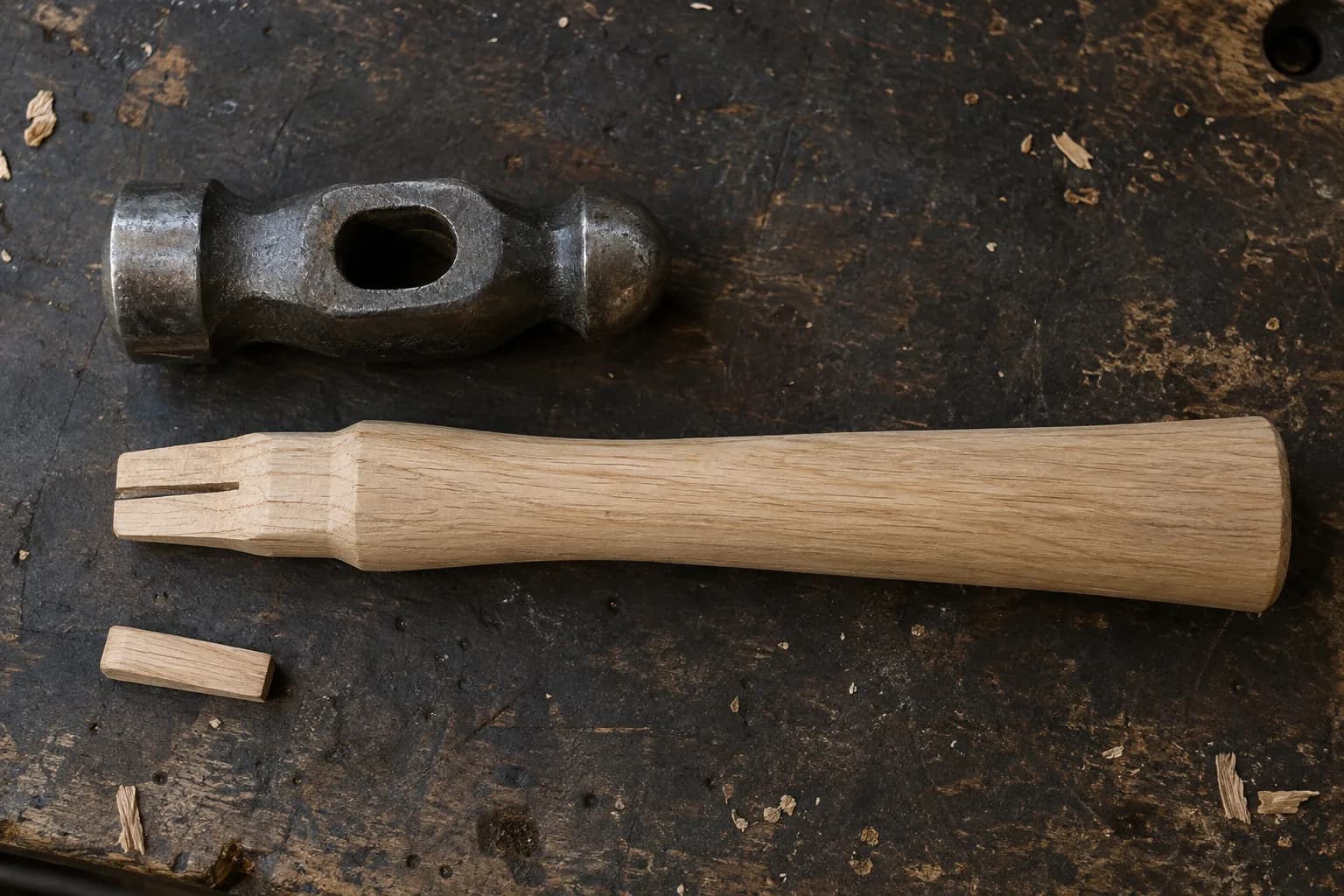
Re-handle found heads with hickory cut to 12–16 inches, and burn or shave the varnish off any factory handle — grip decides control, per Hammer Technique. Forge with the dressed find until your blows outgrow it; by then you will know from your own hands whether the upgrade is a rounding hammer, a dog head, or the one you already tuned. Most discover the tuned find never leaves the rack.
Keep reading
Three more from the same bench.
The hammer is the cheapest tool in the forge and the one your body will know best. Every smith eventually owns a rack of them, but they all trace to a…

Walk any modern hammer-in and the racks tell the story: the rounding hammer — one domed face, one flat, a compact block of a head — has become the default…

Watch a working smith and the hammer looks effortless — because it is. Good hammer technique isn’t strength; it’s a setup that lets gravity, rebound, and…
Same bench
I machine the parts, hand-assemble, track and test Torus grinders in Sterling, Illinois. Most orders ship in seven to ten business days from time of order.

Current dual-axis platform with a fiber-laser-cut 6061 chassis and single-knob tracking.

Current dual-axis platform with a steel chassis, more mass and less vibration.

Prior-design aluminum chassis, 90-degree tilt and 1.5-inch tooling arms.

One-man shop
I answer my own email. Tell me the steel, the machine and what it is doing, and I will tell you what I would try next.