
Damascus & Pattern Welding
Etching Damascus: Ferric Chloride, the Coffee Trick & Finishing
Until it’s etched, a damascus blade is just gray steel with faint ghost lines — every bit of drama comes from the acid. Etching is simple chemistry done…
Damascus & Pattern Welding
No forge needed: where stock-removal makers buy damascus billets, what to check before checkout, how carbon and stainless billets heat treat, and buy vs. forge.
3 min readWritten by Rich LinvilleFree to read
Here’s a fact the forging content in this section might obscure: you don’t need a forge to make a damascus knife. Professionally forged billets are a mature market — you buy a bar with the pattern already in it, grind your blade by stock removal like any other steel, heat treat, etch, done. For makers with a grinder and no forge (most makers!), bought billets are the practical road to damascus work, and there’s zero shame in it: many respected full-time makers build on Damasteel and Baker Forge billets their entire careers.
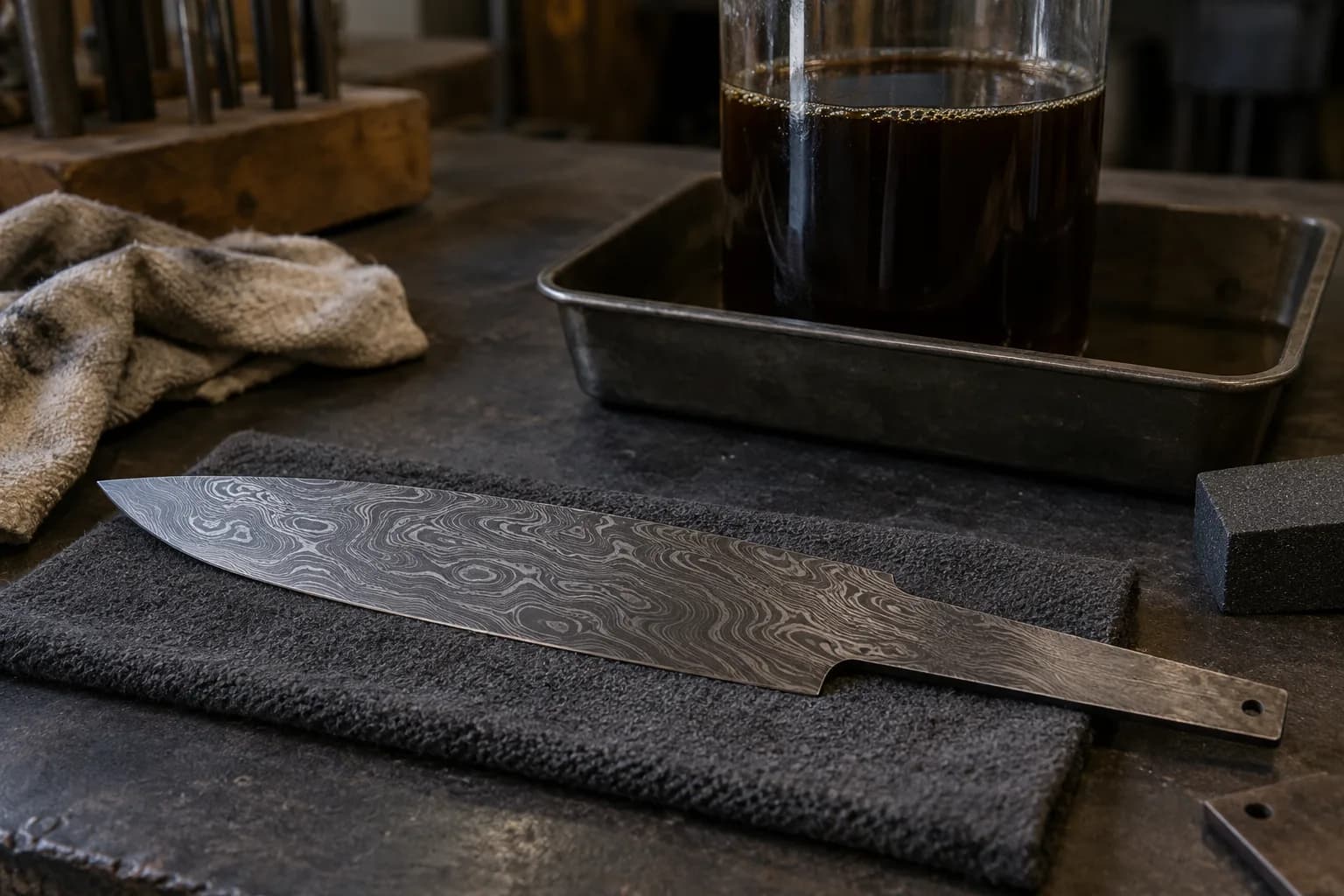
Retail-wise, several of the suppliers from our steel sourcing guide — Jantz, Alpha Knife Supply — stock billets from these makers alongside their own house damascus, which lets you comparison-shop patterns in one cart.
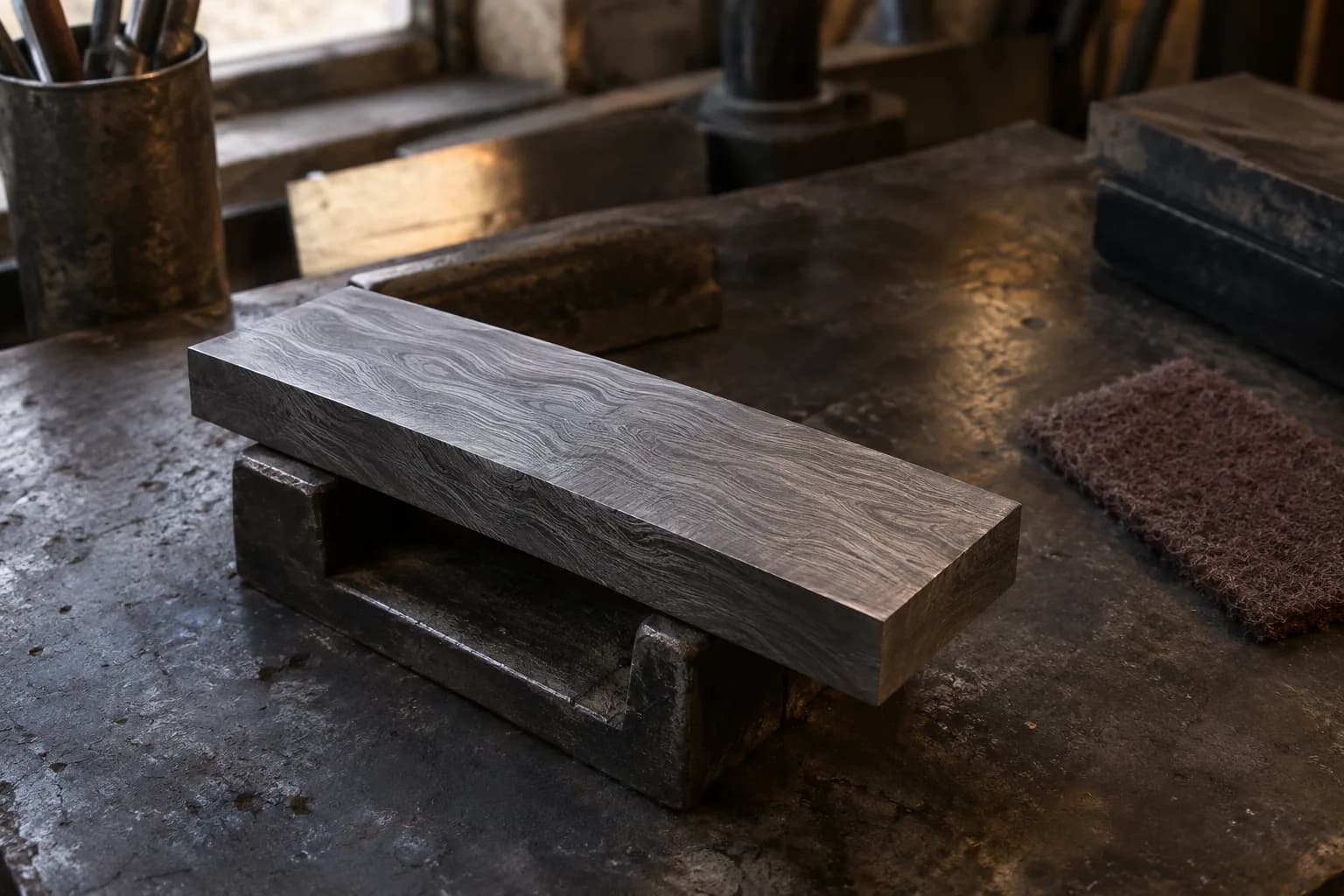
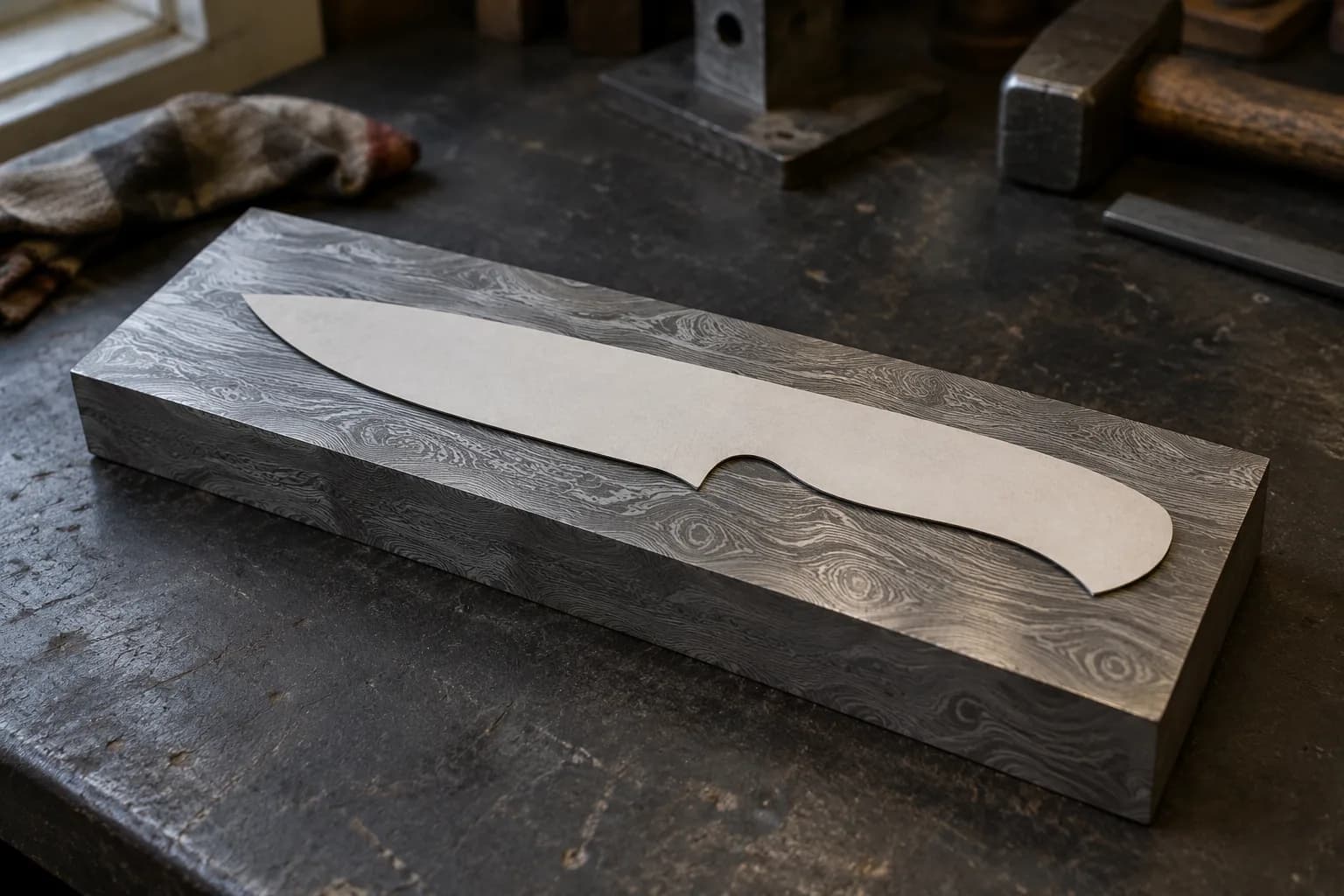
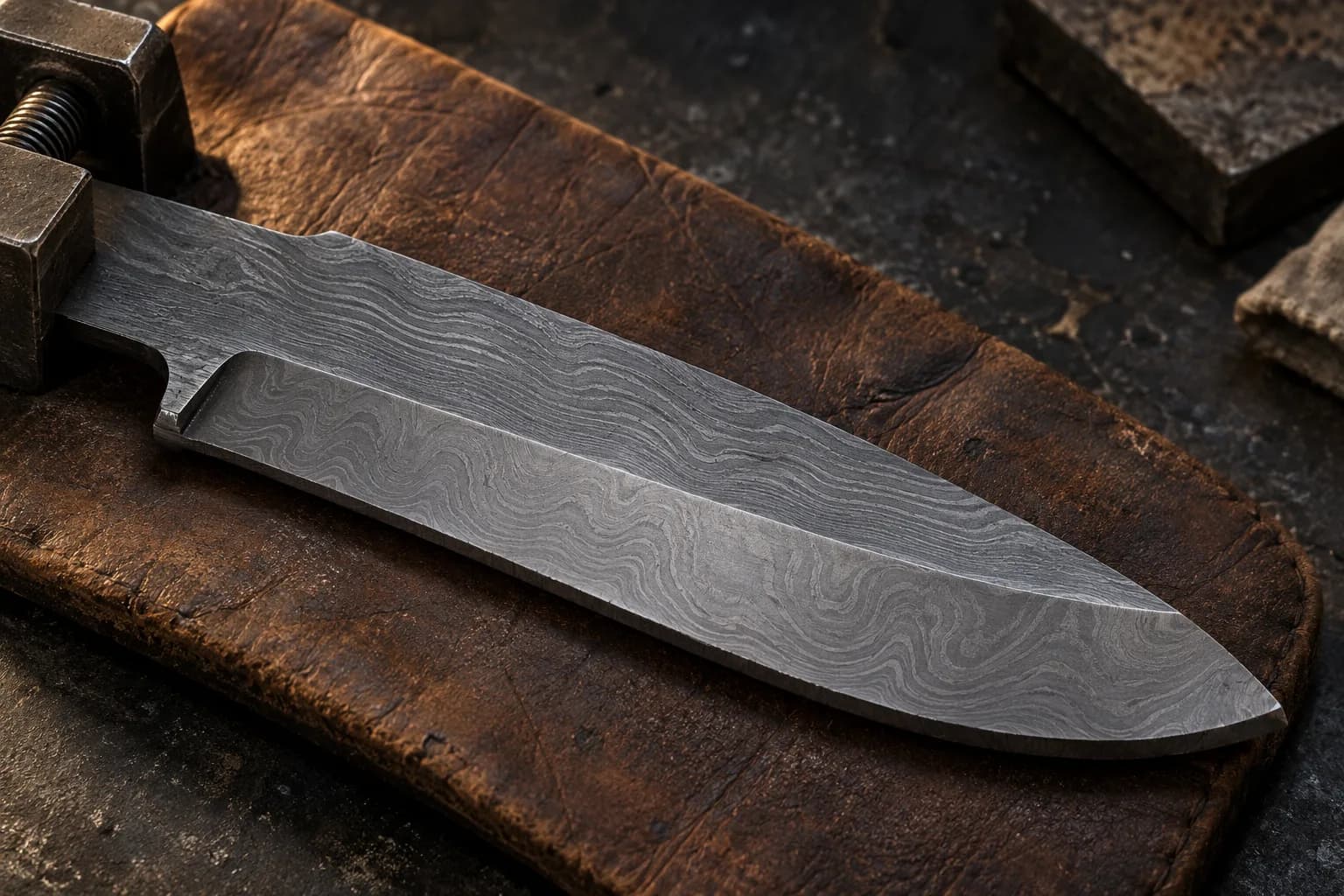
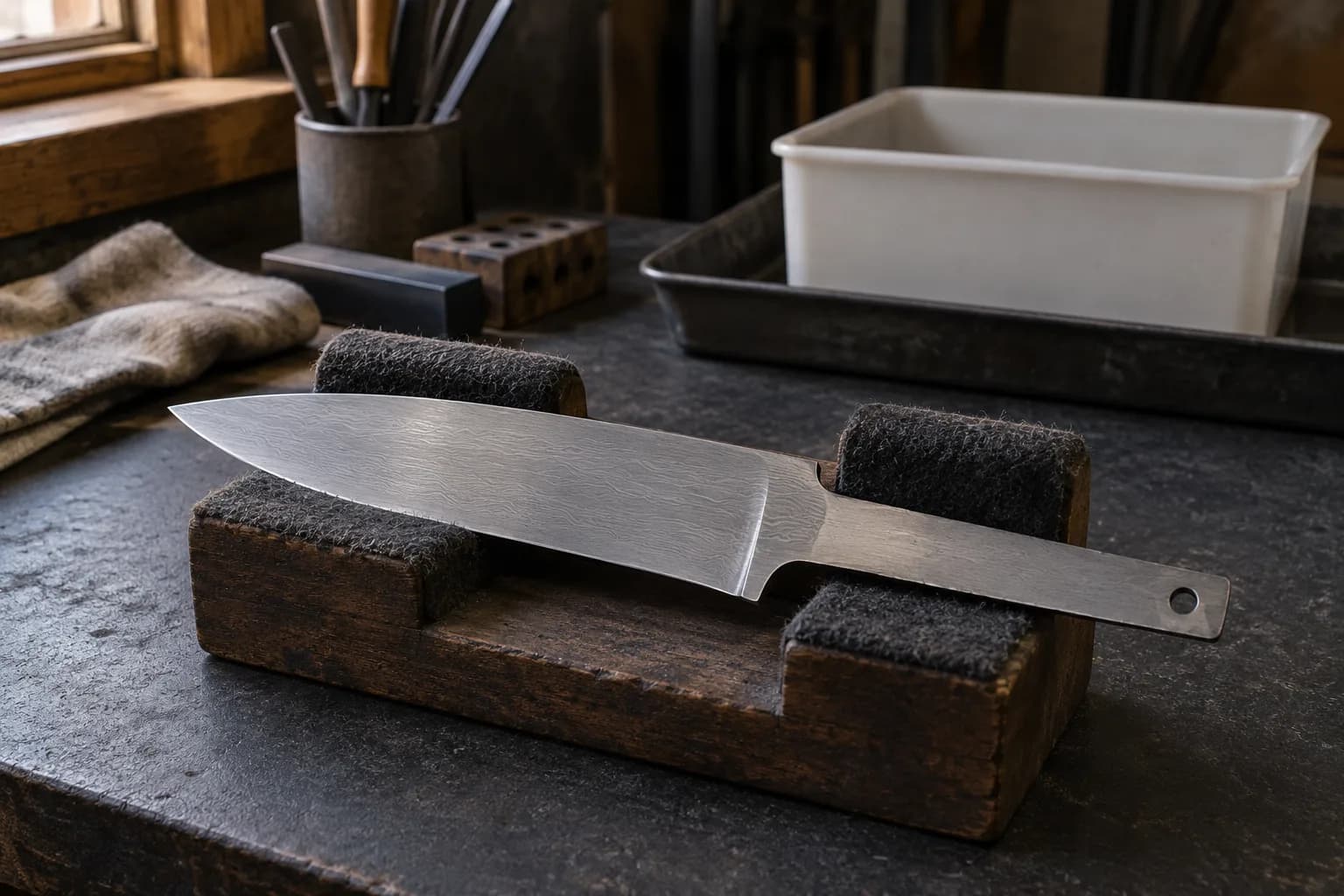
Buying gets you consistency, stainless options, and patterns (mosaic, CopperMai) beyond a hobby forge’s reach — for real money ($50–300+ per billet vs. maybe $20 of bar steel and an afternoon of forge welding). Forging your own gets you the story, the skills, and this entire section of ForgeBrain. Plenty of makers do both: bought billets for customer work, forged billets for the love of it.
Keep reading
Three more from the same bench.
Until it’s etched, a damascus blade is just gray steel with faint ghost lines — every bit of drama comes from the acid. Etching is simple chemistry done…
Here’s the secret experienced makers wish beginners learned sooner: you don’t have to do your own heat treating. Professional heat treating services exist…
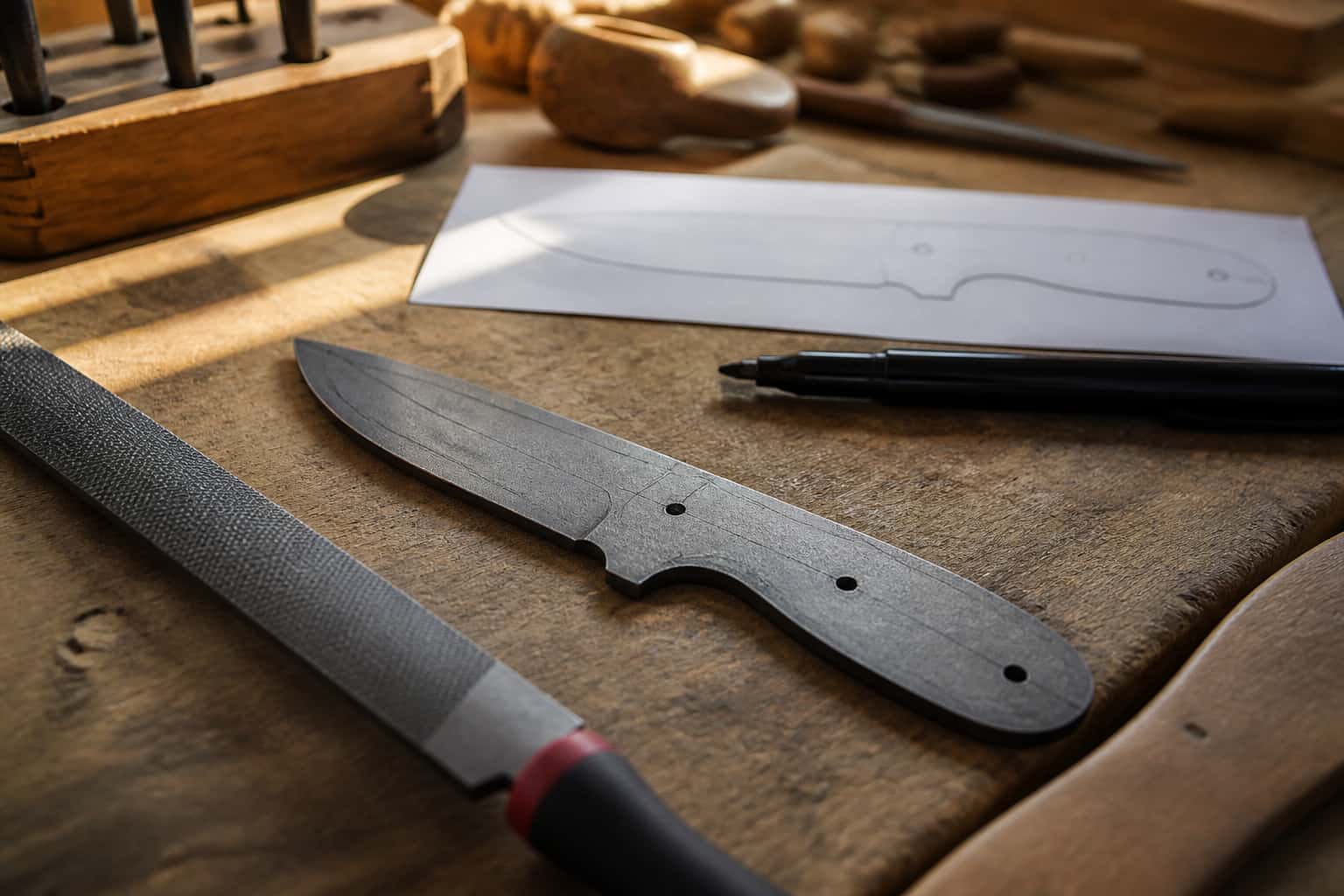
Buying steel from a real, known supplier instead of unmarked scrap or “mystery steel” is the single most important sourcing decision a new maker makes…
Same bench
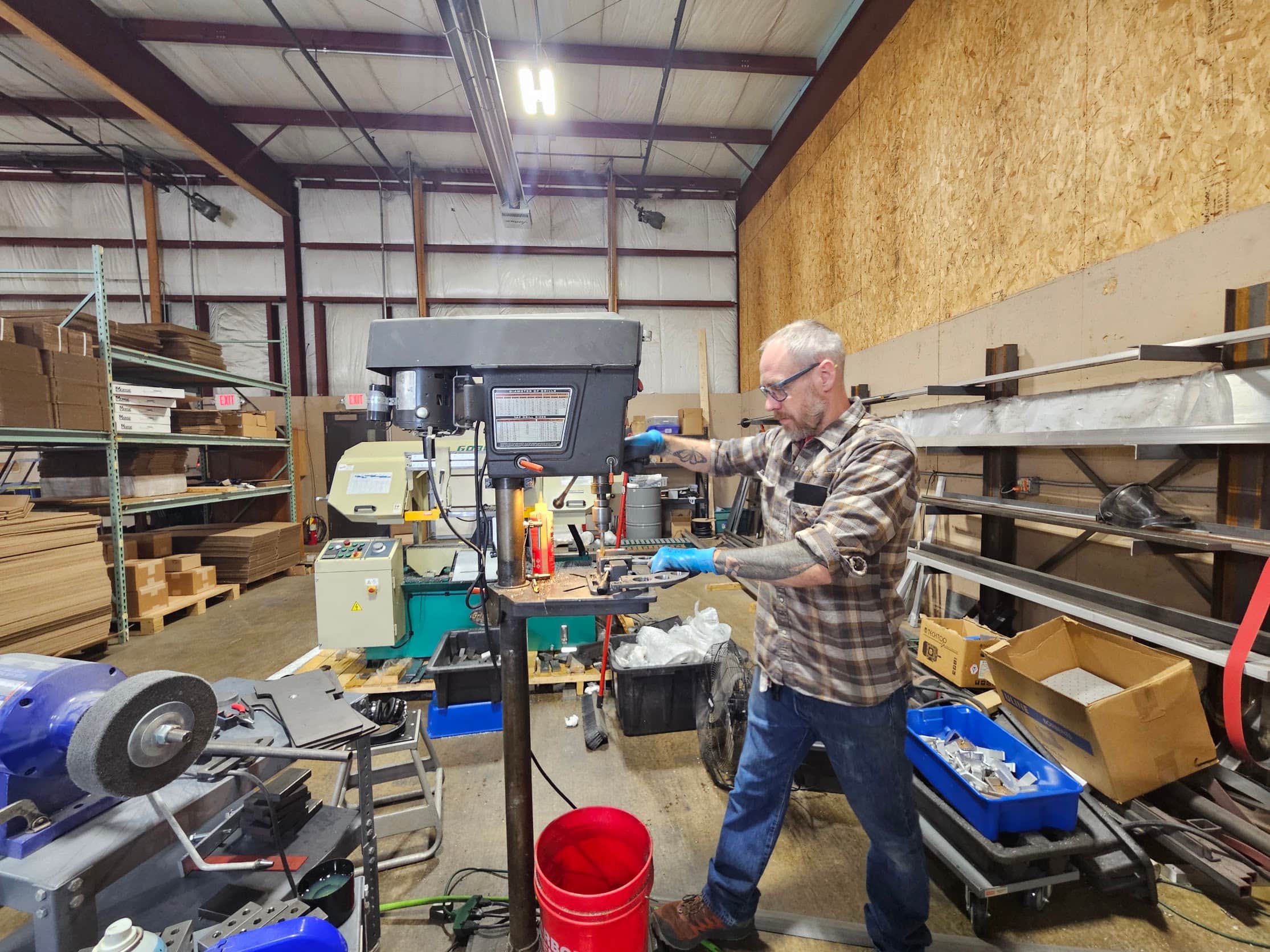
I machine the parts, hand-assemble, track and test Torus grinders in Sterling, Illinois. Most orders ship in seven to ten business days from time of order.
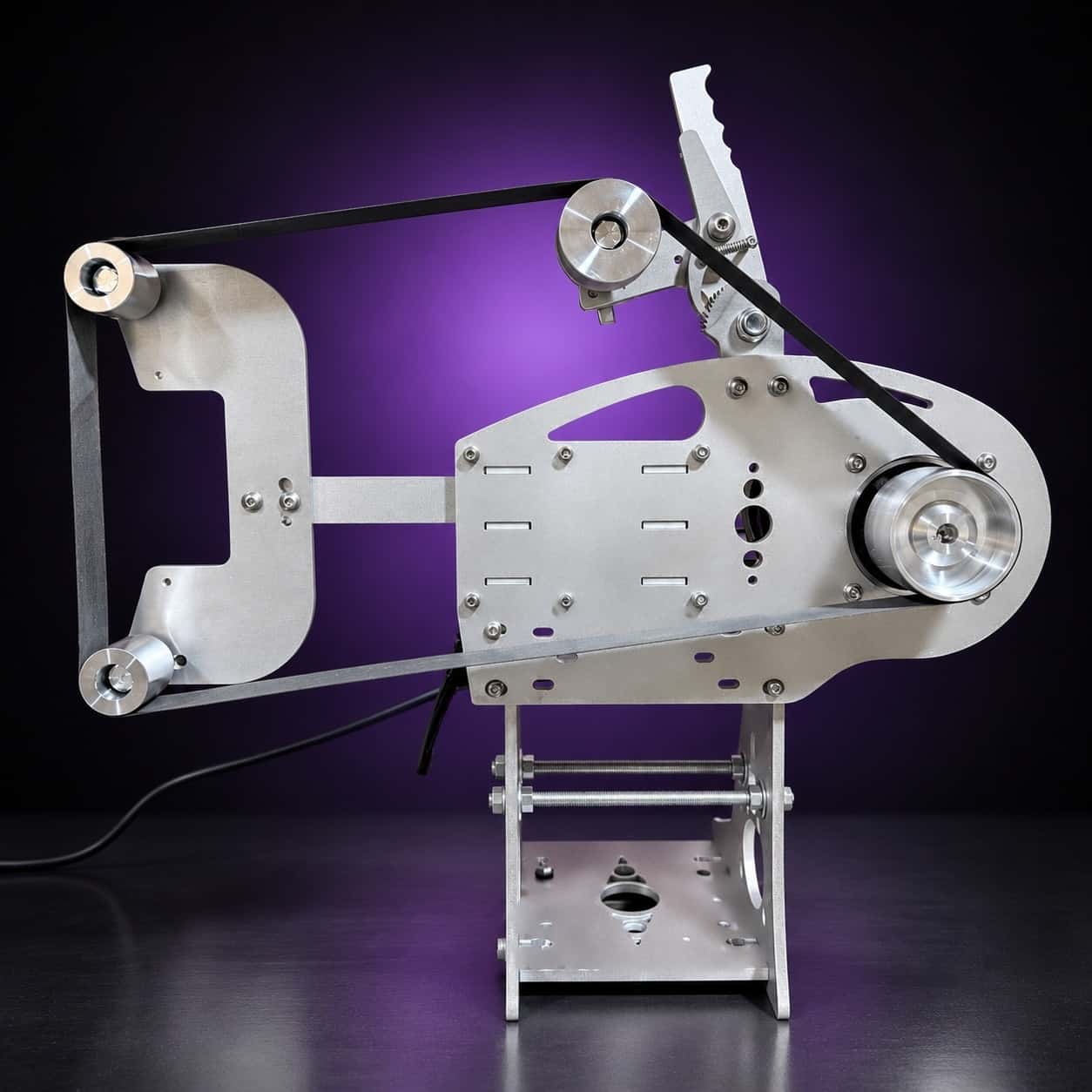
Current dual-axis platform with a fiber-laser-cut 6061 chassis and single-knob tracking.
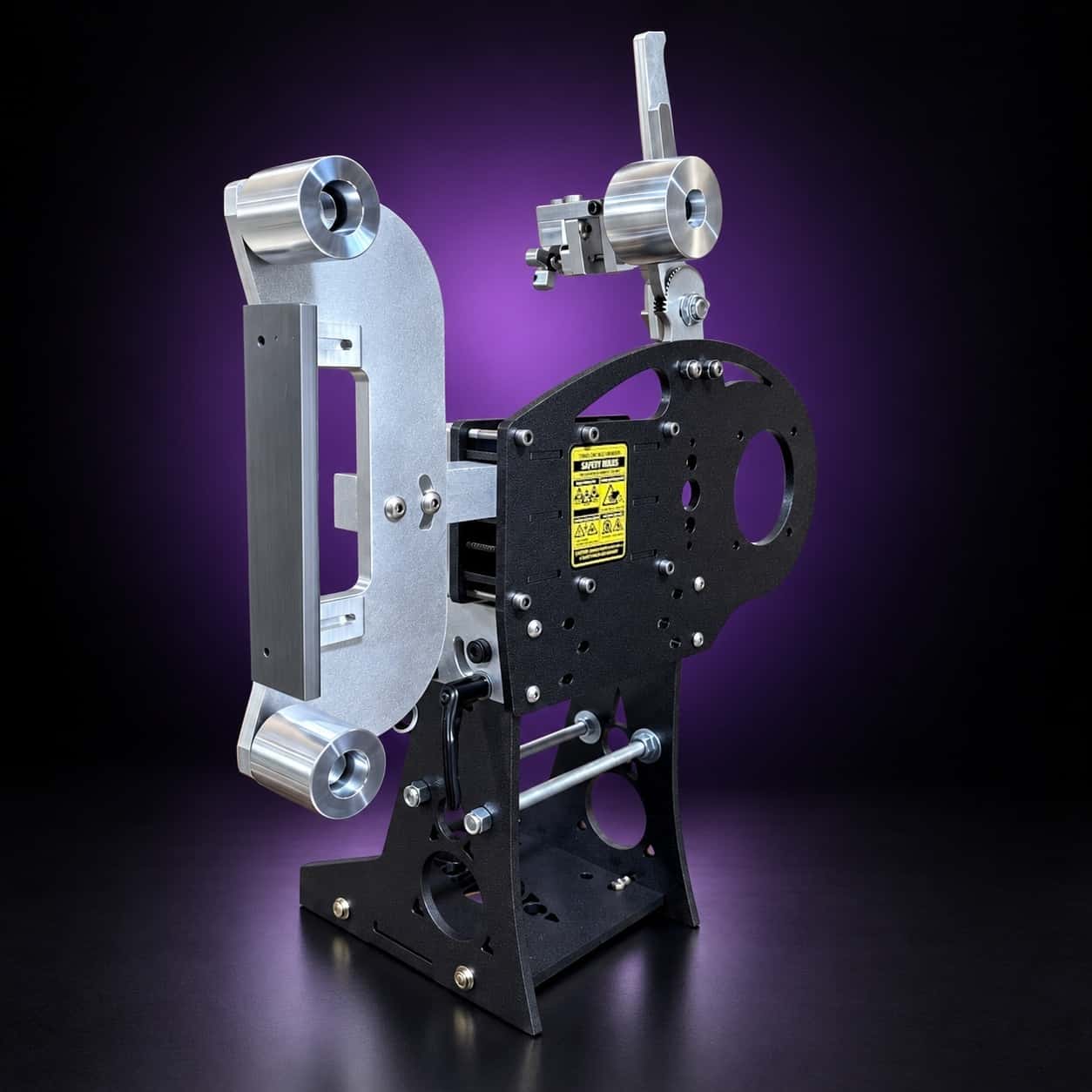
Current dual-axis platform with a steel chassis, more mass and less vibration.
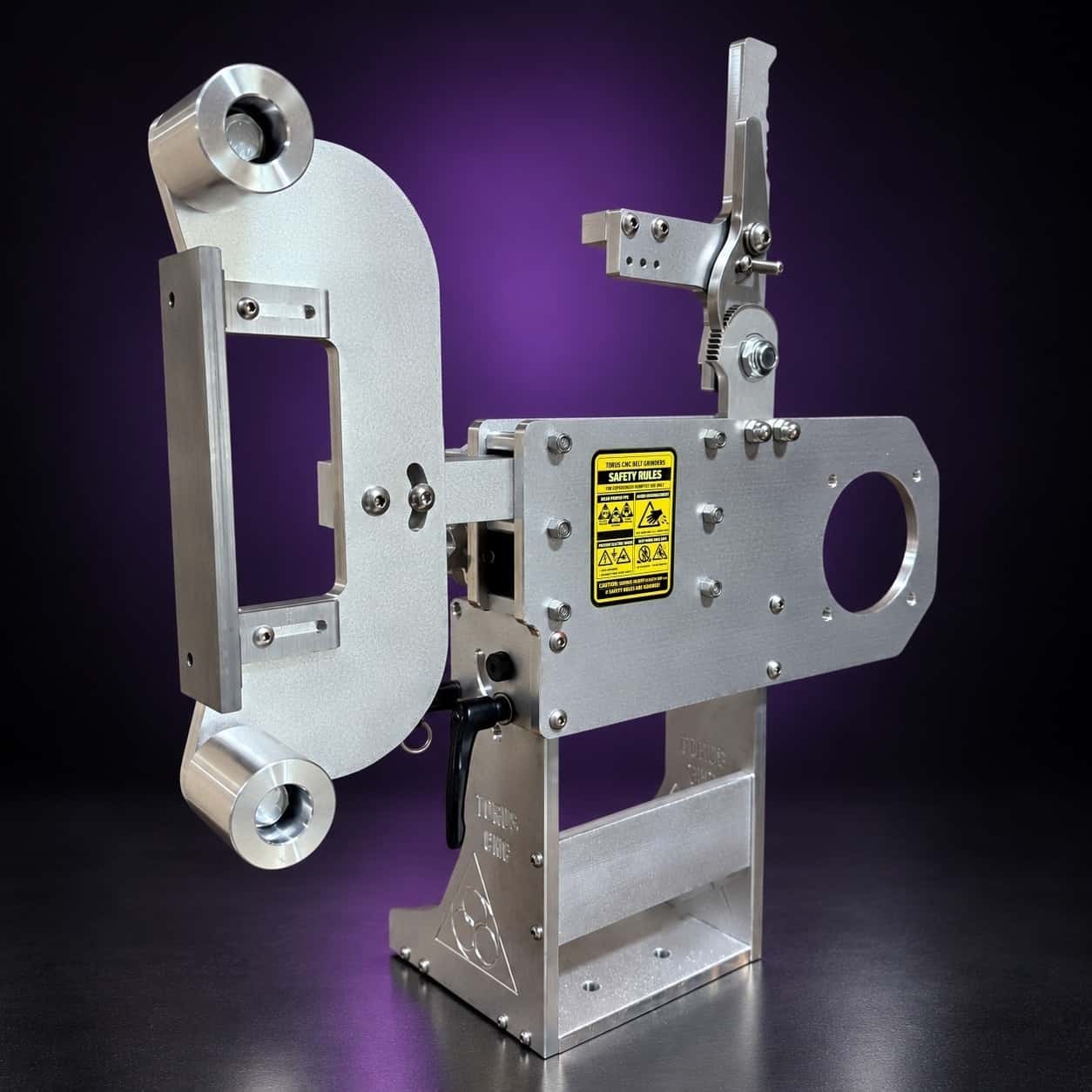
Prior-design aluminum chassis, 90-degree tilt and 1.5-inch tooling arms.
One-man shop
I answer my own email. Tell me the steel, the machine and what it is doing, and I will tell you what I would try next.