
Blade Design
Making & Fitting a Guard: The Gap-Free Method
Nothing separates the serious maker from the scale-slapper like a fitted guard: a slotted block of metal pressed gap-free against the blade’s shoulders…
Blade Design
Front-end craft for full-tang knives: bolster materials, dead-flat mating faces, pins that vanish, optional solder for wet duty, and shaping with the scales.
2 min readWritten by Rich LinvilleFree to read
The bolster is the full-tang knife’s answer to the guard: a metal front end that adds mass where the hand works, protects the scale’s leading edge, and announces craftsmanship from across the table. Same patience skills as guard fitting, different geometry. Here is the craft.
Three honest jobs: balance (steel or brass up front shifts the balance point toward the pinch grip where kitchen and working knives want it), protection (the scale’s end grain hides behind metal instead of chipping at the sheath mouth), and presence (a polished bolster flowing into handle lines is the visual signature of a finished knife). None are mandatory — plenty of fine knives run full scales — but the makers who master bolsters rarely go back.
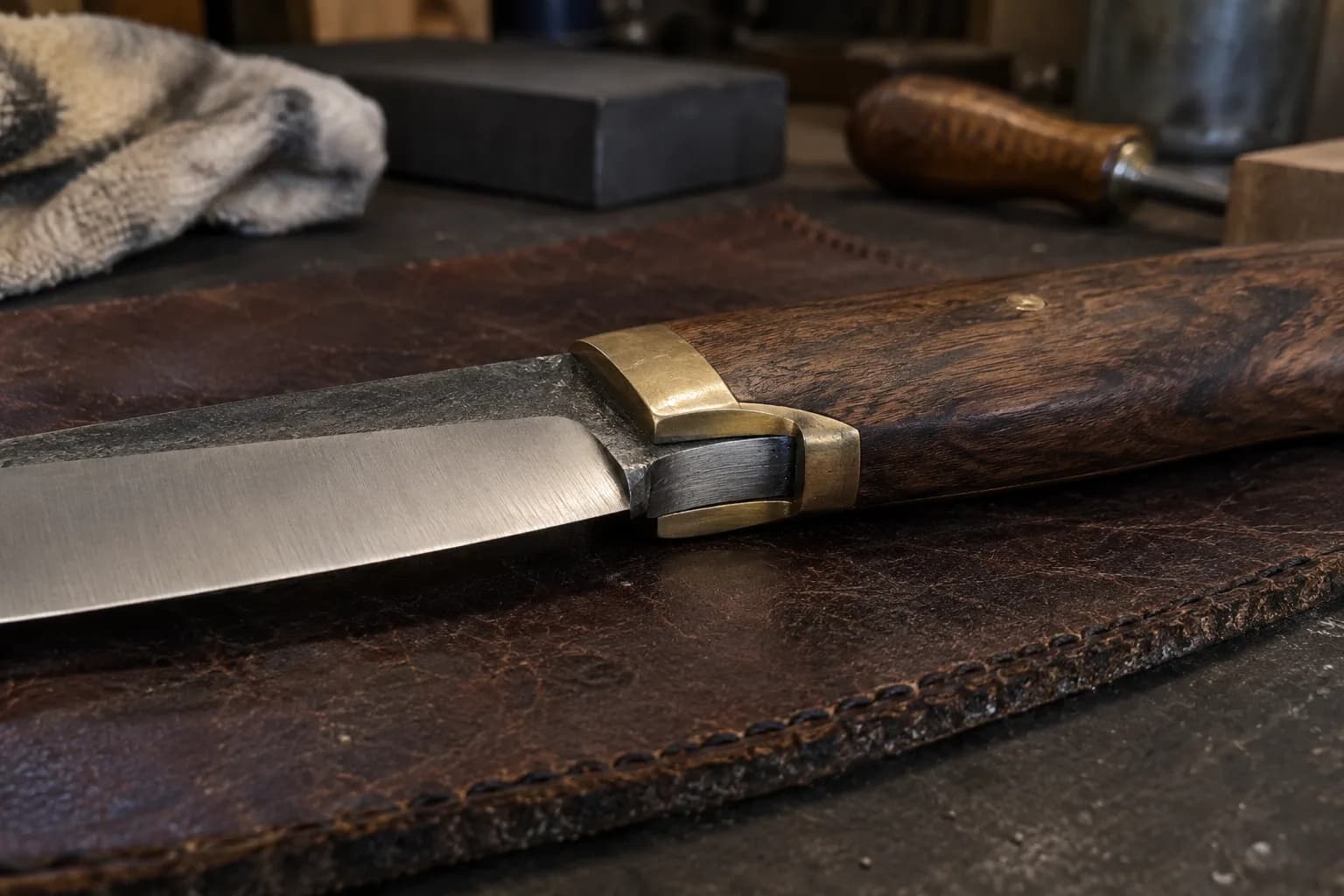
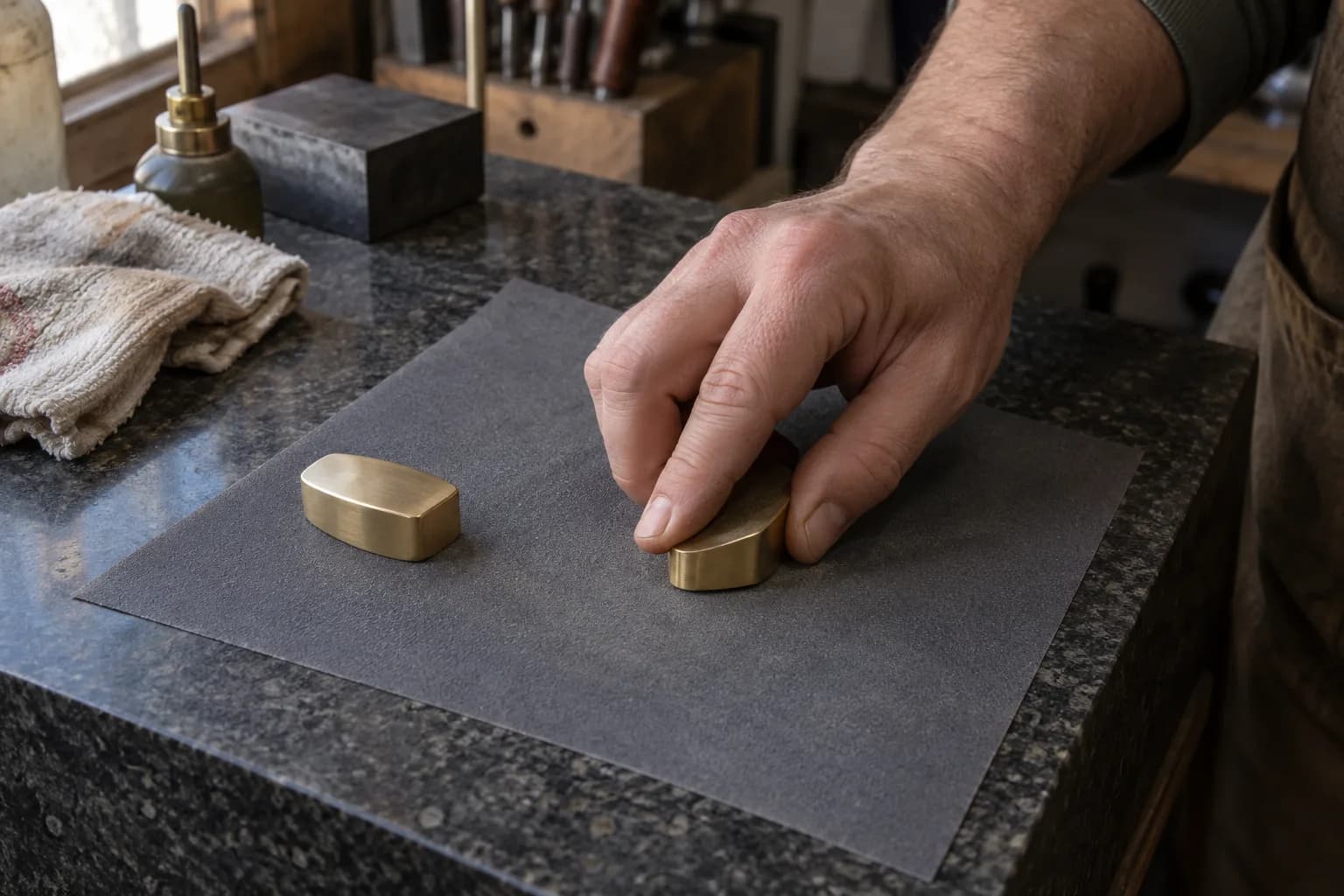
Brass and nickel silver teach the craft; stainless (410 class is traditional) survives kitchens; copper patinas beautifully on rustic builds. Stock: 1/8 to 1/4″ pairs. The foundational requirement is dead-flat mating faces — bolster against tang with zero light — which is surface-plate-and-sandpaper work (figure-eights on a granite plate or the trued platen): any gap in the joint becomes a visible line in the finished knife and a moisture path forever after.
The standard method is pinned, and the magic trick is the invisible pin: drill bolster and tang together, pin with the SAME material as the bolster (nickel pins in nickel bolsters), peen the pins to swell them dead-tight in slightly countersunk holes — then grind and polish flush. Done right, the pin vanishes: one continuous metal surface, and the joint is mechanical forever. Soft-solder underneath (sweated before pinning) adds the sealed joint for wet-duty knives — same temper-protecting heat discipline as the guard guide. Modern epoxy-under-bolster is real and common; the traditional stack (flat fit + pins + optional solder) is the one that survives a dishwasher accident and a resale inspection.
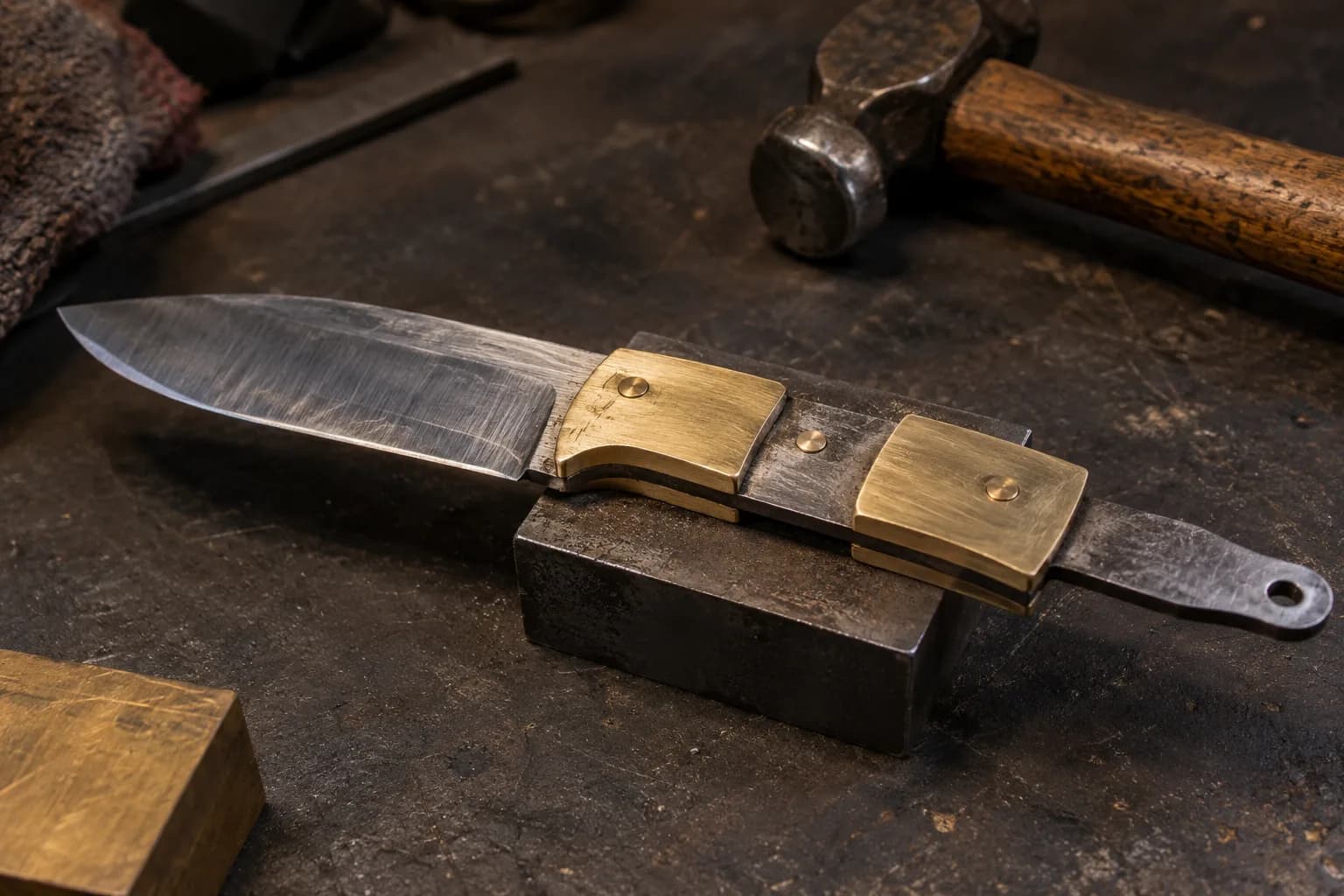
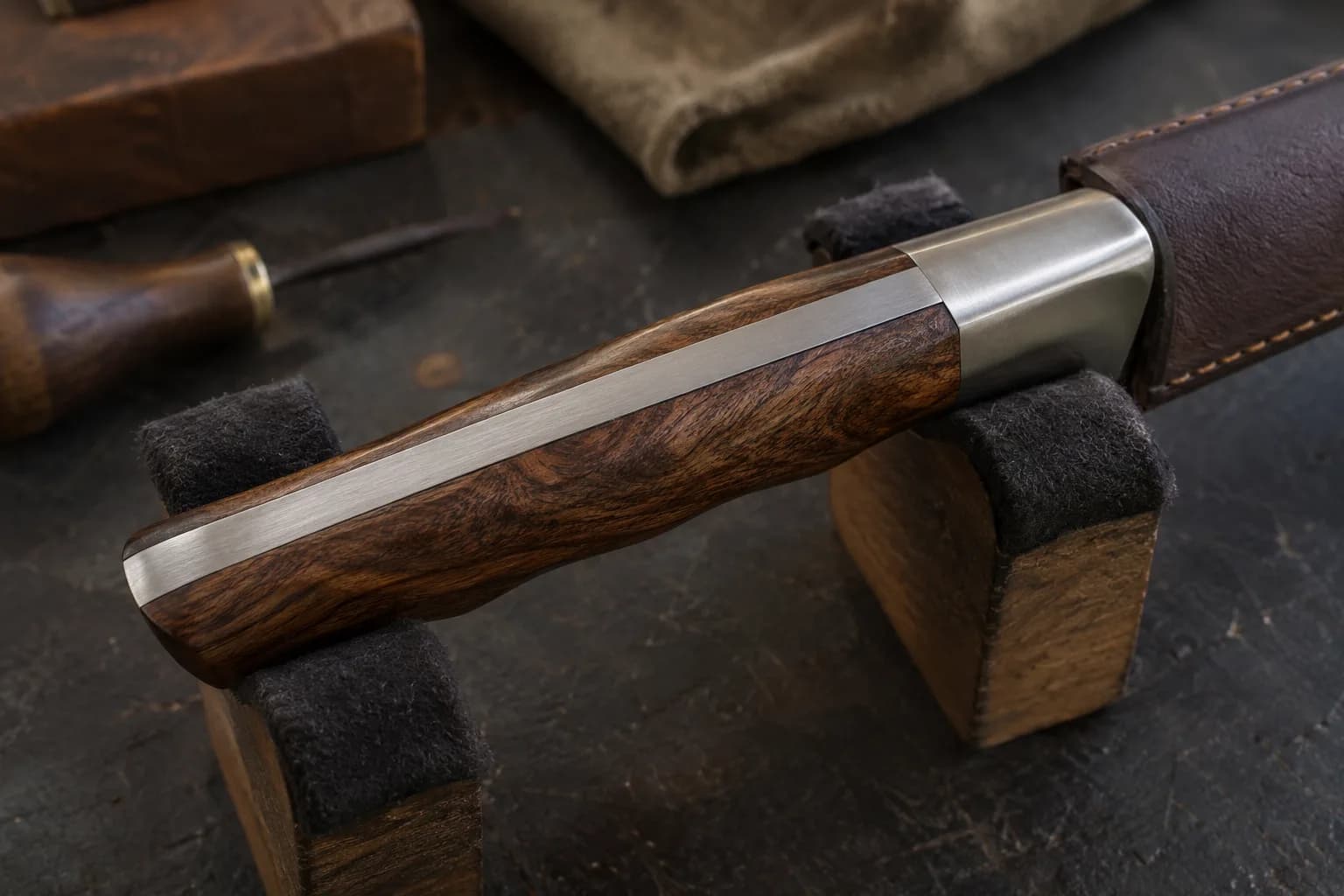
Fit order that works: flatten and attach bolsters, surface their faces flush with the tang, then fit the scales tight against the bolster’s back edge — the scale-to-bolster joint is the second thumbnail test — pin the scales per scale practice, and shape everything as one object: bolster and scale flowing in a single line off the slack belt and hand grits. Metal and wood grind at different rates — light passes and frequent looks, or the belt digs the wood below the metal. Finish metal last with the blade taped, and give the buyer the two-material joint their thumbnail cannot find.
Keep reading
Three more from the same bench.
Nothing separates the serious maker from the scale-slapper like a fitted guard: a slotted block of metal pressed gap-free against the blade’s shoulders…
Most Western knives use a double bevel edge without anyone thinking twice about it, but single bevel (chisel ground) edges show up often enough…
Sharpening is where knifemaking gets humbled: you can grind a flawless blade and still hand someone a knife that won’t slice paper. The good news …
Same bench
I machine the parts, hand-assemble, track and test Torus grinders in Sterling, Illinois. Most orders ship in seven to ten business days from time of order.
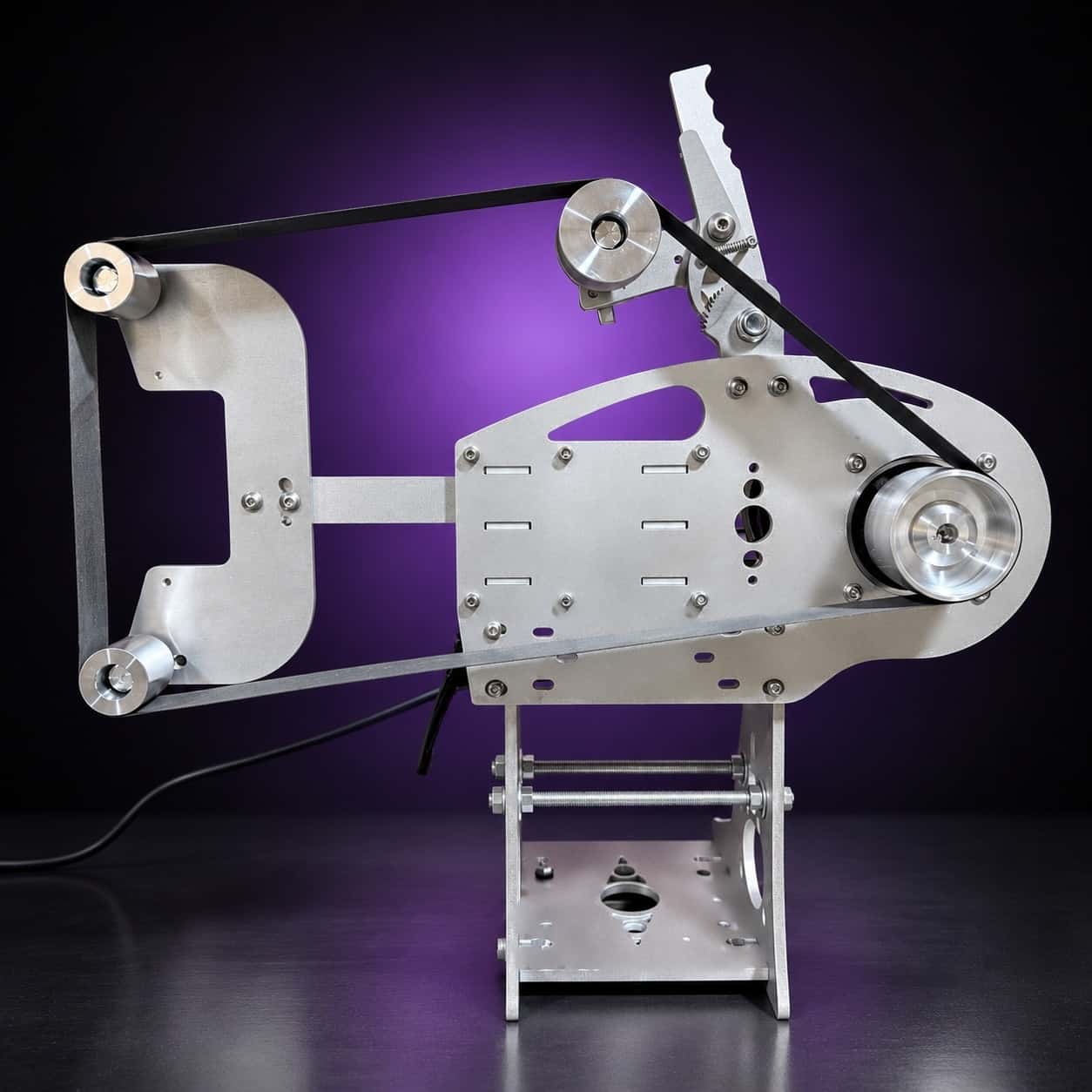
Current dual-axis platform with a fiber-laser-cut 6061 chassis and single-knob tracking.
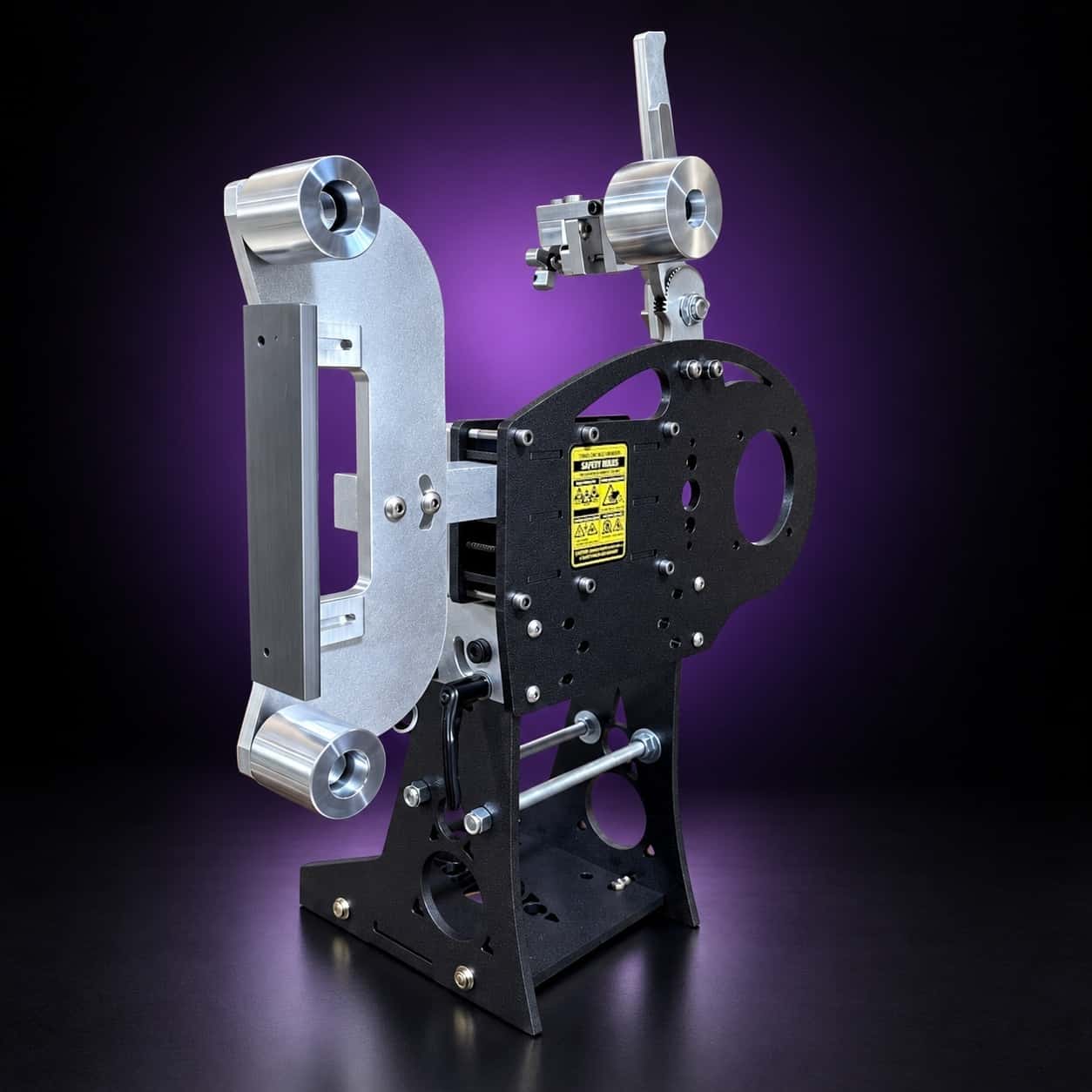
Current dual-axis platform with a steel chassis, more mass and less vibration.
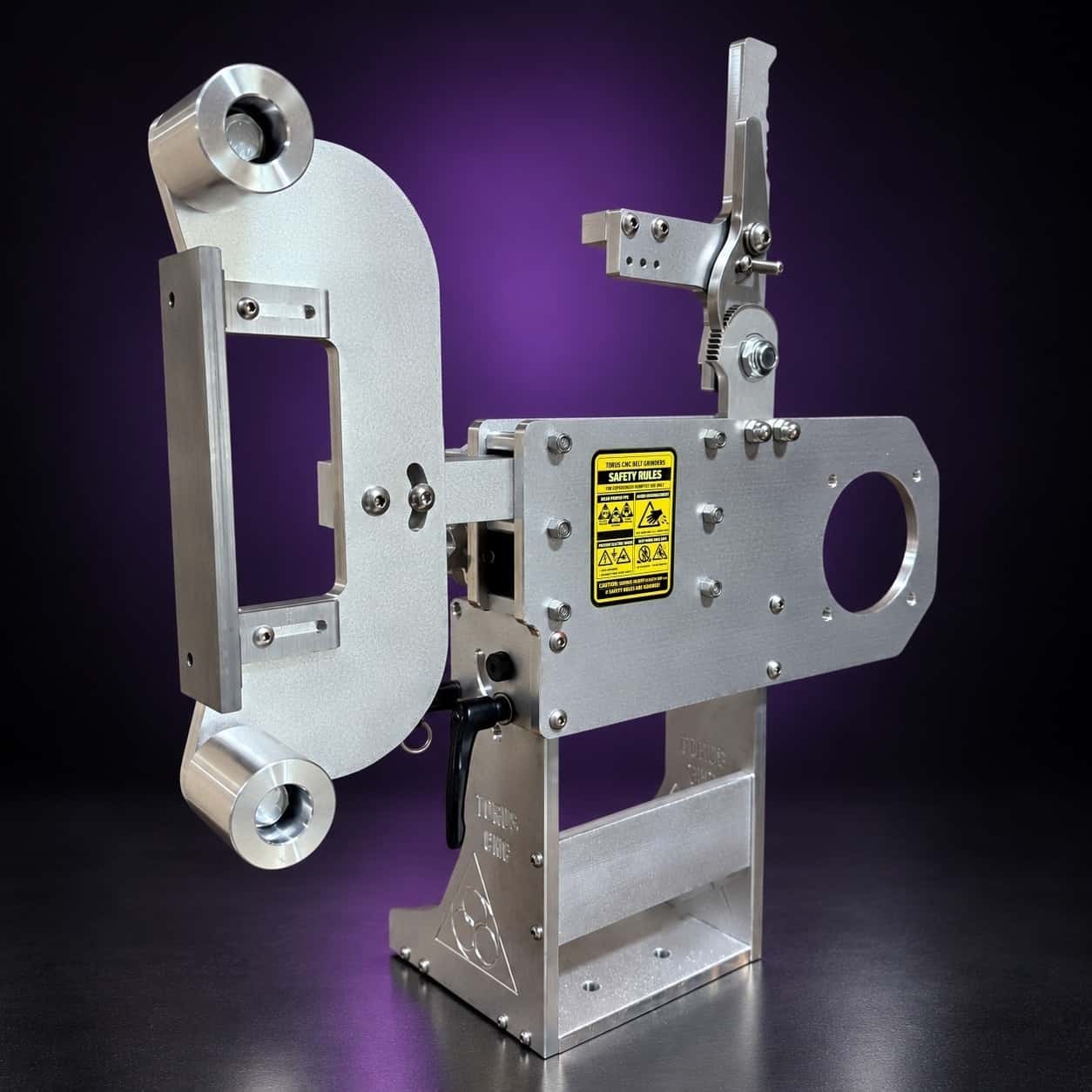
Prior-design aluminum chassis, 90-degree tilt and 1.5-inch tooling arms.
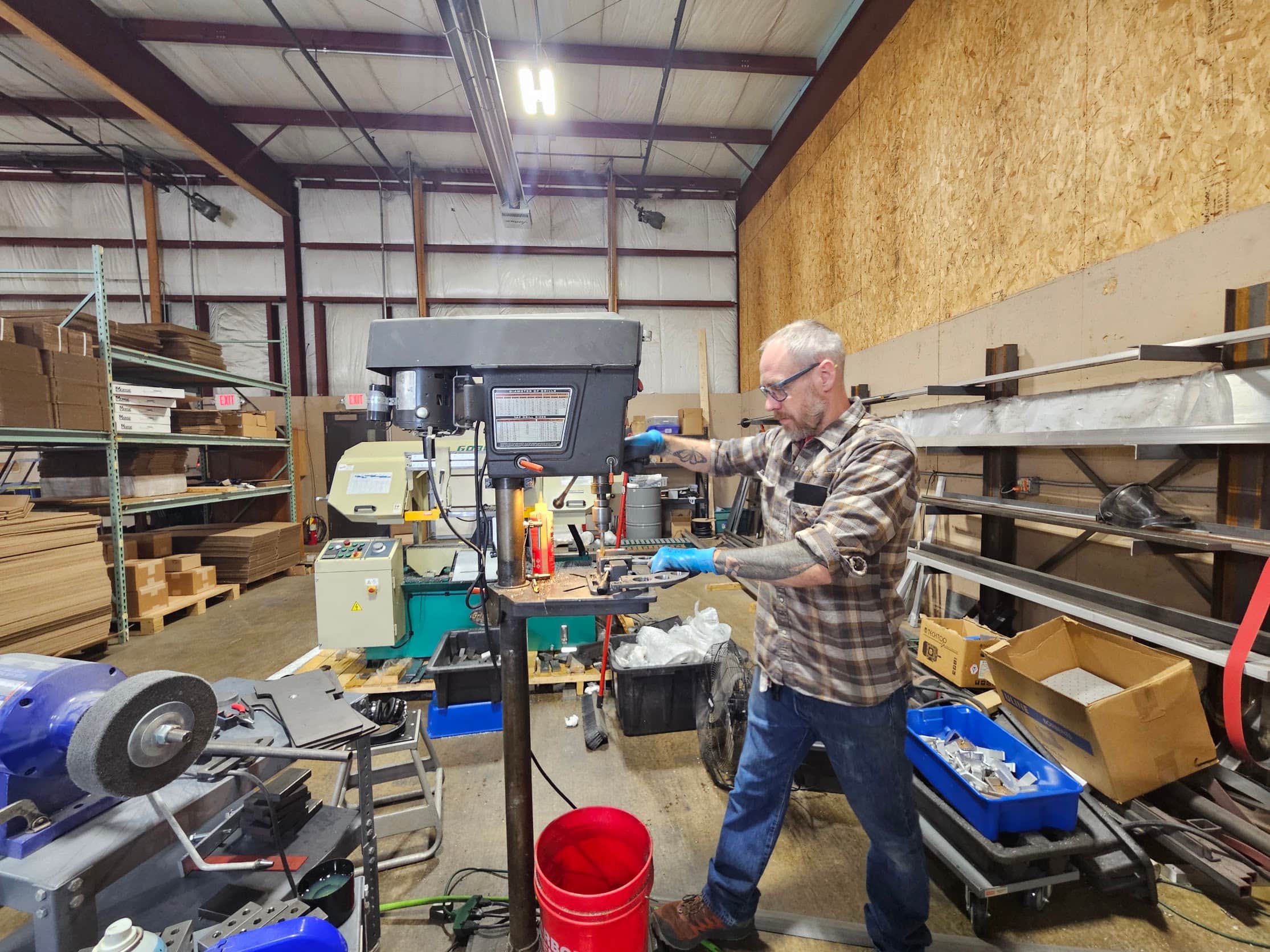
One-man shop
I answer my own email. Tell me the steel, the machine and what it is doing, and I will tell you what I would try next.