
Abrasives
The Complete 2×72 Attachments Guide
A 2×72 out of the box is a platform; the attachments are the machine. Every serious grinder task — flat bevels, hollow grinds, fullers, handle curves…
Abrasives
Turn freehand luck into repeatable bevels with a rigid work rest set square, angle shims and blocks, bevel jigs for matched sets, and when freehand still wins.
2 min readWritten by Rich LinvilleFree to read
The difference between a maker who fights every bevel and one who repeats them at will is rarely talent — it is a reference surface. Work rests and jigs are how angles stop being a feeling and start being a setting. Here is the system, from bare table to full bevel jig, and the honest word on when freehand still wins.
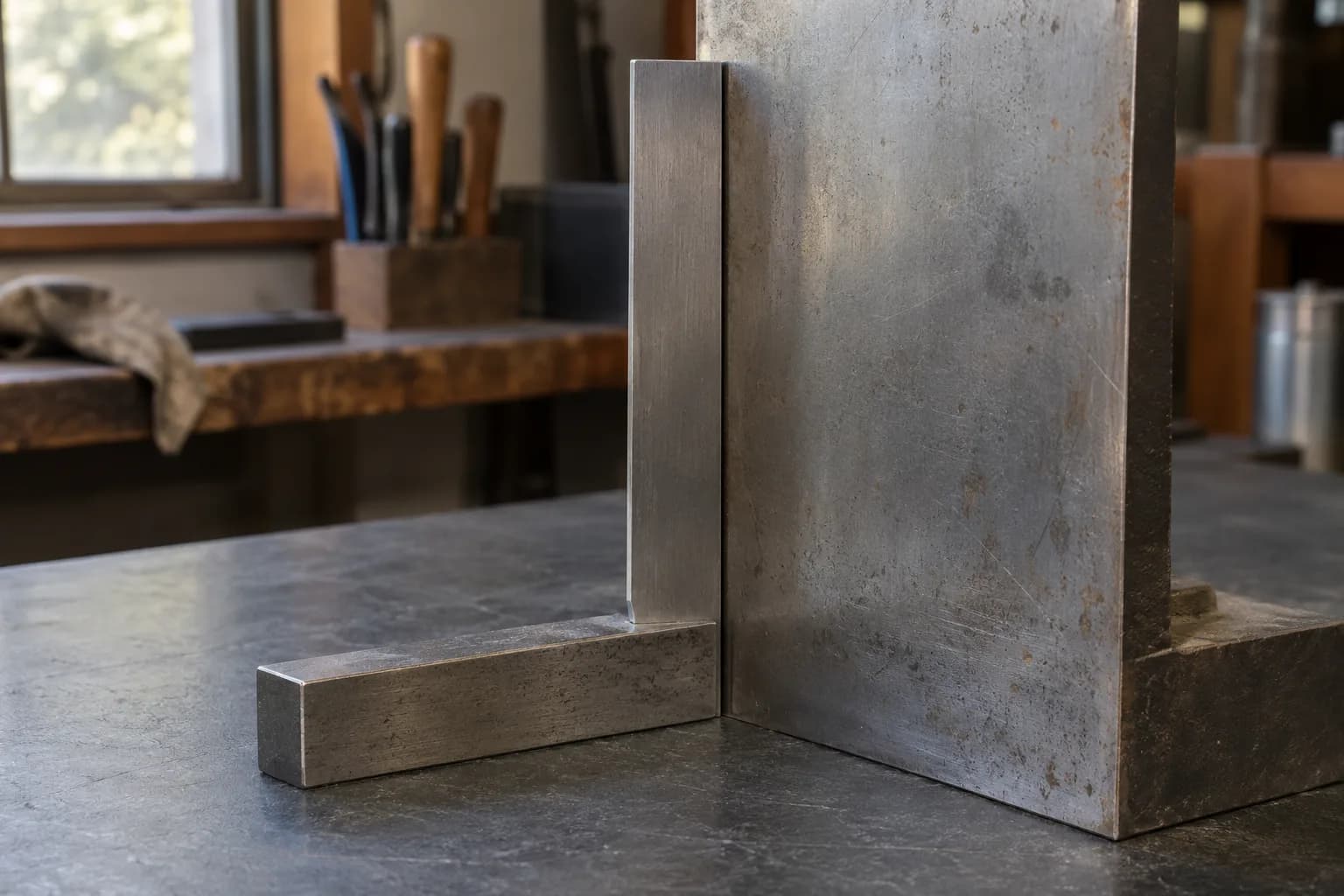
A rigid, adjustable table square to the belt — like the 6×16 adjustable work table — is the highest-value repeatability upgrade on the machine. It gives every operation a registered floor: square plunge lines (blade against a stop, both sides identical), consistent spine work, true 90° profiling passes, and the platform every jig after this bolts to. Set it with an angle cube or a machinist square, lock it, and check it after transport — a table a half-degree off prints that half-degree into everything.
Tilt the table (or shim a fence on it) and the bevel angle becomes a setting per the angle chart: the table’s tilt plus the blade flat against it equals the same grind, pass after pass, blade after blade — the mechanism behind every matching set this site’s batch guide promises. The grind-height math (what angle on what stock lands the bevel where) is now a calculator: the grind height calculator does the trigonometry before you touch steel.
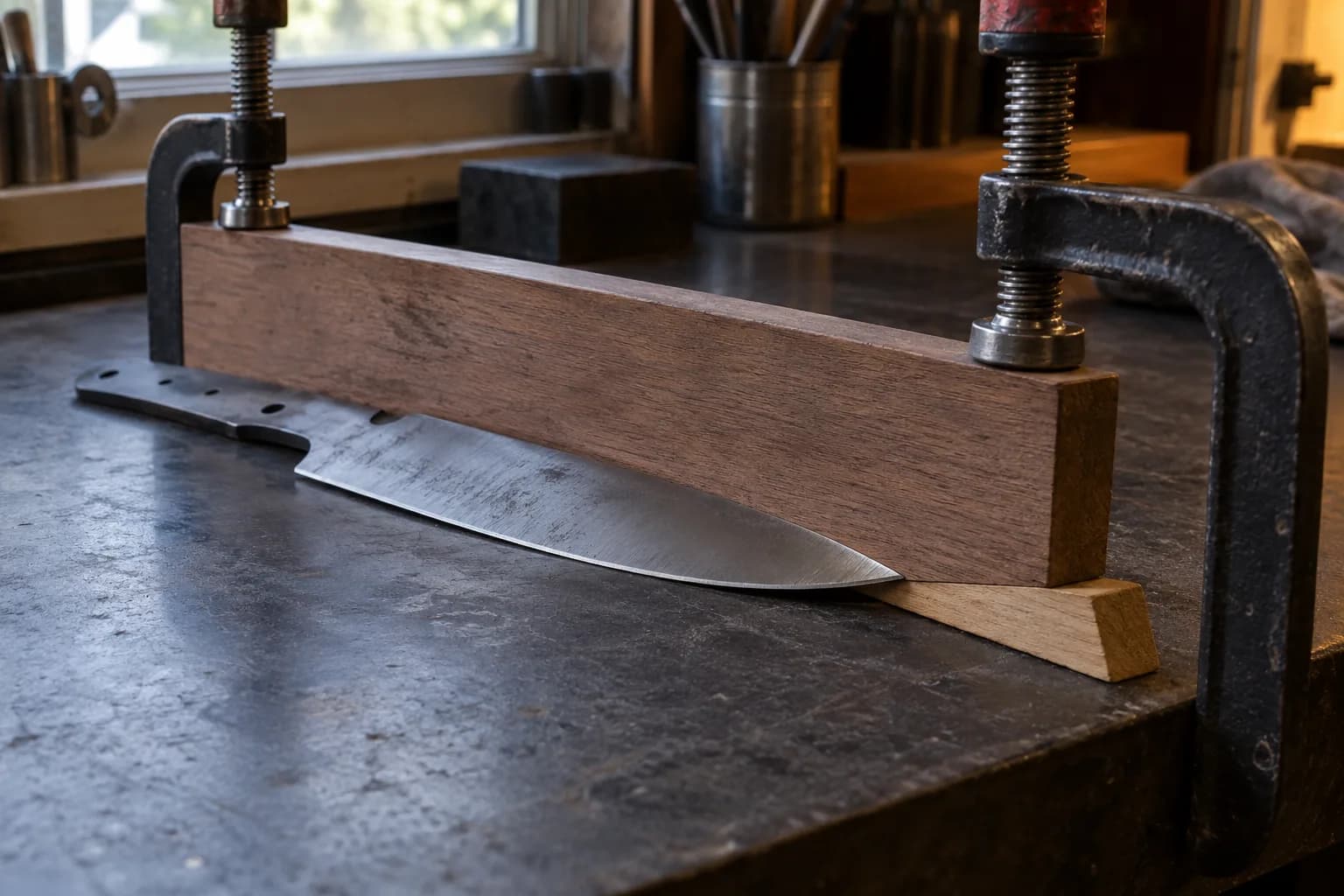
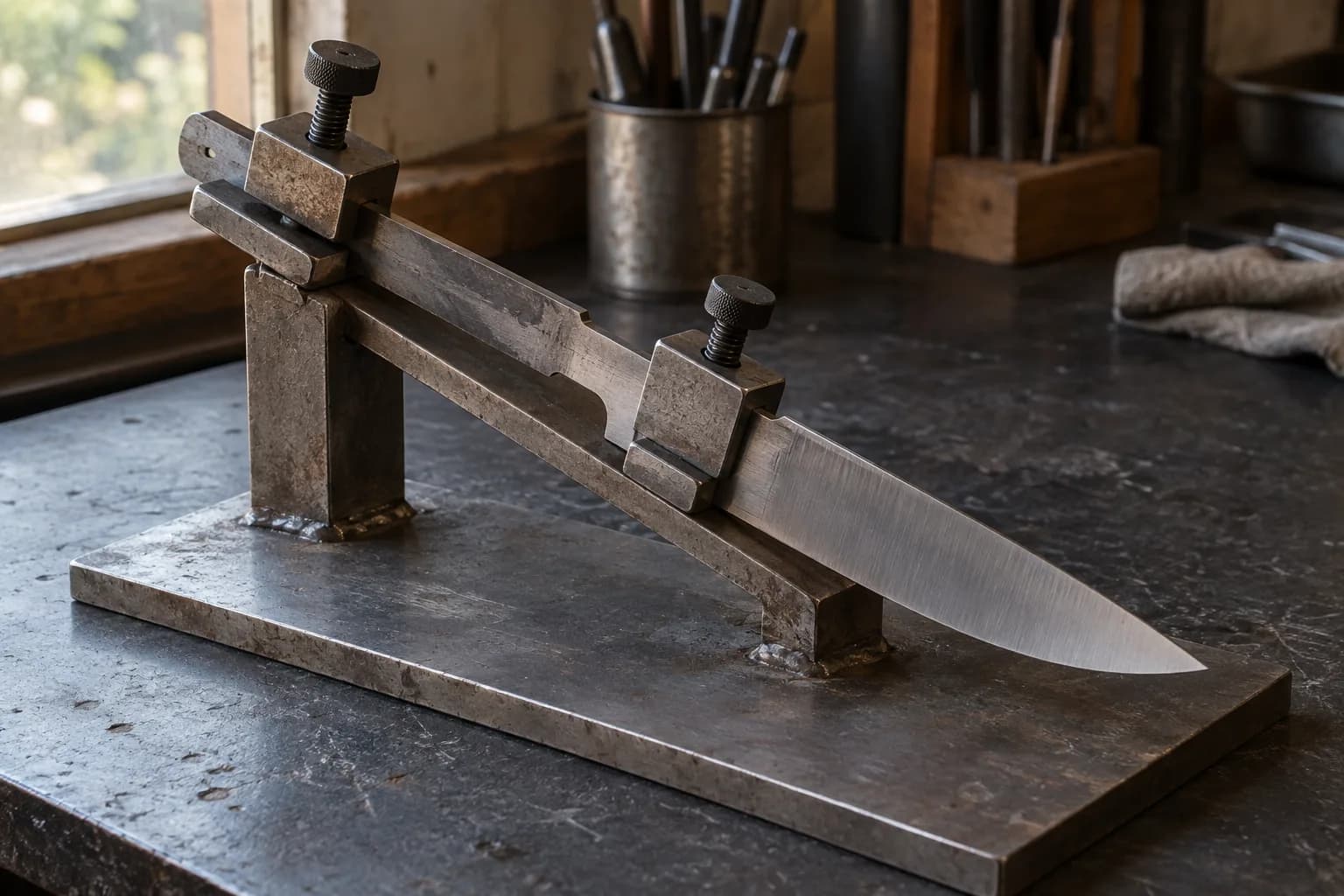
A bevel jig clamps the blade to a carriage that rides the table at a fixed angle — the blade cannot wander because the jig will not let it. Commercial jigs and shop-made angle blocks both work; what matters is rigidity (a flexing jig is a lying jig) and consistent registration (same clamp position every blade, or the jig repeats the wrong thing). Jigs shine for: matching sets, steep learning curves (a beginner’s first clean bevels usually ride a jig), thin kitchen grinds where a wobble is a hole, and production runs where hands tire before standards drop.
Freehand is not the enemy — it is the graduate school. Curved bevels, distal tapers, blended transitions and convex work all want a hand that reads the blade, and every jig-started maker eventually grinds more freehand as feel develops. The professional answer is both: jig the reference geometry, freehand the shaping and finishing — and let the table under your hands stay square either way. Jigs are training wheels the way a machinist’s vise is training wheels: professionals never stop using references; they stop needing them for everything.
Keep reading
Three more from the same bench.
A 2×72 out of the box is a platform; the attachments are the machine. Every serious grinder task — flat bevels, hollow grinds, fullers, handle curves…
Every knife argument eventually lands on angles. Here is the chart we wish someone had handed us — edge angle per side, the grind that usually carries it…
The faire booth business model is forty matching daggers, not forty individual daggers — and the difference between those two sentences is the difference…
Same bench
I machine the parts, hand-assemble, track and test Torus grinders in Sterling, Illinois. Most orders ship in seven to ten business days from time of order.
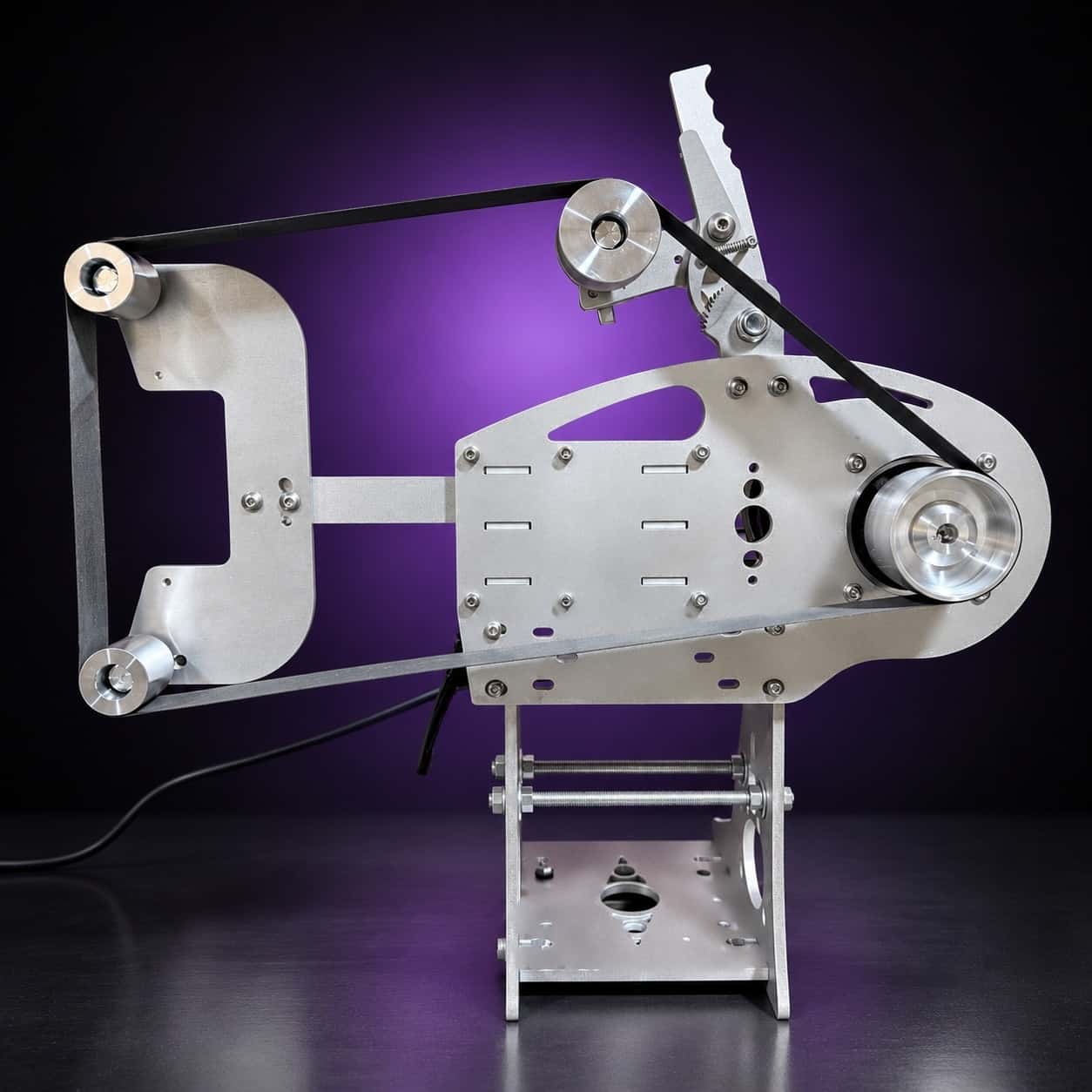
Current dual-axis platform with a fiber-laser-cut 6061 chassis and single-knob tracking.
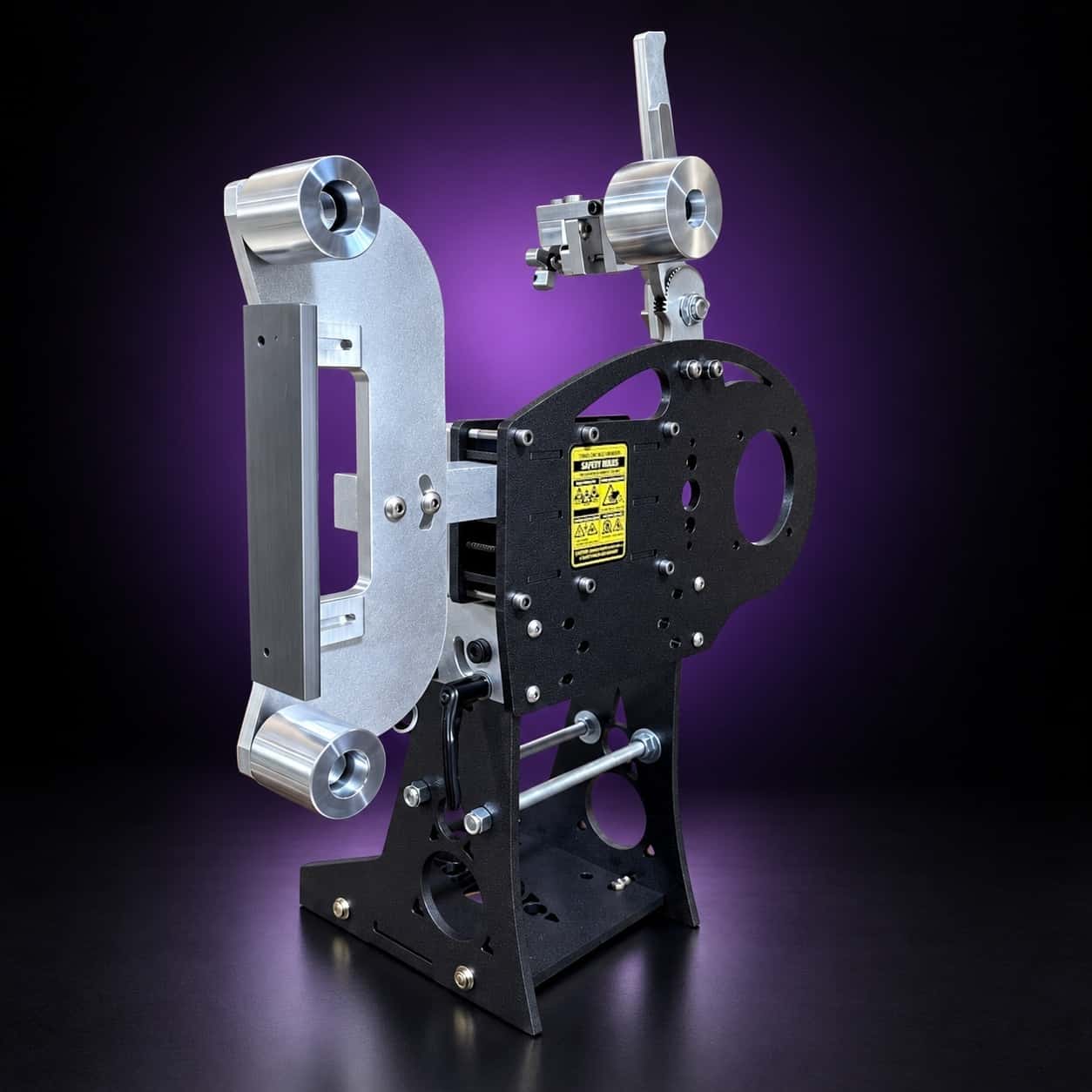
Current dual-axis platform with a steel chassis, more mass and less vibration.
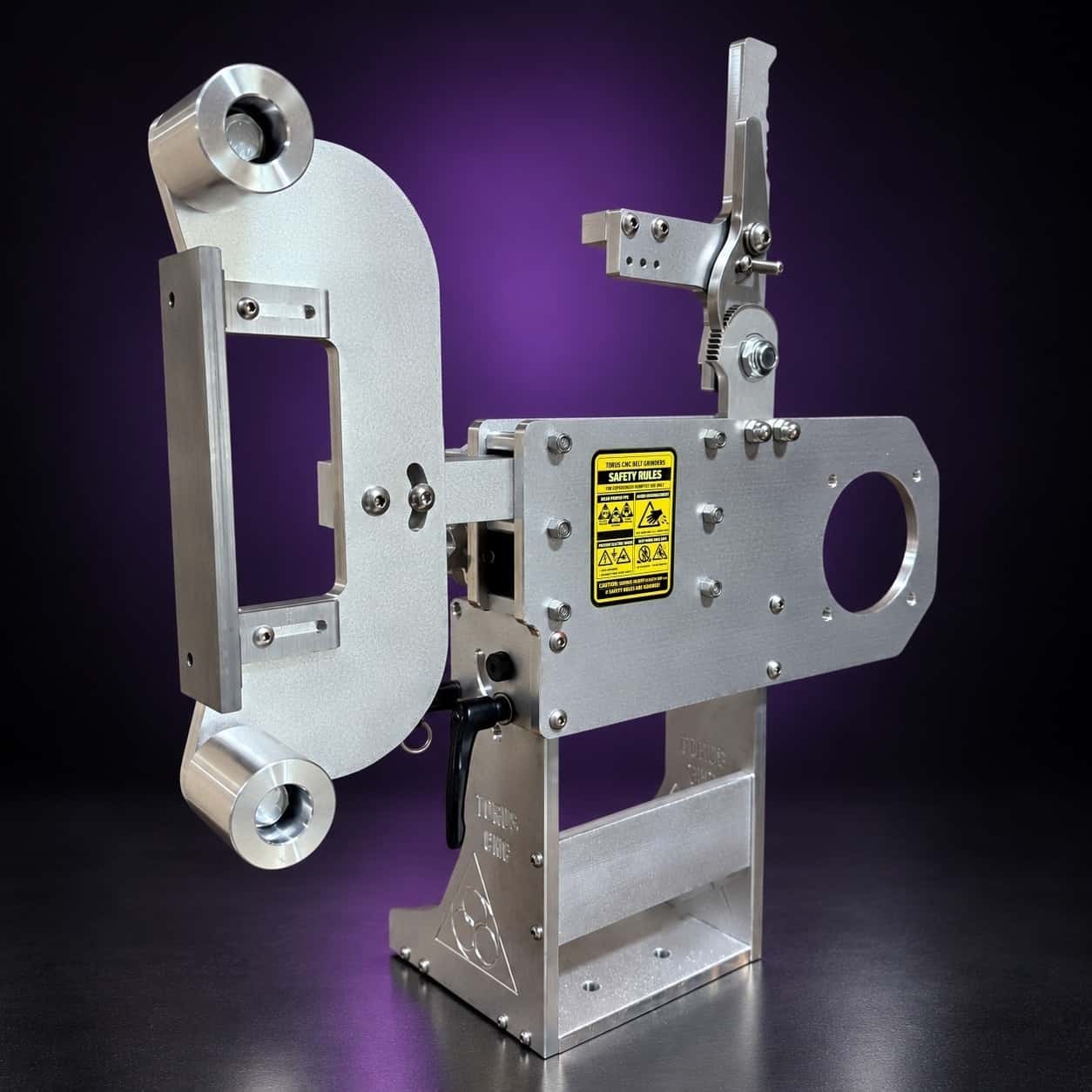
Prior-design aluminum chassis, 90-degree tilt and 1.5-inch tooling arms.
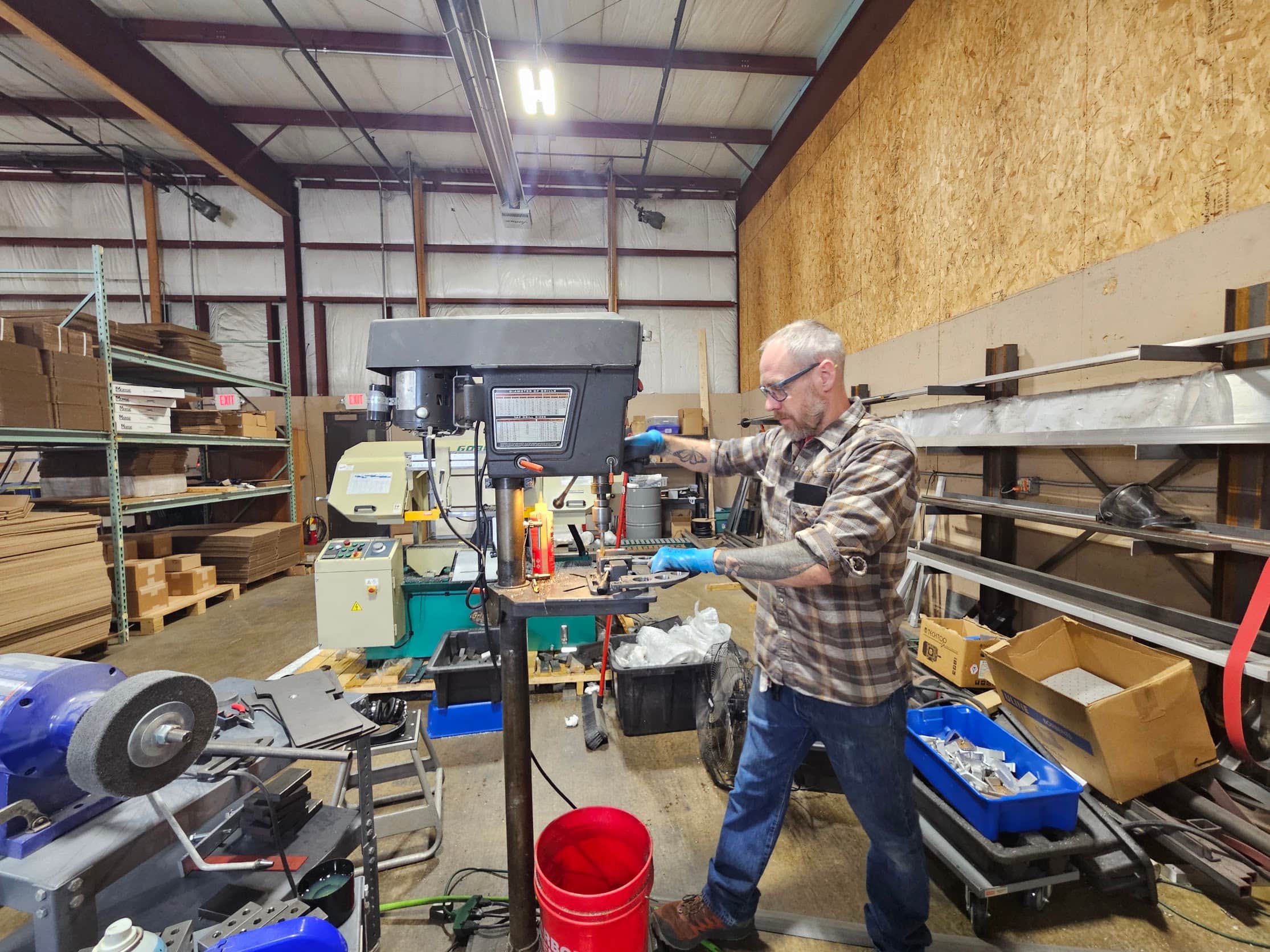
One-man shop
I answer my own email. Tell me the steel, the machine and what it is doing, and I will tell you what I would try next.