

Abrasives
Belt Buyer’s Guide: Which Abrasives to Actually Buy
Belts are the single biggest recurring cost in this hobby, and buying the wrong ones wastes money twice: once on belts that wear out fast, and again on…
Abrasives
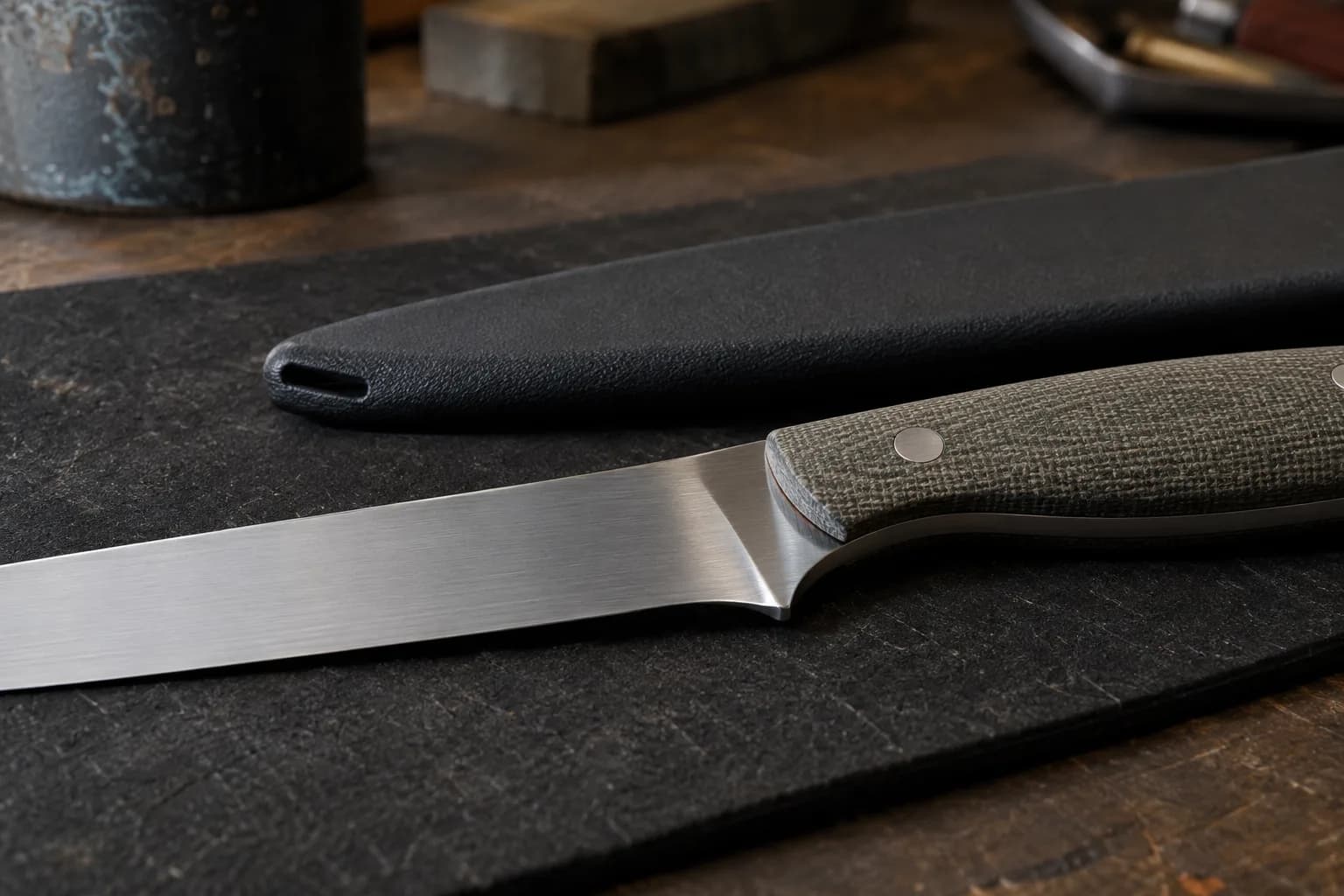
LC200N grinds fast and clean on a standard ceramic progression and sharpens on ordinary stones. Watch heat at fillet thickness; finish crevice-free for salt.
1 min readWritten by Rich LinvilleFree to read
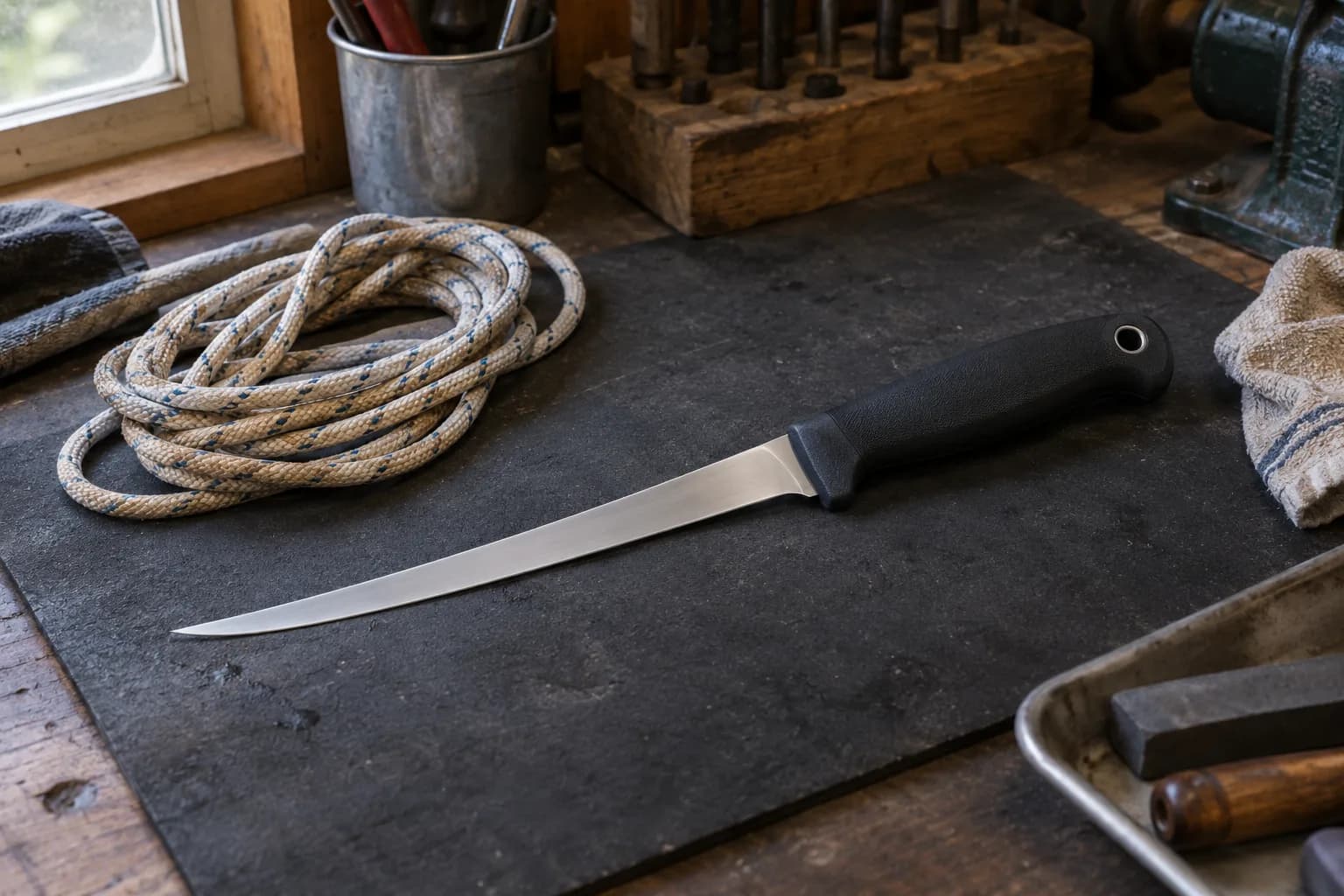
After the carbide monsters, LC200N is a vacation: low carbide volume means it grinds like a mid stainless, finishes cleanly, and sharpens on whatever stones you already own. The shop challenges it does bring are thinness and purpose — this steel gets built into fillet and boat blades, where the grinding discipline is about geometry, not abrasive warfare.
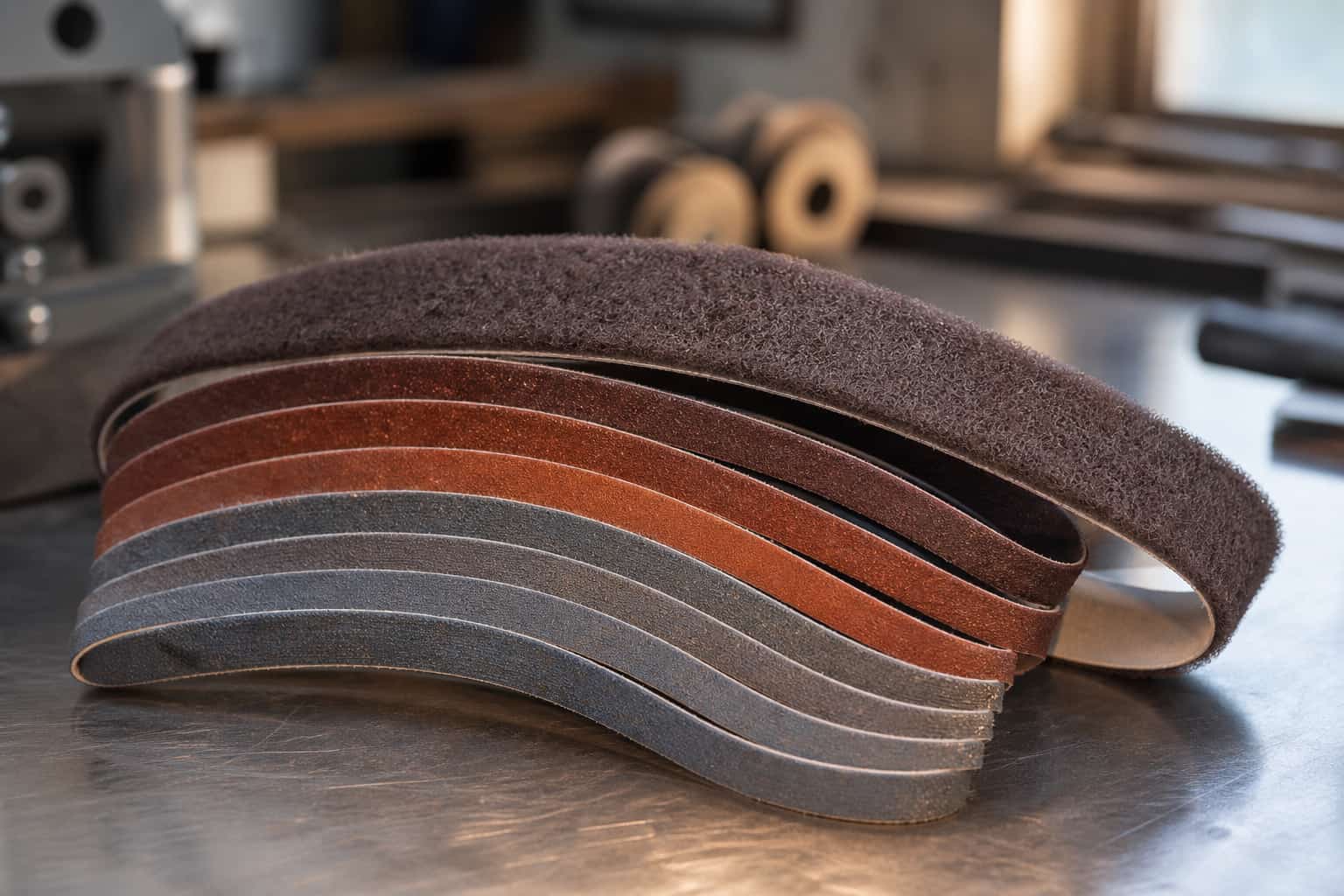
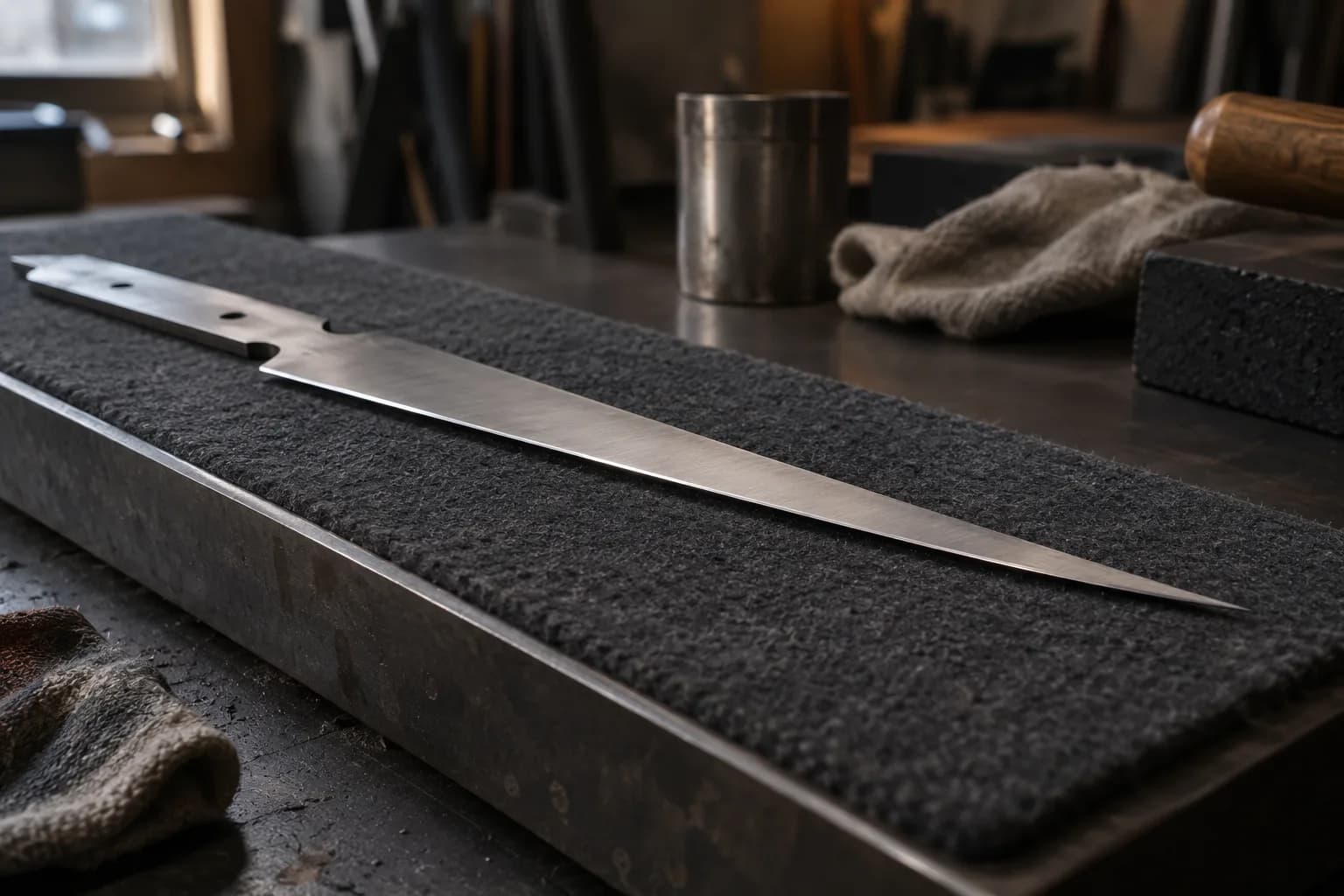
Standard ceramic progression, nothing exotic: 36-60 hogging annealed, 120-220 post-heat-treat, and it responds so willingly that overshooting is the actual risk. Most LC200N work is thin — fillet geometry at 0.008-0.015 behind the edge — so the disciplines are flutter control (light even pressure, constant motion) and heat (thin sections spike instantly; 58-60 HRC tempers are as burnable as any). Fresh sharp belts at low speed are the thin-blade answer, as always.
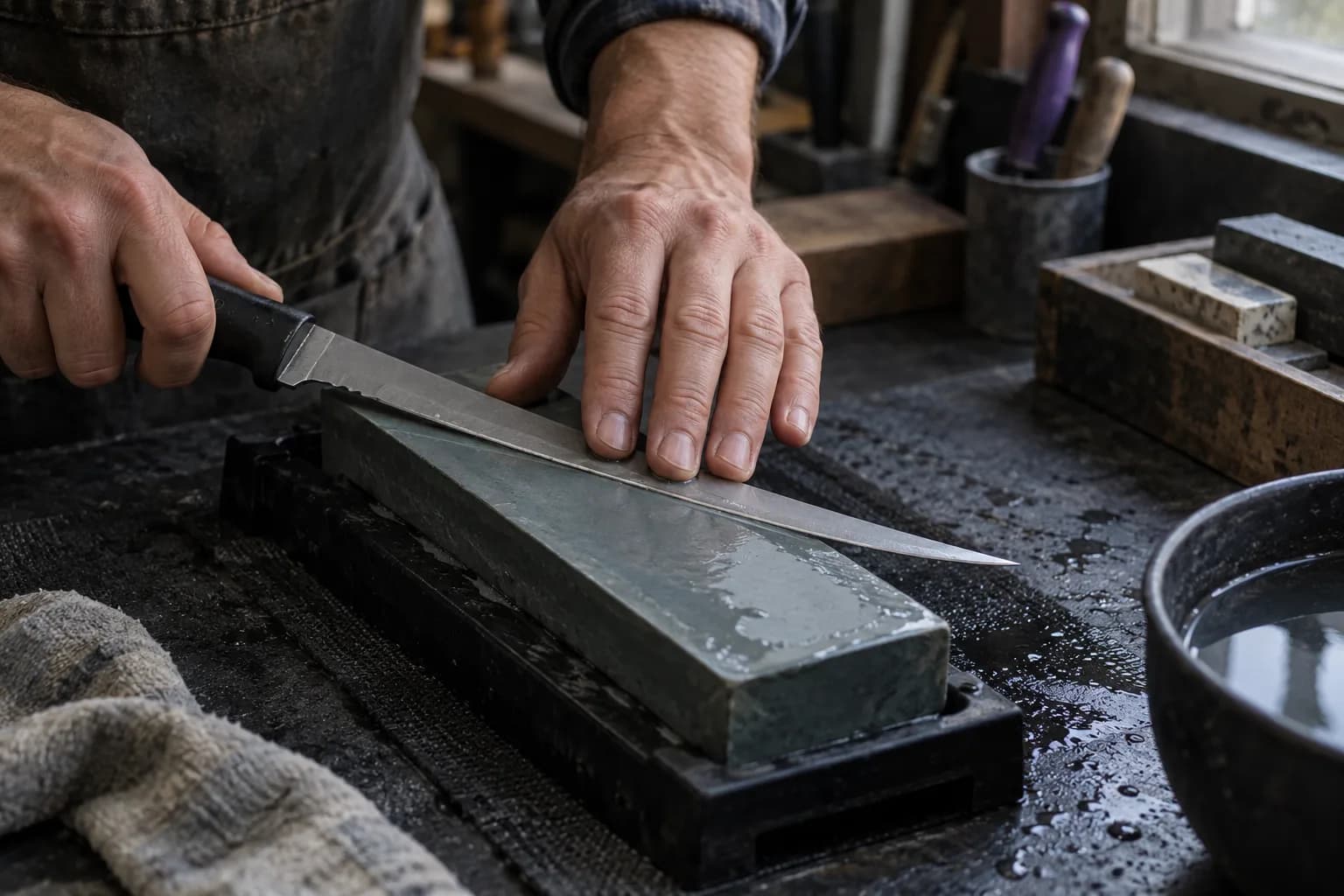
Ordinary stones work beautifully — this is the premium steel you can maintain on a basic waterstone progression, and it strops back to screaming keen in seconds. Angles: 12-15 dps for fillet work, 15-18 for general blades. The edge dulls faster than carbide steels in abrasive media and returns faster too; owners on boats appreciate exactly that trade.
Its rustproof reputation makes finish quality MORE relevant, not less: crevices and rough scratch patterns trap salt against even this steel’s passive layer. Clean satin finishes (400+ or structured-abrasive), eased plunge transitions, and hardware sealed at installation give the corrosion immunity nothing to work around. Pair it with the kydex sheath conversation — wet-duty knives deserve drainage, and leather against a boat knife wastes the steel’s whole superpower.
Keep reading
Three more from the same bench.
Belts are the single biggest recurring cost in this hobby, and buying the wrong ones wastes money twice: once on belts that wear out fast, and again on…

Sharpening is where knifemaking gets humbled: you can grind a flawless blade and still hand someone a knife that won’t slice paper. The good news …
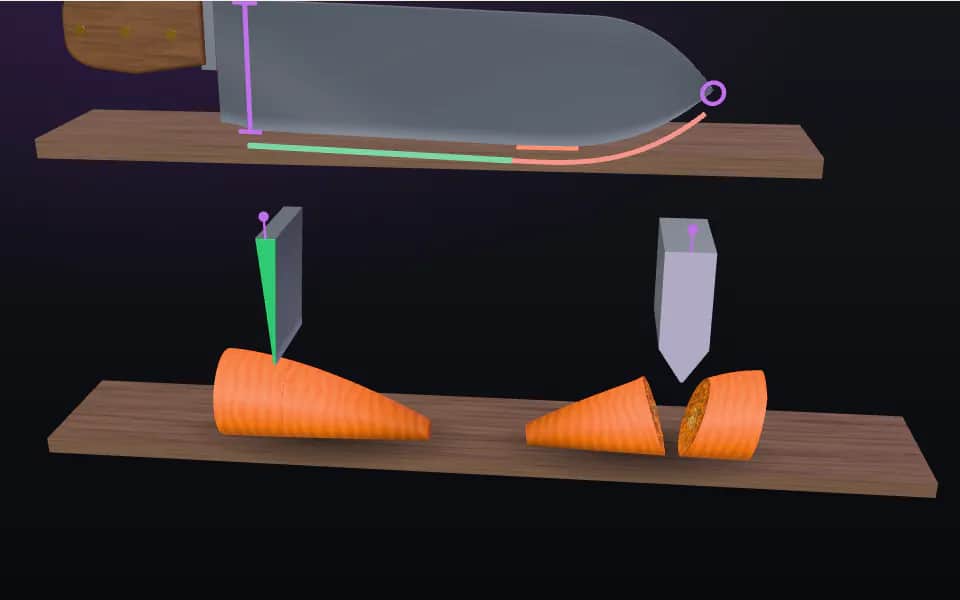
Kitchen knives are where blade geometry stops being theory and starts being dinner. A camp knife forgives a thick grind; a chef’s knife wedges apart a…
Same bench
I machine the parts, hand-assemble, track and test Torus grinders in Sterling, Illinois. Most orders ship in seven to ten business days from time of order.

Current dual-axis platform with a fiber-laser-cut 6061 chassis and single-knob tracking.

Current dual-axis platform with a steel chassis, more mass and less vibration.

Prior-design aluminum chassis, 90-degree tilt and 1.5-inch tooling arms.

One-man shop
I answer my own email. Tell me the steel, the machine and what it is doing, and I will tell you what I would try next.