
Leatherwork
Leatherworking for Knifemakers: Start Here
Every knifemaker meets the same moment: a finished blade, a proud photo — and nothing to put it in. A knife without a sheath is half a product, and…
Leatherwork
Kydex or leather for a knife sheath? Where each wins on moisture, retention, noise, looks and batch speed, how to match sheath to knife, and the hybrid dodge.
2 min readWritten by Rich LinvilleFree to read
Every sheath conversation eventually arrives at the fork: kydex or leather? The honest answer is unfashionable on both sides of the argument — they are different tools, both excellent, and a working maker eventually offers both. Here is the comparison without the tribal jerseys.
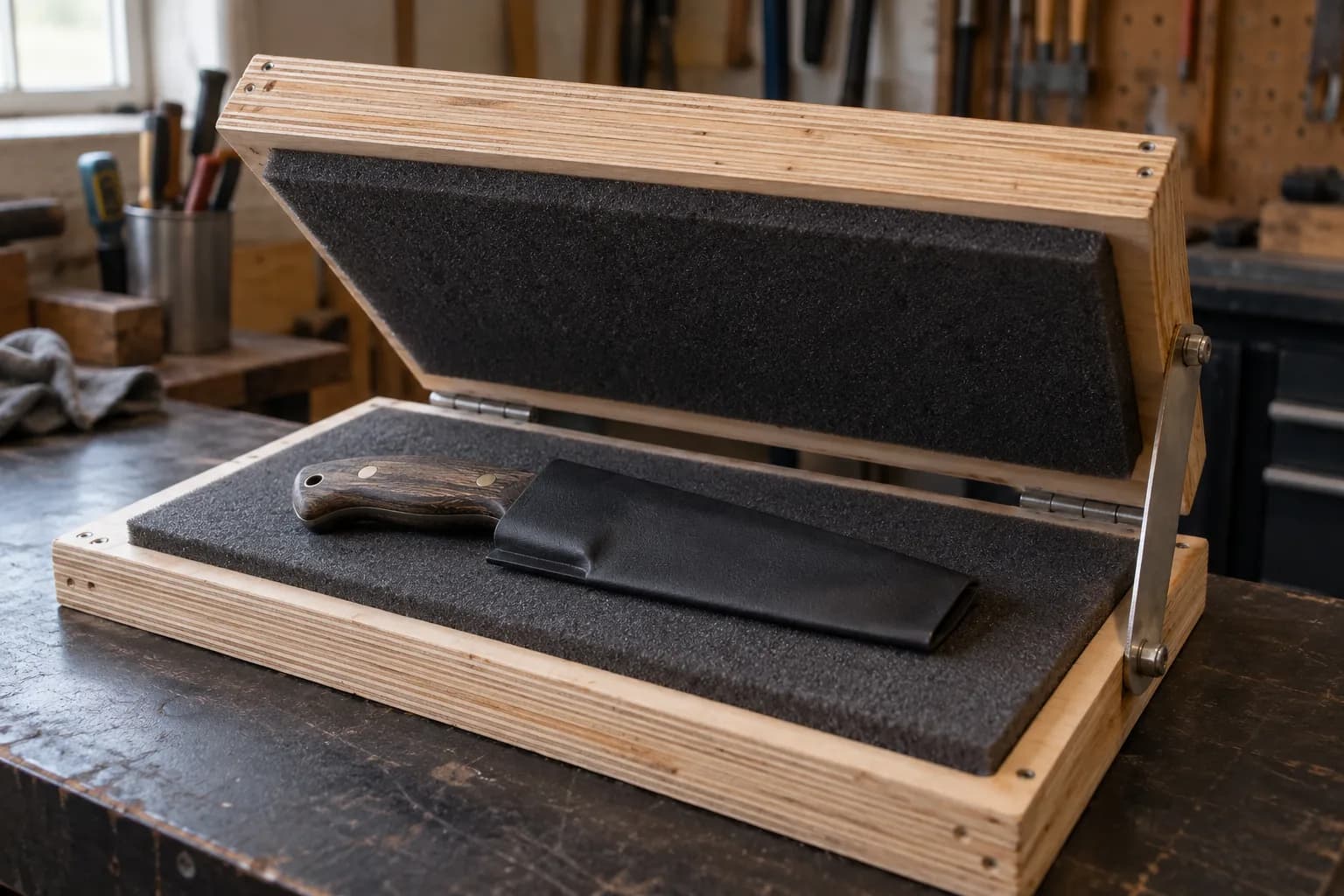
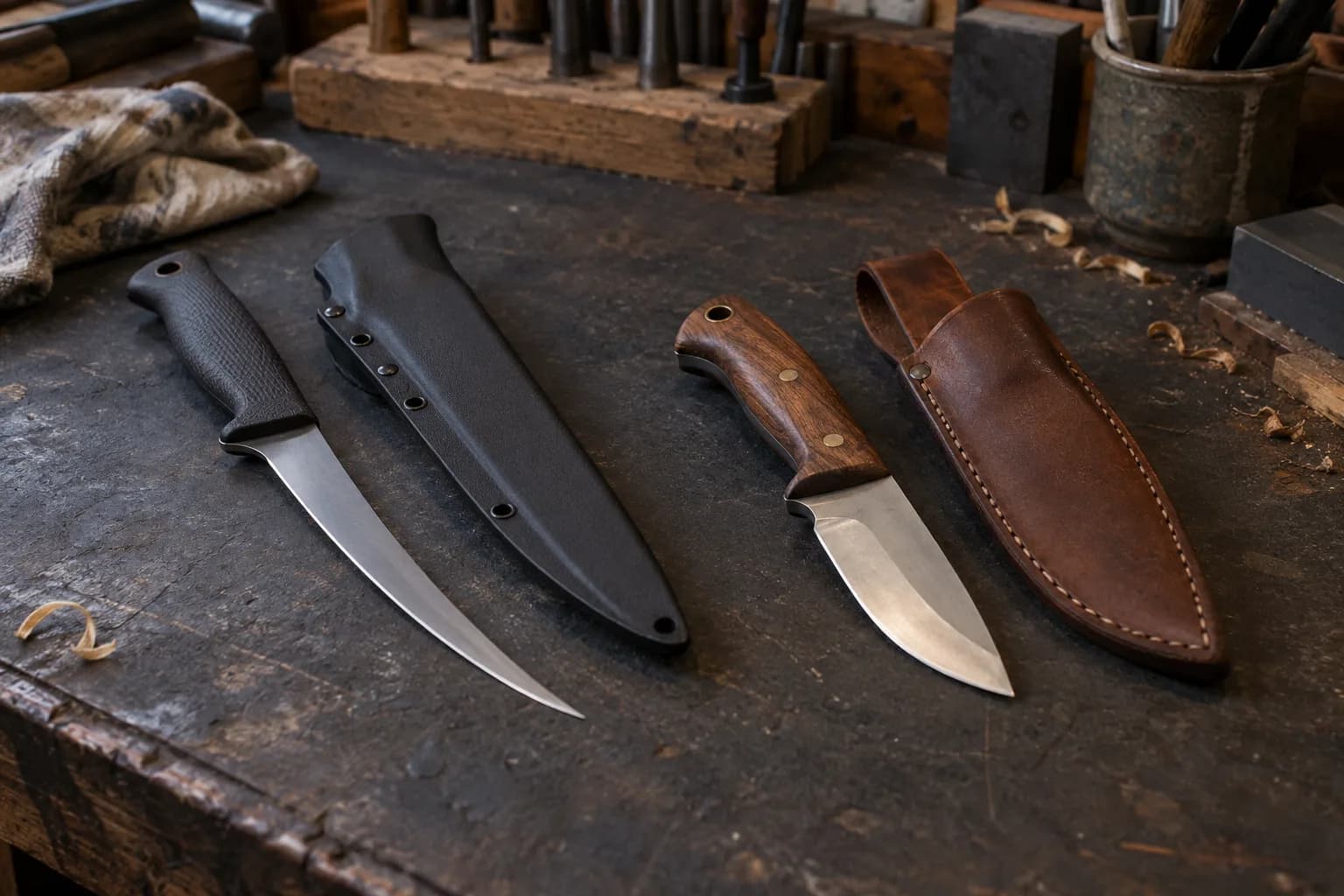
A thermoplastic sheet (0.080 and 0.093 inch are sheath standards) that softens around 300°F, presses around a knife in a foam press in minutes, and cools holding the shape with mechanical precision. Assembly is eyelets and rivets; retention is the molded click plus adjustable eyelet tension; hardware (belt clips, MOLLE mounts, Tek-Loks) bolts on and swaps freely. A kydex sheath shrugs at water, blood, salt and neglect — the reason it owns the fishing, tactical and hard-duty markets.
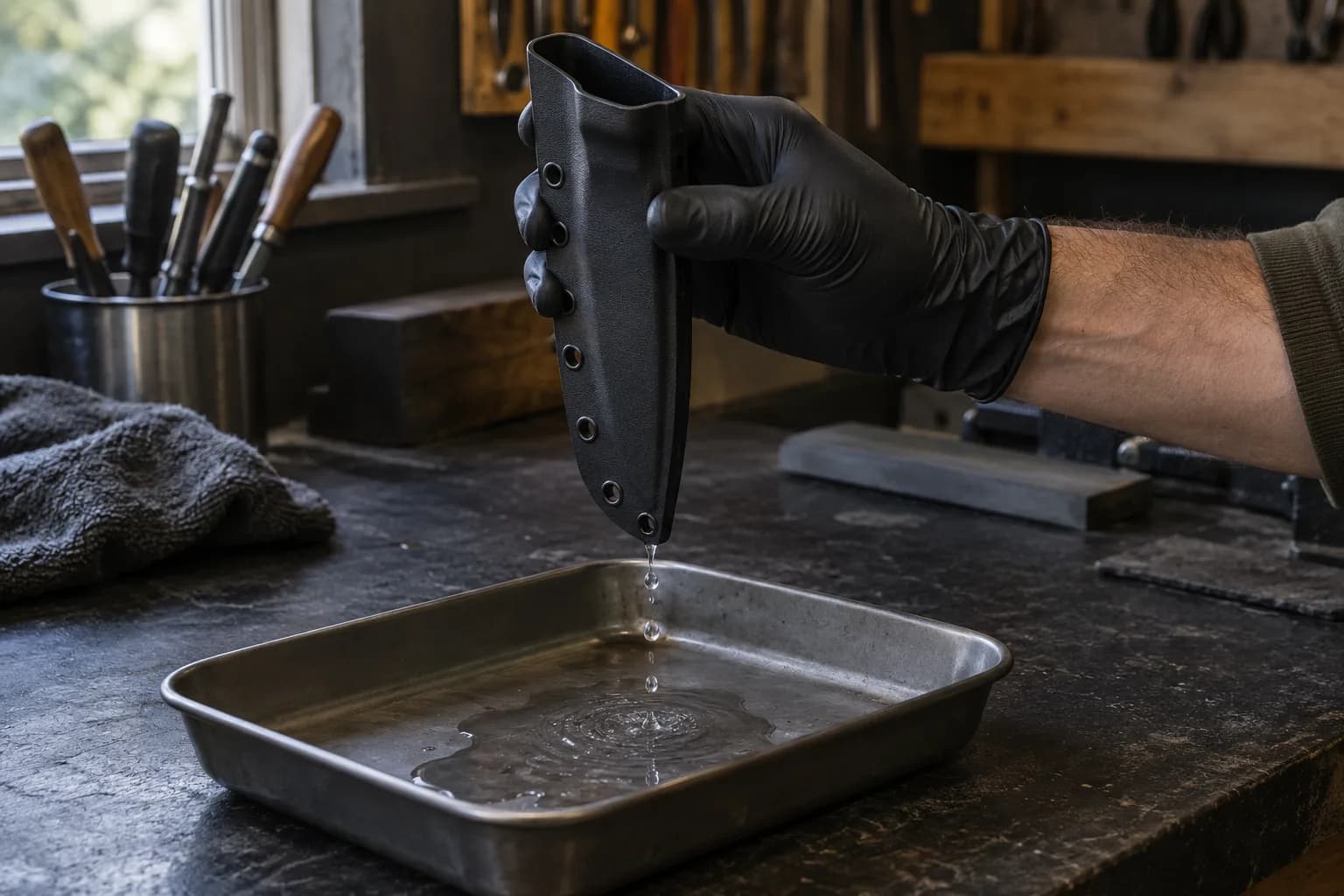
Moisture: kydex, decisively — it absorbs nothing (though water trapped IN a kydex sheath sits against the blade, so drainage matters). Retention precision: kydex clicks are tunable and permanent; leather’s wet-formed click is real but softens with years. Speed and repeatability: kydex, by an order of magnitude — press, trim, drill, done. Aesthetics and craft value: leather, and it is not close; nobody displays a kydex sheath. Blade finish: the persistent claim that kydex scratches blades is half-true — the plastic itself is gentle, but grit trapped inside a rigid sheath becomes lapping compound, while leather’s softer interior forgives debris better. Quiet: leather; kydex announces every draw. Aging: leather patinas, kydex just gets older.
The pairing usually decides itself. Fillet knives, boat knives, wet-environment geometry: kydex, no debate. Traditional bushcraft, hunters, anything in the heritage aesthetic: leather, which the buyer already assumed. EDC fixed blades split personal; offering both wins. High-end collector pieces: leather, where the tooled sheath is part of the object. Choppers and machetes: leather or nylon-hybrid for the big dangler patterns, kydex for the modern ones. The maker math: kydex tooling (press, foam, heat gun or toaster oven, eyelet setter) runs modest and pays back in batch speed; leather’s tooling you own from the starter kit, and its hours price into the premium listing.
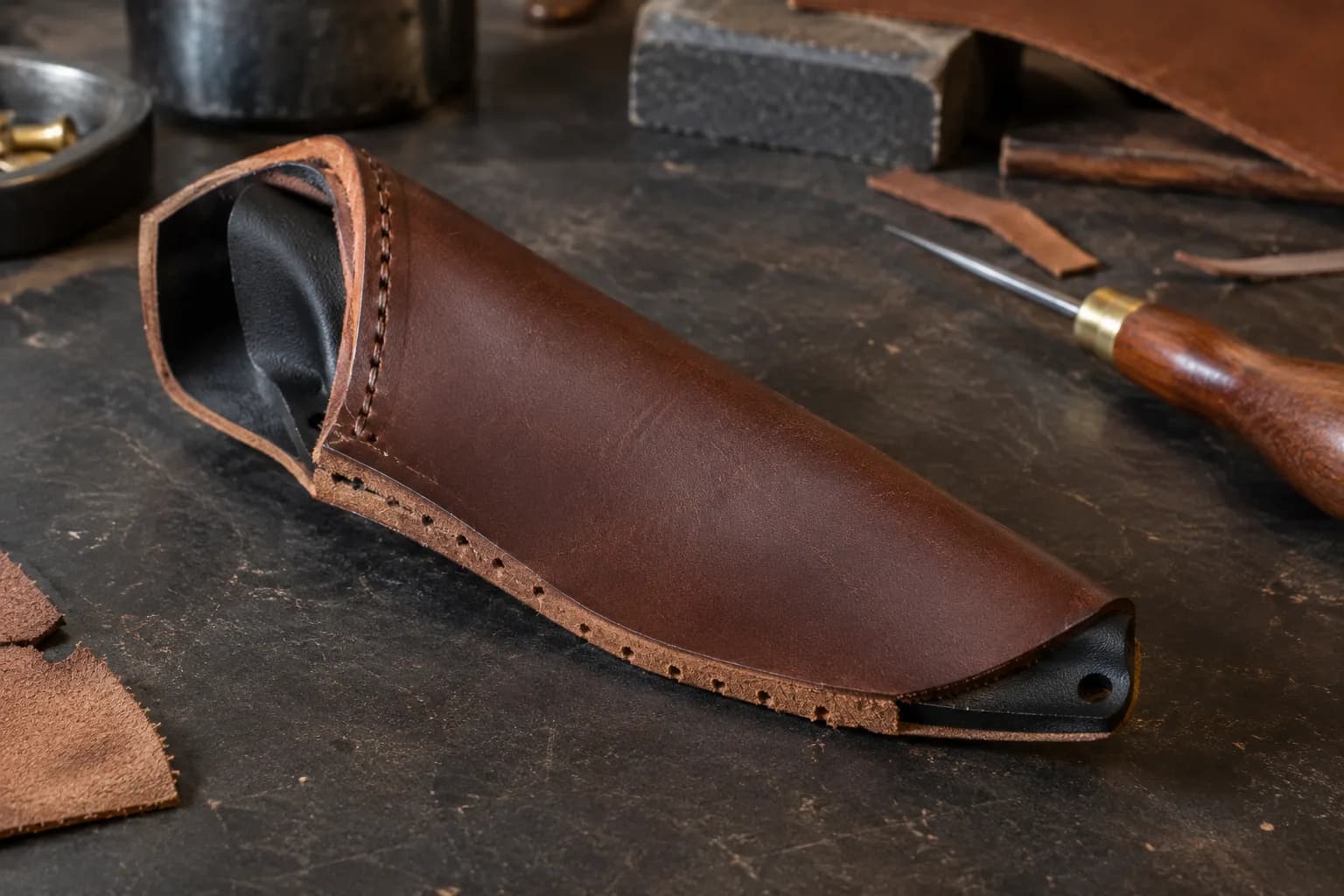
The quiet third answer: a kydex liner inside a leather body — leather’s face with kydex’s spine and drainage — or leather-covered kydex for the best-of-both commissions. More work than either alone, and the solution to the specific customer who wants the heritage look on the boat. Most makers land at the honest default: leather as the house style that matches hand-made knives, kydex on request and for the wet trades — and the style catalog quoting both.
Keep reading
Three more from the same bench.
Every knifemaker meets the same moment: a finished blade, a proud photo — and nothing to put it in. A knife without a sheath is half a product, and…

Once the fold-over is in hand, the style catalog opens. Sheath styles are carry solutions — each one answers where the knife rides, how it draws, and what…

Wet forming is veg-tan’s party trick and the step that separates a leather envelope from a fitted sheath: dampened correctly, the leather takes the…
Same bench
I machine the parts, hand-assemble, track and test Torus grinders in Sterling, Illinois. Most orders ship in seven to ten business days from time of order.

Current dual-axis platform with a fiber-laser-cut 6061 chassis and single-knob tracking.

Current dual-axis platform with a steel chassis, more mass and less vibration.

Prior-design aluminum chassis, 90-degree tilt and 1.5-inch tooling arms.

One-man shop
I answer my own email. Tell me the steel, the machine and what it is doing, and I will tell you what I would try next.