Belt Grinders

Nebula 2x72 The Case for Mass

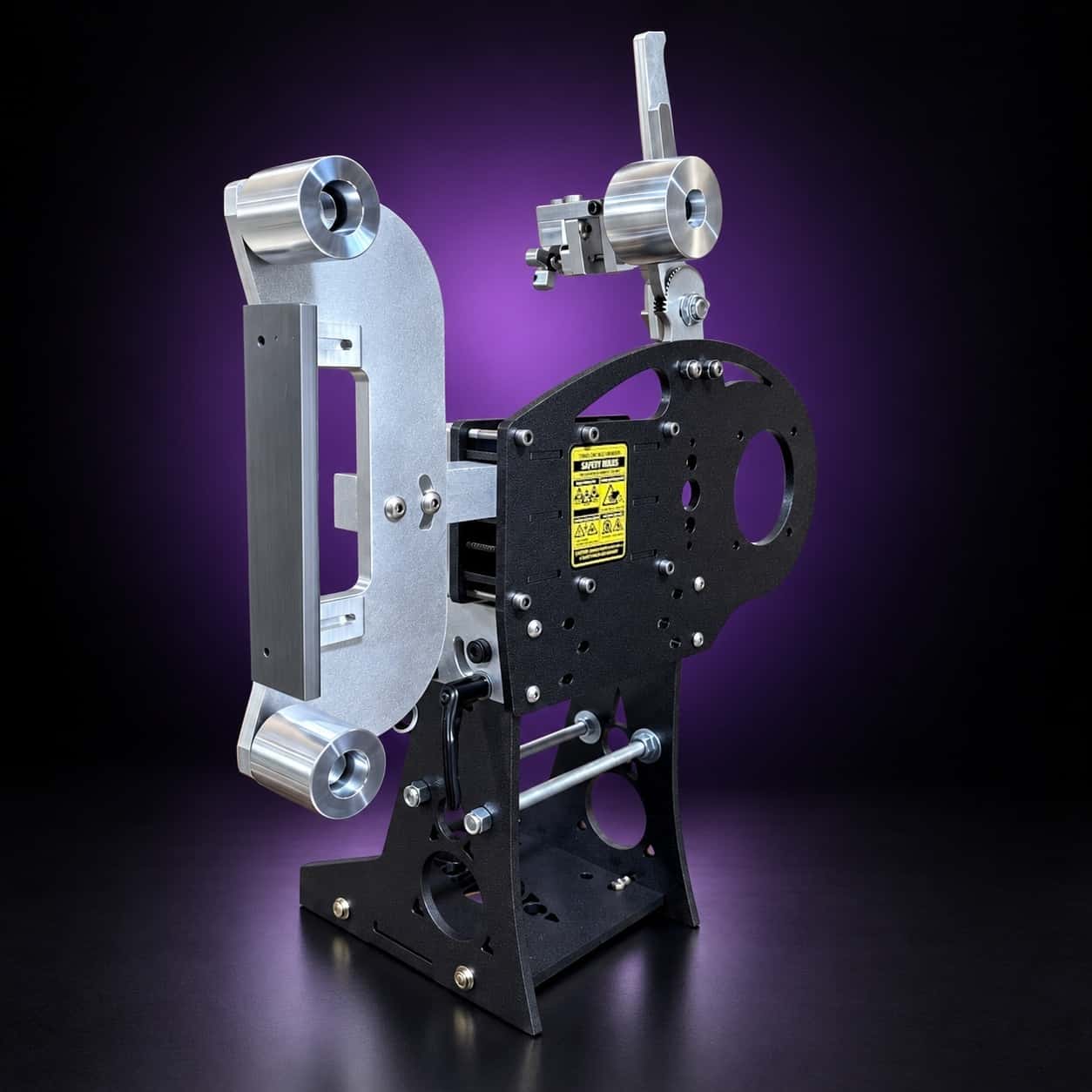
I build the Nebula from 3/8-inch steel for makers who want a heavier grinder on a permanent bench. It shares the Nova tracking, tensioning, tilt and $1,295 chassis price.
2 min readBy Rich Linville
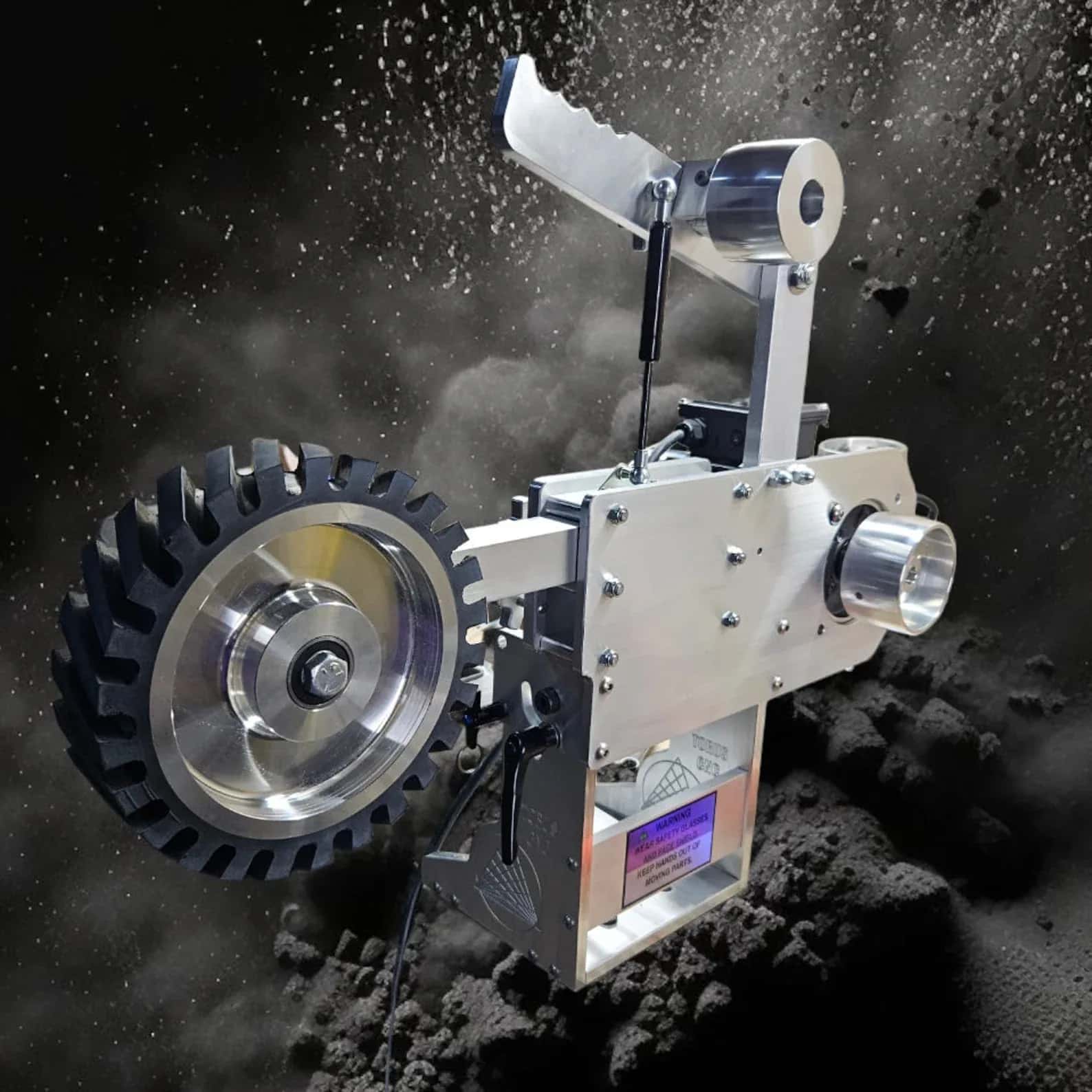
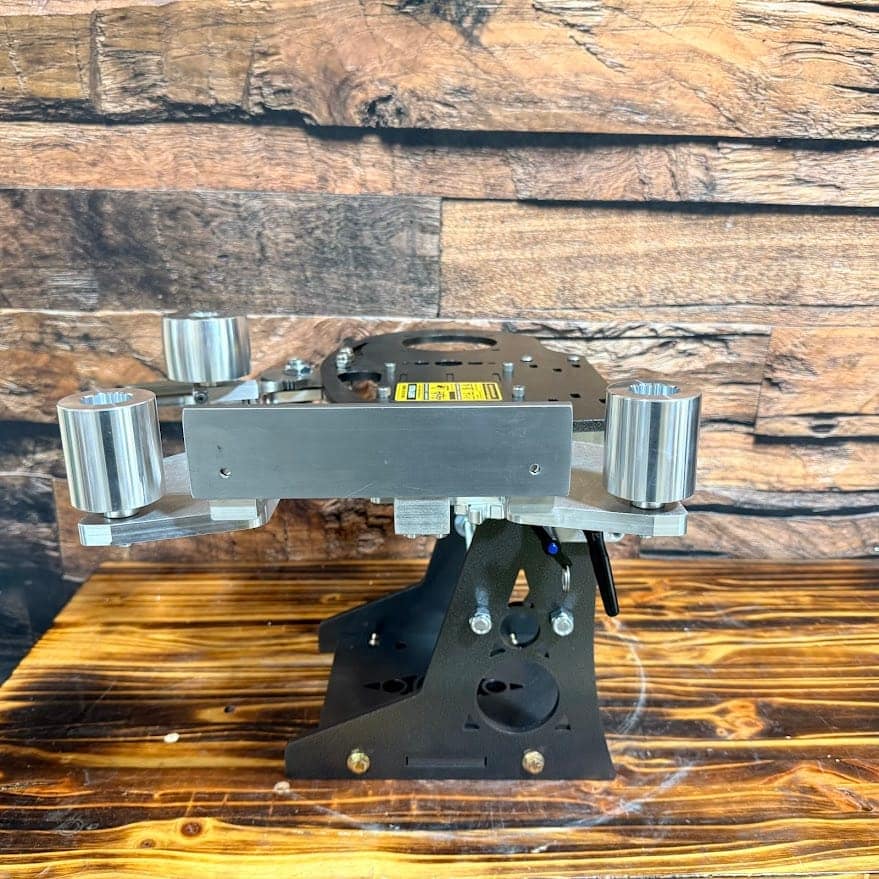
Torus Nebula grinder tilted horizontally, with its flat platen and three aluminum wheels exposed.

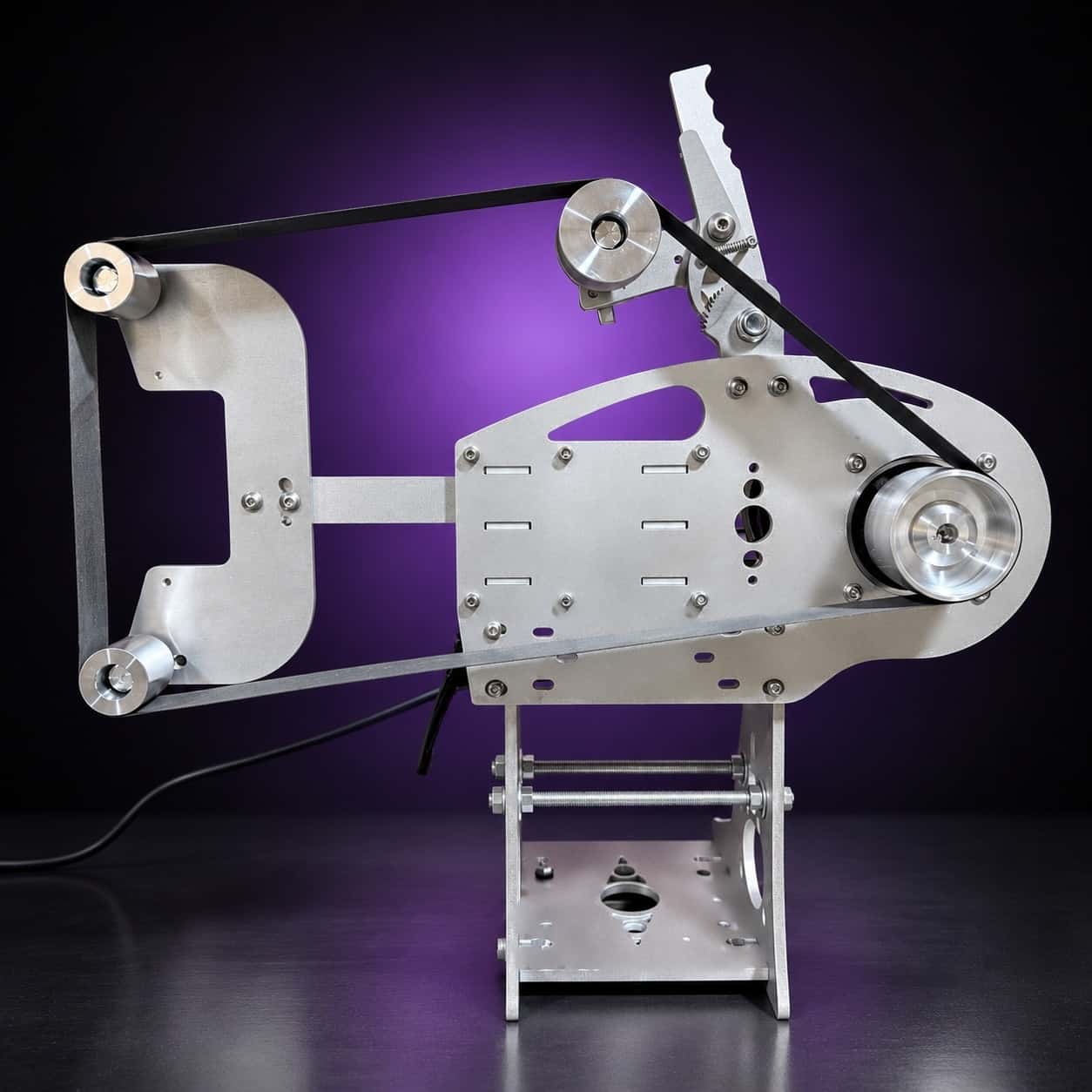
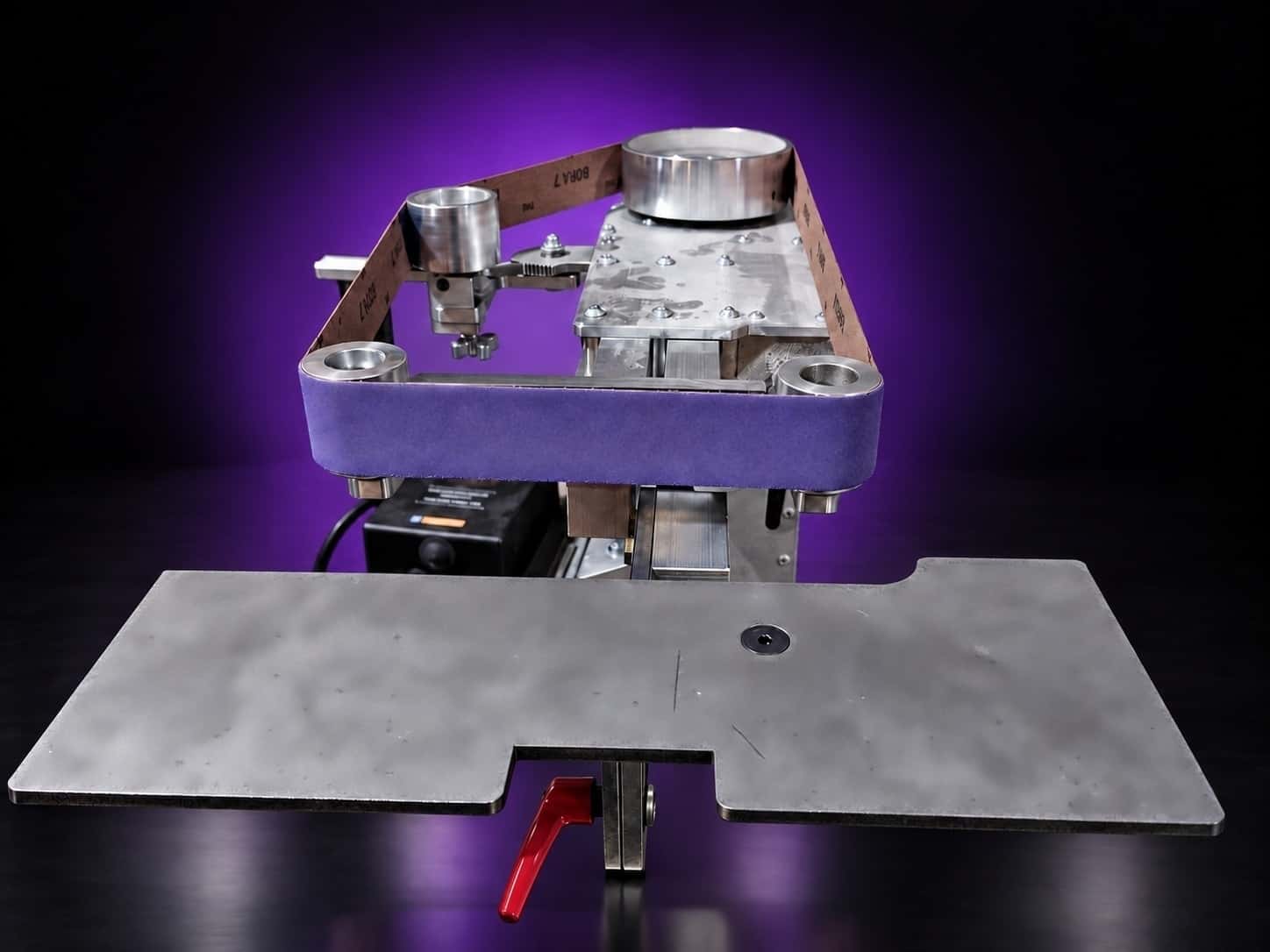
I build the Nebula 2x72 belt grinder for a permanent bench. Its chassis is fiber-laser cut from 3/8-inch steel and powder coated. That extra mass is useful when you grind daily and want a machine that feels planted. It carries the same tracking, tensioning and tilt as the aluminum Nova.

What the steel frame does

The Nebula's steel plate adds mass to the frame. A heavier, rigid chassis helps resist movement under grinding pressure, but it is only one part of the setup. Bolt the grinder to a firm bench and check the mount before blaming a rough grind on the machine. A loose fastener, worn belt or flexible work surface can still cause trouble.
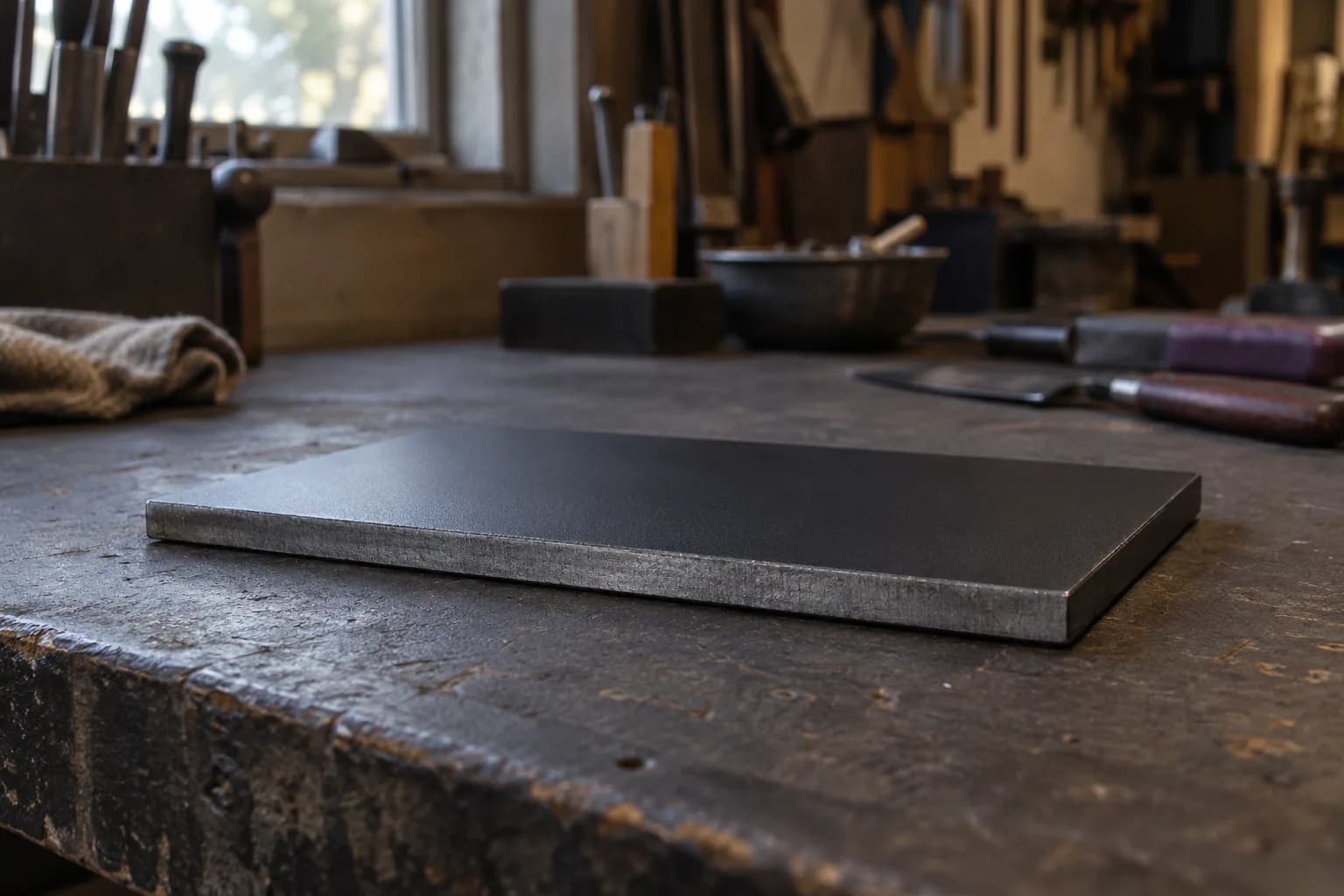
Thick black powder-coated steel plate lying flat on a worn workbench, its bare cut edge showing the thickness.

For coarse stock removal, a fresh ceramic belt and a steady work rest matter alongside the frame. Keep the blank controlled and let the abrasive cut. More weight is useful support, not a reason to force the blade harder into the belt. My belt buyer's guide explains the abrasive choices behind the work.
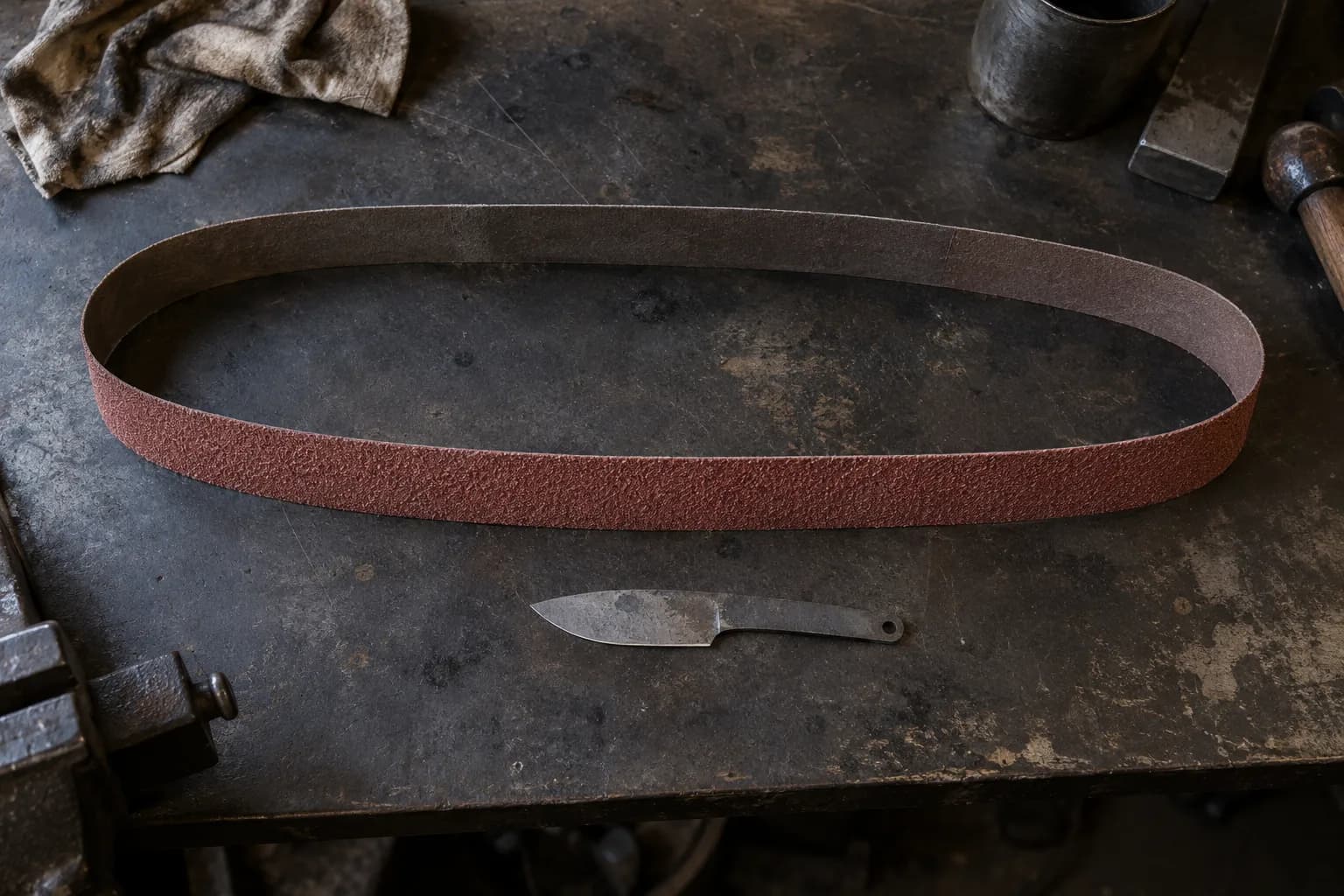
Coarse red-brown abrasive belt laid in a long oval on a dark bench beside a rough drop-point knife blank.

The features carried in steel

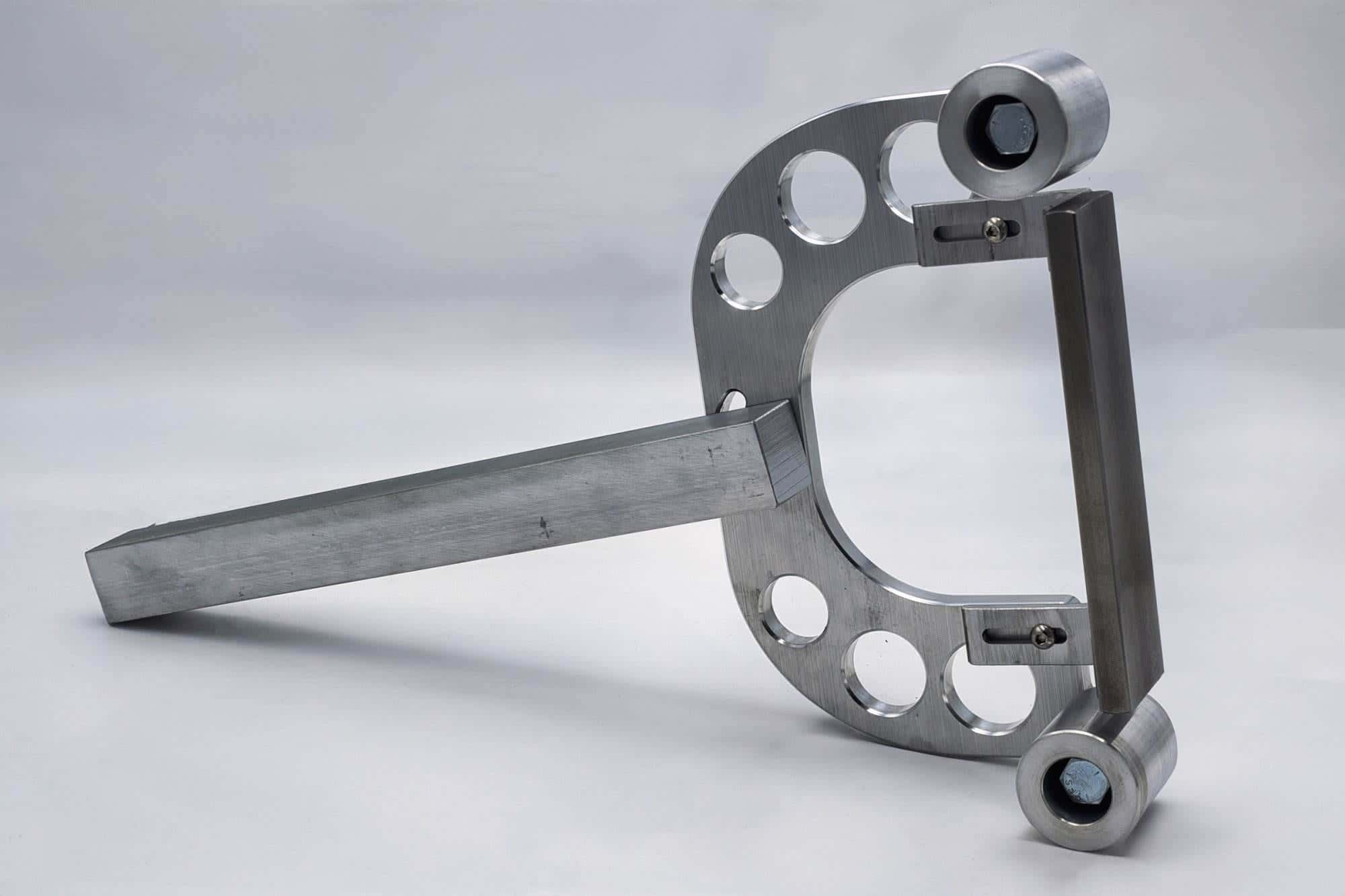
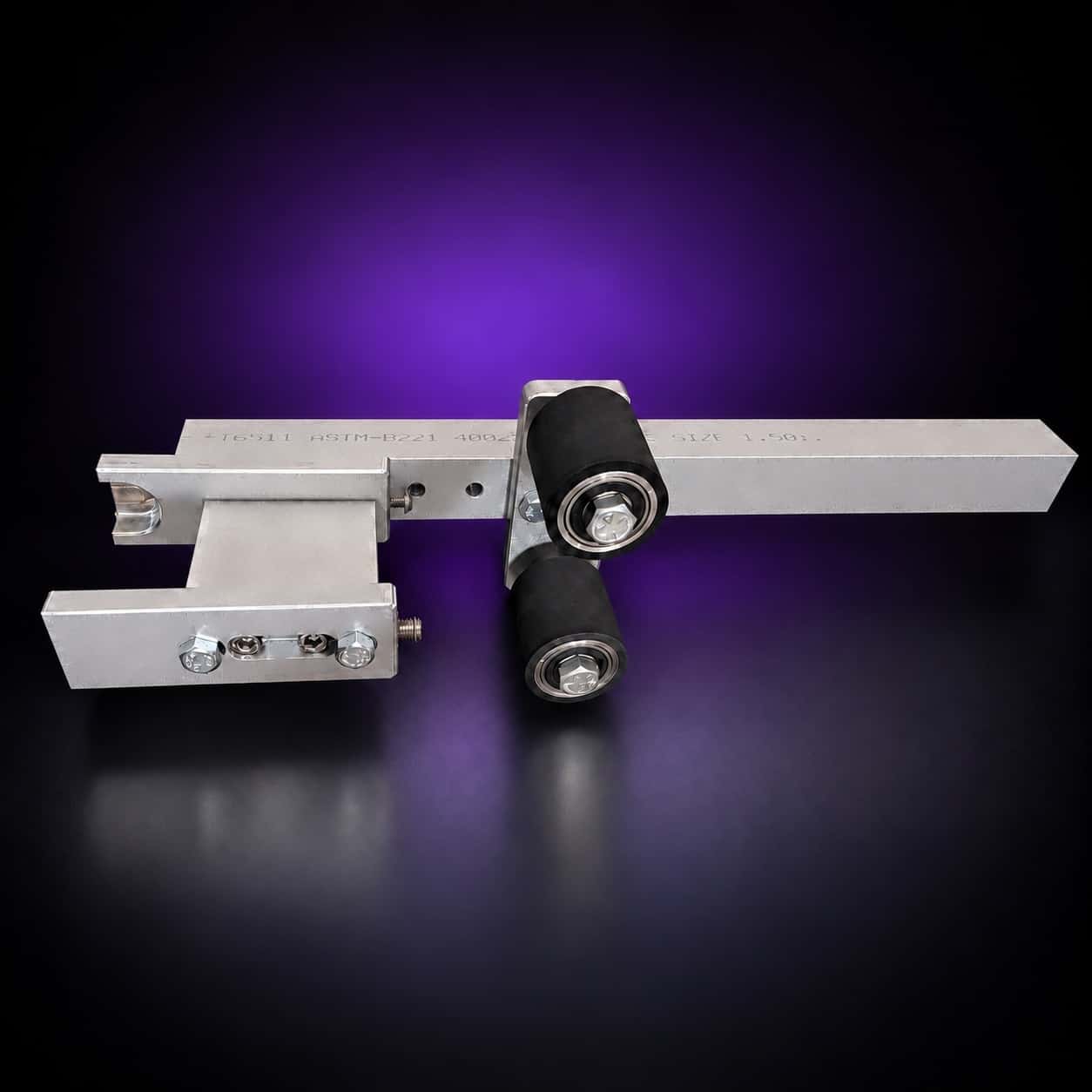
The Nebula tilts through 90 degrees from vertical to horizontal. Its dual-axis tracking head is machined from billet aluminum, and its ratchet tensioner is 304 stainless steel. Standard 1.5-inch tooling arms take Torus arm-mounted attachments and compatible accessories. Check an outside attachment's dimensions before assuming its arm size settles every fit question.

The ratchet holds belt tension without a spring to fatigue. Release the tension for a belt change, then set it again before tracking. That is a practical part of the machine, not a promise that belts, bearings or other wear parts last forever. Routine checks still belong in a working shop.
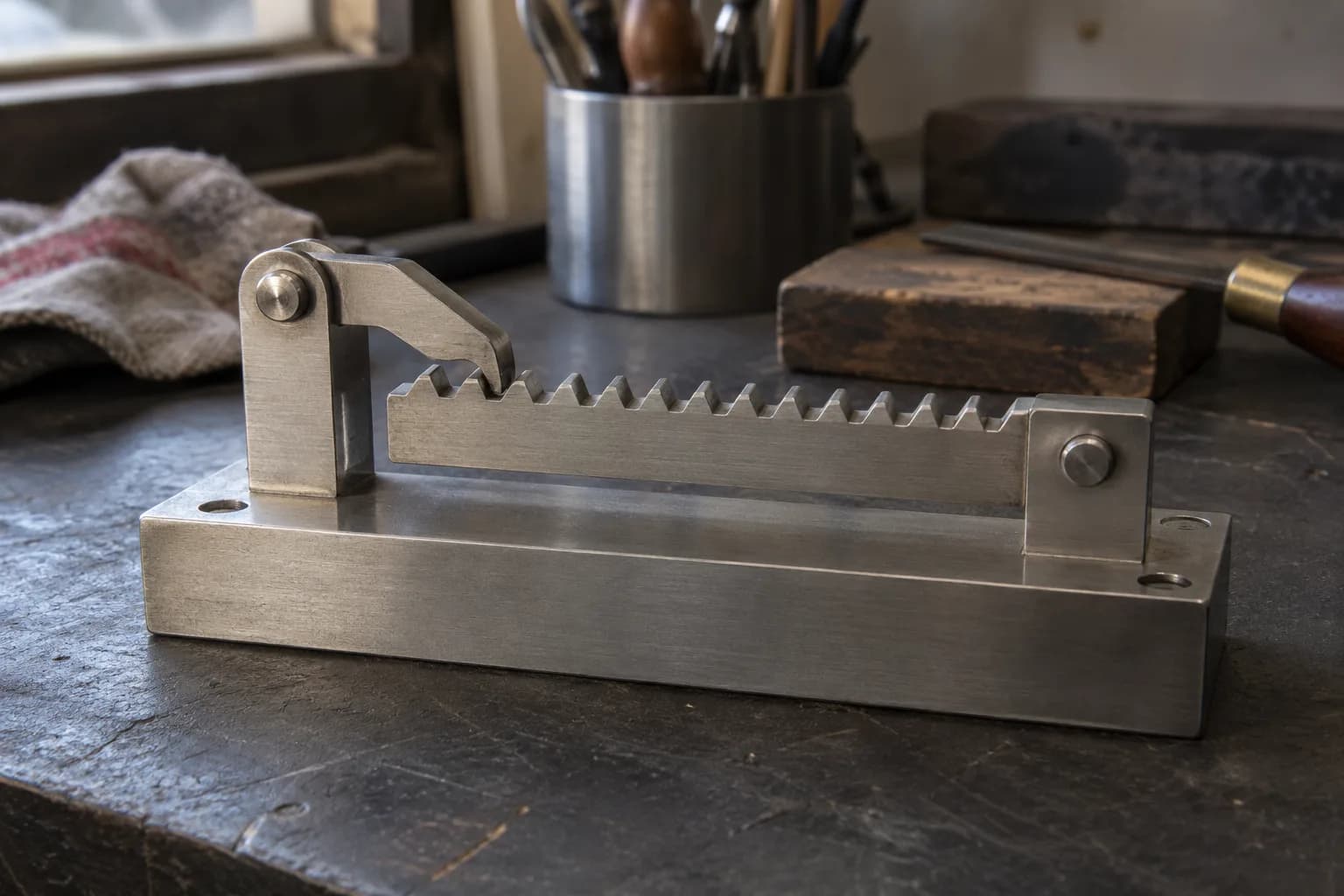
Brushed stainless toothed strip with a pivoting pawl seated against a tooth, bolted to a plain steel block on a bench.

What is in the box

The $1,295 chassis includes the steel frame, a deep flat platen on its own 1.5-inch arm, a 4-inch machined aluminum drive wheel, the tracking assembly and the ratchet tensioner. I assemble, track and run each one in Sterling, Illinois before packing it. The motor and VFD are sold separately, so compare complete setups rather than treating the chassis price as a powered station.

My TechTop motor and KBAC-27D package is $1,195 for 1 HP on 120V or $1,245 for 2 HP on 220V. The sealed drive arrives programmed for the motor. You finish the cord and plug wiring with the supplied guide. Pick the supply that fits your shop before choosing horsepower.

Give it a permanent station

A permanent grinding station should leave room for the work, attachment changes and the full tilting motion. Keep the bench clear around the grinder. Store spare belts and arms where you can reach them without leaning across the belt path. The frame's mass pays off most when the rest of the station supports steady, repeatable work.
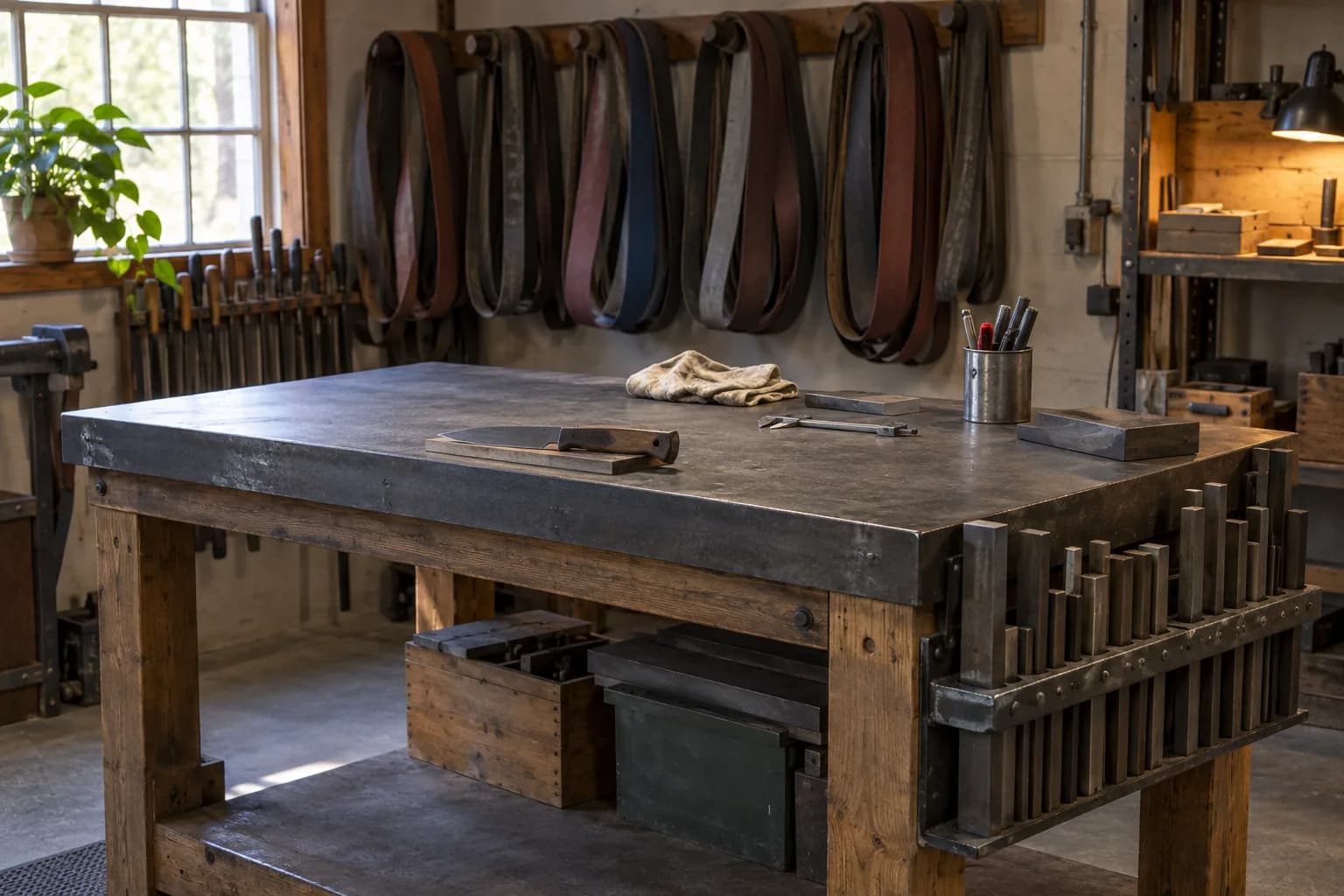
Sturdy timber workbench with a clear steel top, a bolted side rack of square bars and spare belts hung on wall pegs.

Choose the material for your shop

If your grinder has to travel or share a garage bay, my Nova article explains the lighter aluminum option. The two chassis share a $1,295 price. Read the Nova and Nebula comparison if you are deciding between easier handling and extra mass.

Build your Nebula for the bench where it will work.

Filed underBelt Grinders

Keep grinding

Related shop notes

  • Steel work table in front of a grinder running a purple abrasive belt, seen from the table side, on black with a purple glow
    CNC Machine8 min read

    Aluminum vs. Steel: Long-Term Wear Comparison

    I build 2×72 grinders in both 6061 aluminum and 3/8-inch steel, so I have no side to pick. Here is how the two wear over years in a knife shop: rust, flex, weight, cost, and which belongs on your bench.

  • Torus CNC 2x72 belt grinder head with contact wheel against a dust and sparks backdrop
    Belt Grinders11 min read

    The Complete Guide to Choosing the Best 2×72 Knife Grinder Features

    Before you spend $1,000 or more on a 2×72, know which features matter and which are marketing. Here is the complete guide from someone who builds them: motor and VFD, frame material, tracking, tilt, tooling arms, attachments and safety.

ForgeBrain

Go deeper on the technique

Free reference guides from the ForgeBrain library — no sign-up, no paywall.

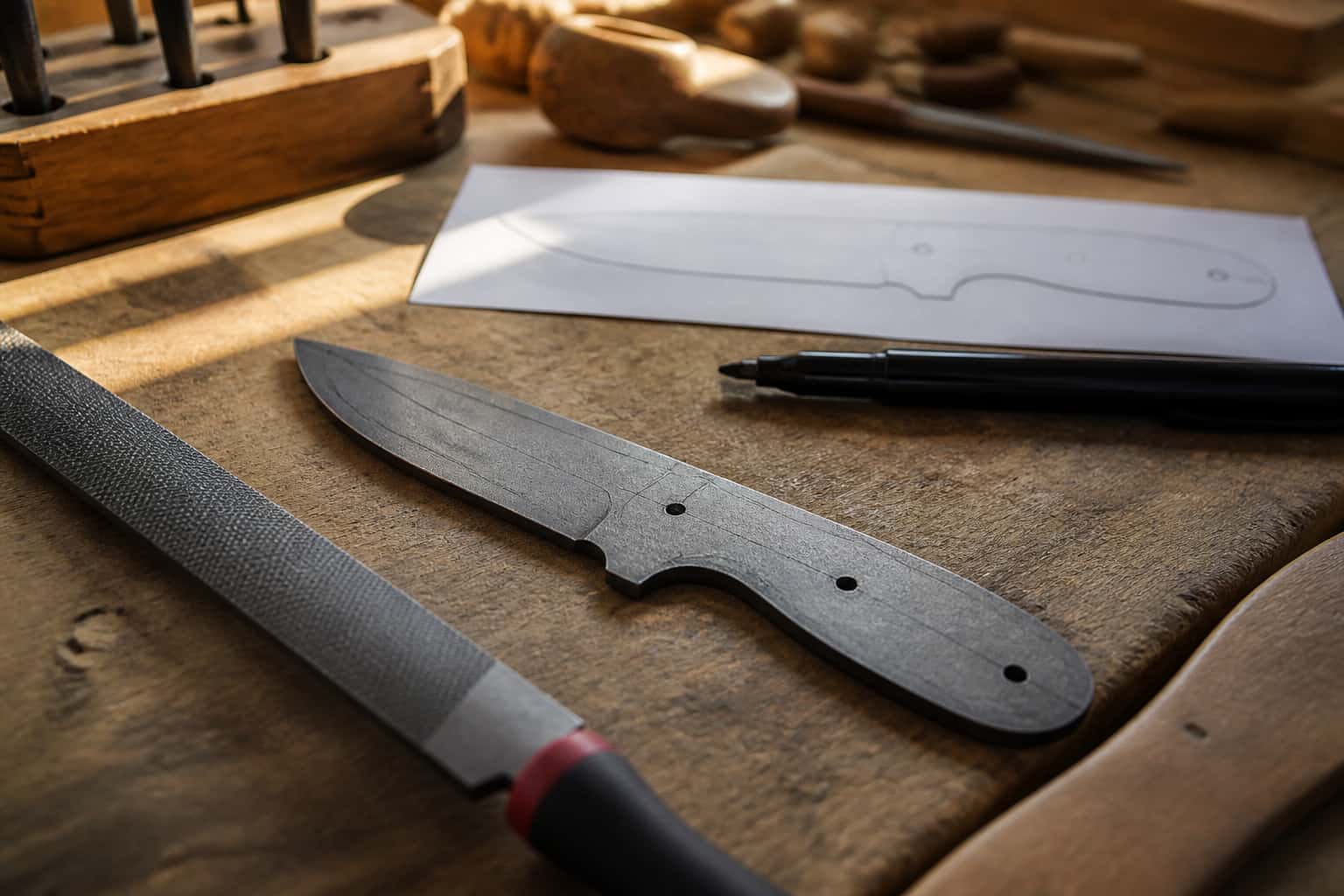
  • Beginner knife blank with scribed layout lines beside a file, marker, and paper template on a bench
    Beginner Guides

    How to Choose a 2×72 Belt Grinder: Complete Buyer’s Guide

    If you’ve spent any time in knifemaking forums or subreddits, you’ve seen the question a hundred times: “what belt grinder should I buy?” The honest answer is that it depends on your budget, how much assembly you want to deal with, and what you plan to grind. This guide walks through the actual decision, feature…

    Read the guide
  • Beginner knife blank with scribed layout lines beside a file, marker, and paper template on a bench
    Beginner Guides

    How Much Does It Cost to Get Into Knifemaking?

    Serious knifemakers eventually ask the same question: what does it actually cost to build a professional-grade shop, not just a hobby setup? This breaks down real numbers for a fully assembled, motor-and-VFD-equipped grinder at three build levels, and shows how that stacks up against the well-known names in the premium 2×72 space. What “Professional-Grade” Actually…

    Read the guide

Built in Sterling

The machines behind these notes

I machine the parts, hand-assemble, track and test each grinder before it ships. Most orders leave in seven to ten business days from time of order.

  • Nebula 2x72 grinder, front three-quarter view: aluminum arm, black plate, Safety Rules label, on black with a purple glow

    Nebula 2×72 Steel Belt Grinder

    My heaviest 2x72: a 3/8-inch steel chassis with machined dual-axis tracking. Bolt it down and it stays put.

    Starts at$1,295View
  • Small wheel attachment from above: holder fork, engraved aluminum arm and two rubber wheels, on black with a purple glow

    Small Wheel Attachment with 1.5″ Aluminum Tooling Arm

    Reaches the choils, finger grooves and inside curves a flat platen never will. Wheels from 1/2 to 1.5 inches.

    Starts at$289View
Rich Linville in the Torus CNC shop with a finished 2x72 belt grinder

Built to order

Tell me what you are building

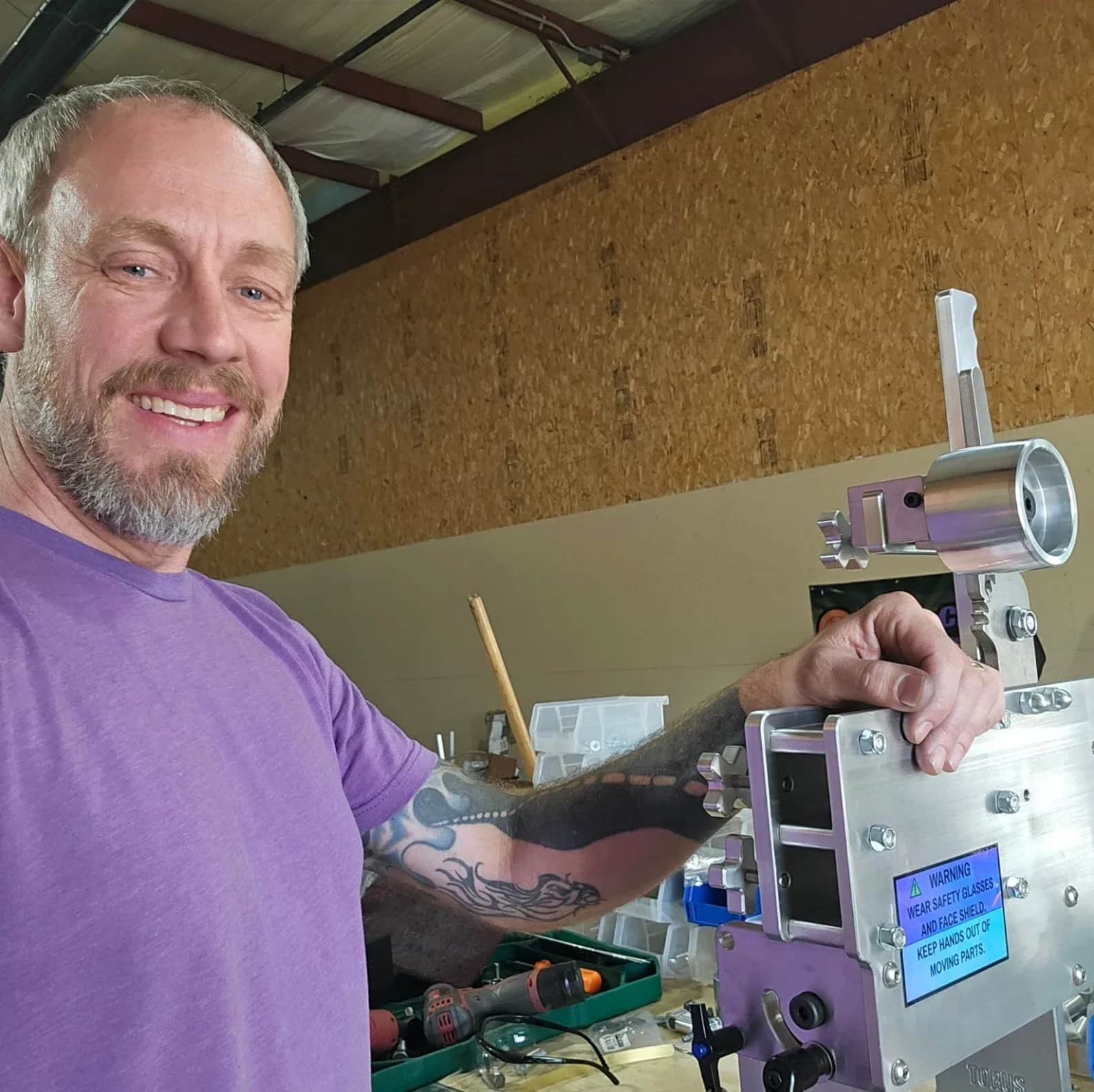
I answer my own email. Tell me the work you do and which grinder you are considering.