
Leatherwork
Wet Forming: Molding Leather to the Knife
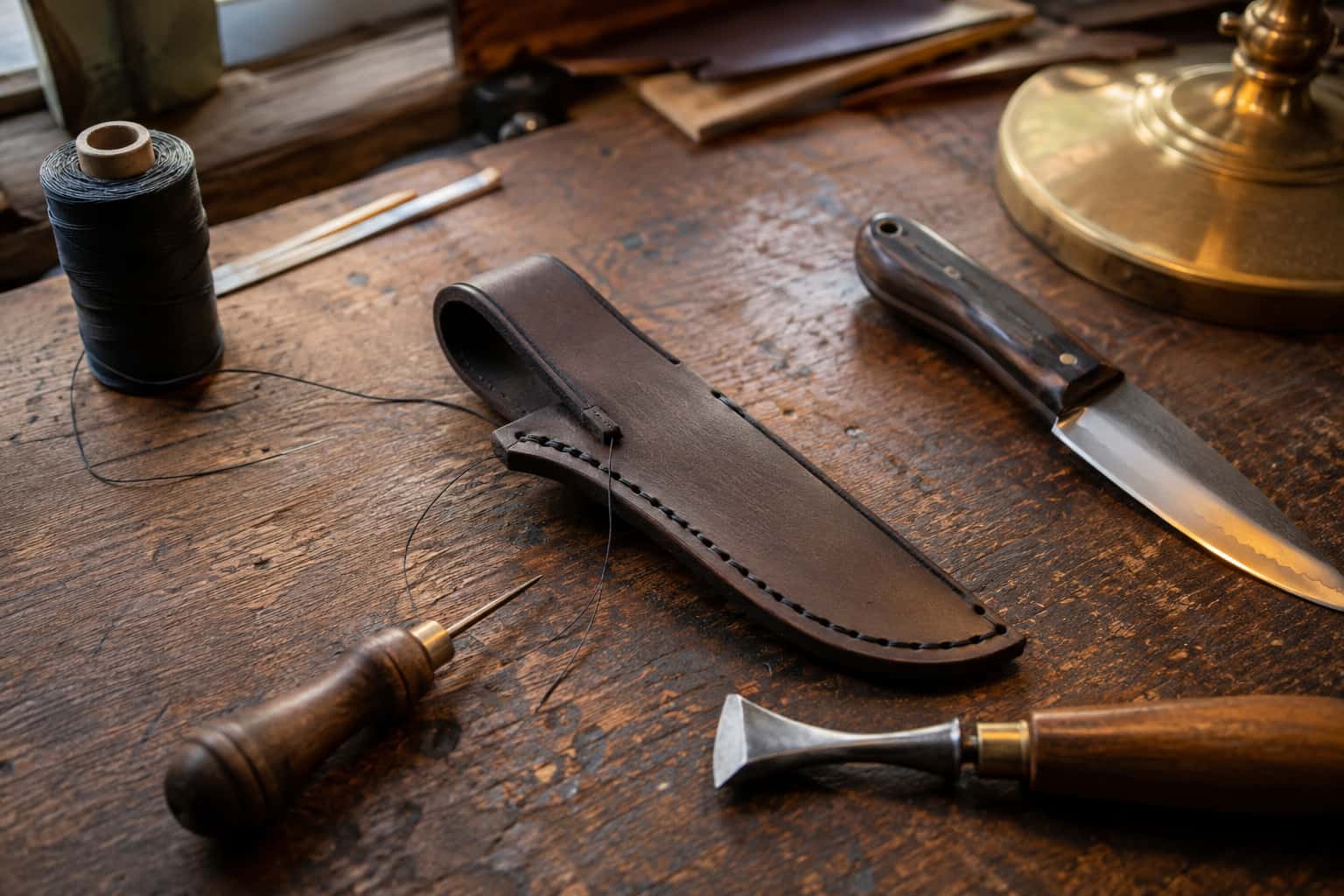
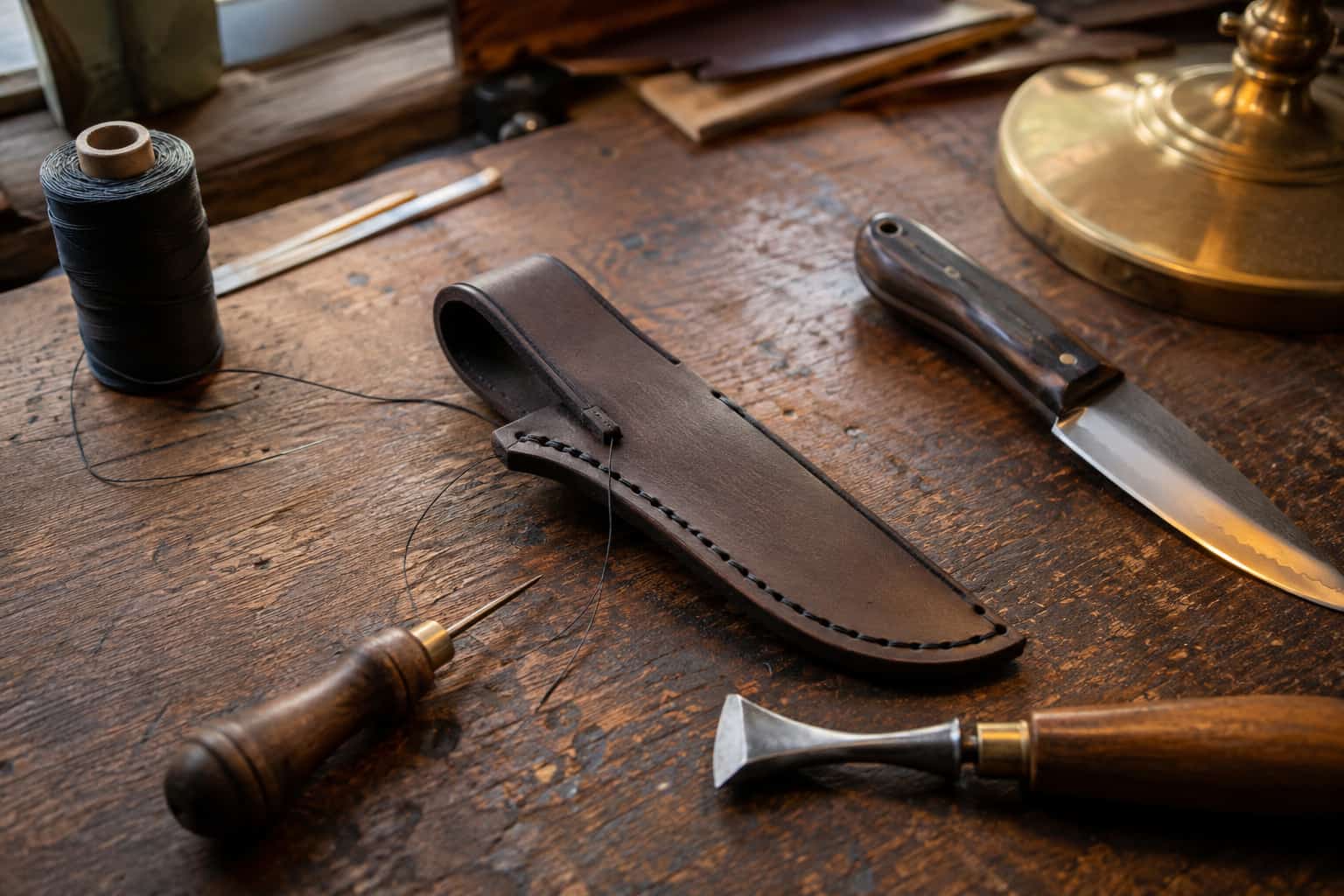
Wet forming is veg-tan’s party trick and the step that separates a leather envelope from a fitted sheath: dampened correctly, the leather takes the…
Leatherwork
Tool veg-tan sheaths: case the leather, run a swivel knife, stamp basketweave and borders, and know when plain beats fancy. The minimum kit and first skills.
2 min readWritten by Rich LinvilleFree to read
Tooling — carving and stamping designs into cased veg-tan — is the craft’s showiest skill and its most optional. A plain, crisply built sheath outsells a badly tooled one every day; a well-tooled one becomes the product photo the whole table is judged by. Start with borders and basketweave, and let ambition compound.
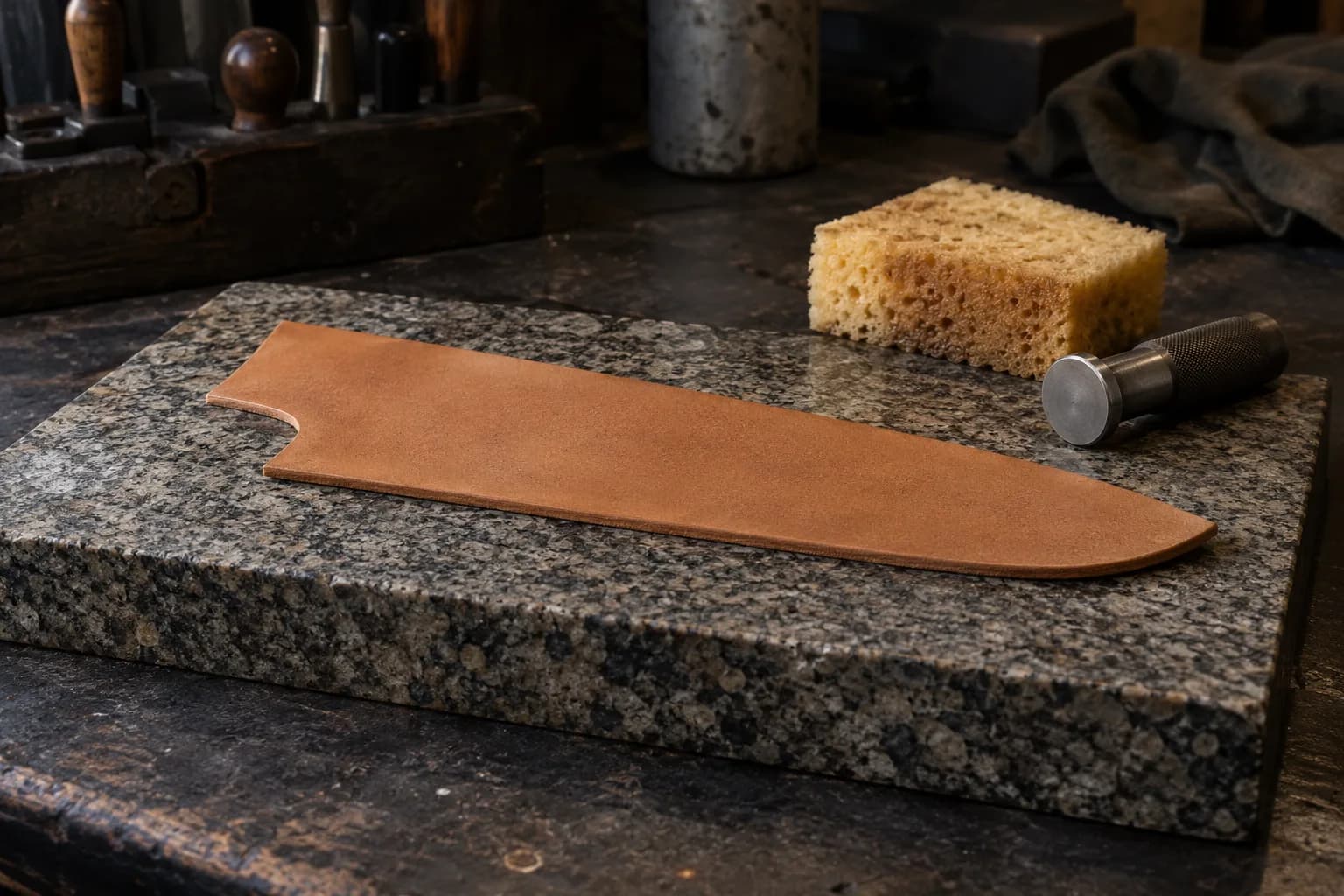
Stamping works because cased vegetable-tanned fiber compresses and STAYS compressed — the tannage that wet-forms is the tannage that holds an impression. The moisture state is the same casing discipline as wet forming: evenly damp, surface returning to color, clay-not-sponge. Too wet and stamps mush; too dry and they bounce. Tool BEFORE assembly, on the flat panel, with the piece backed by something dead — granite scrap, a slab — because a lively bench eats impression depth.
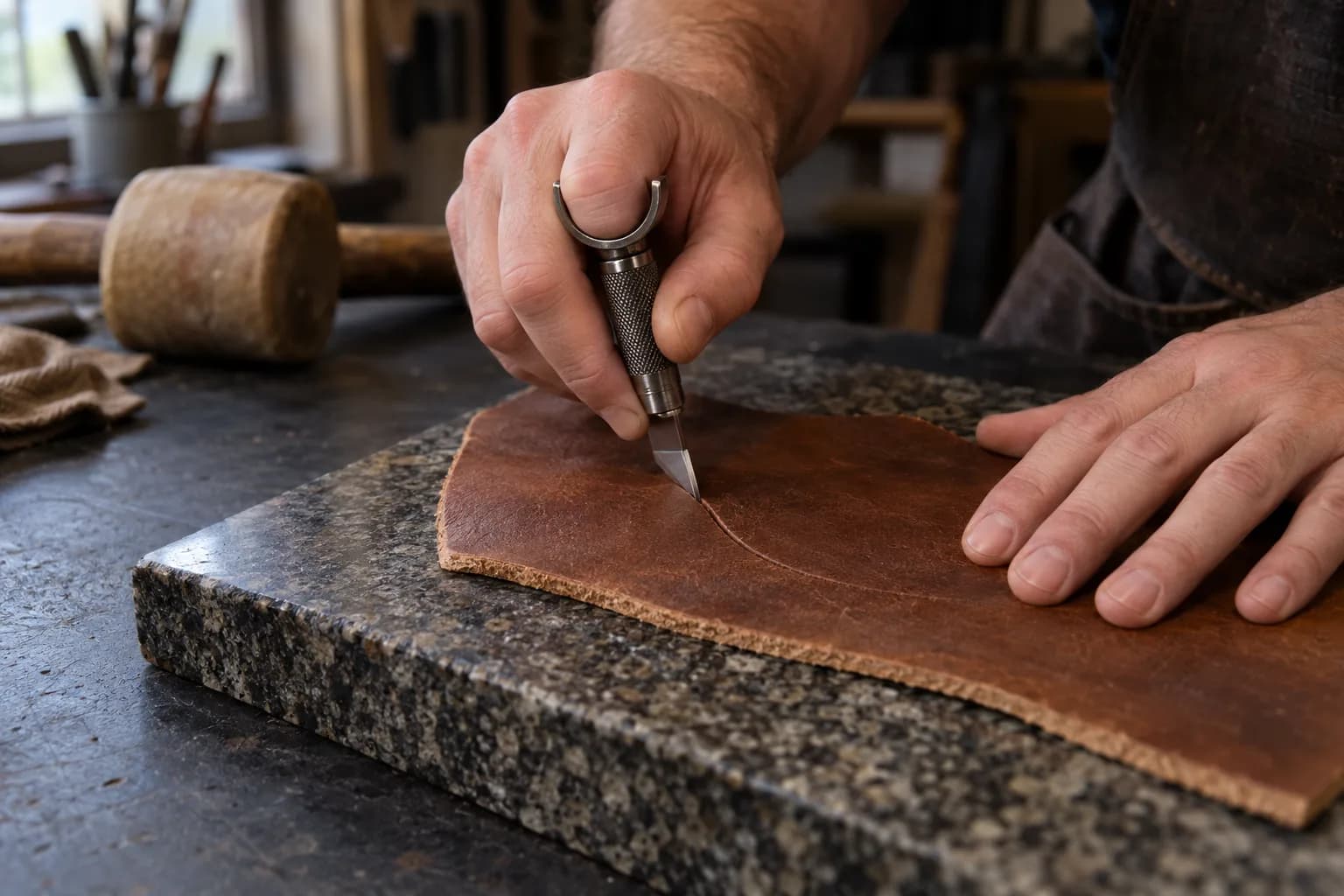
A swivel knife (the rotating-barrel carving knife that cuts the outline lines), a mallet (rawhide or poly — never steel on stamp shanks), a beveler stamp, a backgrounder, one border stamp, and one basketweave stamp: under fifty dollars of tooling opens most of the traditional catalog. Skill one is the swivel-knife line: cut at half the leather’s depth, lean the blade into curves, and let the wrist rotate the barrel — practice initials-in-scrap until the lines stop wobbling. Skill two is the walked stamp: overlapping impressions at even depth and spacing. Both are grind-line disciplines wearing leather clothes; the hands that hold a consistent bevel learn them fast.
Basketweave — the diagonal interlock pattern — is the traditional sheath filler for a reason: one stamp, walked in staggered rows off a guideline, covers a panel in an evening and reads as instant craftsmanship. The sequence: light diagonal guideline, first row walked corner-to-corner, subsequent rows keyed off the last, then a border stamp framing the field and a beveler crisping the frame line. Add the customer’s initials with letter stamps or a carved cartouche and the sheath is personalized — the upsell that costs minutes and closes commissions.
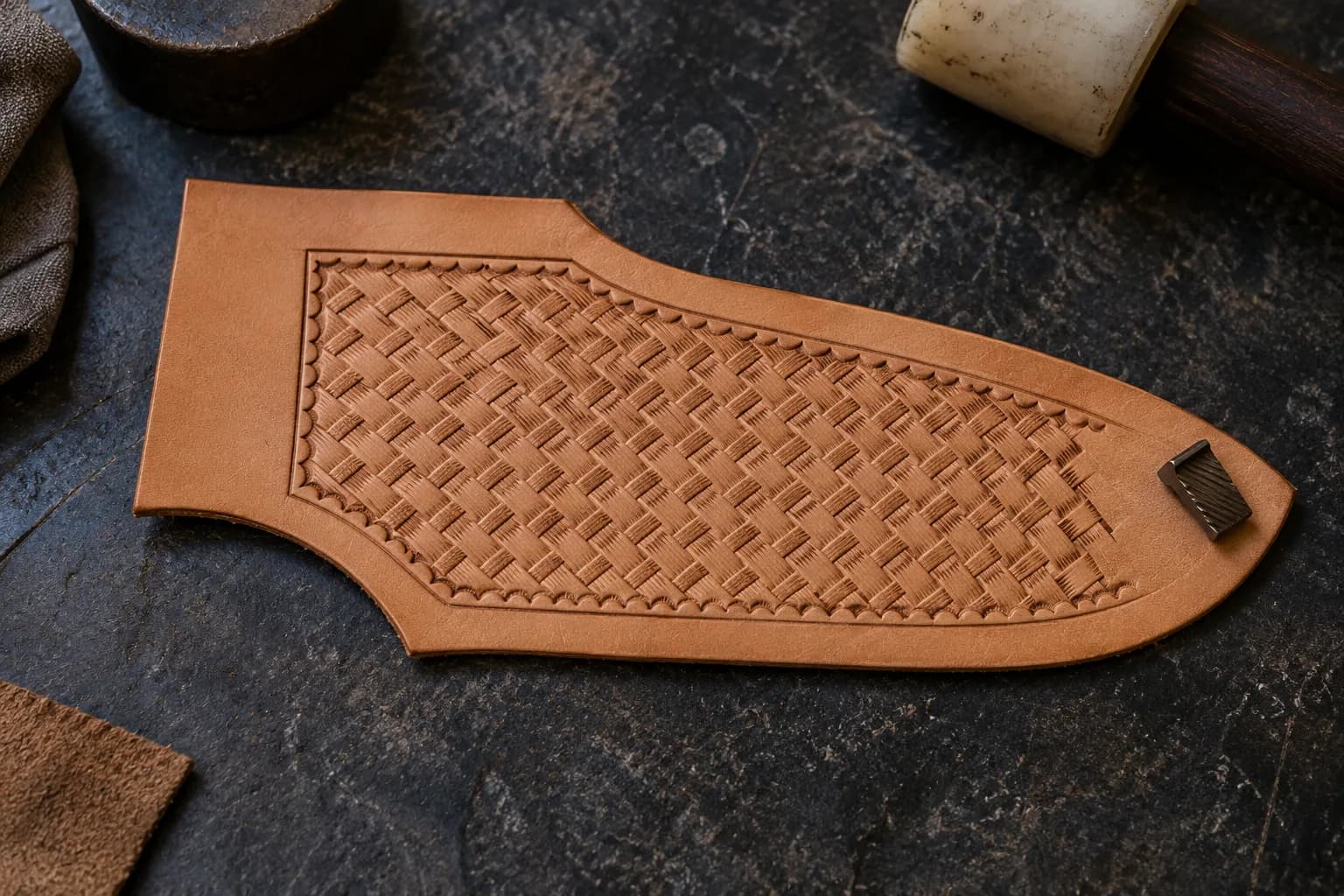
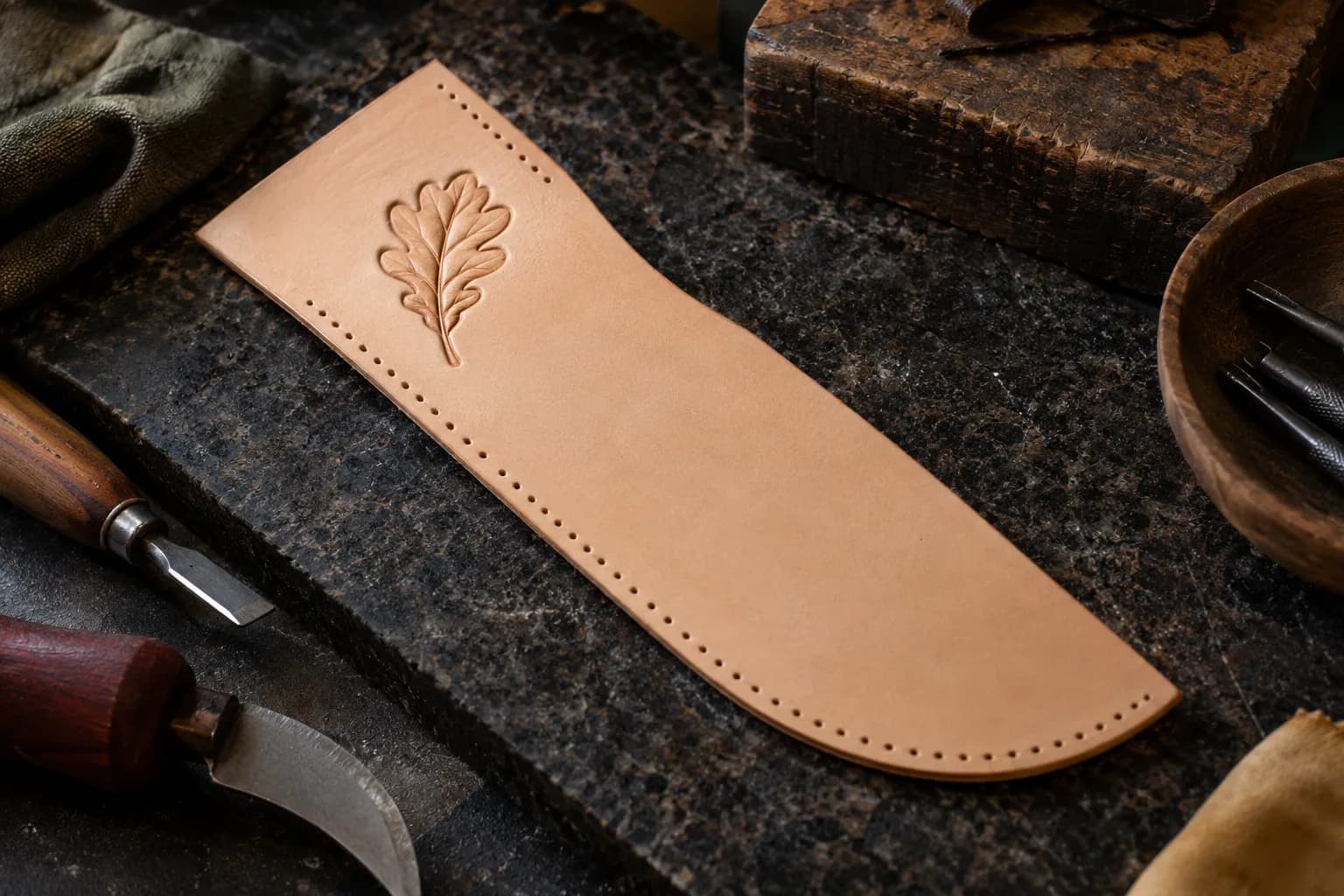
The traps are ambition and coverage: floral carving before clean lines, and tooling every square inch. Tooling reads best against plain — a basketweave panel inside clean borders, a single oak-leaf motif over the fold, initials and nothing else. Match the register to the knife: full western floral suits a cowboy-pattern hunter, geometric borders suit a modern EDC, and a Scandinavian blade wants the natural finish from the finishing guide more than any stamp. The sheath decorates the knife; the hierarchy never reverses.
Keep reading
Three more from the same bench.
Wet forming is veg-tan’s party trick and the step that separates a leather envelope from a fitted sheath: dampened correctly, the leather takes the…

Two details tell every experienced eye whether leatherwork is amateur or professional: the edges and the finish. Neither requires talent — both require…

The fold-over (or centerback) sheath is leatherwork’s first-knife project: one piece of leather folded around the blade, a welt guarding the stitches, one…
Same bench
I machine the parts, hand-assemble, track and test Torus grinders in Sterling, Illinois. Most orders ship in seven to ten business days from time of order.

Current dual-axis platform with a fiber-laser-cut 6061 chassis and single-knob tracking.

Current dual-axis platform with a steel chassis, more mass and less vibration.

Prior-design aluminum chassis, 90-degree tilt and 1.5-inch tooling arms.

One-man shop
I answer my own email. Tell me the steel, the machine and what it is doing, and I will tell you what I would try next.