
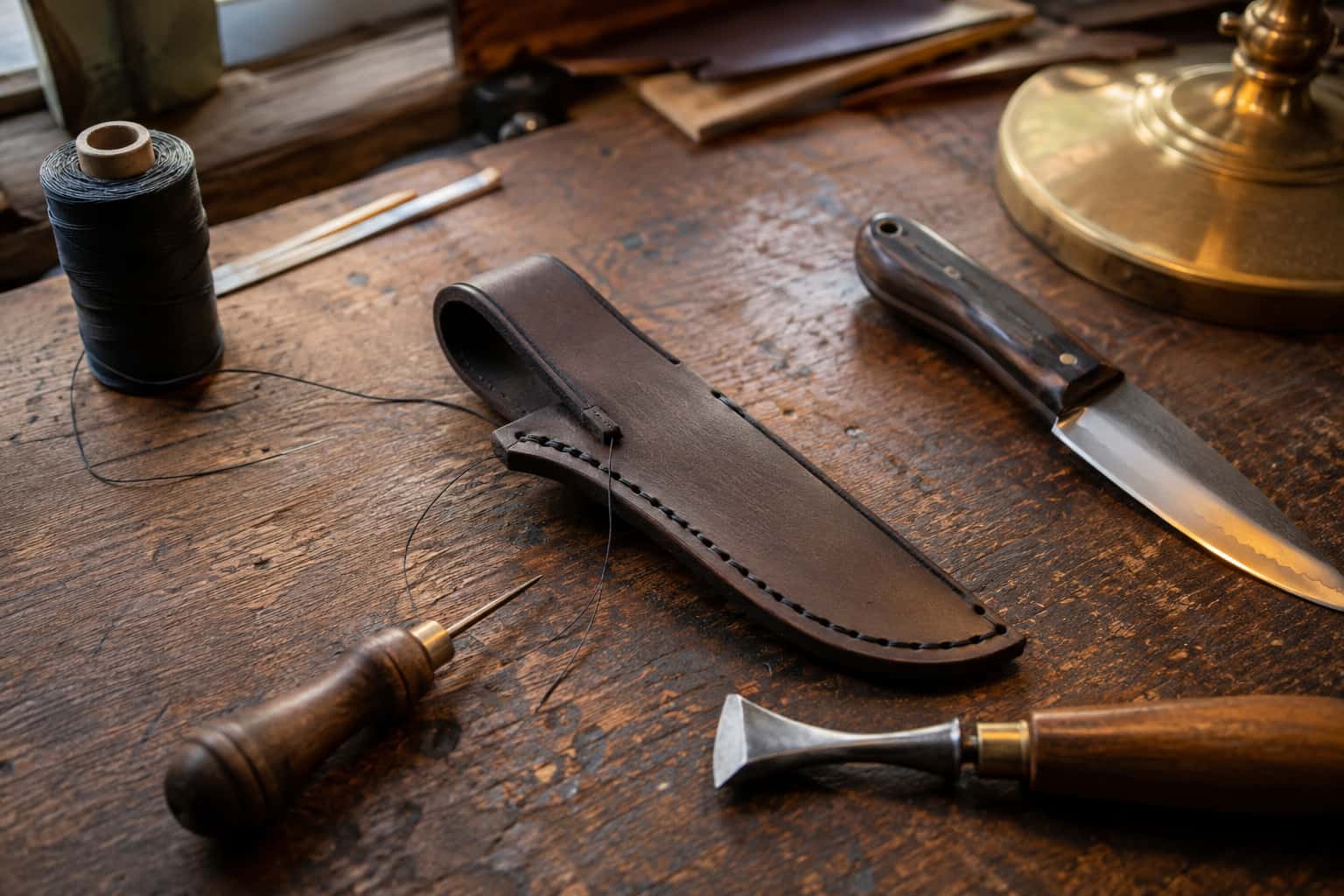
Leatherwork
Leatherworking for Knifemakers: Start Here
Every knifemaker meets the same moment: a finished blade, a proud photo — and nothing to put it in. A knife without a sheath is half a product, and…
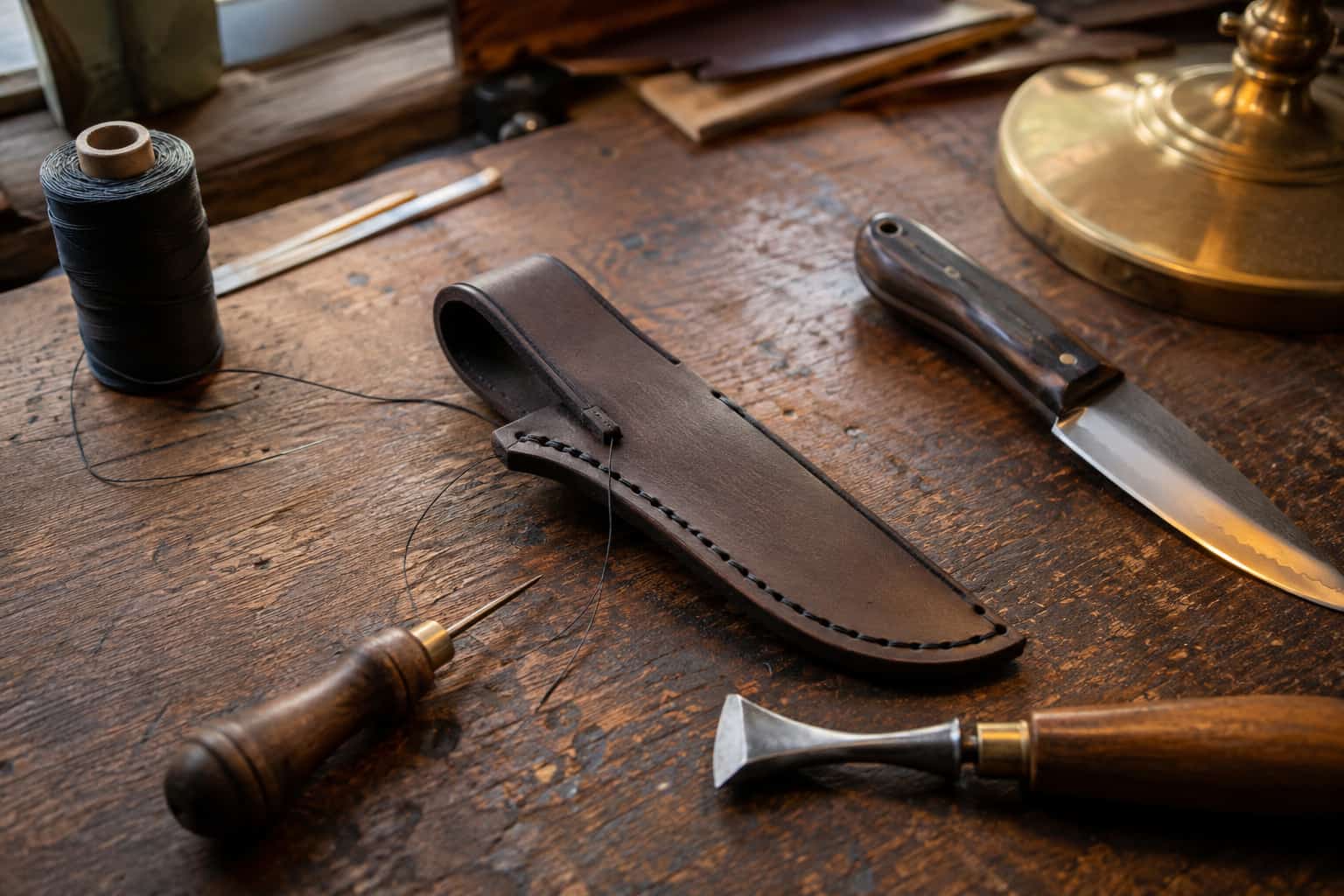
Leatherwork
Buy vegetable-tanned, full-grain 8-9 oz leather for sheaths, learn the ounce system and hide cuts, and see why chrome-tan stains and corrodes blades.
2 min readWritten by Rich LinvilleFree to read
Leather buying has its own jargon wall: tannages, ounces, cuts, grades, temper. Here is the wall taken down — and the one warning in this craft that protects every blade you make: the wrong tannage will rust a knife in its own sheath.
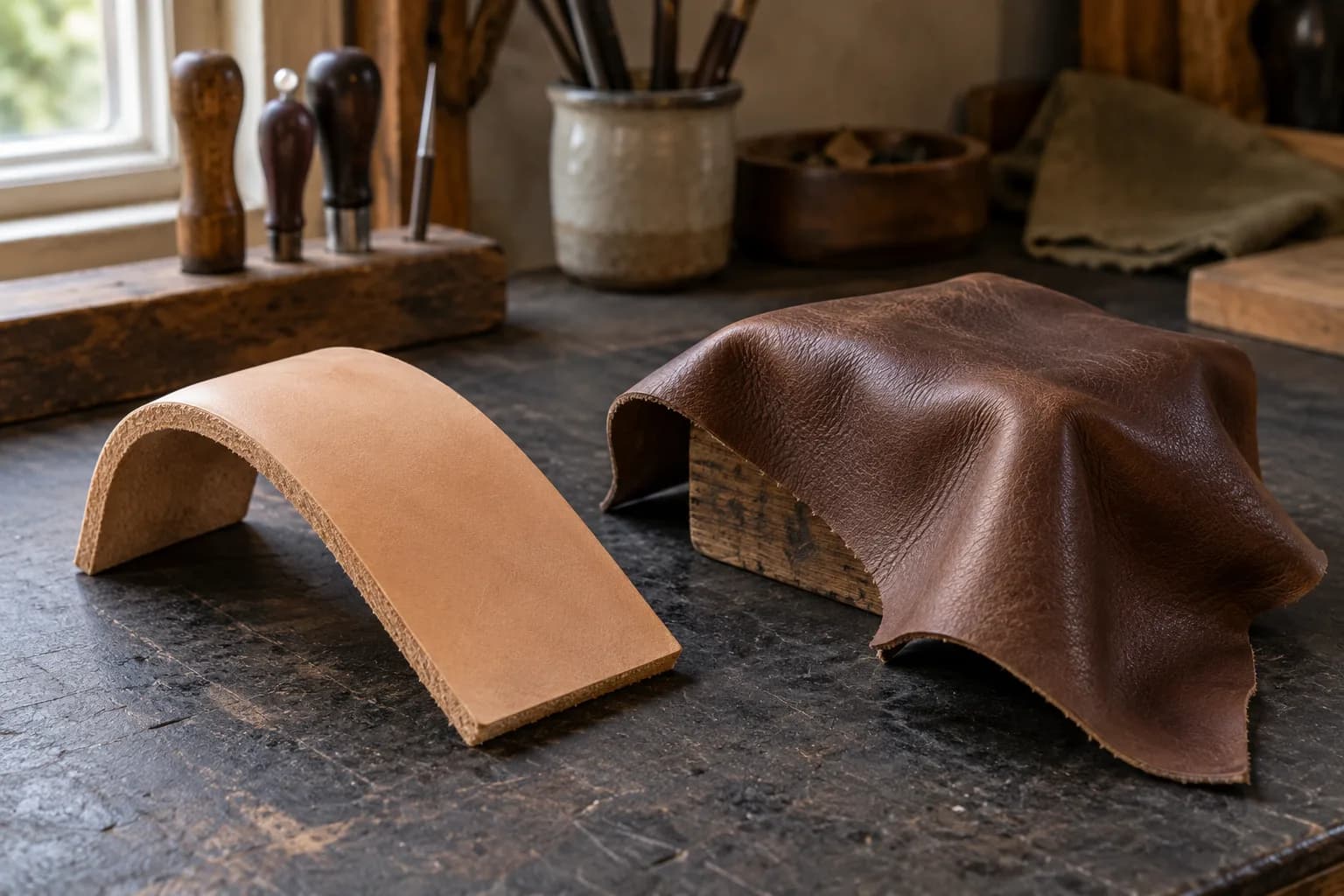
All leather is hide preserved by tanning, and the method decides everything. Vegetable tanning — months in tannin baths of bark and plant matter, the old way — yields firm, moldable leather that cuts crisply, tools beautifully, burnishes to glass, and holds a wet-formed shape like it grew there. Chrome tanning — days in chromium salt baths, the modern industrial way — yields soft, stretchy, upholstery-friendly leather that does none of those things. Sheaths, holsters and everything structural: veg-tan, always.
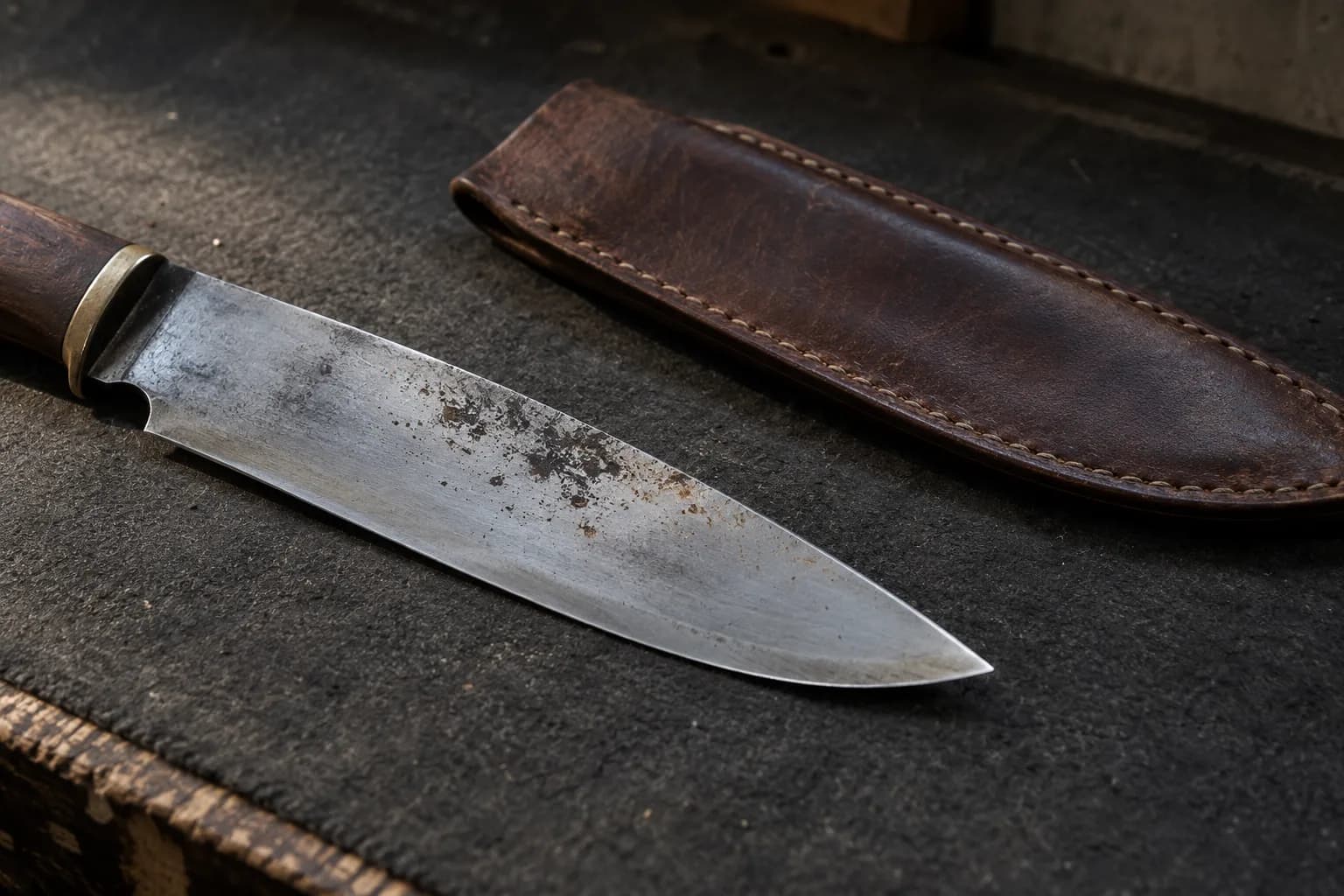
The stronger reason than workability: chrome-tanned leather retains acidic residues and salts from its tanning chemistry, and in contact with steel — especially with any moisture — it stains, pits and corrodes blades, stainless included. Makers learn this from a customer photo of a blade with black spots shaped like the sheath’s interior. Veg-tan is far kinder, though no leather is a storage vault — the full storage rules live in Leather Care and Blade Storage. When a supplier cannot say which tannage a hide is, that is an answer too: walk.
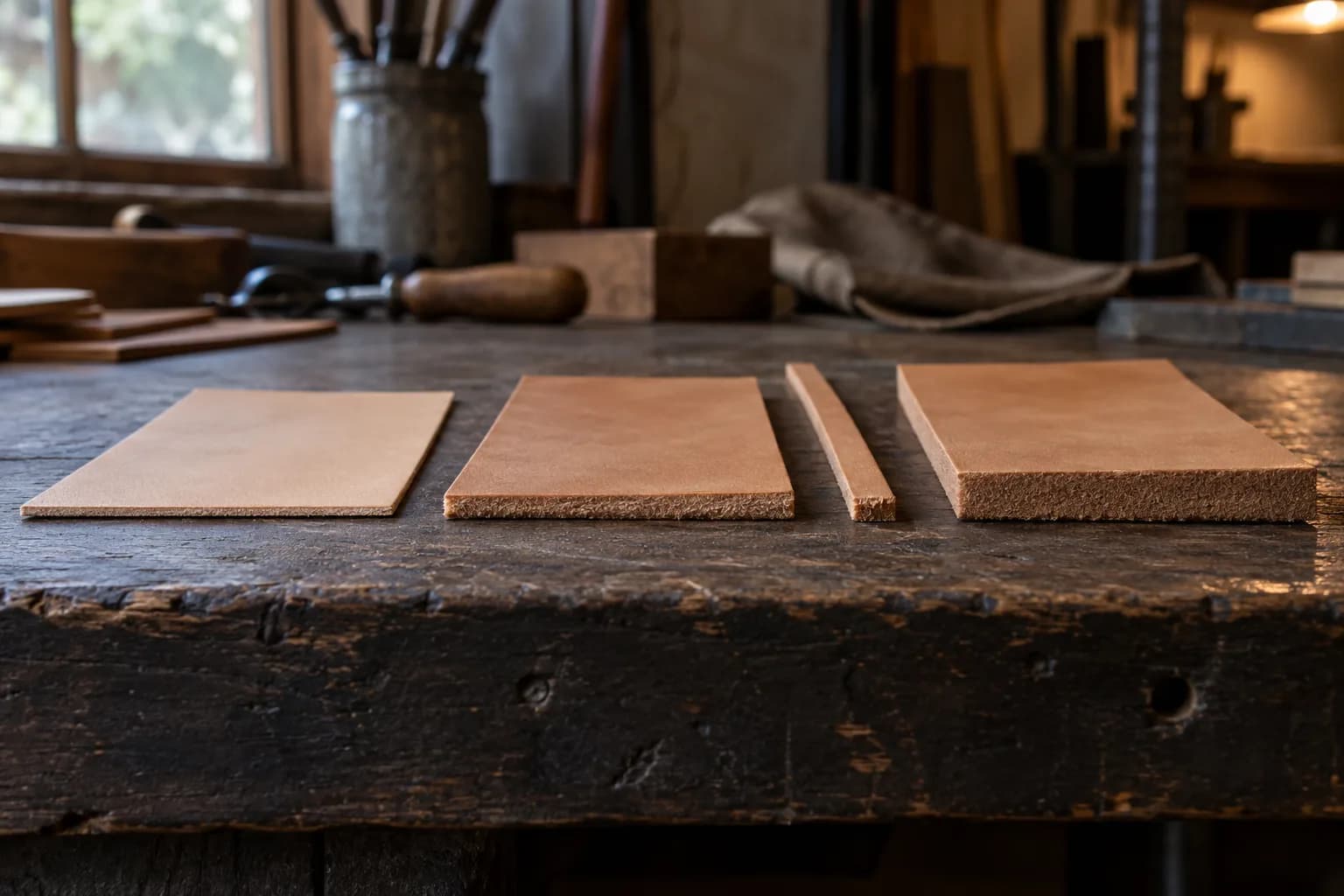
Leather thickness is sold in ounces: one ounce equals 1/64 inch, quoted in ranges because hide varies. The working translations: 4-5 oz (about 1/16 inch) — knife rolls, linings, light pouches; 6-7 oz — light sheaths, folder slips; 8-9 oz (about 1/8 inch) — THE standard fixed-blade sheath and belt weight; 10-12 oz — heavy holsters, axe masks, armor-adjacent. When in doubt on a sheath, 8-9 oz is correct; doubled at the welt it builds the rigid spine the design needs.
A hide sells in districts: the back and shoulder are dense, uniform, low-stretch — prime sheath territory (a “double shoulder” is the classic sheath purchase); bellies are cheap, stretchy practice material honestly labeled as such. Full-grain — the intact surface — is the grade to buy; “genuine leather” in the marketing sense means the leftovers. Import veg-tan is workable and budget-friendly; the celebrated American tanneries earn their premium in consistency — buy import to learn, domestic to sell, and handle a hide before trusting a new supplier at volume.
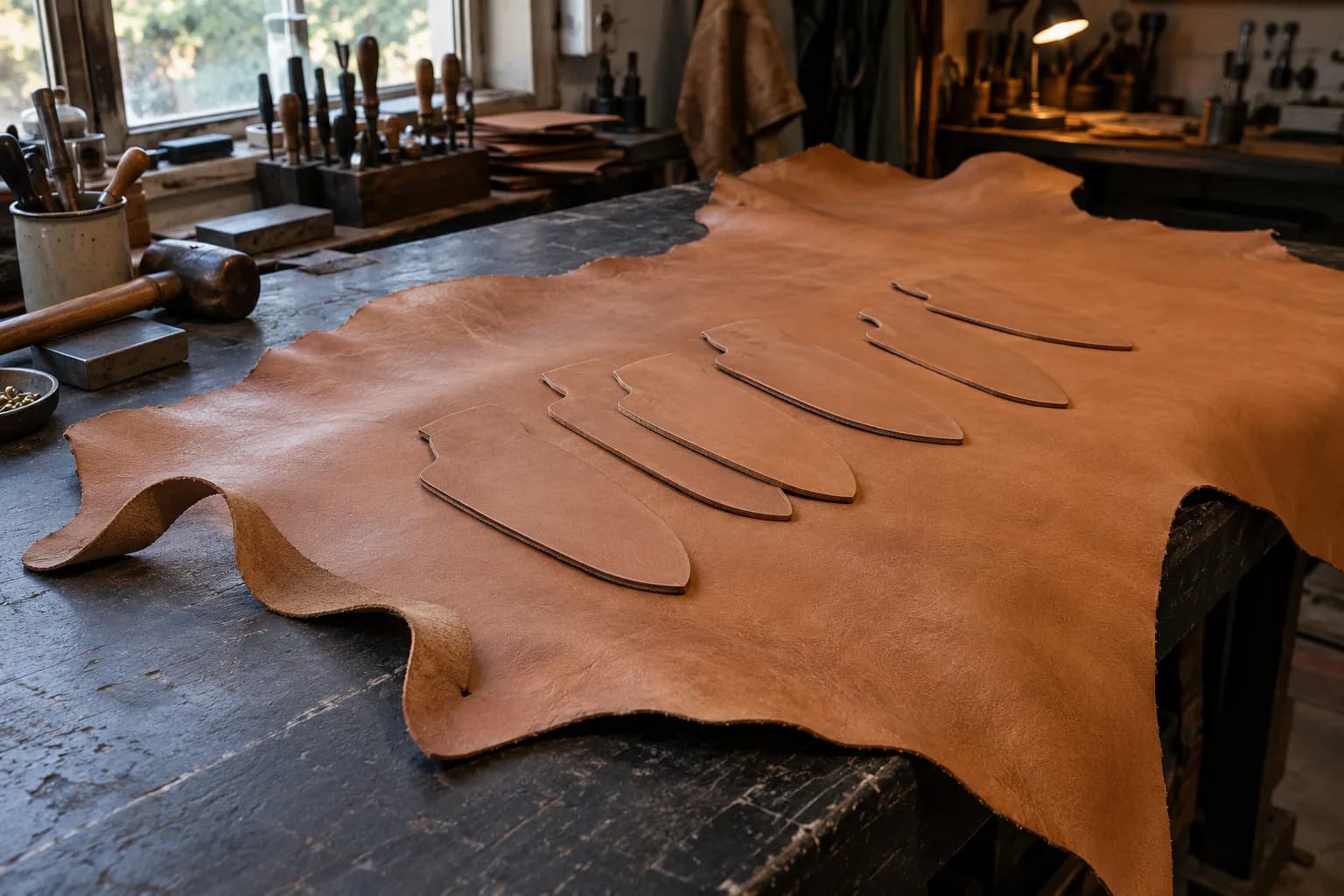
For a knifemaker starting the first sheath: one 8-9 oz veg-tan double shoulder (natural, undyed — you will dye and finish yourself), a small piece of 4-5 oz for practice stitching, and nothing else until the work asks. One shoulder yields many sheaths; the skill it teaches yields all the rest.
Keep reading
Three more from the same bench.
Every knifemaker meets the same moment: a finished blade, a proud photo — and nothing to put it in. A knife without a sheath is half a product, and…

The fold-over (or centerback) sheath is leatherwork’s first-knife project: one piece of leather folded around the blade, a welt guarding the stitches, one…

The last leather lesson is the one to print on the care card that ships with every knife: the sheath is transport and carry, not storage. Long-term…
Same bench
I machine the parts, hand-assemble, track and test Torus grinders in Sterling, Illinois. Most orders ship in seven to ten business days from time of order.

Current dual-axis platform with a fiber-laser-cut 6061 chassis and single-knob tracking.

Current dual-axis platform with a steel chassis, more mass and less vibration.

Prior-design aluminum chassis, 90-degree tilt and 1.5-inch tooling arms.

One-man shop
I answer my own email. Tell me the steel, the machine and what it is doing, and I will tell you what I would try next.