
Beginner Guides
Basic Knife Anatomy & Terminology
Knifemaking has its own vocabulary, and a lot of guides (including this one) assume you already know it. Here’s every term you’ll actually run into…
Blade Design
Full tang is stronger and easier to build; hidden tang is lighter and shifts balance back. Compare strength, weight and balance, and a partial-tang middle.
3 min readWritten by Rich LinvilleFree to read
Tang construction, how far the blade steel actually extends into the handle, affects strength, weight, balance, and how a knife is actually built, and it’s one of the first real design decisions a maker makes after choosing blade shape.
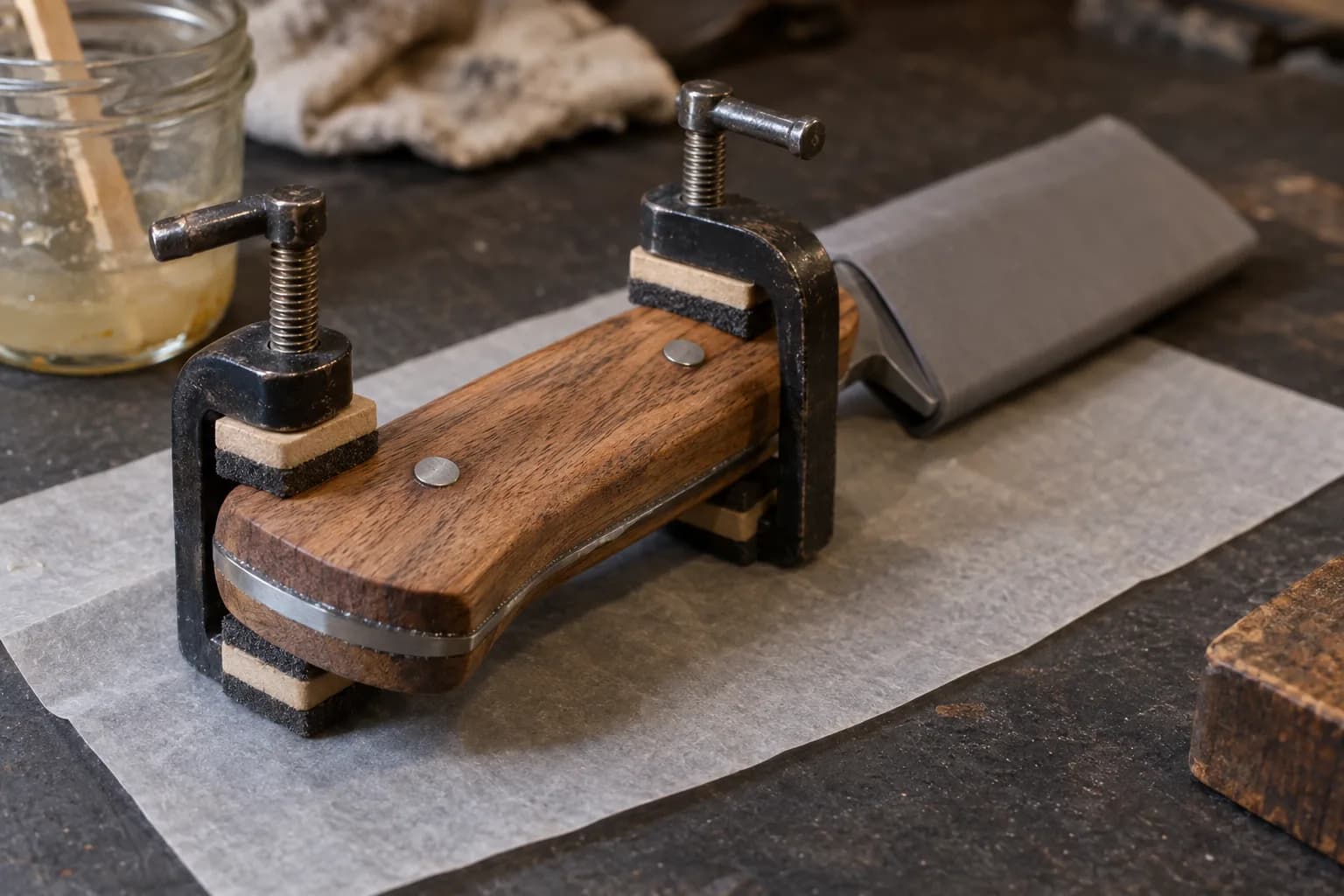
The steel runs the entire length and width of the handle, visible along the top and bottom edges when scales are attached, essentially the same width as the blade all the way to the back of the handle. Handle scales are attached on either side of this full-width steel core with pins and epoxy.
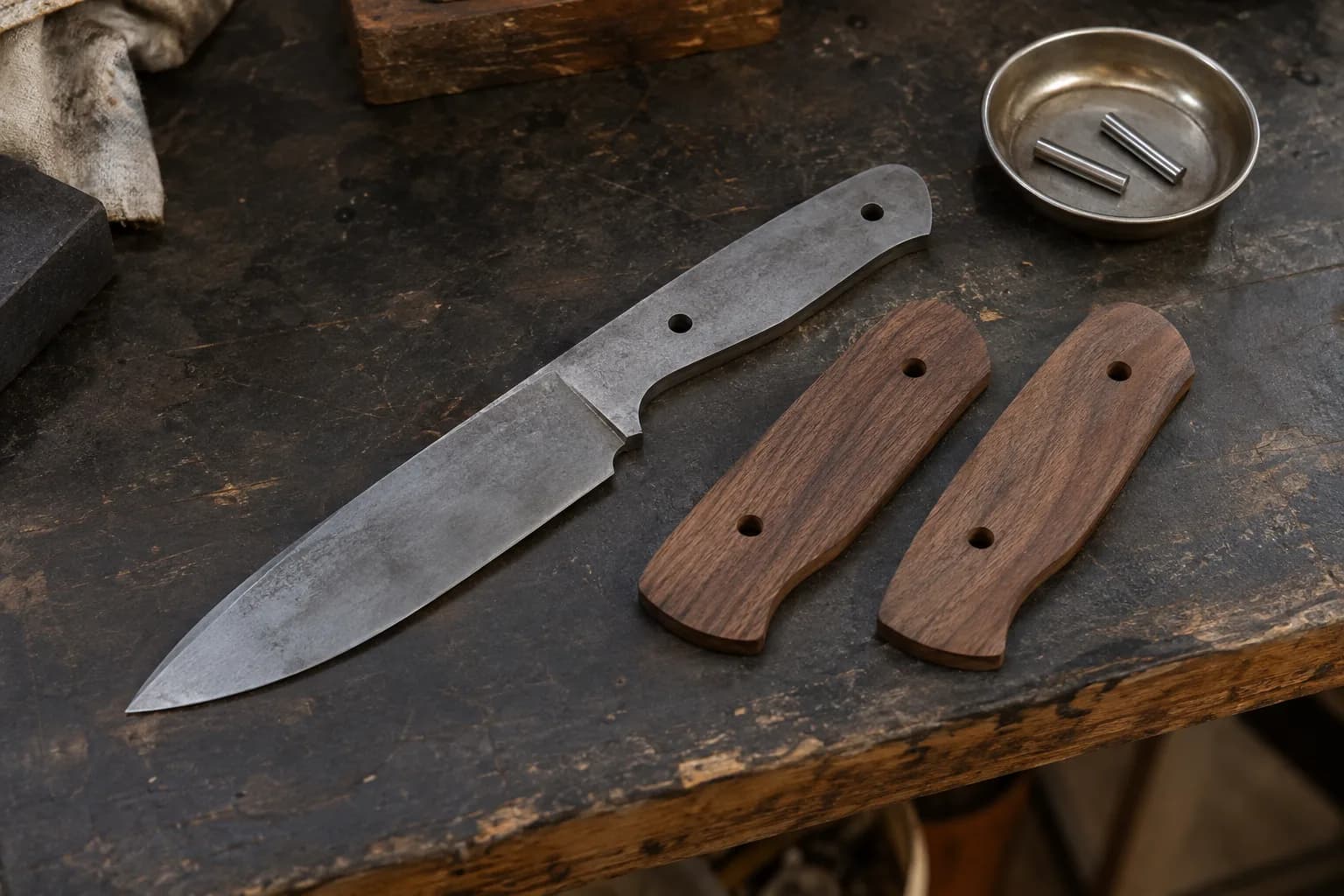
Maximum strength, there’s no weaker transition point between blade and handle, since it’s continuous steel throughout. It’s also the simplest, most beginner-friendly construction method: flat scales glued and pinned to a flat tang is a straightforward process with predictable results. Full tang is the standard for most modern working knives, hunting knives, and hard-use fixed blades for exactly these reasons.
Full tang knives are heavier than an equivalent hidden-tang design, since there’s a full slab of steel running through the whole handle instead of just a narrow core. Balance also tends to sit further forward (blade-heavy) unless deliberately designed otherwise, since so much steel mass sits close to the blade.
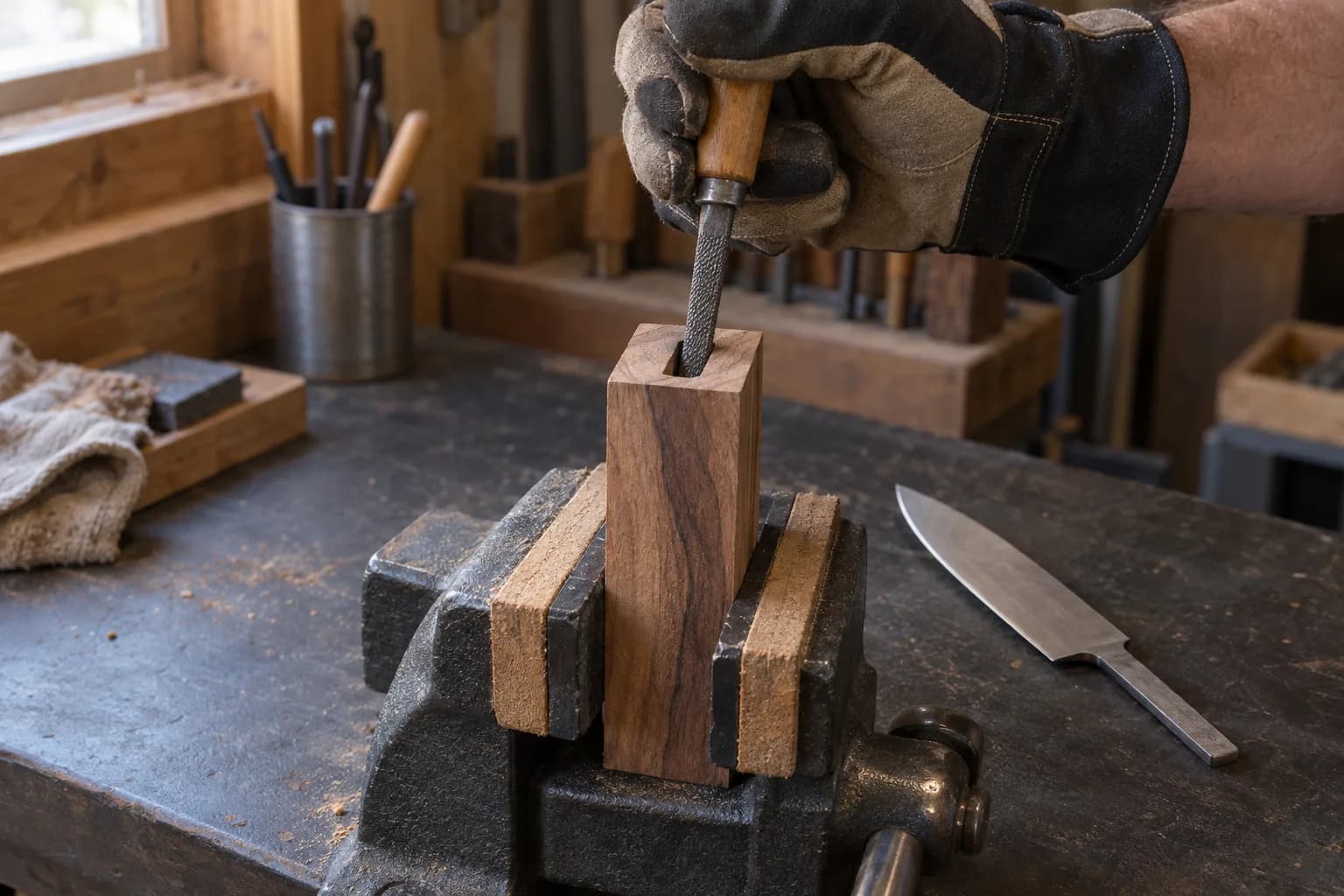
The tang narrows significantly compared to the blade width and is fully enclosed inside the handle material, usually a wood or similar handle block with a hole bored through it, rather than flat scales attached to the outside of a visible tang. Traditional knives, some kitchen knives, and many forged blades use this construction.
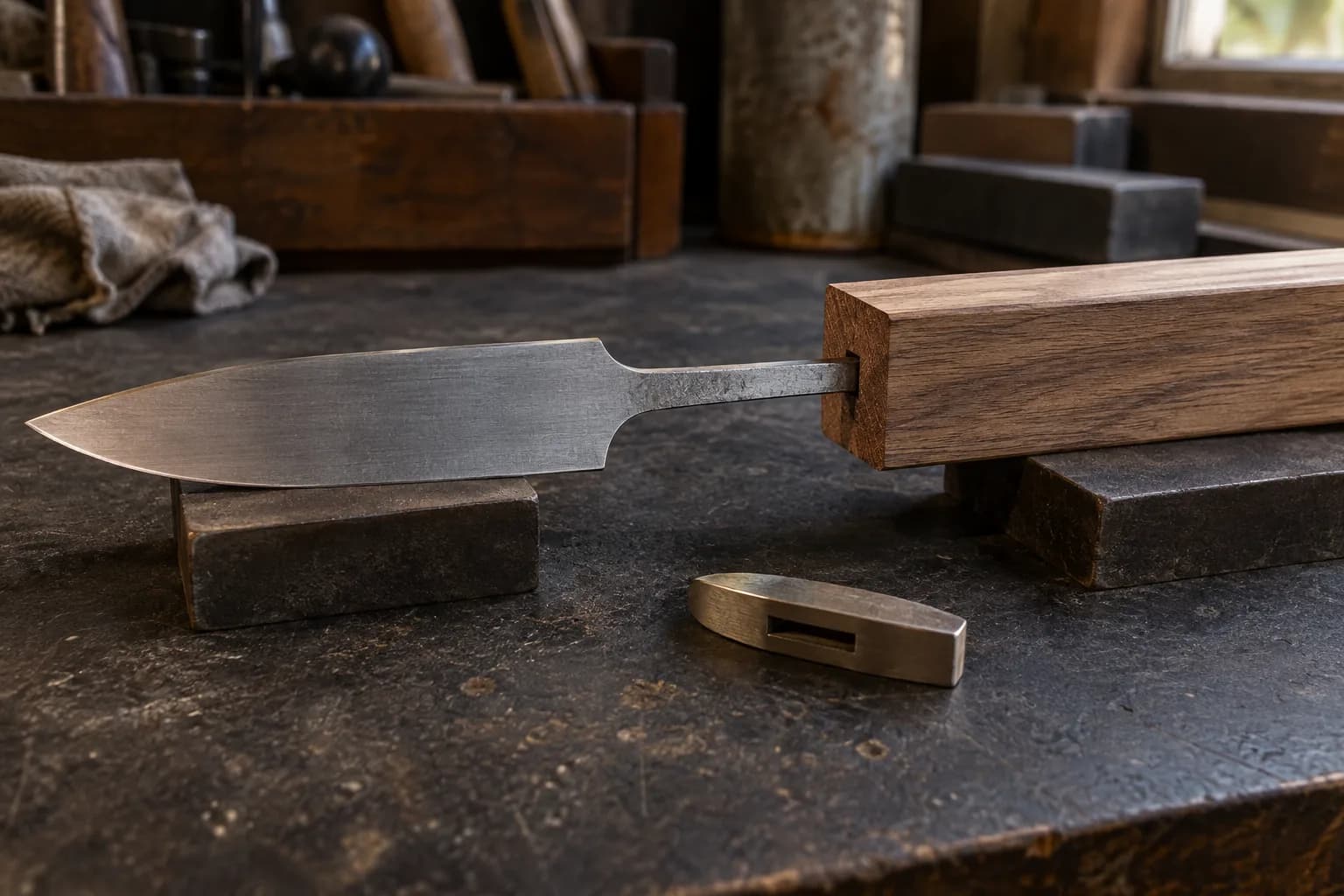
Significantly lighter than full tang for the same blade, since only a narrow core of steel runs through the handle instead of a full-width slab. This also shifts balance back toward the handle, which many makers and users prefer for extended use or fine control tasks. It allows a more traditional, rounded handle profile that full tang’s flat-scale construction can’t easily achieve.
Less inherently strong than full tang at the blade-to-handle transition, since the tang narrows down significantly right where stress concentrates during hard use. Construction is also more demanding: boring a straight, accurately-sized hole through a handle block, then fitting and securing the tang (often with epoxy and sometimes a peened or threaded end) takes more precision than flat-scale attachment. A poorly executed hidden tang is a real structural weak point; a well-executed one, common on high-quality traditional and Japanese-style knives, is entirely reliable for its intended use.
Some knives use a tang that extends partway into the handle (shorter than full length but not fully hidden and narrowed like traditional hidden tang), sometimes visible through a small section of exposed steel. This shows up mainly on lower-cost production knives and is generally considered the weakest of the common options, worth knowing about mainly to recognize it, not to build toward it deliberately.
Full tang. The construction process is far more forgiving, flat scales pinned and glued to a flat tang, and mistakes are easier to catch and correct before they become structural problems. Hidden tang construction is a worthwhile skill to build toward once full-tang fundamentals (flattening, pinning, epoxy work, covered in Handle Scales Won’t Sit Flush or Have Gaps) are solid.
At the transition point, yes, generally, since the tang narrows right where stress concentrates. Whether that matters depends on use: a well-made hidden tang kitchen knife sees very different stress than a hard-use outdoor knife, and traditional hidden tang construction has a long track record for its intended applications.
Not really, they’re different design decisions made early, the tang needs to be shaped differently from the start (full-width vs. narrowed and tapered) depending on which construction you’re planning, not something changed after the blade is already profiled.
Yes, meaningfully. Full tang’s extra steel mass in the handle shifts balance forward; hidden tang’s minimal handle-steel shifts it back. This is one of the real, practical reasons to choose one over the other beyond just strength and construction difficulty.
Keep reading
Three more from the same bench.
Knifemaking has its own vocabulary, and a lot of guides (including this one) assume you already know it. Here’s every term you’ll actually run into…
Handle material affects grip, durability, weather resistance, and how a knife feels in the hand, arguably as much as blade steel affects how it cuts…
Modern knifemaking owes a lot to a handful of individuals who either revived lost techniques, popularized enduring designs, or brought the craft to a…
Same bench
I machine the parts, hand-assemble, track and test Torus grinders in Sterling, Illinois. Most orders ship in seven to ten business days from time of order.
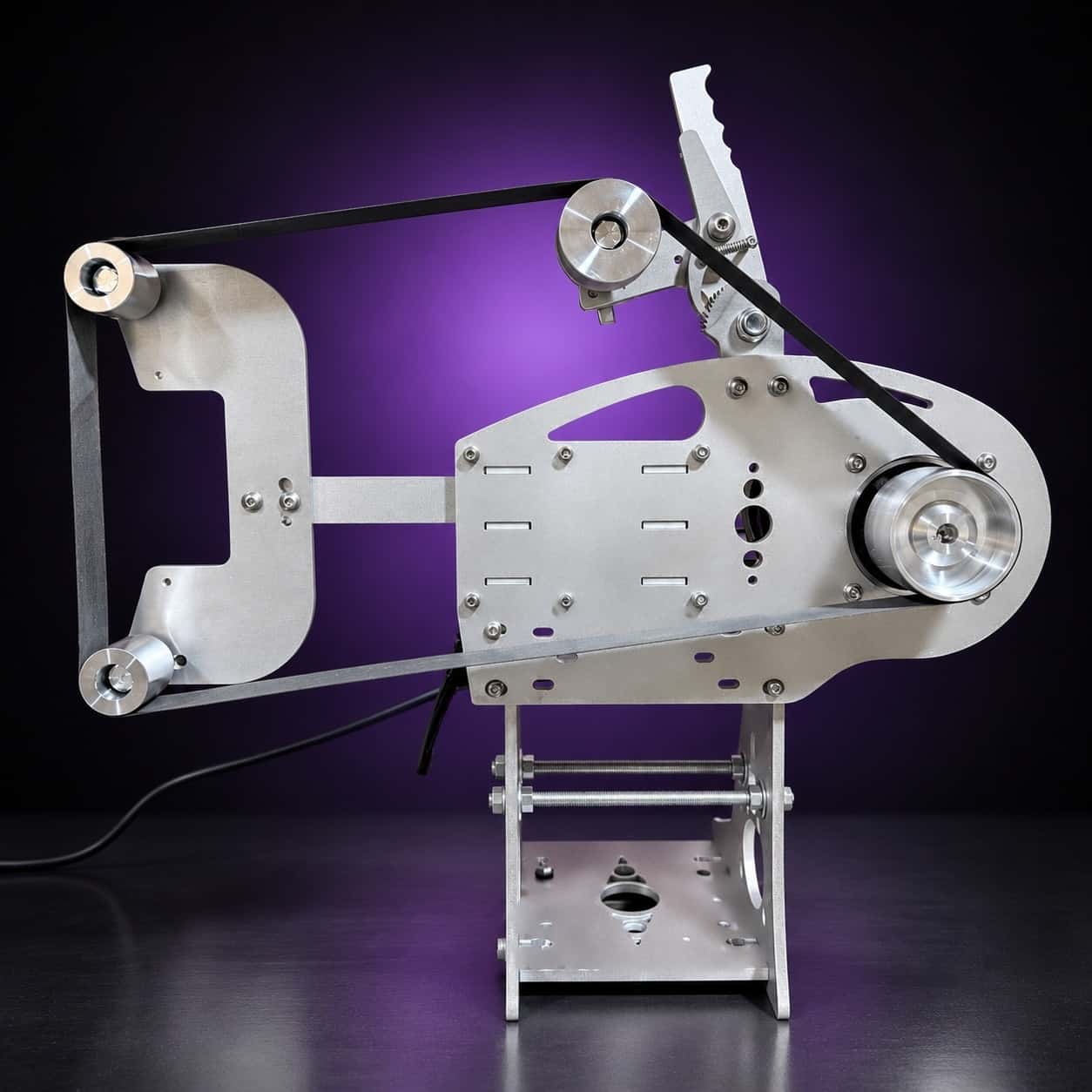
Current dual-axis platform with a fiber-laser-cut 6061 chassis and single-knob tracking.
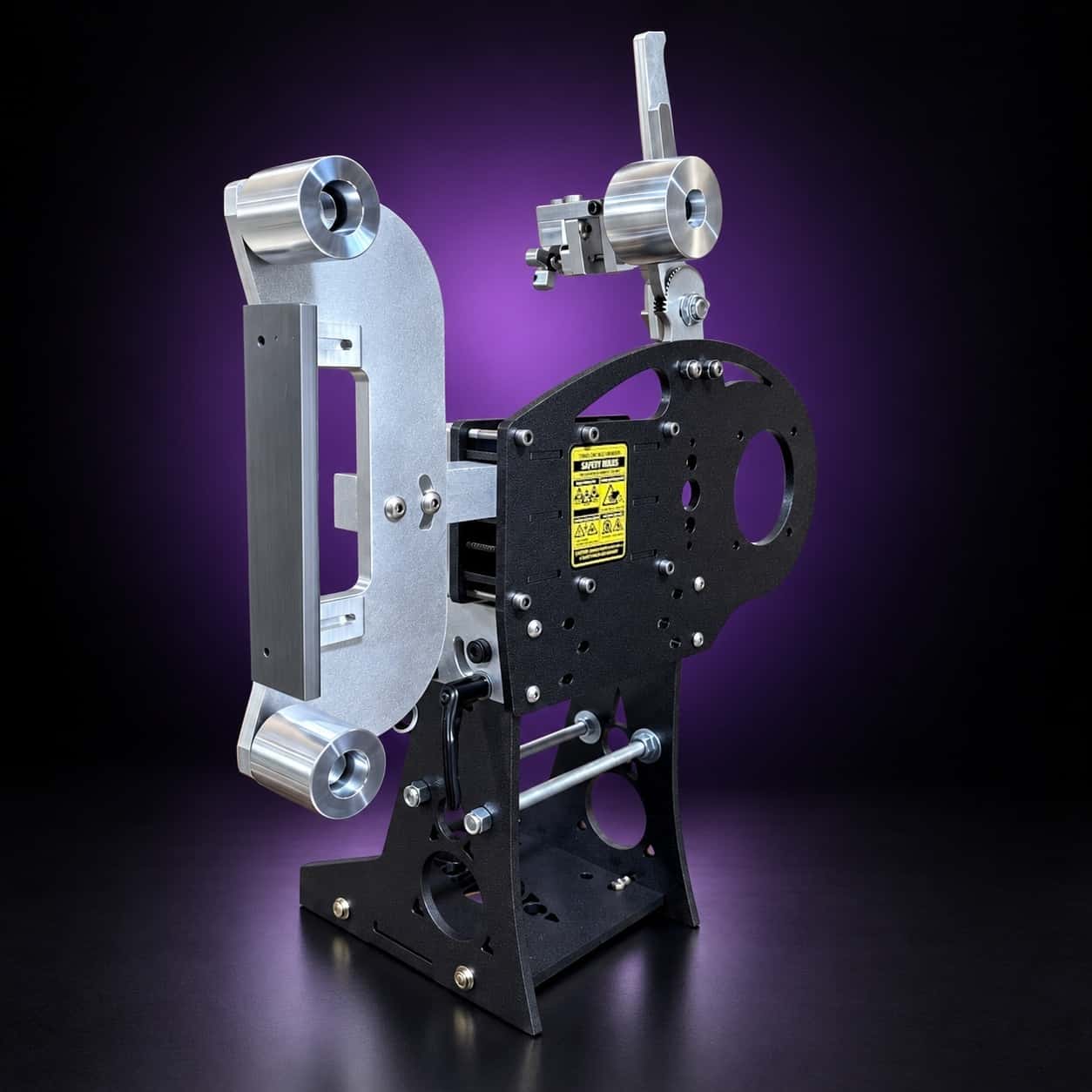
Current dual-axis platform with a steel chassis, more mass and less vibration.
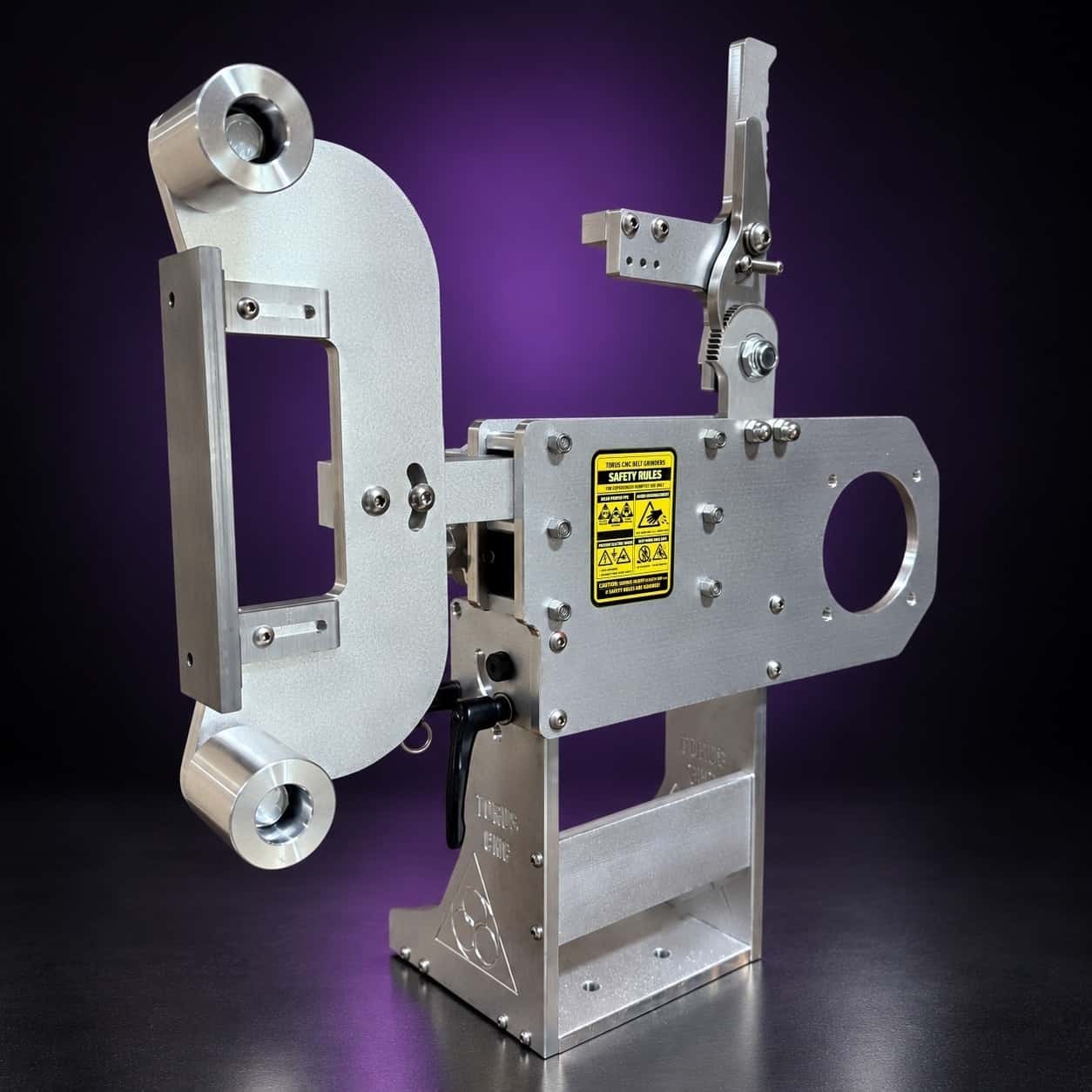
Prior-design aluminum chassis, 90-degree tilt and 1.5-inch tooling arms.
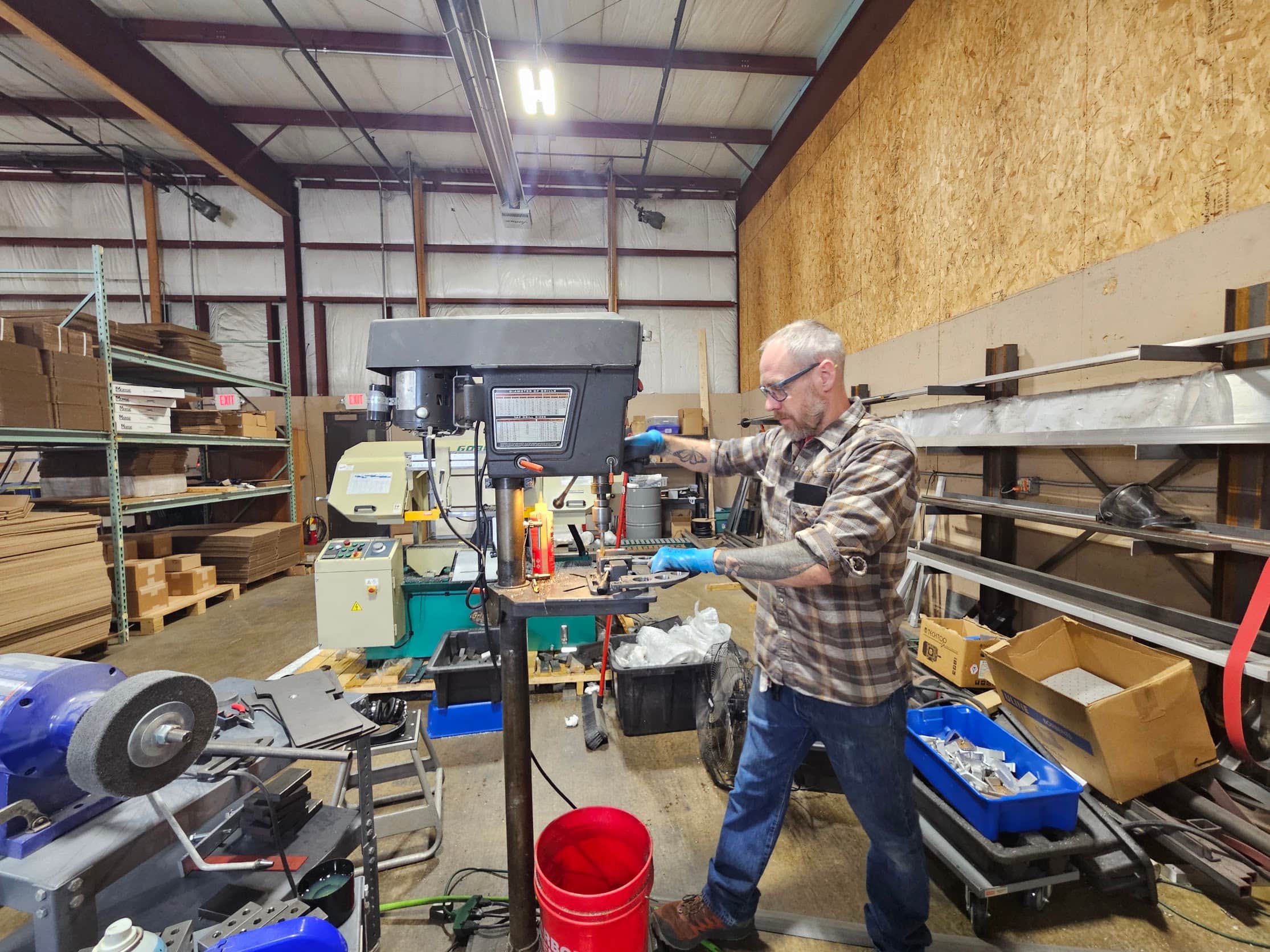
One-man shop
I answer my own email. Tell me the steel, the machine and what it is doing, and I will tell you what I would try next.