
Beginner Guides
How to Choose Your First Knife Steel
With dozens of knife steels to choose from, picking your first one can feel overwhelming. The good news: for a first knife, the right answer is almost…
Beginner Guides
Plain-language knife anatomy: point, edge, spine, grind and bevel on the blade; tang, scales, pins and guard on the handle; plus heat-treat and steel terms.
4 min readWritten by Rich LinvilleFree to read
Knifemaking has its own vocabulary, and a lot of guides (including this one) assume you already know it. Here’s every term you’ll actually run into, organized by where it sits on the knife.
Point: the very tip of the blade. Edge: the sharpened cutting line running from the point back toward the handle. Spine: the thick, unsharpened back edge of the blade, opposite the cutting edge. Tip: the general area near the point, distinct from the point itself in shape and use.
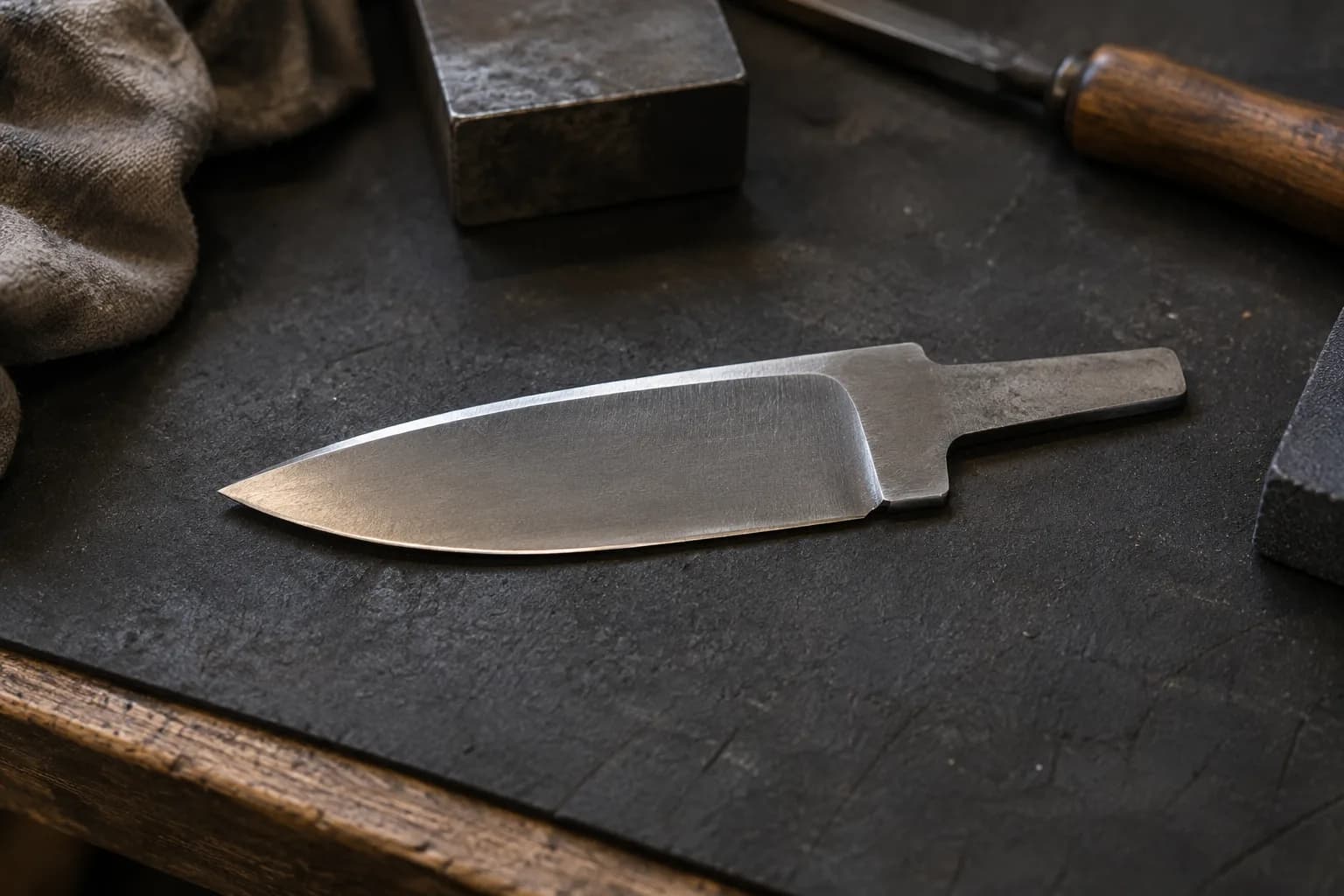
Grind: the cross-sectional shape of the blade, how the flat stock has been thinned down toward the edge. Flat grind: a single straight bevel running from spine to edge. Hollow grind: a concave bevel, ground with a curved wheel, common on straight razors and some hunting knives. Full flat grind: the bevel starts right at the spine with no flat unground section. Saber grind: the bevel starts partway down the blade instead of at the spine, leaving a flat unground section near the spine for extra strength. Convex grind: a curved, outward-bulging bevel, strong at the edge and common on axes and choppers. Bevel: any ground, angled surface on the blade, most often referring to the final angle right at the cutting edge.
Ricasso: the flat, unsharpened section of blade right in front of the handle, often where a maker stamps their logo. Choil: a small notch cut into the edge just before the ricasso, giving a finger a safe resting spot close to the work. Plunge line: the point where the main grind bevel cuts into the ricasso, a visible transition line makers work hard to keep clean and even on both sides. Belly: the curved portion of the edge, usually toward the front of the blade, used for slicing cuts. Swedge: a false, unsharpened bevel ground into the spine near the tip, thinning it for a more piercing point without adding a second cutting edge (a true swedge is sharpened; a false swedge is not).
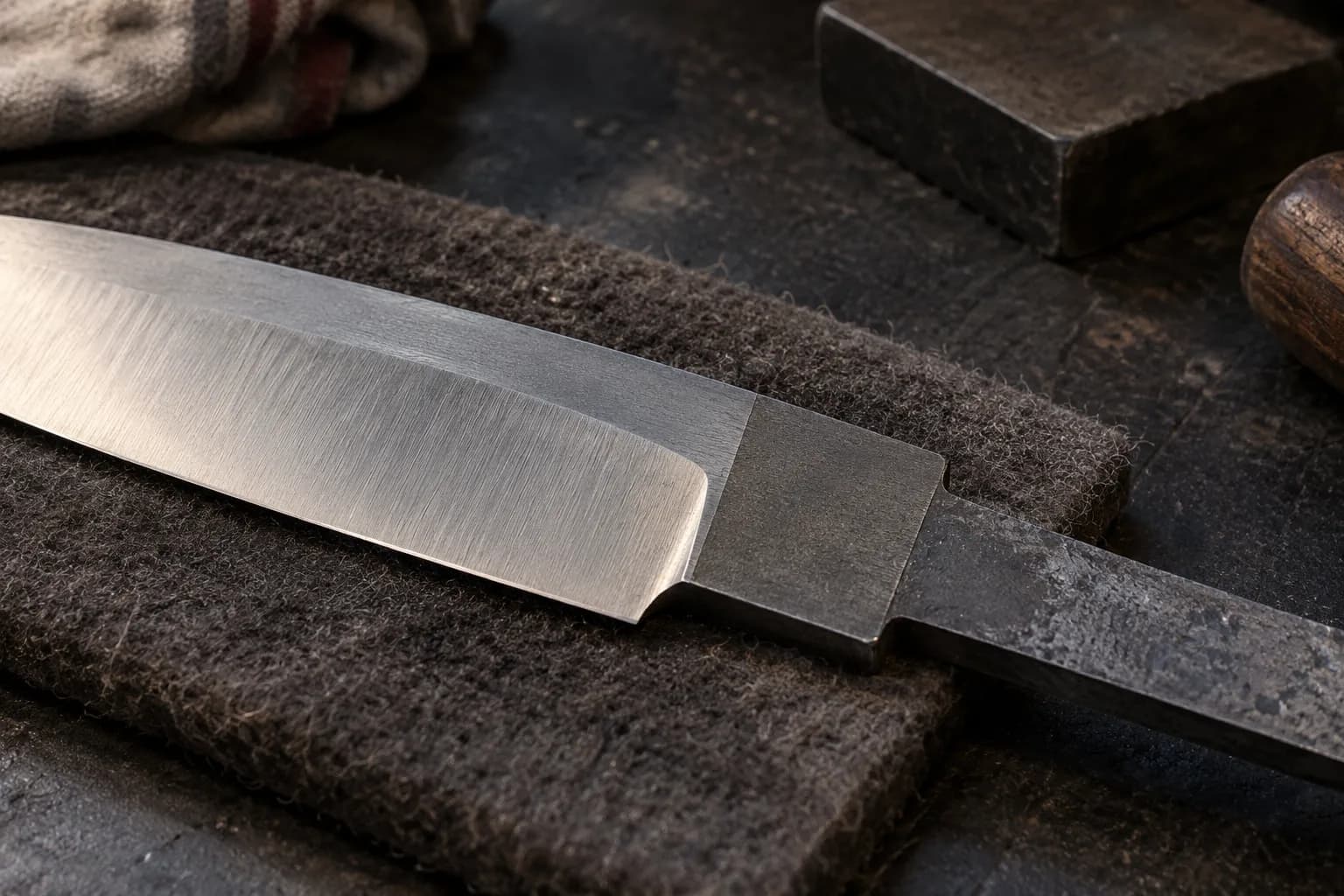
Tang: the portion of the steel that extends back from the blade into the handle. Full tang: the tang runs the entire length and width of the handle, visible along the top and bottom edge, the strongest and most common construction on working knives. Hidden tang: the tang is narrower than the handle and fully enclosed inside it, common on traditional and forged knives. Scales: the two handle slabs (wood, G10, Micarta, etc.) attached to either side of a full tang. Pins: the fasteners running through the tang and scales holding the handle together, along with or instead of epoxy. Bolster: a metal collar or transition piece between the blade and handle, often on forged or traditional knives, adding weight and a finished look. Guard: a crosspiece between the blade and handle that protects the hand from sliding forward onto the edge.
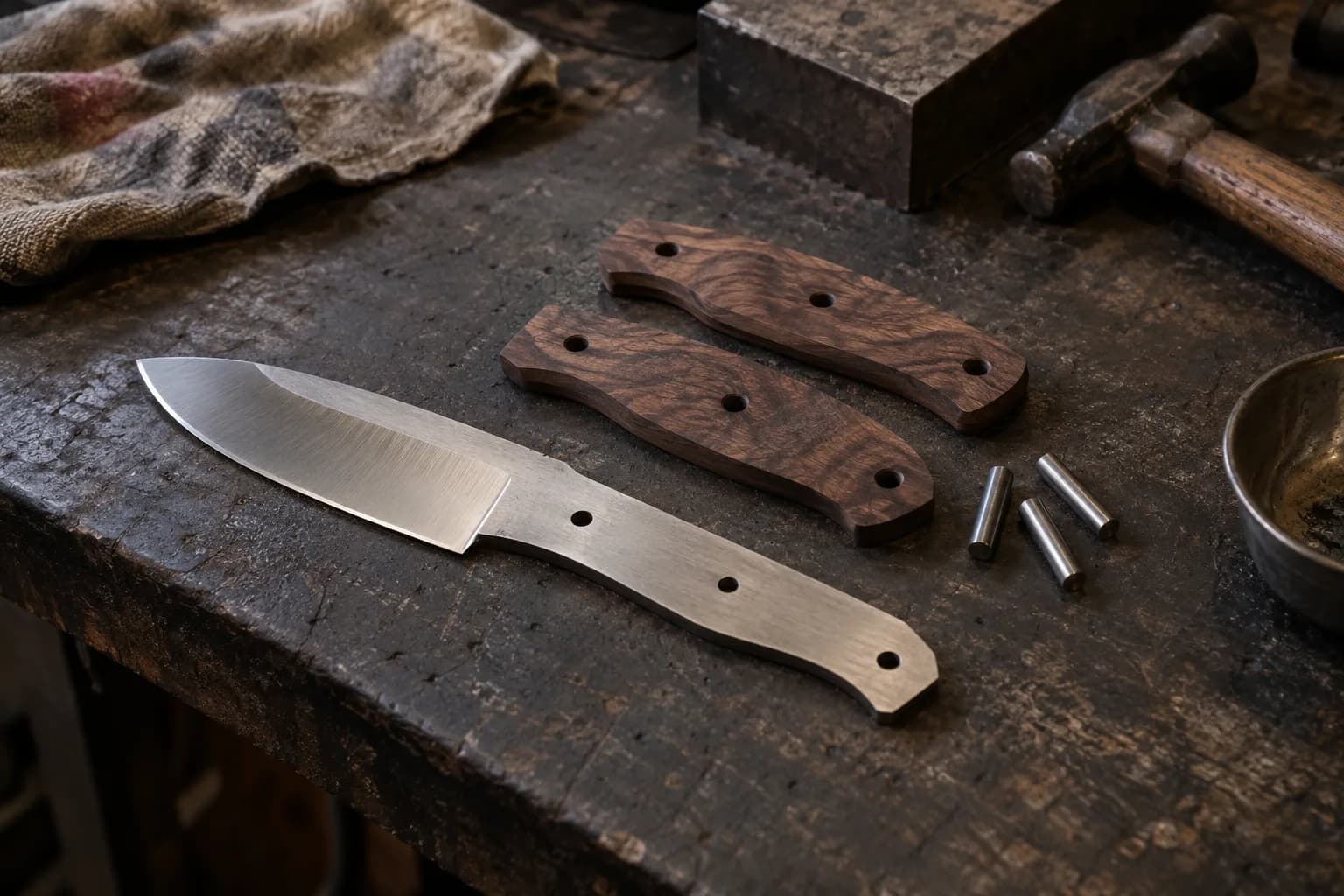
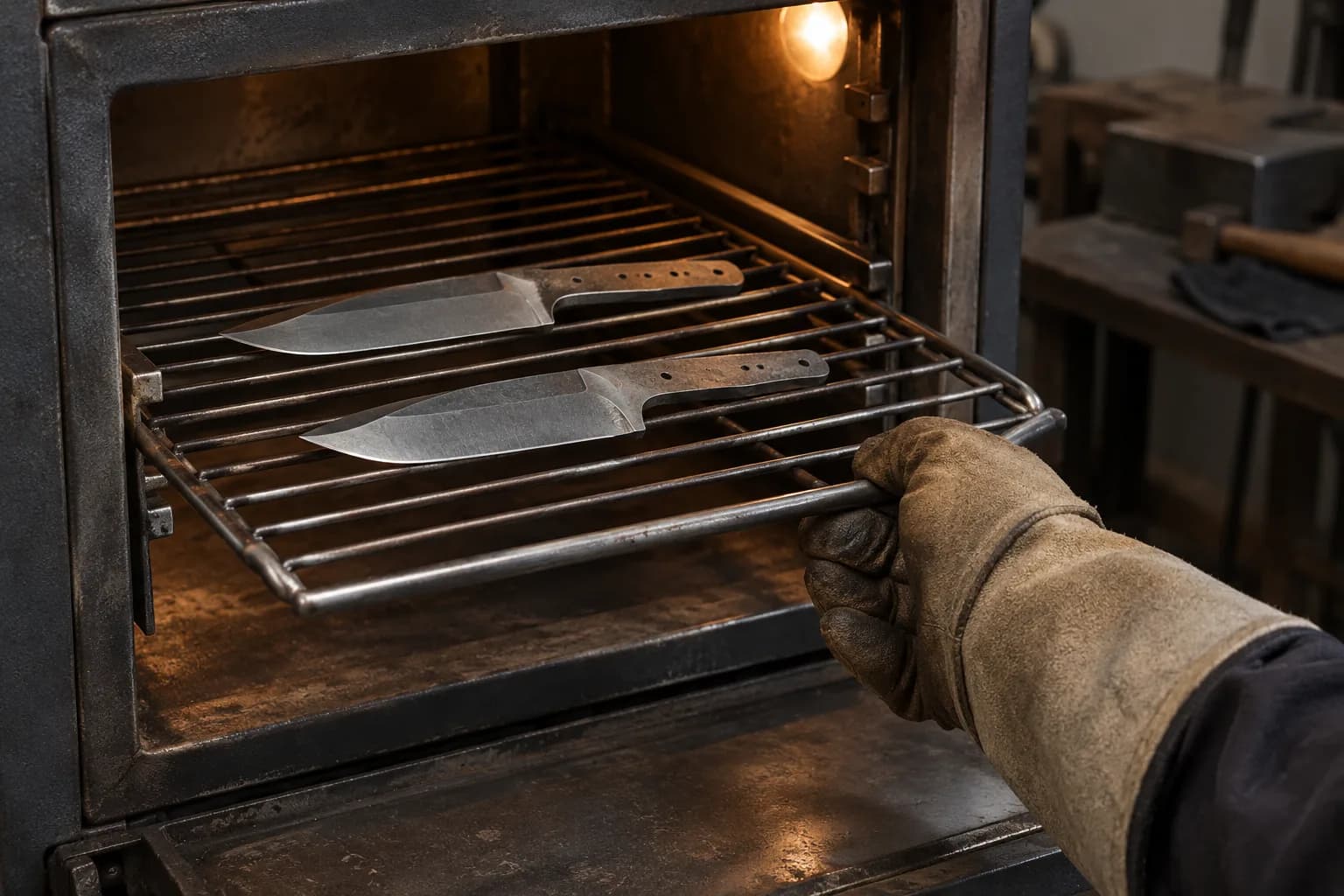
Normalize: heating the steel above its critical temperature and air-cooling it, done before hardening to relieve stress and refine grain structure. Austenitize: heating the steel to its critical temperature range where the internal crystal structure changes, the step immediately before quenching. Quench: rapidly cooling the austenitized steel (in oil, water, or air depending on the alloy) to lock in a hard structure. Temper: reheating the quenched blade to a lower temperature to trade some hardness for toughness, making it usable instead of glass-brittle. Hamon: a visible hardening line along the edge, created by clay-coating the spine before quenching so only the edge hardens fully, common on differentially-hardened blades. See the full Heat Treating Guide for the process itself.
Stock: the raw bar or sheet steel a knife is made from before any shaping. Distal taper: a gradual thinning of the blade’s thickness from ricasso to tip, reducing weight without weakening the edge. Rockwell hardness (HRC): the standard numeric scale for how hard a heat-treated blade is; most knife steels land between roughly 58-64 HRC depending on the alloy and intended use. See Understanding Knife Steel Ratings for how hardness relates to edge retention and toughness.
The bevel is the whole ground, angled surface leading down to the edge. The edge is just the very thin cutting line where the bevel(s) meet at the front of the blade.
No. The essentials to start are grind, tang, bevel, and quench/temper. The rest will make sense naturally as you read guides that use them; this page is meant as a reference to come back to, not a checklist to memorize first.
A guard specifically protects the hand from the edge by sitting between blade and grip. A bolster is more about the transition and weighting between blade and handle, and doesn’t always serve a protective function the way a guard does.
Keep reading
Three more from the same bench.
With dozens of knife steels to choose from, picking your first one can feel overwhelming. The good news: for a first knife, the right answer is almost…
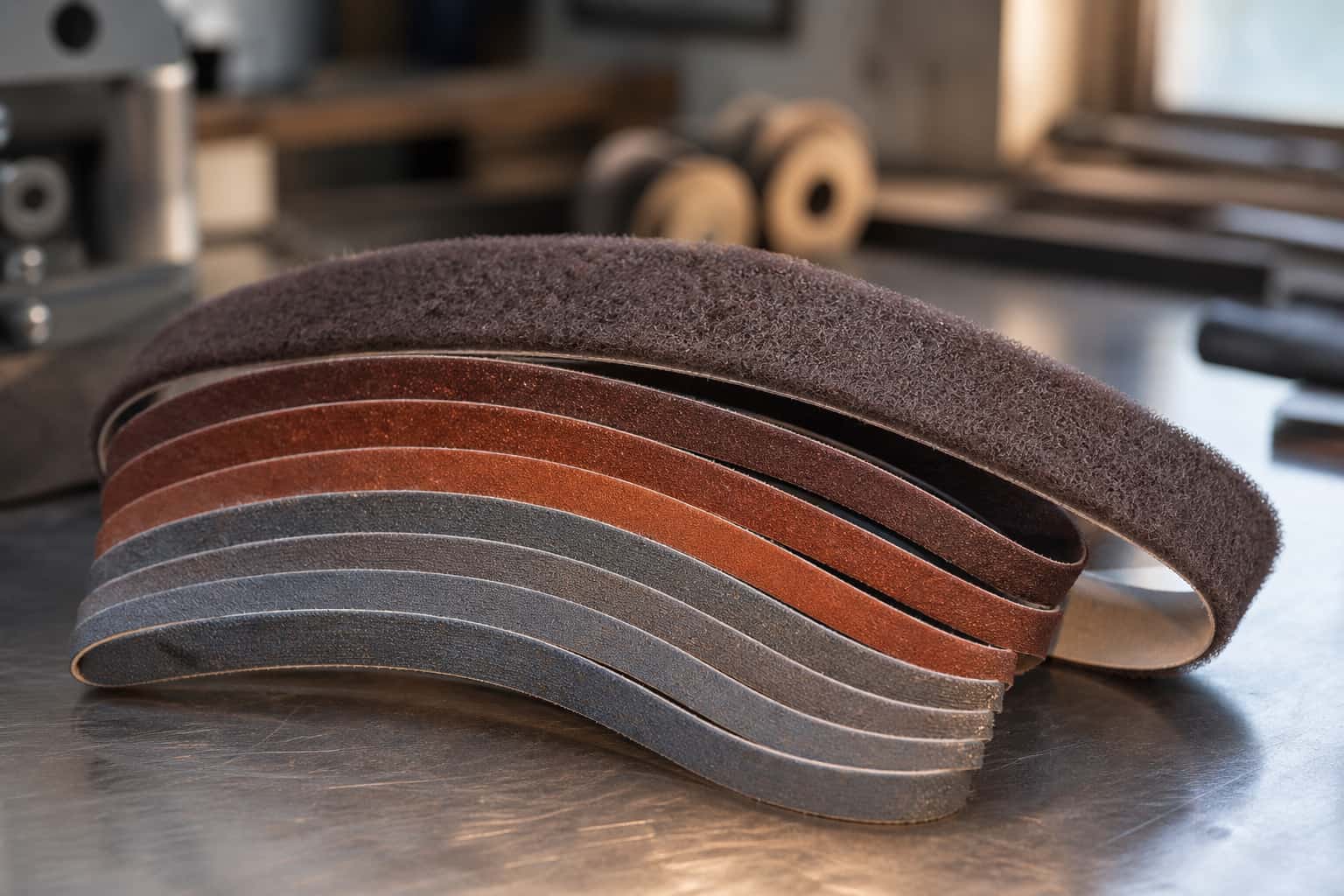
Every steel in the Knife Steel Database is rated 1-5 across four properties: toughness, edge retention, corrosion resistance, and machinability. Here’s…
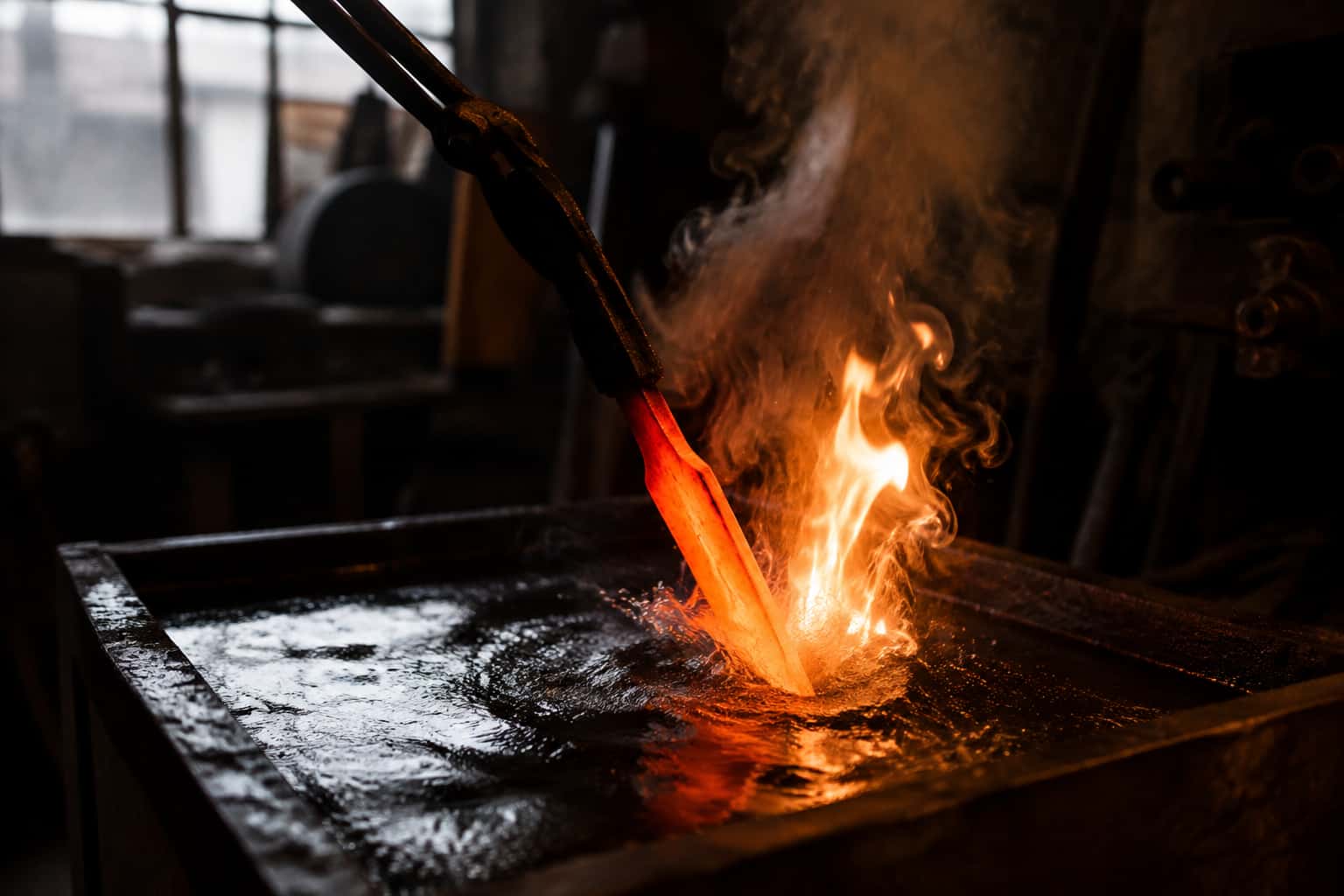
Heat treating is what turns a piece of flat bar stock into a functional knife blade. Done correctly, it transforms the steel’s internal crystal structure…
Same bench
I machine the parts, hand-assemble, track and test Torus grinders in Sterling, Illinois. Most orders ship in seven to ten business days from time of order.
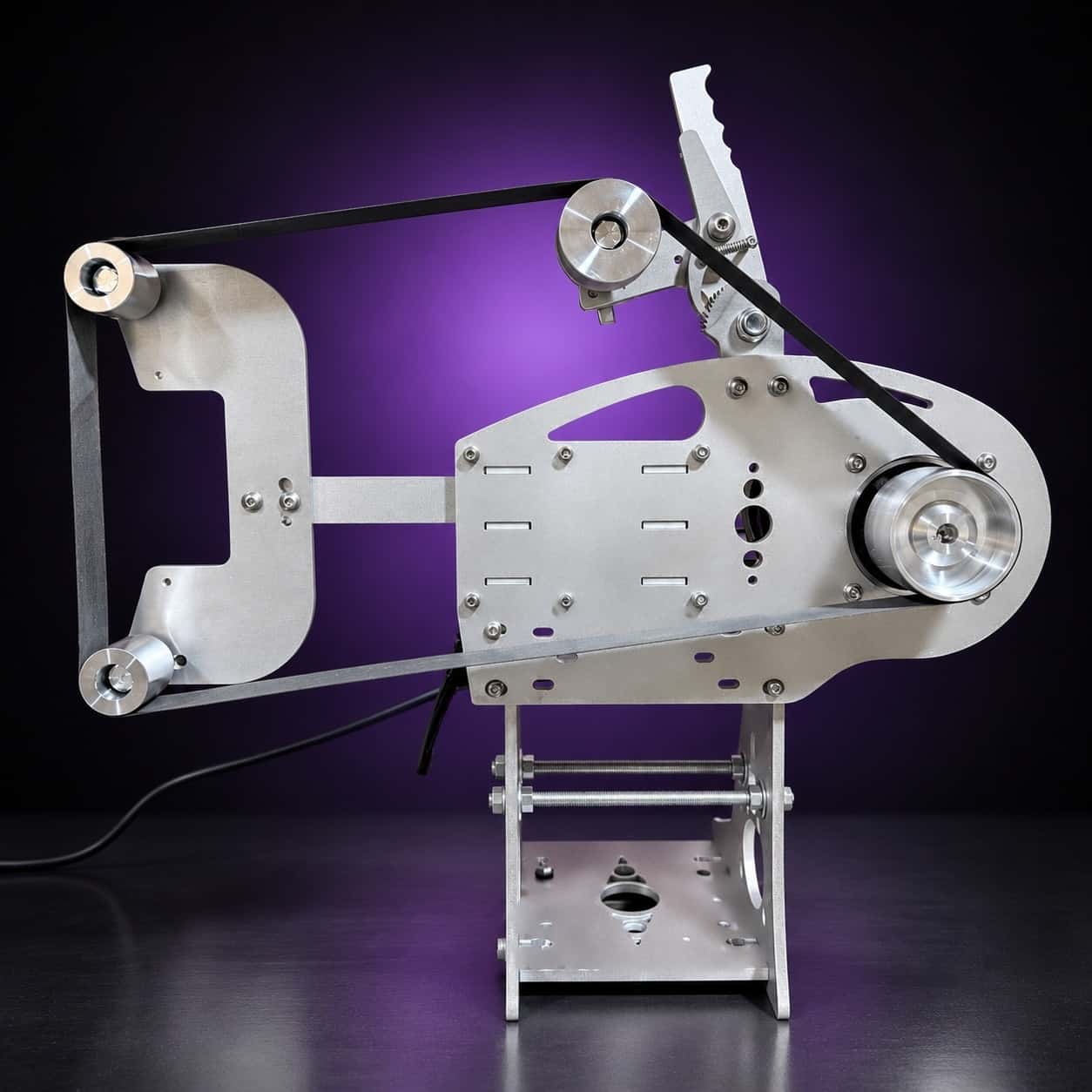
Current dual-axis platform with a fiber-laser-cut 6061 chassis and single-knob tracking.
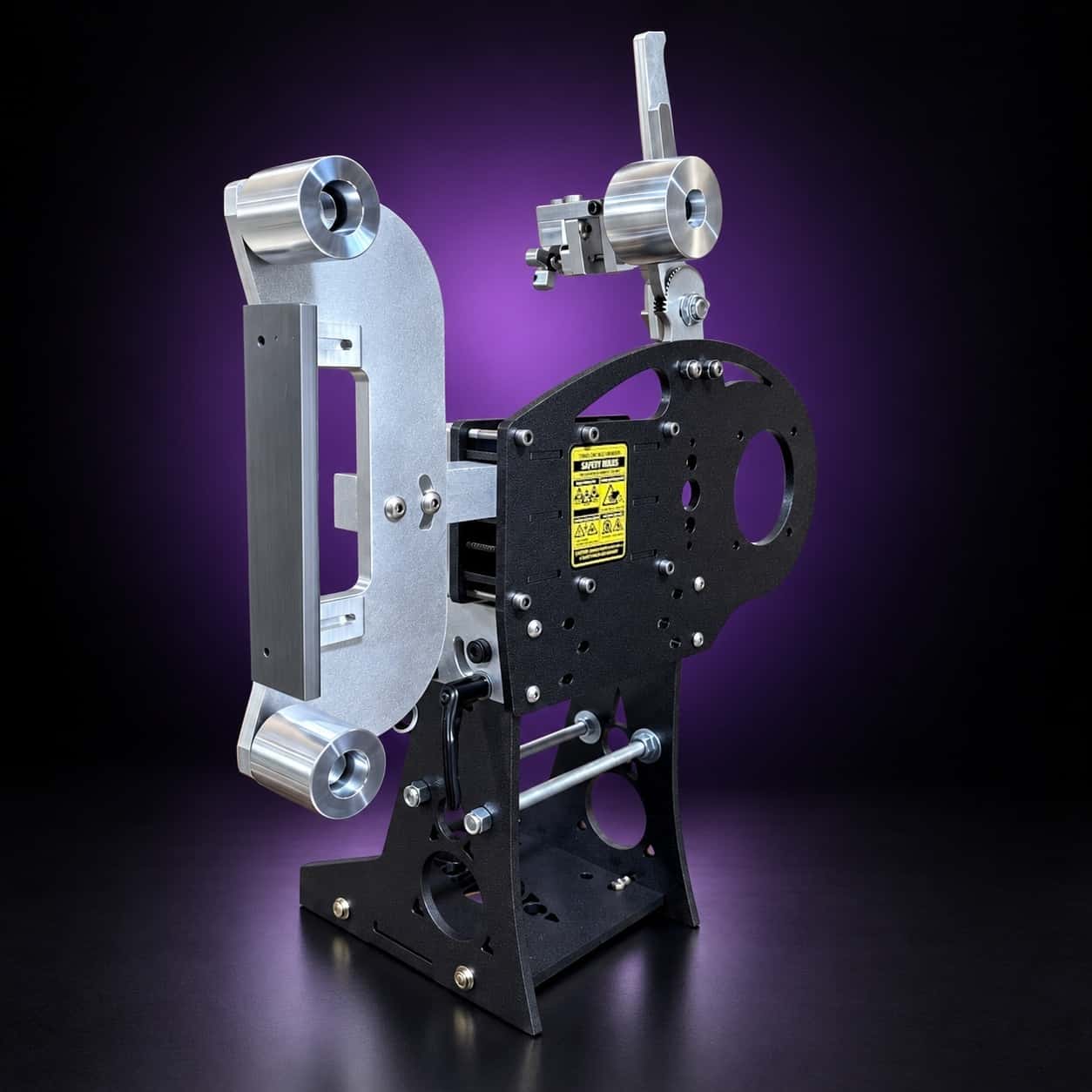
Current dual-axis platform with a steel chassis, more mass and less vibration.
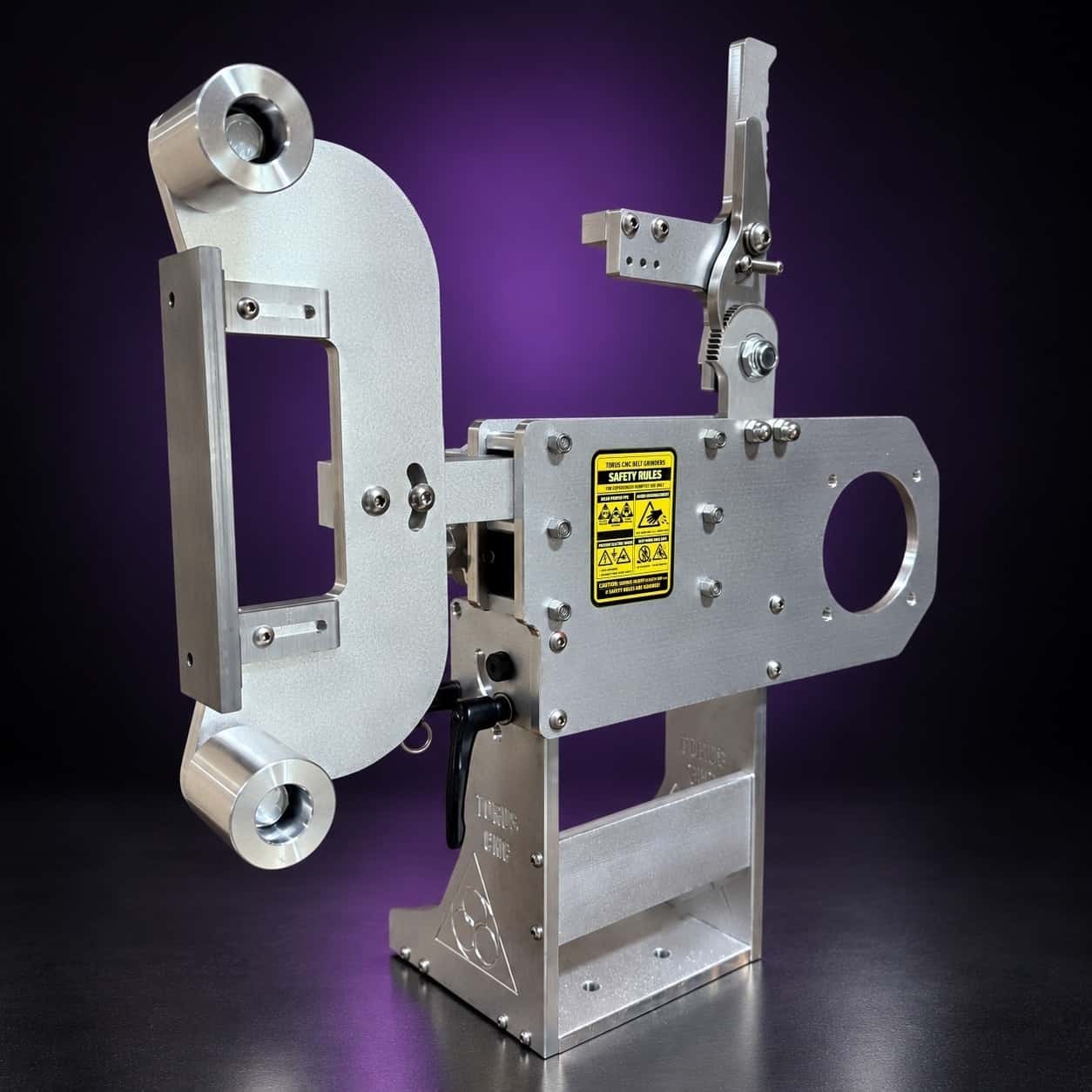
Prior-design aluminum chassis, 90-degree tilt and 1.5-inch tooling arms.
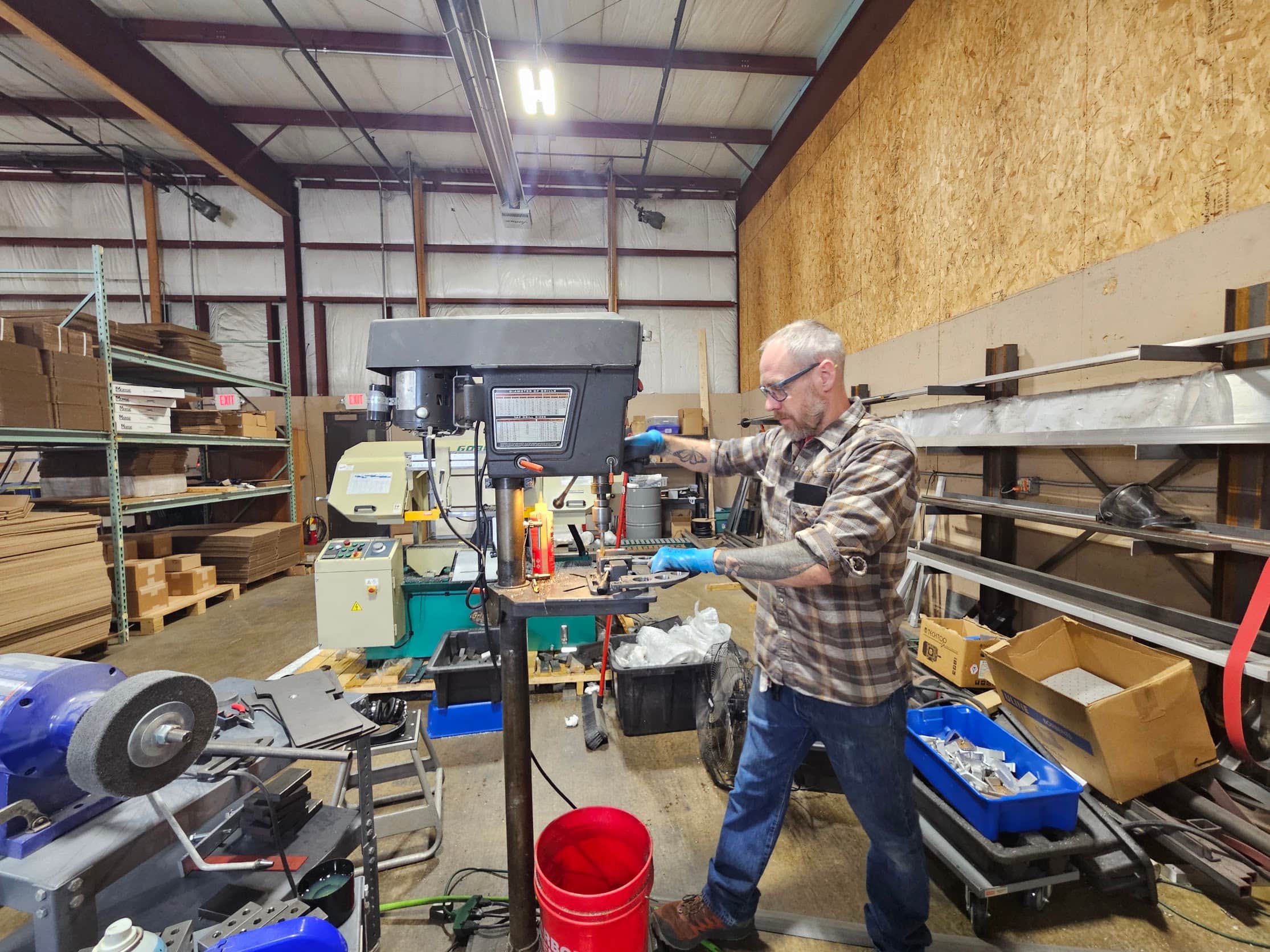
One-man shop
I answer my own email. Tell me the steel, the machine and what it is doing, and I will tell you what I would try next.