
Blade Design
Handle Material Guide: G10, Micarta, Wood, and More
Handle material affects grip, durability, weather resistance, and how a knife feels in the hand, arguably as much as blade steel affects how it cuts…
Blade Design
Walnut, maple and cherry to curly, burl and exotic woods for knife handles: figure, stabilization needs, oily-wood glue-up prep and what to look for in a blank.
3 min readWritten by Rich LinvilleFree to read
“Wood handle” covers an enormous range, from a plain domestic walnut block to a wildly figured stabilized burl costing more than the blade steel. Here’s how the common species and figure types actually differ.
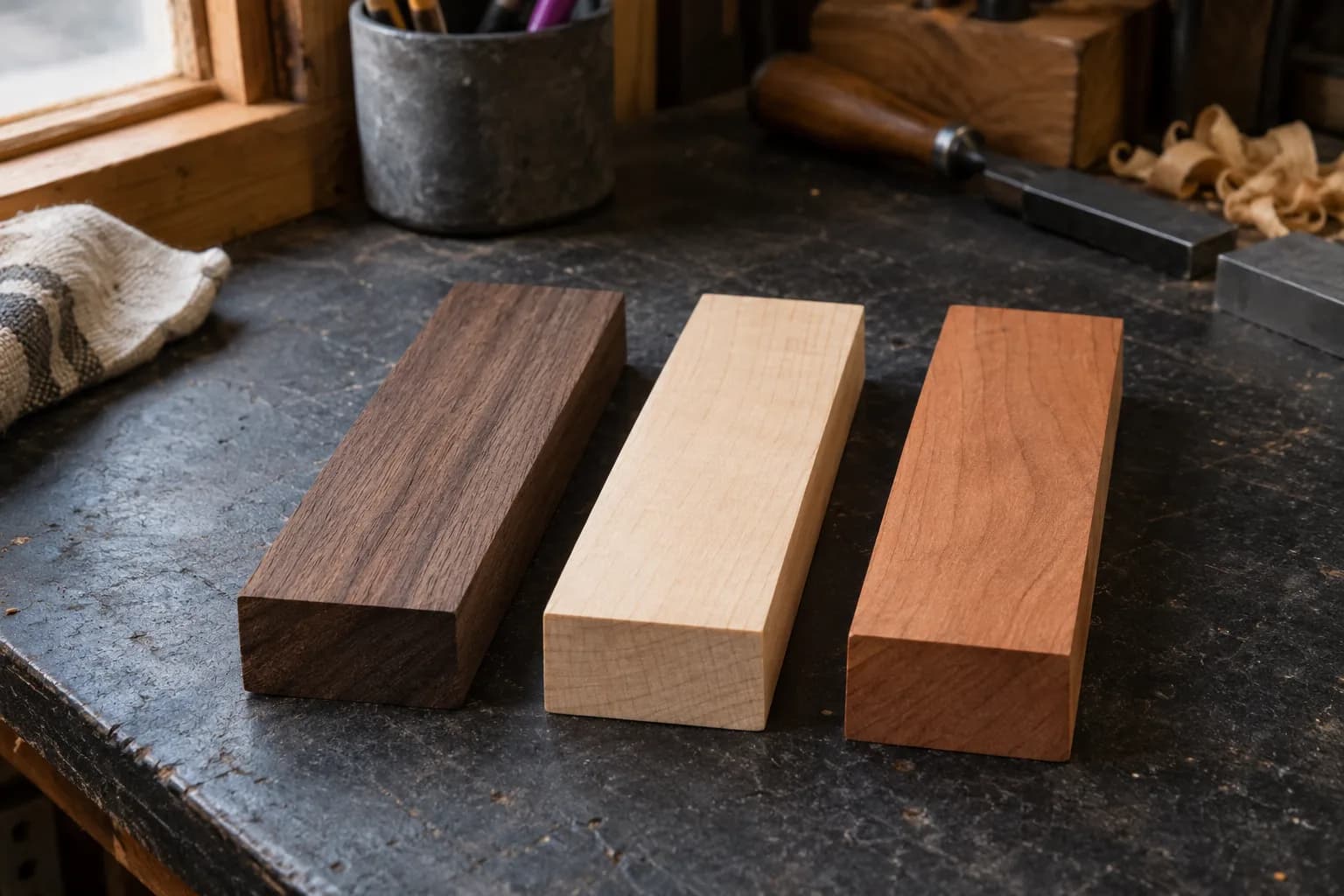
Walnut, maple, and cherry are the most common domestic choices, moderately priced, widely available, and easy to source in blank sizes suited to knife handles. Walnut runs dark brown with a straight, even grain; maple is pale and takes figure well (see below); cherry darkens attractively with age and UV exposure. All three are dense enough to hold up reasonably well even unstabilized, though stabilization still improves durability.
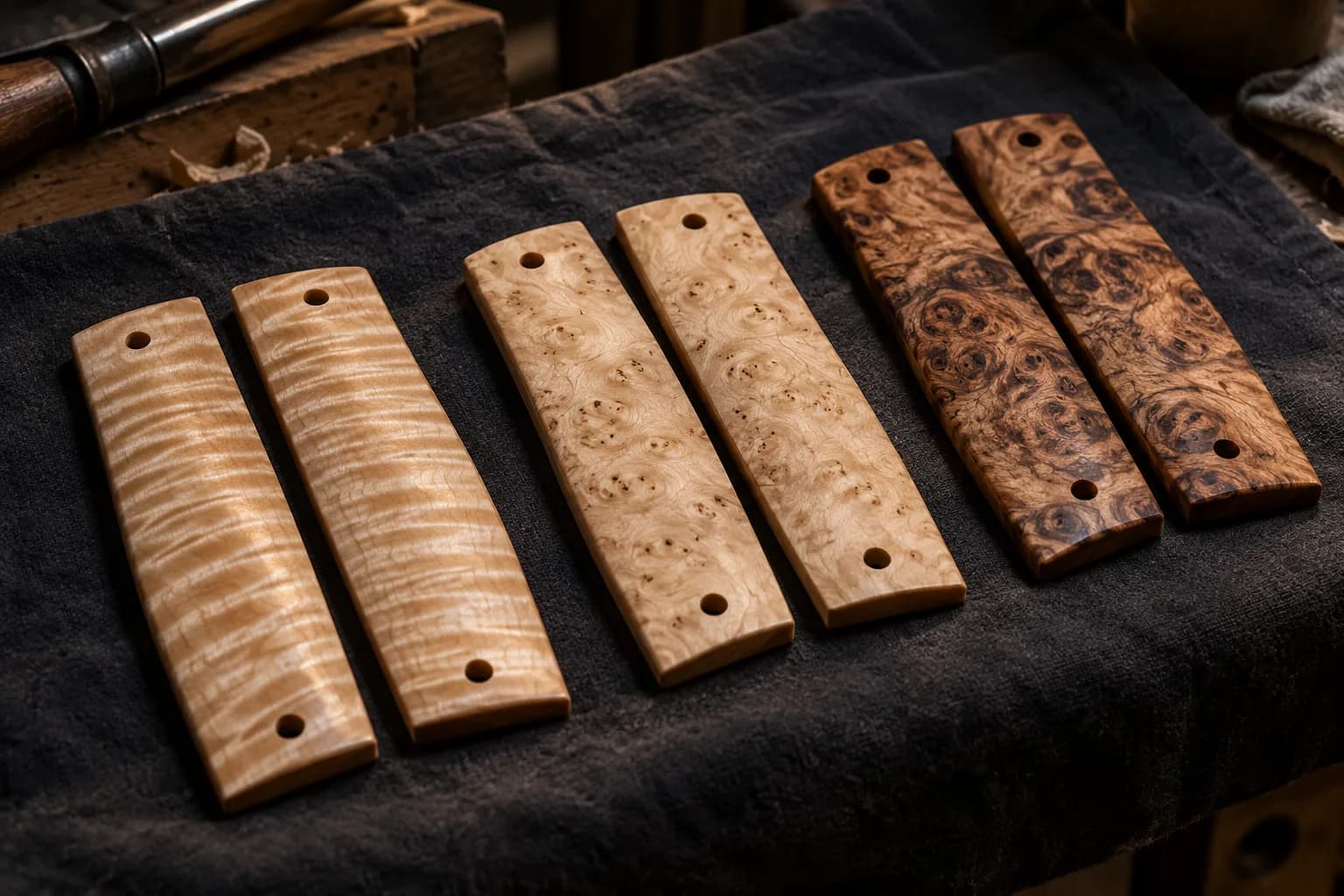
“Figure” refers to unusual grain patterns that catch light differently than straight grain. Curly (or “flamed”) maple shows rippling bands; birdseye maple shows small swirling eye-like marks from tiny grain distortions; burl (from any species) comes from a tree growth abnormality and produces dense, swirling, often highly prized patterns. Figured wood costs significantly more than straight-grain material of the same species and is almost always stabilized, since figure often comes with structural irregularities that make the wood more prone to cracking untreated.
Cocobolo, bocote, African blackwood, desert ironwood, and various rosewoods are popular for their color, figure, and (in several cases) natural oil content that resists moisture on its own. These woods are denser and often naturally more stable than domestic species, but several carry real sourcing considerations: some rosewood species are CITES-restricted (regulated international trade due to conservation status), affecting availability and sometimes requiring documentation. Always confirm legal sourcing with a reputable supplier rather than assuming any exotic species is freely tradeable.
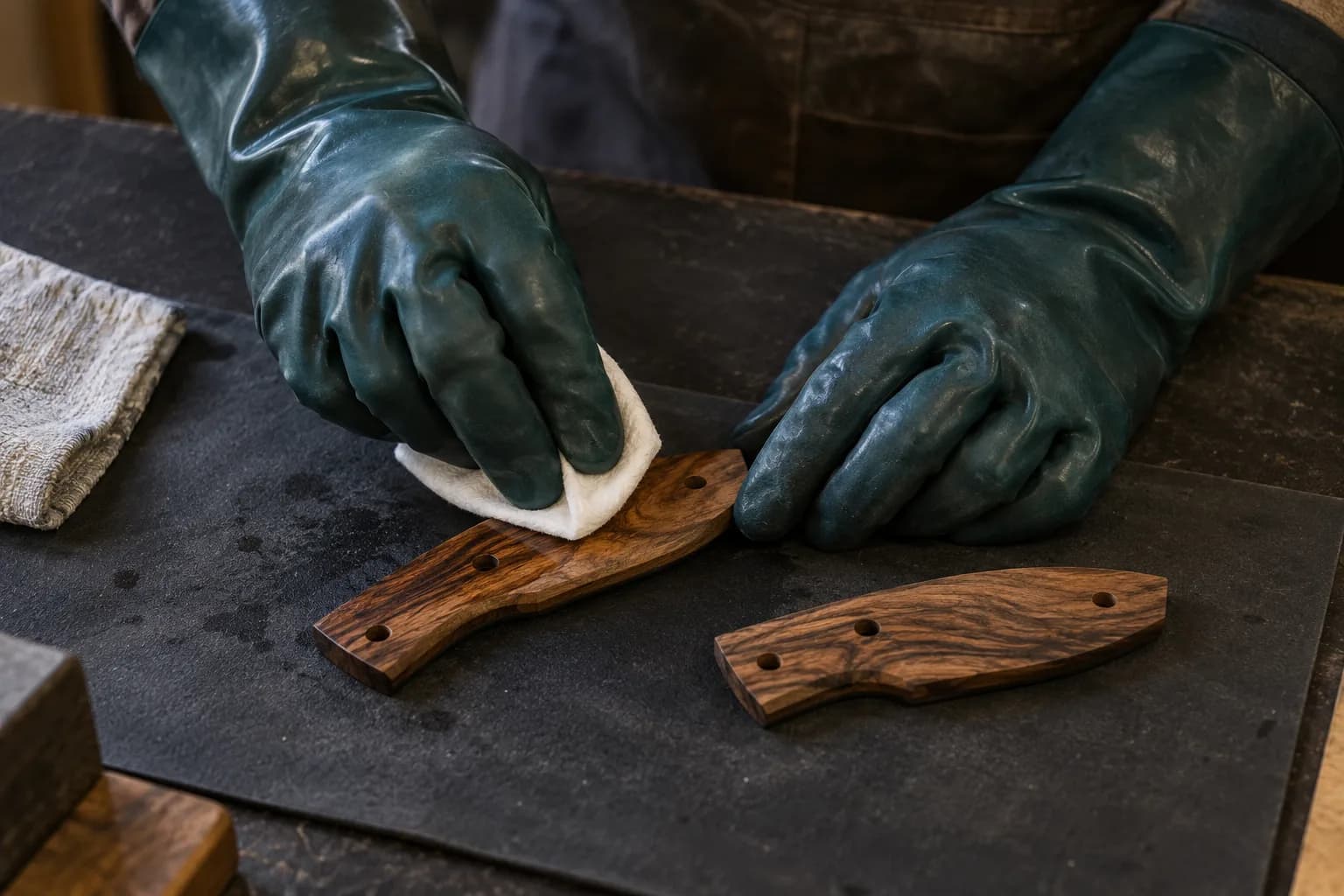
Cocobolo, ironwood, and other naturally oily woods resist moisture well but that same oil content interferes with epoxy adhesion if not addressed. Wipe the gluing surface with acetone or a similar solvent immediately before glue-up to remove surface oil, and confirm the epoxy you’re using is rated for oily woods, some standard epoxies bond poorly to untreated oily surfaces even after wiping.
Wood that’s begun to decay from fungal activity, producing dramatic dark zone lines and sometimes color changes, prized purely for its striking appearance. Because spalting is literally early-stage decay, spalted wood is structurally weaker than sound wood of the same species and essentially always needs stabilization to be usable and durable as a handle material.
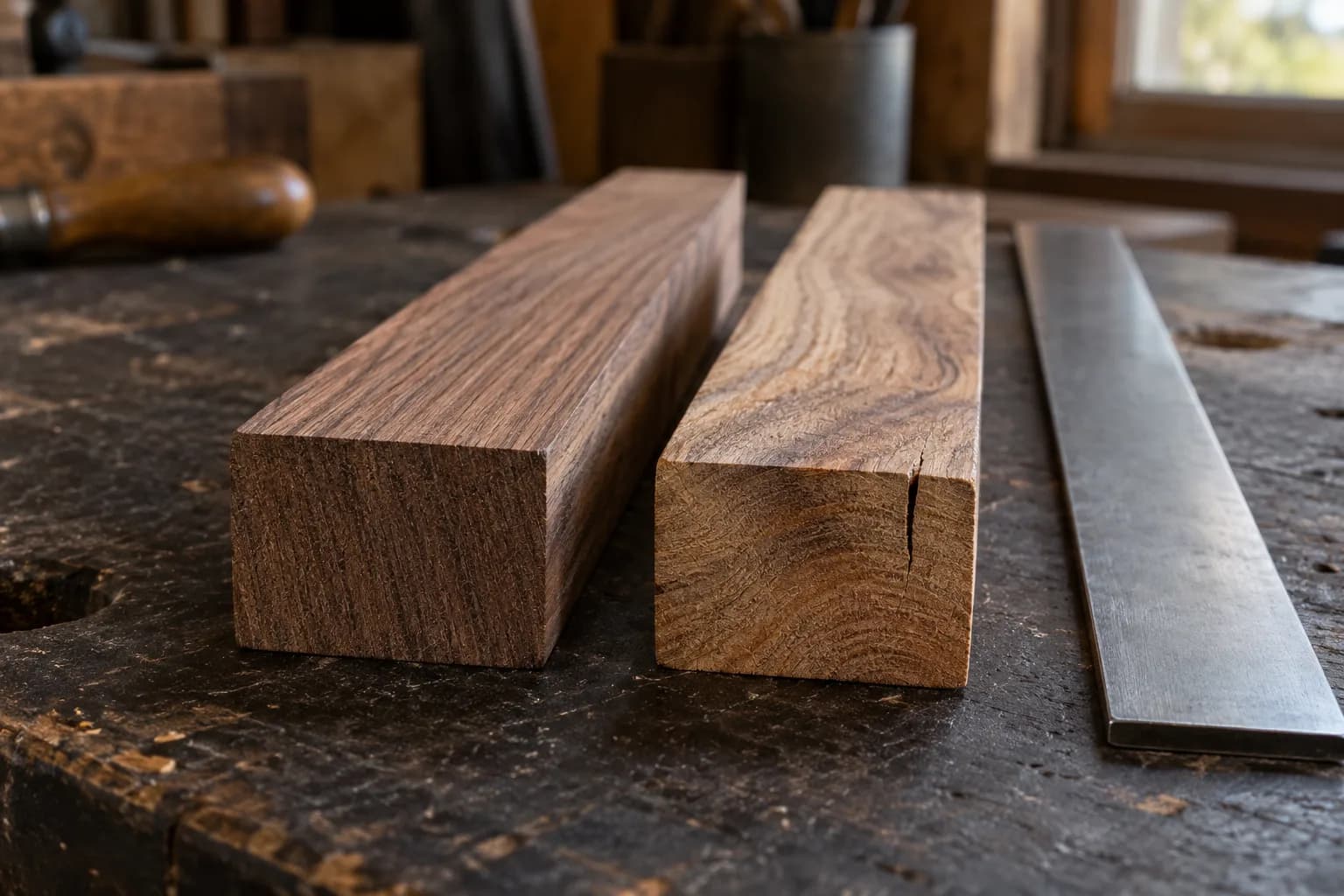
Check for a straight, tight grain orientation running the length of the handle (not diagonal to it, which weakens the piece), and inspect for any soft, punky, or checked (cracked) areas, especially near the edges of the blank where drying stress concentrates. A blank that looks visually appealing but has structural weakness in the wrong spot is a problem waiting to surface during shaping or use.
Denser, naturally oily woods like cocobolo or ironwood can be used unstabilized with reasonable results, though stabilization still improves long-term stability. Porous or figured woods (maple, spalted wood, most burls) benefit dramatically from stabilization and are rarely used raw for durable working knives.
Not automatically, some species (particularly certain rosewoods) are subject to CITES trade restrictions. Buy from a supplier who can confirm legal sourcing rather than assuming any wood sold online is unrestricted.
Almost always residual surface oil preventing full epoxy adhesion. Wipe the gluing surface with acetone immediately before glue-up, and confirm the epoxy is formulated to handle oily woods.
Keep reading
Three more from the same bench.
Handle material affects grip, durability, weather resistance, and how a knife feels in the hand, arguably as much as blade steel affects how it cuts…
Attaching handle scales looks simple, glue two pieces of material to a flat tang, but getting a tight, gap-free, structurally sound result depends on a…
Every knife argument eventually lands on angles. Here is the chart we wish someone had handed us — edge angle per side, the grind that usually carries it…
Same bench
I machine the parts, hand-assemble, track and test Torus grinders in Sterling, Illinois. Most orders ship in seven to ten business days from time of order.
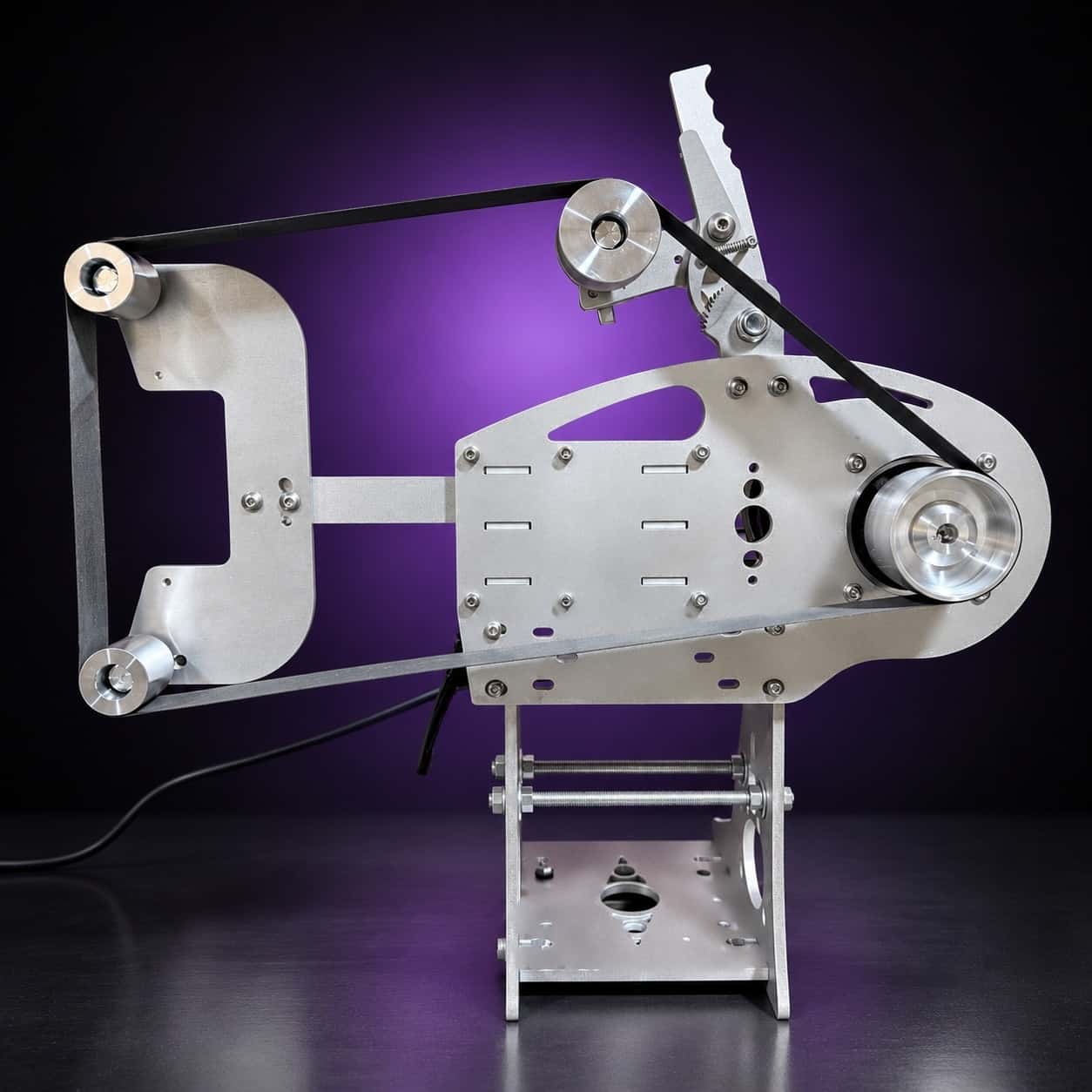
Current dual-axis platform with a fiber-laser-cut 6061 chassis and single-knob tracking.

Current dual-axis platform with a steel chassis, more mass and less vibration.

Prior-design aluminum chassis, 90-degree tilt and 1.5-inch tooling arms.
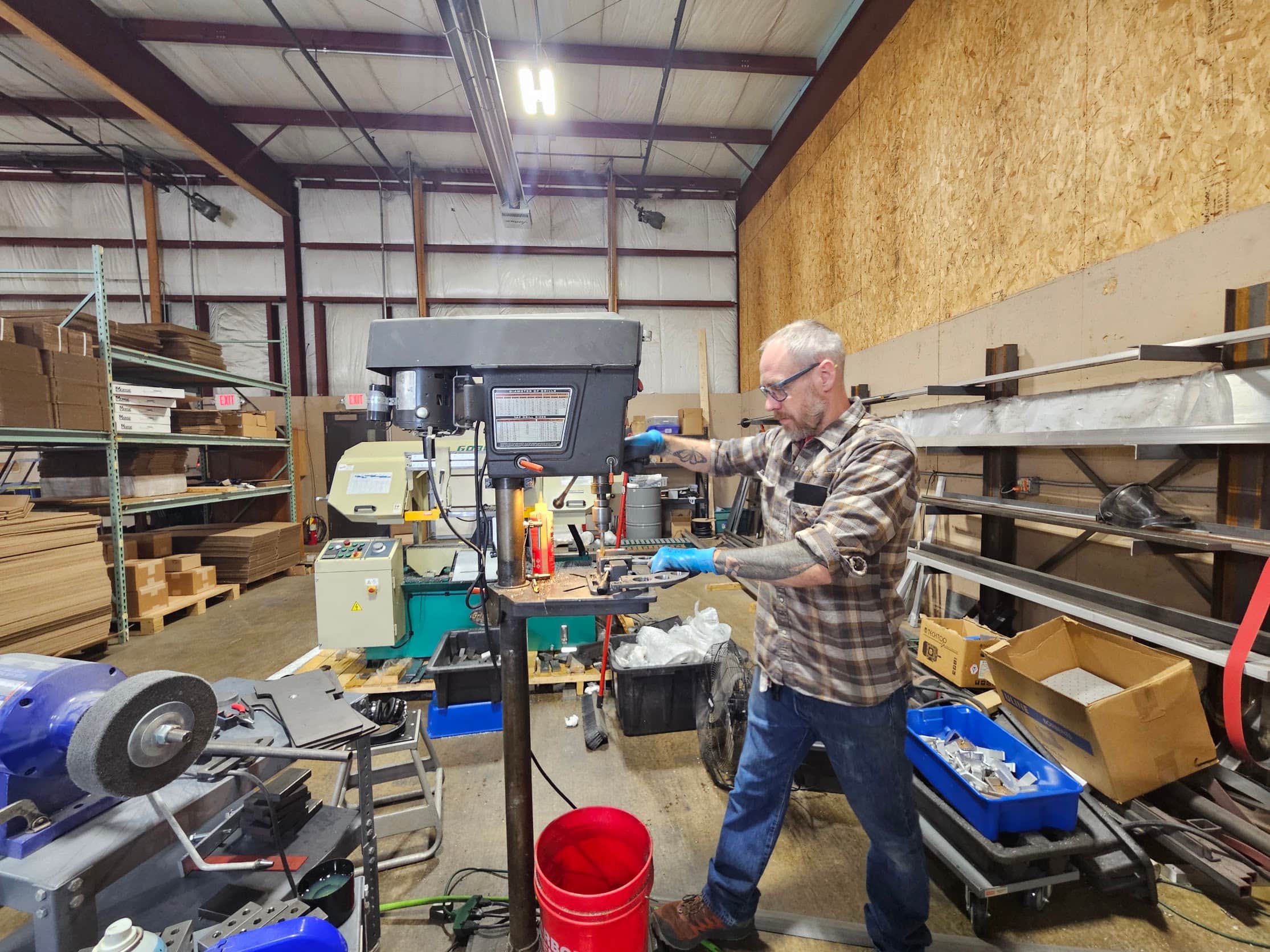
One-man shop
I answer my own email. Tell me the steel, the machine and what it is doing, and I will tell you what I would try next.