
Blade Design
Attaching Handle Scales: Pins, Epoxy & Assembly Technique
Attaching handle scales looks simple, glue two pieces of material to a flat tang, but getting a tight, gap-free, structurally sound result depends on a…
Blade Design
Stainless, brass, nickel silver, copper, mosaic and titanium pins compared: which stay bright, which develop patina and which peen easily on a handle.
3 min readWritten by Rich LinvilleFree to read
Pin material affects corrosion resistance, appearance, and how easily the pin peens or finishes flush, and the options range from plain utilitarian steel to elaborate decorative mosaic patterns.
The cheapest option, but mild steel rusts without protection, generally a poor choice for an exposed pin unless it will be plated, blued, or otherwise finished to resist corrosion. Occasionally used where cost is the primary concern and the pin will be well-sealed under epoxy and finish.
The standard modern choice for a plain, functional pin: corrosion-resistant, affordable, widely available in various diameters, and takes a clean satin or polished finish. Stainless pins are a reliable default when the goal is a clean, unobtrusive result rather than a decorative accent.
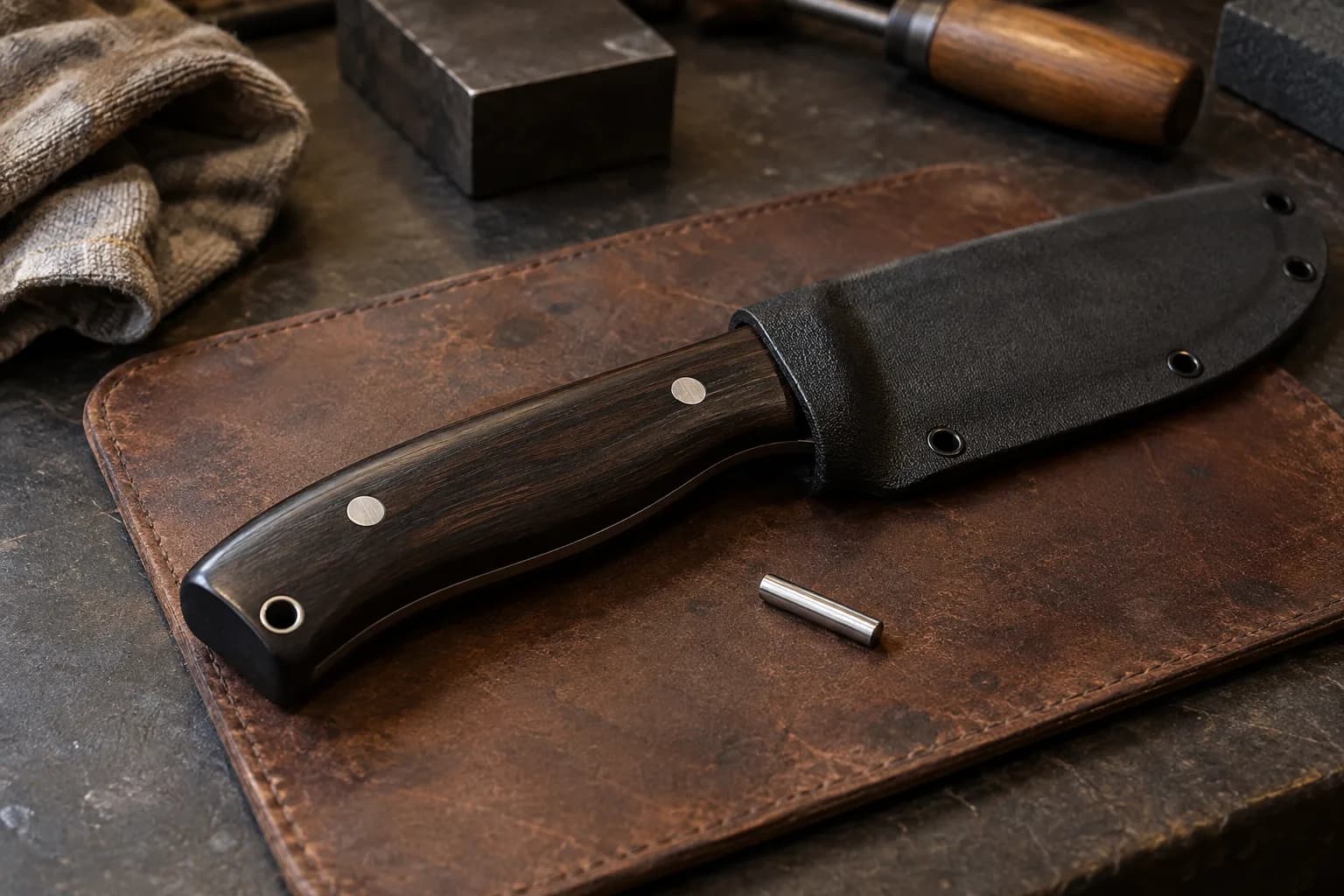
Soft, warm-colored, and a classic decorative choice, brass pins peen easily (useful for hidden-tang or traditional construction where a peened end secures the assembly) and develop a distinctive patina over time if left unfinished, or can be polished to stay bright. Brass contrasts nicely against darker handle materials like walnut or dark Micarta.
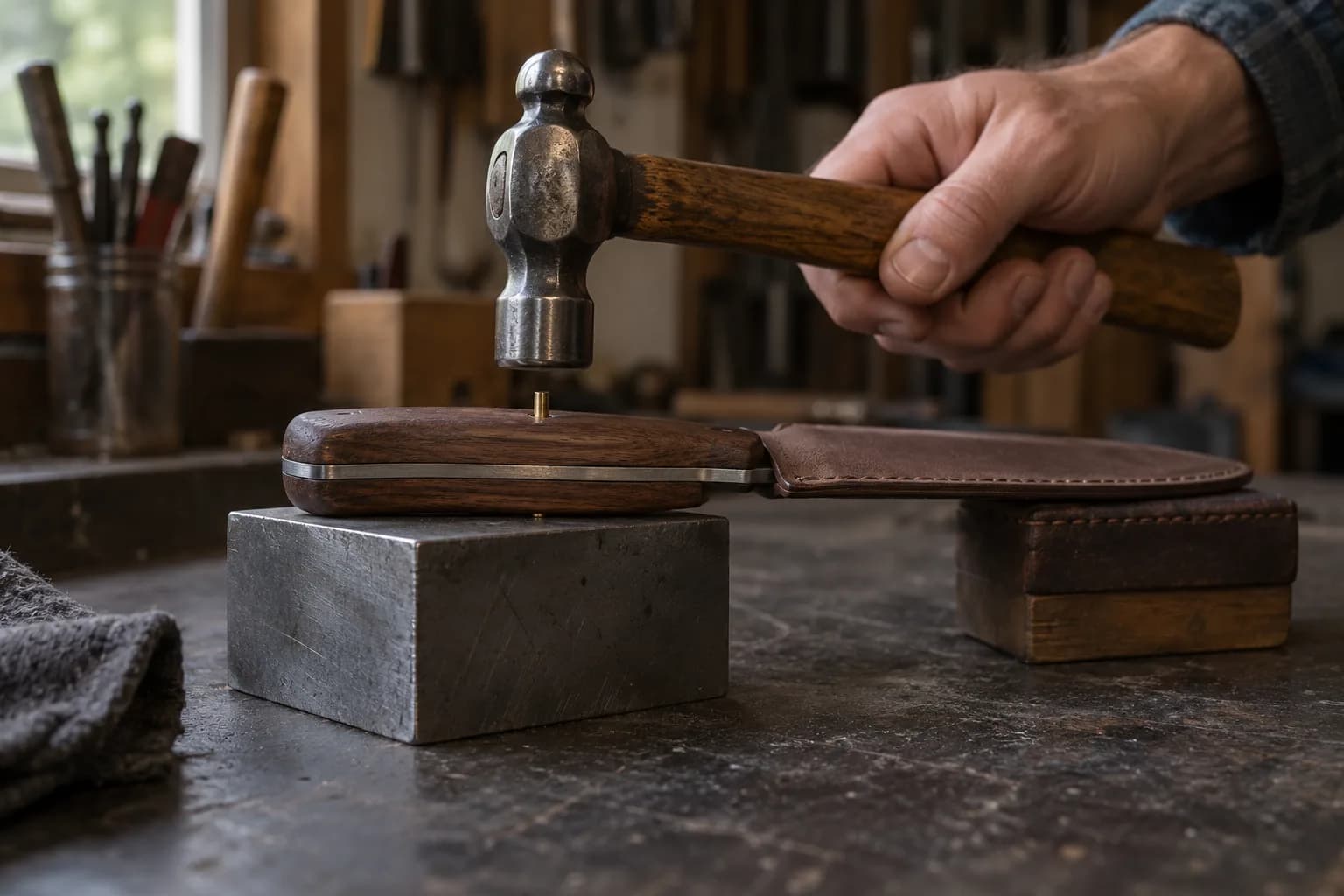
Despite the name, an alloy containing no actual silver, valued for a bright, silvery appearance that resists tarnishing better than brass. Nickel silver is a common choice when a bright metal accent is wanted without brass’s tendency to darken over time.
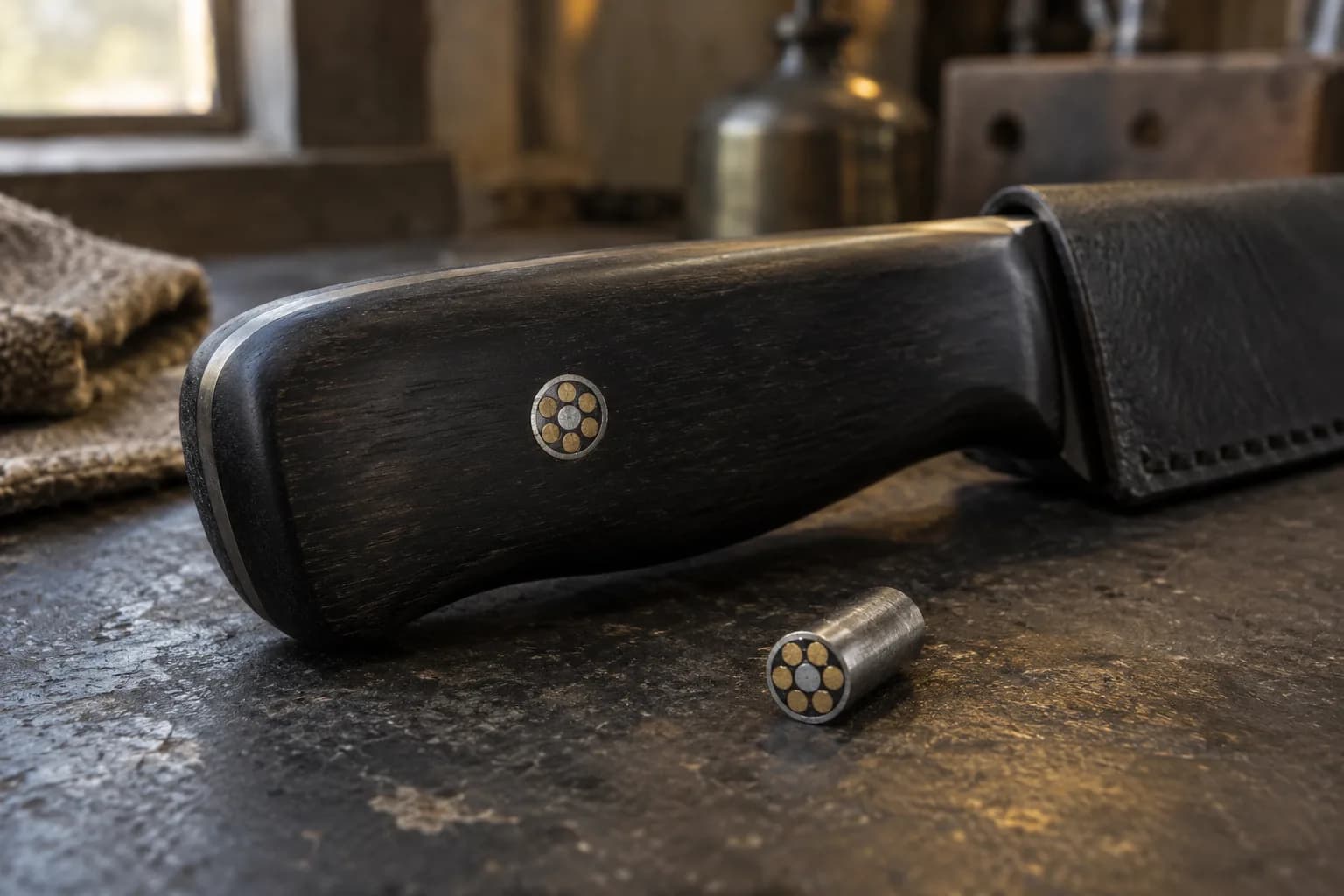
Pre-manufactured pins with a decorative cross-sectional pattern (often a symmetrical design combining multiple metal colors) that shows on both ends of the pin once installed. Mosaic pins add a distinct decorative element with no extra work beyond installing them like a standard pin, popular on knives where the pin itself is meant to be a visual feature, not just a fastener.
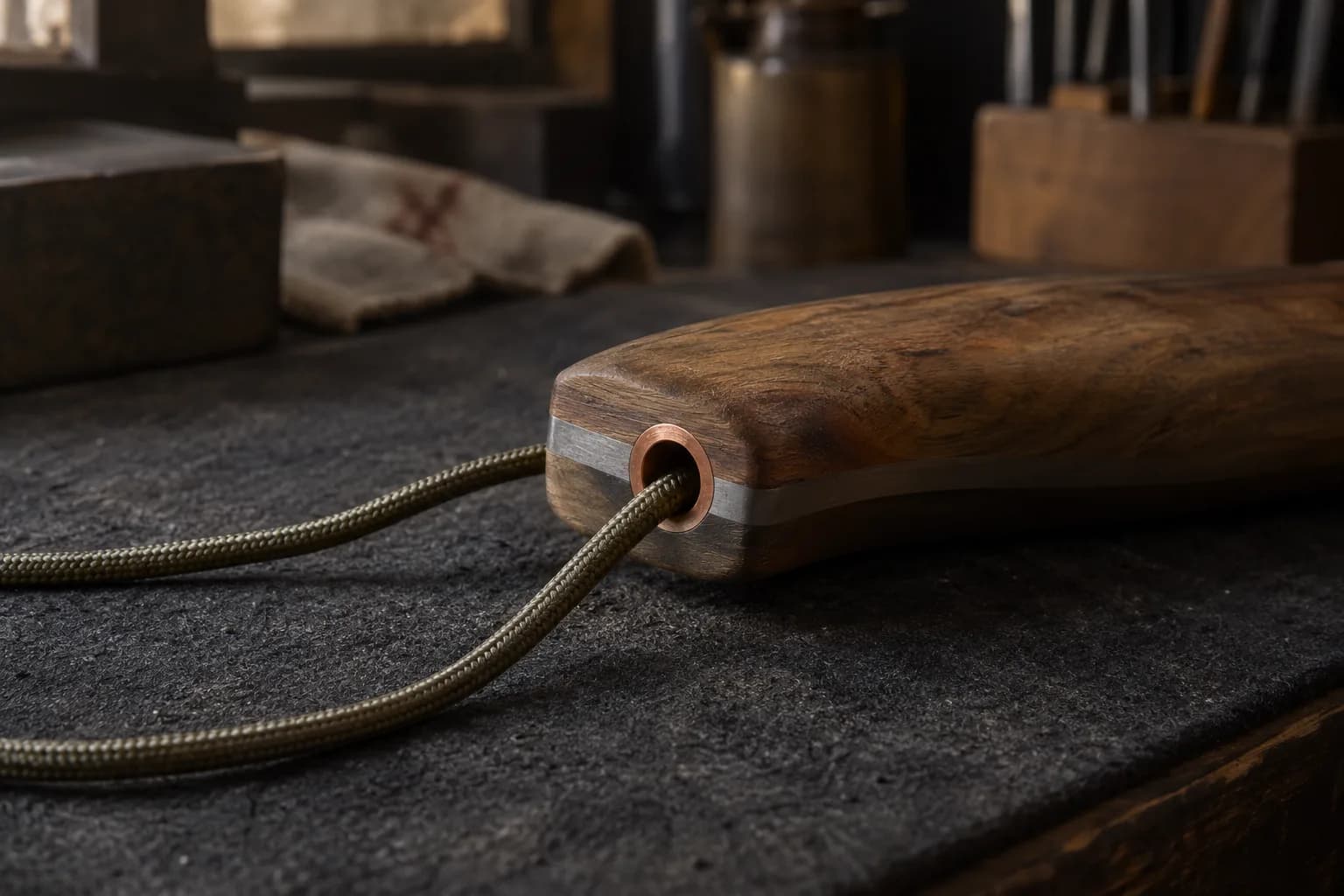
Copper offers a warm reddish tone and, like brass, develops a natural patina over time if left unsealed. Copper tubing (hollow rather than solid) is sometimes used specifically to allow a lanyard hole to run through the pin location, combining structural fastening with a functional lanyard attachment point.
Lightweight and completely corrosion-proof, titanium pins are a premium option, but titanium is significantly harder to peen or work than steel, brass, or copper, better suited to designs using threaded fasteners or simple through-pins secured with epoxy rather than techniques relying on peening.
Solid pins are simpler and generally stronger for a given diameter. Tube pins (hollow) save weight and, as with copper tubing above, can double as a lanyard hole location, at some cost to raw strength compared to a solid pin of the same outer diameter.
Stainless steel or brass, both are affordable, widely available, and forgiving to work with. Stainless gives a clean, understated look; brass adds warmth and contrast, and peens easily if the design calls for it.
Not strictly required, but it’s a common design choice for a cohesive look, matching pin material to any bolsters, guards, or lanyard hardware. Mixing metals intentionally (like brass pins with a stainless bolster) is also a legitimate stylistic choice, not a mistake.
Softer metals (brass, copper, mild steel, aluminum) peen readily. Stainless steel is harder to peen well without proper technique and heat in some cases, and titanium is difficult to peen at all, better suited to other securing methods.
Keep reading
Three more from the same bench.
Attaching handle scales looks simple, glue two pieces of material to a flat tang, but getting a tight, gap-free, structurally sound result depends on a…
Handle material affects grip, durability, weather resistance, and how a knife feels in the hand, arguably as much as blade steel affects how it cuts…
Bolsters and guards sit at the transition between blade and handle, and while they’re sometimes confused with each other, they serve genuinely different…
Same bench
I machine the parts, hand-assemble, track and test Torus grinders in Sterling, Illinois. Most orders ship in seven to ten business days from time of order.
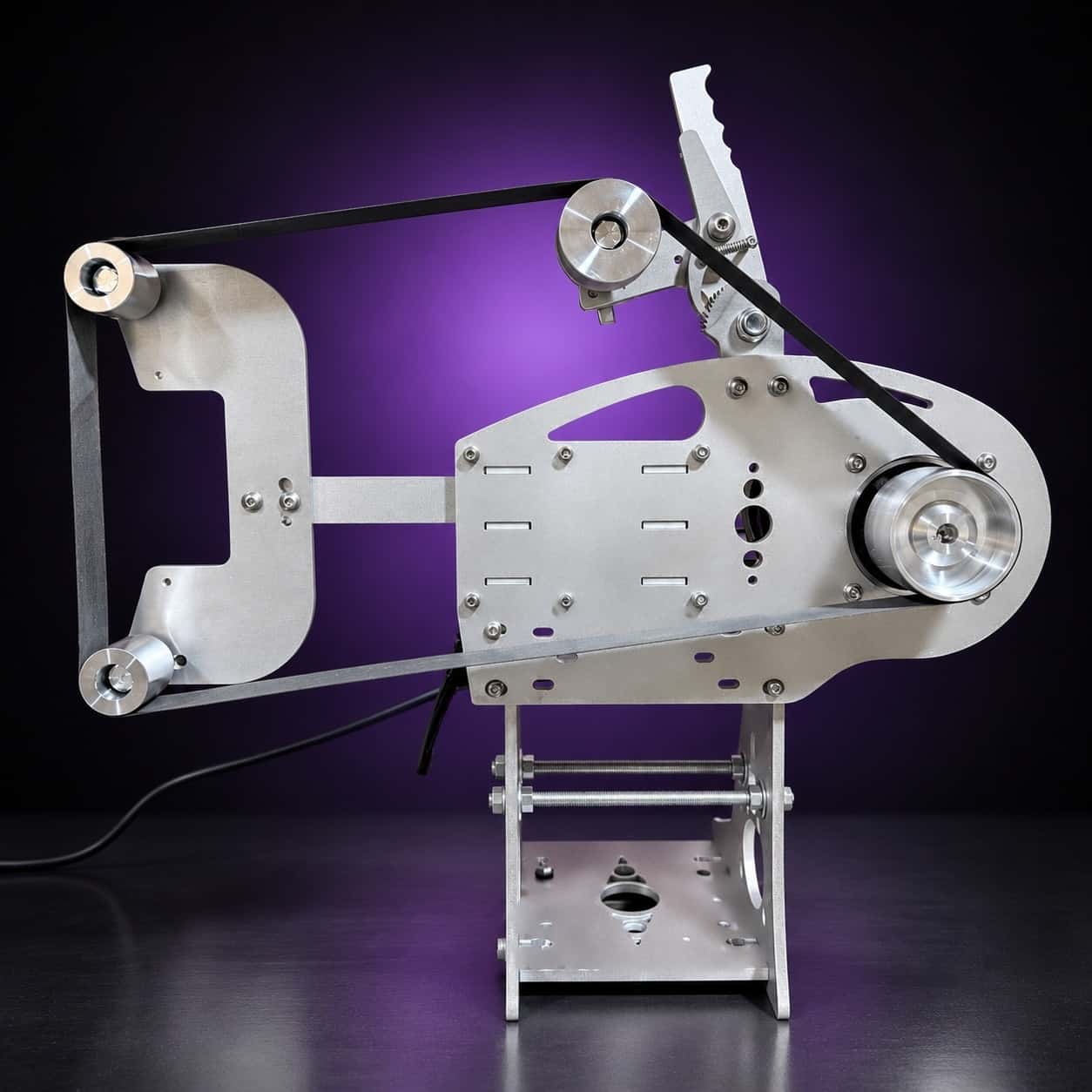
Current dual-axis platform with a fiber-laser-cut 6061 chassis and single-knob tracking.
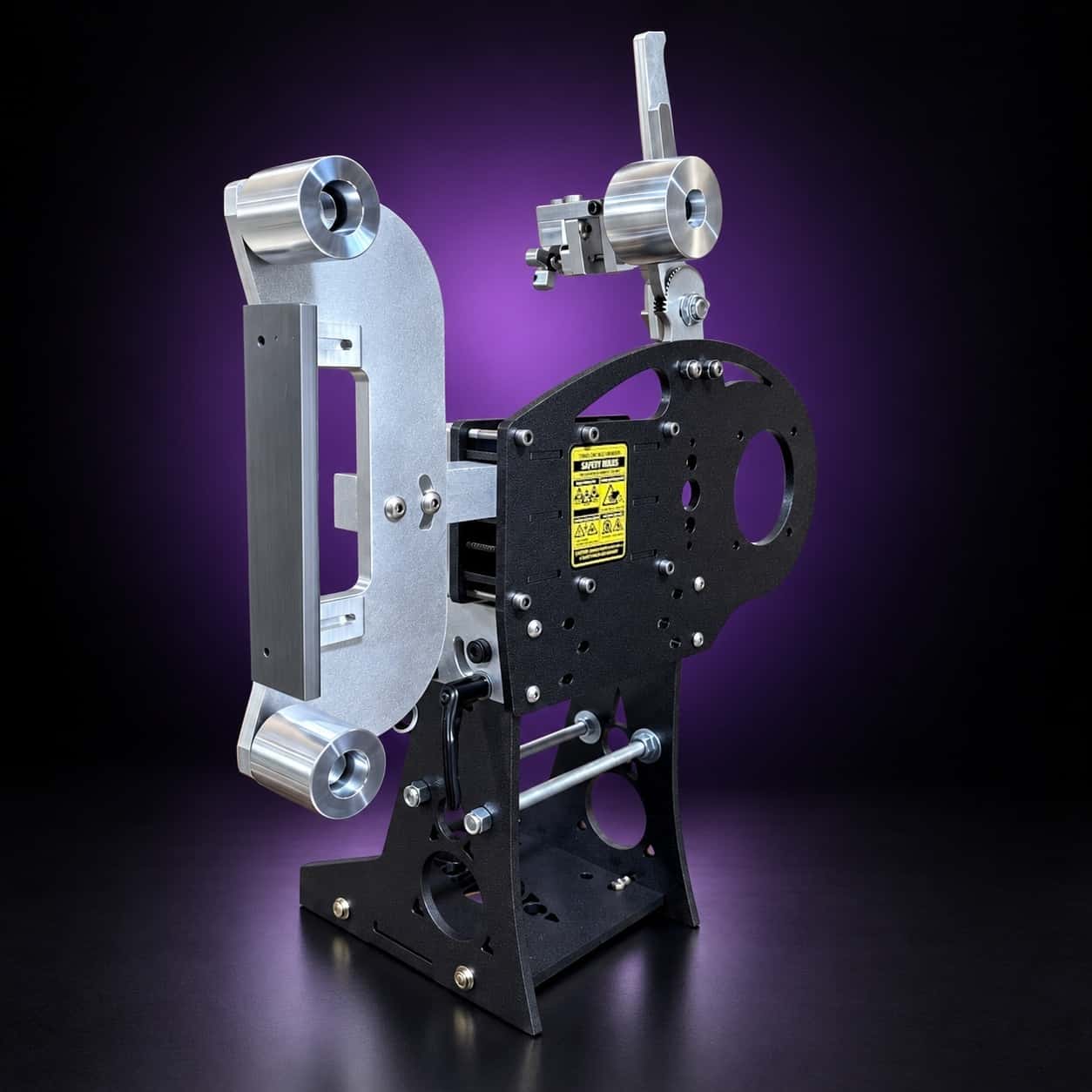
Current dual-axis platform with a steel chassis, more mass and less vibration.
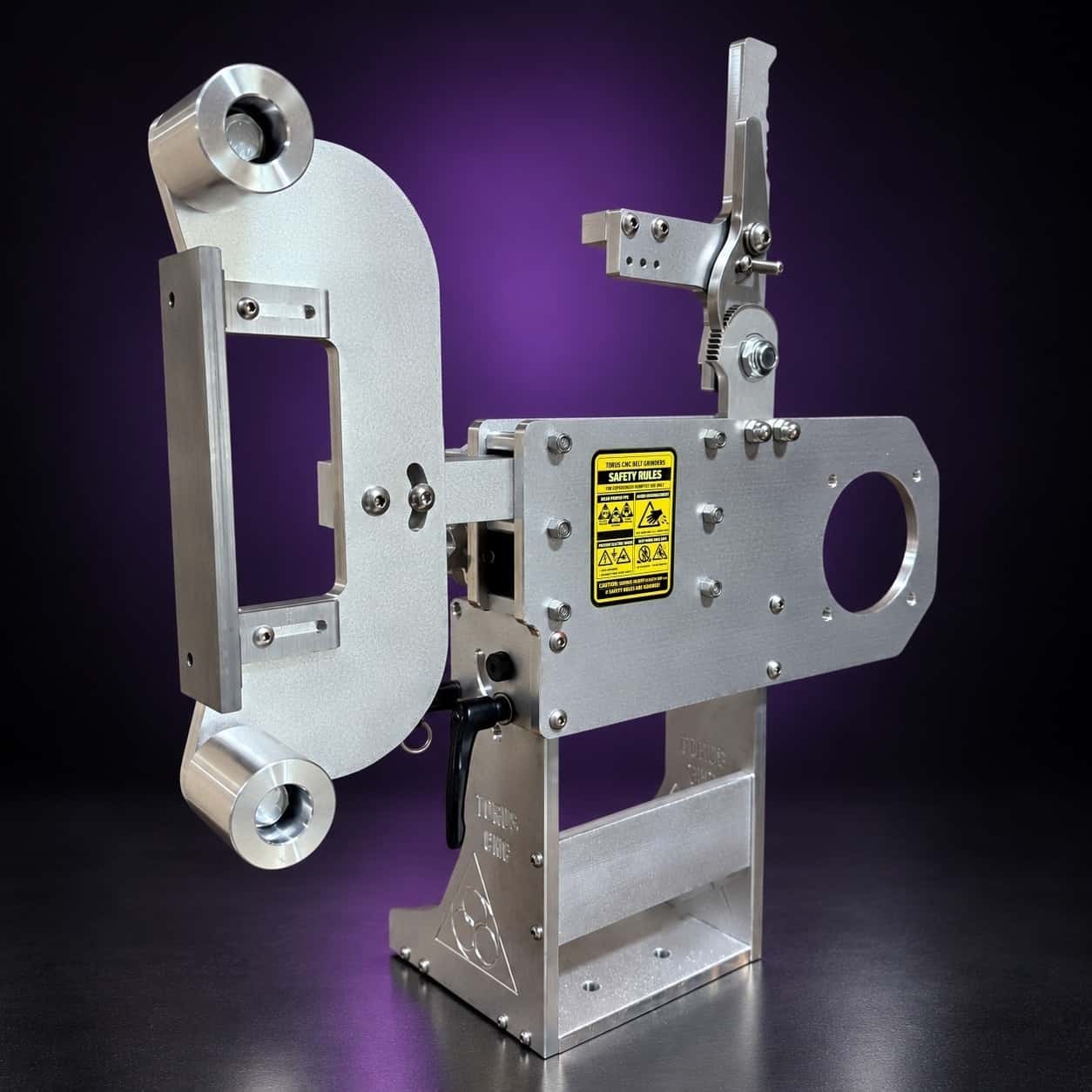
Prior-design aluminum chassis, 90-degree tilt and 1.5-inch tooling arms.
One-man shop
I answer my own email. Tell me the steel, the machine and what it is doing, and I will tell you what I would try next.