
Blade Design
Hidden Fasteners for Knife Handles: Corby & Loveless Bolts
Beyond simple pins, several hardware systems let a maker attach handle scales with a cleaner look, added mechanical strength, or the option to service the…
Blade Design
A bolster balances and finishes the handle; a guard stops the hand sliding onto the edge. Full versus partial guards, integral versus applied builds.
3 min readWritten by Rich LinvilleFree to read
Bolsters and guards sit at the transition between blade and handle, and while they’re sometimes confused with each other, they serve genuinely different purposes and show up on different styles of knife.
A metal (or sometimes contrasting material) collar or block fitted between the blade and the handle scales, primarily a transition piece and weighting element rather than a hand-protection feature. Bolsters are common on traditional, forged, and hidden-tang knives, adding a finished, substantial look at the front of the handle and shifting balance slightly forward.
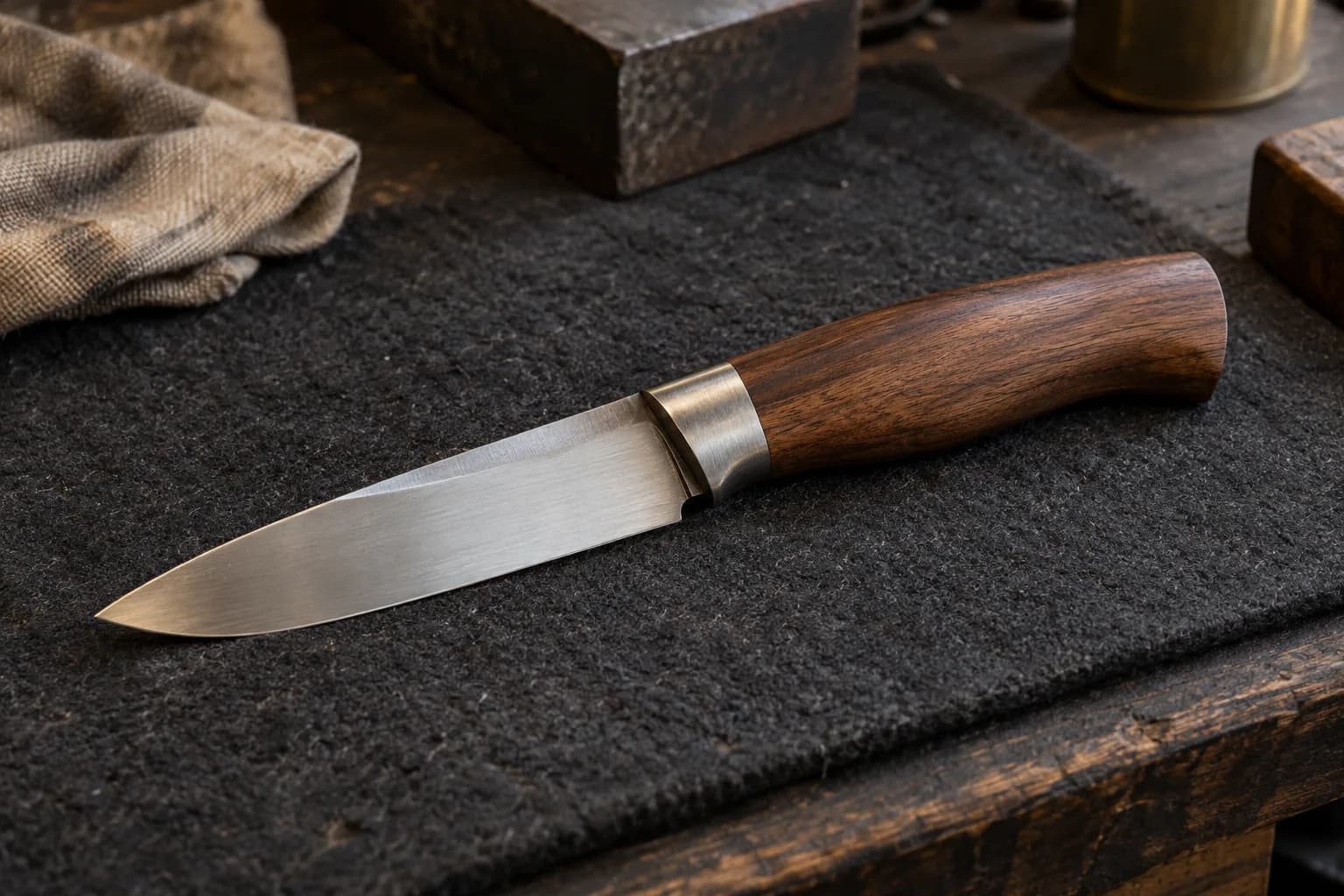
A crosspiece, often perpendicular to the blade, positioned specifically to stop a hand from sliding forward onto the edge during hard use, a functional safety feature more than a decorative one. Guards are standard on fighting knives, hunting knives used with a forward grip, and any design where a hand slipping forward during use is a real risk.
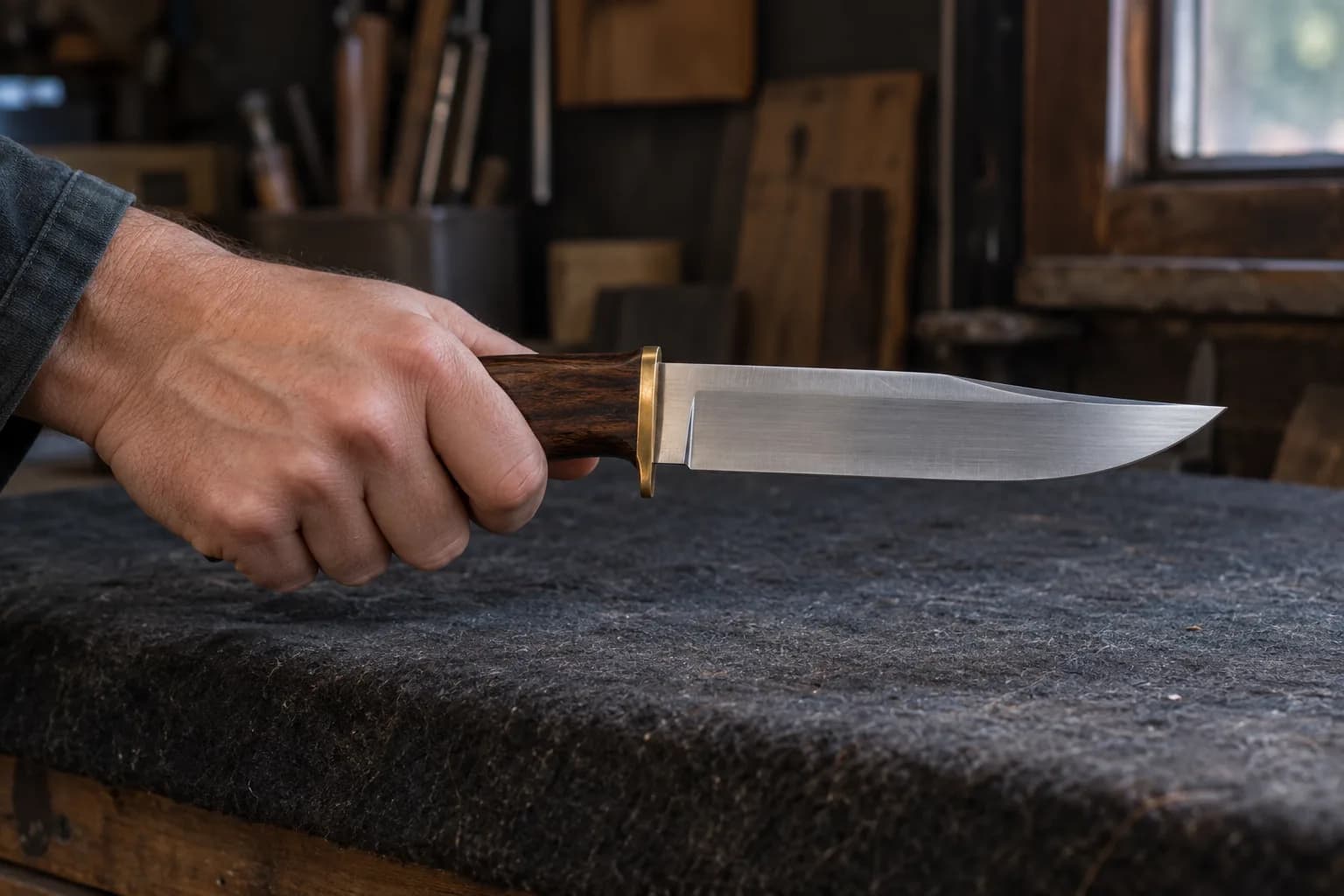
A full guard extends on both sides of the blade (above and below), offering protection regardless of grip orientation. A partial or single guard extends on only one side, typically just below the blade on the cutting edge side, offering protection where it’s most needed while keeping a lower profile and less material to work around during use.
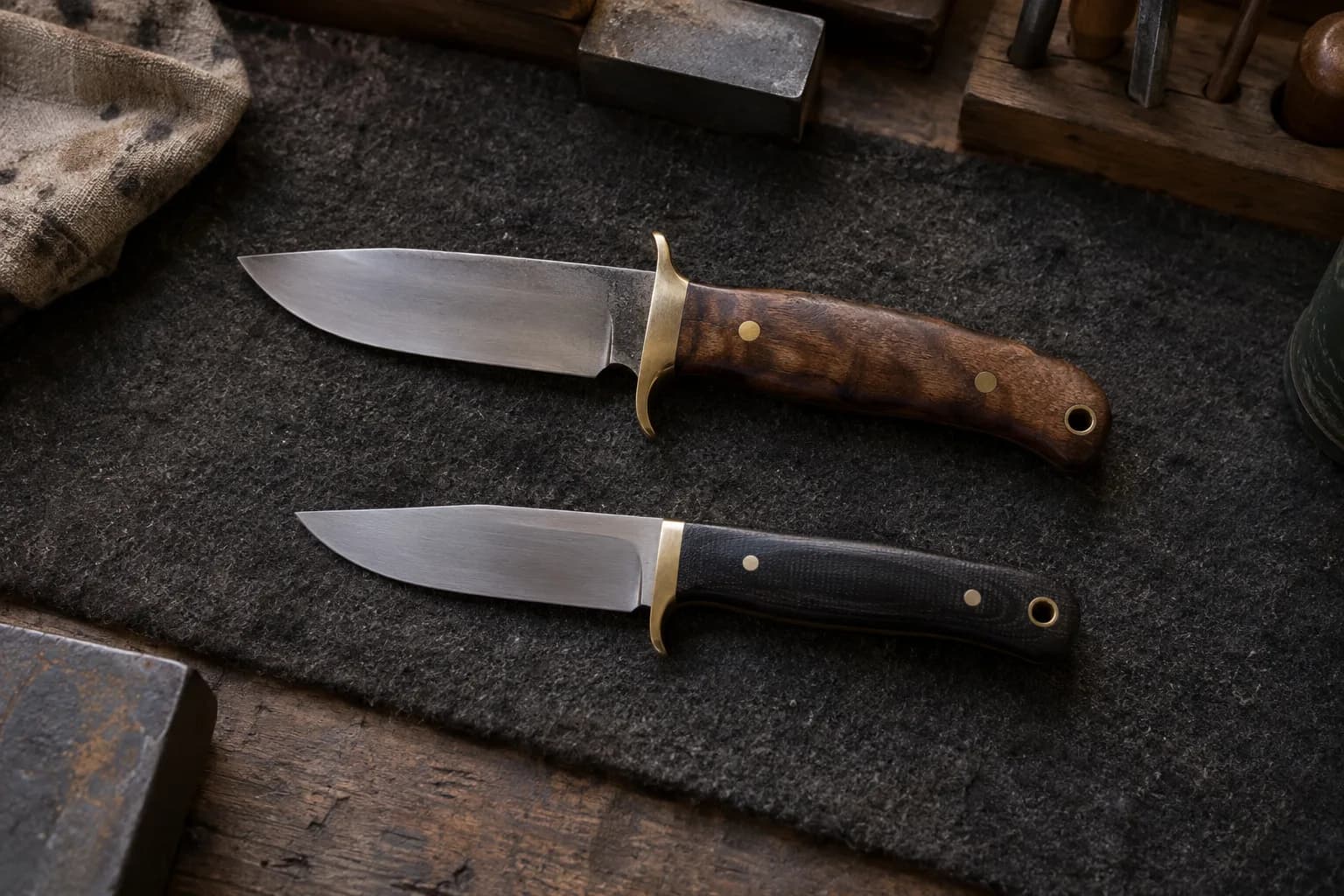
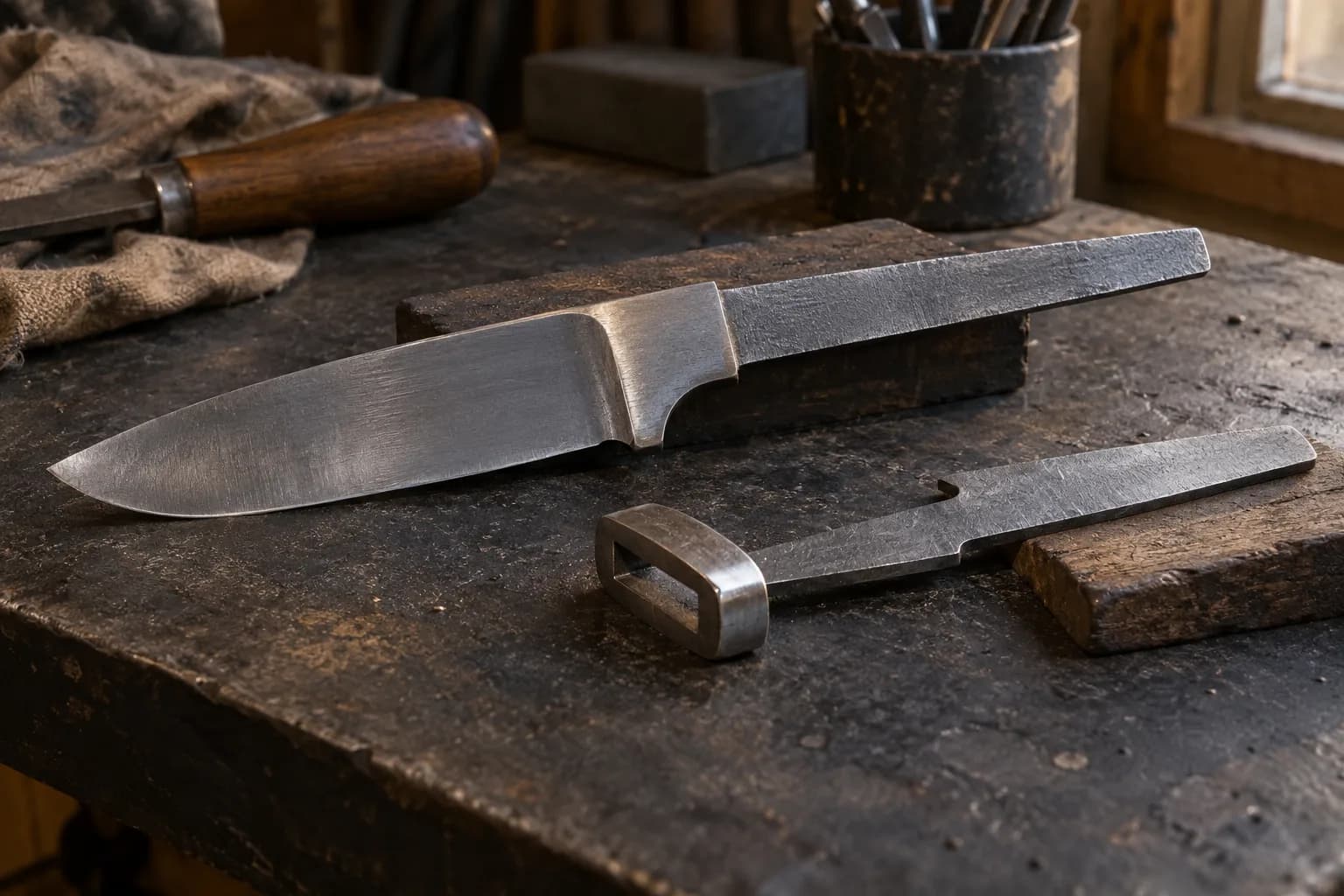
An integral bolster or guard is forged or machined as one continuous piece with the blade itself, no separate piece to attach, which adds real strength and an unbroken look but requires either forging skill or removing significant extra material via stock removal to leave the integral section standing proud. An applied bolster or guard is a separate piece fitted and pinned or soldered onto the tang, more common on stock-removal knives since it doesn’t require leaving extra material during the initial profile grinding.
Nickel silver and brass are traditional, popular choices for bolsters, taking a bright polish and contrasting nicely with wood or Micarta handles, see Pin Materials for Knife Handles for how these same metals behave as pins too. Stainless steel bolsters are common on more modern designs for a durable, low-maintenance look. Guards, especially on hard-use knives, are most often steel or stainless steel for maximum strength where hand protection actually matters.
Like handle scales, a bolster or guard needs a flat, clean-fitting mating surface against the tang and any adjacent handle material, gaps here are just as much a problem as gaps in scale attachment, see Attaching Handle Scales for the surface-prep and dry-fit principles that apply here too. Guards in particular need to sit perpendicular and centered accurately, since a crooked guard is both a functional problem (uneven hand protection) and a visible cosmetic flaw.
No. General-purpose, hunting, and kitchen knives are commonly built without one, since the grip and use case don’t typically risk a hand sliding onto the edge. Guards matter most on knives meant for thrusting or hard forward-force use where that slip risk is real.
A bolster is primarily a transition and weighting element; a guard is primarily a hand-protection feature. Some knives have both, combined into a single fitted piece that does both jobs at once.
Generally yes, since there’s no joint or attachment point that could fail, but a well-fitted applied guard with quality pinning or soldering is entirely strong enough for the vast majority of knife use.
Keep reading
Three more from the same bench.
Beyond simple pins, several hardware systems let a maker attach handle scales with a cleaner look, added mechanical strength, or the option to service the…
Attaching handle scales looks simple, glue two pieces of material to a flat tang, but getting a tight, gap-free, structurally sound result depends on a…
Pin material affects corrosion resistance, appearance, and how easily the pin peens or finishes flush, and the options range from plain utilitarian steel…
Same bench
I machine the parts, hand-assemble, track and test Torus grinders in Sterling, Illinois. Most orders ship in seven to ten business days from time of order.
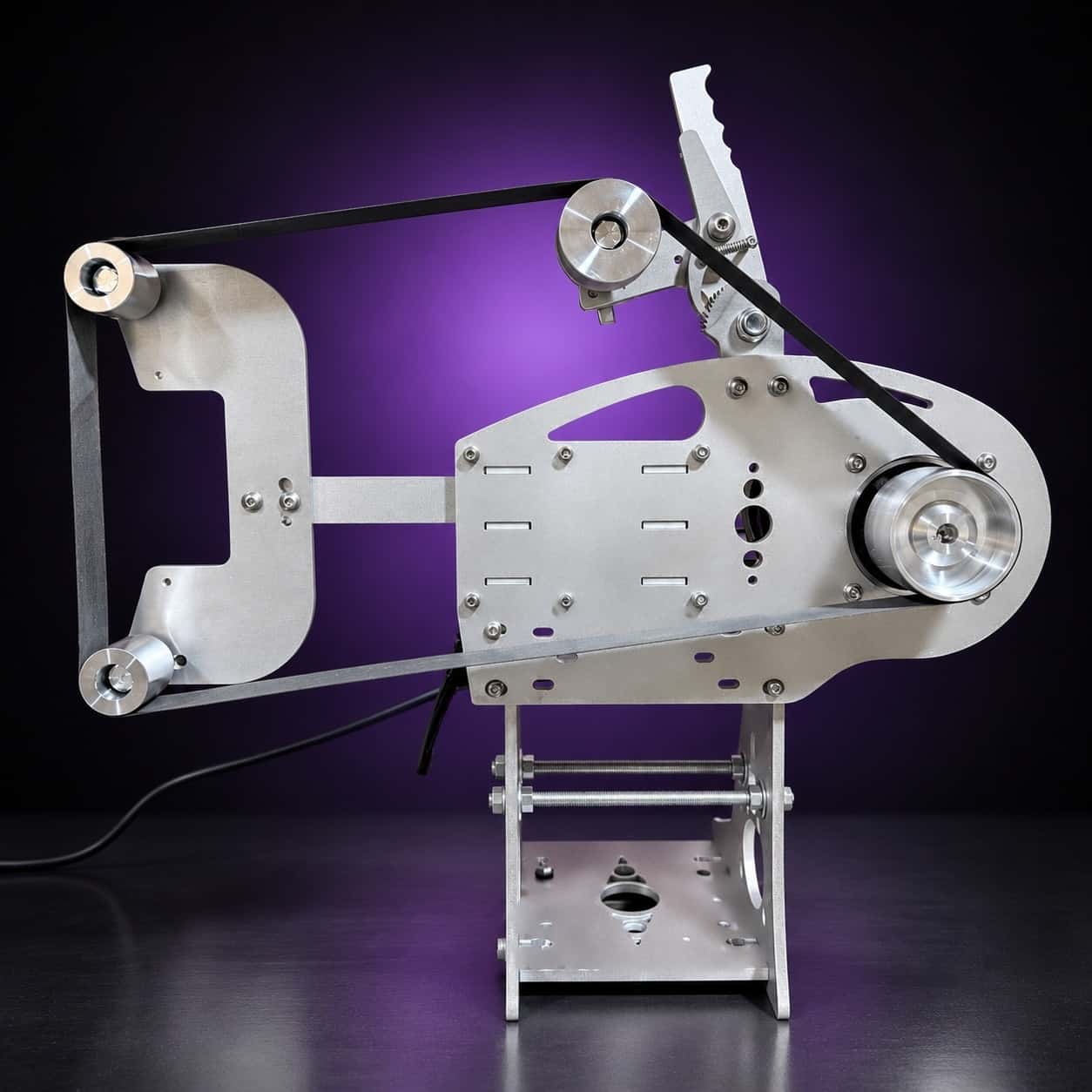
Current dual-axis platform with a fiber-laser-cut 6061 chassis and single-knob tracking.
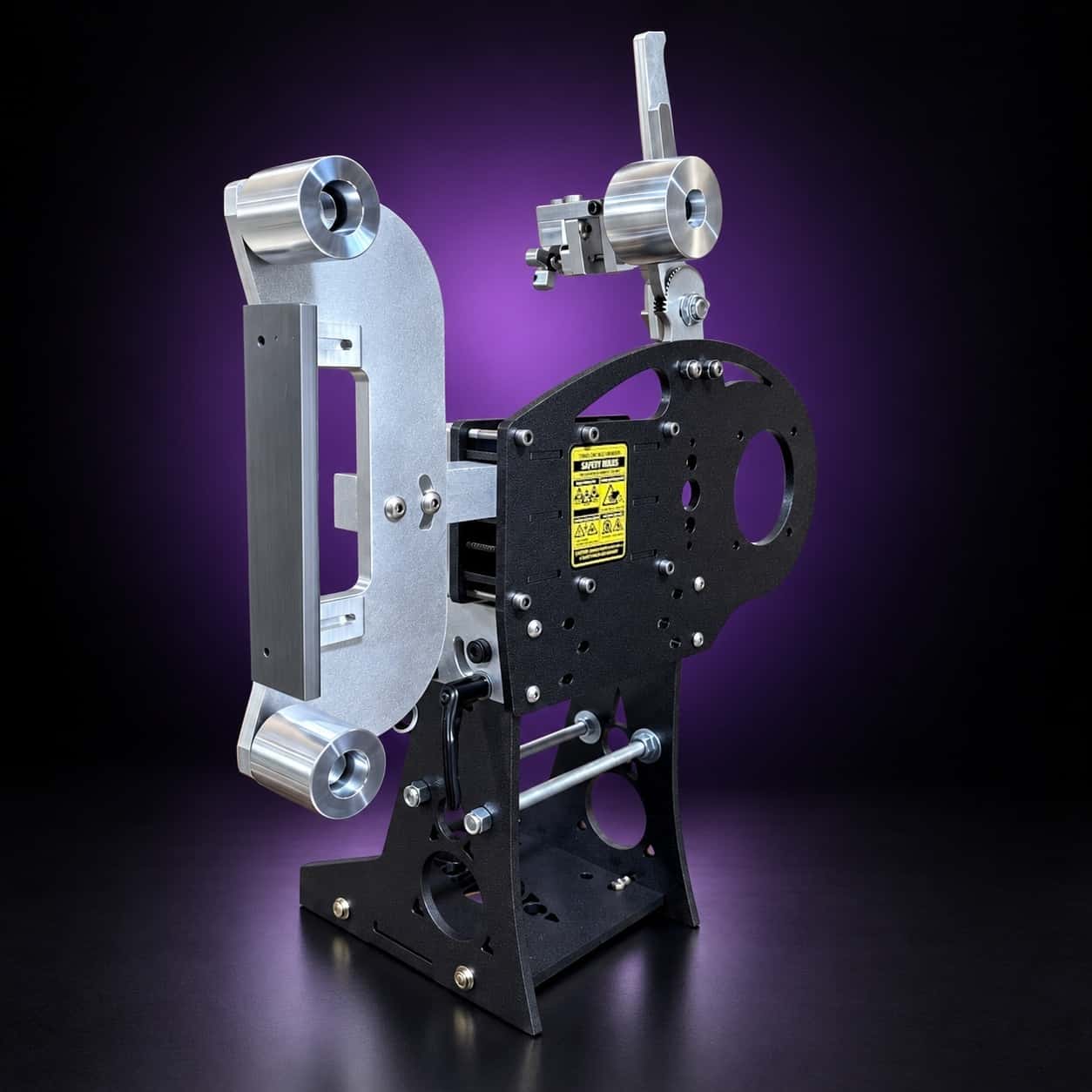
Current dual-axis platform with a steel chassis, more mass and less vibration.
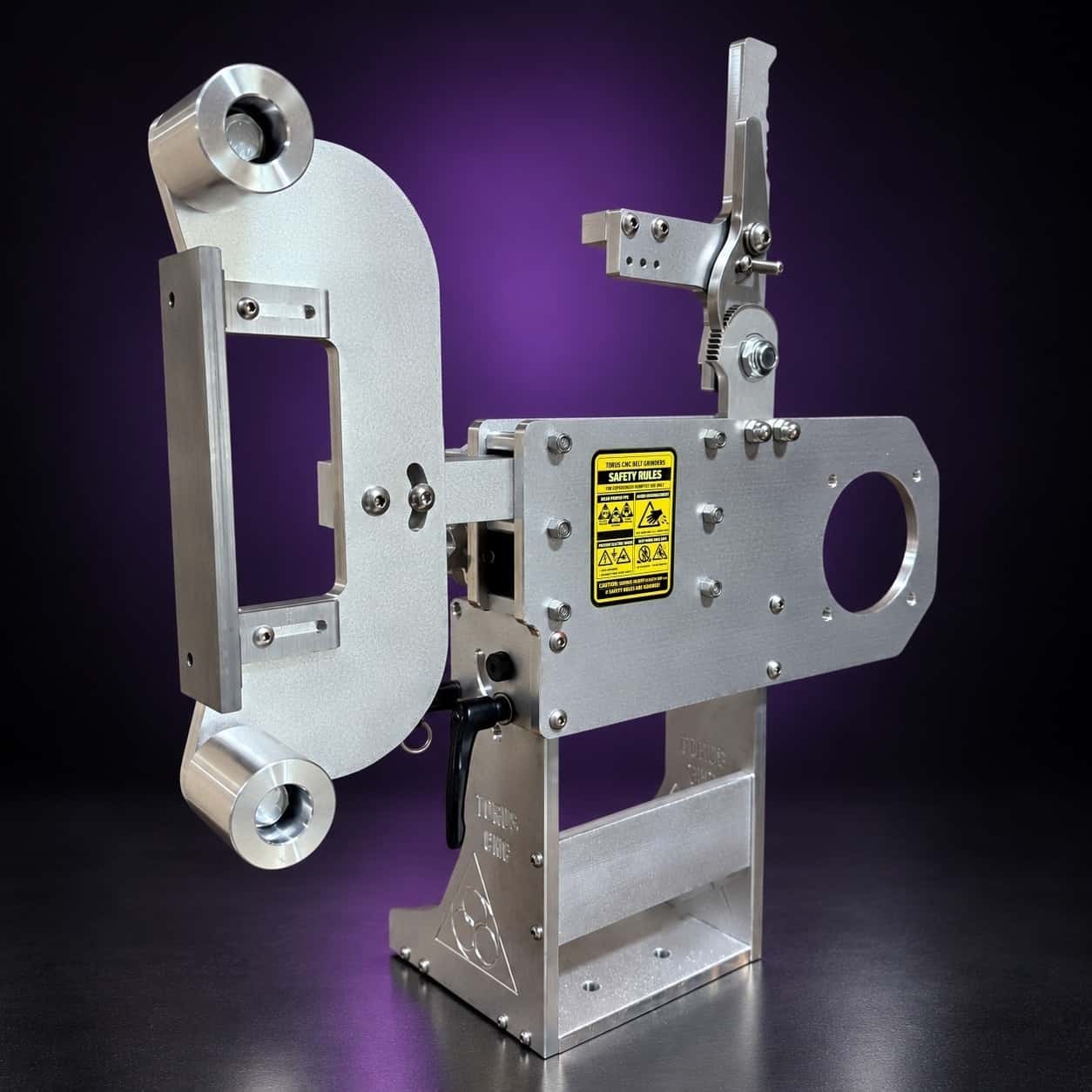
Prior-design aluminum chassis, 90-degree tilt and 1.5-inch tooling arms.
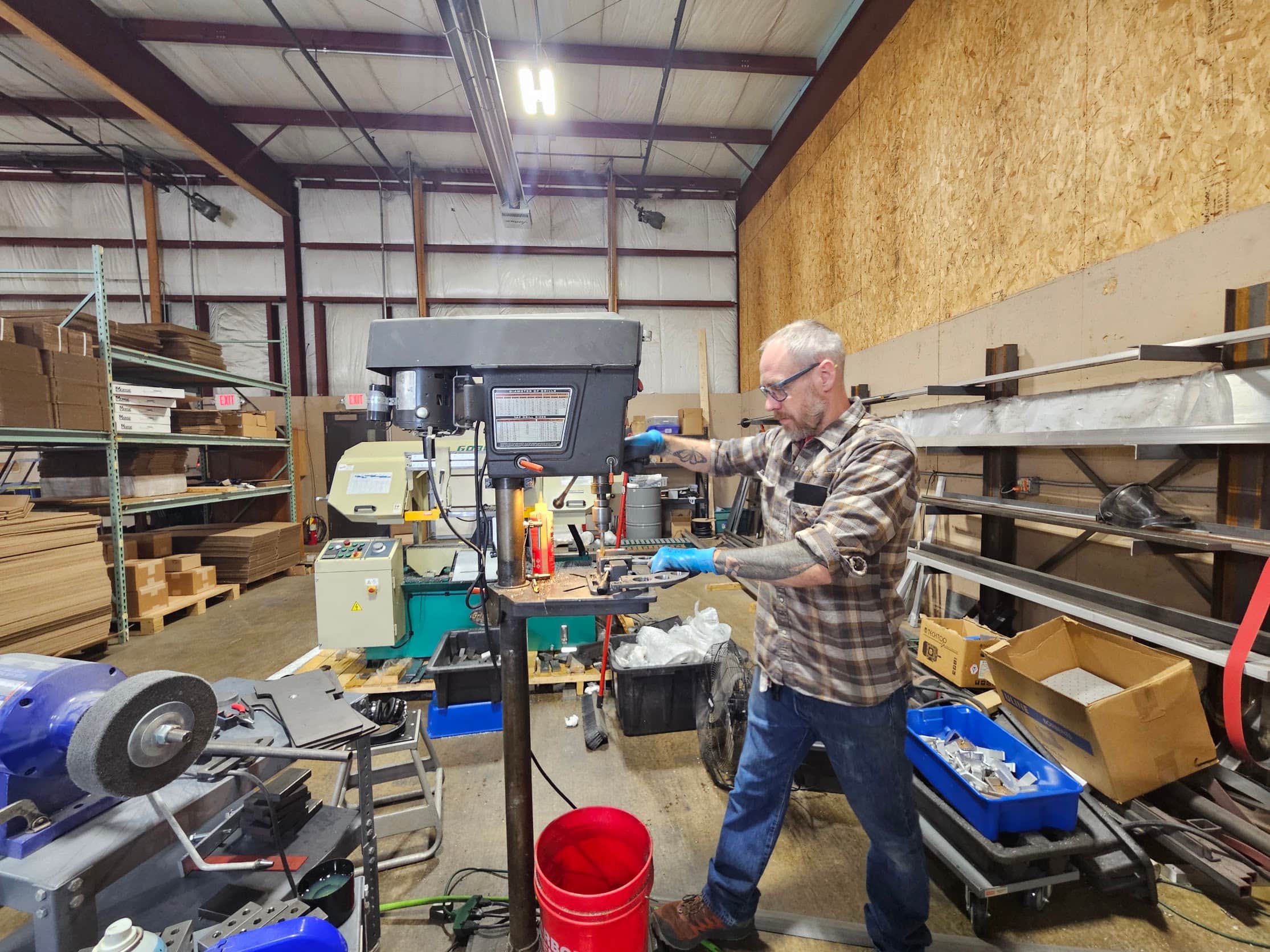
One-man shop
I answer my own email. Tell me the steel, the machine and what it is doing, and I will tell you what I would try next.