
Blade Design
Handle Material Guide: G10, Micarta, Wood, and More
Handle material affects grip, durability, weather resistance, and how a knife feels in the hand, arguably as much as blade steel affects how it cuts…
Blade Design
Canvas, linen, paper and burlap Micarta compared for toughness, texture and appearance, so you can pick the right handle material for the knife.
2 min readWritten by Rich LinvilleFree to read
Micarta is defined by its base material as much as the resin-and-pressure process that makes it, and canvas, linen, paper, and burlap Micarta all look and feel genuinely different from one another.
Made from layers of cotton canvas cloth soaked in resin and compressed. This is the most common and toughest of the standard Micarta types, with a visible, somewhat coarse layered texture once sanded and finished. Canvas Micarta is a standard choice for hard-use knives where durability matters as much as looks.
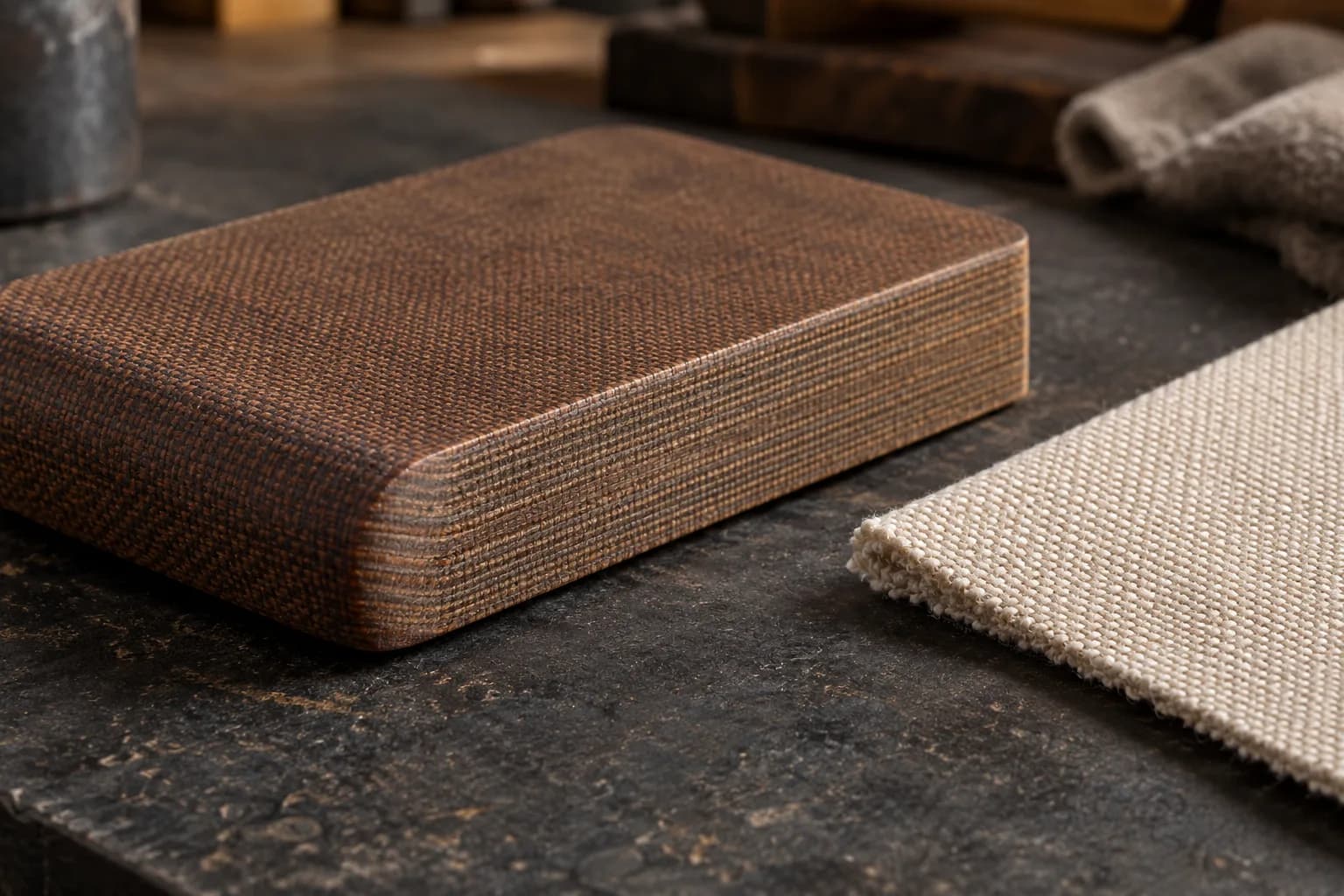
Uses finer linen cloth instead of canvas, producing a smoother, tighter-grained finished surface than canvas Micarta while remaining very tough. Linen Micarta often takes a more refined, subtle look than canvas, popular on knives where a slightly more polished appearance is wanted without moving away from a fabric-based material.
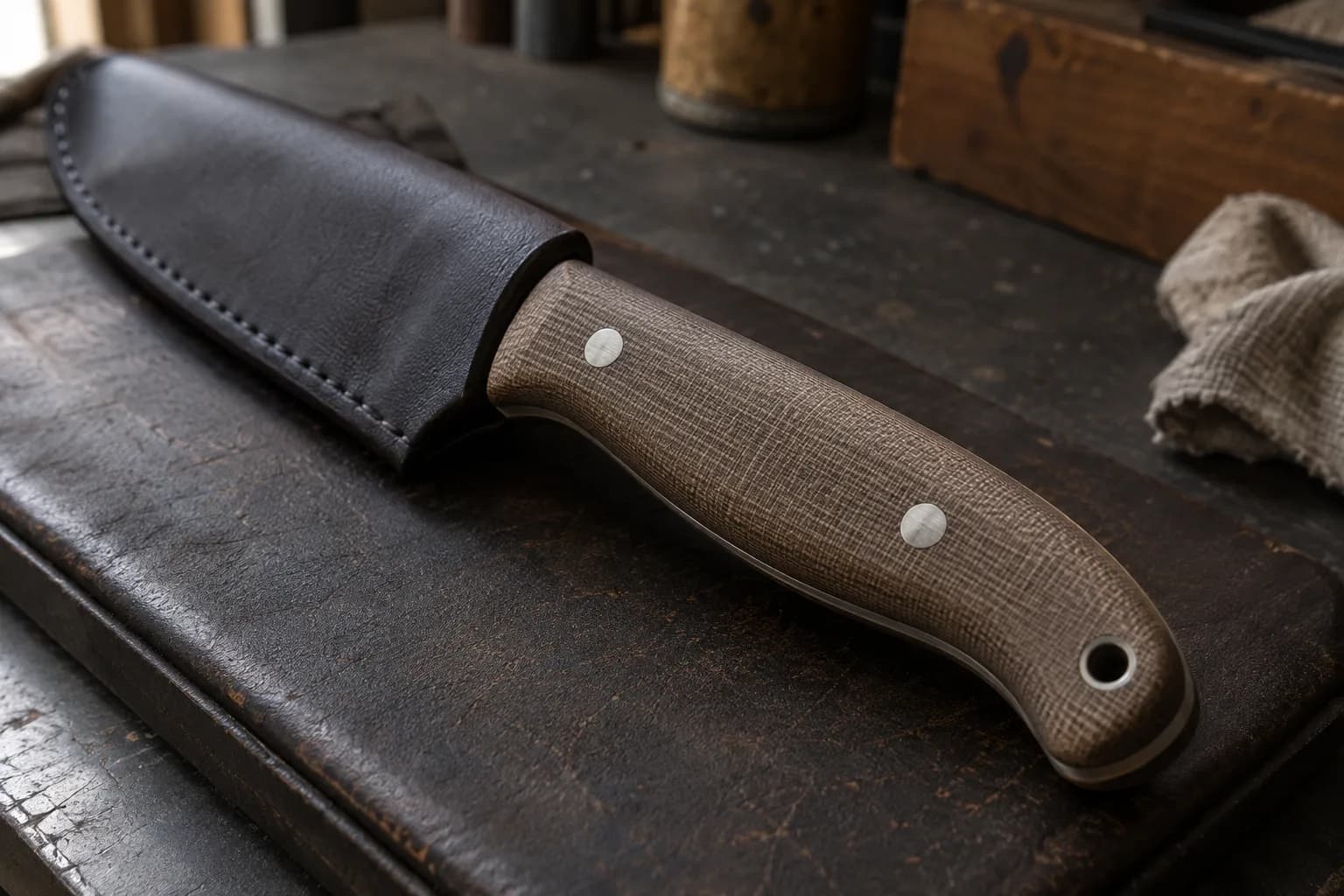
Made from layers of kraft paper rather than woven cloth, resulting in the smoothest surface finish of the common Micarta types once sanded. Paper Micarta is often produced in a wide range of vibrant colors and can achieve a smoother, almost solid-color appearance compared to the more visibly layered look of canvas or linen. It’s generally considered slightly less impact-tough than canvas Micarta, though still a durable, practical handle material.
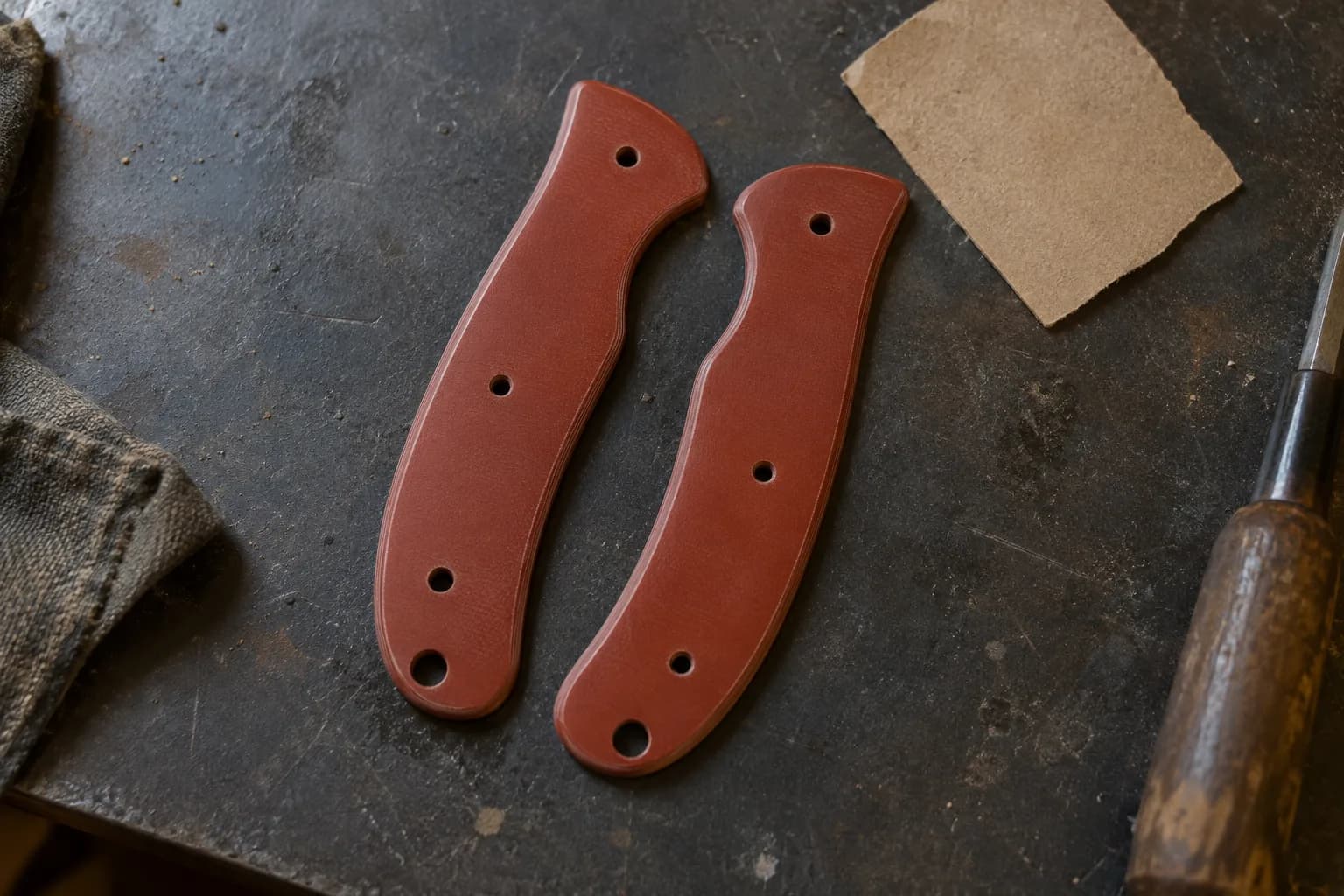
Uses coarse burlap fabric, producing a distinctly rustic, heavily textured surface with pronounced grip once finished, more aggressive texture than canvas, linen, or paper Micarta. Popular for outdoor and hard-use knives specifically for that grip and traditional, rugged look.
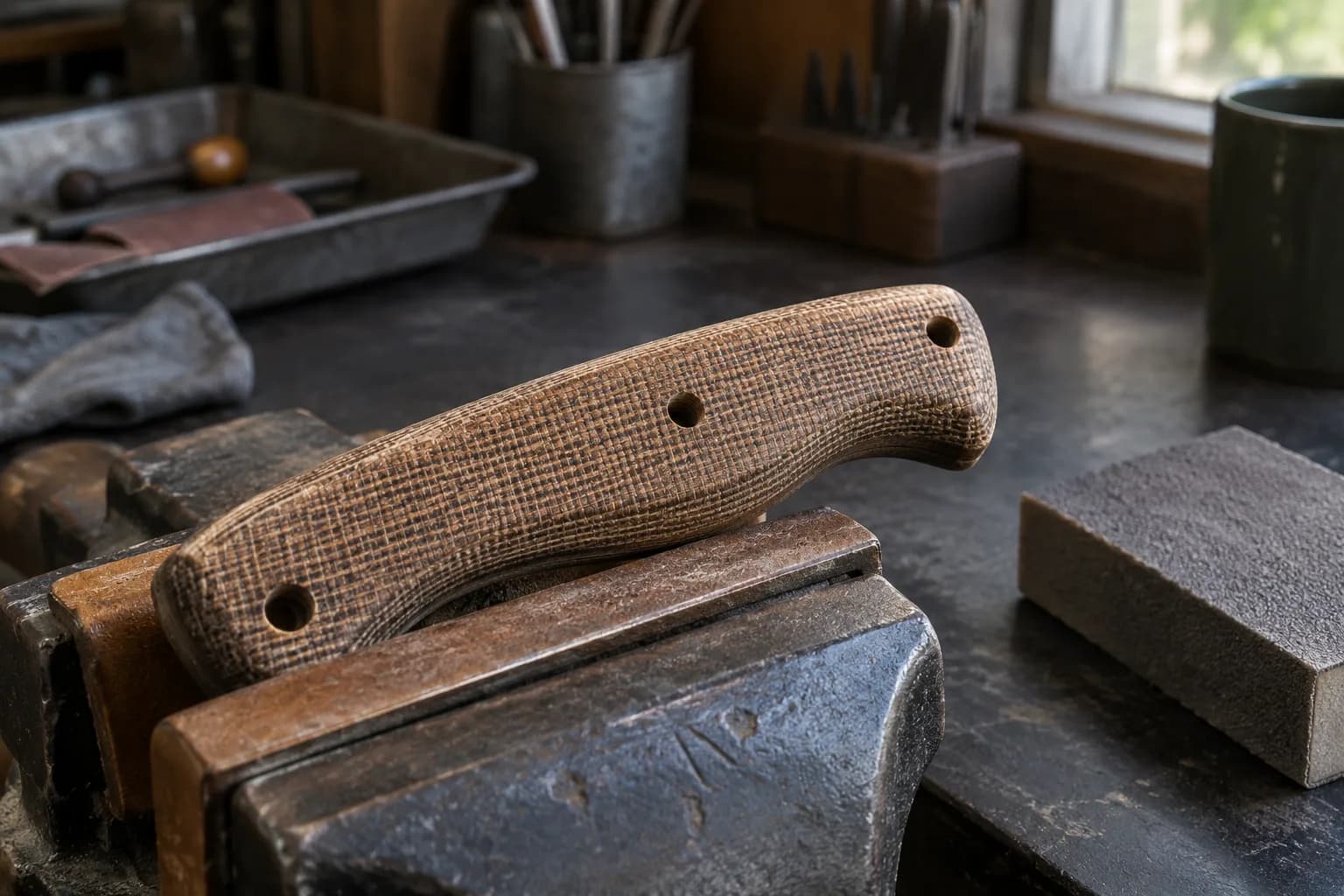
All Micarta types grind and shape similarly on a 2×72 grinder, but burlap’s coarser weave can pull and fray slightly more at edges during aggressive shaping compared to the tighter weave of linen or paper Micarta, worth taking lighter passes near edges and corners with burlap in particular.
Paper Micarta typically shows color most vividly and evenly since its base material has the least inherent texture competing with dye or resin tint. Canvas and linen show more of the underlying weave pattern through any color, and burlap’s heavy texture dominates the visual regardless of color. Choosing a base material is as much about the finished look as it is about toughness.
Generally yes, canvas’s coarser, more open weave tends to give better impact toughness than paper’s tighter, flatter structure, though both are durable, practical handle materials well beyond what’s needed for typical use.
Canvas or linen Micarta are the most forgiving, tough enough to handle grinding mistakes without chipping easily, and widely available. Burlap’s coarser weave takes slightly more care near edges.
Not typically as the two scales of a single handle (matching scales is standard), but different Micarta types are sometimes used for scales versus liners or spacers within the same build for contrast.
Keep reading
Three more from the same bench.
Handle material affects grip, durability, weather resistance, and how a knife feels in the hand, arguably as much as blade steel affects how it cuts…
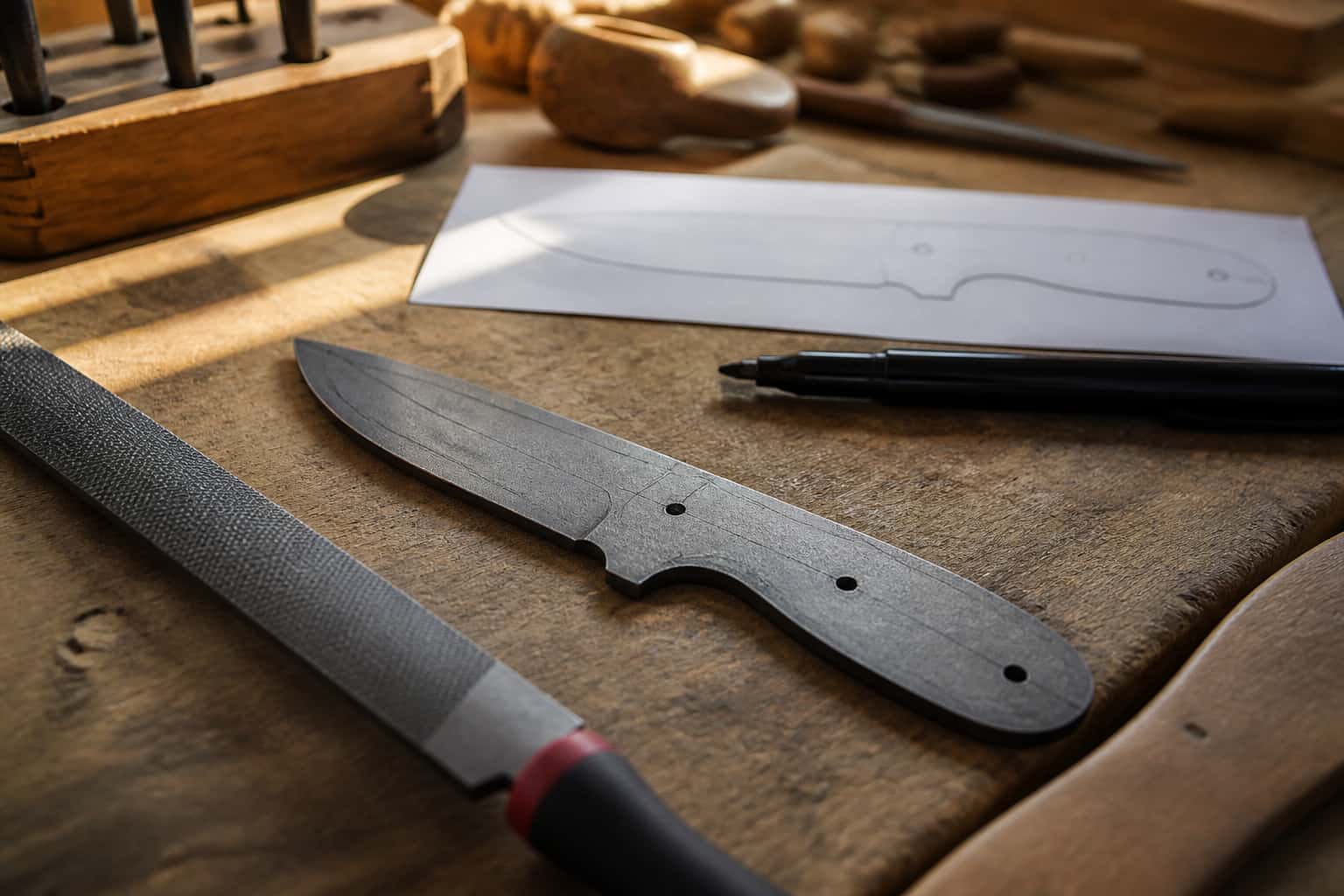
It’s easy to look at a fully outfitted professional shop and assume you need all of it to make your first knife. You don’t. Here’s what actually matters…
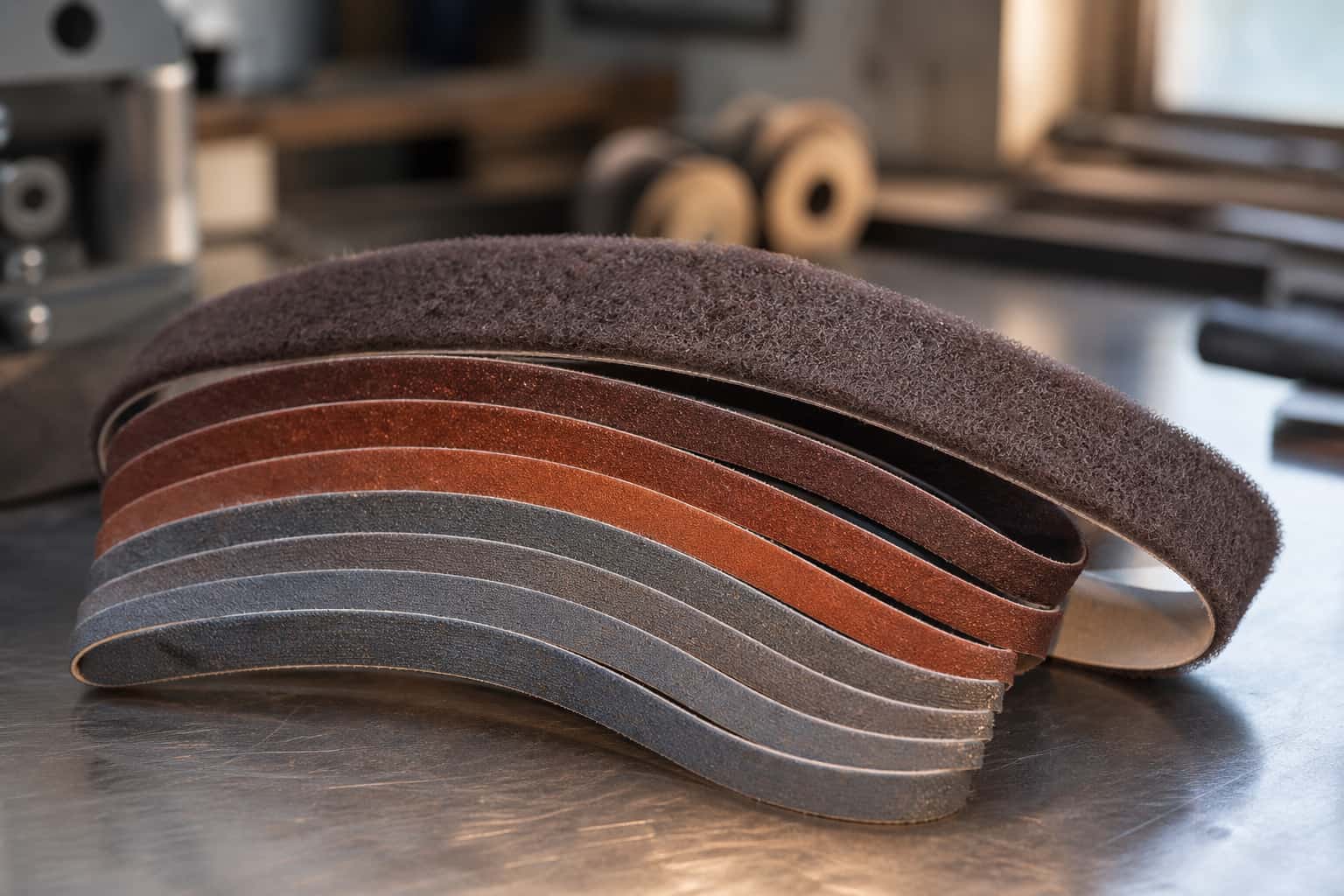
Attaching handle scales looks simple, glue two pieces of material to a flat tang, but getting a tight, gap-free, structurally sound result depends on a…
Same bench
I machine the parts, hand-assemble, track and test Torus grinders in Sterling, Illinois. Most orders ship in seven to ten business days from time of order.
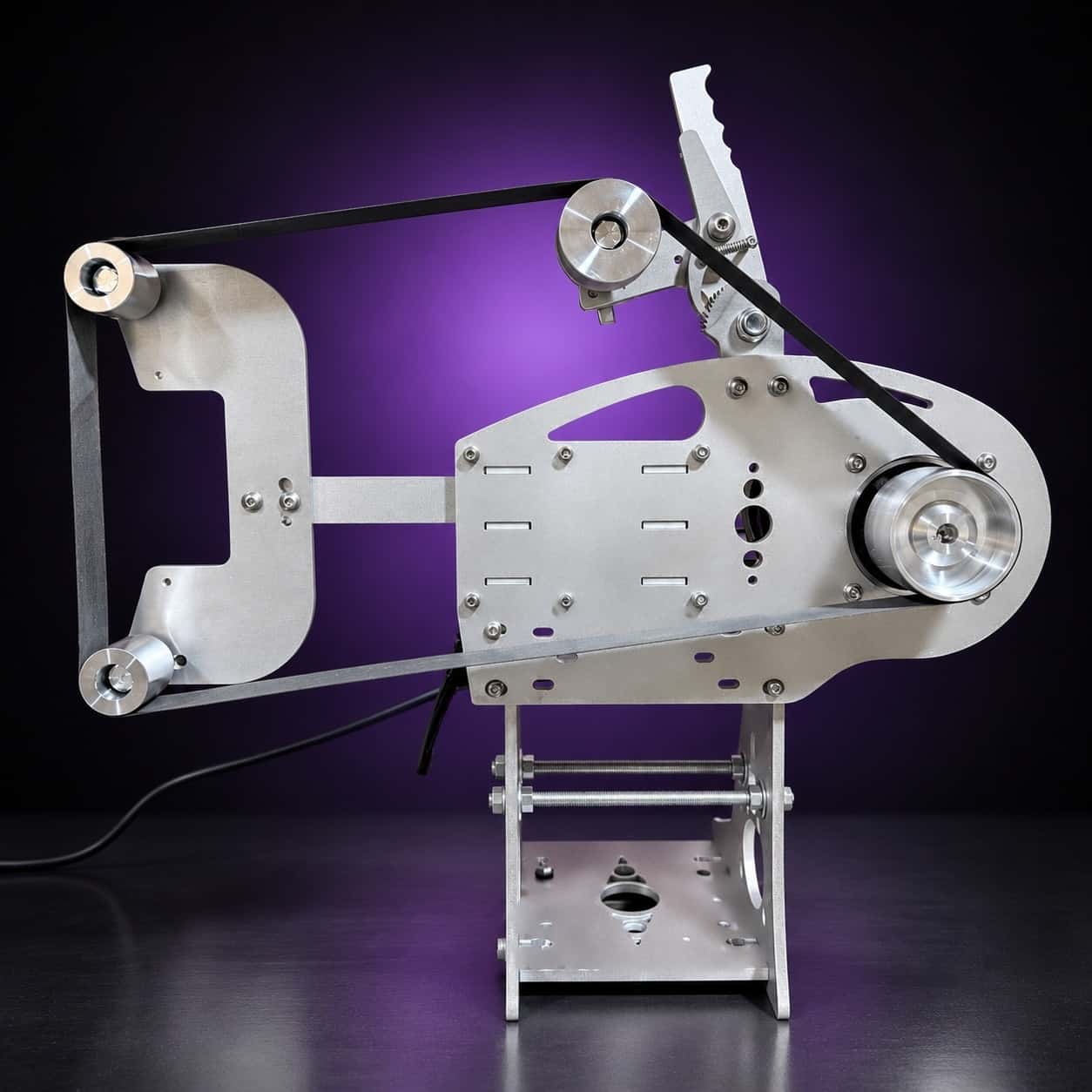
Current dual-axis platform with a fiber-laser-cut 6061 chassis and single-knob tracking.
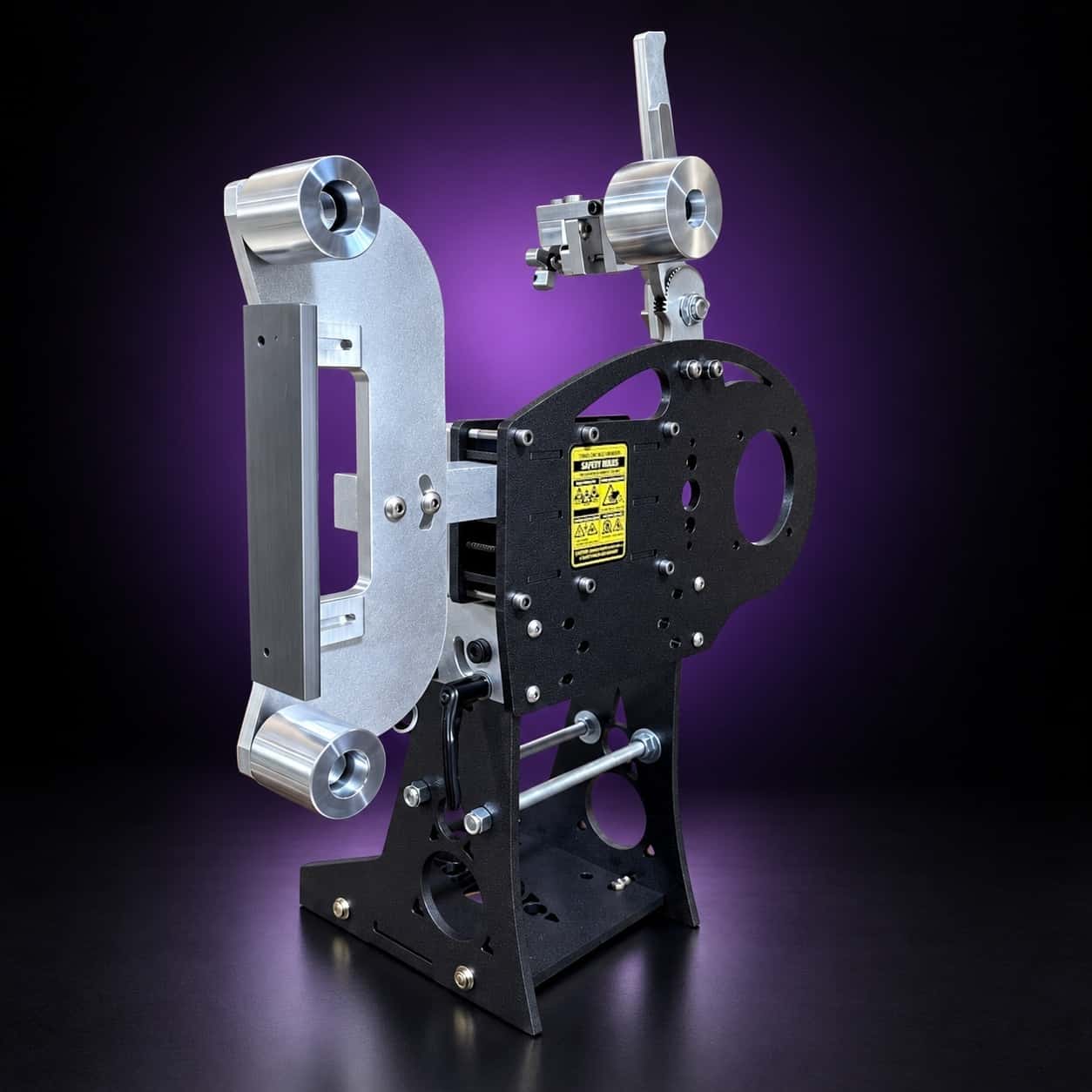
Current dual-axis platform with a steel chassis, more mass and less vibration.
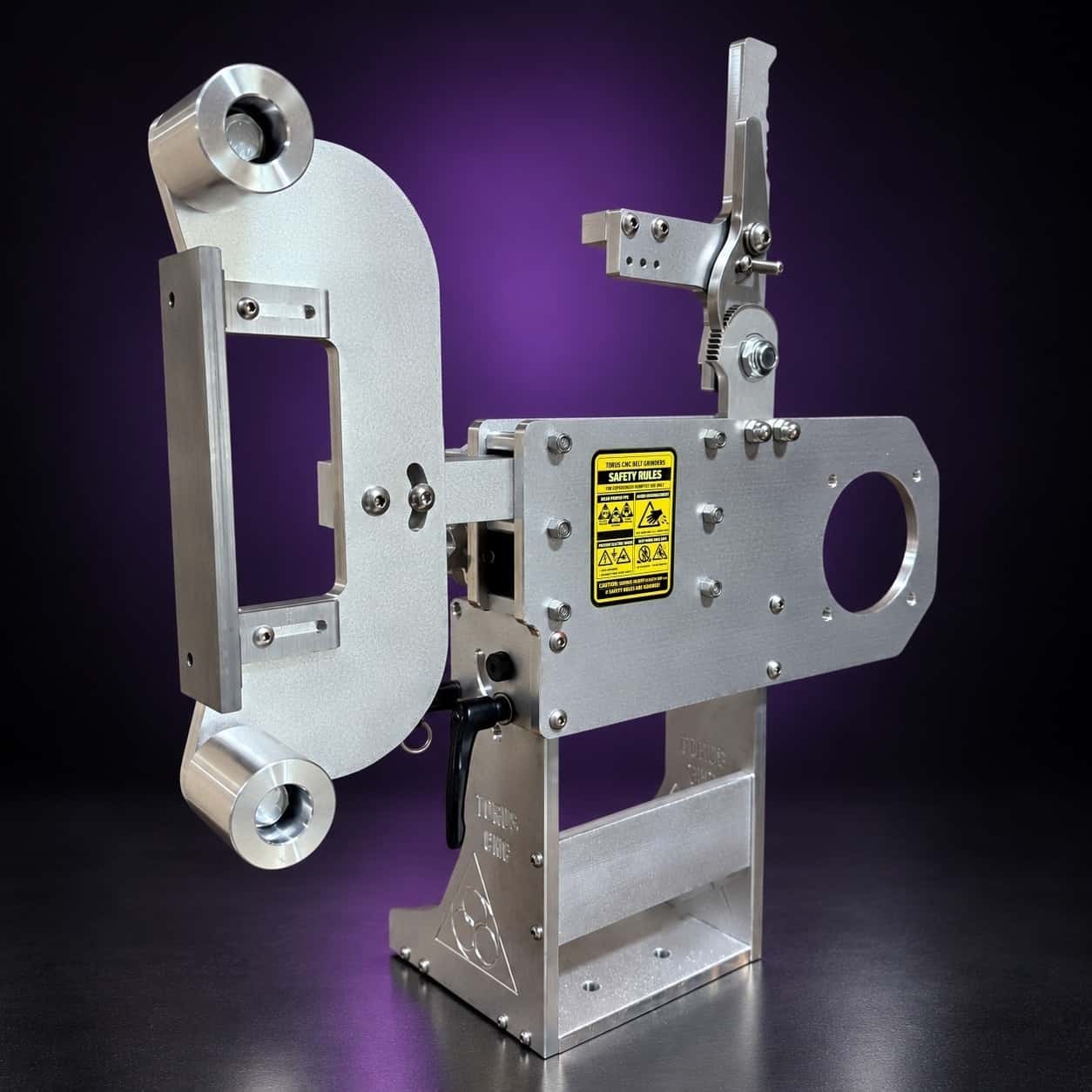
Prior-design aluminum chassis, 90-degree tilt and 1.5-inch tooling arms.
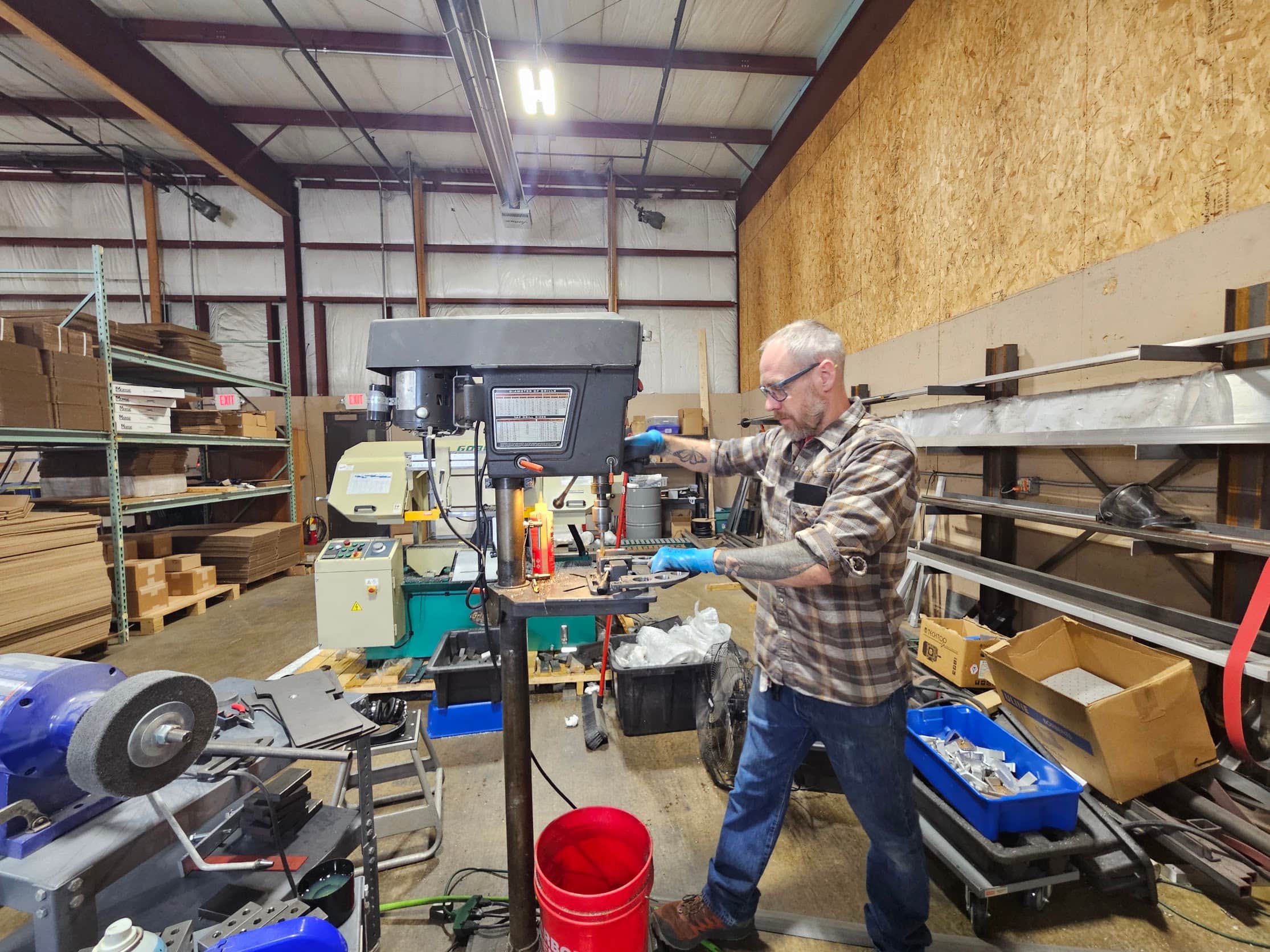
One-man shop
I answer my own email. Tell me the steel, the machine and what it is doing, and I will tell you what I would try next.