
Blade Design
Attaching Handle Scales: Pins, Epoxy & Assembly Technique
Attaching handle scales looks simple, glue two pieces of material to a flat tang, but getting a tight, gap-free, structurally sound result depends on a…
Blade Design
How Corby and Loveless bolts clamp scales tight yet finish flush like a pin, plus countersunk screw systems and when to choose them over plain pins and epoxy.
3 min readWritten by Rich LinvilleFree to read
Beyond simple pins, several hardware systems let a maker attach handle scales with a cleaner look, added mechanical strength, or the option to service the handle later. These are collectively known as hidden or “bolt” fasteners.
A two-piece system: a threaded bolt and a matching barrel-shaped sleeve that thread together from either side of the handle. Once tightened and ground flush, a Corby bolt looks like a solid rivet or pin from the outside, but it draws the scales together mechanically under real clamping force, adding strength beyond what epoxy and a plain pin provide alone. Removing one typically means drilling it out rather than simply unscrewing it once installed and finished, so treat it as a strong, clean-looking permanent fastener rather than a routinely serviceable one.
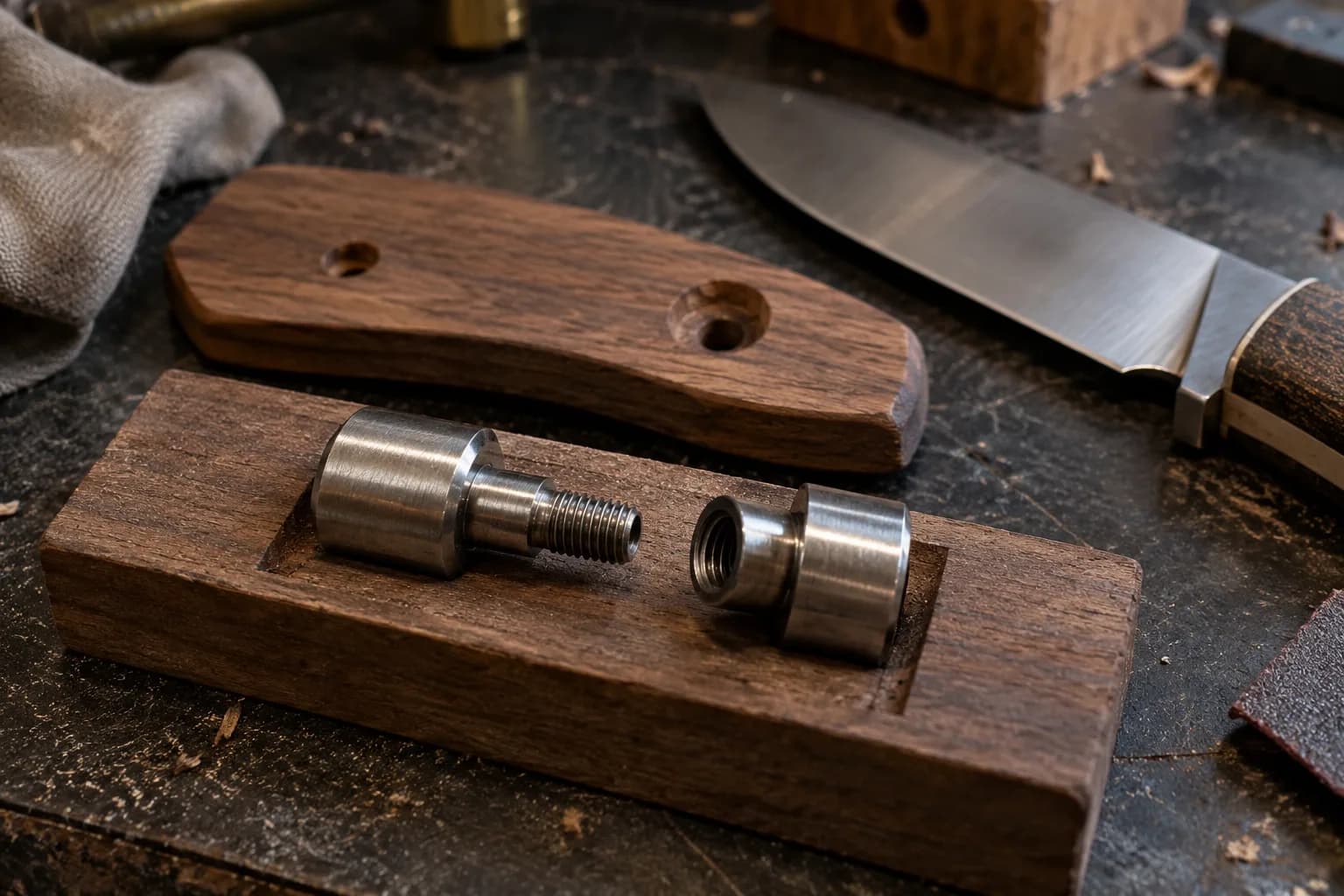
Named after knifemaker Bob Loveless, a similar two-piece countersunk bolt system to Corby bolts, threading together to clamp the scales with real mechanical force and finishing flush. Loveless bolts and Corby bolts serve essentially the same purpose with some differences in exact thread and head design between manufacturers; both are considered premium, high-strength hidden fastener options.
Plain pins rely on the pin’s diameter and the surrounding epoxy bond for strength. Corby-style and Loveless bolts add active clamping force, mechanically drawing the scales tight against the tang independent of the epoxy, which can produce a tighter, more secure final fit, especially valuable on hard-use knives or when working with handle materials that are less forgiving of an imperfect epoxy bond.
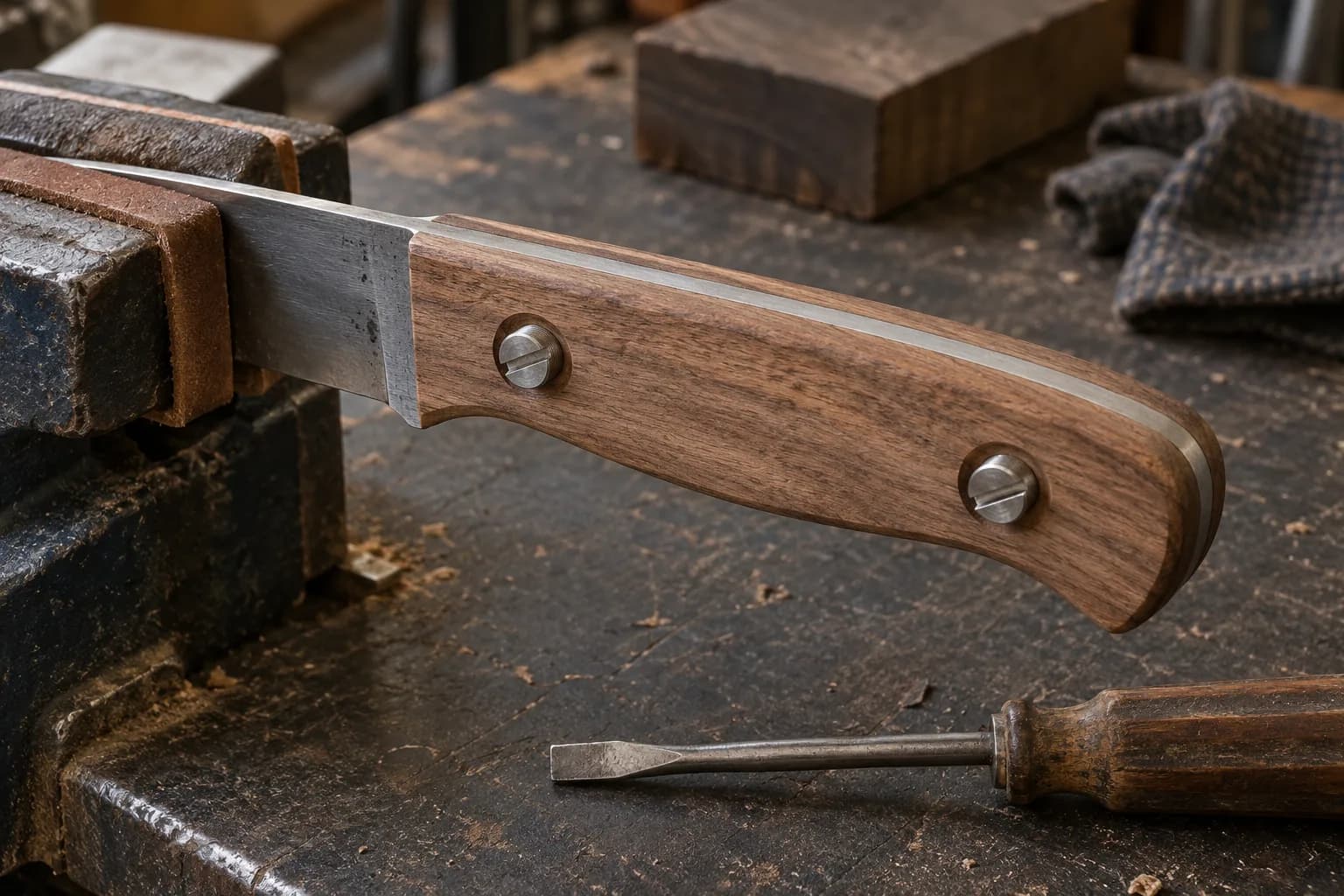
Some makers use countersunk machine screws that thread into a tapped hole in the tang, with the screw head recessed and then covered with a matching material plug or filled and blended smooth. This allows genuine disassembly (unlike Corby or Loveless bolts once finished) at the cost of more visible hardware unless carefully hidden, and more setup work (tapping threads accurately into the tang).
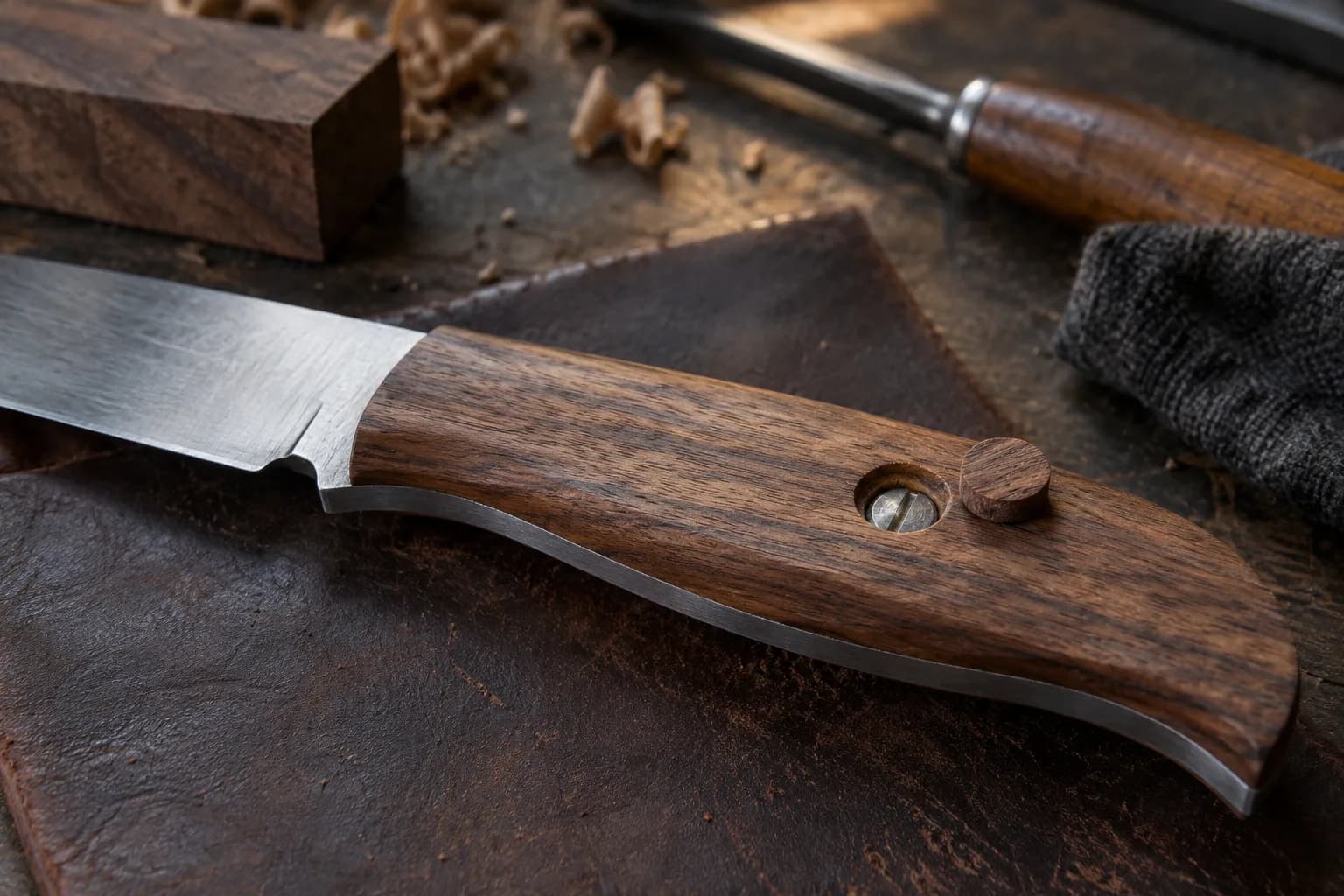
Not hidden at all, exposed bolt heads or standoffs that are a deliberate visual design element rather than something concealed, common on tactical and modern folding knife designs. Worth knowing about as the alternative to hidden fastener systems, not a mistake if visible hardware is the intended look.
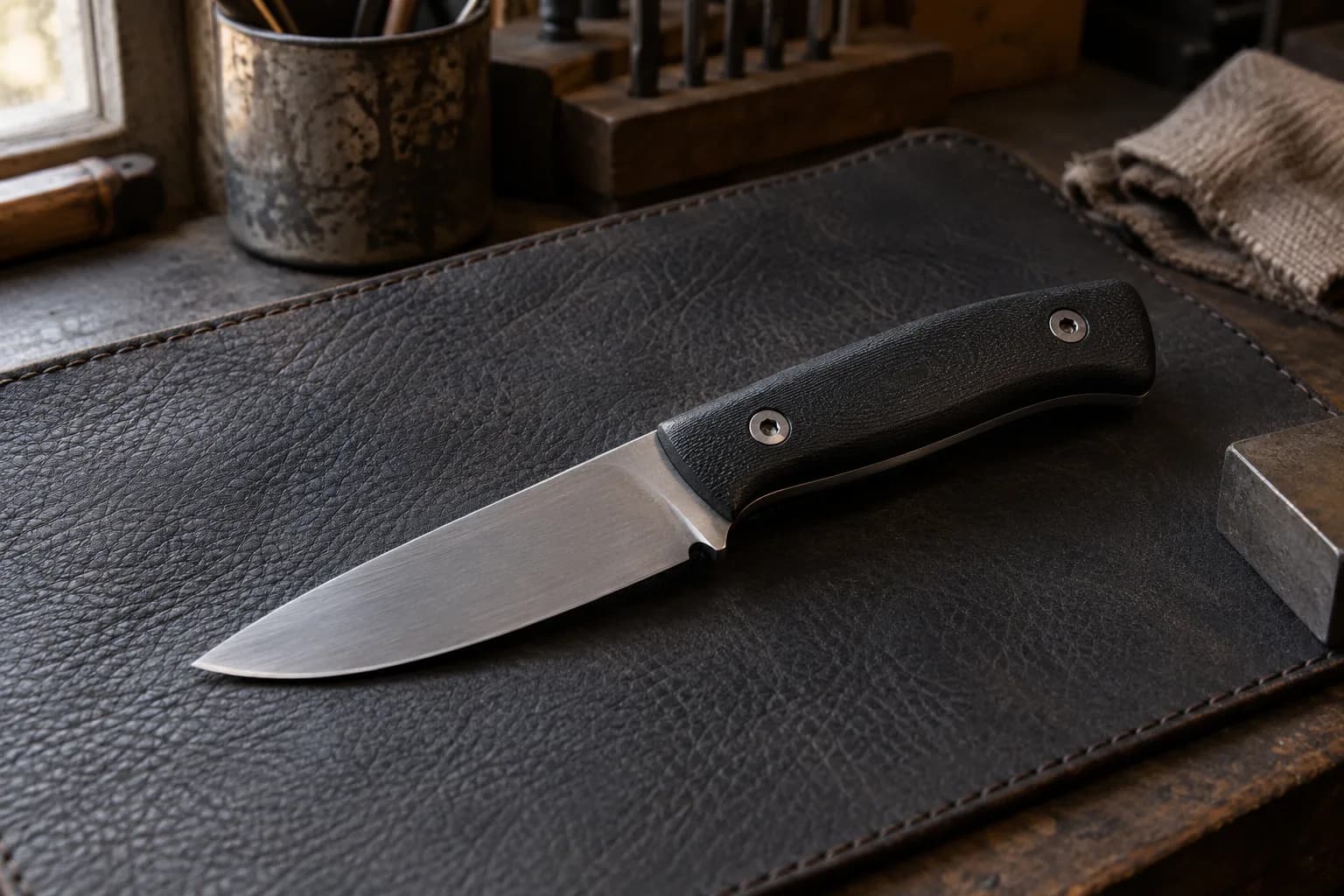
Plain pins with quality epoxy are entirely adequate and far simpler for most builds, including a first handle. Corby or Loveless bolts are worth the added cost and precision (accurately sized, perpendicular holes matter more with threaded hardware than with simple pins) once a maker wants extra mechanical security or plans a design where the handle might need to be more serviceable in concept, even though Corby/Loveless bolts aren’t truly meant for repeat disassembly in practice.
In practice, no, not easily. Once tightened and ground flush during finishing, removing one typically requires drilling it out, similar to removing a rivet, despite the threaded construction.
A properly sized drill bit for the bolt diameter and a way to hold the barrel side stationary while tightening the bolt side (some kits include a specific wrench or slot design for this) are typically all that’s needed beyond standard shop tools.
Not necessarily required, plain pins with good epoxy technique (see Attaching Handle Scales) are perfectly strong for most builds and simpler to execute well. Bolt systems are a worthwhile upgrade once basic pinning and epoxy technique are solid.
Keep reading
Three more from the same bench.
Attaching handle scales looks simple, glue two pieces of material to a flat tang, but getting a tight, gap-free, structurally sound result depends on a…
Pin material affects corrosion resistance, appearance, and how easily the pin peens or finishes flush, and the options range from plain utilitarian steel…
Modern knifemaking owes a lot to a handful of individuals who either revived lost techniques, popularized enduring designs, or brought the craft to a…
Same bench
I machine the parts, hand-assemble, track and test Torus grinders in Sterling, Illinois. Most orders ship in seven to ten business days from time of order.
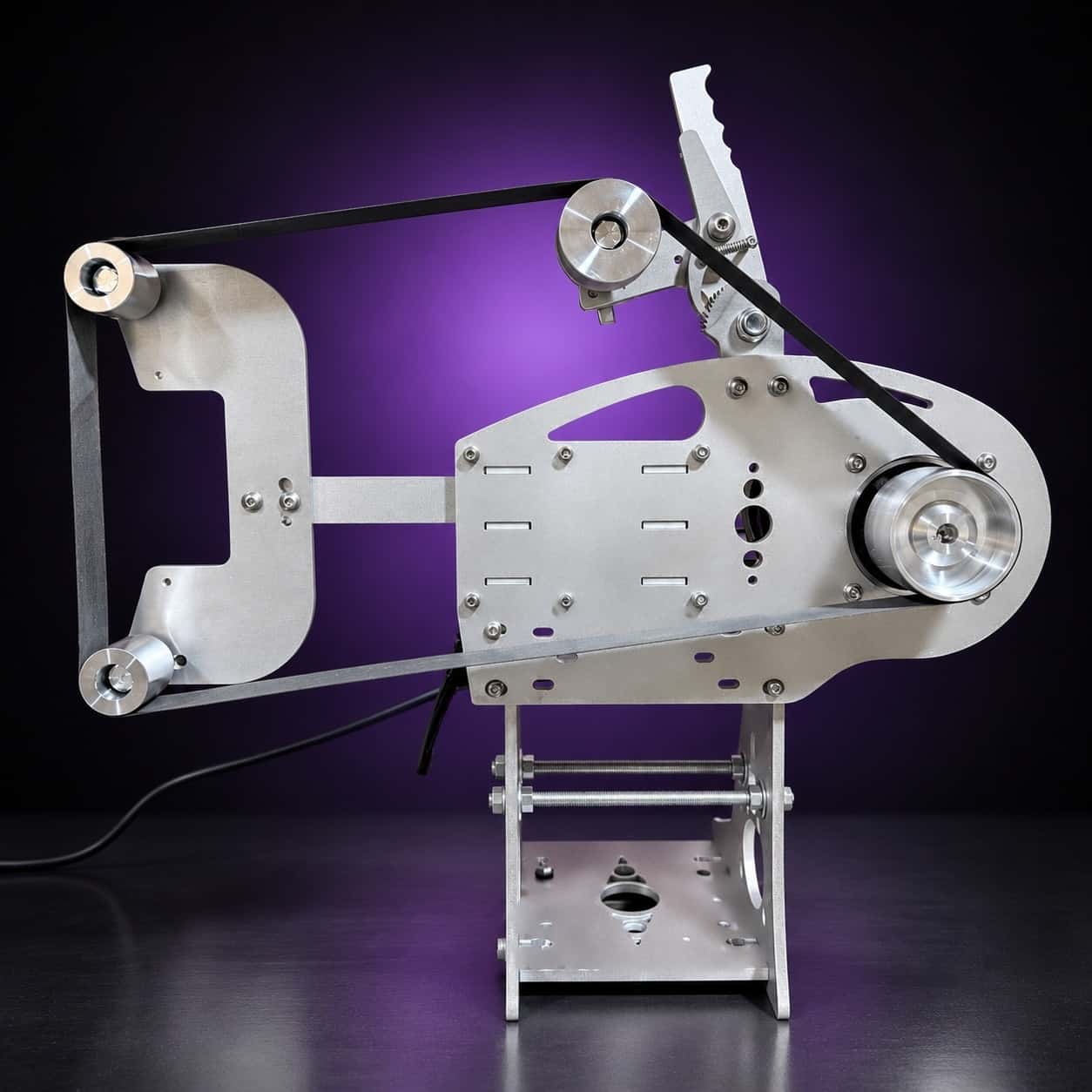
Current dual-axis platform with a fiber-laser-cut 6061 chassis and single-knob tracking.
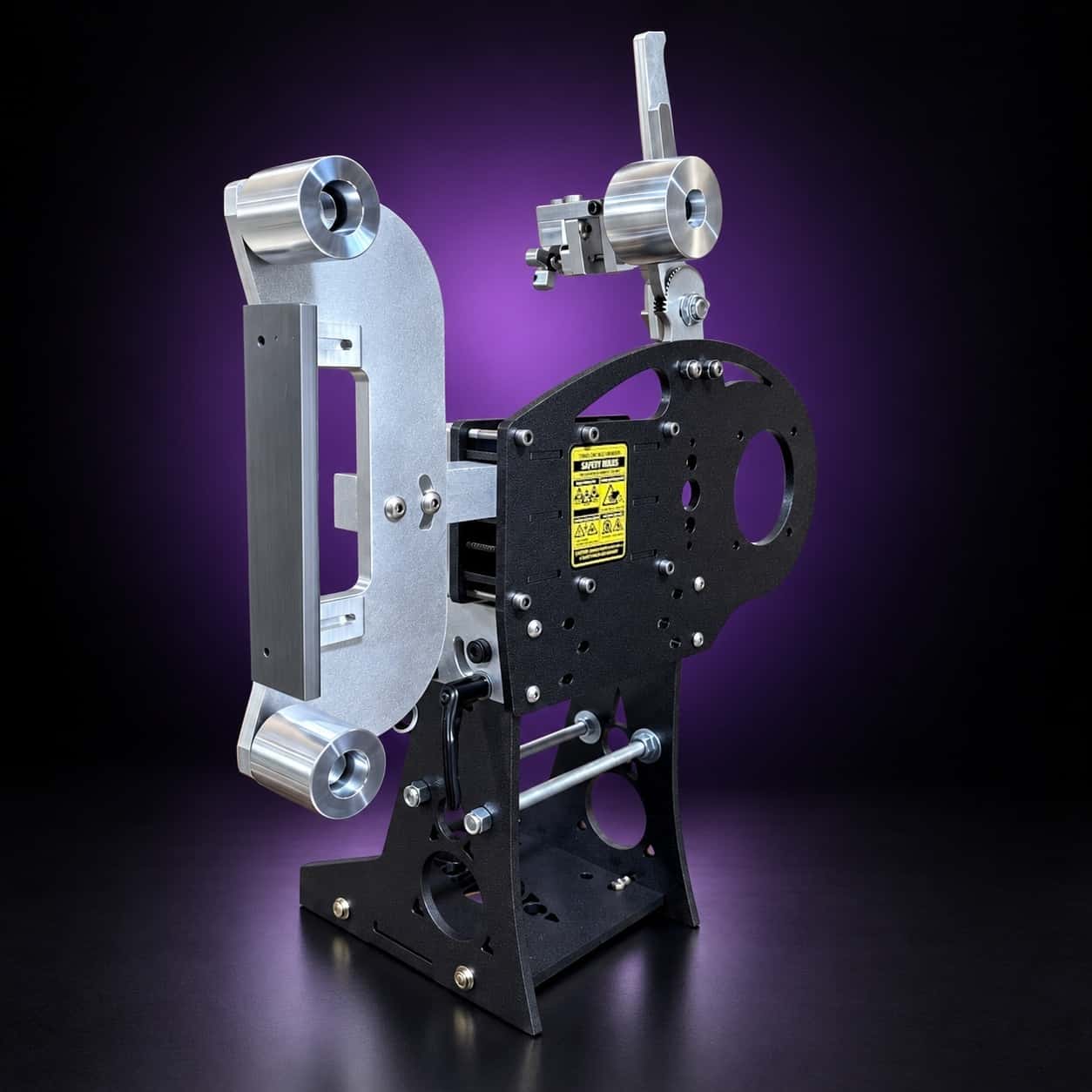
Current dual-axis platform with a steel chassis, more mass and less vibration.
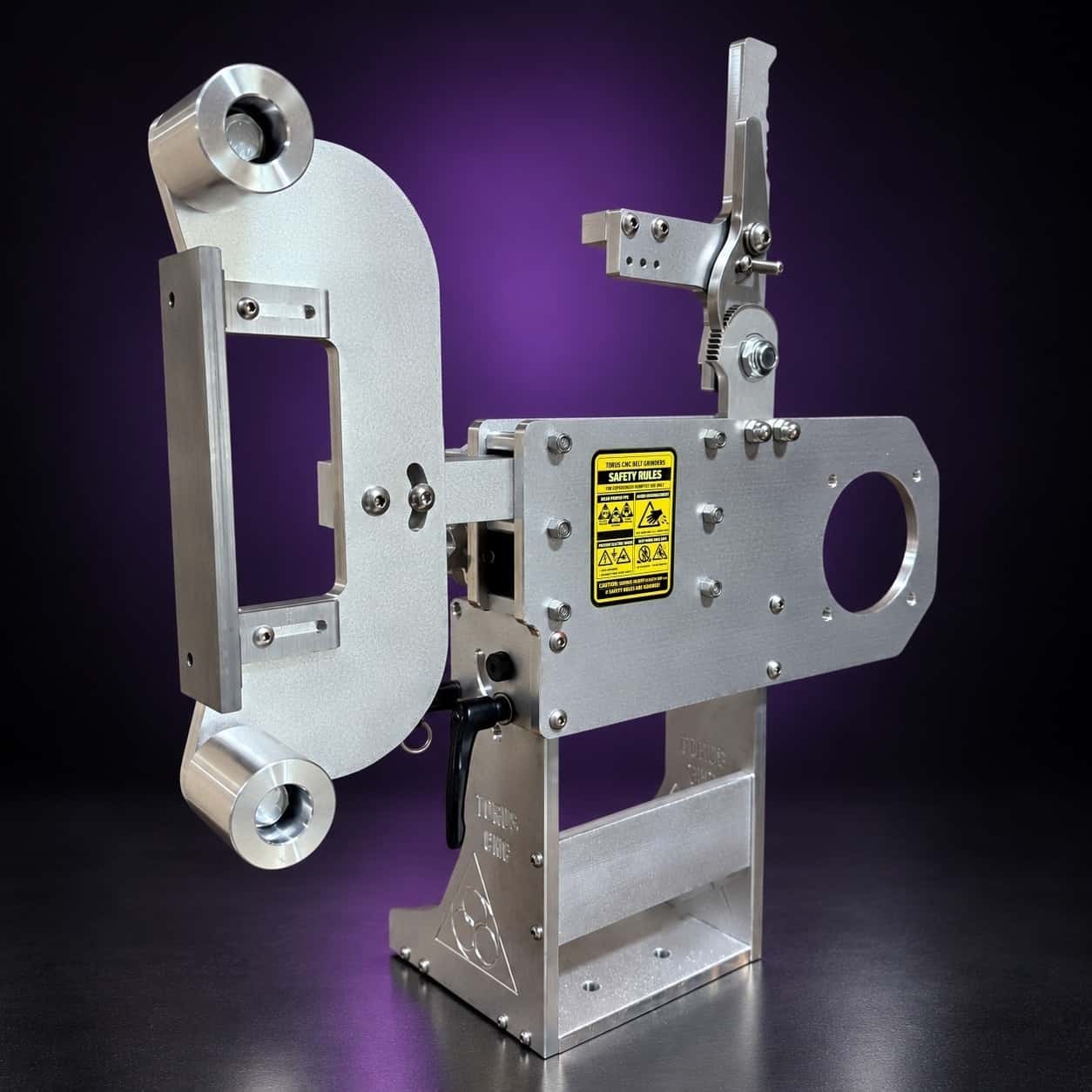
Prior-design aluminum chassis, 90-degree tilt and 1.5-inch tooling arms.
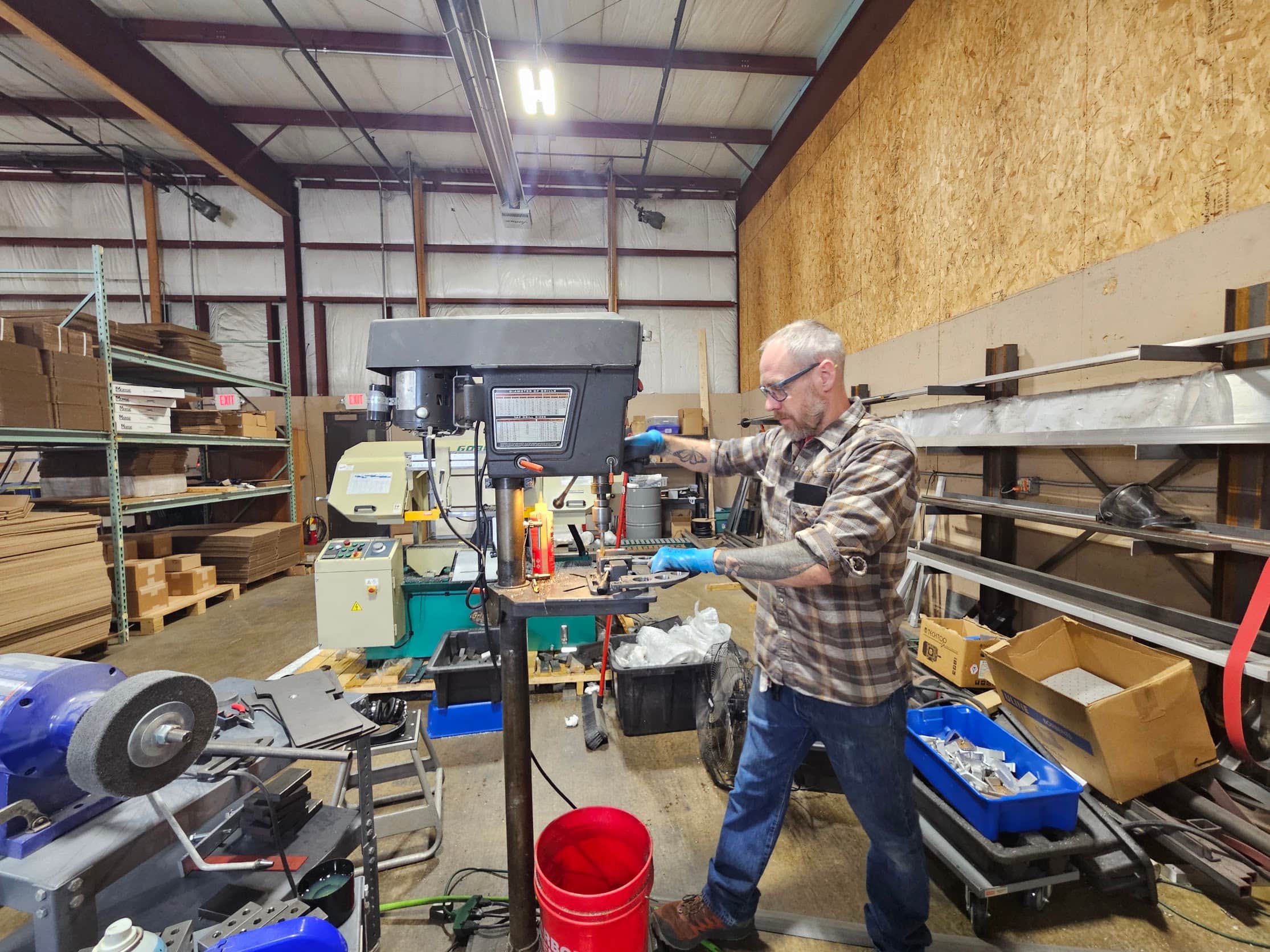
One-man shop
I answer my own email. Tell me the steel, the machine and what it is doing, and I will tell you what I would try next.