
Blade Design
Handle Material Guide: G10, Micarta, Wood, and More
Handle material affects grip, durability, weather resistance, and how a knife feels in the hand, arguably as much as blade steel affects how it cuts…
Blade Design
Solid, camo and textured G10 for knife handles: how grinding depth changes a camo pattern, smooth versus textured faces, thickness options and sourcing.
3 min readWritten by Rich LinvilleFree to read
G10 isn’t one uniform product, color, layering, and surface finish all vary, and picking the right variant affects both the finished look and how the material behaves during shaping.
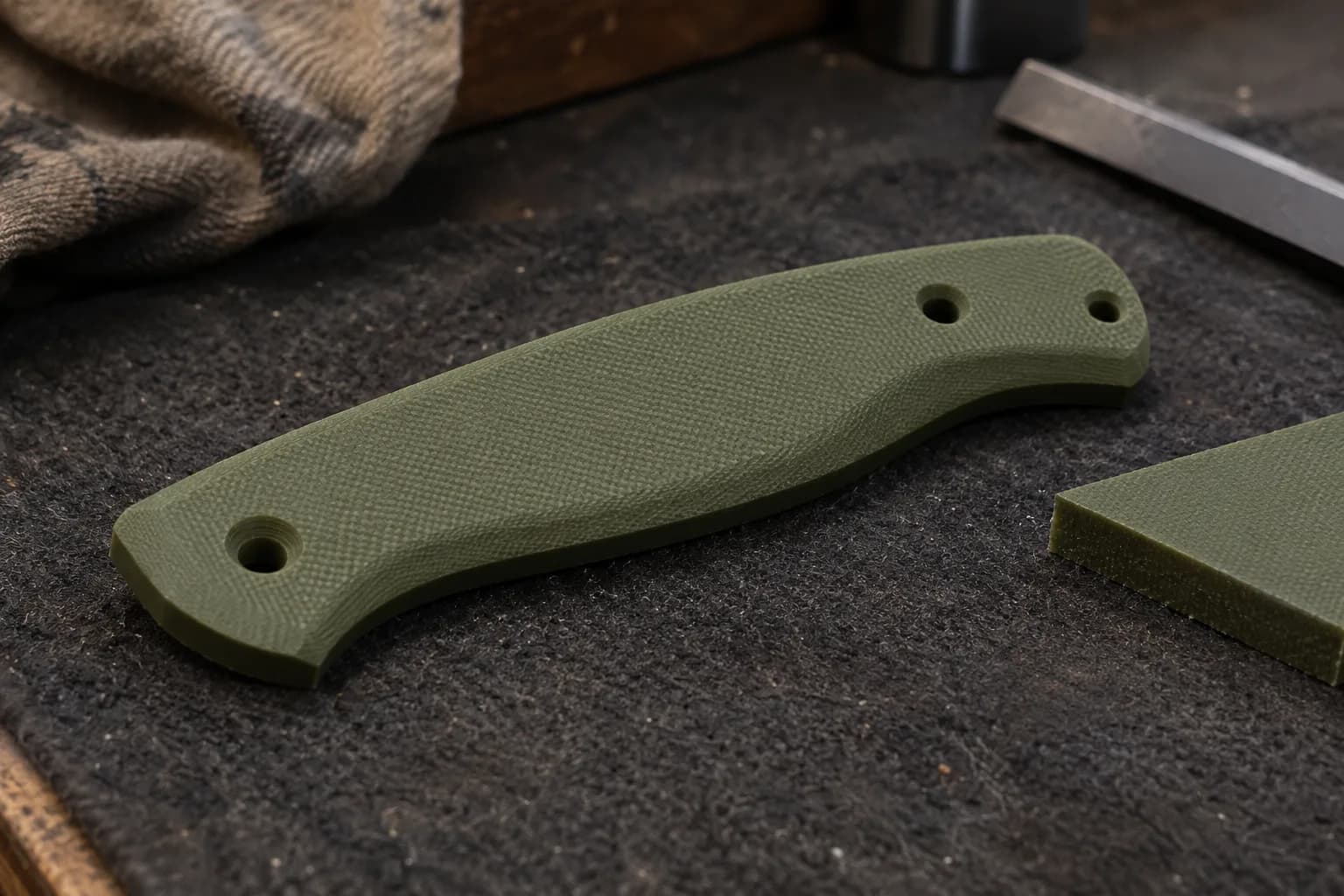
A single consistent color runs through the entire thickness of the sheet. This is the simplest, most predictable option: the color at the surface is the color you’ll see no matter how deep you grind or contour, which matters on a handle where shaping removes material unevenly. Black, OD green, and a range of other solid colors are all widely available.
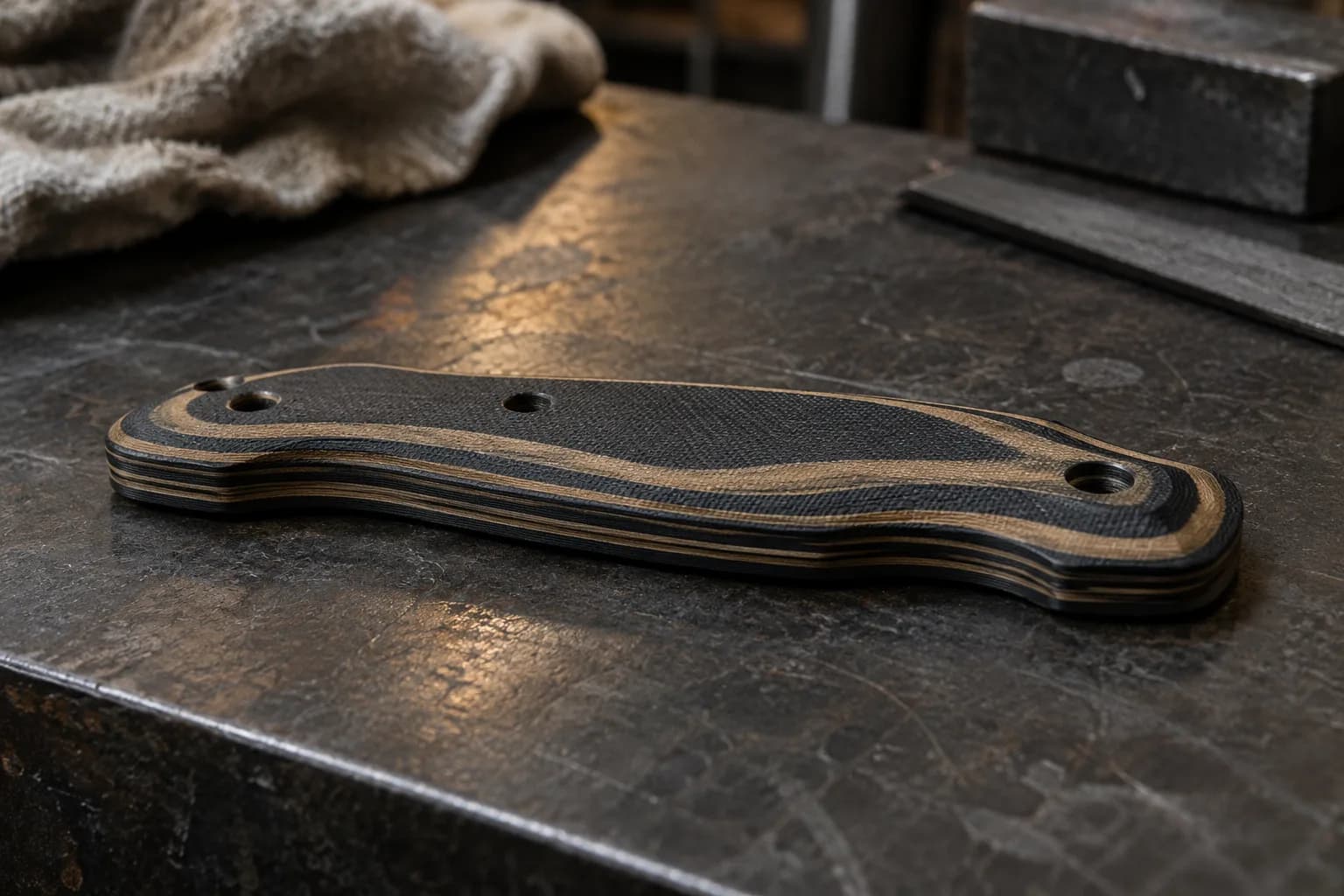
Made by stacking multiple colors of G10 material together during manufacture, so grinding into the material at different depths reveals different underlying colors, producing a mottled, camo-like, or striped pattern depending on the layer pattern and how the final shape cuts through it. This gives a distinctive look that solid-color G10 can’t achieve, but the exact pattern that emerges depends on how deep and at what angle the final shaping goes, less predictable and repeatable than solid color.
Textured G10 has a grip pattern (dimples, checkering-like texture, or a stippled surface) pressed into the material during manufacturing, adding real tactile grip without needing to hand-texture the finished handle. Smooth G10 takes a polished or satin finish more easily and is the standard choice when texture will be added later by the maker (checkering, jimping, or a bead-blasted finish) rather than relying on the material’s built-in surface.
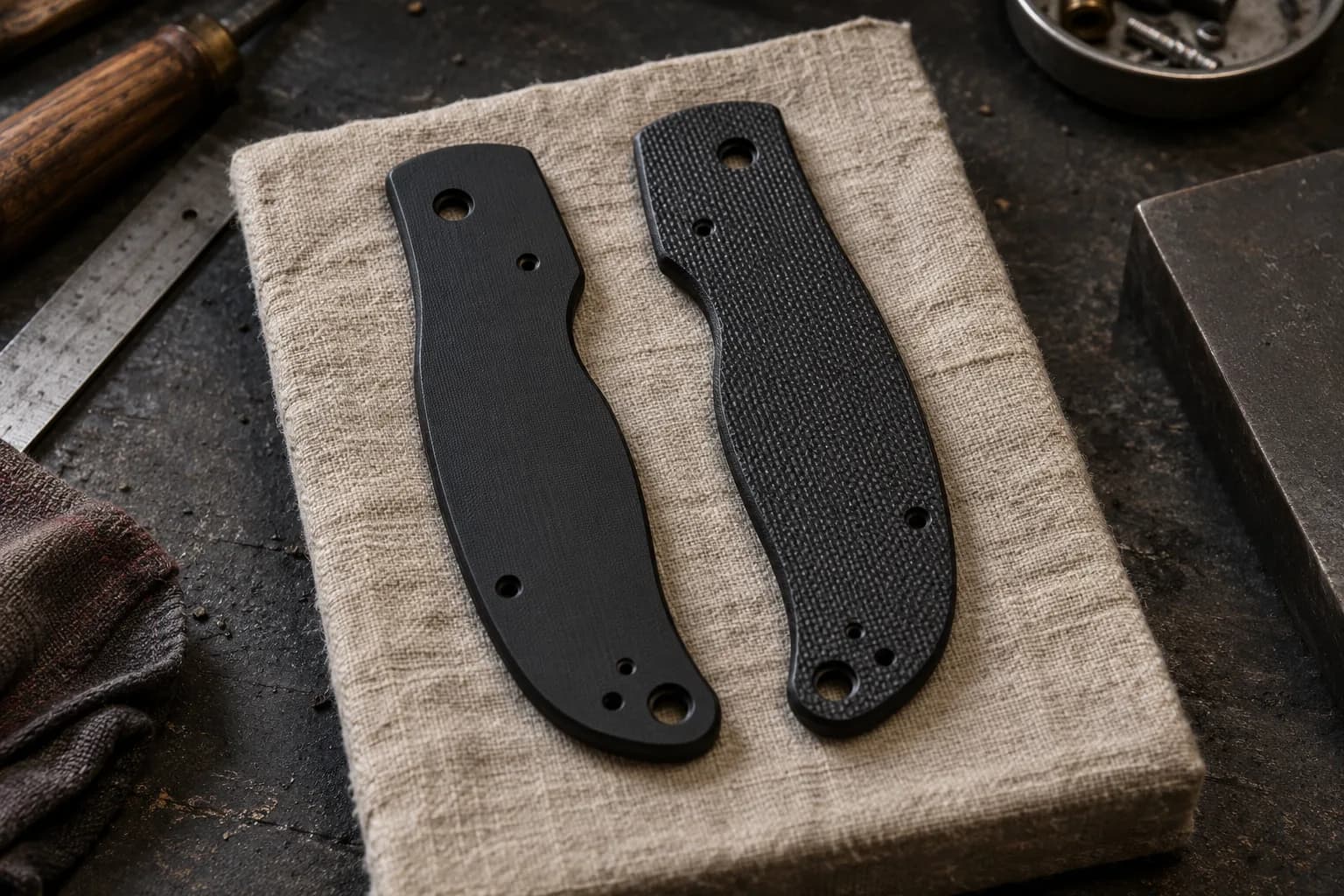
G10 sheet commonly comes in a range of thicknesses, roughly 1/8″ to 1/4″ being typical for full-tang handle scales, with thinner material sometimes used for liners or spacers between other materials rather than as the primary scale. Thicker stock gives more material to contour a rounded profile from; thinner stock is lighter and suits a flatter handle design.
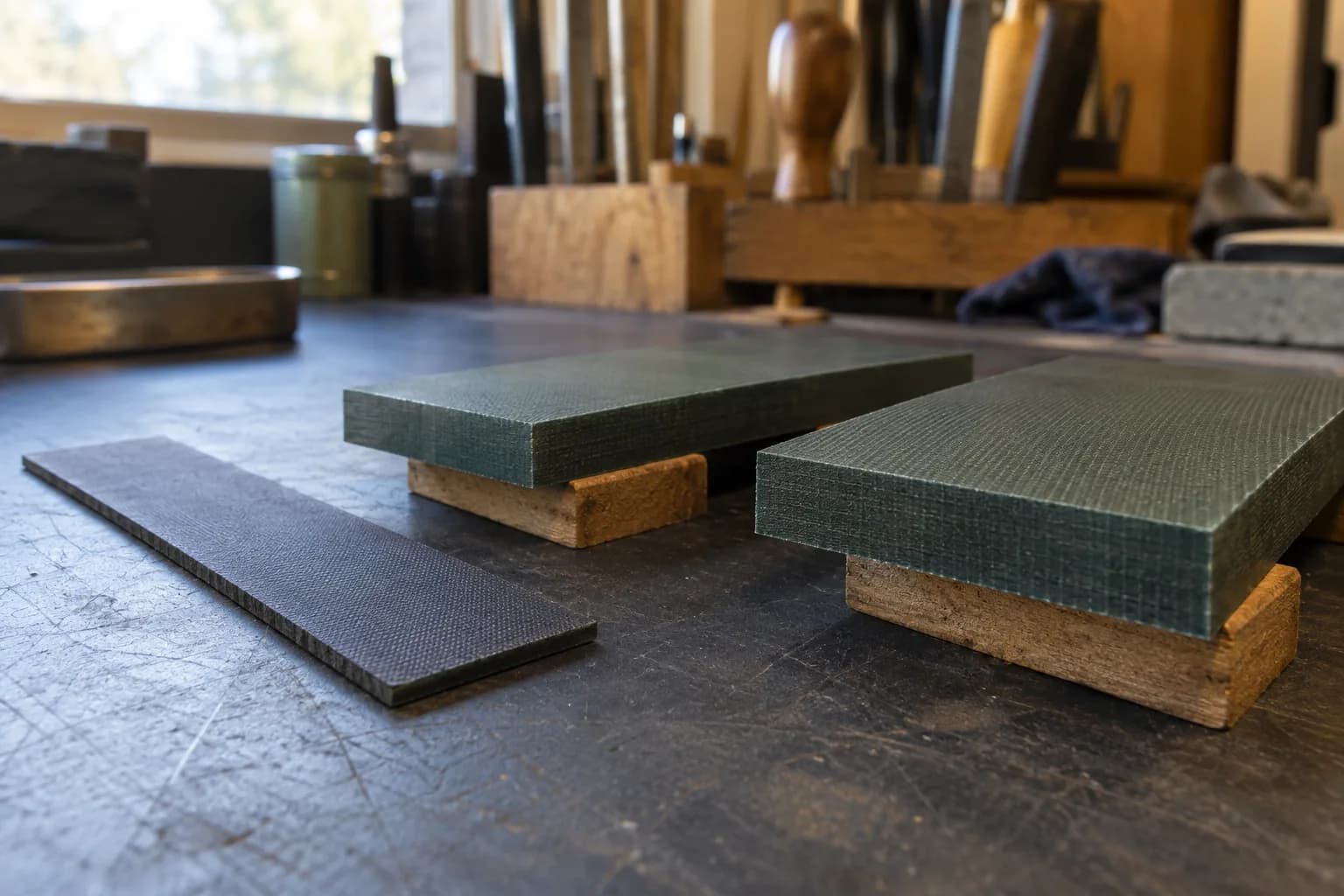
G10 quality varies between manufacturers, mainly in how consistently the resin-to-fiberglass ratio is controlled and how well the sheet resists delamination (layers separating) under stress or heat. Reputable knifemaking suppliers selling G10 specifically for handle use are generally more reliable than G10 sourced from general industrial suppliers not focused on the knife market, worth keeping in mind when comparing prices that seem unusually low.
G10 grinds cleanly with standard abrasives but produces fine glass fiber dust that’s a real respiratory irritant, a proper respirator (not just a dust mask) is worth wearing specifically for G10 work, alongside the general shop safety basics covered in Essential First Tools & Equipment.
Camo G10 gets its pattern from stacked layers of different solid colors revealed by grinding depth, a manufacturing process. Dyed or solid-color G10 is a single uniform color throughout, no layering involved.
Not universally better, different purposes. Textured G10 gives grip straight out of the material with no extra work; smooth G10 is the better starting point if you plan to add your own texture or want a polished, non-textured final look.
For a given handle design, yes, thicker material is generally stronger and more impact-resistant, but the practical difference for typical handle scale thicknesses (1/8″-1/4″) is small; thickness choice is usually driven more by the handle’s intended shape and feel than by strength concerns at this scale.
Keep reading
Three more from the same bench.
Handle material affects grip, durability, weather resistance, and how a knife feels in the hand, arguably as much as blade steel affects how it cuts…
It’s easy to look at a fully outfitted professional shop and assume you need all of it to make your first knife. You don’t. Here’s what actually matters…
Attaching handle scales looks simple, glue two pieces of material to a flat tang, but getting a tight, gap-free, structurally sound result depends on a…
Same bench
I machine the parts, hand-assemble, track and test Torus grinders in Sterling, Illinois. Most orders ship in seven to ten business days from time of order.
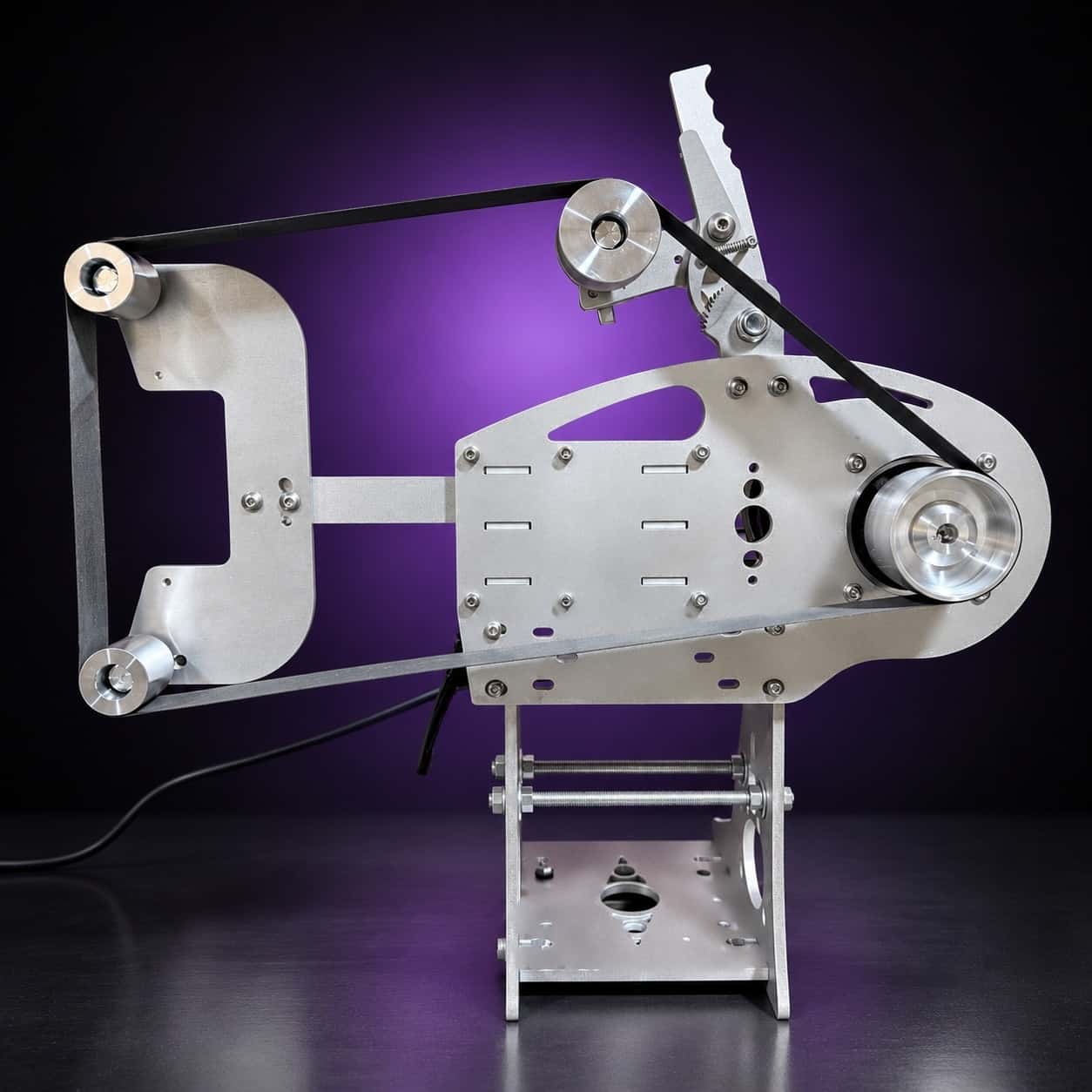
Current dual-axis platform with a fiber-laser-cut 6061 chassis and single-knob tracking.
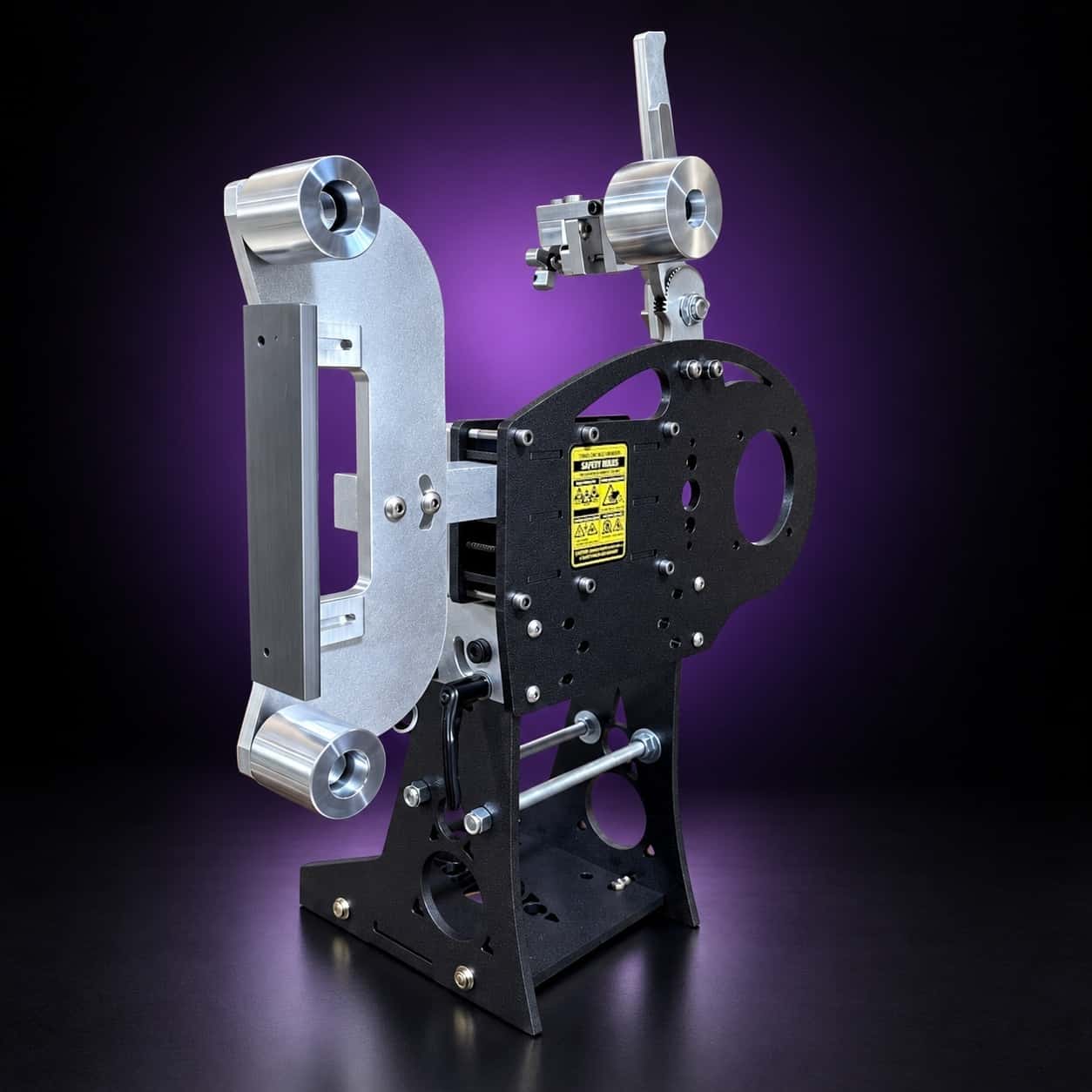
Current dual-axis platform with a steel chassis, more mass and less vibration.
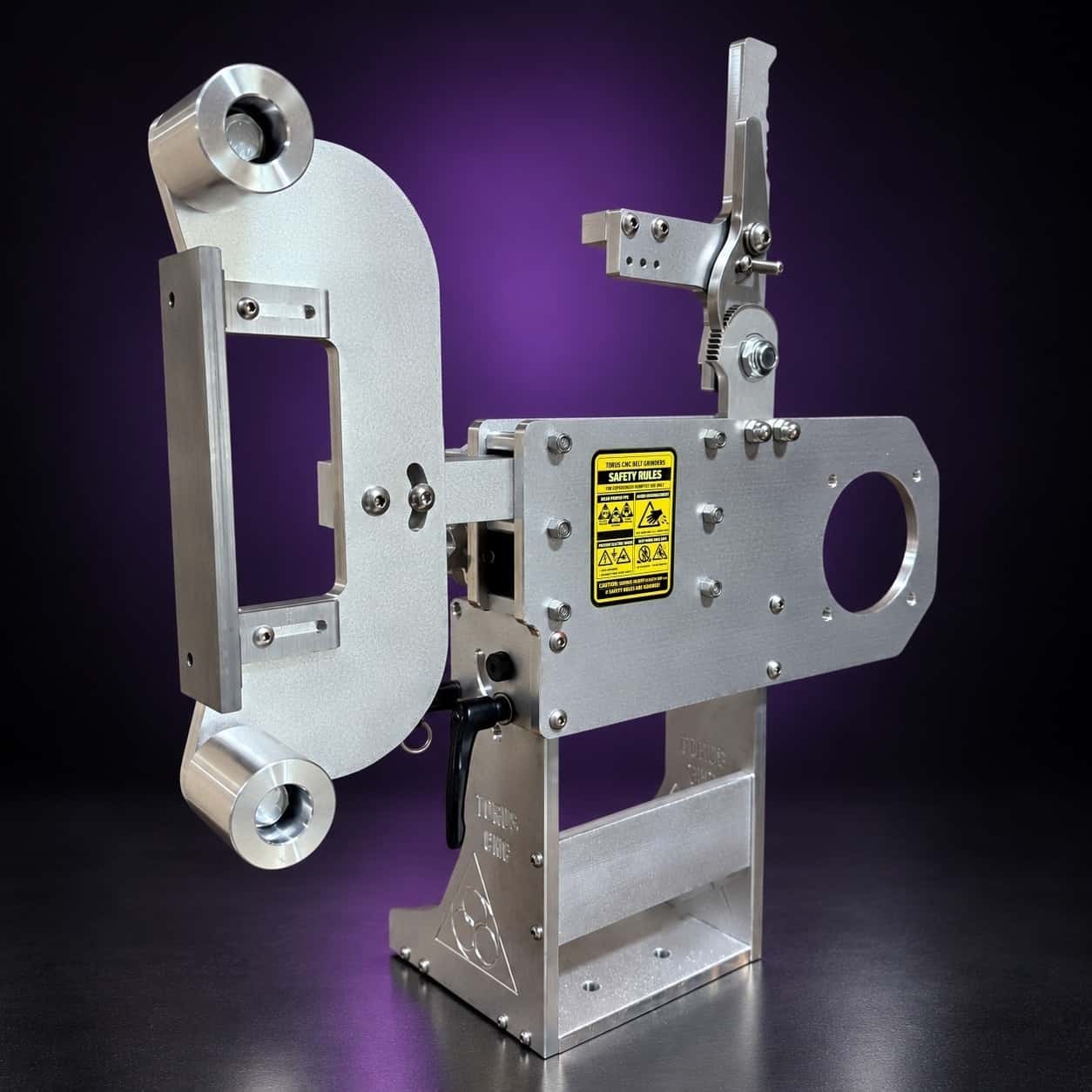
Prior-design aluminum chassis, 90-degree tilt and 1.5-inch tooling arms.
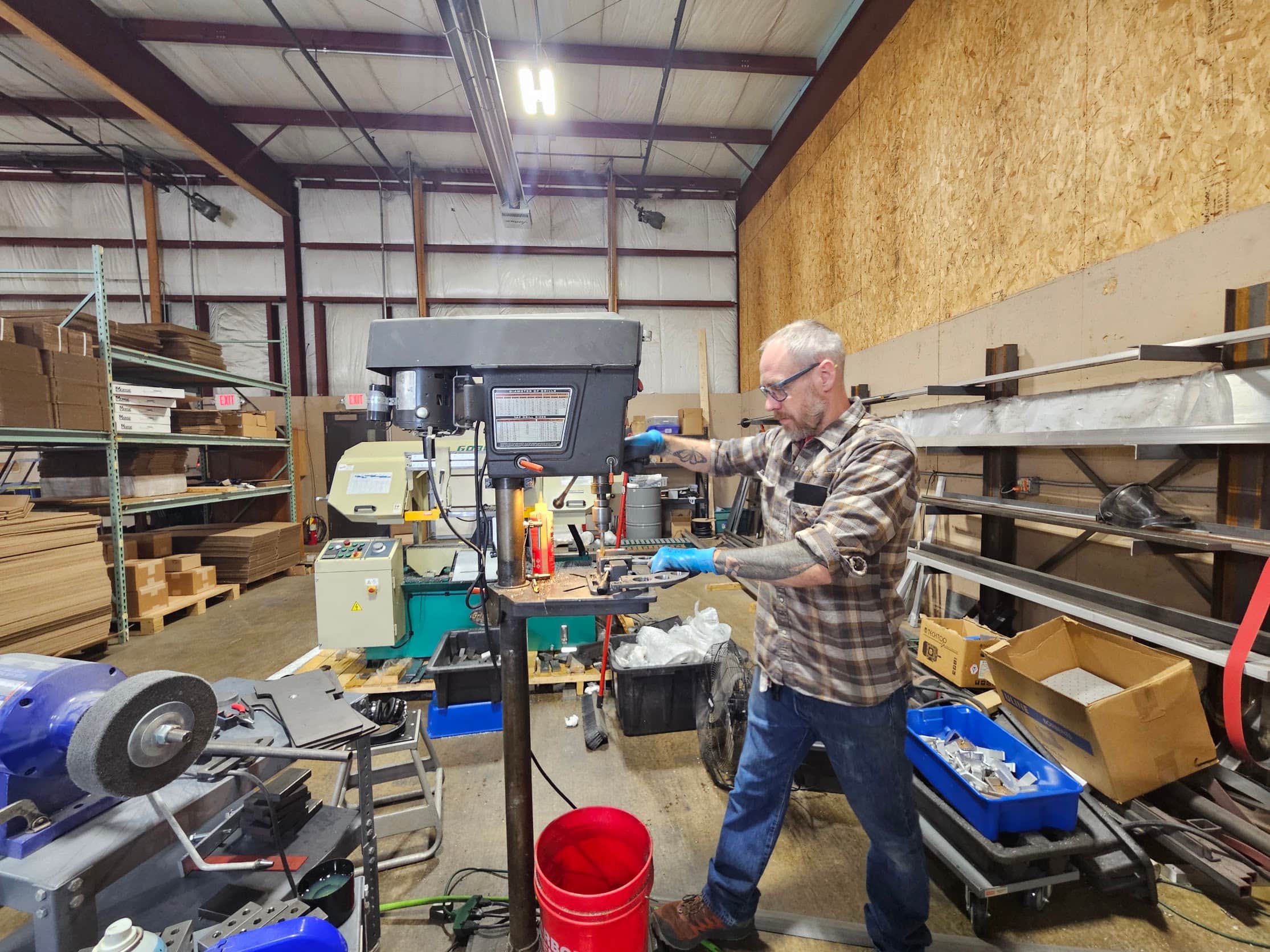
One-man shop
I answer my own email. Tell me the steel, the machine and what it is doing, and I will tell you what I would try next.