
Blade Design
Handle Material Guide: G10, Micarta, Wood, and More
Handle material affects grip, durability, weather resistance, and how a knife feels in the hand, arguably as much as blade steel affects how it cuts…
Blade Design
Woven, forged and CF-faced G10 carbon fiber for knife handles: how the looks differ, what each costs, and the machining and dust safety you need to know.
2 min readWritten by Rich LinvilleFree to read
“Carbon fiber handle” can mean several genuinely different materials with different looks, costs, and working properties, not just one uniform woven black sheet.
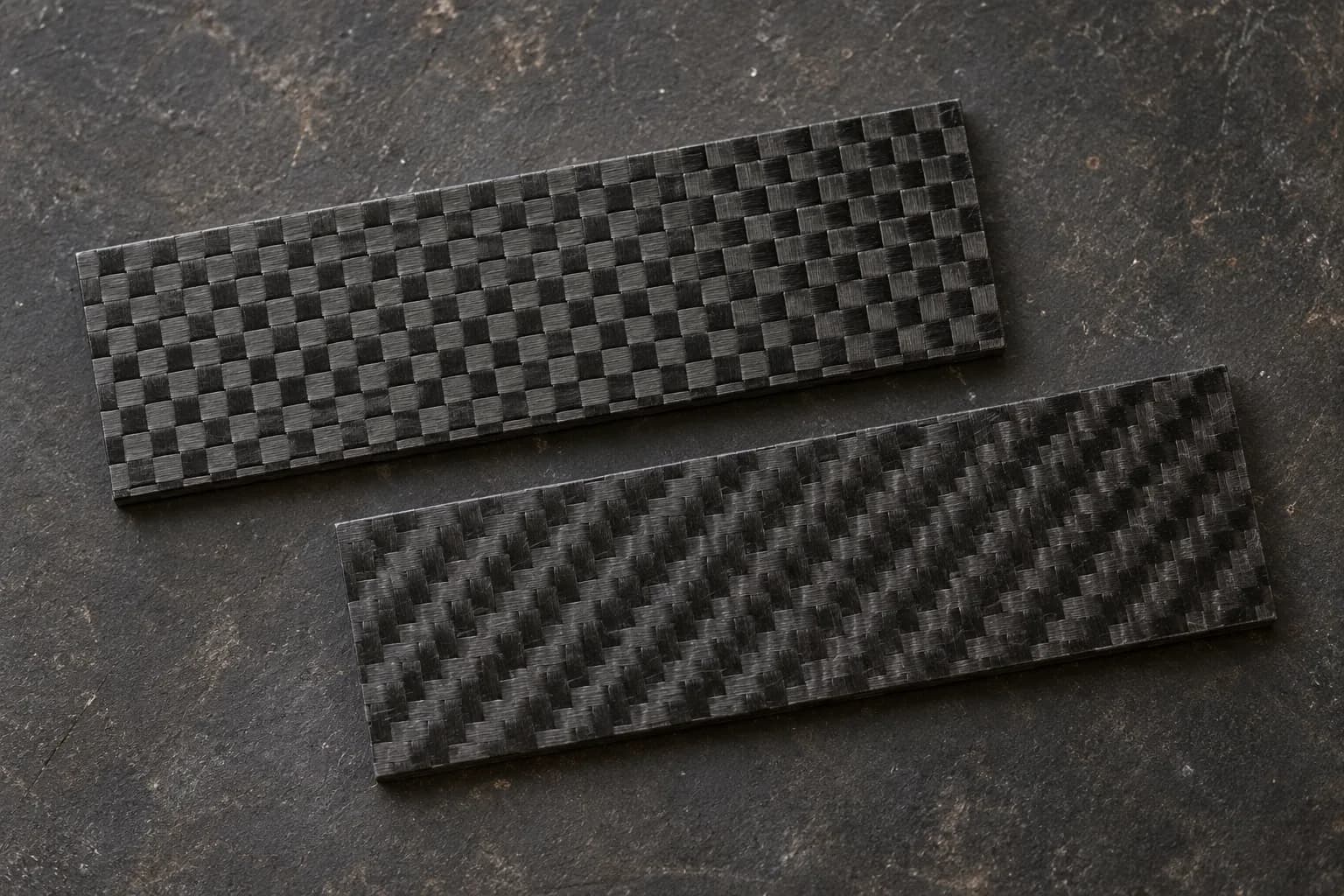
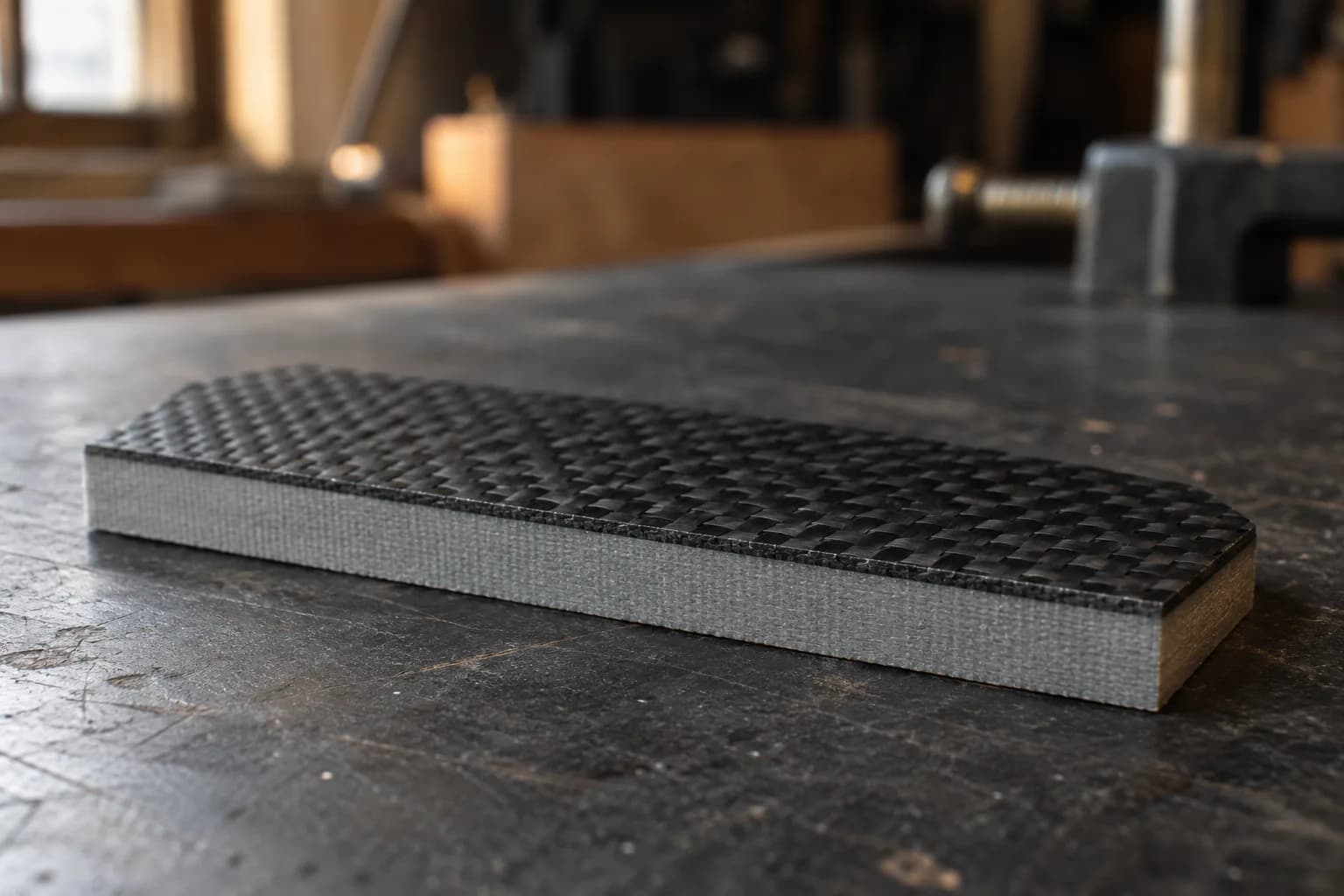
Traditional carbon fiber sheet is woven carbon fabric set in resin, and the weave pattern affects the visual texture. Twill weave (most common, a diagonal basket-like pattern, often called 2×2 twill) is the look most people picture when they think “carbon fiber.” Plain weave has a simpler, more grid-like checkerboard pattern. Both perform similarly structurally; the choice is almost entirely aesthetic.
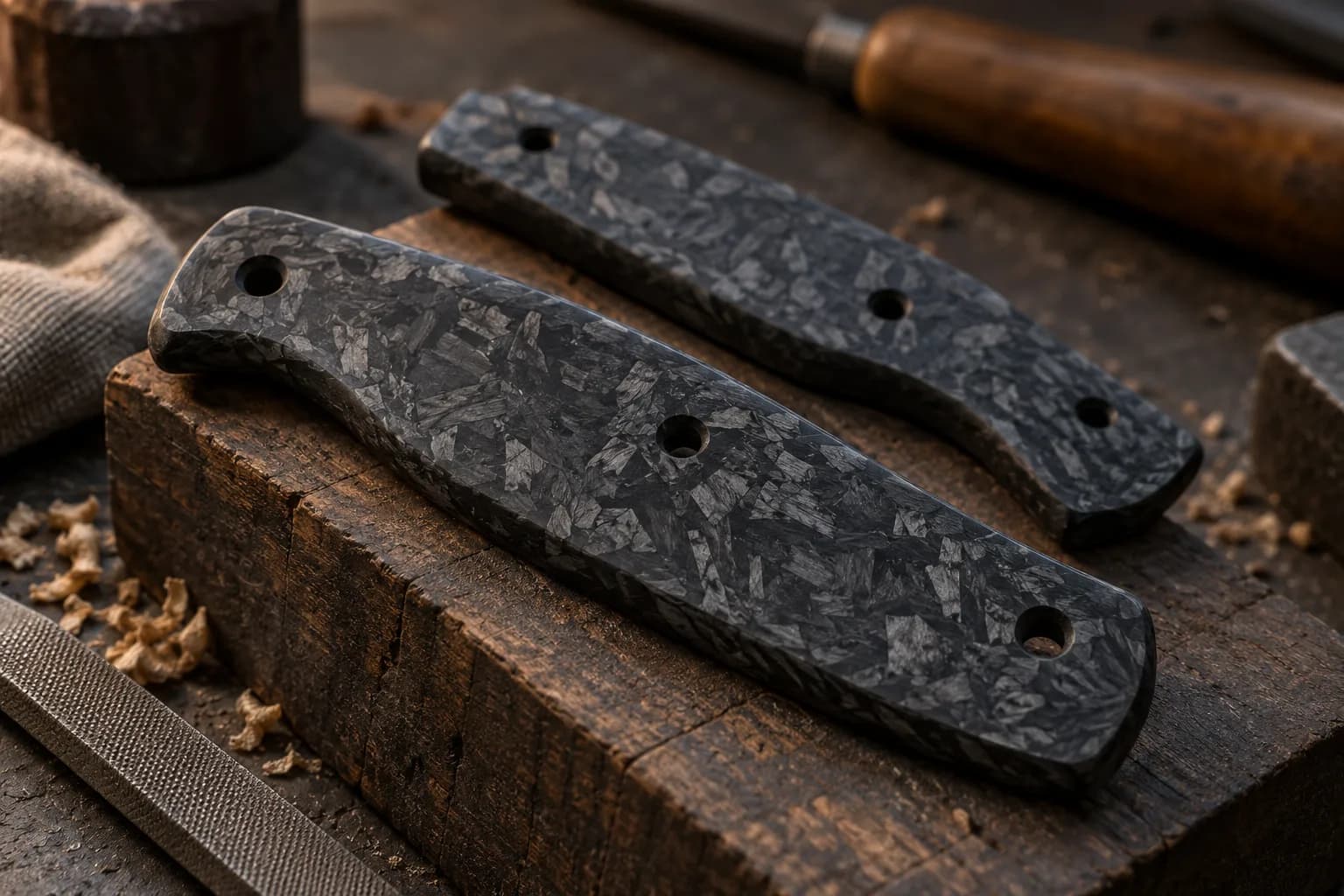
A distinctly different material from woven carbon fiber: chopped carbon fiber fragments are randomly oriented and compressed with resin under heat and pressure, producing a swirled, marbled pattern with no visible weave at all. Forged carbon fiber has a bolder, more organic look than the geometric pattern of woven CF and has become popular on premium knives specifically for that distinct appearance. It’s generally more expensive than standard woven carbon fiber.
A thin veneer of real carbon fiber laminated onto a G10 core, giving the visual look of carbon fiber at a lower cost and often better impact resistance than pure carbon fiber sheet, since the G10 core adds toughness. This is a common, practical choice when the carbon fiber look is wanted without the full cost or brittleness of solid carbon fiber scales.
The resin binding the carbon fiber can be tinted, producing colored carbon fiber (blue, red, and other tints over the visible weave or forged pattern) rather than the standard black. The carbon fiber itself is still black; the color comes through the translucent tinted resin layer.
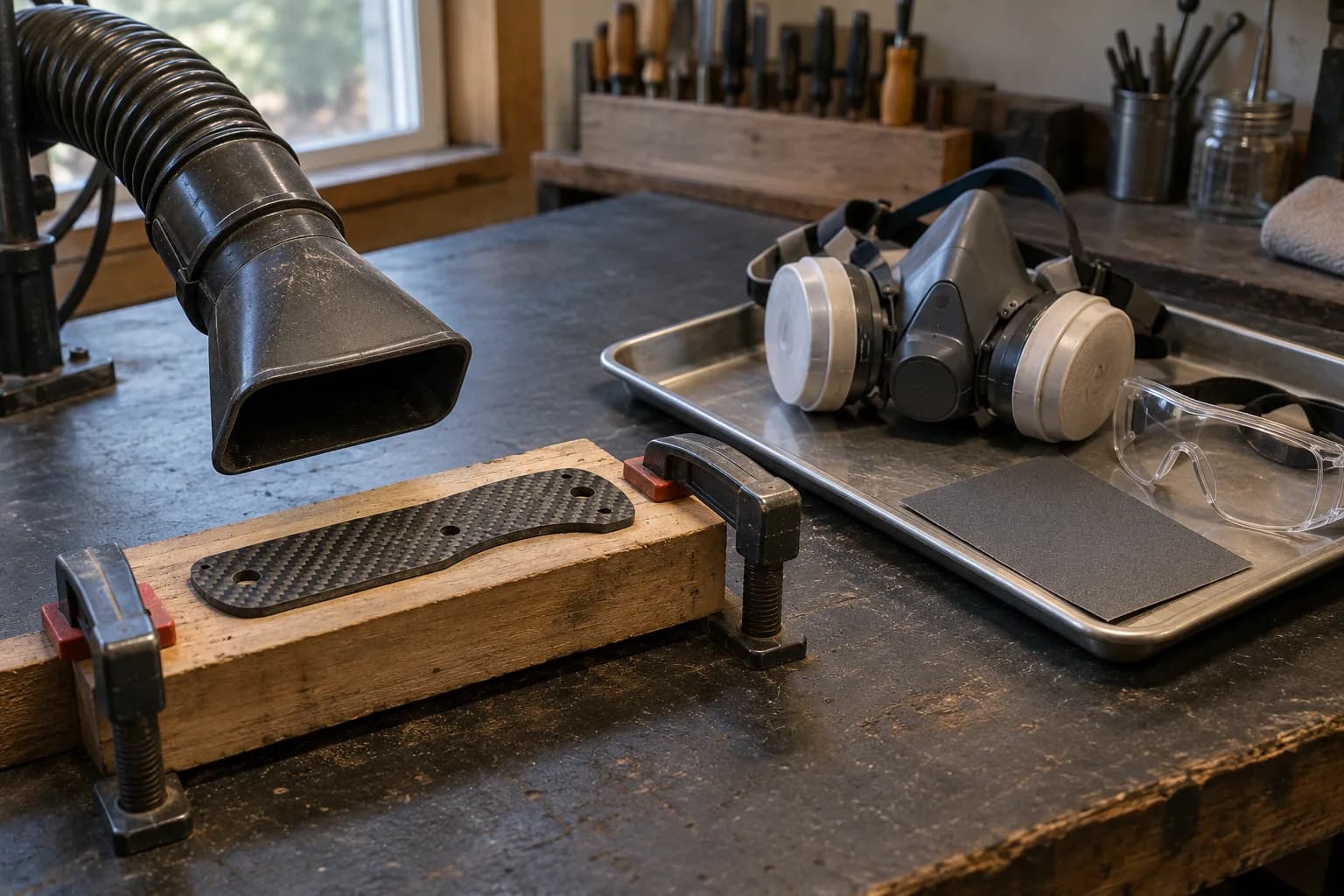
Carbon fiber dust is a genuine respiratory hazard, more so than G10 or Micarta dust, and proper respirator use (not just a dust mask) is important when grinding or sanding it. Carbon fiber is also more brittle than G10 and can chip at thin edges or sharp corners more easily during shaping, worth taking lighter passes near edges compared to tougher materials like G10 or Micarta.
Standard woven carbon fiber sheet is widely available from knifemaking suppliers at a moderate premium over G10. Forged carbon fiber and CF/G10 hybrids vary more in price and availability depending on supplier; forged carbon fiber in particular is often the most expensive handle material covered in this guide series.
Not necessarily stronger, different structurally, the random fiber orientation in forged CF distributes stress differently than the aligned weave of traditional CF. The main draw of forged carbon fiber is its distinct appearance, not a clear strength advantage.
Carbon fiber material itself costs more to produce than fiberglass, and it requires more careful handling and cutting to avoid delamination or fraying at edges, adding to manufacturing cost. This carries through to the price of finished handle scale sheet.
Yes, thin carbon fiber liners or bolsters are commonly paired with wood or Micarta scales, combining carbon fiber’s distinct look as an accent with the warmth or grip of another primary material.
Keep reading
Three more from the same bench.
Handle material affects grip, durability, weather resistance, and how a knife feels in the hand, arguably as much as blade steel affects how it cuts…
It’s easy to look at a fully outfitted professional shop and assume you need all of it to make your first knife. You don’t. Here’s what actually matters…
Attaching handle scales looks simple, glue two pieces of material to a flat tang, but getting a tight, gap-free, structurally sound result depends on a…
Same bench
I machine the parts, hand-assemble, track and test Torus grinders in Sterling, Illinois. Most orders ship in seven to ten business days from time of order.
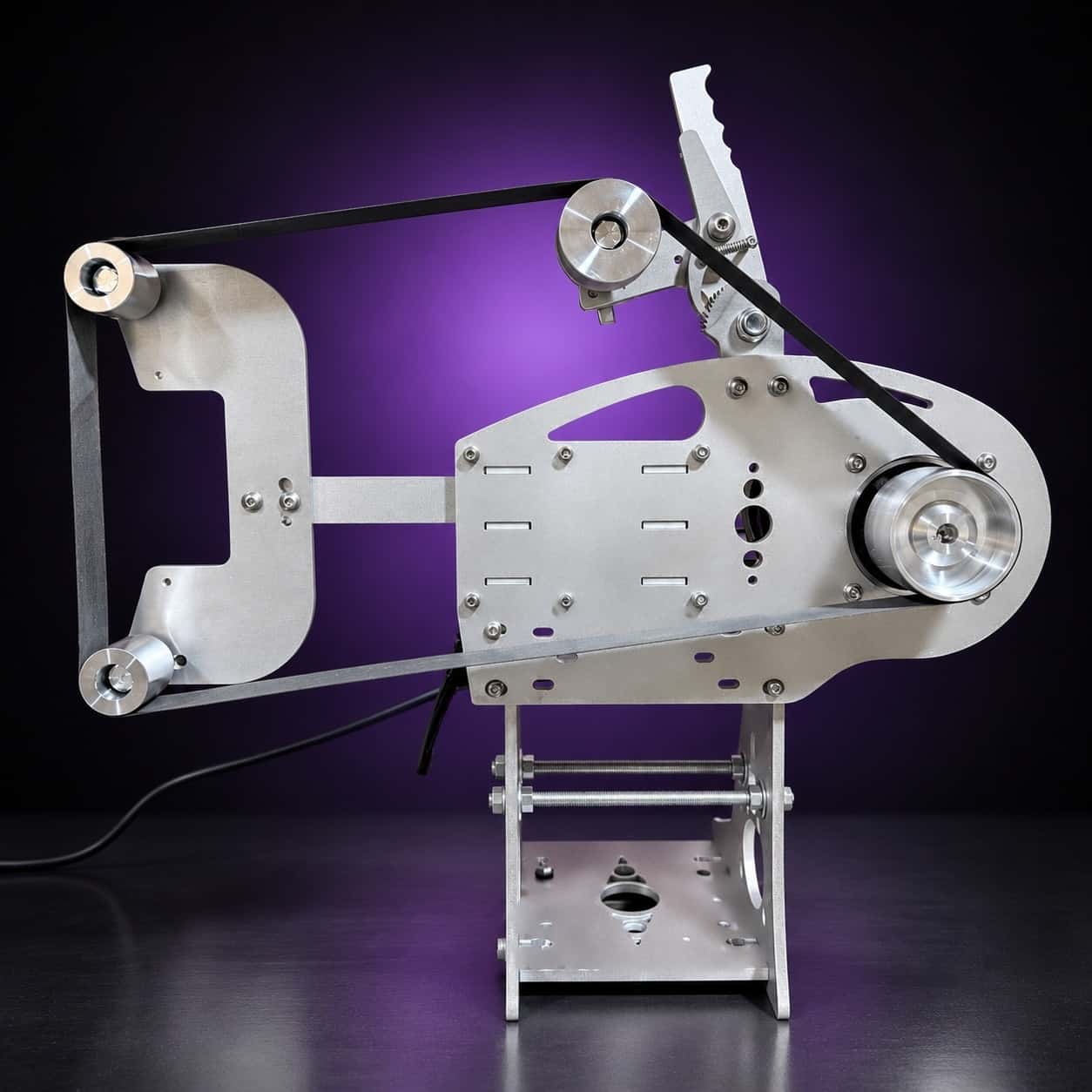
Current dual-axis platform with a fiber-laser-cut 6061 chassis and single-knob tracking.
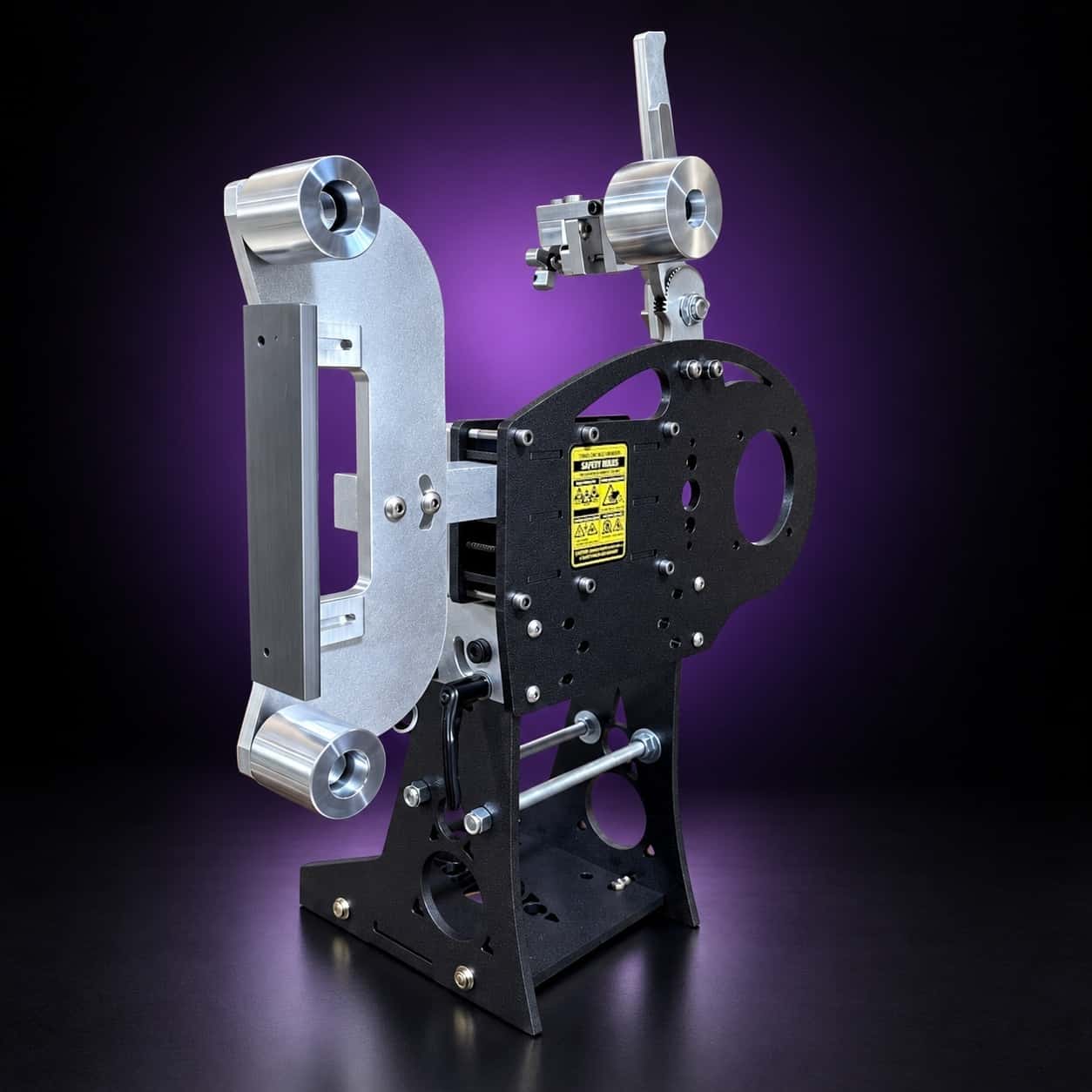
Current dual-axis platform with a steel chassis, more mass and less vibration.
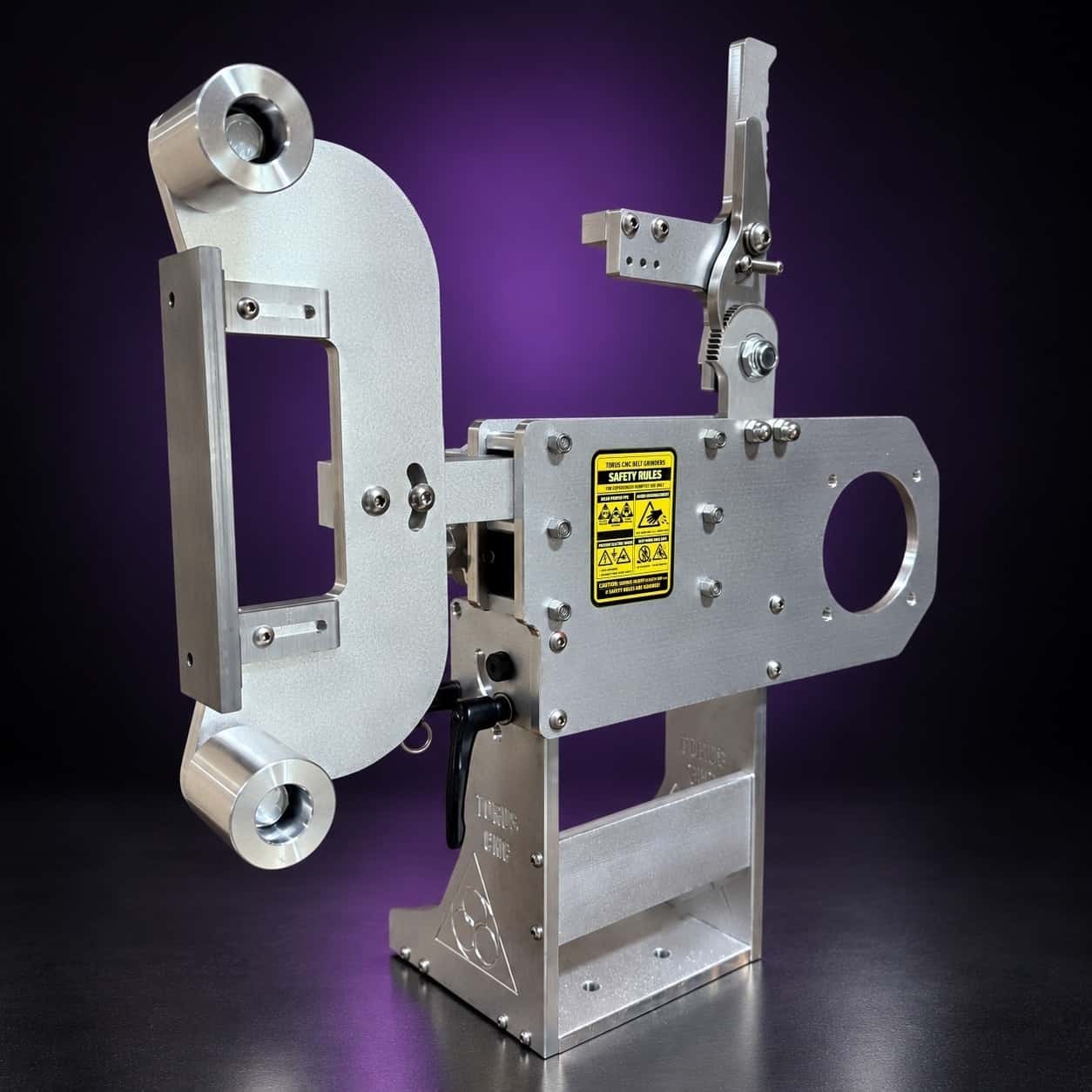
Prior-design aluminum chassis, 90-degree tilt and 1.5-inch tooling arms.
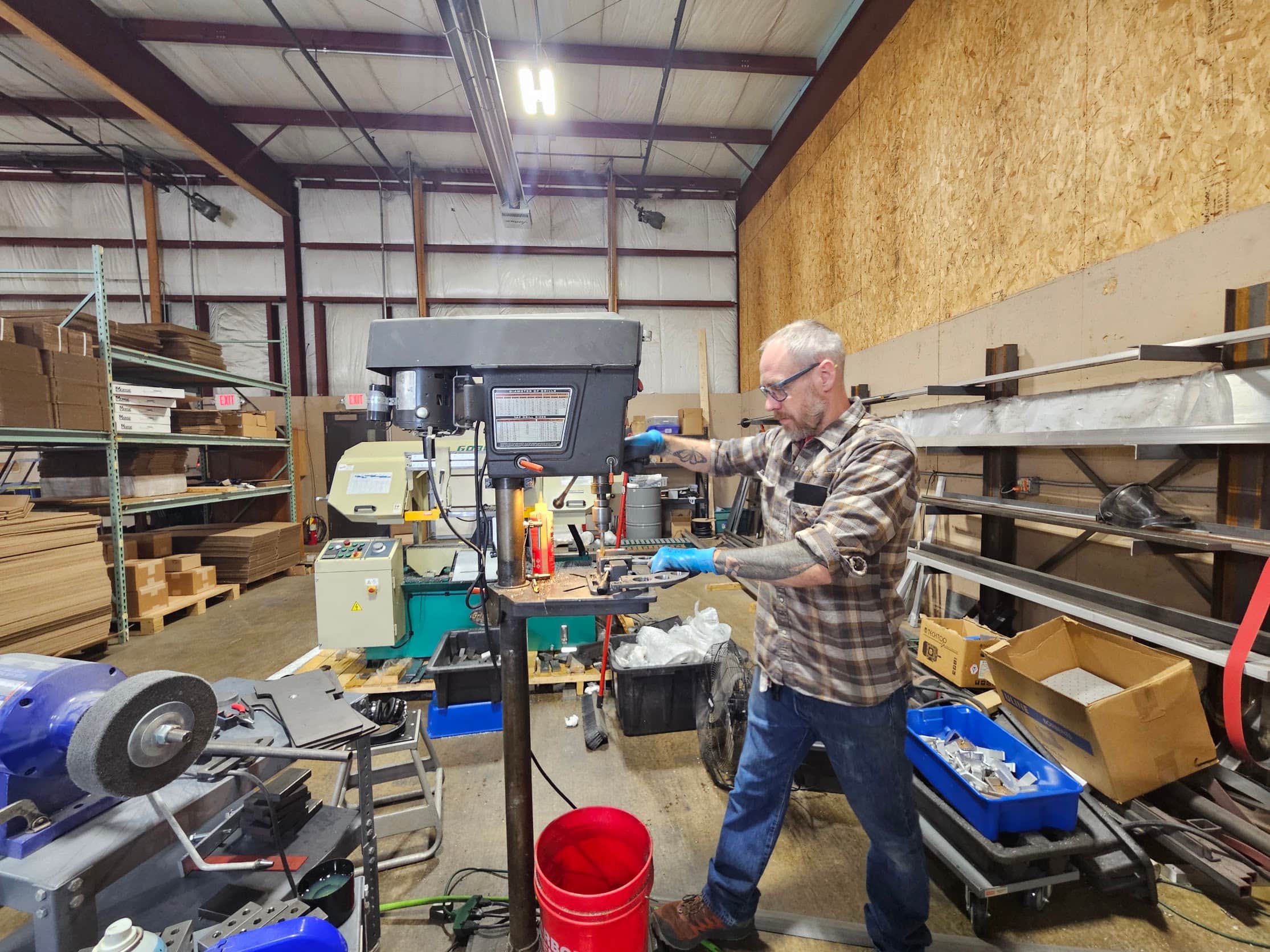
One-man shop
I answer my own email. Tell me the steel, the machine and what it is doing, and I will tell you what I would try next.