Belt Grinders

A Brief History of the 2×72 Grinder and Why You Want One.

The 2×72 belt grinder became the knifemaker’s standard for one reason: a long belt and a flat platen remove steel fast and leave a clean surface. Here is the short history, and why you want one.
1 min readBy Rich Linville
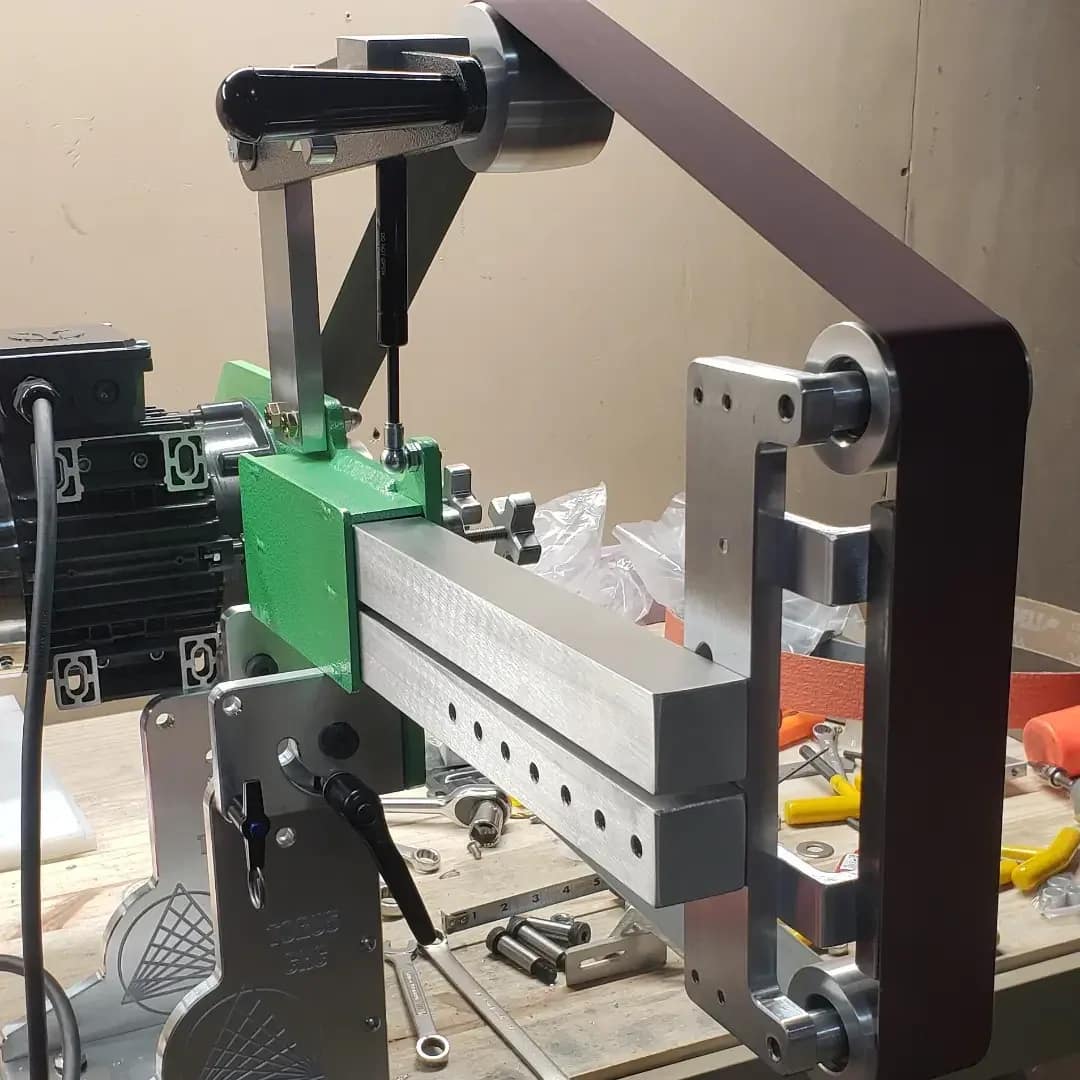
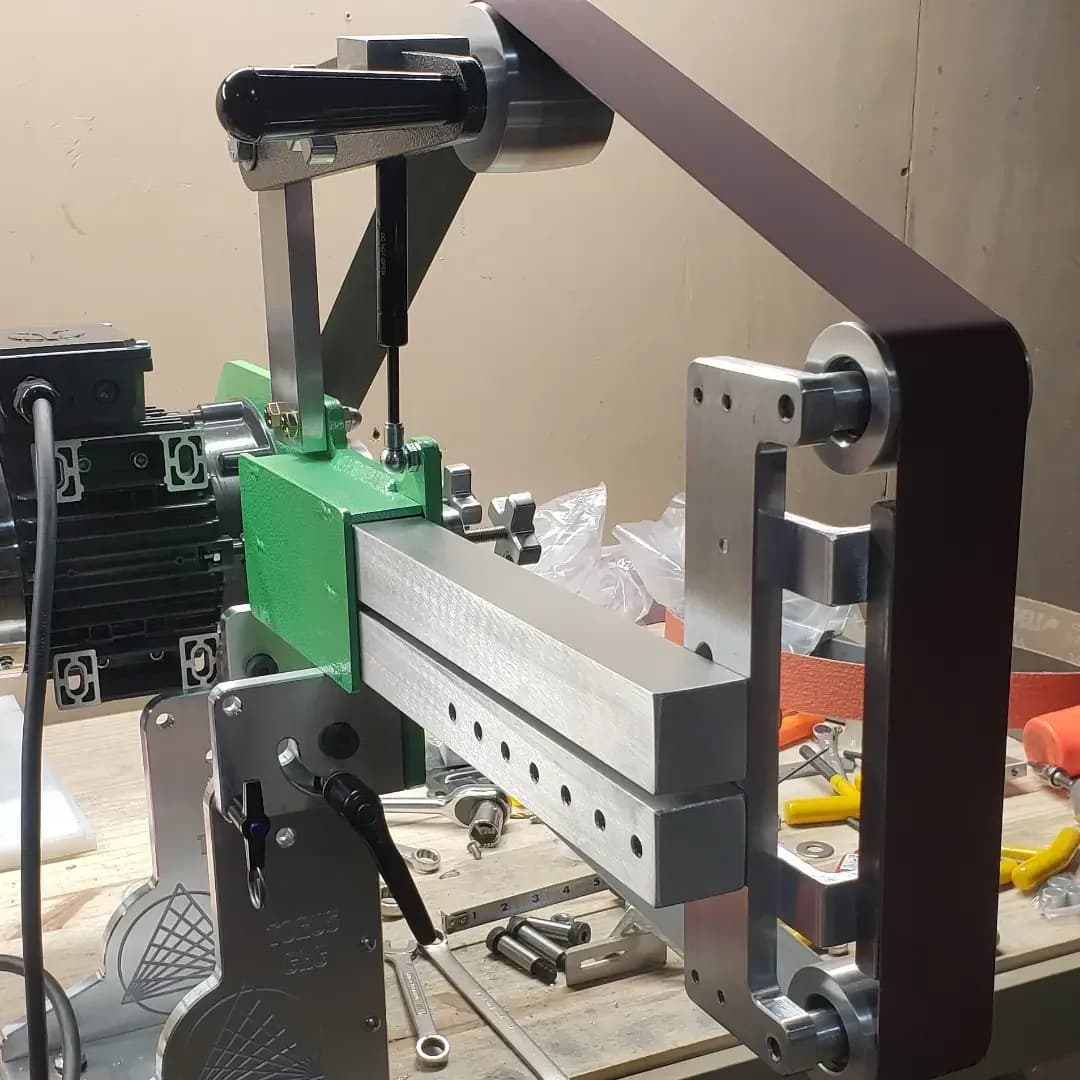
Close-up of a Torus CNC belt grinder's tooling arm, tension knob, and drive wheel assembly on a bench

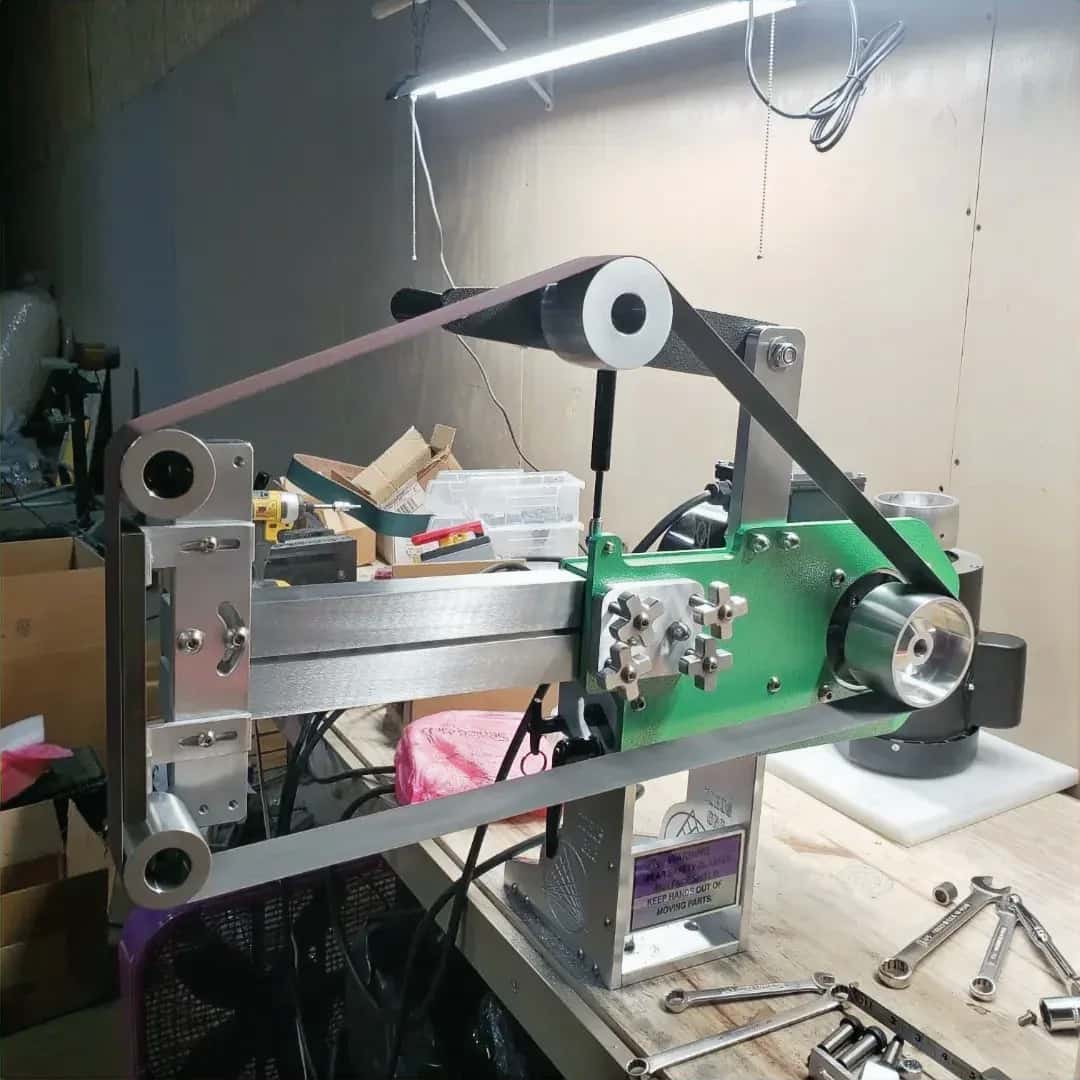
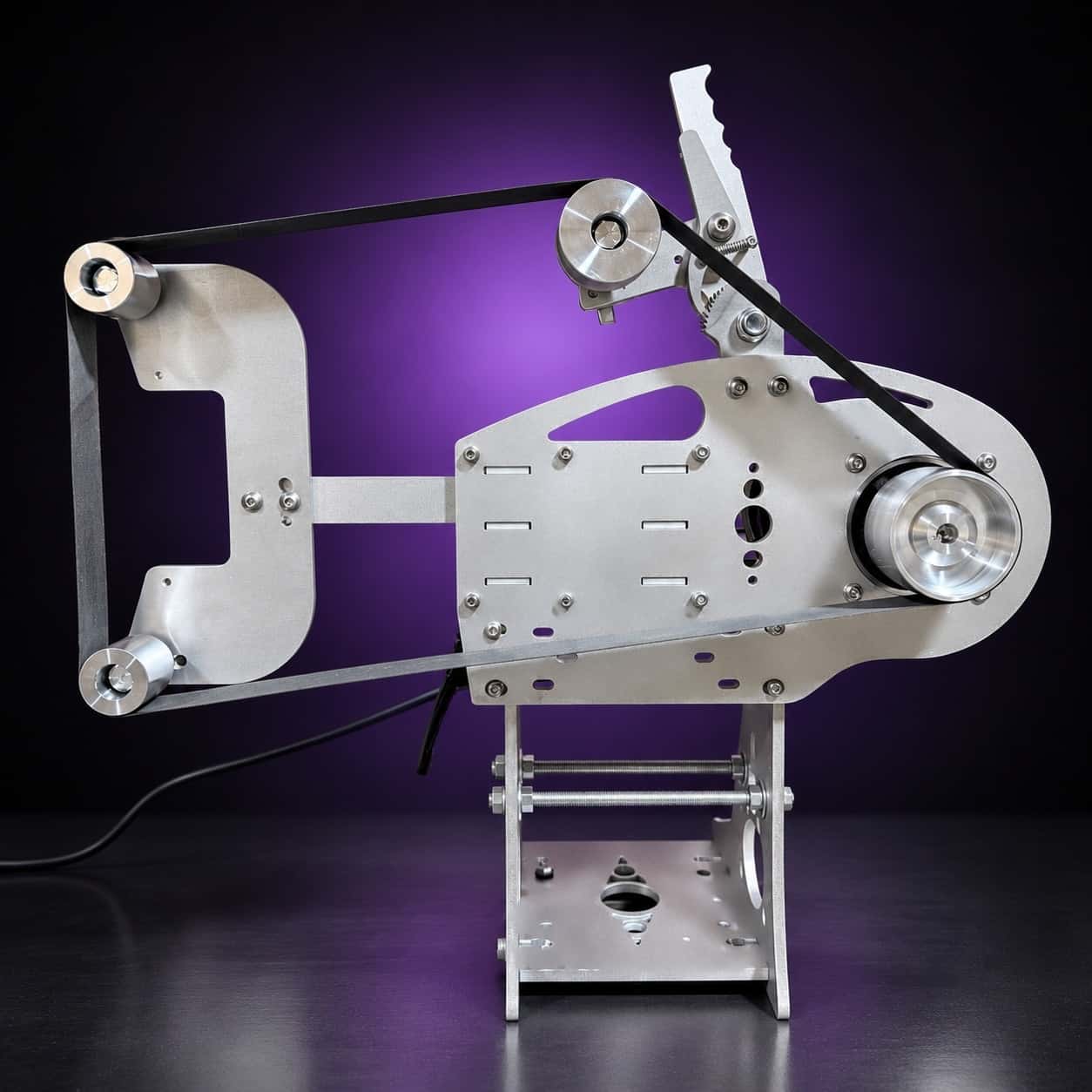
The 2×72 belt grinder is the one machine so many knife shops share, and it earned that spot the honest way. A 72-inch belt runs cooler and lasts longer than a short one, a 2-inch face covers a full bevel, and a flat platen gives you a reference surface you can trust. Here is the short history of how the format took over, and why I built my own version on a HAAS mill instead of buying one.

A Glimpse into the Past: The Genesis of 2×72 Grinders

The inception of 2×72 grinders dates back to the early 20th century when blacksmiths and metalworkers were in search of a versatile, sturdy, and precise tool to aid in their craftsmanship. With the rise in demand for high-quality blades and metalwork, the need for a reliable grinding solution became apparent. The 2×72 grew out of that need: a bigger, steadier grinder built for working shops.
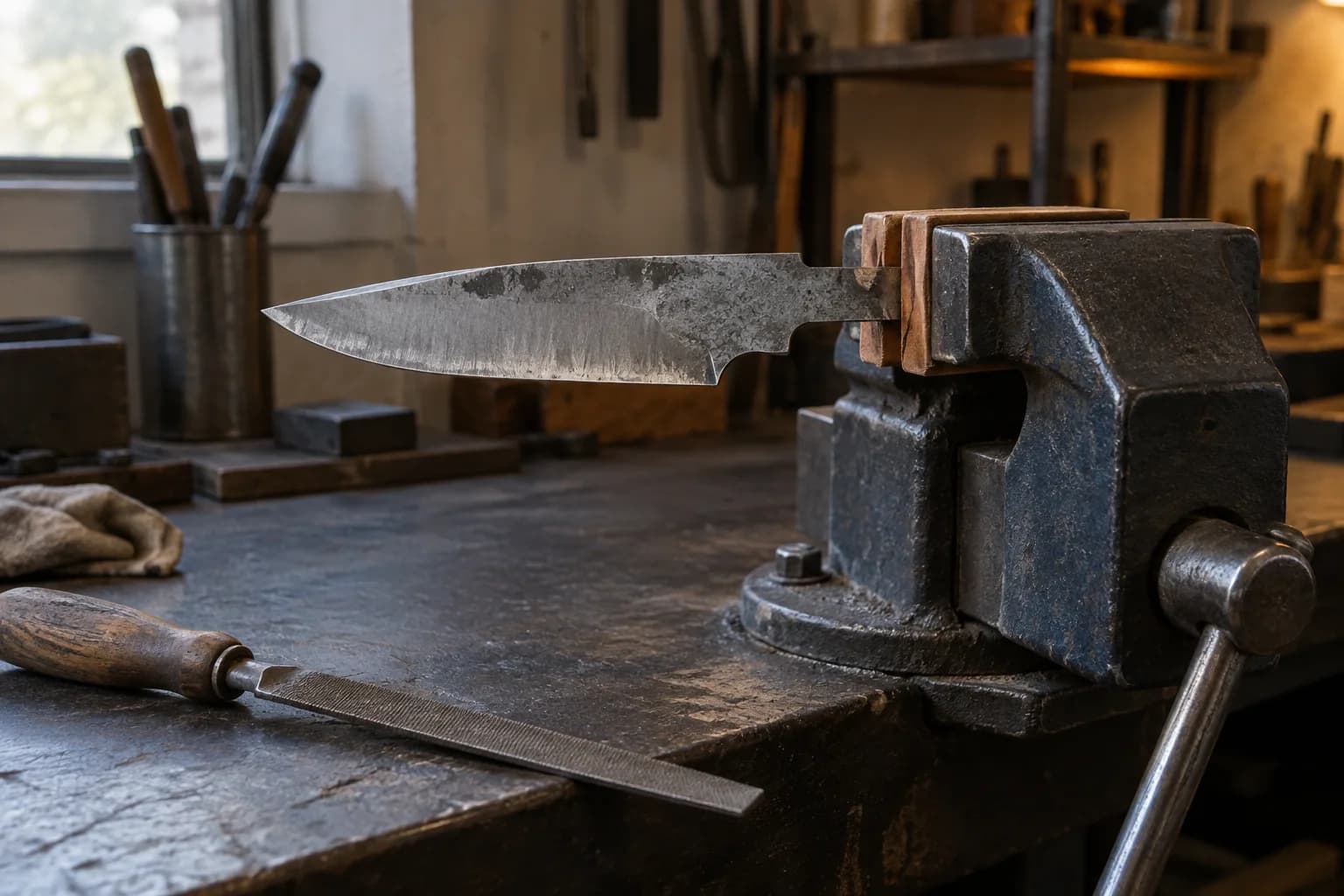
Rough forged knife blank held by its tang in a wood-padded iron vise, with a wooden-handled file on a dark bench

Introducing the Torus 2×72 Classic

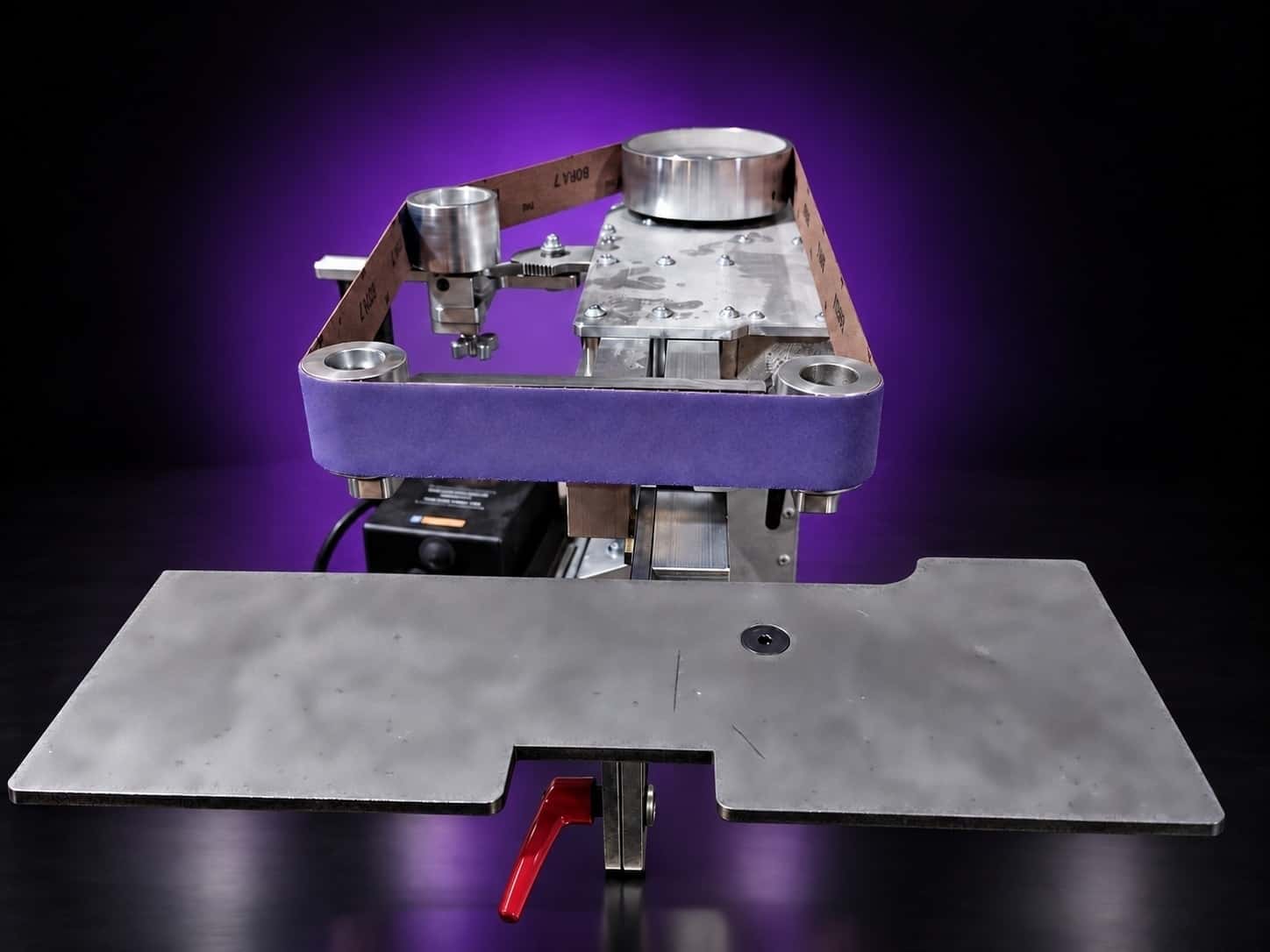
Among the myriad options available in the market, the Torus 2×72 Classic has taken the art of metal crafting to new heights. This modern 2×72 grinder encompasses the perfect blend of precision engineering and user-centric design, providing a smooth experience for both seasoned professionals and aspiring hobbyists. It is a machined 6061 aluminum chassis that tilts from vertical to horizontal, with ratchet tensioning and a deep slack platen, assembled and tested in Sterling, Illinois before it ships.
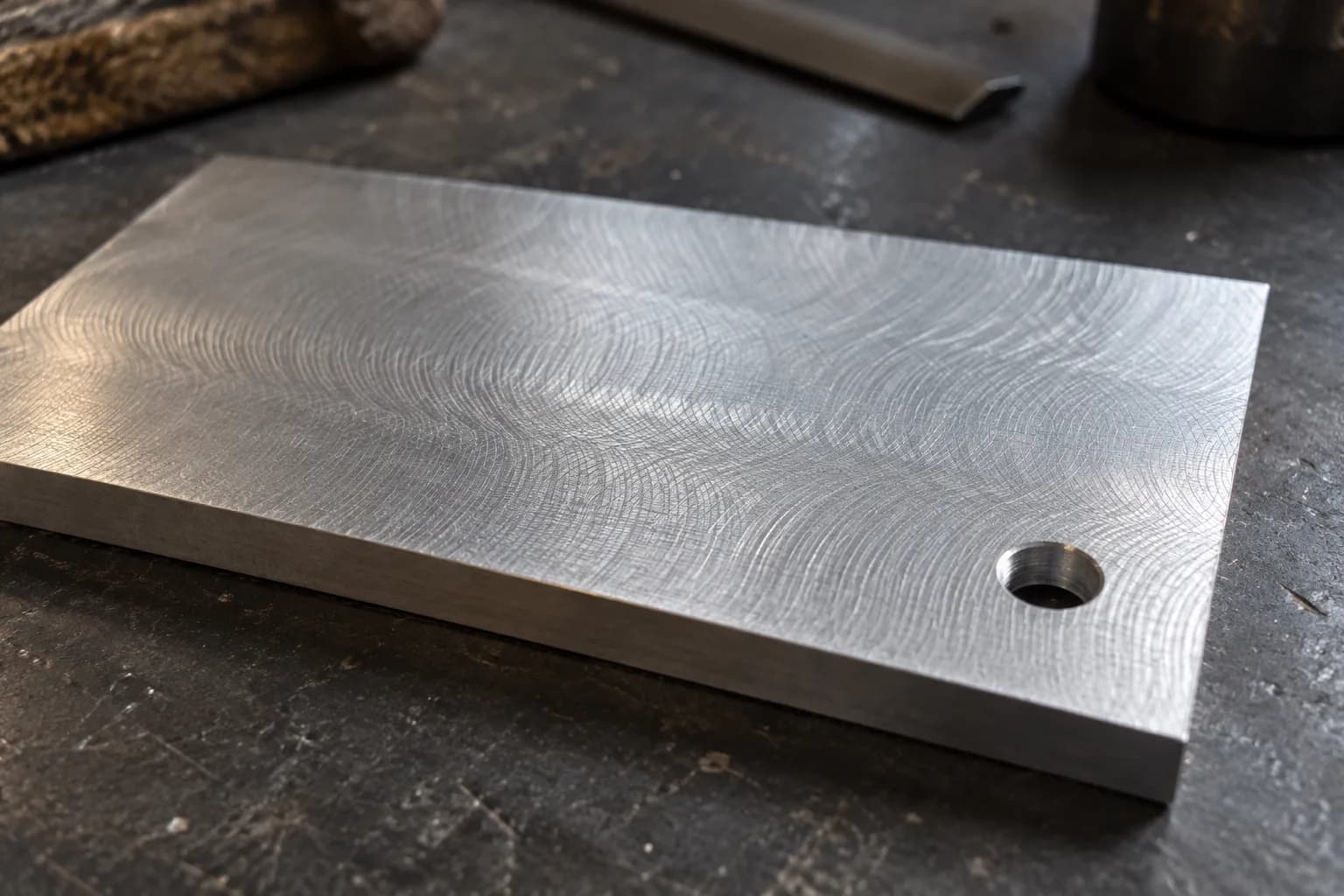
Machined aluminum plate with swirling milling marks, a clean edge and one counterbored hole on a dark scarred bench

Embrace the Artisan’s Essential: Let Your Imagination Run Wild

Whatever you make, from knives to general metalwork, a Torus 2×72 is the grinder I would start with.
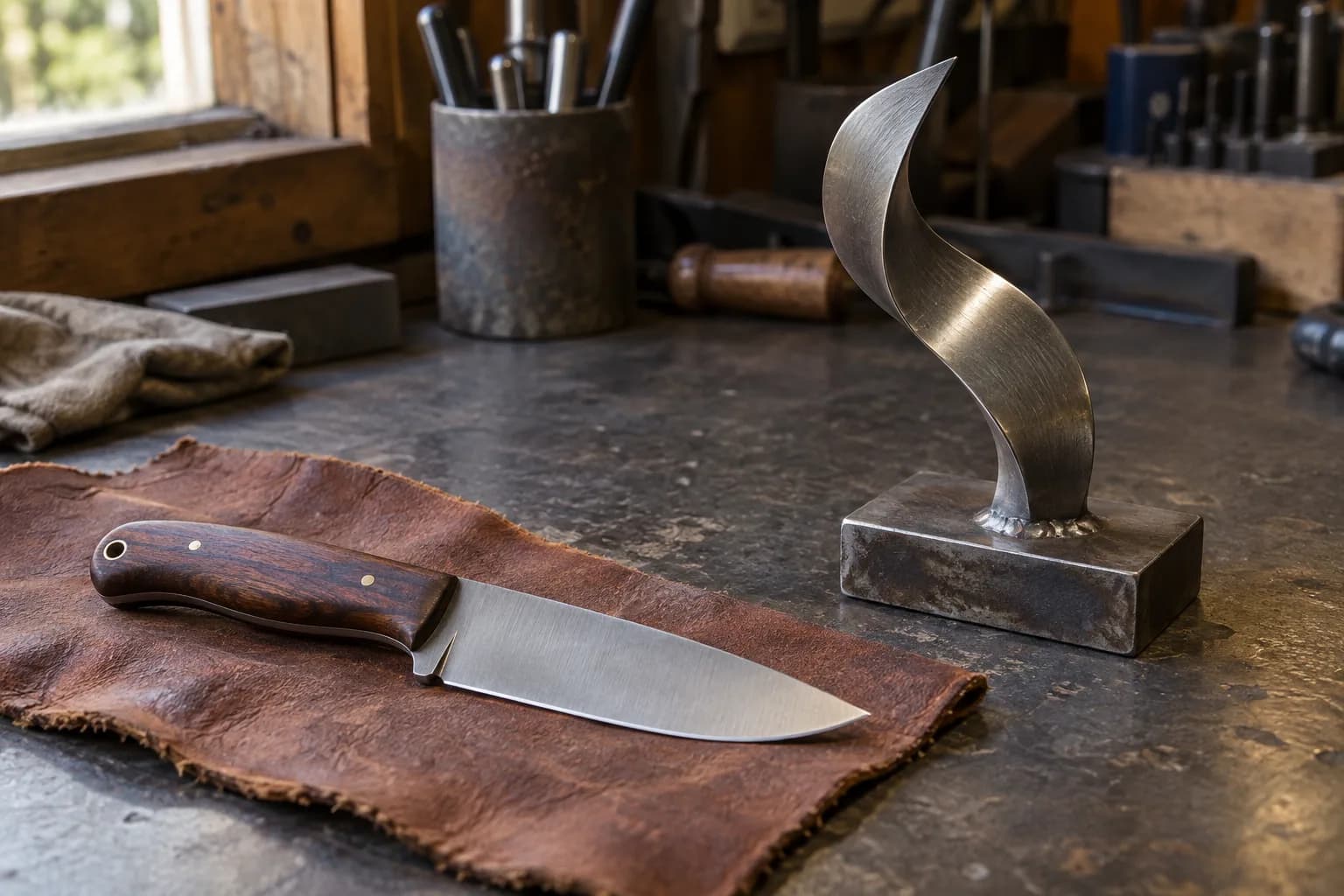
Finished utility knife with dark wood handle on a leather scrap beside a curved satin steel sculpture on a welded base
Close-up of a Torus CNC belt grinder's tooling arm, tension knob, and drive wheel assembly on a bench

The grinder I built for myself became the Torus 2×72 Classic: machined 6061 aluminum, stainless ratchet tensioning, a tilting chassis, and every unit assembled and tested before it leaves Sterling, Illinois. Start there at $1,095, or step up to the Nova if you want the full dual-axis tracking system.
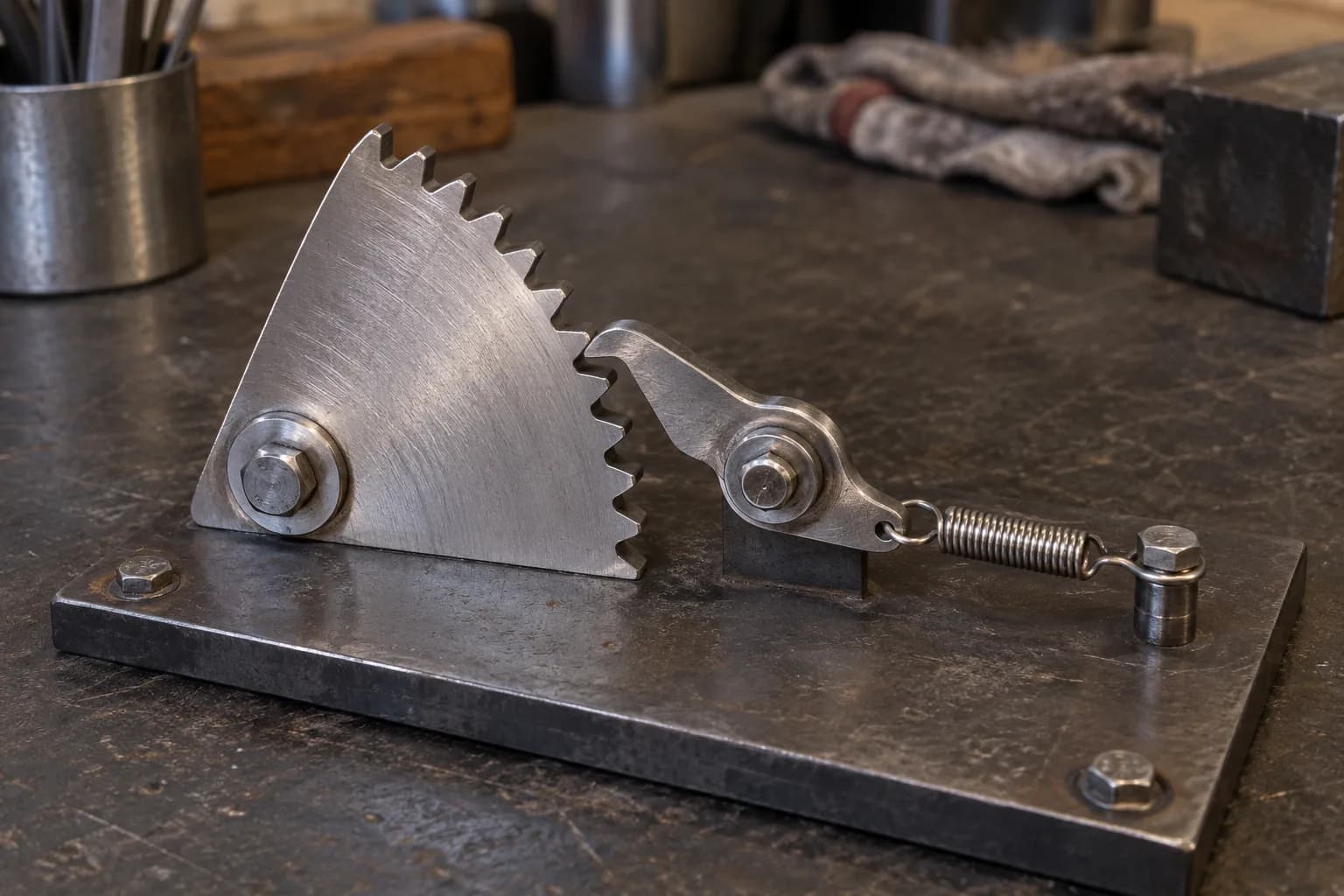
Stainless toothed ratchet sector with a spring-loaded pawl bolted to a steel plate on a dark bench

Filed underBelt Grinders

Keep grinding

Related shop notes

ForgeBrain

Go deeper on the technique

Free reference guides from the ForgeBrain library — no sign-up, no paywall.

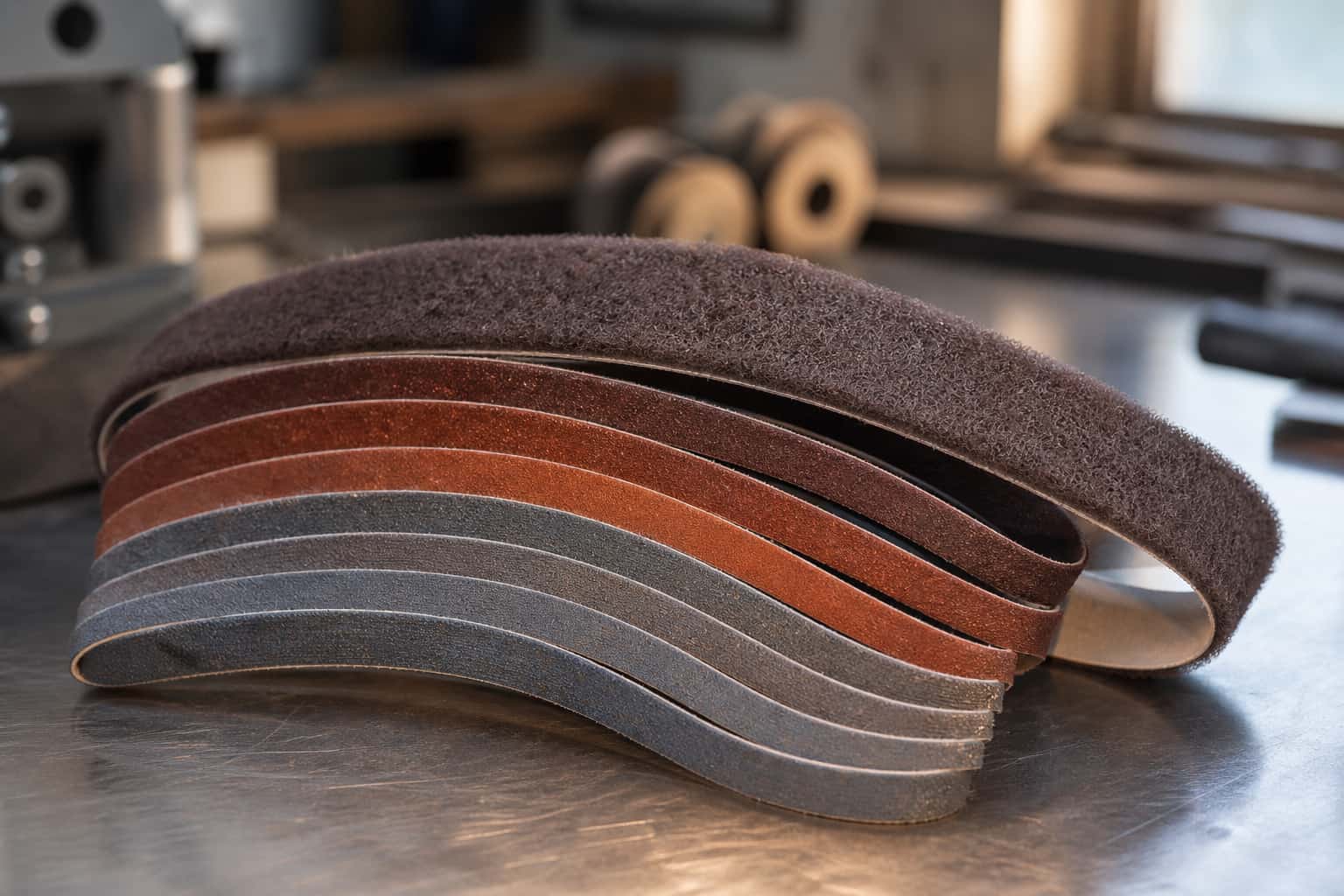
  • Abrasive belts in several textures and colors fanned on a steel bench, nonwoven belt on top.
    Abrasives

    Grinding and Sharpening 8670: Belt Recommendations & Technique

    8670 might be the most cooperative steel a 2×72 ever meets. It arrives thin, grinds clean, tolerates heat-treat improvisation, and sharpens on anything abrasive. The technique notes here are short because the steel genuinely does not need much — the few that exist are about thin stock and hard use. Grinding Annealed 8670 Fast and…

    Read the guide
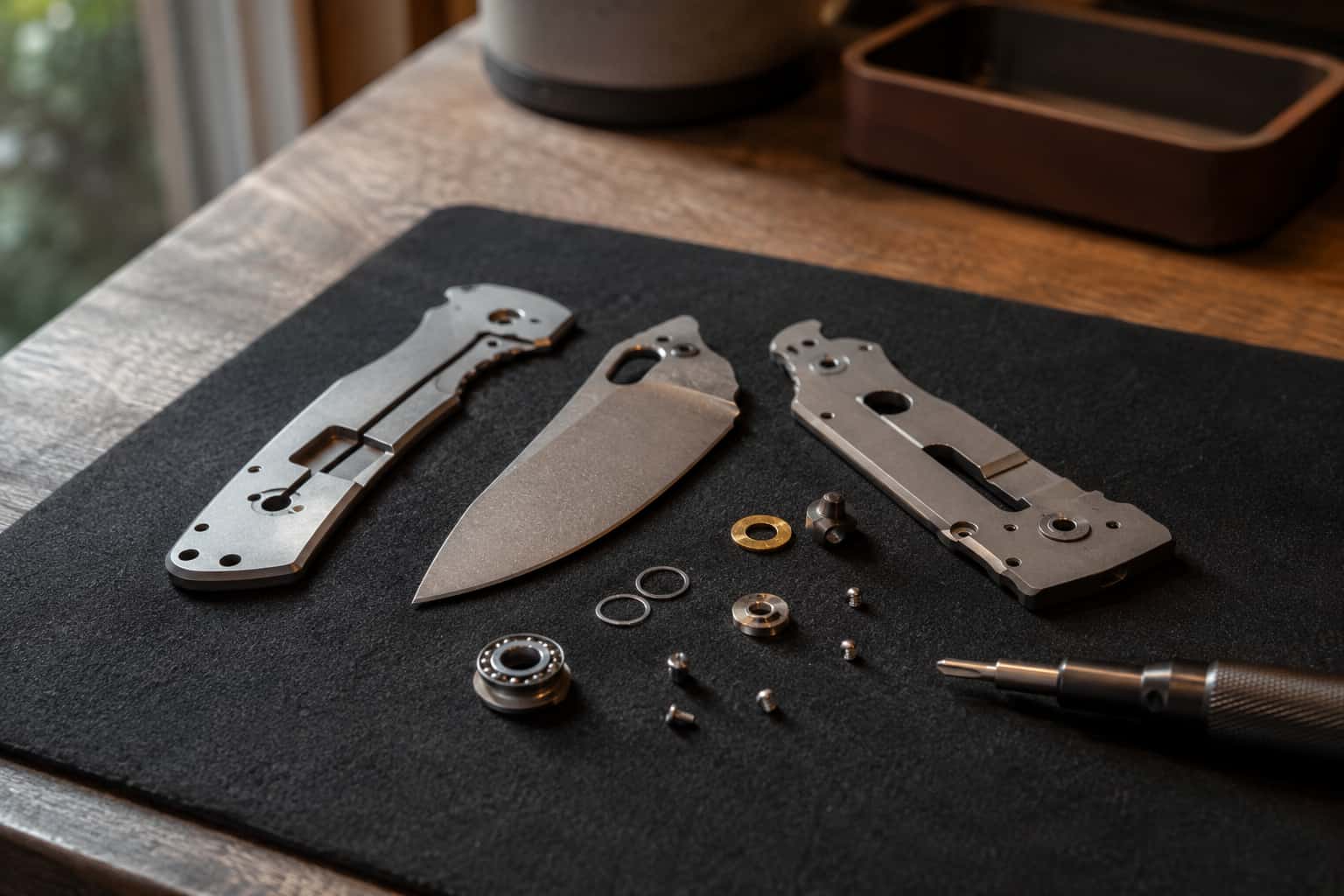
  • Disassembled folding knife parts including titanium scales, blade, pivot, and screws on a mat
    Folding Knives

    Building a Liner Lock: The Modern First Mechanism

    The liner lock is the modern folder’s default mechanism and the standard first LOCKING build: every part is visible, every adjustment reachable, every mistake diagnosable. It is also where folder-making earns its thousandths reputation — the lock face and detent live at tolerances your calipers can barely see. Here is the build in working order….

    Read the guide

Built in Sterling

The machines behind these notes

I machine the parts, hand-assemble, track and test each grinder before it ships. Most orders leave in seven to ten business days from time of order.

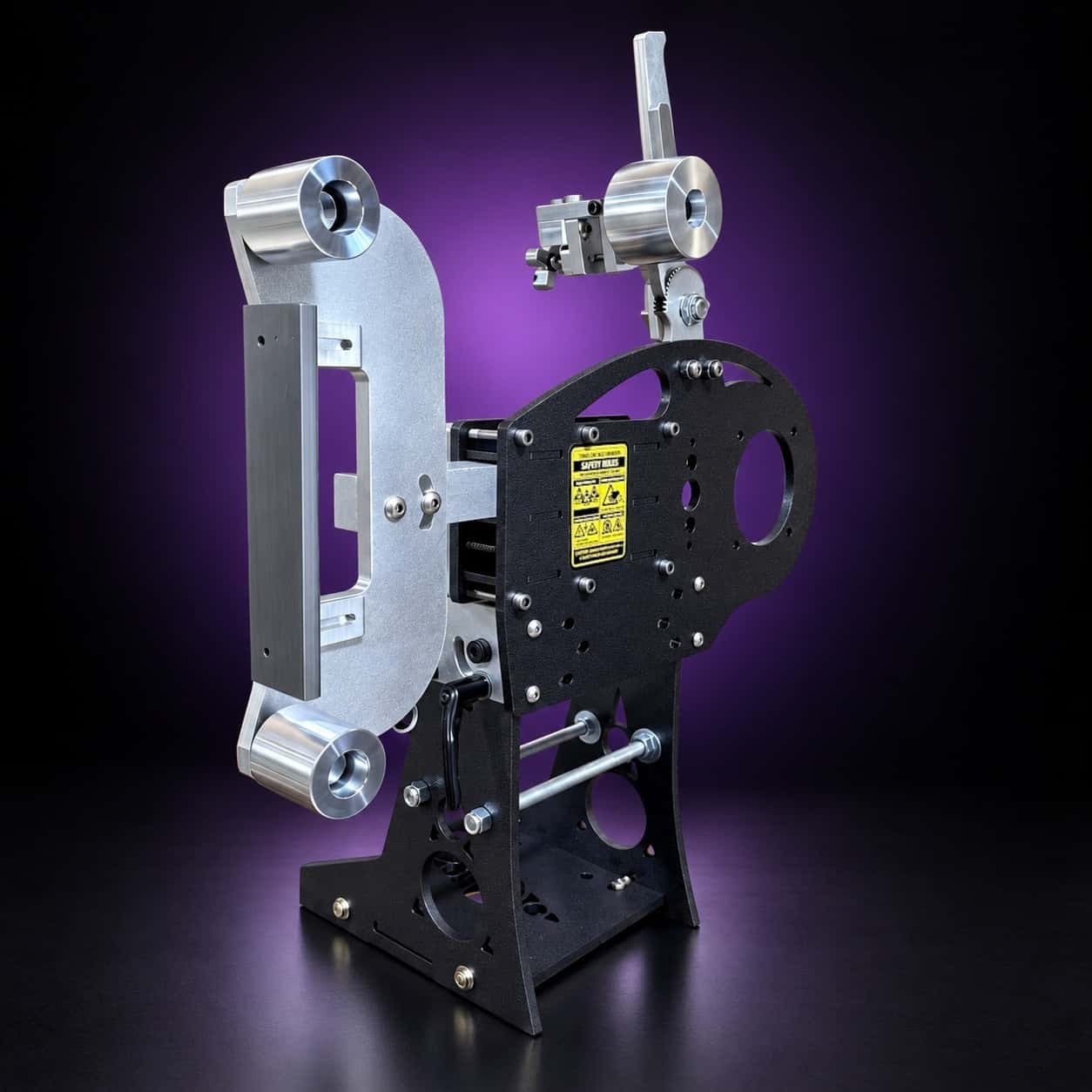
  • Nebula 2x72 grinder, front three-quarter view: aluminum arm, black plate, Safety Rules label, on black with a purple glow
    Limited release · 3 remain

    Torus Nebula 2x72 - Corvus Edition

    Nebula 2x72 - Corvus Edition: an exclusive Gunmetal Grey / silver vein powdercoat finish on our precision-engineered steel 2×72.

    These are the last Nebula chassis available until the next release. Once this run sells out, availability pauses until the next run is ready.

    Next release: 10 more chassis expected Nov 17–Nov 24 (3–4 weeks from Oct 27).

    Starts at$1,495View
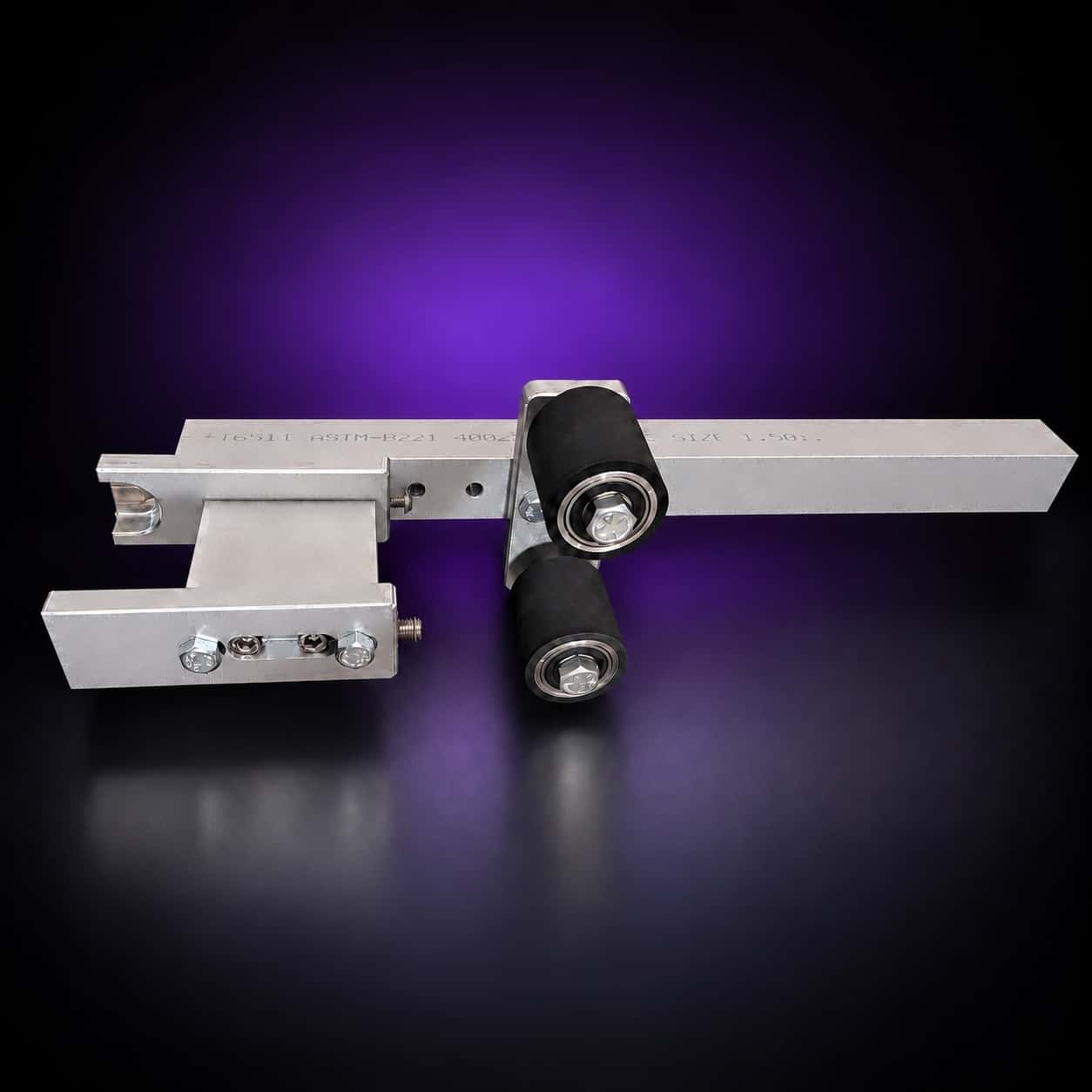
  • Small wheel attachment from above: holder fork, engraved aluminum arm and two rubber wheels, on black with a purple glow

    Small Wheel Attachment with 1.5″ Aluminum Tooling Arm

    Reaches the choils, finger grooves and inside curves a flat platen never will. Wheels from 1/2 to 1.5 inches.

    Starts at$289View
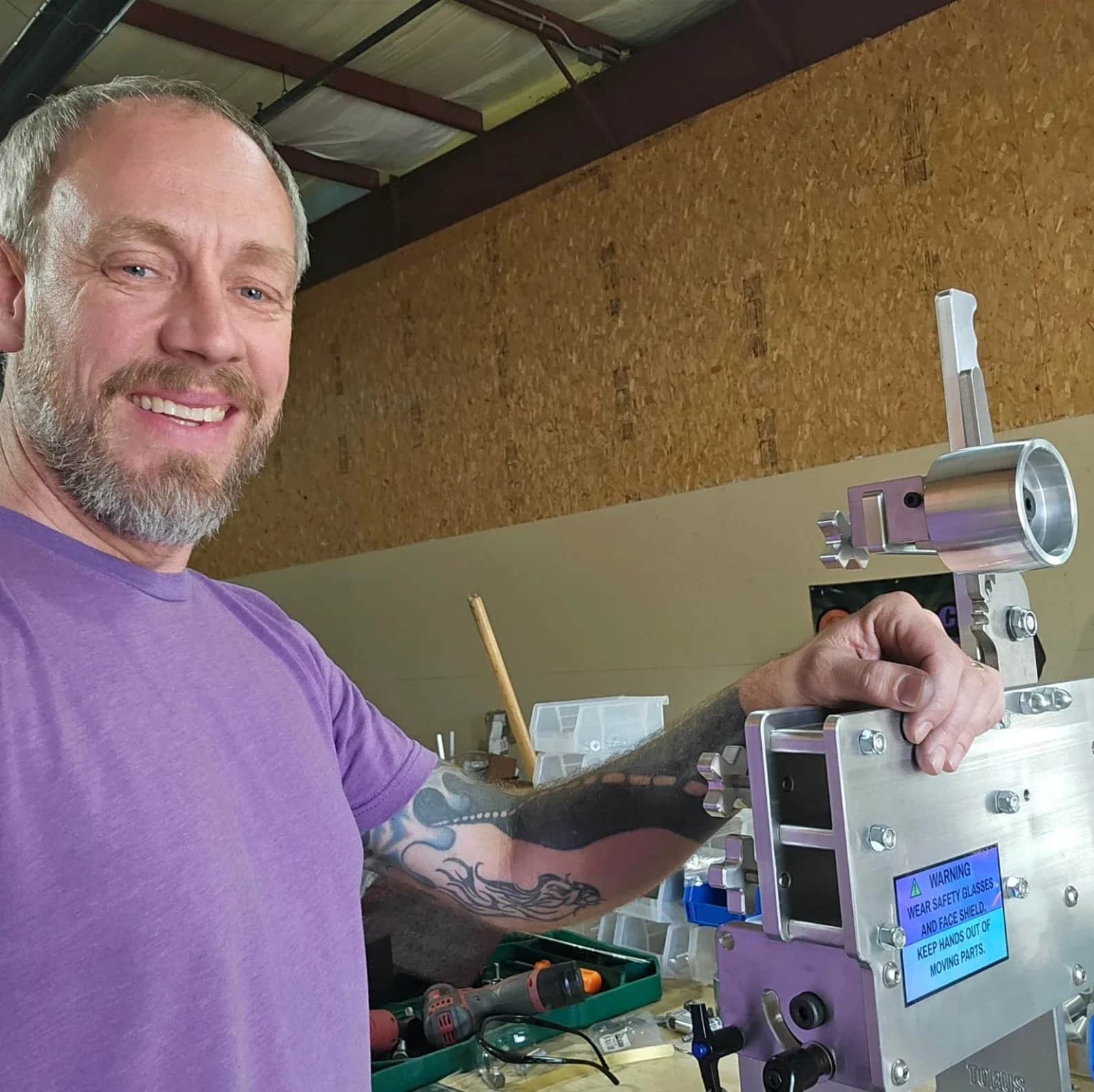
Rich Linville in the Torus CNC shop with a finished 2x72 belt grinder

Built to order

Tell me what you are building

I answer my own email. Tell me the work you do and which grinder you are considering.