
Leatherwork
The Fold-Over Knife Sheath, Step by Step
The fold-over (or centerback) sheath is leatherwork’s first-knife project: one piece of leather folded around the blade, a welt guarding the stitches, one…
Leatherwork
Saddle stitching taught properly: one thread, two needles, a lock at every hole so a cut stitch cannot unravel the seam, plus thread, needle and awl choices.
2 min readWritten by Rich LinvilleFree to read
The saddle stitch is the hand seam that built every harness, holster and sheath before sewing machines — and it remains standard in fine leatherwork for a blunt engineering reason: a machine lockstitch unravels from one cut thread, while a saddle stitch — two independent threads crossing through every hole — holds even when a stitch is severed. On a sheath living against a blade, that redundancy is the specification.
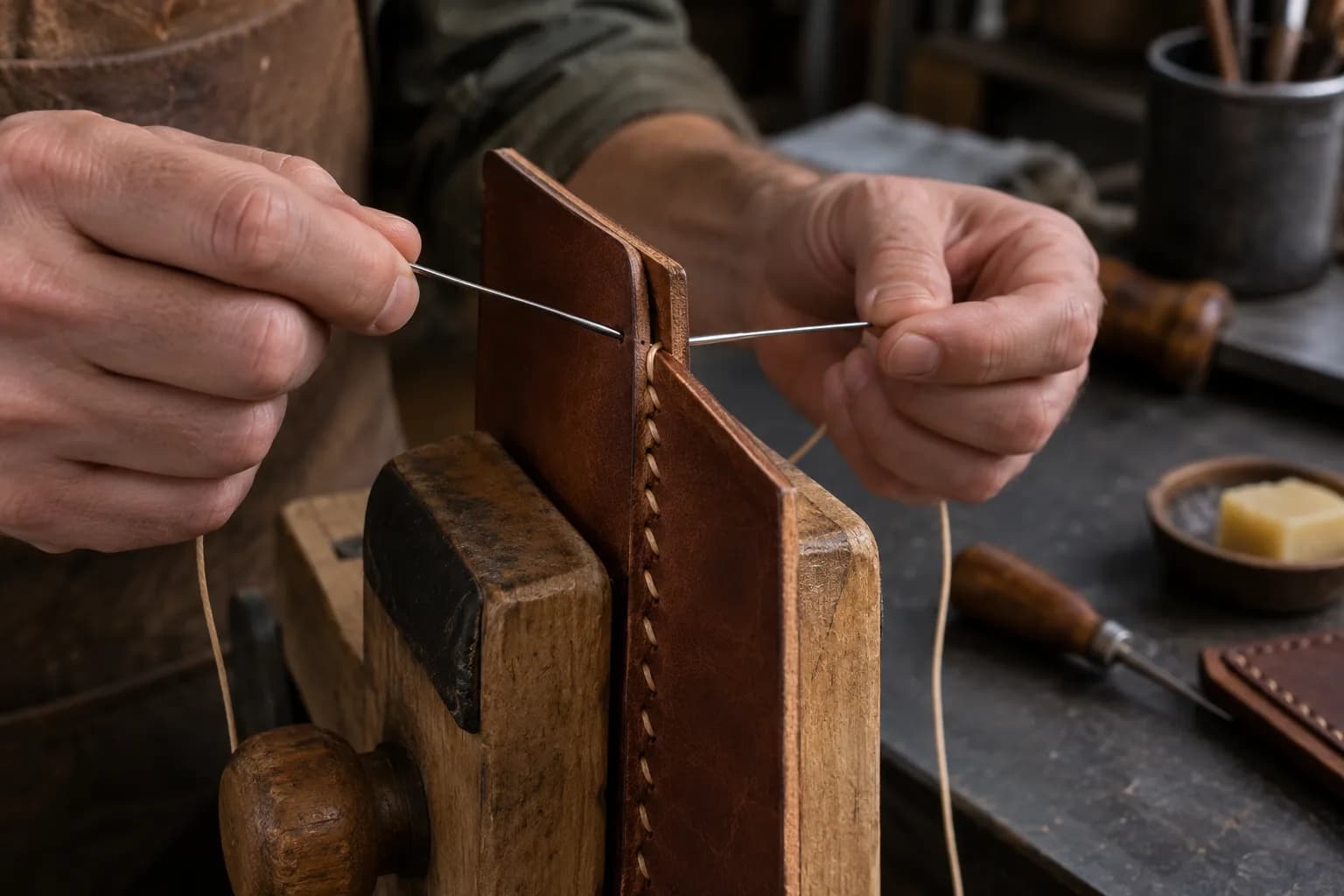
One thread, a needle on each end. Both needles pass through every hole from opposite sides, crossing inside the leather — each hole locks its own X of thread. Cut any single stitch and its neighbors stand; the seam degrades stitch by stitch instead of zipper-failing. This is why the fold-over guide ends its seams with a three-hole backstitch and no knots: the structure IS the security.
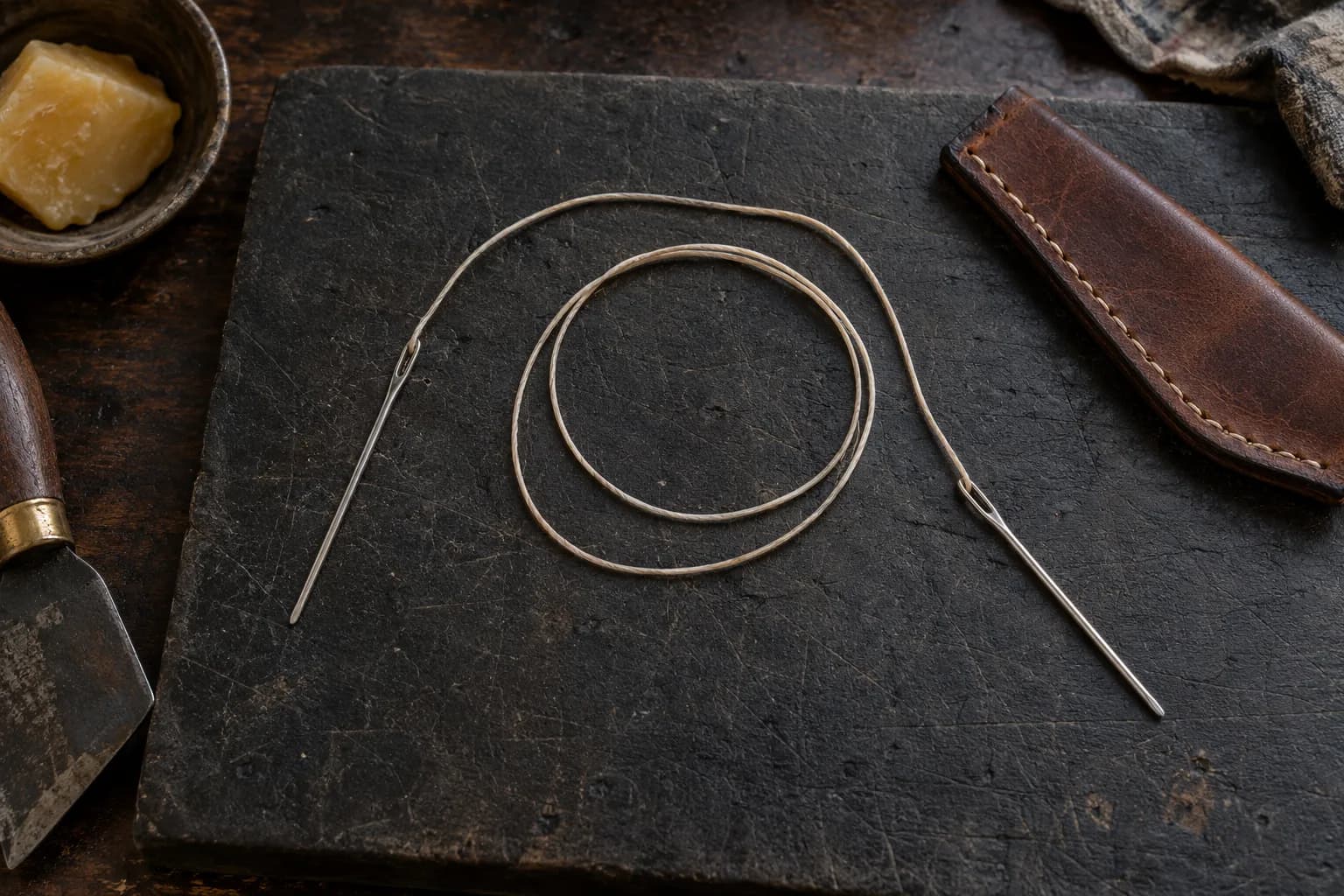
Waxed polyester or braided poly thread (0.6-0.8mm for sheath weight) is the working modern answer — strong, rot-proof, and the wax seats stitches and resists moisture wicking. Traditional linen serves the traditionalists who wax it themselves. Needles: blunt harness needles, size 002-004 — blunt matters, because the needle should follow the awl’s hole, never pierce its own path. Thread length: three to four times the seam, because mid-seam splices are the tax on optimism.
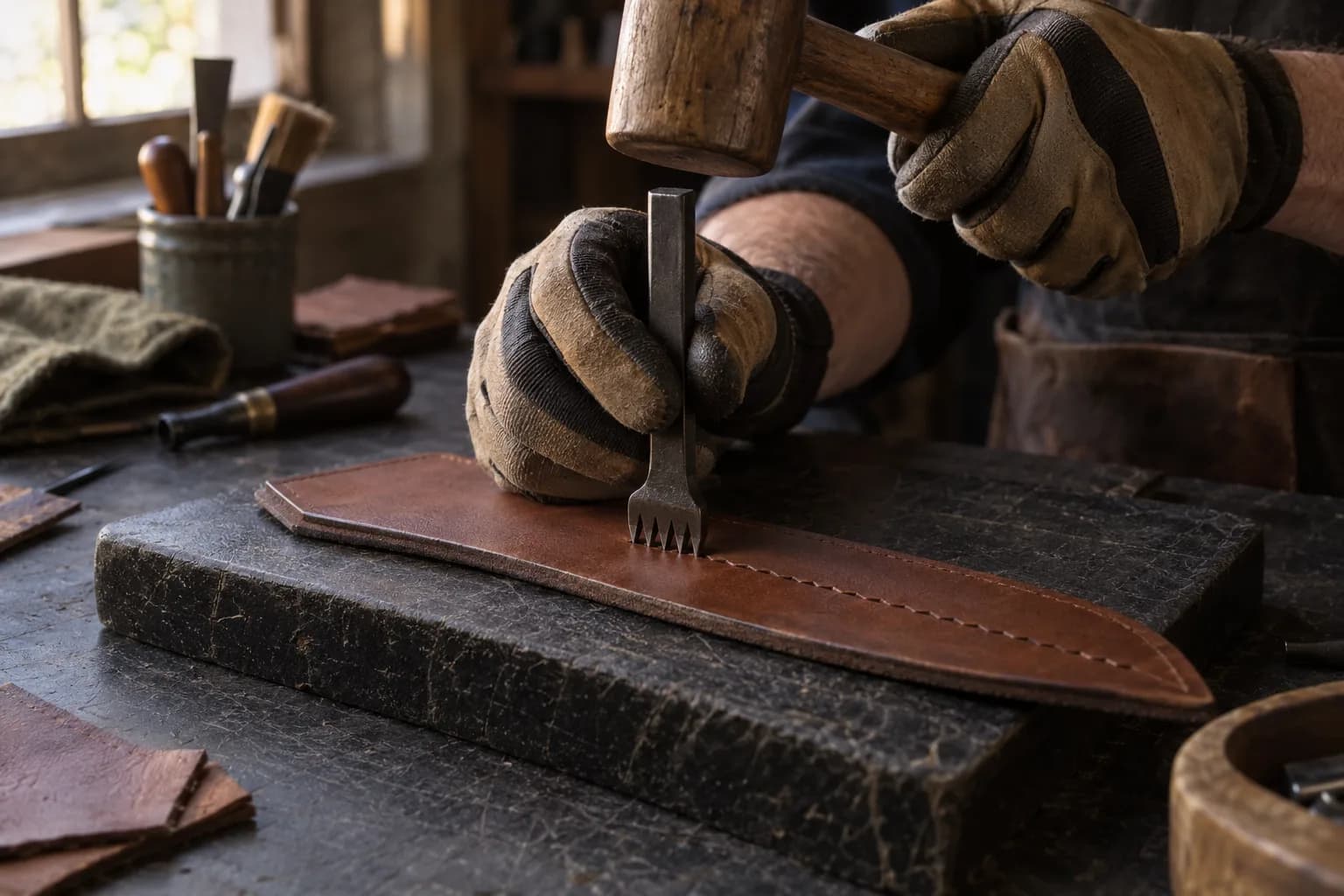
The traditional method pierces each hole with a diamond awl as you stitch — the diamond cross-section cuts a slit that closes around thread, and the angled slits give the classic slanted stitch line. The modern path punches ahead with diamond chisels (stitching irons) and a mallet: slower to set up, vastly easier to keep straight, and the honest recommendation for a knifemaker’s first hundred holes. The drill-press habit from sheath work makes round holes that stitch fine and look machine-made — functional, less handsome; choose knowingly. Either way the groover’s recessed line keeps the finished stitches below abrasion.
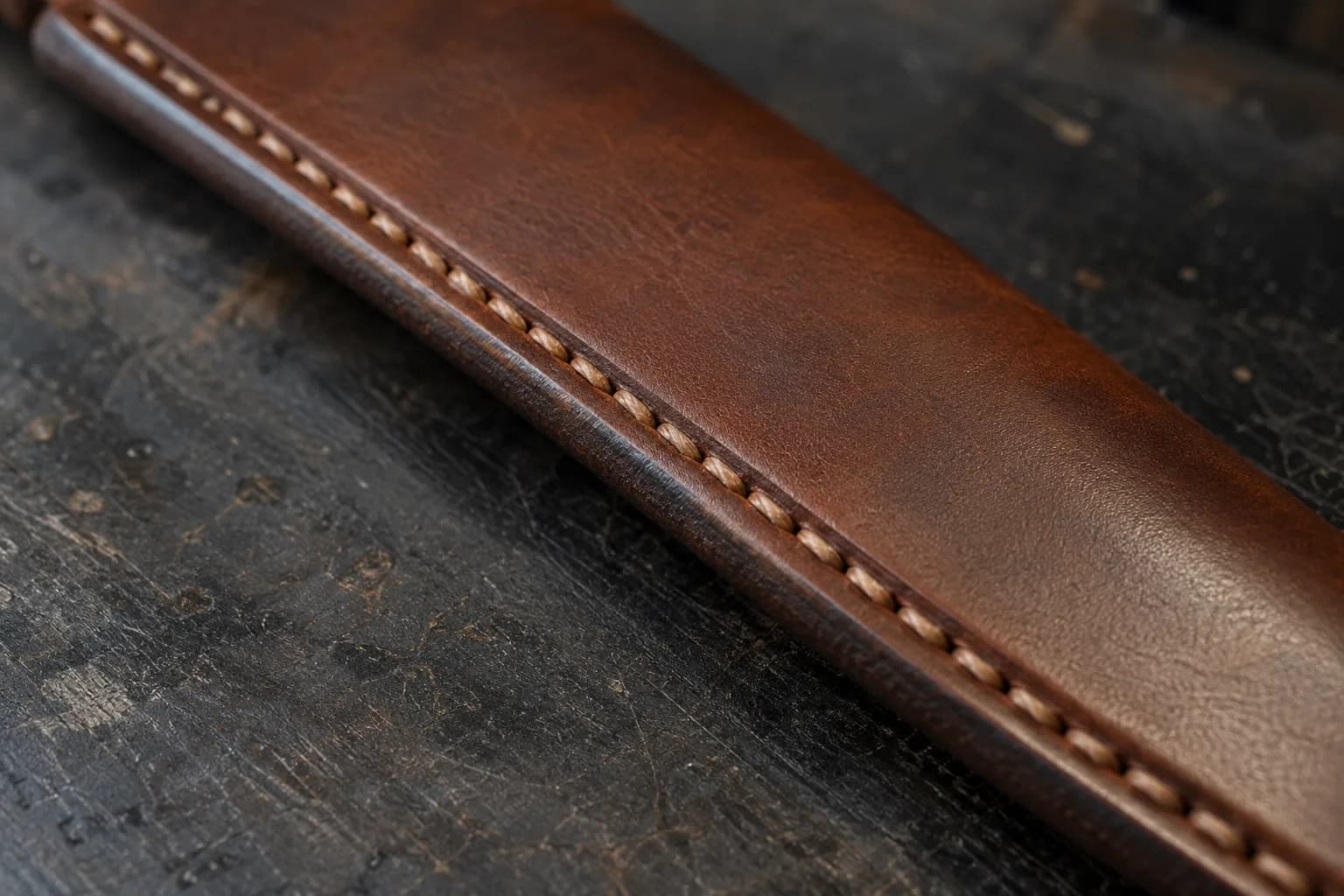
Consistency is the entire craft: same needle order (left first, always), same cast of the thread over the right needle each stitch, same pull tension — snug enough to seat into the groove, never so tight the leather puckers. A stitching pony (two jaws and a clamp, easily shop-made from scrap hardwood) holds the work so both hands run needles; without one, saddle stitching is juggling. Speed arrives on its own around the third project; evenness is the thing to practice, because a wandering stitch line is the first thing every eye finds — the same way a wandering grind line is, per the standards your blade work already keeps.
Keep reading
Three more from the same bench.
The fold-over (or centerback) sheath is leatherwork’s first-knife project: one piece of leather folded around the blade, a welt guarding the stitches, one…

Every knifemaker meets the same moment: a finished blade, a proud photo — and nothing to put it in. A knife without a sheath is half a product, and…

Once the fold-over is in hand, the style catalog opens. Sheath styles are carry solutions — each one answers where the knife rides, how it draws, and what…
Same bench
I machine the parts, hand-assemble, track and test Torus grinders in Sterling, Illinois. Most orders ship in seven to ten business days from time of order.

Current dual-axis platform with a fiber-laser-cut 6061 chassis and single-knob tracking.

Current dual-axis platform with a steel chassis, more mass and less vibration.

Prior-design aluminum chassis, 90-degree tilt and 1.5-inch tooling arms.

One-man shop
I answer my own email. Tell me the steel, the machine and what it is doing, and I will tell you what I would try next.