
Leatherwork
The Fold-Over Knife Sheath, Step by Step
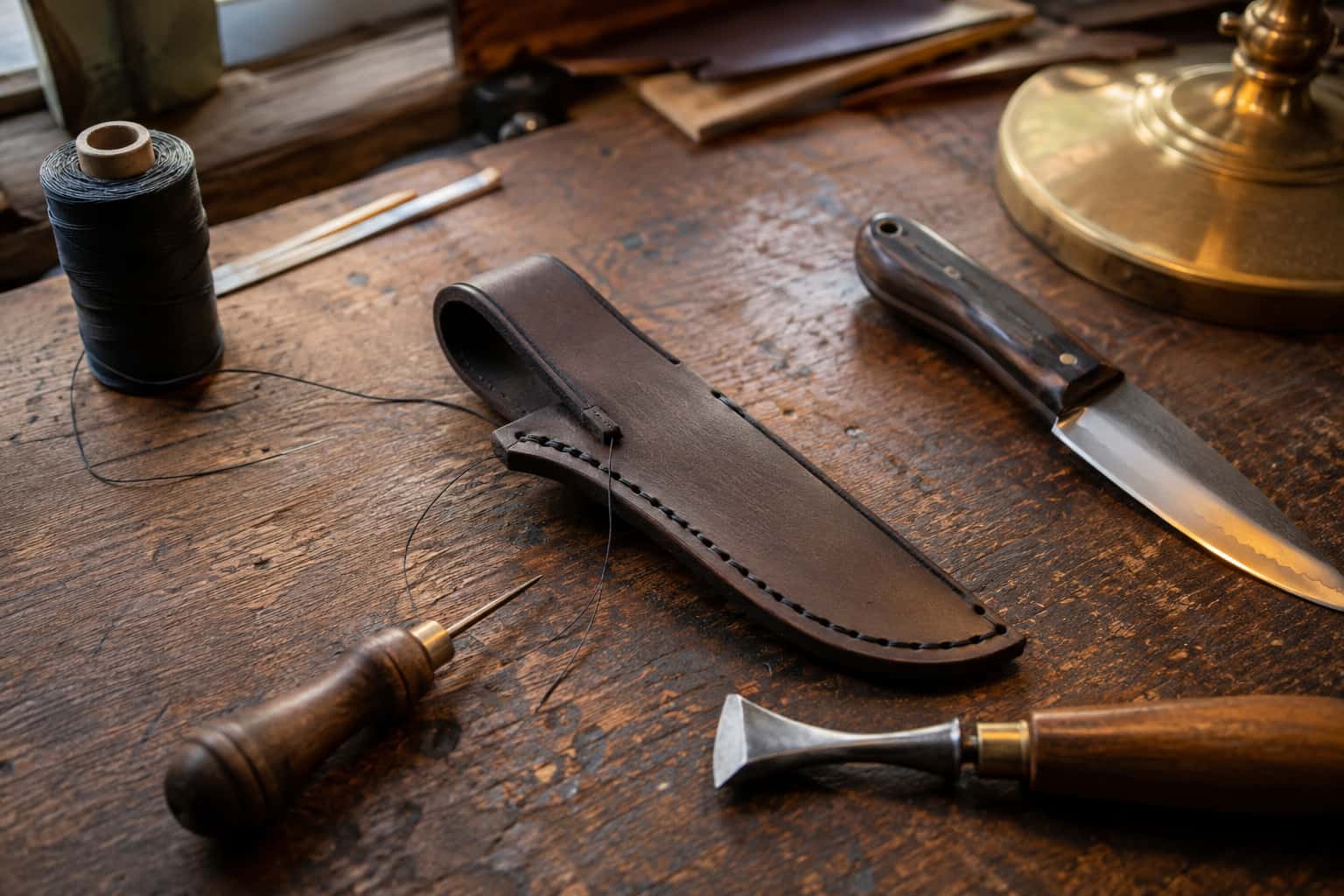
The fold-over (or centerback) sheath is leatherwork’s first-knife project: one piece of leather folded around the blade, a welt guarding the stitches, one…
Leatherwork
Match the sheath to the knife: pancake sheaths with belt slots, danglers that clear big blades, pocket slips and scout carry, and how each keeps retention.
2 min readWritten by Rich LinvilleFree to read
Once the fold-over is in hand, the style catalog opens. Sheath styles are carry solutions — each one answers where the knife rides, how it draws, and what it snags on — and offering the right two or three turns a knife listing into a system listing.
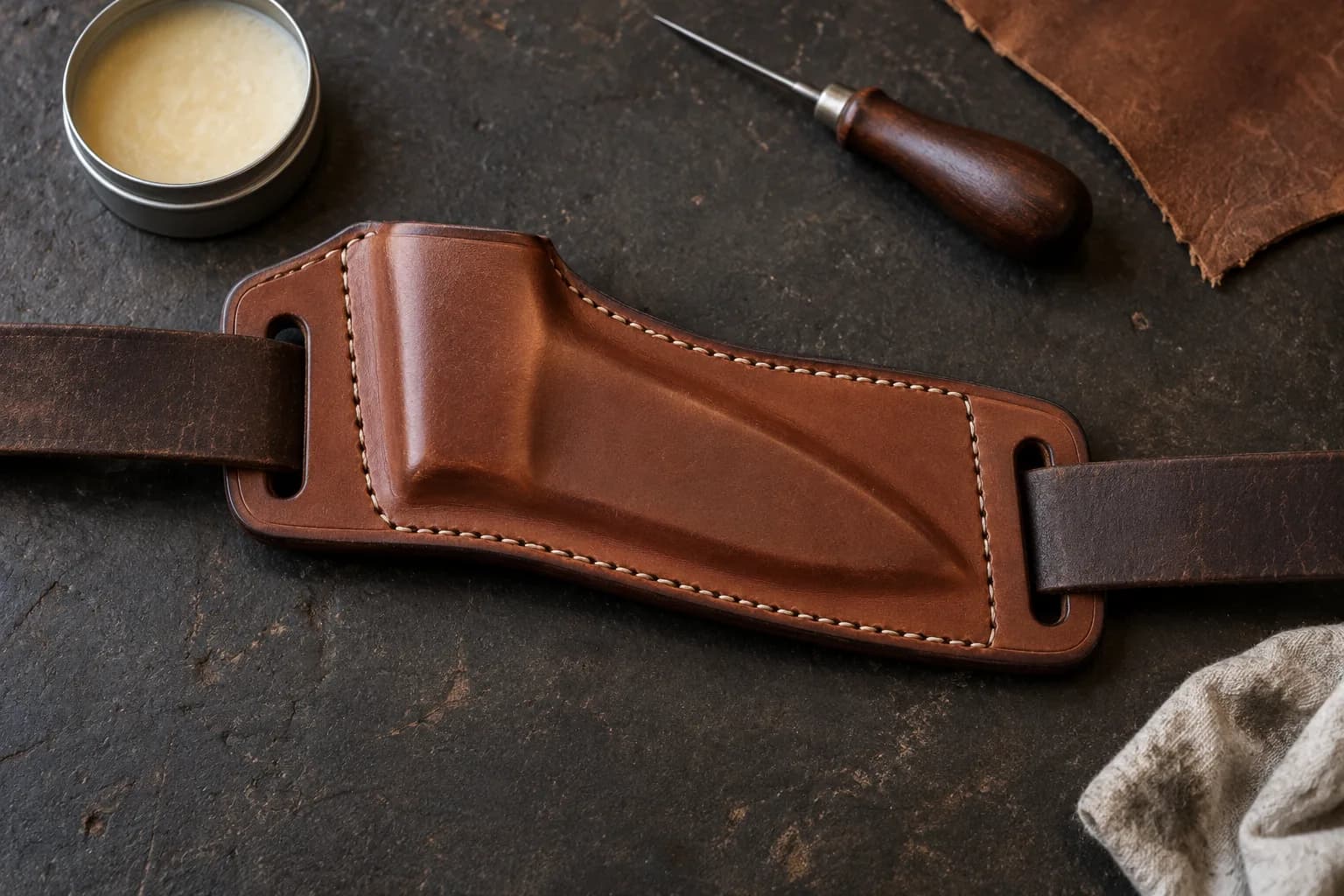
Two flat panels stitched around the knife’s silhouette with the belt slots punched IN the panels — the sheath hugs the body like its holster ancestors, carries high and tight, and presents the handle at whatever cant the slot placement dials in. It is the fixed-blade EDC answer: no swing, no bulk, all draw. Build notes: the panels want a full welt line around the blade side; slots are punched with an oblong punch before assembly; and the cant angle is decided on paper, because it is permanent. A wet-formed pancake with a crisp blade impression is the sheath that photographs like money — see Wet Forming.
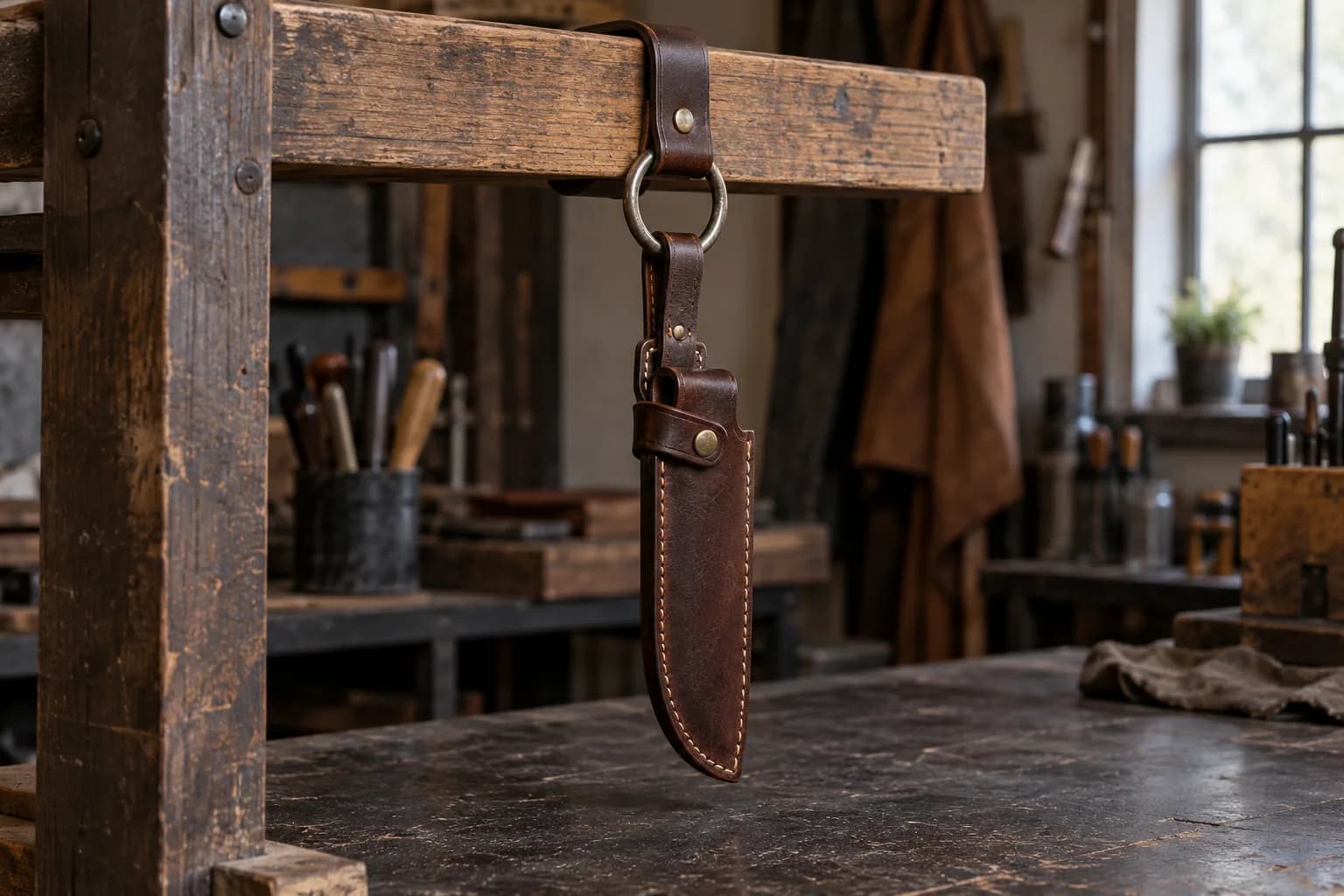
A hanger loop connecting sheath to belt through a ring or fold, letting the sheath swing and sit low. What sounds casual is deeply practical for big blades: a camp knife or chopper carried rigid at the belt line jams into ribs when sitting and levers when bending — dangled, it moves with the body and clears the hip in a truck seat or a treestand. Build as a normal deep-pouch sheath plus a doubled hanger strap; a heavy ring or a folded-leather bridge both serve. Hunters specifically ask for these; stock them.
The pocket slip — an open-top sleeve, often 4-6 oz — dresses folders and protects pockets; it is the fastest gift-market item a maker can batch. Scout (horizontal) carry stitches the belt loops across the sheath back so a short blade rides level along the beltline — beloved for small fixed blades, and demanding a firm wet-formed fit since gravity is no longer the retention plan. Shoulder rigs, baldrics and neck sheaths (usually kydex territory, but leather serves light ones) round out the catalog; each is the same fold-over-or-pancake core wearing different mounting.
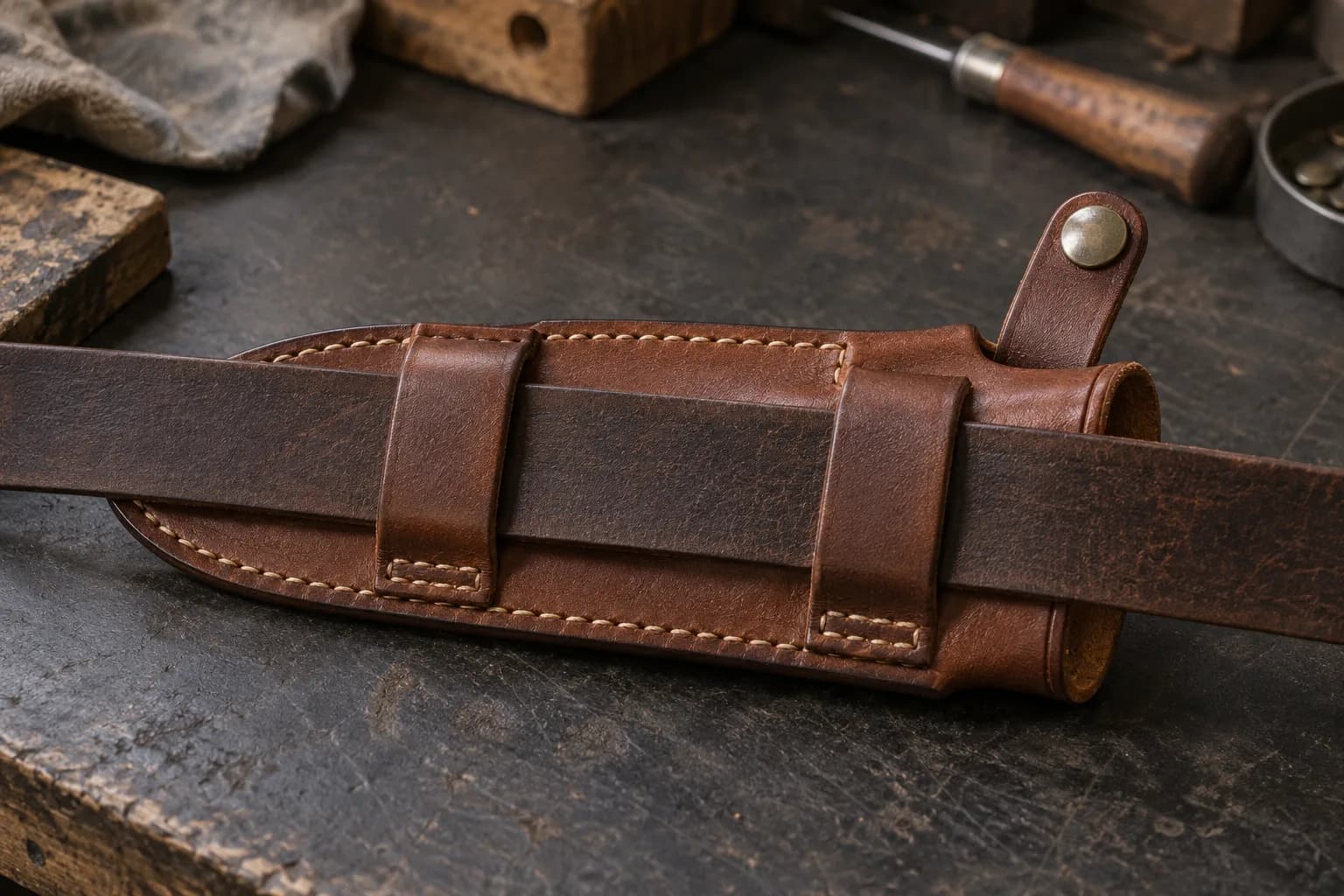
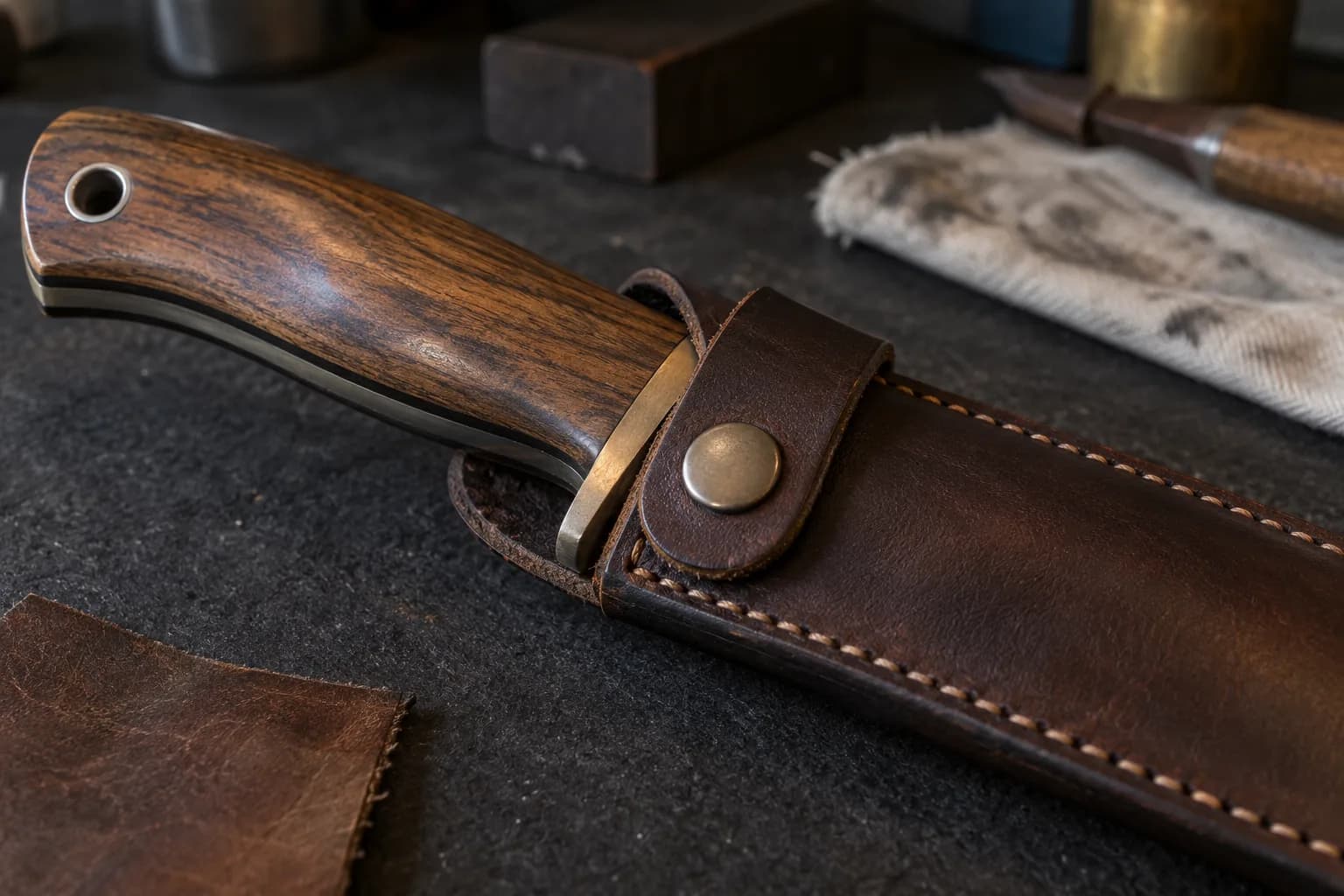
Every style answers the same question — what holds the knife in? — from some mix of: wet-formed friction (the click), a welt-deep pouch, a snap strap over the guard, or gravity plus depth. The rule of thumb: vertical deep-pouch carry can live on molding alone; anything horizontal, dangling or mounted upside down earns a strap or a hard click. Retention is tested the undignified way — sheathed knife, held upside down, shaken — before any sheath ships. The maker’s reputation rides in someone’s truck; the test costs ten seconds.
Keep reading
Three more from the same bench.
The fold-over (or centerback) sheath is leatherwork’s first-knife project: one piece of leather folded around the blade, a welt guarding the stitches, one…
Every knifemaker meets the same moment: a finished blade, a proud photo — and nothing to put it in. A knife without a sheath is half a product, and…
Leather buying has its own jargon wall: tannages, ounces, cuts, grades, temper. Here is the wall taken down — and the one warning in this craft that…
Same bench
I machine the parts, hand-assemble, track and test Torus grinders in Sterling, Illinois. Most orders ship in seven to ten business days from time of order.
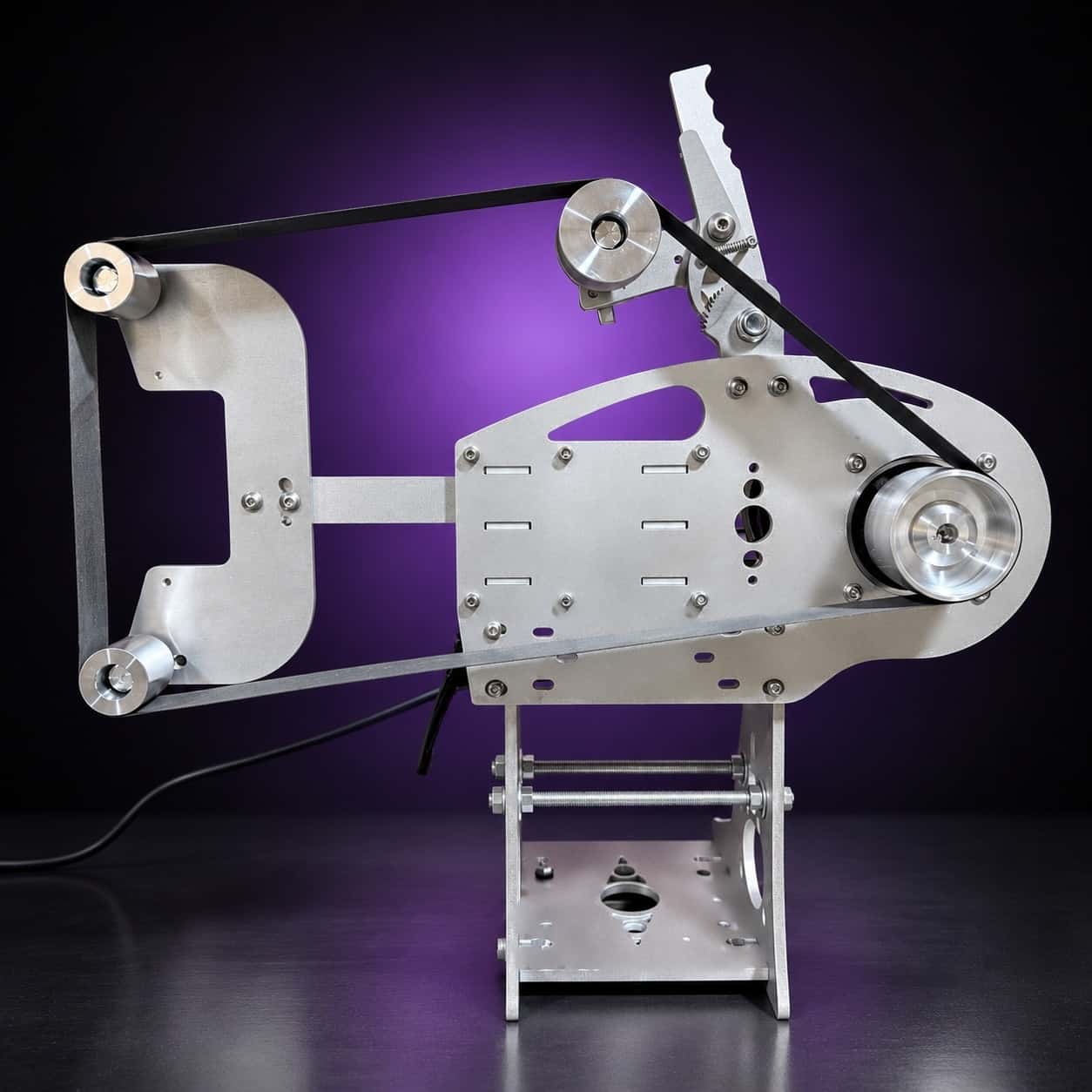
Current dual-axis platform with a fiber-laser-cut 6061 chassis and single-knob tracking.
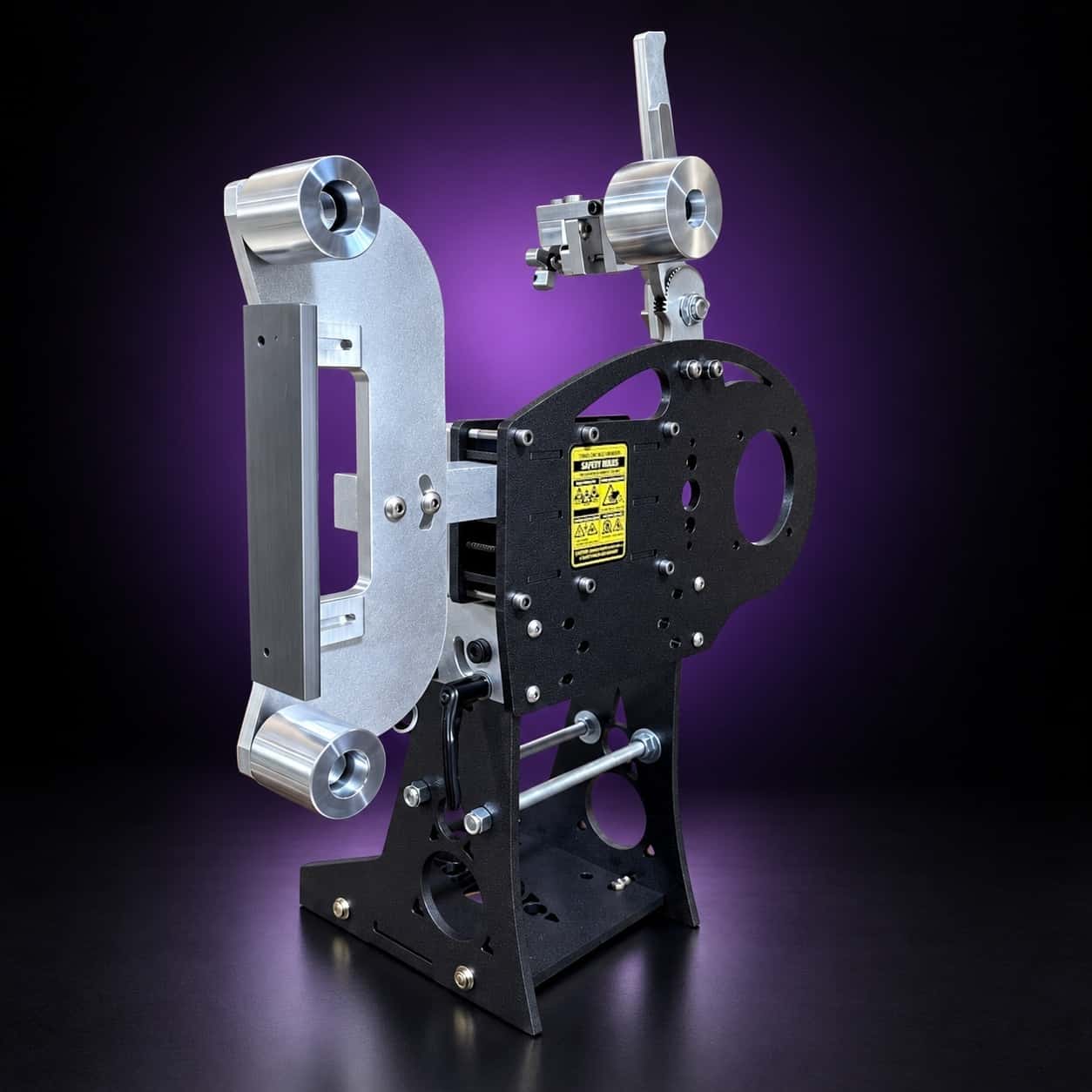
Current dual-axis platform with a steel chassis, more mass and less vibration.
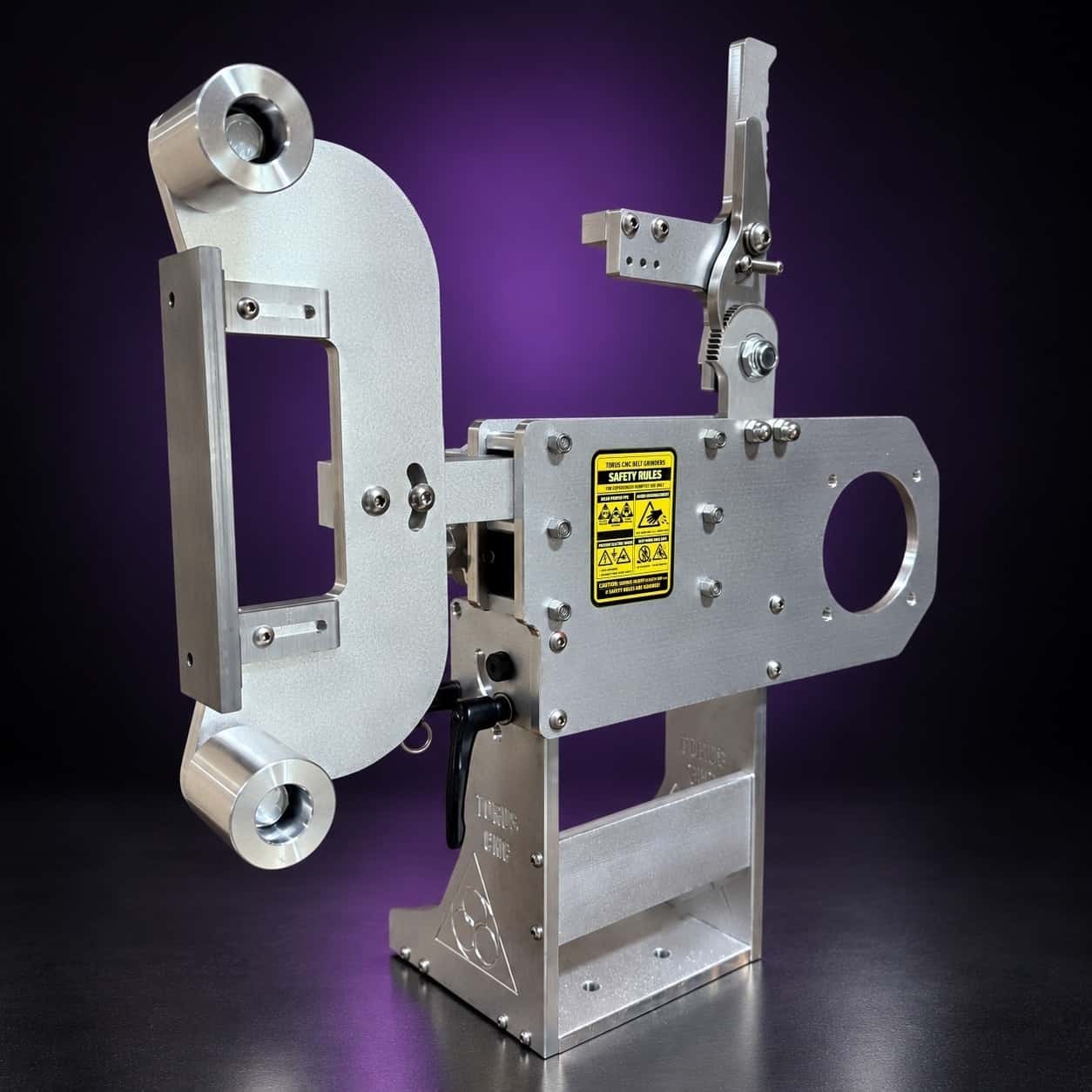
Prior-design aluminum chassis, 90-degree tilt and 1.5-inch tooling arms.
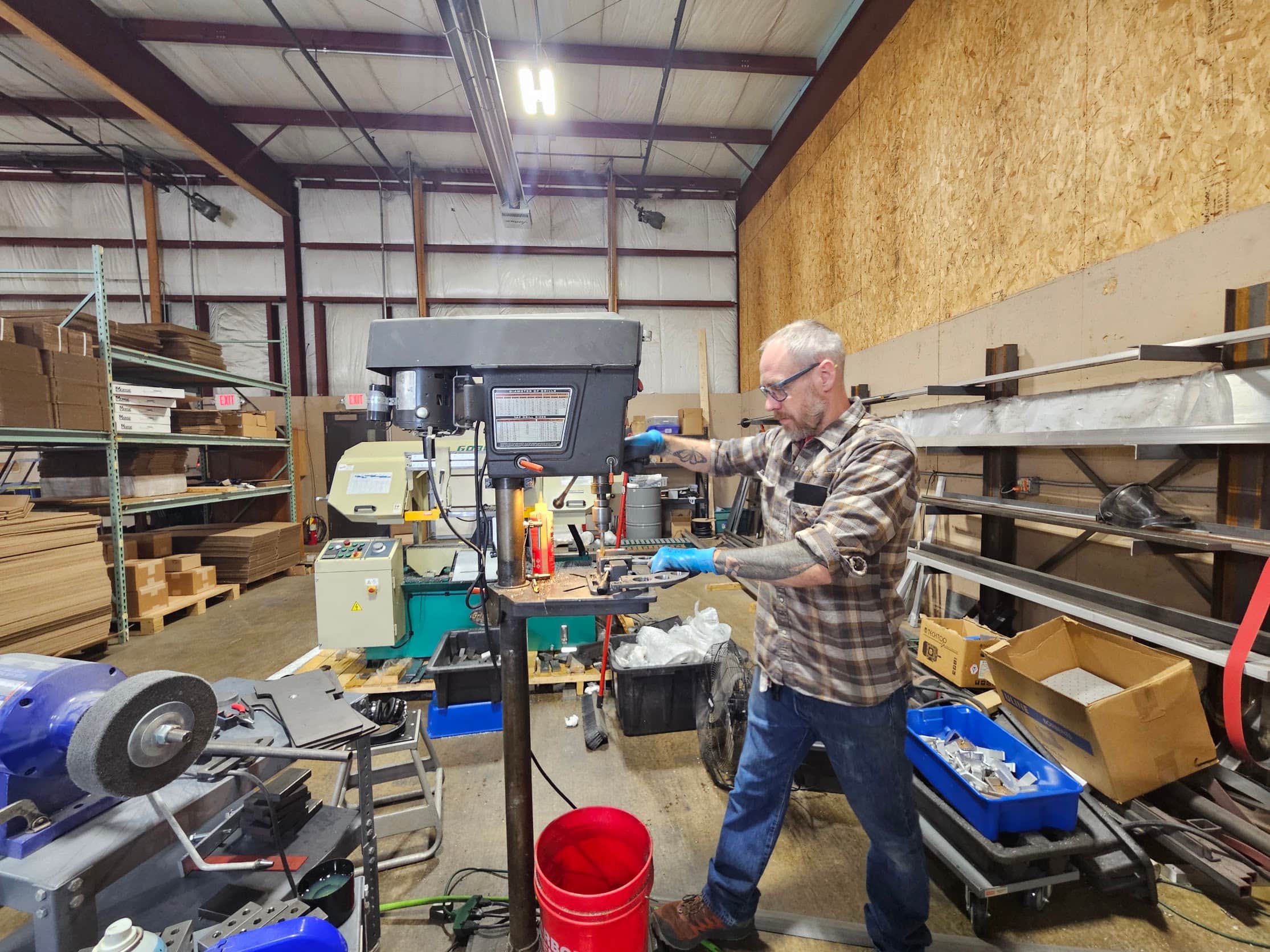
One-man shop
I answer my own email. Tell me the steel, the machine and what it is doing, and I will tell you what I would try next.