
Leatherwork
Leather Types & Weights: What to Buy for Sheaths
Leather buying has its own jargon wall: tannages, ounces, cuts, grades, temper. Here is the wall taken down — and the one warning in this craft that…
Leatherwork
Caring for sheaths and the storage rule every owner needs: why blades never live in leather long-term, verdigris, conditioning, and wet rescue.
2 min readWritten by Rich LinvilleFree to read
The last leather lesson is the one to print on the care card that ships with every knife: the sheath is transport and carry, not storage. Long-term, blades and leather are bad roommates — and the maker who explains why, in writing, prevents the saddest customer email in the craft: the heirloom knife, stored proudly in its beautiful sheath, ruined.
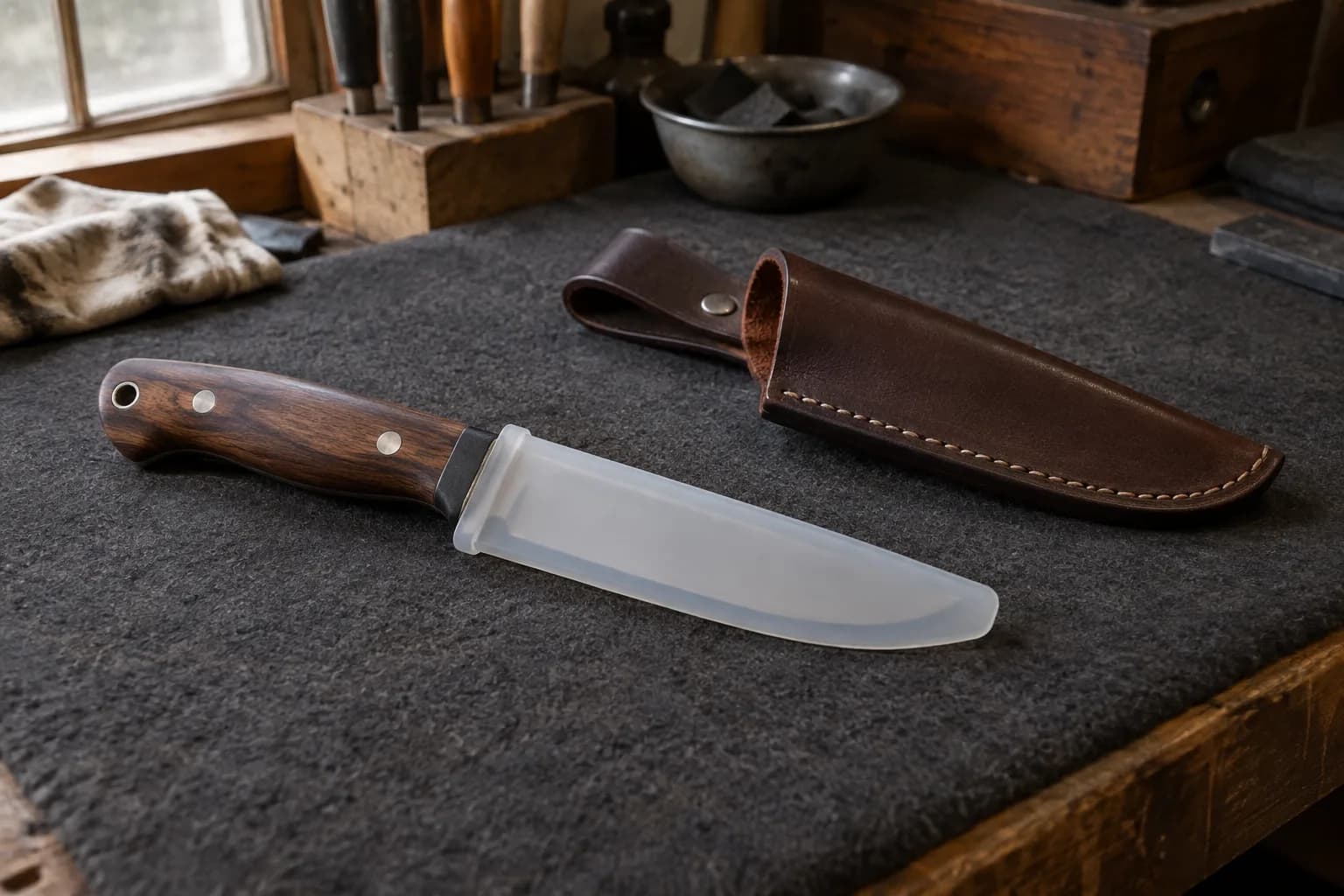
Even good veg-tan is mildly acidic and hygroscopic — it drinks humidity and holds it against the steel in the dark, and its tannins react with iron on contact (the same iron-tannin chemistry that blackens an etched blade on purpose, working slowly against a stored one). Carbon blades spot first; stainless is slower, not immune. Chrome-tan does all of it faster and adds its salt residues. The rule on the care card: knife rides in the sheath, sleeps out of it — stored oiled, dry, and separate. Collectors store blades in waxed paper or silicone sleeves and the sheath alongside; the pair reunites for use and photos.
The green crust where brass or copper hardware meets leather is verdigris — copper corrosion fed by leather’s acids and oils. It stains, spreads and eventually eats stitching; on old sheaths it is the classic decay. Prevention: seal under hardware during the build, wipe fittings after wet exposure. Treatment: mechanical removal (brush, pick), a white-vinegar-damp swab kept OFF the surrounding leather, dry, recondition, then watch it — established verdigris returns without the moisture fix that caused it. Steel and nickel hardware sidestep the issue, one reason working sheaths favor them.
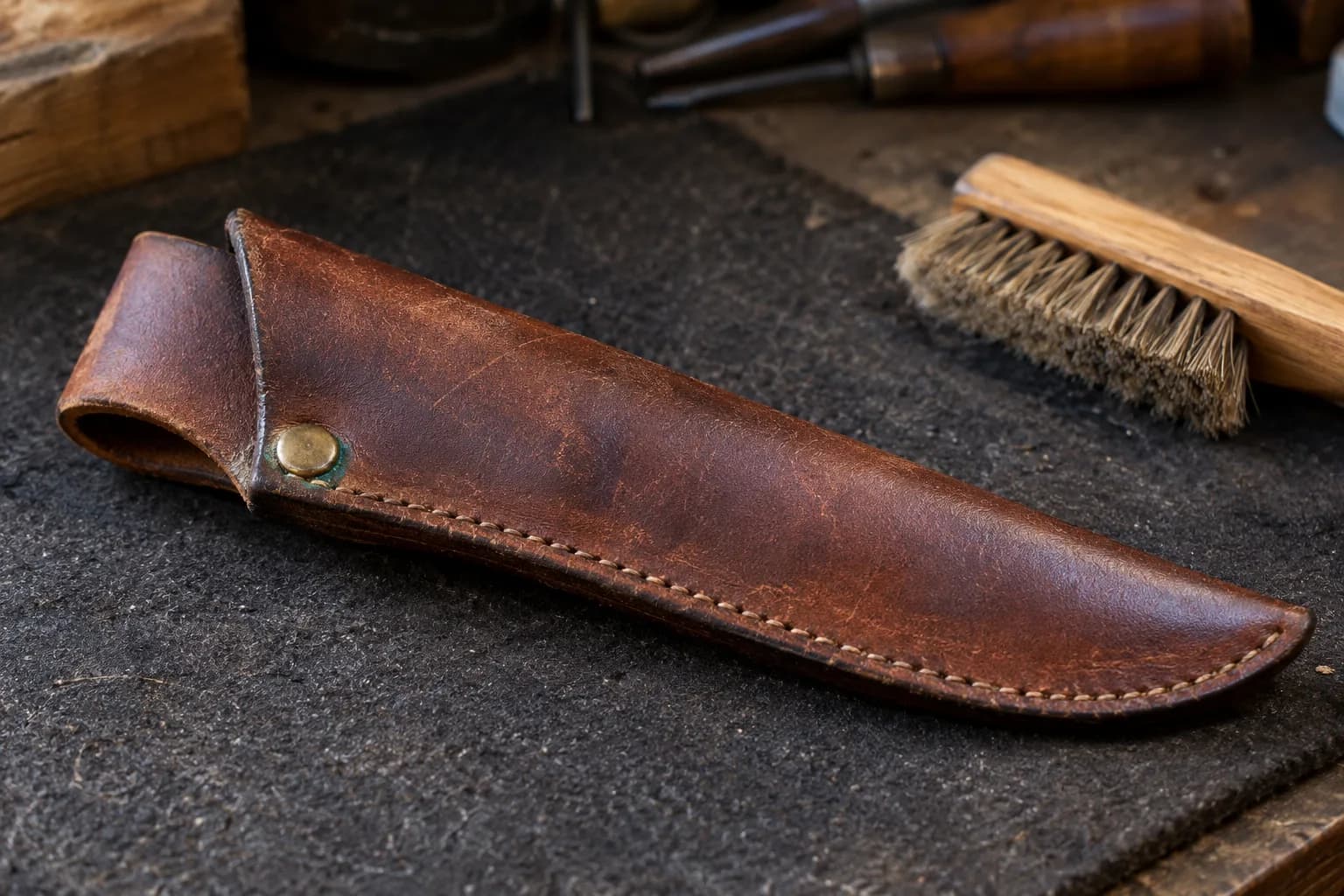
Leather care culture over-oils. A working sheath wants conditioning when it TELLS you — surface dry, lightening at flex points, a papery hand — typically once or twice a year outdoors, less indoors: a thin coat of neatsfoot or a balm from the finishing guide, buffed, done. Over-oiled leather goes soft, sags off its wet-formed fit, darkens blotchy and bleeds onto clothes. Petroleum products and silicone sprays stay off veg-tan entirely; mink oil is a heavy waterproofing trade-off, not a conditioner.
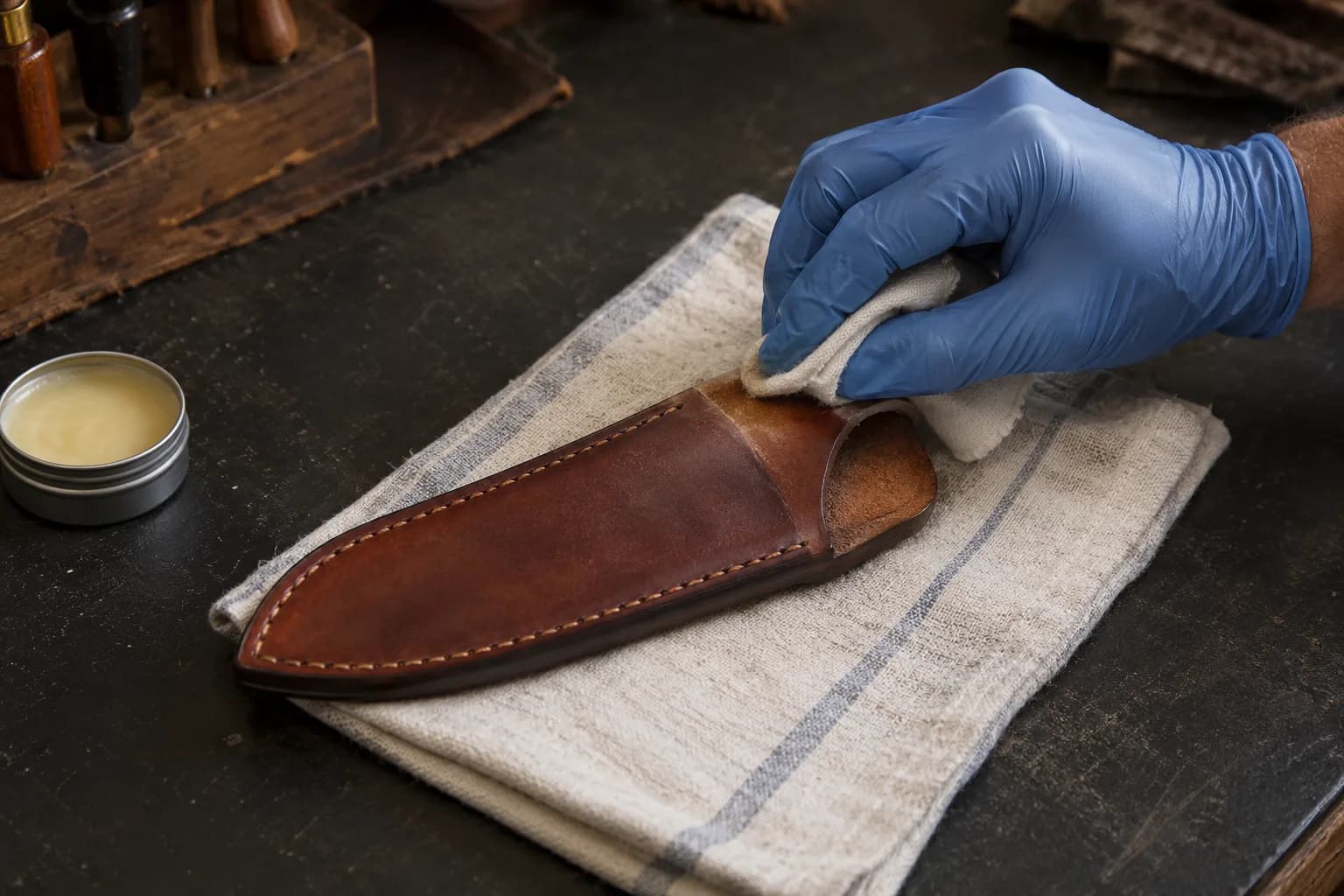
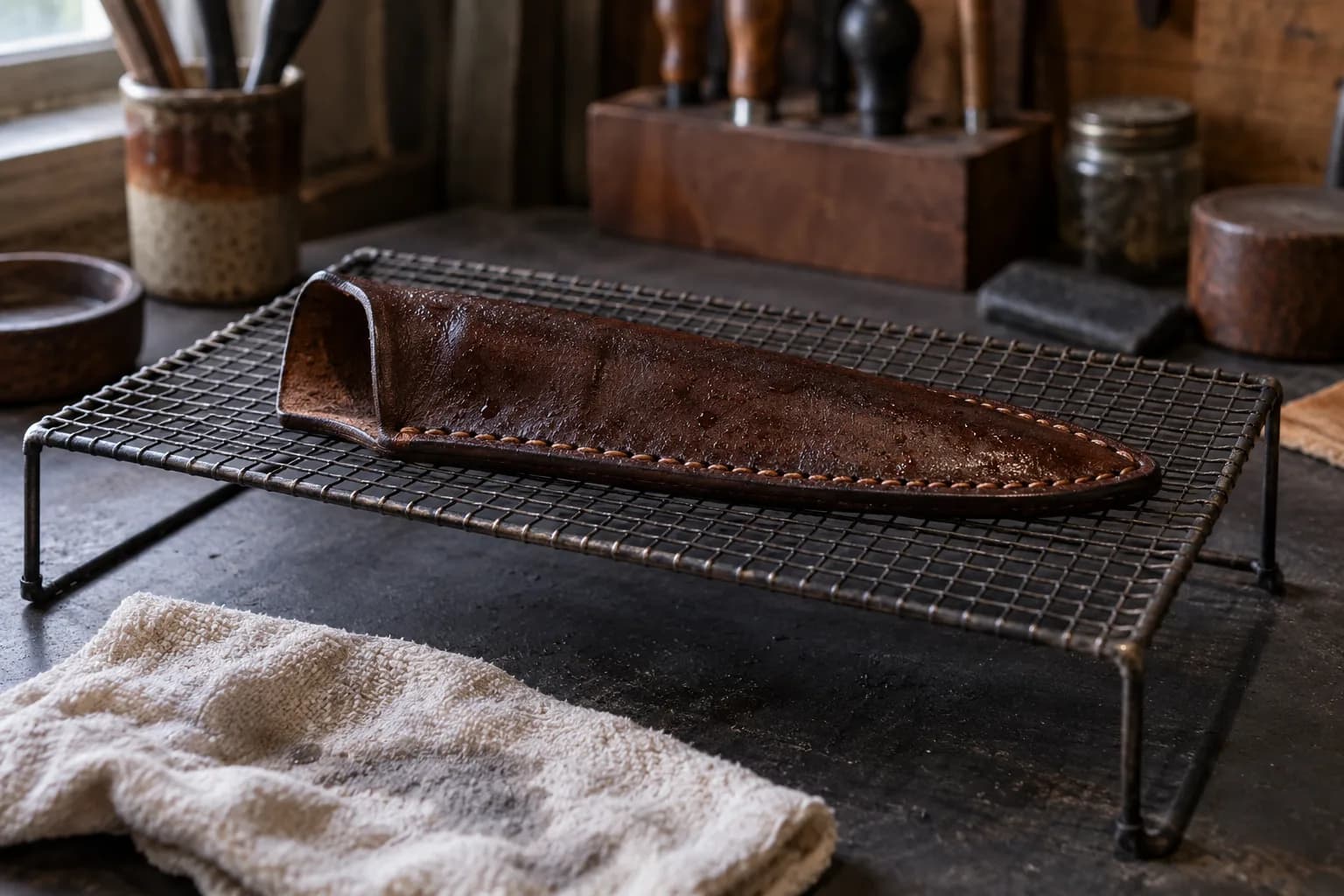
A soaked sheath dries like it was wet-formed, because it was: knife OUT, shape gently restored, room-temperature air, days not hours — never a heater, which is how sheaths crack. Recondition after. Cared for this way, a veg-tan sheath outlives its maker; the oldest working saddles run past a century on exactly this regimen. Close the loop on the care card: transport in leather, storage apart, condition when asked, dry slow, and the knife-and-sheath pair stays photograph-ready for a lifetime — which is, quietly, the repeat-customer letter every maker wants their products writing.
Keep reading
Three more from the same bench.
Leather buying has its own jargon wall: tannages, ounces, cuts, grades, temper. Here is the wall taken down — and the one warning in this craft that…

Wet forming is veg-tan’s party trick and the step that separates a leather envelope from a fitted sheath: dampened correctly, the leather takes the…

Two details tell every experienced eye whether leatherwork is amateur or professional: the edges and the finish. Neither requires talent — both require…
Same bench
I machine the parts, hand-assemble, track and test Torus grinders in Sterling, Illinois. Most orders ship in seven to ten business days from time of order.

Current dual-axis platform with a fiber-laser-cut 6061 chassis and single-knob tracking.

Current dual-axis platform with a steel chassis, more mass and less vibration.

Prior-design aluminum chassis, 90-degree tilt and 1.5-inch tooling arms.

One-man shop
I answer my own email. Tell me the steel, the machine and what it is doing, and I will tell you what I would try next.