
KNIFE MAKING
Freehand or jig? The argument never dies. It filled pages on BladeForums again this summer, same as every year: one camp says a jig is training wheels you never take off, the other says freehand is gatekeeping dressed up as tradition. Both camps are wrong about the other. Here is the honest version.
KEY TAKEAWAYS
- Jigs make straight flat bevels. They cannot follow a curved profile, cut a recurve, or hollow grind.
- Freehand takes longer to learn but works for every grind you will ever want.
- The middle path is real: angle-set work rests and learning aids teach your hands without doing the work for them.
- Consistent equipment matters more than the method. A grinder that will not track or hold its work rest square fights both camps equally.
- Nobody who buys your knife asks which way you ground it.
WHAT A JIG ACTUALLY DOES
Most bevel jigs clamp the blade and ride a flat table across the belt. That locks one variable — the angle — and that is all it locks. You still control pressure, travel speed, and where the grind starts and stops. The catch is geometry: a clamped jig slides parallel to the table, so it cuts straight bevels. Blade with a sweeping belly? Recurve? Hollow grind on a wheel? The jig has no answer. That is not a moral failing. It is just what the tool is.
WHAT FREEHAND ACTUALLY BUYS YOU
Everything the jig cannot do. Freehand follows the profile, rolls the plunge, walks a grind line exactly where you want it — flat, hollow, convex, recurved. The cost is time. Your hands need hours of scrap steel before the lines come out clean, and the learning curve is paved with belts. Makers who grind every day swear by it because for them the investment already paid off. That does not make it the only road in.
THE MIDDLE PATH NOBODY ARGUES ABOUT
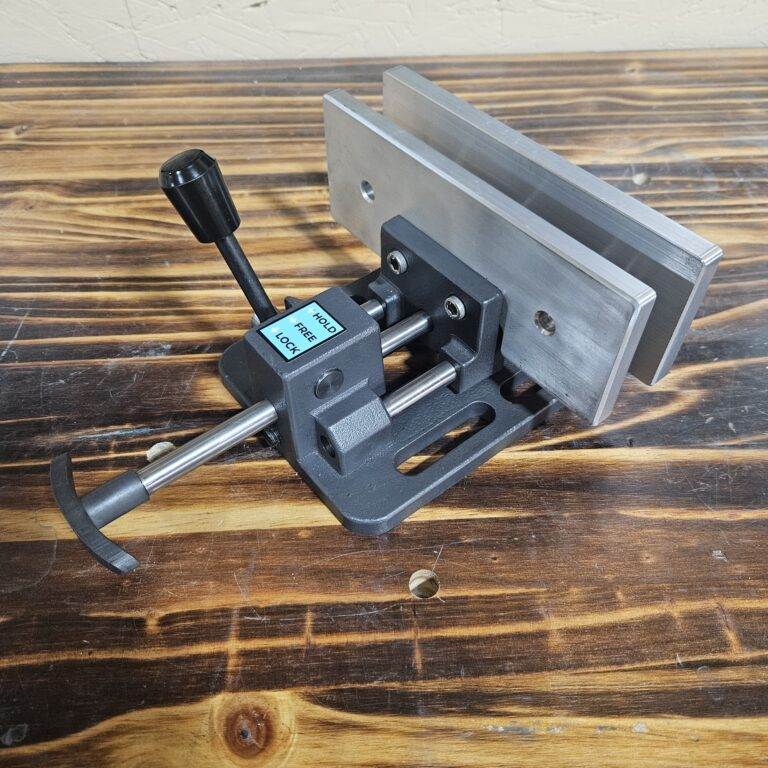
Between a full clamp jig and pure freehand sits the approach most working makers quietly use: a solid work rest set at a known angle, fingers as the fixture, eyes on the grind line. Aids like the bubble jig live here too — they signal the angle but your hands still do the work, so the skill transfers. Start heavy on the rest, lean on it less as your hands learn. Nothing to unlearn later.
THE PART BOTH CAMPS AGREE ON
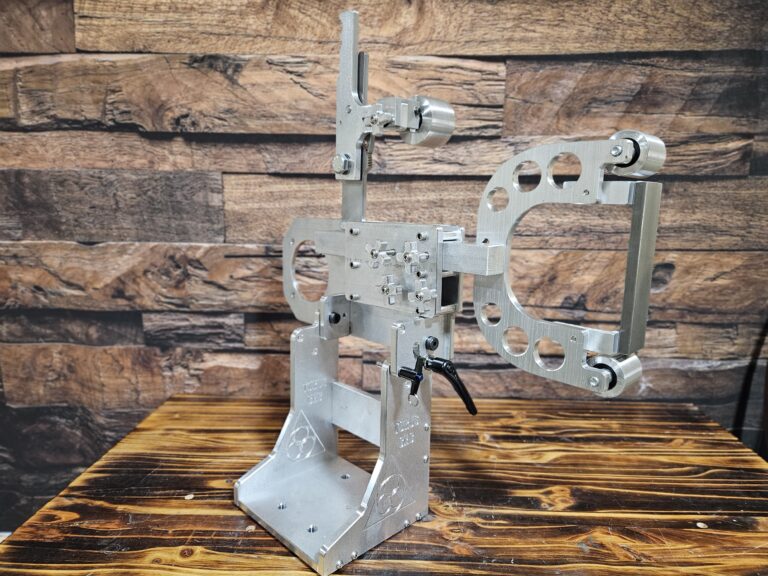
Ask the freehand purists and the jig loyalists what ruins more blades than either method, and you get the same answer: a machine that will not hold still. A belt that wanders, a work rest that flexes, a platen that is not square — no technique survives that. Whatever camp you land in, equipment that supports repeatable results is the real foundation, and it is why consistency beats speed when the knives have to pay for themselves.
If you want the full map of what you are grinding toward, our guide to blade grind types covers flat, hollow, convex and the rest — including which ones a jig can and cannot reach.
PICKING YOUR LANE
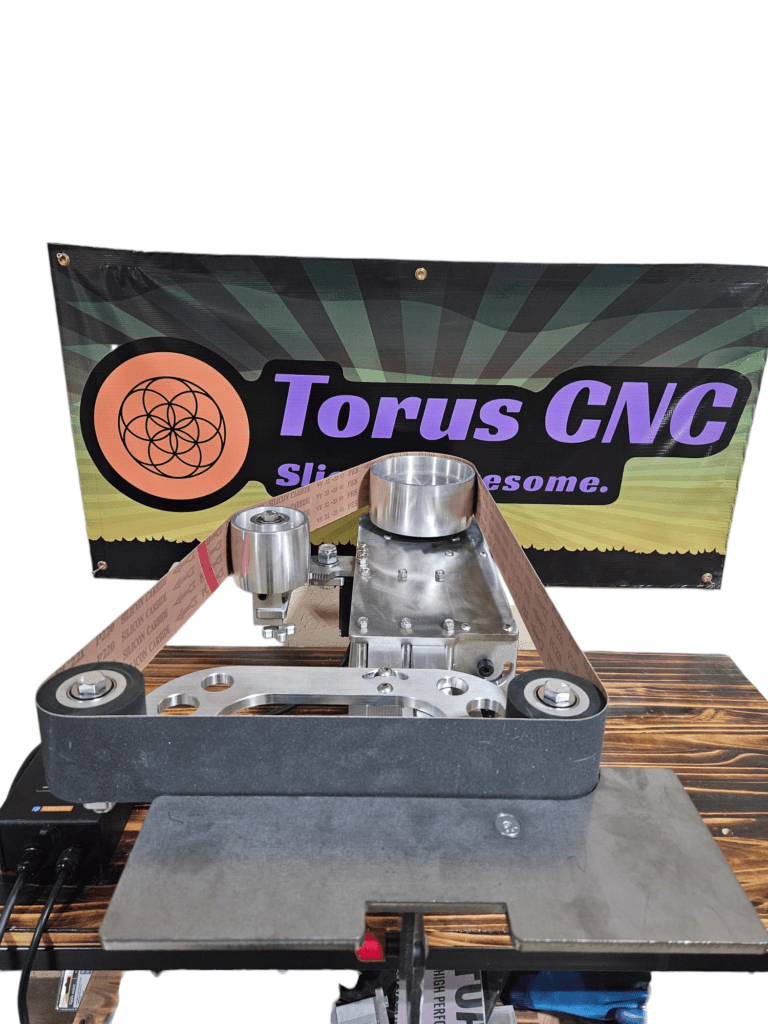
First knife or first ten? Use the work rest and any aid that keeps you from trashing steel. Planning production work or curved grinds? Start feeding freehand practice in now, a little every session. And run it all on a machine that holds its settings — a true-tracking 2×72 with a work rest that locks down square is what makes either method repeatable. That is the job the NOVA was built for. If you want in at closeout money, the fully assembled Torus 2×72 Steel is $845 while stock lasts.
Ready to stop arguing and start grinding? The lineup is at toruscnc.com/shop.