

Normalizing & Thermal Cycling: The Step Between Forge and Quench
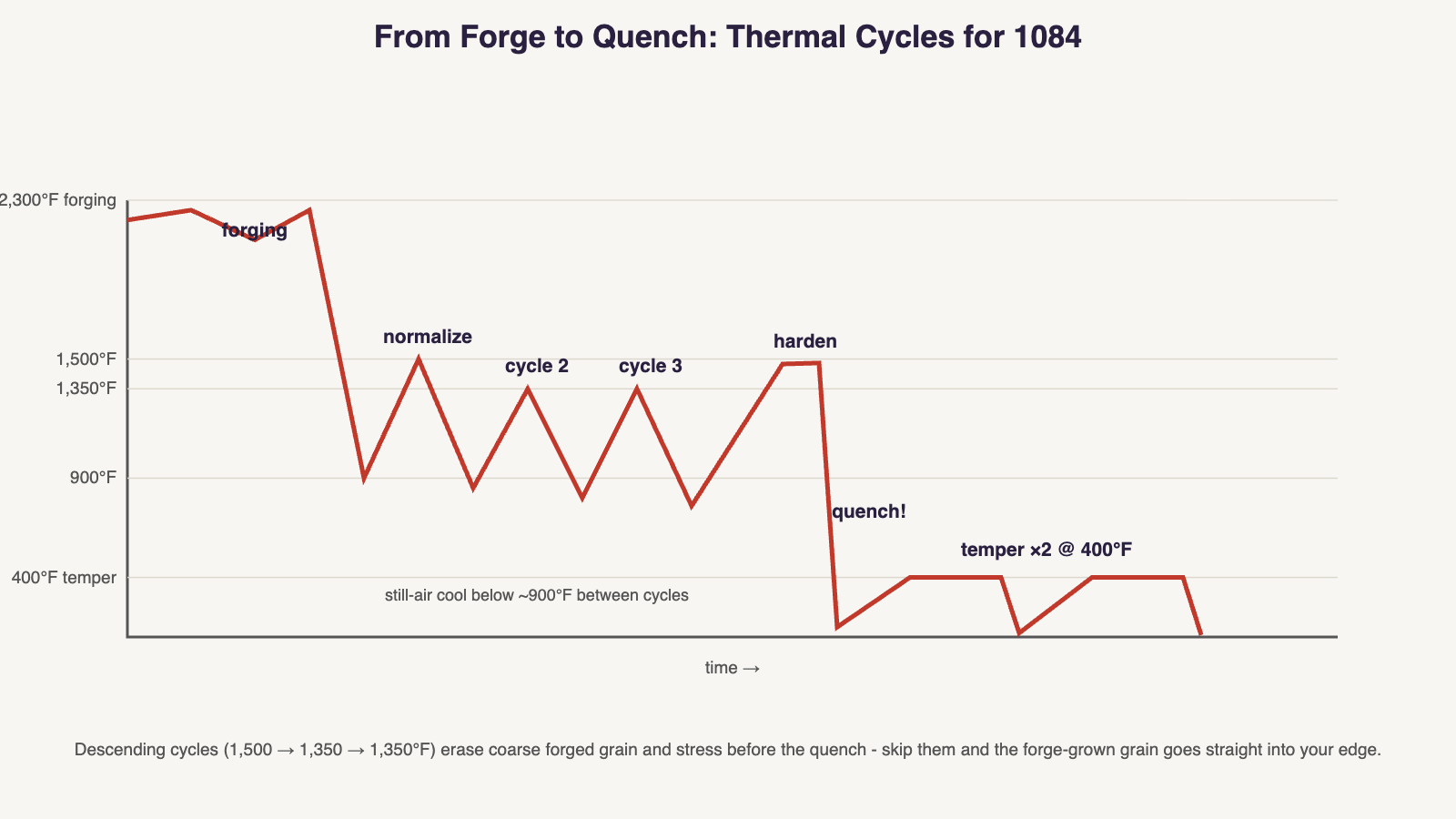
After forging, run three descending thermal cycles - about 1,500F, then 1,350F twice - cooling in still air below ~900F between each. This erases the coarse grain and stress that forging heat creates, so the quench hardens clean steel. By eye: cycle one is a shade past non-magnetic, cycles two and three just below it. Then harden, quench fast, temper twice.
Between the last hammer blow and the quench sits the least glamorous, most skipped, most important step in forging: normalizing. Forging happens way up at 2,000°F+, and steel pays for that convenience with coarse grain and locked-in stress. Quench a blade in that state and you harden the damage into it — coarse grain makes brittle edges (the metallurgy is in our grain refinement guide), and banked stress comes out as warps and cracks. Three short heating cycles erase the debt. Stock-removal makers get to skip this; forgers don’t.
The Recipe (1084 and Friends)
The commonly used sequence for 1084-class steels, matching the datasheets and Knife Steel Nerds’ guidance:
- Cycle 1 — ~1,500°F: heat evenly through, hold briefly, then cool in still air down below ~900°F (a dull black heat). This resets the coarse forged grain to fresh, uniform grain.
- Cycle 2 — ~1,350°F: same drill, lower peak. Refines the new grain further.
- Cycle 3 — ~1,350°F: once more. Diminishing returns after three — this isn’t a “more is better” process.
- Then straight into hardening (~1,475–1,500°F, fast quench oil) and two 400°F tempers.
Still air means still: hang or tong-hold the blade point-down out of drafts — no fan, no quench, no laying it on cold steel. And keep the peaks honest: overshooting the first cycle’s temperature grows grain instead of refining it. When in doubt, cooler beats hotter on cycles two and three.
Doing It by Eye (No Kiln Required)
The same skills from torch-and-forge heat treating apply: ~1,500°F is just past non-magnetic (magnet releases ~1,425°F, go a shade brighter); ~1,350°F is below non-magnetic — bring the blade to where the magnet just still grabs, a dull-to-medium red in a dim shop. Precision within ±50°F is fine here; evenness along the blade matters more than hitting a number. A dim shop, patience between cycles, and a magnet cover it.
Decarb: The Other Tax Forging Charges
All that time at heat burns carbon out of the blade’s outer skin (“decarburization”) — a soft gray layer a few thousandths deep that will not harden no matter how perfect your quench. The cure is in the plan: forge with grinding stock in reserve, and grind past scale and decarb before or after hardening. A blade that files soft in spots after a confident heat treat is often just wearing its decarb skin — check that before blaming the quench.
The Payoff
Normalized 1084, properly hardened, snaps a test coupon with fine silky-gray grain and hits full hardness (mid-60s HRC as-quenched, tempered down to working hardness — see choosing HRC). Skipped normalizing shows up as glittery coarse break surfaces, chippy edges, and quench drama. Ten extra minutes at the forge buys the whole difference — and once these cycles are habit, you’re doing exactly what the damascus workflow demands anyway.
Sources
- Knife Steel Nerds — How to Thermal Cycle Knife Steel
- American Bladesmith Society — recommended working sequence for 1084
- KnifeMaker.ca — 1084 heat treatment recipe
Common Mistakes
Skipping normalizing entirely and quenching forge-coarse grain. Overshooting cycle one and growing grain instead of refining it. Cooling in a draft or on cold steel instead of still air. Forgetting decarb – then blaming the quench when the surface files soft. Running six cycles because three felt too easy.