

Etching Damascus: Ferric Chloride, the Coffee Trick & Finishing
Etch damascus in diluted ferric chloride - 3 to 4 parts distilled water to 1 part etchant - in 10-15 minute cycles with a light oxide wipe between rounds, then neutralize in baking soda water. A hot instant-coffee soak afterward darkens the carbon steel layers for stronger contrast. Sand to 400+ grit and degrease completely first, and oil the blade immediately after.
Until it’s etched, a damascus blade is just gray steel with faint ghost lines — every bit of drama comes from the acid. Etching is simple chemistry done patiently: ferric chloride eats the carbon-steel layers faster than the nickel-bearing ones, leaving the 15N20 bright and proud while the 1084 recedes dark. Here’s the full process, from final sanding to the coffee trick.
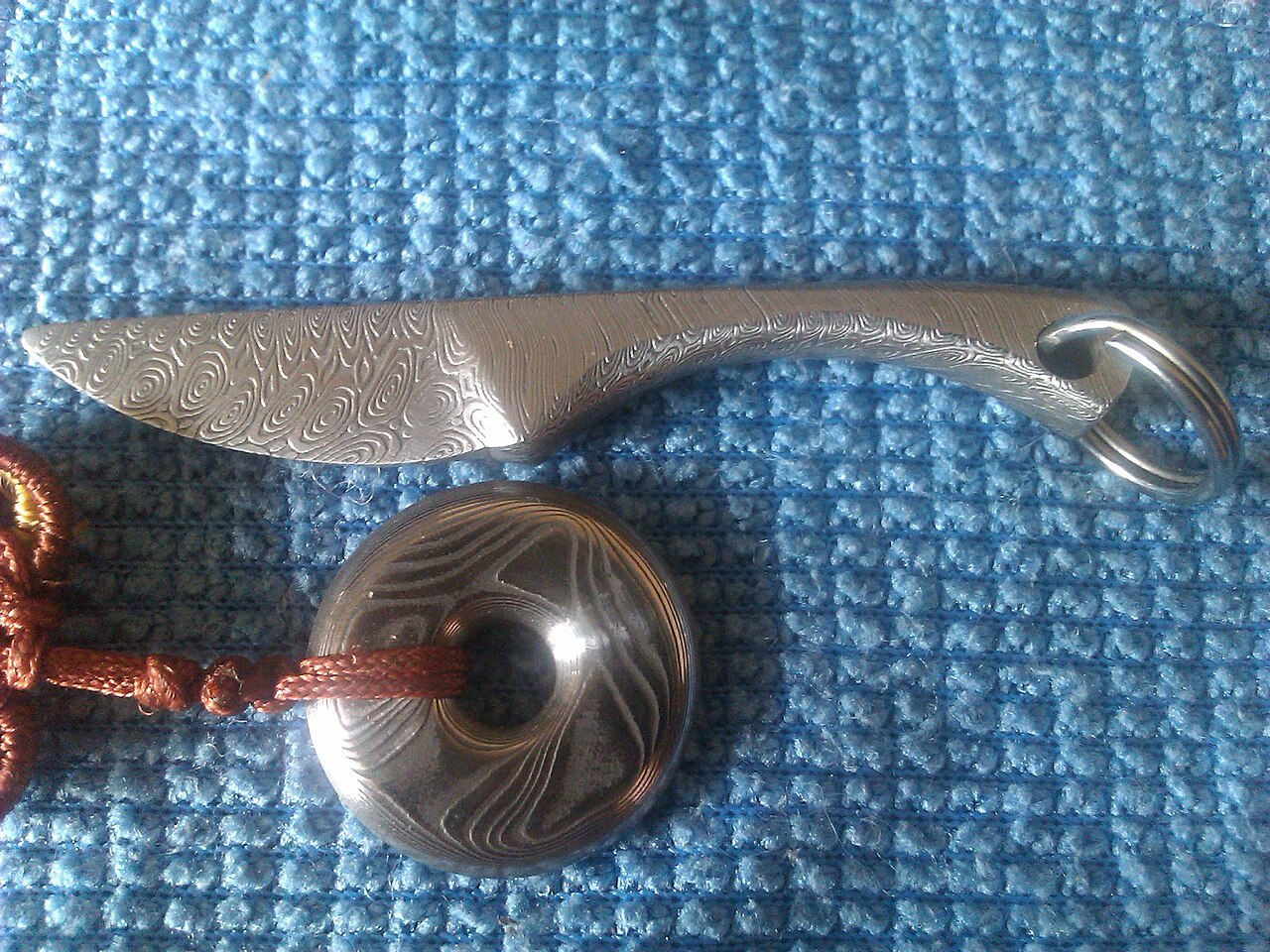
What You Need
- Ferric chloride — sold as PCB etchant (electronics suppliers) or as knifemaker’s etchant from the usual suppliers
- Distilled water for dilution, a non-metallic container tall enough to submerge the blade (PVC pipe with a cap, plastic jug)
- Baking soda, acetone or glass cleaner for degreasing, 0000 steel wool or 2000-grit paper, nitrile gloves and eye protection
- Optional but worth it: a jar of strong instant coffee (really)
Step by Step
- Finish the blade first — completely. Etching is the last step before final assembly: heat treated, ground, and hand-sanded to at least 400 grit (800+ gives cleaner, brighter results). Every scratch left on the blade etches into permanence.
- Degrease like it matters, because it does. Acetone or glass cleaner, wiped until a clean patch of paper towel stays clean — then don’t touch the steel again. One fingerprint = one blotchy etch shaped exactly like your thumb.
- Mix the etchant: 3–4 parts distilled water to 1 part ferric chloride. The common knifemaker’s dilution. Stronger works faster but coarser; 4:1 etches slower with more control, which is what you want on a first attempt. Room temperature.
- Etch in cycles, not one long soak. Suspend the blade fully submerged (hang it on a wire through the tang hole — resting it against the container leaves a line). Etch 10–15 minutes, pull it, rinse in water, and very lightly wipe the gray-black oxide film off with 0000 steel wool or worn 2000-grit under running water. Back in the tank. Repeat 2–4 cycles until the pattern has the depth and topography you want — you can feel the layers with a fingernail on a well-etched blade.
- Neutralize. Into a baking-soda-and-water bath for several minutes, then rinse thoroughly and dry completely. Skipping neutralization leaves active acid in the pattern’s valleys, quietly rusting under your finish.
- Optional: the coffee etch. Submerge the neutralized blade in strong, hot instant coffee for 30–60 minutes. The tannins darken the carbon-steel layers dramatically without further attacking the steel — it’s the difference between gray-on-silver and black-on-silver, and it’s a standard trick among makers for good reason.
- Optional: brighten the highs. An extremely light pass with 2000-grit on a hard flat backer polishes just the raised nickel layers, making the contrast pop further. Feather-light — you’re kissing the peaks, not sanding the blade.
- Oil immediately. A fresh etch is bare, activated carbon steel and it wants to rust (see rust troubleshooting). Mineral oil or a wax-based finish the same hour. For working knives, tell the owner: damascus is carbon steel with better graphics, and it gets carbon-steel care.
Troubleshooting the Etch
- Weak, ghosty pattern: under-etched (more cycles), or the etchant is exhausted — old ferric loaded with dissolved iron slows to a crawl. Refresh the batch.
- Blotchy patches: grease or fingerprints. Sand back past the etch, re-degrease, re-etch.
- Pattern vanishes when you sand after etching: you sanded, not wiped. Only the lightest oxide-removal touches between cycles.
- Uniform gray, no contrast: both steels etching alike — usually means the billet isn’t actually two contrasting steels (mystery-steel damascus strikes again — see found steel) or the etch never got past the surface scratches.
Sources
- Vegas Forge — How to Etch Damascus
- David Robertson — Using Ferric Chloride to Etch Damascus Steel
- KnifeDogs — neutralizing etching solution
Common Mistakes
Etching over fingerprints or leftover grease. One marathon soak instead of short cycles. Scrubbing between cycles and erasing the relief. Skipping the baking-soda neutralization. Leaving the fresh etch unoiled overnight. Expecting contrast from a billet that is not actually two contrasting steels.
Safety
Ferric chloride is corrosive and stains everything it touches permanently – nitrile gloves, eye protection, and a dedicated plastic container. Work ventilated, keep it off concrete and tools, and never store it in metal. Do not pour spent etchant down the drain: it is dissolved-metal waste – neutralize and take it to household hazardous waste disposal.